Inspiration
Floods and droughts can seriously affect communities, agriculture, and the environment. We wanted to explore how machine learning could help demonstrate the identification of environmental risk conditions using important climate-related parameters.
What it does
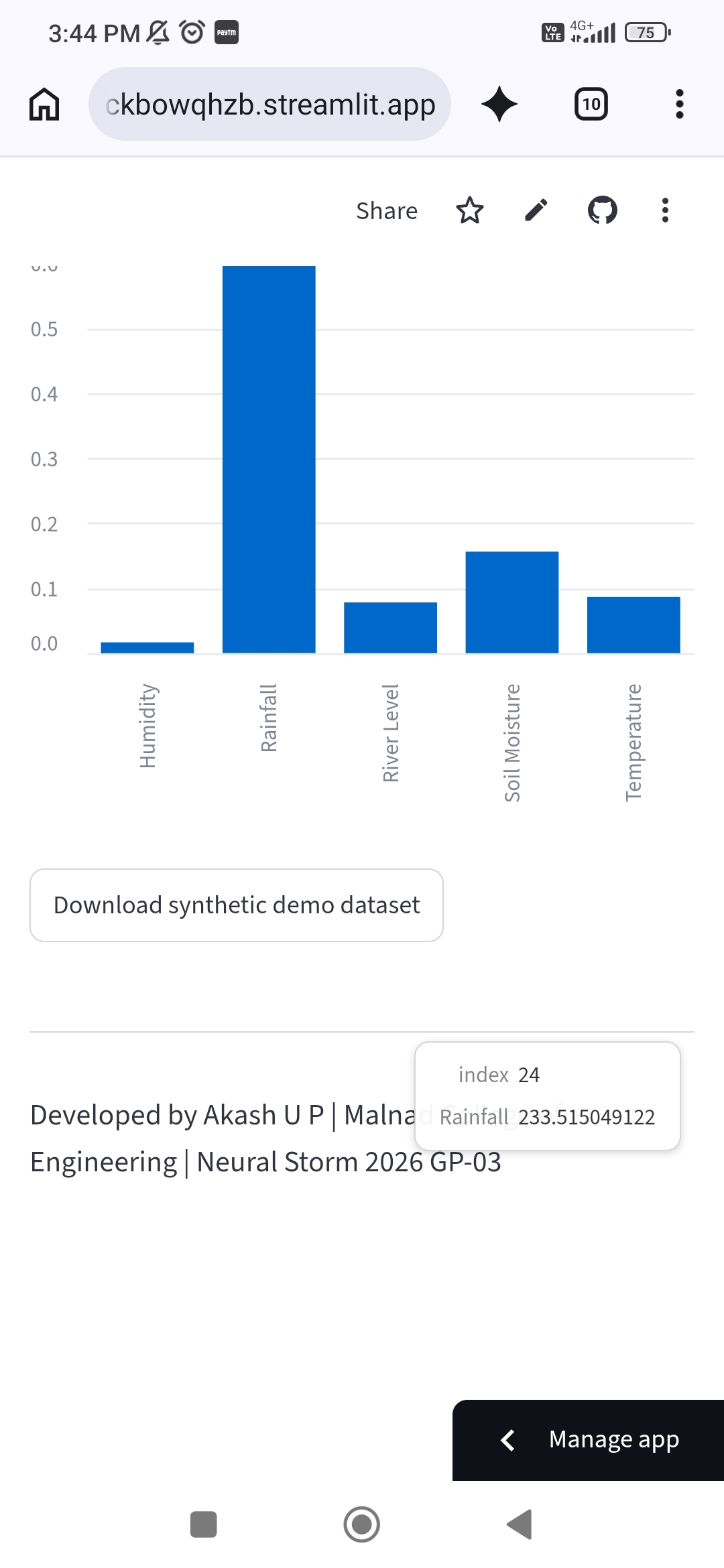
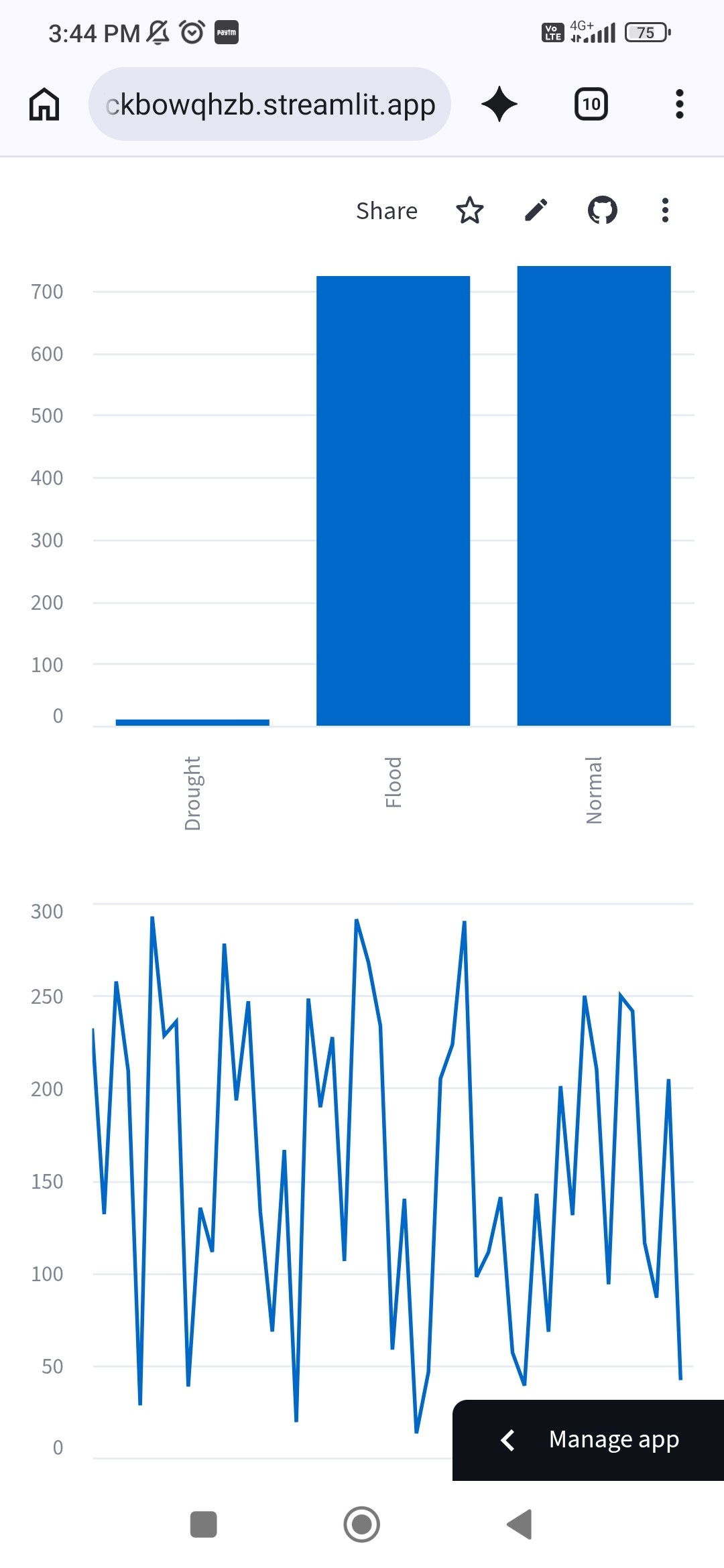
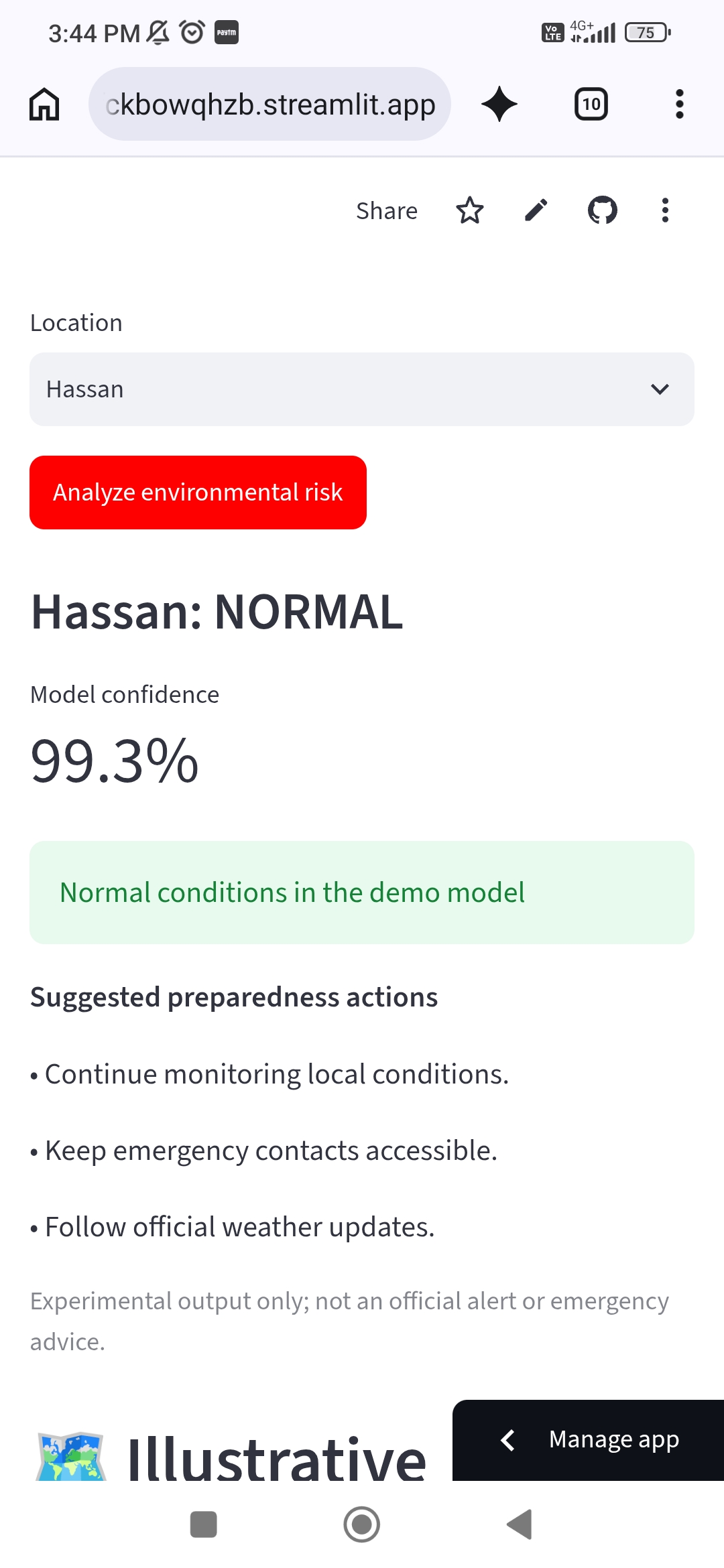
AquaAlert is an educational prototype that classifies environmental conditions into Normal, Flood-like, and Drought-like categories. It uses rainfall, soil moisture, river level, temperature, and humidity as input features. It also provides visualizations and suggested preparedness actions.
How we built it
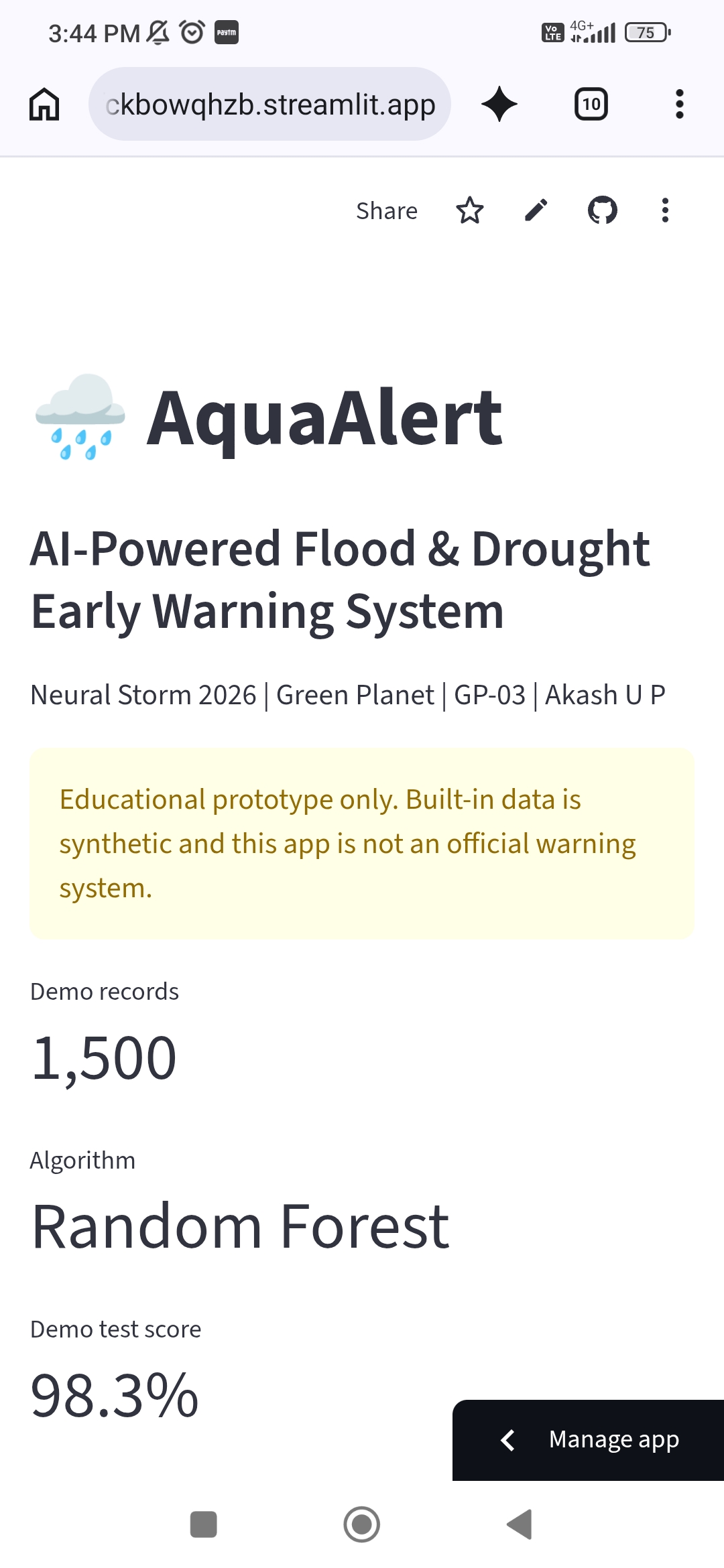
We developed the application using Python, Streamlit, and a Random Forest machine-learning classifier. The prototype uses a synthetically generated demonstration dataset containing 1,500 records. The application displays environmental data charts, classification results, and an illustrative location view.
Challenges and learning
This project helped us understand the workflow of preparing data, training a classification model, connecting machine-learning predictions to a user interface, and deploying a Python application online. We also learned the importance of clearly communicating model limitations and data reliability.
What's next
Future improvements could include verified historical weather observations, real-time environmental data feeds, regional model validation, and integration with official warning systems.
Disclaimer: This is an educational prototype using synthetic demonstration data. It is not an officially validated forecasting or emergency alert system. Inspiration
What it does
How we built it
Challenges we ran into
Accomplishments that we're proud of
What we learned
What's next for AquaAlert – AI-Powered Flood & Drought Early Warning System
Built With
- data
- forest
- learning
- machine
- numpy
- pandas
- python
- random
- scikit-learn
- streamlit
