Inspiration
I built AquaSENTINEL*out of a personal desire to change that narrative. When environmental signals are scattered across raw data feeds and complicated dashboards, critical hours are lost. I wanted to create something that bridges the gap between raw data and human actiona system that doesn't just display numbers, but actually understands risks, detects anomalies early, and provides clear decision support when every minute counts.
What it does
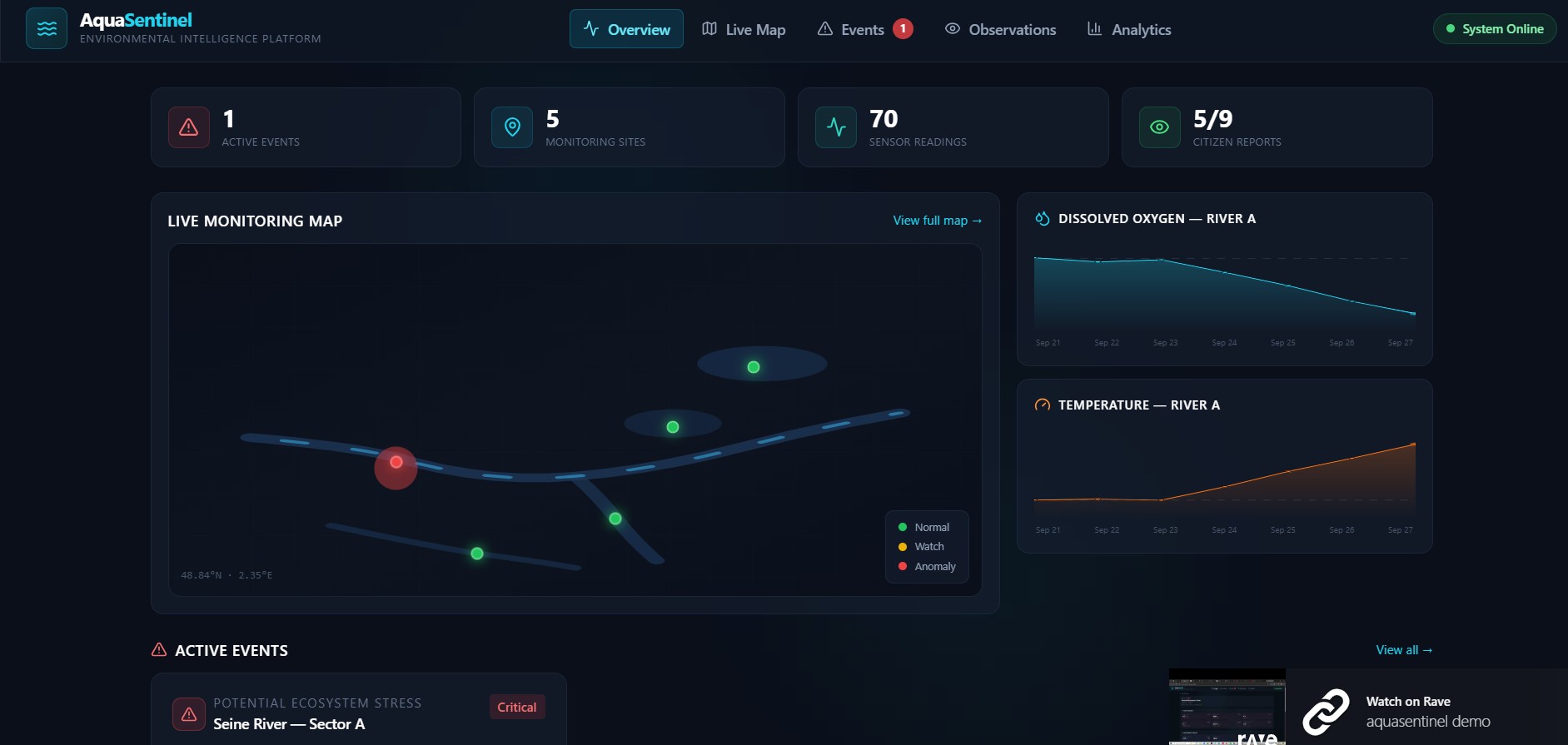
AquaSENTINEL is an intelligent environmental monitoring and risk-detection platform designed to turn fragmented data into real-time safety insights.
It operates on a continuous workflow: Monitor → Detect → Analyze → Alert → Respond. Through an interactive dashboard, the platform tracks water and environmental conditions, surfaces potential hazards, and uses AI-assisted analysis to interpret what the data actually means for local safety—reducing the time it takes from spotting a potential problem to taking action.
How we built it
The platform was engineered with speed, responsiveness, and usability in mind:
- Frontend & Dashboard: Built using React, TypeScript, and Vite for a fast, modular, and reliable user experience.
- Styling* Styled with Tailwind CSS to create a clean, modern, and high-visibility interface optimized for rapid incident monitoring.
- AI Integration & Logic: Integrated specialized environmental data processing workflows and AI-assisted analysis components to translate complex signals into clear, actionable warnings.
- Deployment:*Deployed live via Vercel for instant accessibility. ## Challenges we ran into Synthesizing Fragmented Data: Combining raw environmental metrics into a cohesive story that makes sense at a glance required careful UI/UX design.
- Real-Time Responsiveness: Ensuring the dashboard and analysis workflow felt snappy and reliable under various simulated risk conditions and making some example for demo. ## Accomplishments that we're proud of
What we learned
Building AquaSENTINEL reinforced how critical software engineering and AI are when applied to grassroots environmental challenges. Real-world problems like flooding demand systems that prioritize clarity, speed, and empathy for the people on the ground.
What's next for Aqua sentinel
Integration with live public sensor networks and real-world meteorological datasets.
- Advanced geospatial risk mapping.
- Automated anomaly detection and push notifications for high-risk zones.
Built With
- react
- typescript
- vite

Log in or sign up for Devpost to join the conversation.