
APX LMS: An AI-Powered Learning Management System
Inspiration
The inspiration for APX LMS was born from the direct experiences and frustrations with the current state of online education. We noticed that while digital learning platforms have become ubiquitous, many of them are little more than glorified file repositories. They often lack the dynamic, interactive, and personalized elements that make in-person learning so effective. This leads to a passive learning experience, student disengagement, and a significant administrative burden on teachers who are forced to juggle multiple disconnected tools for communication, assessment, and content delivery.
We were inspired to build a platform that doesn't just manage learning but actively enhances it. We envisioned a system where technology, particularly AI, could be a powerful ally for both educators and learners. We wanted to automate the tedious aspects of course creation, provide students with intelligent tools to practice and prepare, and create a centralized, seamless environment that fosters a genuine sense of community and connection, even in a remote setting.
What it does
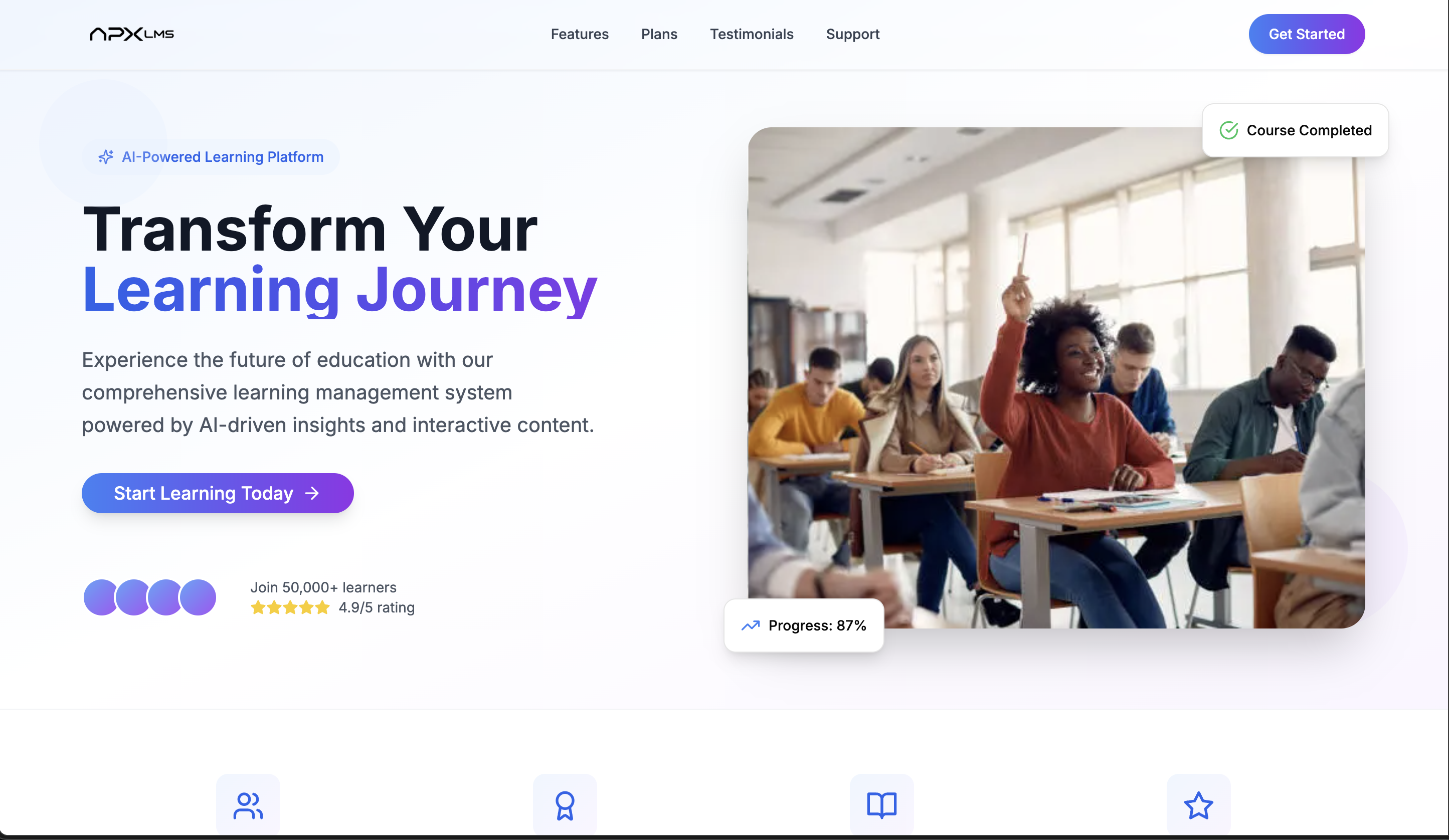
APX LMS is a comprehensive, AI-enhanced educational ecosystem designed to bridge the gap between traditional and digital learning. It provides distinct, tailored experiences for each user role, ensuring everyone has the right tools to succeed.
For Teachers
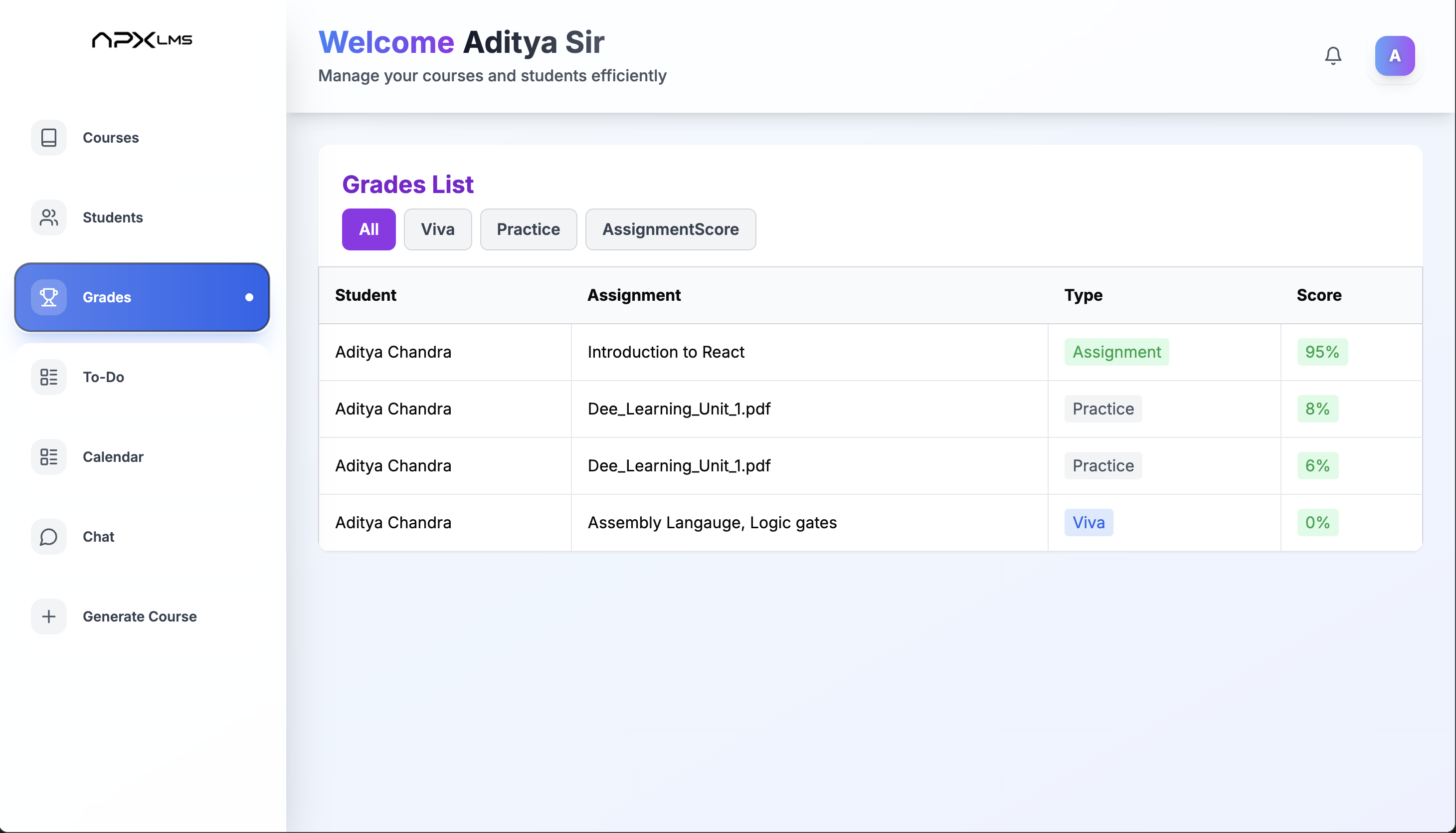
APX LMS is a powerful command center. Teachers can offload the heavy lifting of curriculum design by using the AI to generate entire courses from a simple topic or a YouTube playlist, complete with structured chapters and summaries. They can create and manage their classes, design diverse assignments with rich content, and grade student submissions with an integrated and efficient workflow. The platform also gives them a direct channel to their students through class-wide announcements.
For Students
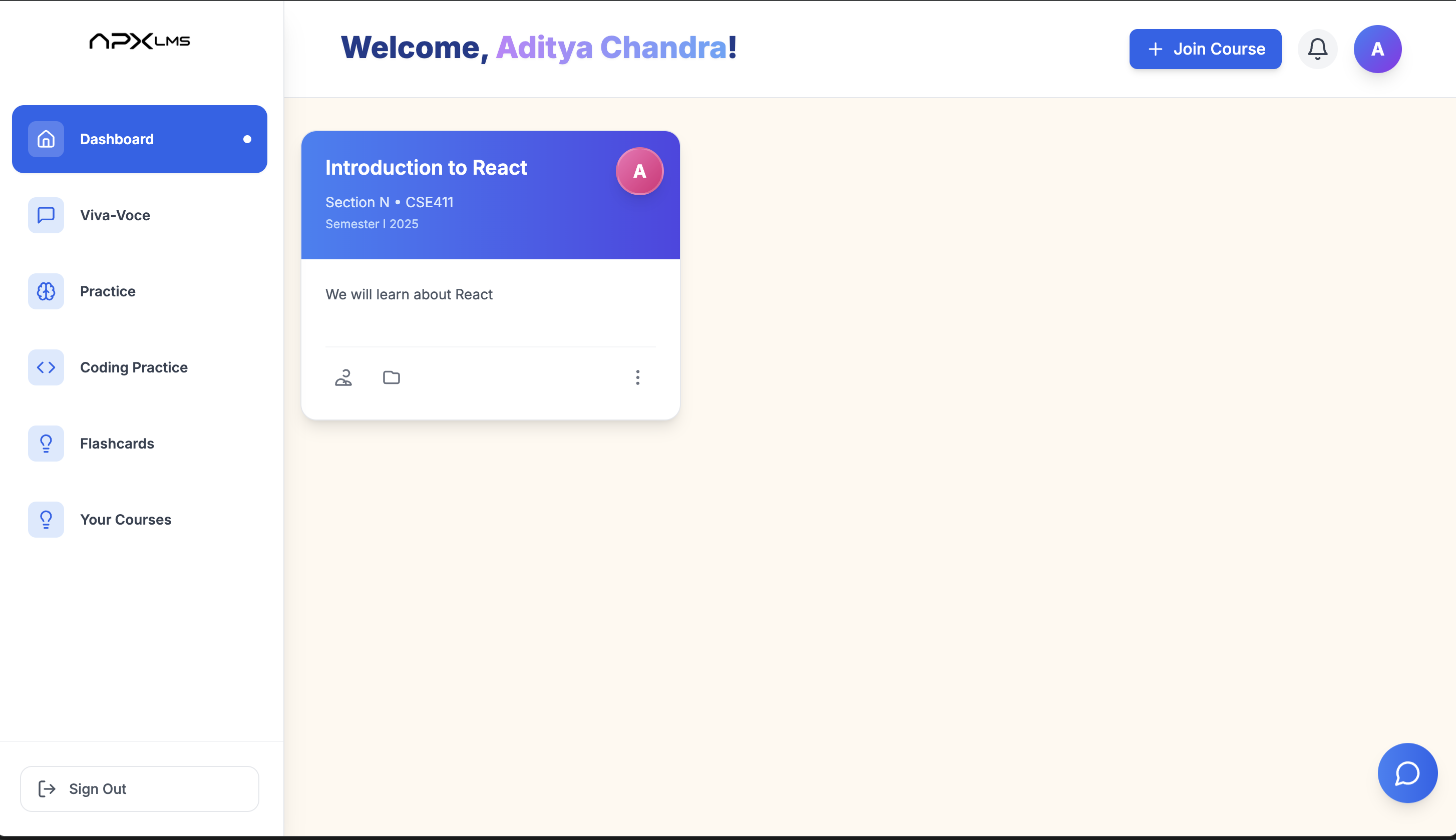
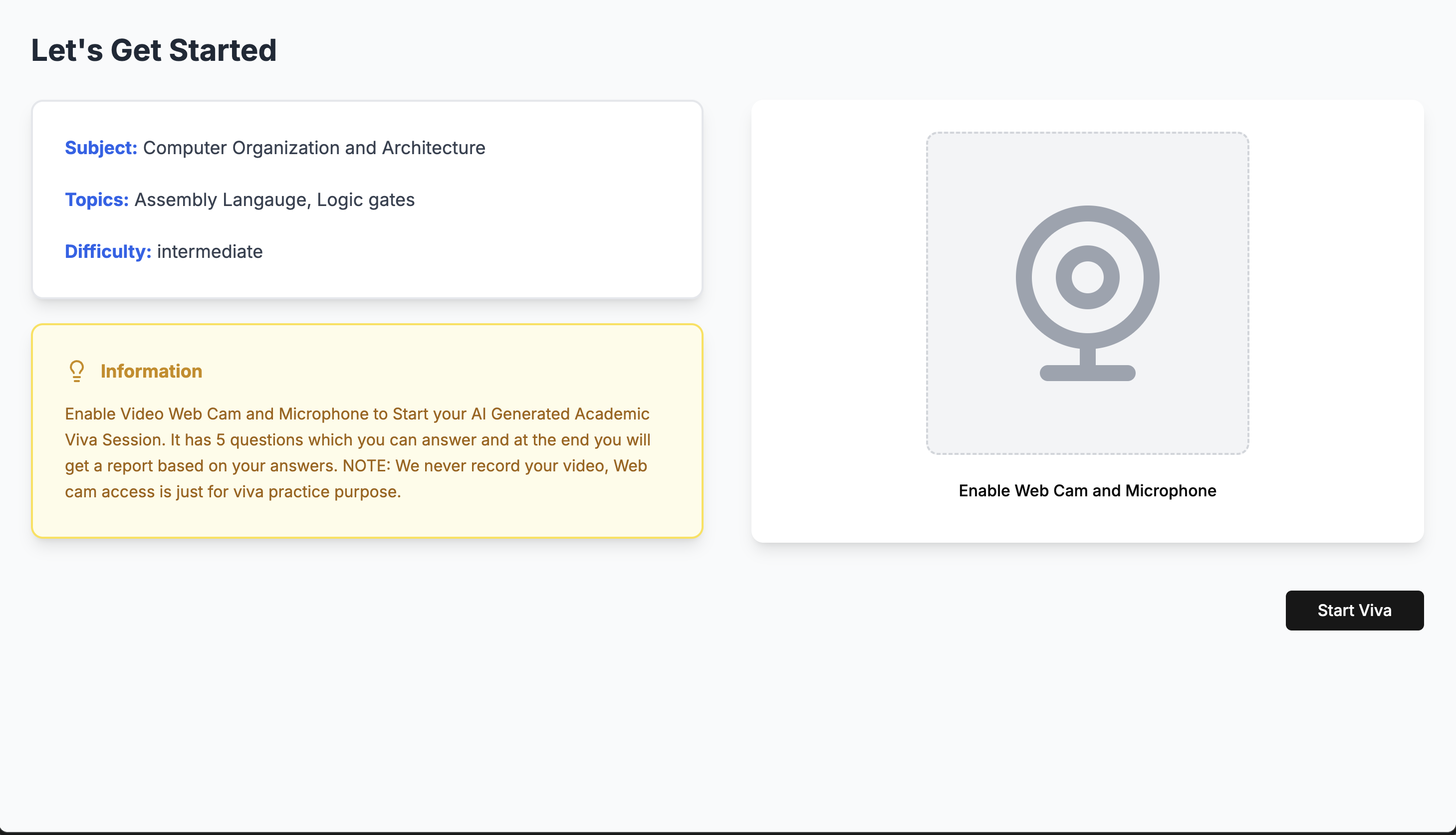
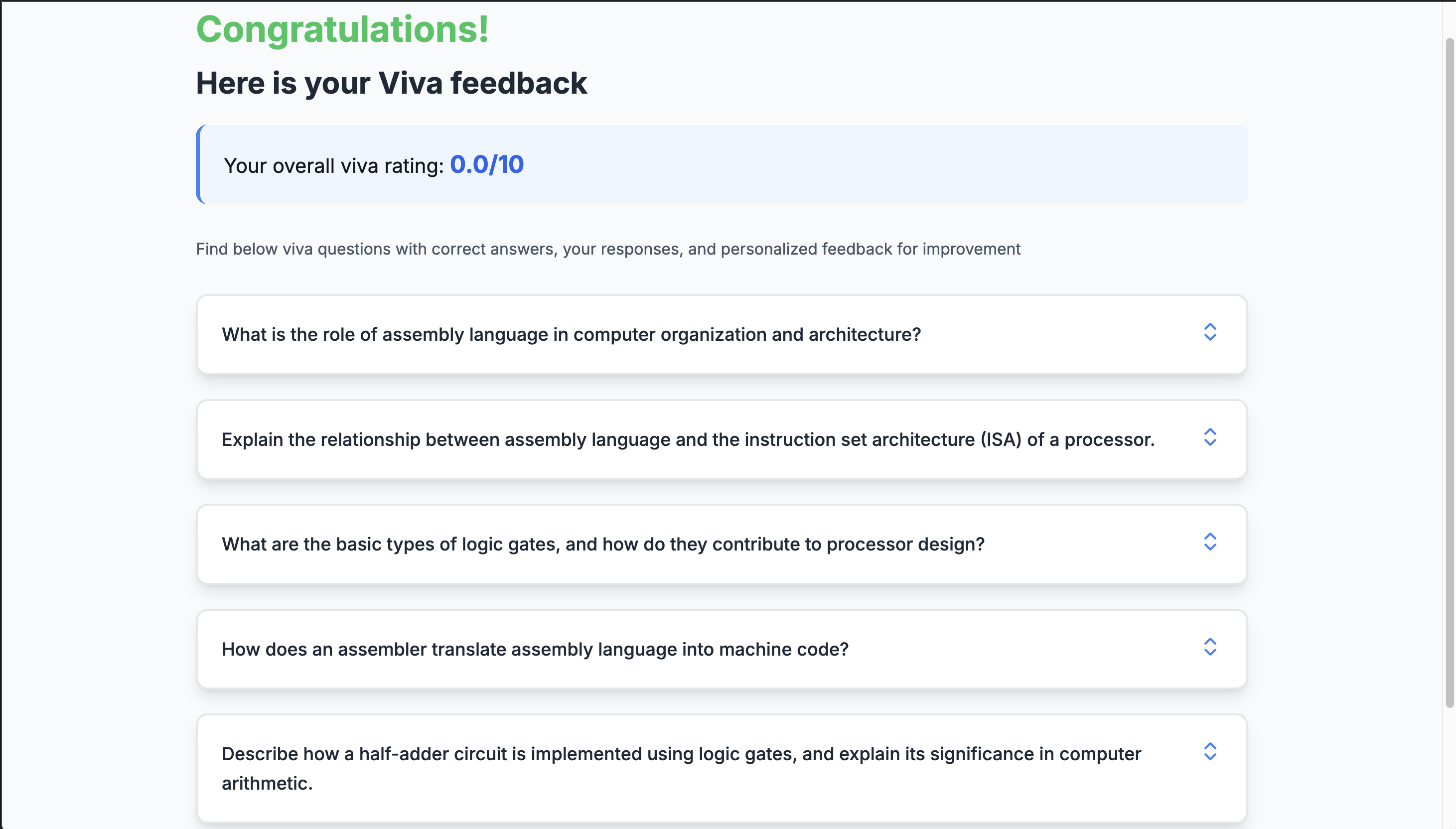
The platform is a personalized learning companion. It provides a clear and organized view of all enrolled courses, upcoming deadlines, and academic progress. Beyond standard course consumption, students can actively engage with the material through AI-generated practice quizzes and self-created flashcards. The standout feature is the AI-powered Viva Voce simulator, which allows them to practice for oral exams by responding to AI-generated questions and receiving instant, actionable feedback on their performance, helping to build both knowledge and confidence.
For Administrators
The admin dashboard offers a 30,000-foot view of the entire institution. Administrators have the tools to manage the lifecycle of all users, monitor platform-wide activity and engagement, and configure system settings to ensure the platform runs smoothly and securely for everyone.
How we built it
APX LMS is engineered with a modern, full-stack architecture designed for performance, scalability, and a rich user experience.
Backend
The core of our application is a robust RESTful API built with Node.js and the Express.js framework. This API handles all business logic, from user authentication to AI integrations. We chose MongoDB as our database, using Mongoose as the ODM to create a flexible data structure that can easily evolve. For our real-time notification system, which is critical for user engagement, we implemented a native WebSocket server to push instant updates to clients. The AI magic is powered by the Cerebras AI API, which we integrated to handle complex tasks like course generation and viva feedback.
Frontend
The user interface is a dynamic and responsive single-page application (SPA) built on Next.js, the industry-standard framework for production-grade React applications. This choice ensures fast page loads and a smooth user experience. We used Tailwind CSS for a utility-first styling approach, allowing us to build a clean, modern, and highly-customizable UI. All state management is handled elegantly within React using hooks, and Axios is used for all HTTP communication with our backend API.
Authentication & Security
User security is paramount. We implemented a token-based authentication system using JSON Web Tokens (JWT), where user passwords are encrypted with bcrypt.js. To provide a frictionless and secure login alternative, we also integrated Google OAuth.
Challenges we ran into
Integrating a third-party AI service was a significant technical hurdle. Crafting precise and reliable prompts to ensure the AI returned data in a strict, predictable JSON format was a process of intense trial and error. We had to build resilient parsing logic to handle the occasional variations in the AI's output.
Another major challenge was designing and implementing the WebSocket infrastructure for real-time notifications. Ensuring that notifications were delivered instantly and only to the relevant users (e.g., students in a specific course) required careful management of WebSocket connections and user sessions on the server.
Finally, managing the complex state of the frontend, especially in the multi-functional dashboards for teachers and students, was a challenge. We had to carefully structure our components and data flow to keep the UI responsive and in sync with the backend.
Design and UX Philosophy
From the beginning, our goal was to create a platform that was not just powerful, but also intuitive and enjoyable to use. Our design philosophy was centered on three core principles:
- Clarity and Simplicity Education technology can often be cluttered and confusing. We prioritized a clean, minimalist UI using Tailwind CSS to ensure that users are never overwhelmed. Each dashboard is designed to present the most relevant information upfront, with clear navigation and a consistent visual language.
- Role-Specific Experience: We recognized that a student's needs are very different from a teacher's or an admin's. Instead of a one-size-fits-all approach, we designed three distinct user experiences. The student dashboard is focused on learning and progress, the teacher dashboard on management and creation, and the admin dashboard on oversight. This tailoring ensures that every user feels the platform was built specifically for them.
- Reducing Friction: Every feature was designed to minimize the number of clicks and mental effort required to complete a task. For example, the AI course generator turns a complex, multi-step process into a two-click action. The single-code course enrollment removes the usual hassle of registration. Our goal was to make the technology fade into the background, allowing users to focus on what truly matters: learning and teaching.
Accomplishments that we're proud of
We are immensely proud of building a platform that feels intelligent and alive. The AI-powered Viva Voce simulator is a feature we believe is a game-changer, offering students a safe and effective space to practice a high-stakes skill that is often neglected by other platforms.
The automated course generation is another accomplishment we're proud of, as it directly addresses a major pain point for educators, freeing up their valuable time to focus on teaching rather than content curation. Finally, successfully architecting and deploying a full-stack application with a clean separation of concerns between the frontend and backend is a technical achievement that we are very proud of.
What we learned
This project was a deep dive into the entire lifecycle of modern web application development. On the backend, we mastered the art of designing and building a secure and scalable REST API and learned the intricacies of integrating with external AI services. On the frontend, we honed our skills in building complex, stateful user interfaces with Next.js and React.
Perhaps the most valuable lesson was in prompt engineering—learning how to "speak" to a large language model to get the precise output needed for our application's features. This project solidified our understanding of how to bridge the gap between human instruction and machine execution, a critical skill in the age of AI.
What's next for APX LMS
We see a bright future for APX LMS and have a clear roadmap of features we're excited to build next:
- Deeper AI Integration: We plan to introduce more advanced AI features, such as personalized learning paths that adapt to each student's performance and automated grading for written assignments to further reduce teacher workload.
- Enhanced Collaborative Tools: We want to build features that foster student collaboration, such as shared document editing, group project workspaces, and live, real-time study sessions within the platform.
- A Dedicated Mobile Experience: To make learning truly accessible anywhere, we plan to develop native mobile applications for iOS and Android, offering a fully-featured experience on the go.
- Advanced Analytics and Insights: We aim to build a more sophisticated analytics dashboard that provides teachers with deep insights into student performance, helping them identify at-risk students and areas where the class may be struggling.
Built With
- cerebras-ai-api
- express.js
- google-oauth
- javascript
- mongodb
- next.js
- node.js
- react
- tailwind-css
- websockets


Log in or sign up for Devpost to join the conversation.