Inspiration
I used to work in the Telegram team, and i saw how many teams are struggling with owning all the supply chain, while they’re creators and they know what the end user needs. AI made code cheap, and it is still hard to build a product people will pay for. A person with an idea gets a working prototype in an evening and then meets the rest: data, identity, payments, hosting, support, updates. That remainder is still shaped like a company. And once something works, it is hard to get users: every app asks a person to leave where they are, open a link, sign up, install, and each step loses most of the people who reached it.
What it does
We make it easy for creators to instantly and constantly create apps, but not worry about all the headache of infra and other tech stuff. They just create right interfaces for right people and distribute it with least friction possible.
How we built it
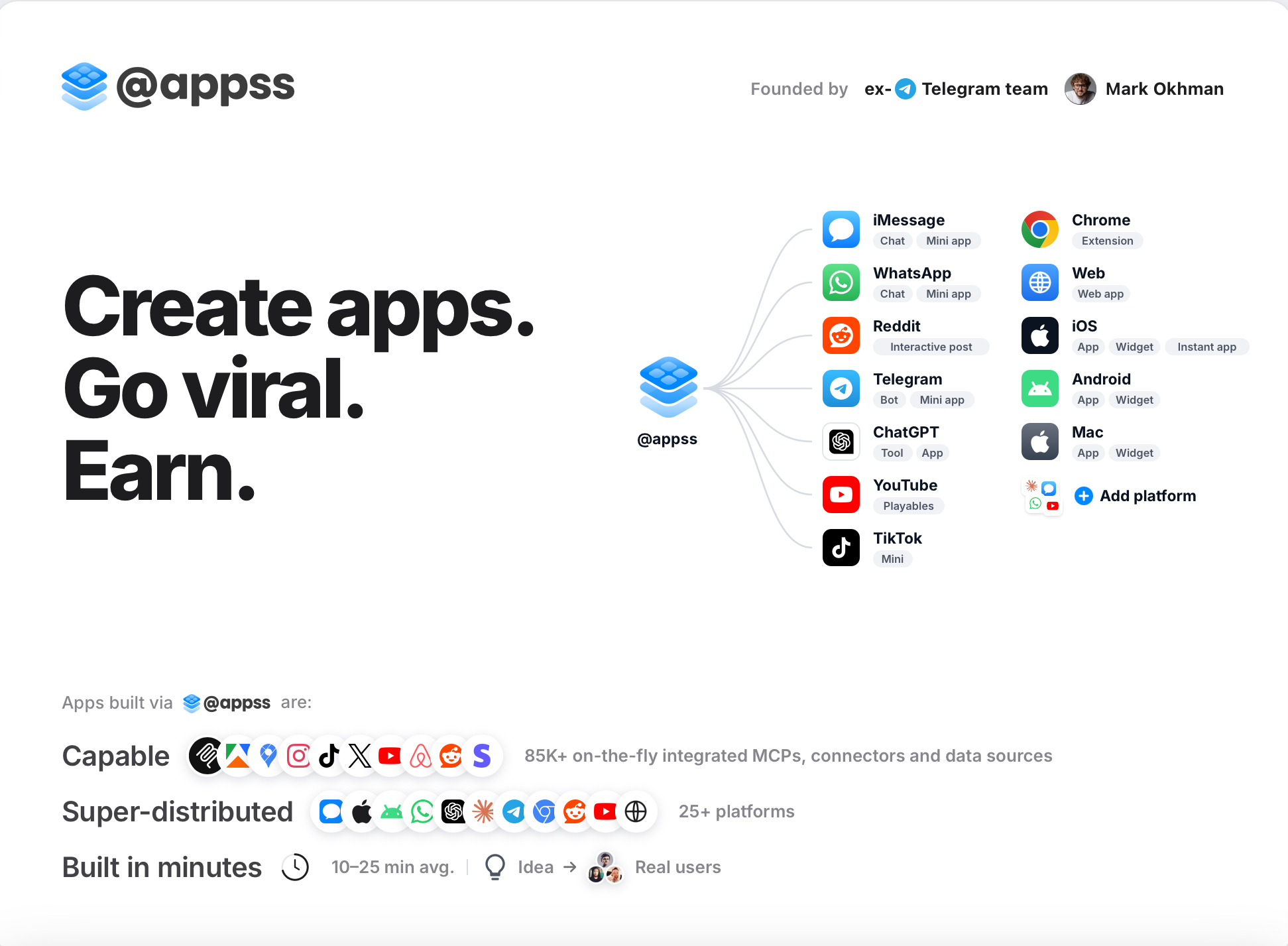
We’ve build a coding harness, friendly UI and distribution system. An agent takes the real request, assembles the app from ready actions (receipt reading, currency rates, payments), deploys it and opens it inside WhatsApp, Telegram and iMessage. Brainbase spins up workers when needed: when the app needs to process input, generate something, make a voice call, a confirmation or a reminder.
Challenges we ran into
It’s not easy to make sure every version of the app for every platform functions natively, it takes us the most efforts to keep those interfaces in sync.
What we learned
Code is the cheap part. Builders sell code and stop at the first step; model makers keep apps inside their own chat; both leave the person to become a company. The unit of software has to become a contribution: a creator ships an interface and an audience, an enterprise ships an action, and the chain pays everyone per use. That is how video, rides and rooms became things ordinary people produce.
What's next
We’re going keep signing angel checks and pre-seed VCs
