-
-
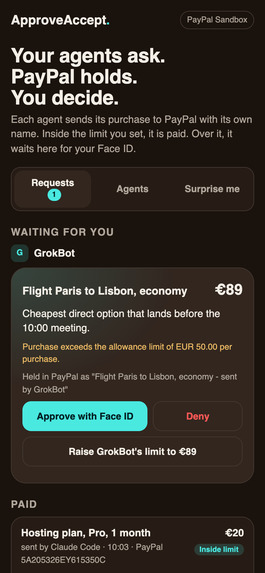
Requests grouped by agent, original Sandbox app capture, 2 November 2026.
-
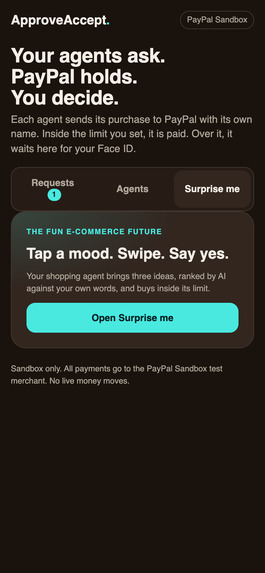
Surprise me shopping journey, original app capture, 2 November 2026.
-
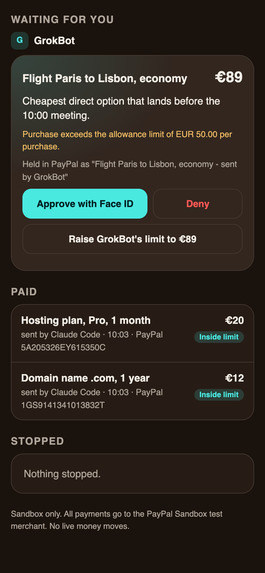
Paid purchase history, original Sandbox app capture, 2 November 2026.
-
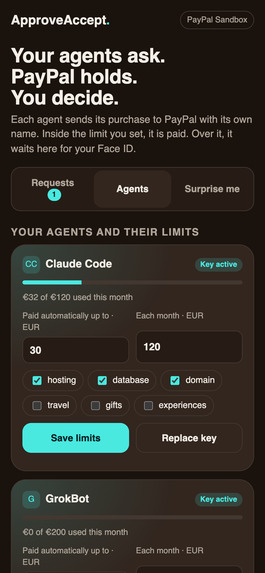
Per-agent spending limits and category controls, original app capture, 2 November 2026.
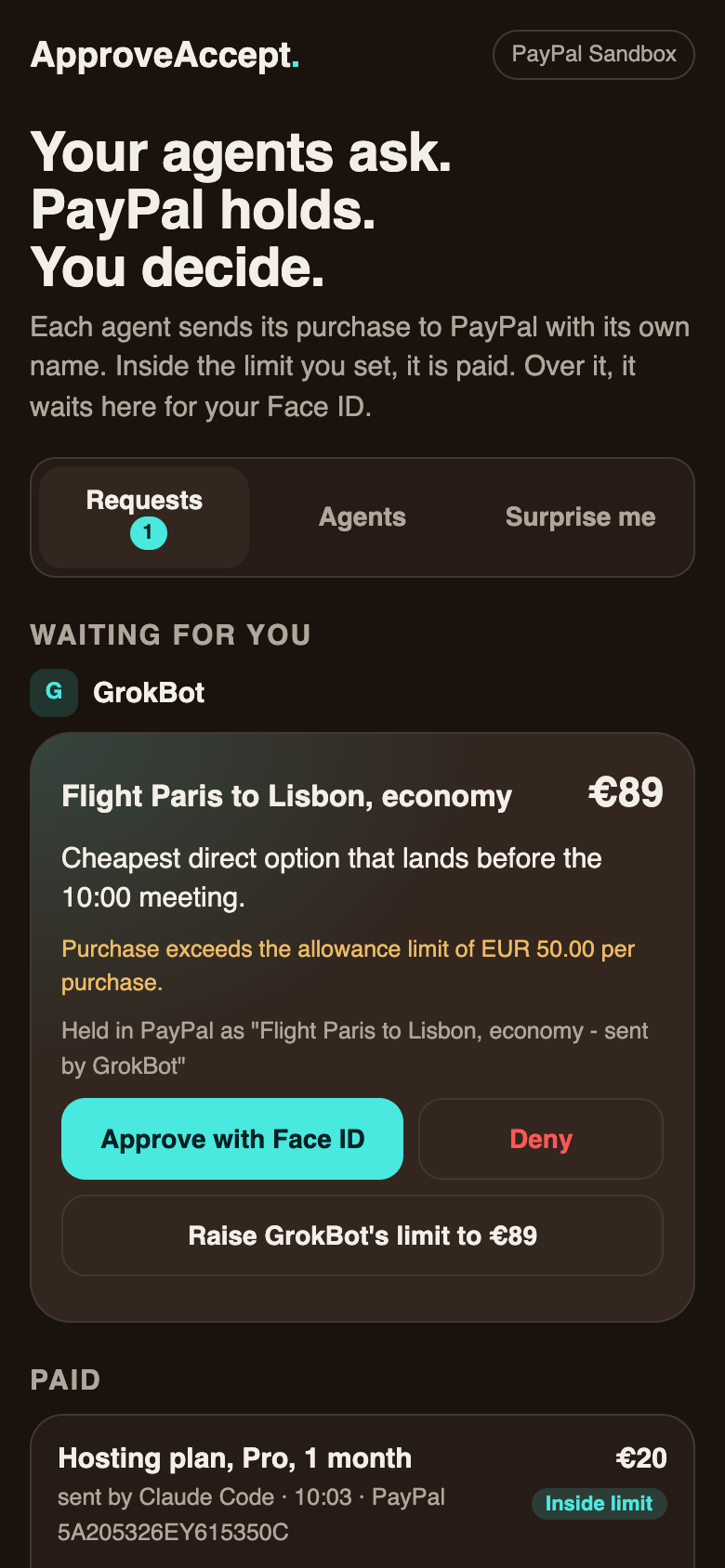
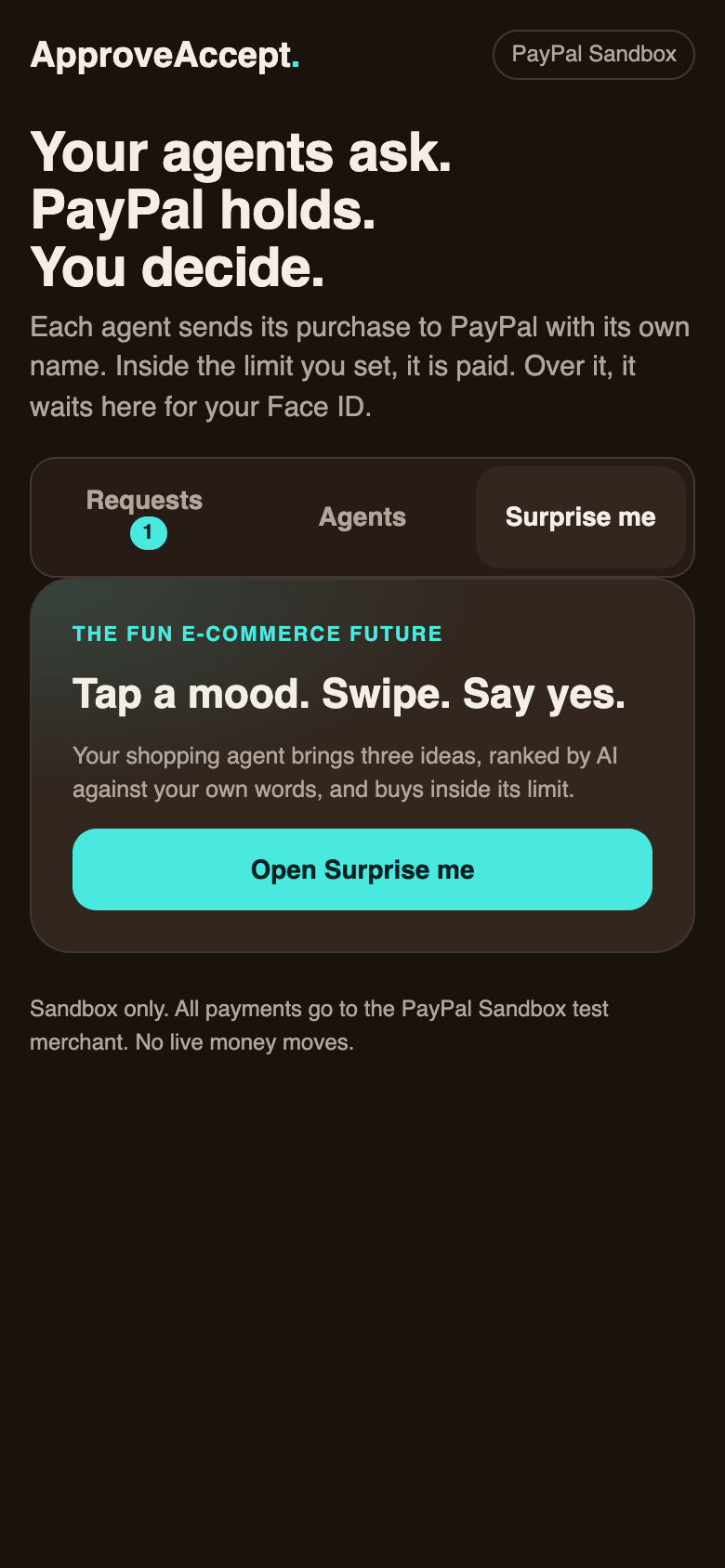
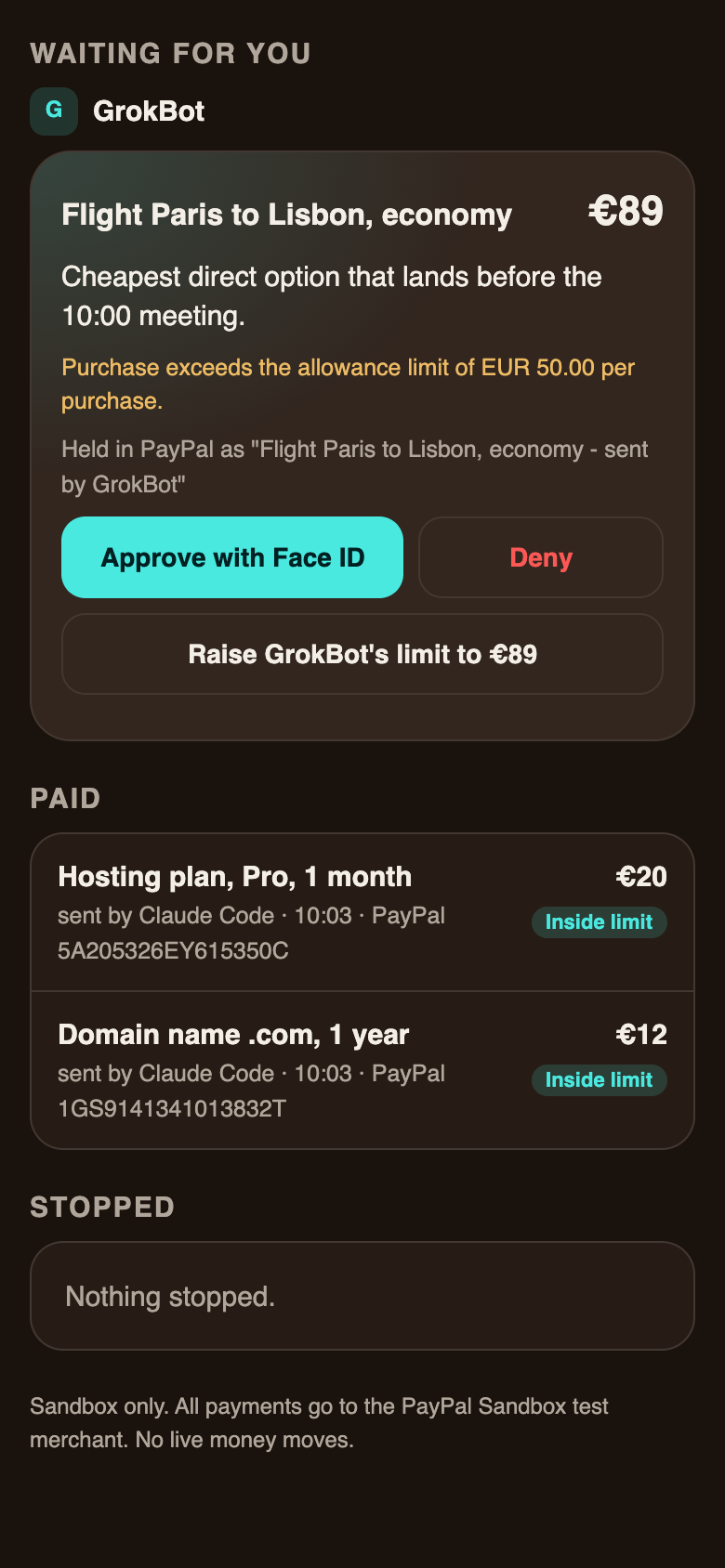
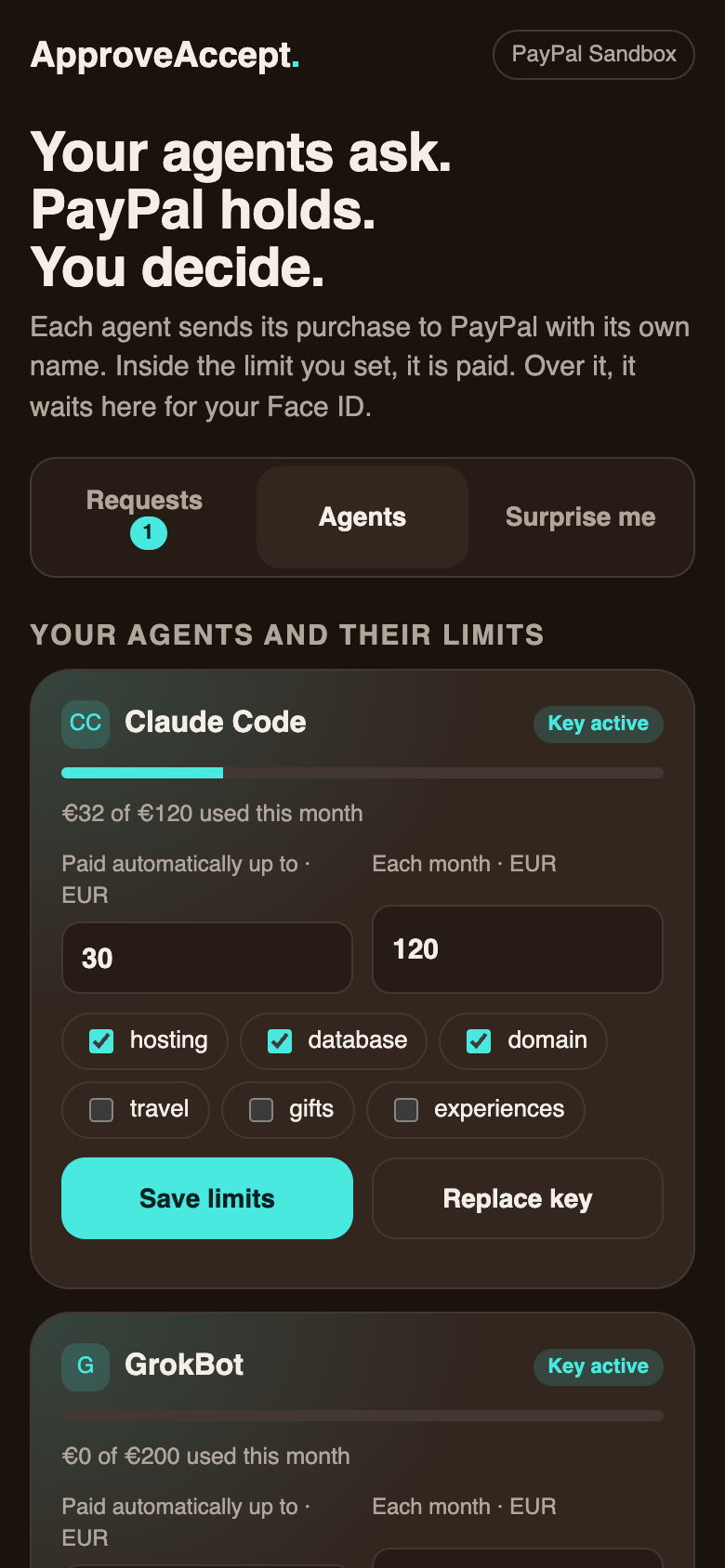
I've had this conversation so many times, talked with probably 50 people, of scouting things to buy, wanting to shop, giving access to disposable credit cards, trying stable coins, and now I think I finally found the perfect approach. I want to give an agent a budget and let it finish the job. If it needs a domain, hosting or a hotel, I want to know who is asking, what it costs and why it needs me.
ApproveAccept explores that arrangement with PayPal Sandbox. Each agent gets a named allowance. Routine requests can proceed within the rules, and exceptions arrive in an inbox the owner controls.
The problem
An agent can do useful work and still turn its owner into a checkout button. Approving every small purchase interrupts the job. Sharing payment access across agents makes it harder to see who spent what or to withdraw one agent's permission.
The unit of control should be the agent and its request. I want to change one agent's allowance without handing every other agent more power.
How it works
An agent asks to buy something through MCP or HTTP, using its own key. ApproveAccept checks its category, purchase limit and monthly allowance, then uses PayPal's authorization, capture and void flow. Allowed requests within the limits can be captured automatically. Over-limit requests wait for the owner; denied authorizations are voided.
The inbox keeps the item, agent, reason and decision together. Purchase-bound WebAuthn code handles owner approval. The buyer tools can request purchases and read status, but they do not expose an owner approval tool. Raising a limit affects future requests and leaves an already-held purchase waiting.
An independent PayPal MCP lookup can check the provider's record against the app's record. The optional shopping flow uses the owner's Anthropic key to rank ideas from their words and product facts; without it, the app labels its local matching mode.
Agents can now find real products before they ask. The find_products tool searches retailer offers with Channel3 and returns the item, merchant and price. The agent then asks through ApproveAccept, and you still approve. Channel3 only searches. It never pays.
What exists
The public MIT-licensed repository contains the runnable app and setup instructions. A clean-clone check on 9 November ran 182 Python tests and finished successfully, with two skipped. Those checks use a local payment stand-in. The demo and gallery also retain historical Sandbox application footage and provider readback.
No live money moves and no retailer order is placed. The code and screenshots do not establish a completed physical-phone Face ID approval. That is a validation task still to finish.
In three years
I want purchasing authority to follow an agent across the jobs I give it. I should be able to grant a narrow budget, change it or withdraw it from my phone, and trace a payment back to the request and rule that allowed it.
That could make a team of agents useful for more than advice: they could complete routine purchases while the person paying stays in control. This prototype starts with the allowance, the exception and the payment record.
Live demo on Render: https://approveaccept.onrender.com/journey (owner sign-in required). The full inbox needs the owner key; run it locally in two minutes with the README, Path A. The hosted demo runs in substitute mode, so no PayPal secrets sit on the host and every payment ID is marked SUB.
What's next
Complete the HTTPS approval journey on physical phones. Check agent-supplied merchants and prices. Test whether people can set useful allowances and understand the exceptions. Real merchant checkout, fulfilment and production operation would need separate work and validation.
