-
-
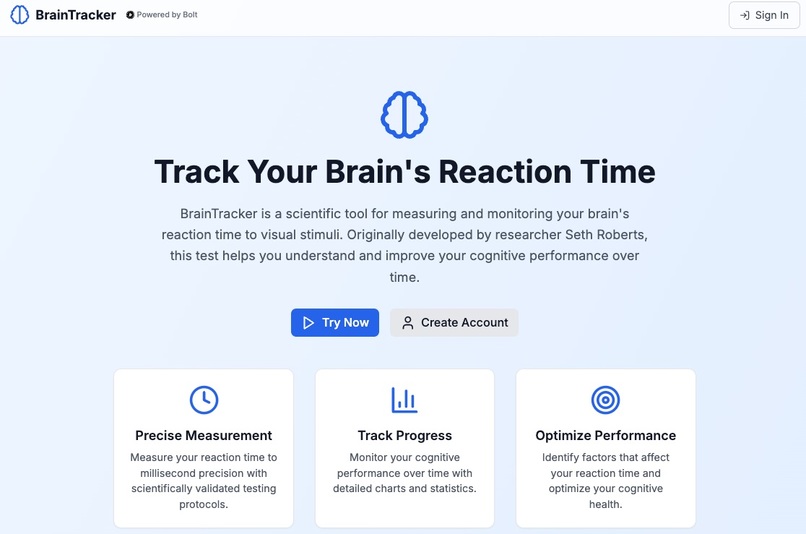
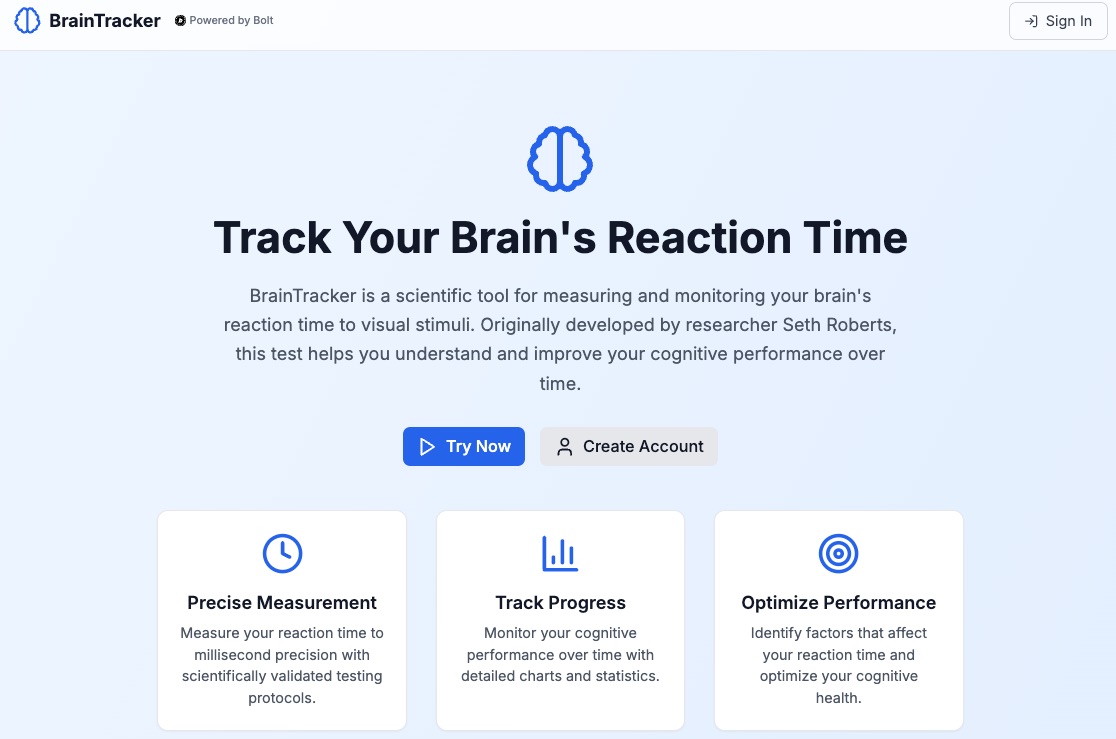
The landing page offers a brief overview. Create an account and log in to save your tests.
-
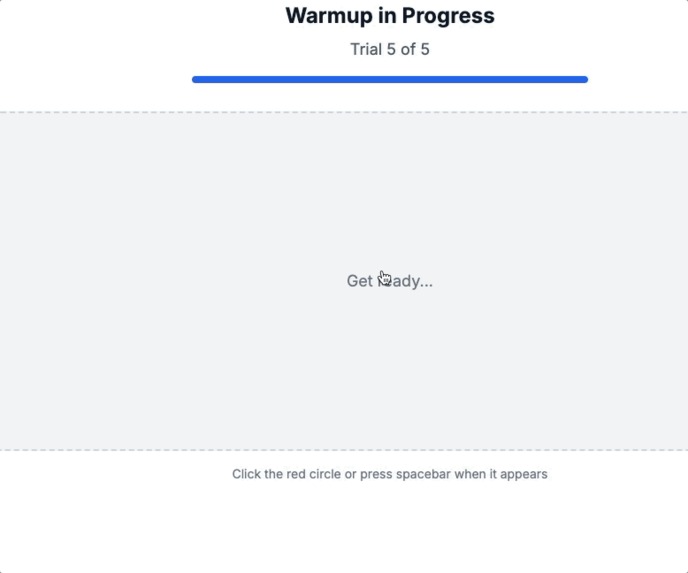 GIF
GIF
Tap the red circle as fast as you can.
-
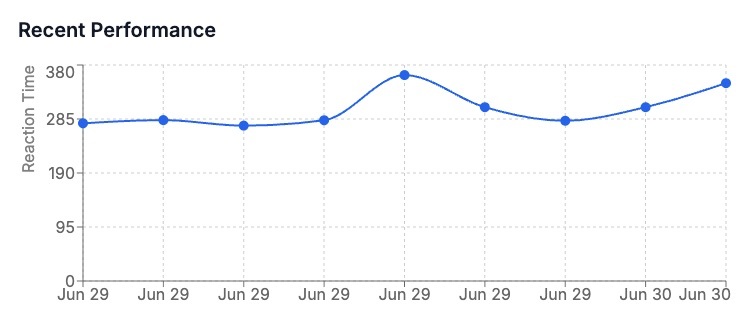
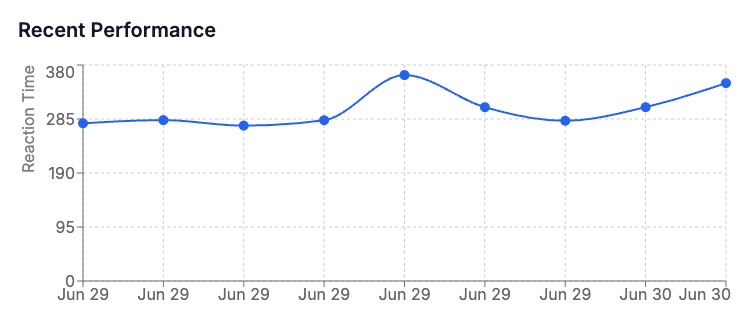
My score time shifts slightly throughout the day. That peak was right before dinner. (Lower is better)
-
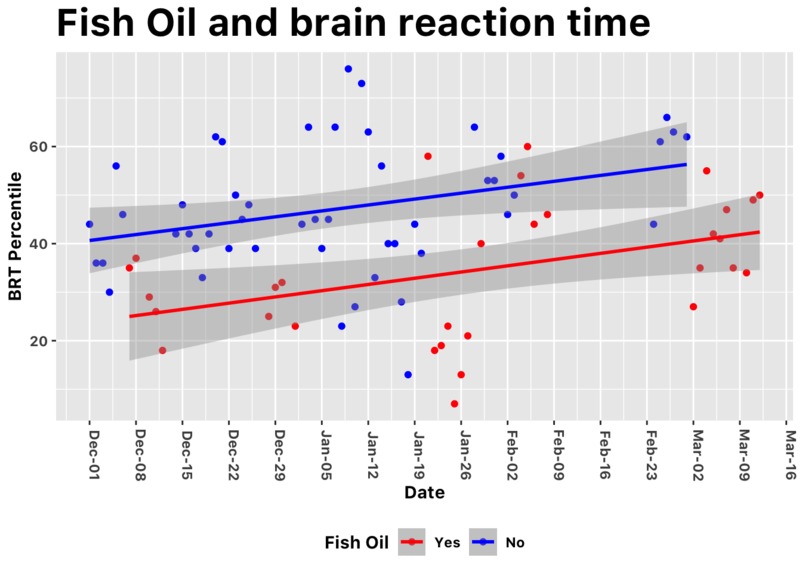
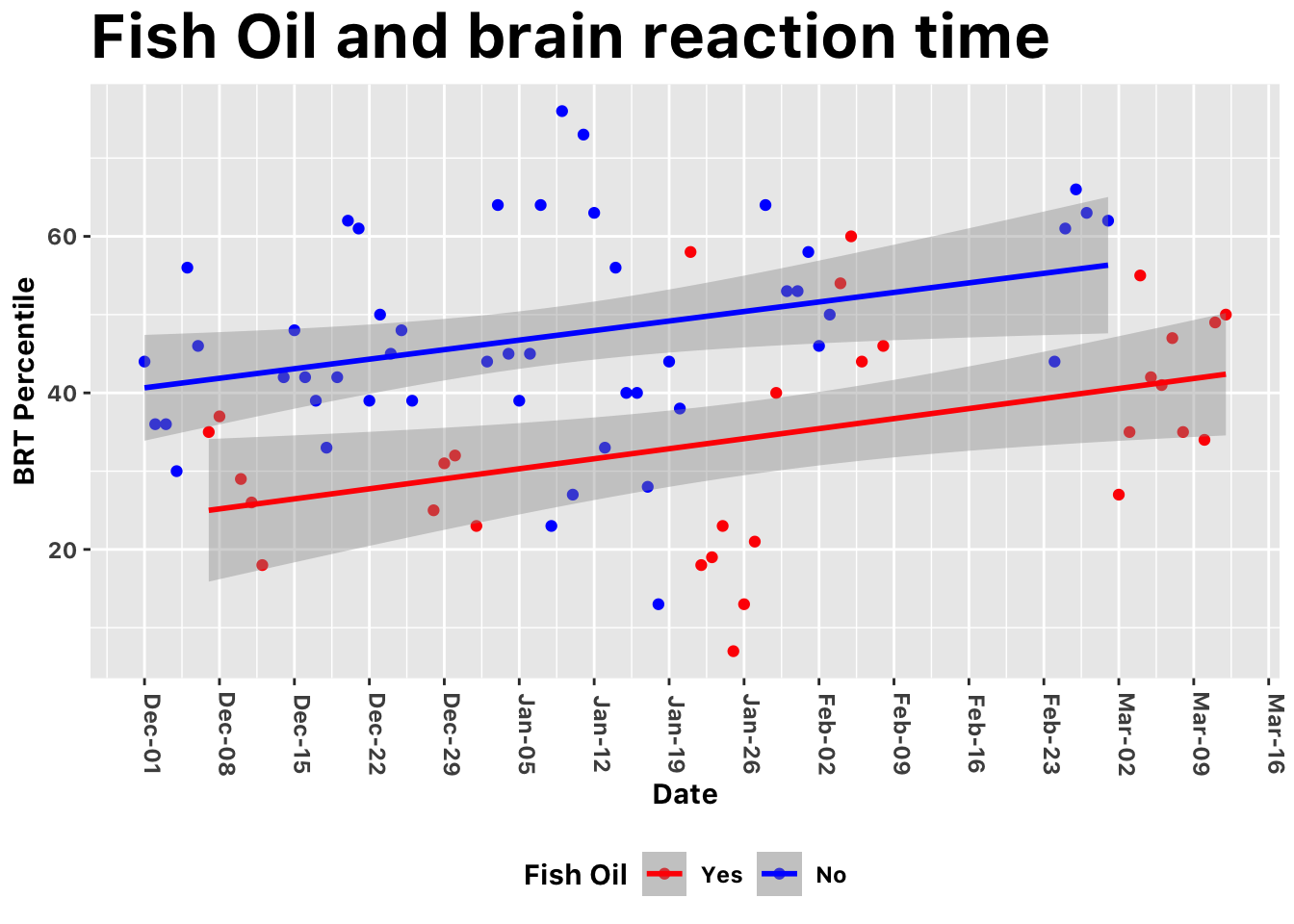
A legacy plot painstakingly made using the late Professor Seth Robert's legacy code demonstrating cognitive benefits of fish oil.

Inspiration
My late mentor, UC Berkeley psychology professor Seth Roberts, developed sophisticated R-based tools for measuring cognitive performance through Brain Reaction Time (BRT) tests. His original work required technical expertise and complex R scripts. I wanted to resurrect his legacy research (a 15 year-old script) and make it accessible to anyone interested in personal cognitive tracking.
What it does
The app implements Seth's BRT vigilance testing methodology in a modern, user-friendly interface. Users take a 4-minute cognitive test that measures reaction time and focus ability, then track correlations with lifestyle variables (sleep, supplements, diet, exercise) to identify personal cognitive enhancers. The original R analysis showed fish oil improved my BRT scores by 99.9% statistical confidence.
How we built it
Used Bolt.new to rapidly prototype and deploy the complete application. I pointed Bolt to the Github repo with Prof. Roberts' original code. Bolt successfully translated that complex R statistical analysis (t-tests, correlation analysis, trend visualization) into Typescript/React. Implemented data persistence, interactive charts, and a clean UI that makes cognitive self-tracking accessible without requiring R programming skills.
Challenges we ran into
It was surprisingly easy! Bolt gave me a highly-workable model in one shot. After that, it was mostly tweaks to make it useful to others who want to try.
- Testing on my previous statistically validated work.
- Ensuring overall validity in a lightweight web application
- Deploying to a memorable URL between Netlify and my domain provider (AWS) was a little tricky and required some lengthy debugging with ChatGPT o3.
Accomplishments that we're proud of
Successfully resurrected decade-old research code and made it instantly usable. Created a tribute to Seth Roberts' pioneering work in quantified self methodology. Demonstrated how modern no-code tools can preserve and extend academic research legacy.
What we learned
Bolt.new's rapid prototyping capabilities can bridge the gap between academic research and practical applications. Complex statistical analysis can be democratized through thoughtful UX design.
What's next for BRT Cognitive Tracker
- Integration with wearable devices for automated sleep/activity tracking
- Machine learning models for personalized intervention recommendations
- Community features for sharing anonymized cognitive enhancement discoveries
- Mobile app development for consistent daily testing


Log in or sign up for Devpost to join the conversation.