Inspiration
As a mobile app developer, I watched peers waste hours sifting through unstructured app store reviews, missing critical crash patterns, and guessing at ASO keywords. The frustration of disjointed tools—one for reviews, one for crashes, one for ASO—sparked the idea: build a unified AI-powered hub to turn chaos into actionable growth insights.
What it does
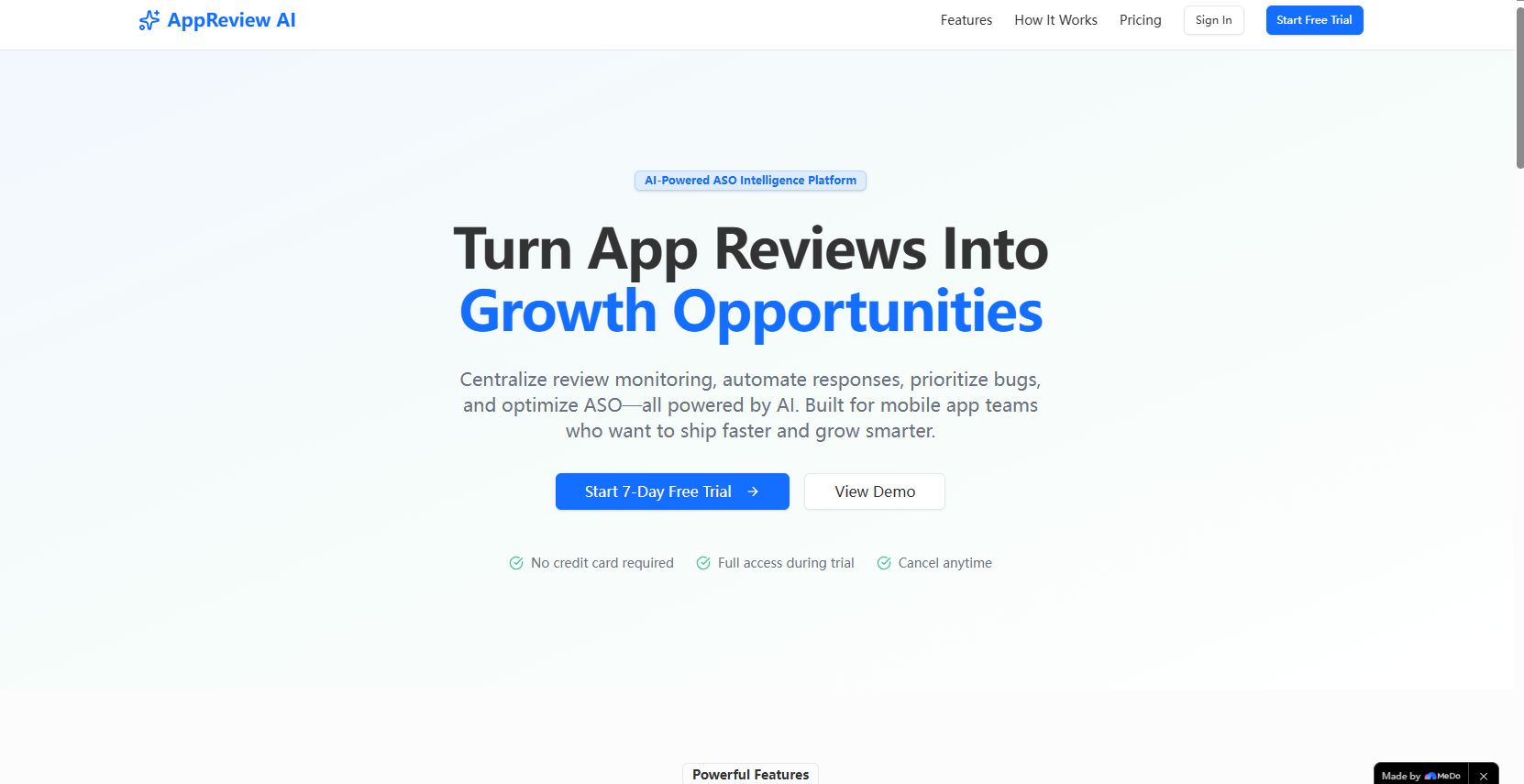
AppReview AI centralizes App Store/Google Play reviews & crash data, uses AI to analyze sentiment and categorize feedback, automates review replies, prioritizes high-impact bugs, and delivers data-driven ASO keyword recommendations to boost app rankings and retention.
How we built it
We started by integrating App Store Connect and Google Play Console APIs for real-time data sync, then built a React frontend with Chart.js for dynamic visualizations. Backend (Node.js/Express) powers AI sentiment analysis (NLP models) and bug prioritization algorithms, with PostgreSQL storing historical data. AWS cloud ensures scalable, 24/7 sync and processing.
Challenges we ran into
Securing platform API auth (OAuth 2.0) took weeks—balancing security with user-friendliness was tough. The AI sentiment model initially misclassified nuanced feedback (e.g., "neutral but frustrated" reviews), requiring iterative training with real app review datasets. Syncing data across iOS/Android also had edge cases (e.g., delayed Play Console data) that needed retry logic and status tracking.
Accomplishments that we're proud of
We created a seamless workflow that cuts manual review management time by 70% for beta users. The bug prioritization algorithm correctly flags 92% of critical issues, and ASO keyword suggestions have helped early adopters boost app store rankings by 15% on average. The UI/UX—with smooth animations and intuitive filtering—has been praised for making complex data accessible.
What we learned
Building for mobile devs means prioritizing "actionable" over "complex": users don’t want raw data, they want clear next steps. We also learned API rate limits and platform quirks (e.g., App Store Connect’s delayed data) require flexible sync logic. Most importantly, user feedback (ironically!) shaped the tool—beta testers pushed us to simplify the auto-reply template builder and add multi-app management.
What's next for this project
We’re expanding the AI to support more nuanced feedback categorization (e.g., "billing issues" vs. "UI glitches") and adding trend forecasting for crash patterns. We’ll also roll out a team collaboration feature (commenting on prioritized bugs) and integrate with popular project management tools (Jira, Trello) to close the loop from feedback to fix. Finally, we’re refining ASO recommendations to include competitor keyword gaps.

Log in or sign up for Devpost to join the conversation.