Inspiration
Appointment Connect: Digitise the process, not the patient.
Changing an NHS outpatient appointment should be simple. Yet patients can spend 20–30 minutes waiting on the telephone, be disconnected, and have to try again days later. An appointment that could have been released for another patient may remain unused.
The project grew out of my own experiences navigating NHS outpatient care across multiple specialties, and a concern that administrative barriers are too often mistaken for a lack of patient engagement.
Research into NHS appointment administration, including patient survey findings from The King's Fund, helped reinforce the importance of examining the entire patient journey, not simply the final appointment outcome.
I wanted to explore a different question: What if we redesigned the administrative process rather than asking patients and staff to work harder to navigate it?
What it does
Appointment Connect is a working prototype of a coordinated outpatient appointment-rescheduling workflow.
It demonstrates how:
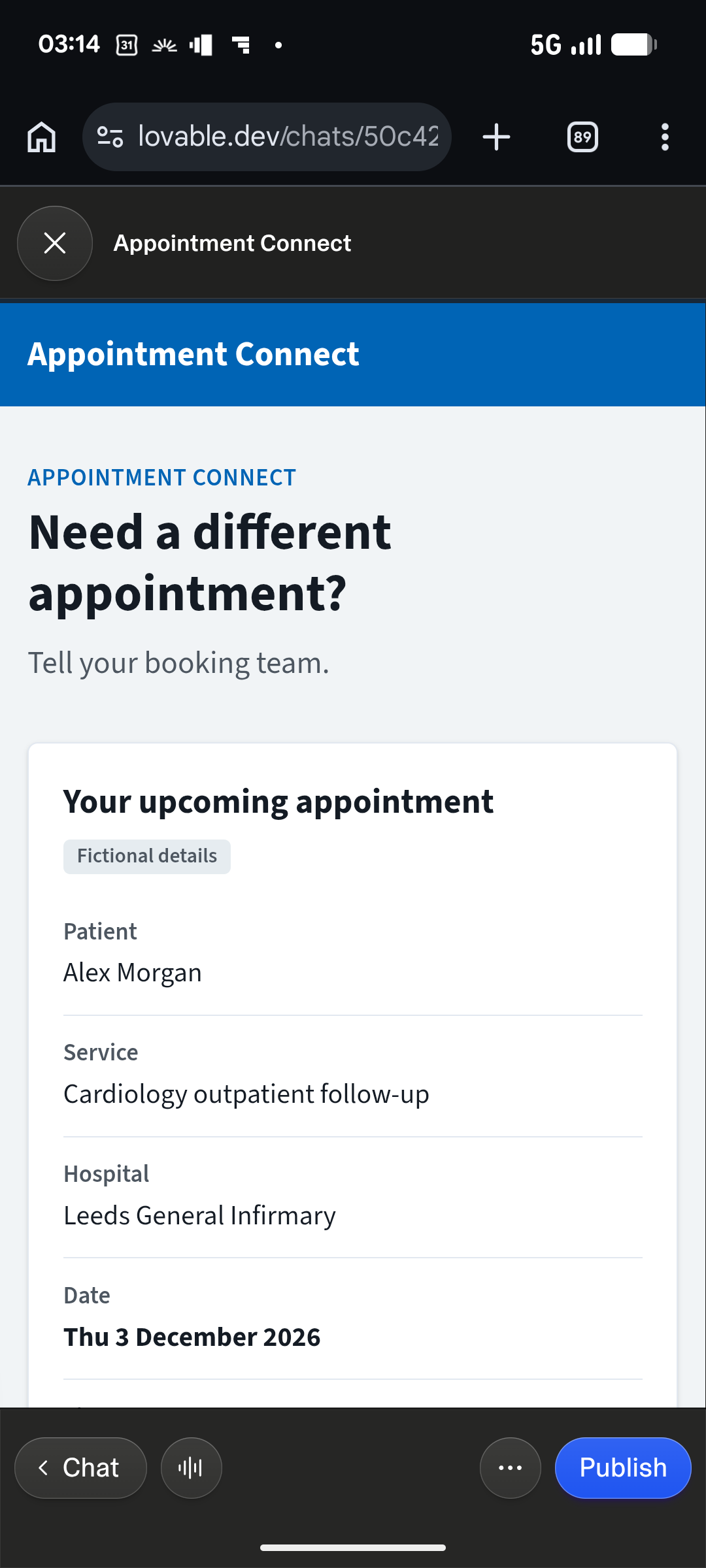
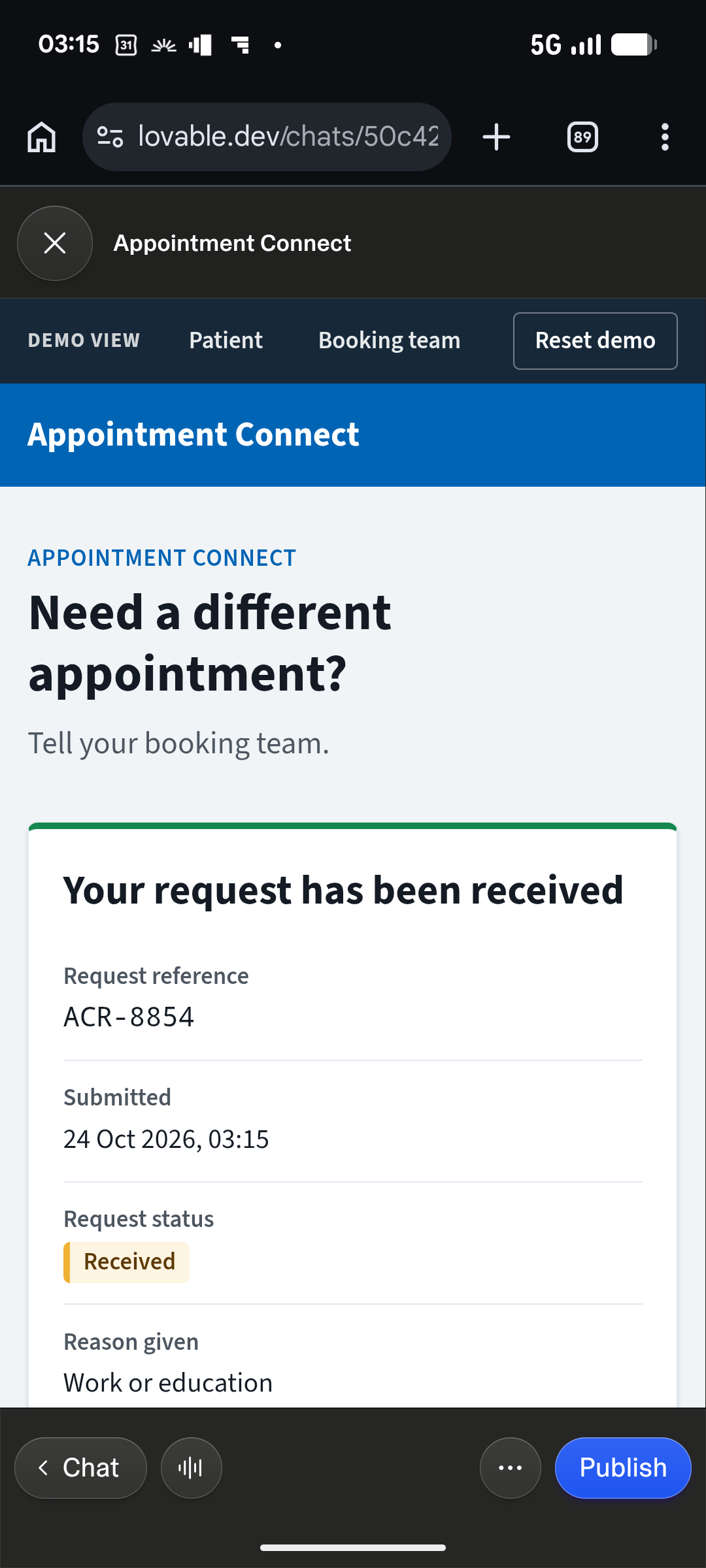
- A patient can submit an appointment-change request.
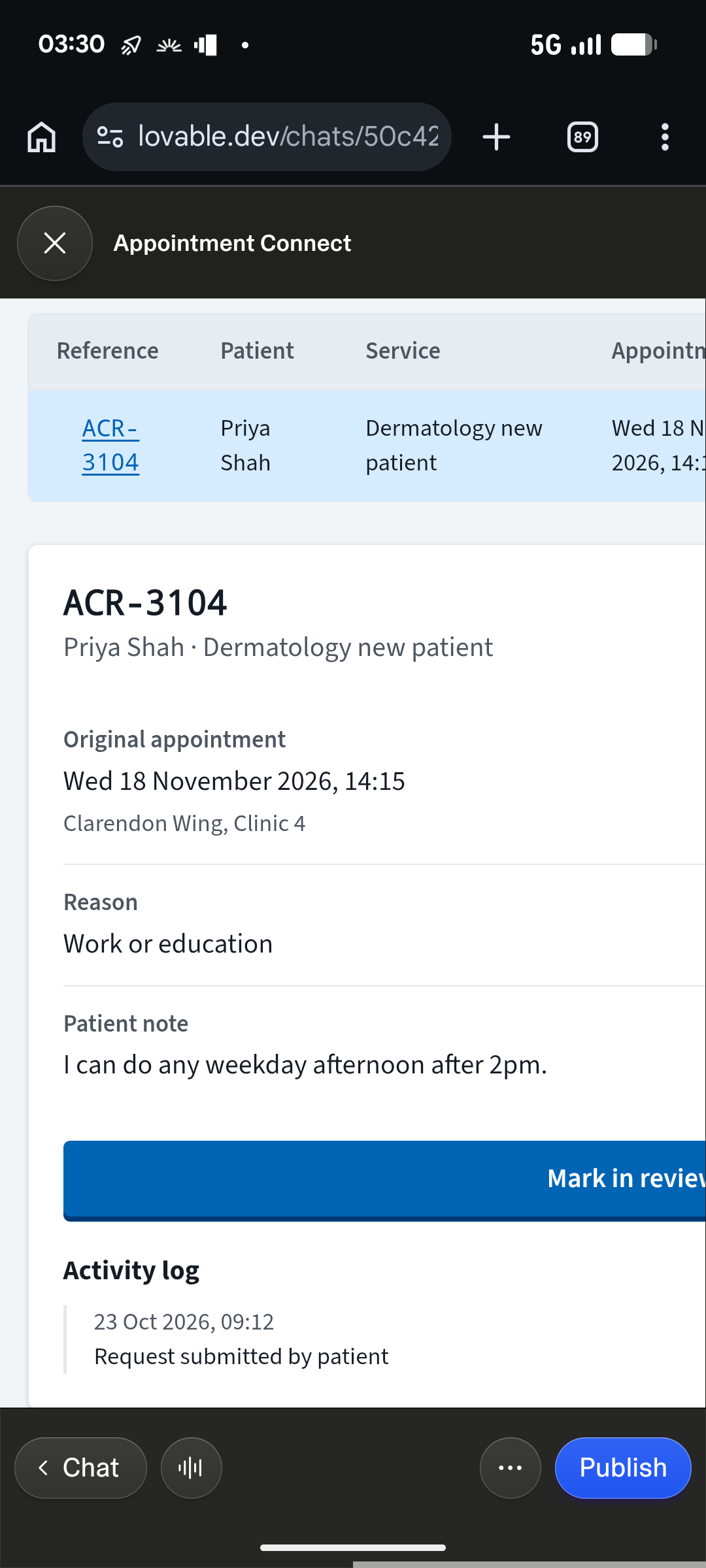
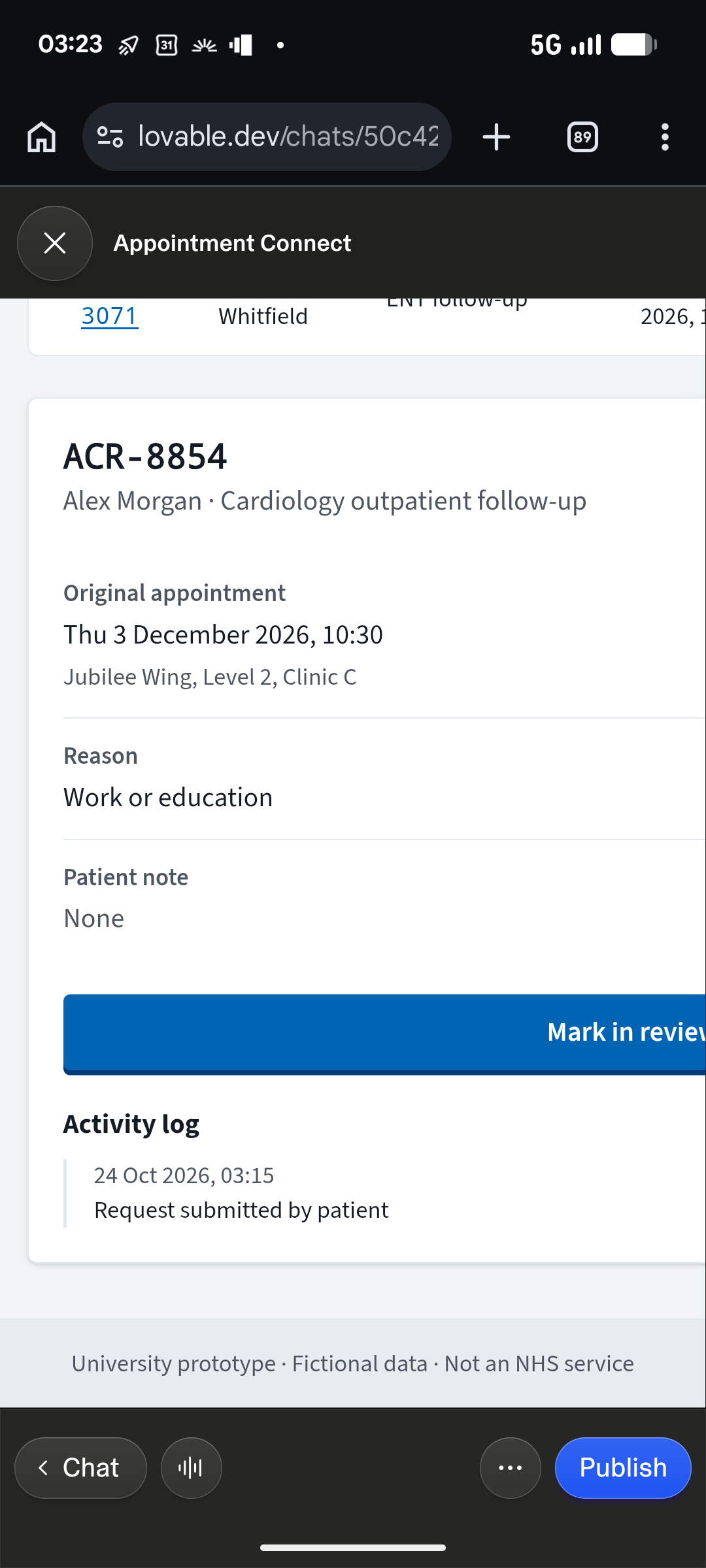
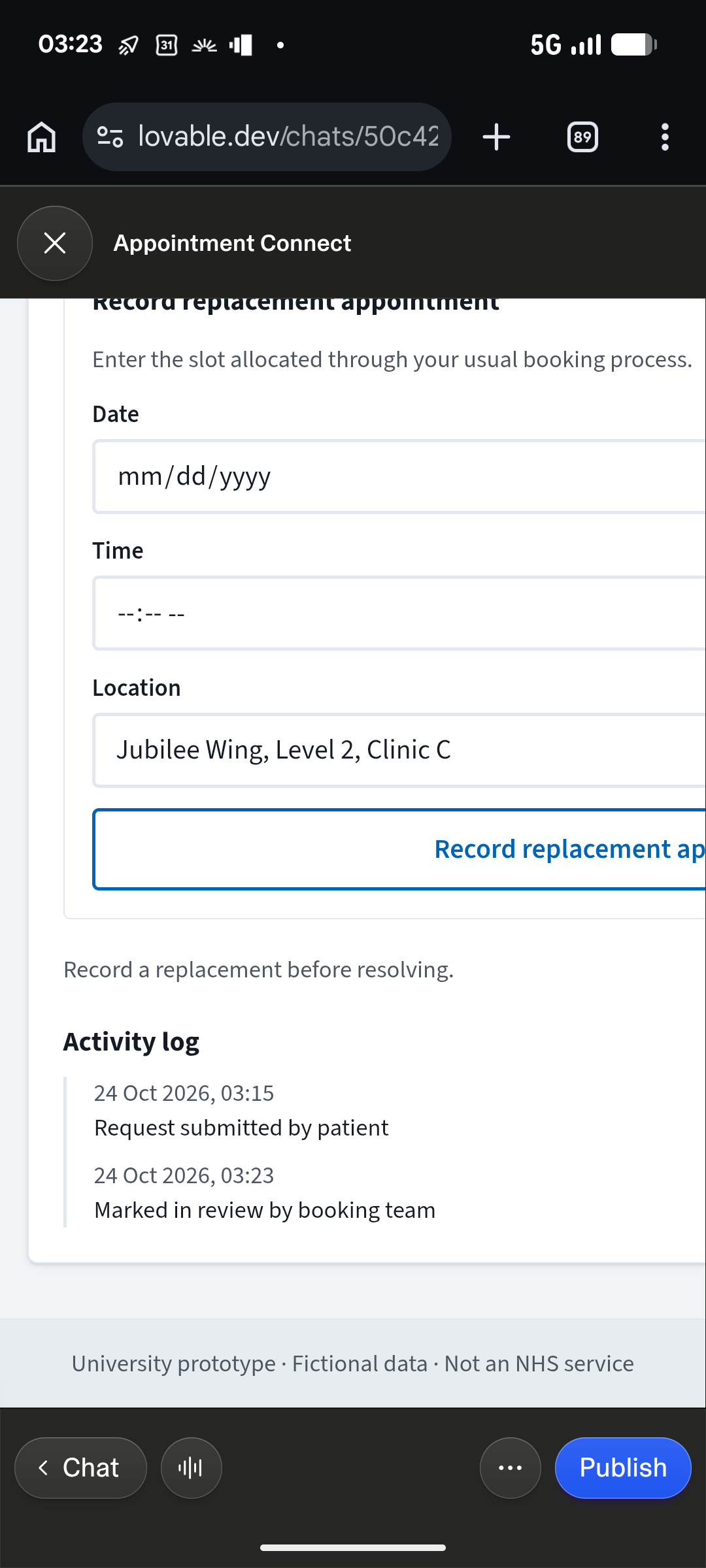
- A booking team can receive and manage requests through a shared dashboard.
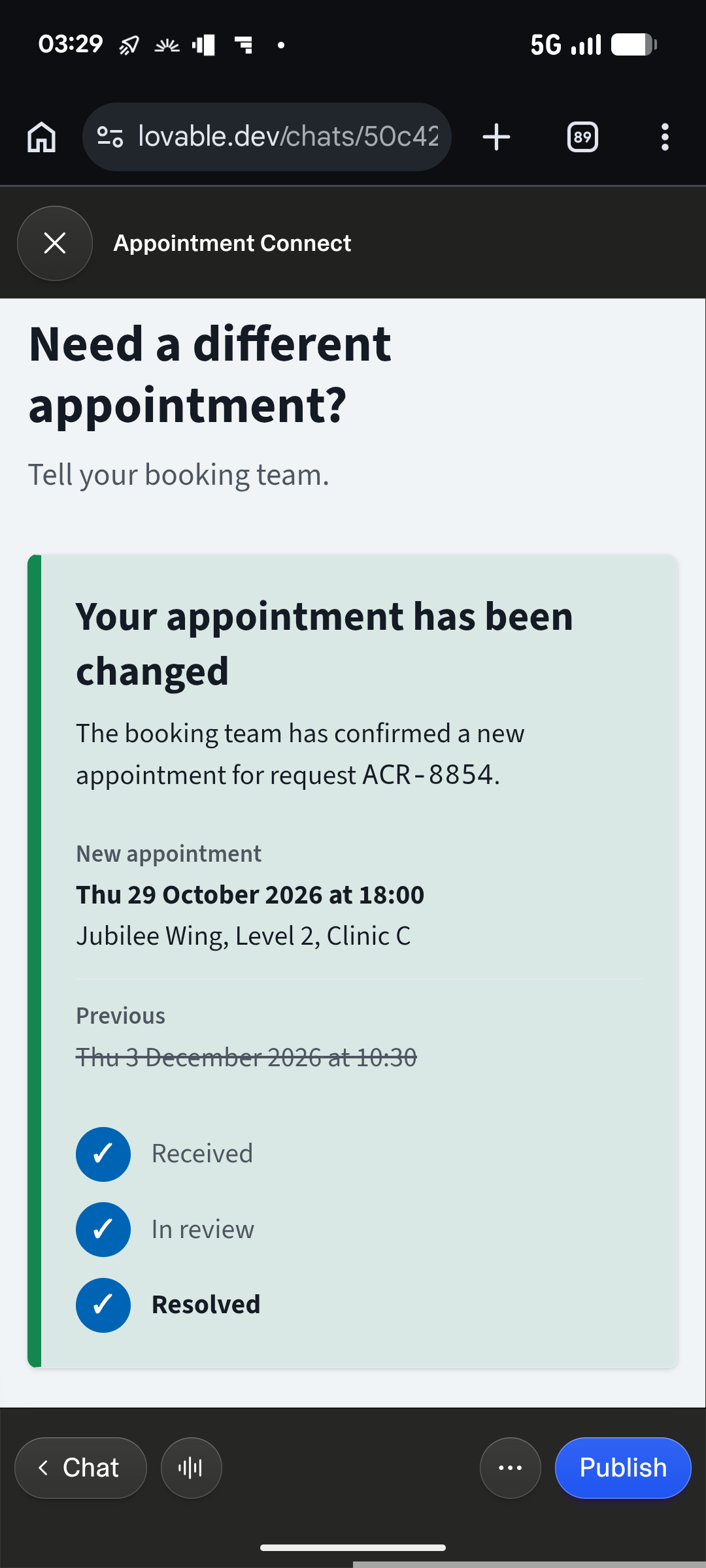
- An alternative appointment can be offered.
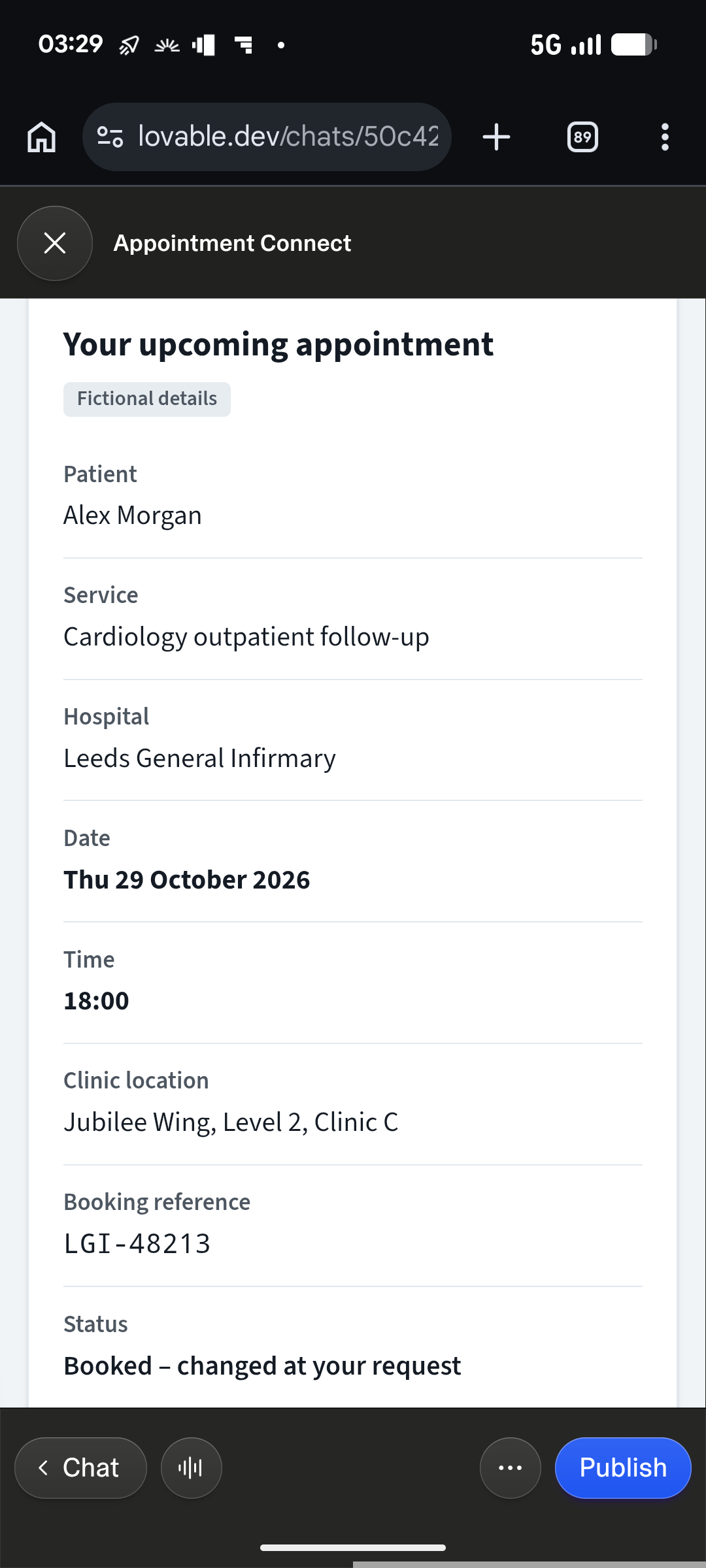
- The patient can confirm the new appointment and see its updated status.
The aim is to reduce unnecessary telephone traffic, make requests visible and actionable, and help the NHS recover appointment capacity that might otherwise be lost.
Importantly, this is not about eliminating telephone support. It is about making telephone support more accessible by reducing avoidable administrative calls.
The same underlying workflow could eventually support requests made online, by telephone, in person, or through an authorised helper.
How I built it
I began by exploring research into NHS outpatient administration, patient experience, missed appointments, access and operational capacity.
I used NotebookLM to synthesise research sources and develop an evidence-informed understanding of the problem. I then used ChatGPT to explore the service design, workflow, accessibility considerations and operational modelling.
Using Lovable, I developed a working interactive prototype that demonstrates the patient and booking-team journey.
I tested the end-to-end flow, from submitting a request through to offering and confirming a replacement appointment.
The emphasis was on designing a coherent service process rather than simply producing another appointment-booking interface.
Challenges and what I learned
The biggest challenge was recognising that appointment rescheduling is not merely a scheduling problem.
It is also a problem of communication, administrative workload, fragmented information systems, patient access and clinical responsibility.
A patient who cannot reach a booking team may be trying very hard to engage with healthcare, even though that effort is invisible to the hospital's appointment records.
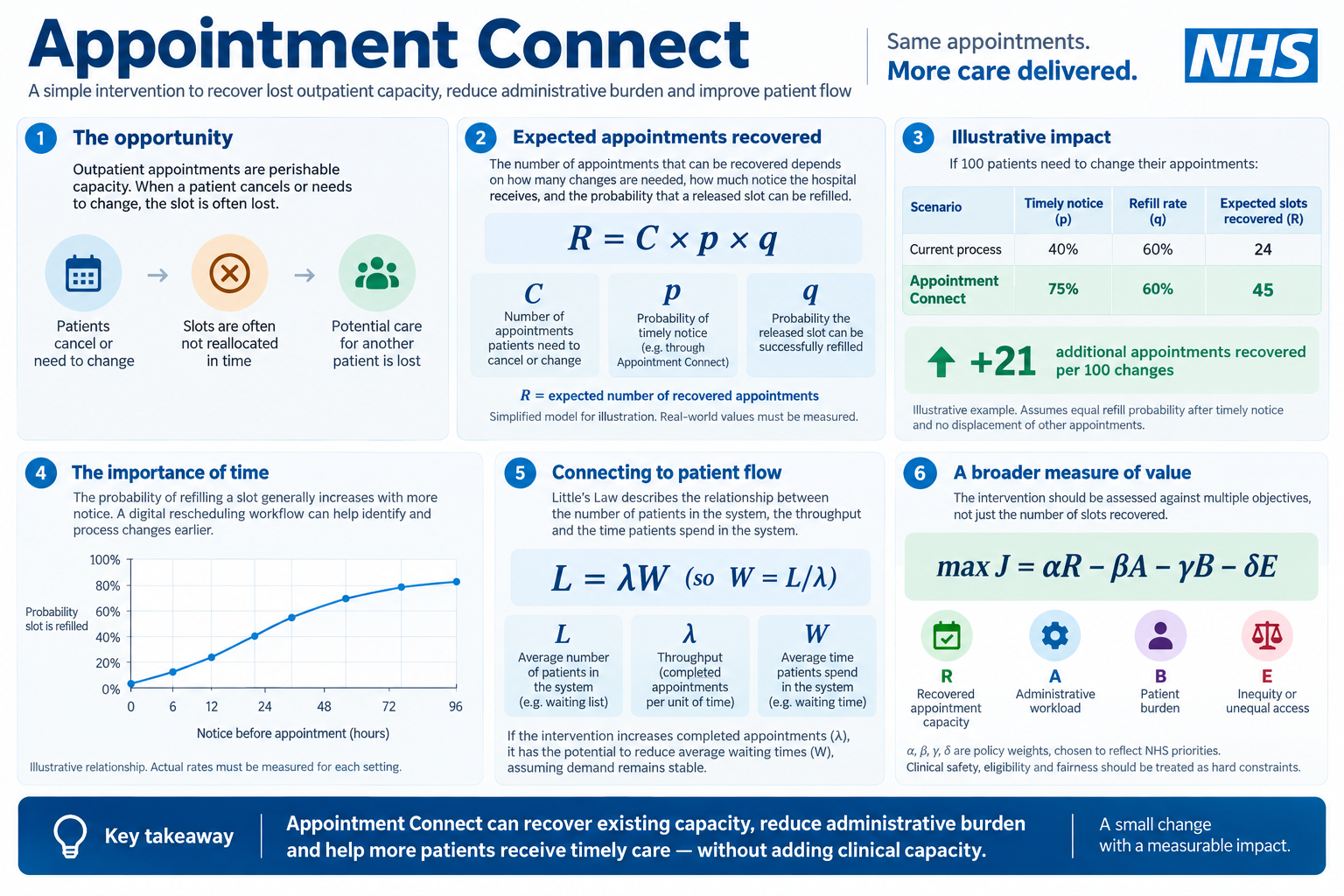
I also explored how earlier notification of appointment changes could improve the chances of reallocating available slots. This suggests potential operational benefits, although these would require testing with real service data.
The prototype deliberately avoids making clinical decisions. Its purpose is to improve the administrative workflow and ensure that appropriate exceptions can be escalated to healthcare professionals.
Two principles guided the project:
Digitise the process, not the patient.
Don't be a hero. Good systems should not depend on extraordinary effort from patients or staff simply to accomplish routine tasks.
What's next?
Appointment Connect is a hackathon prototype, not a live NHS service.
The next step would be to test its assumptions with patients, booking teams and clinical administrators, examine how it could integrate with existing NHS systems, and evaluate its effects on accessibility, telephone waiting times, administrative workload and recovered appointment capacity.
The ambition is simple: make it easier for patients to manage their care, easier for staff to support them, and harder for valuable NHS capacity to go to waste.
Built With
- chatgpt
- github
- gitlab
- google-notebook
- lovable

Log in or sign up for Devpost to join the conversation.