What it does
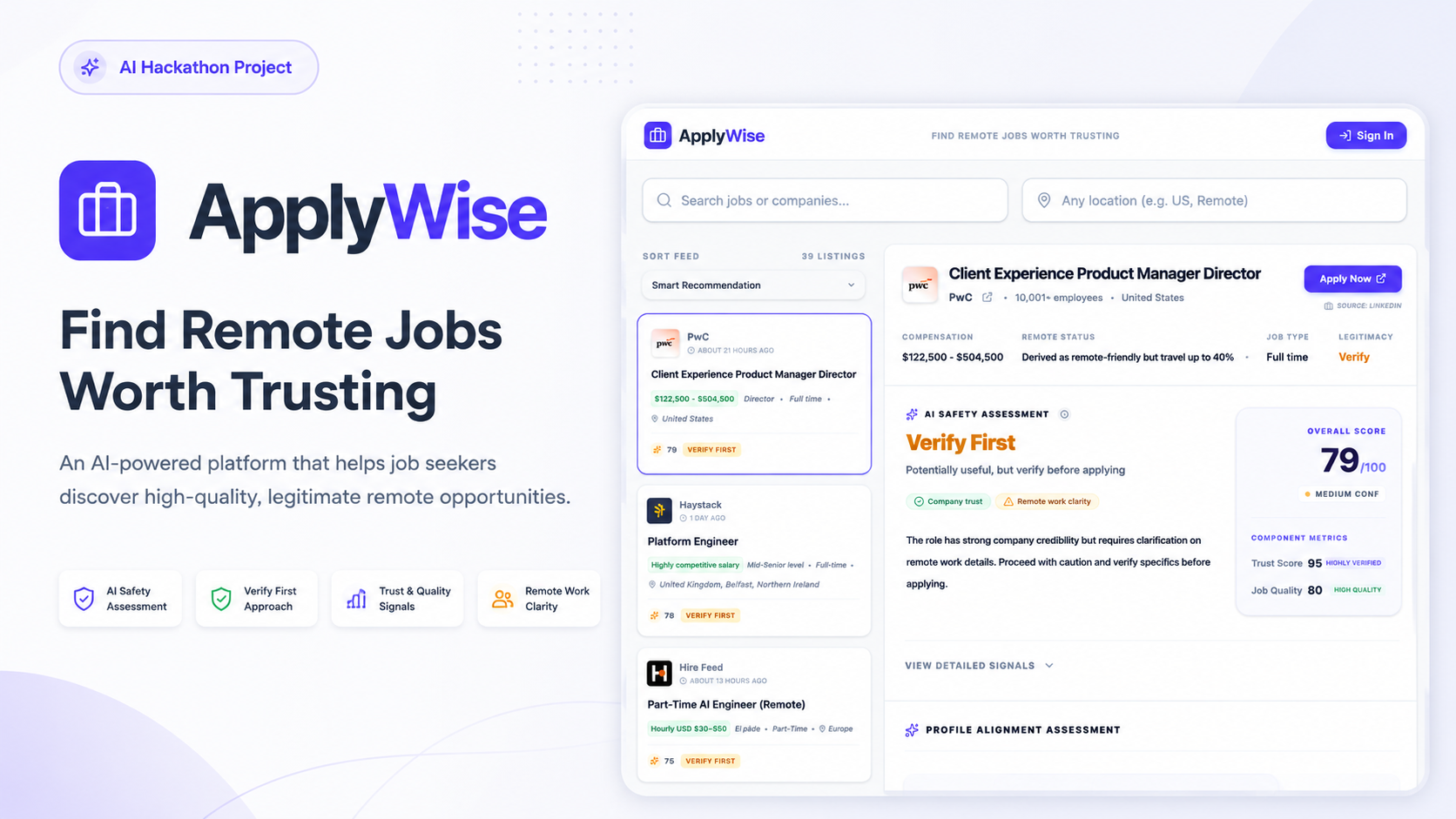
ApplyWise: Find remote jobs worth trusting is an AI-powered platform that helps job seekers discover a curated set of high-quality, legitimate remote job opportunities. Instead of showing every available posting, ApplyWise continuously fetches remote jobs from job sources, filters out risky or low-quality listings, and ranks the remaining opportunities based on evidence-driven analysis.
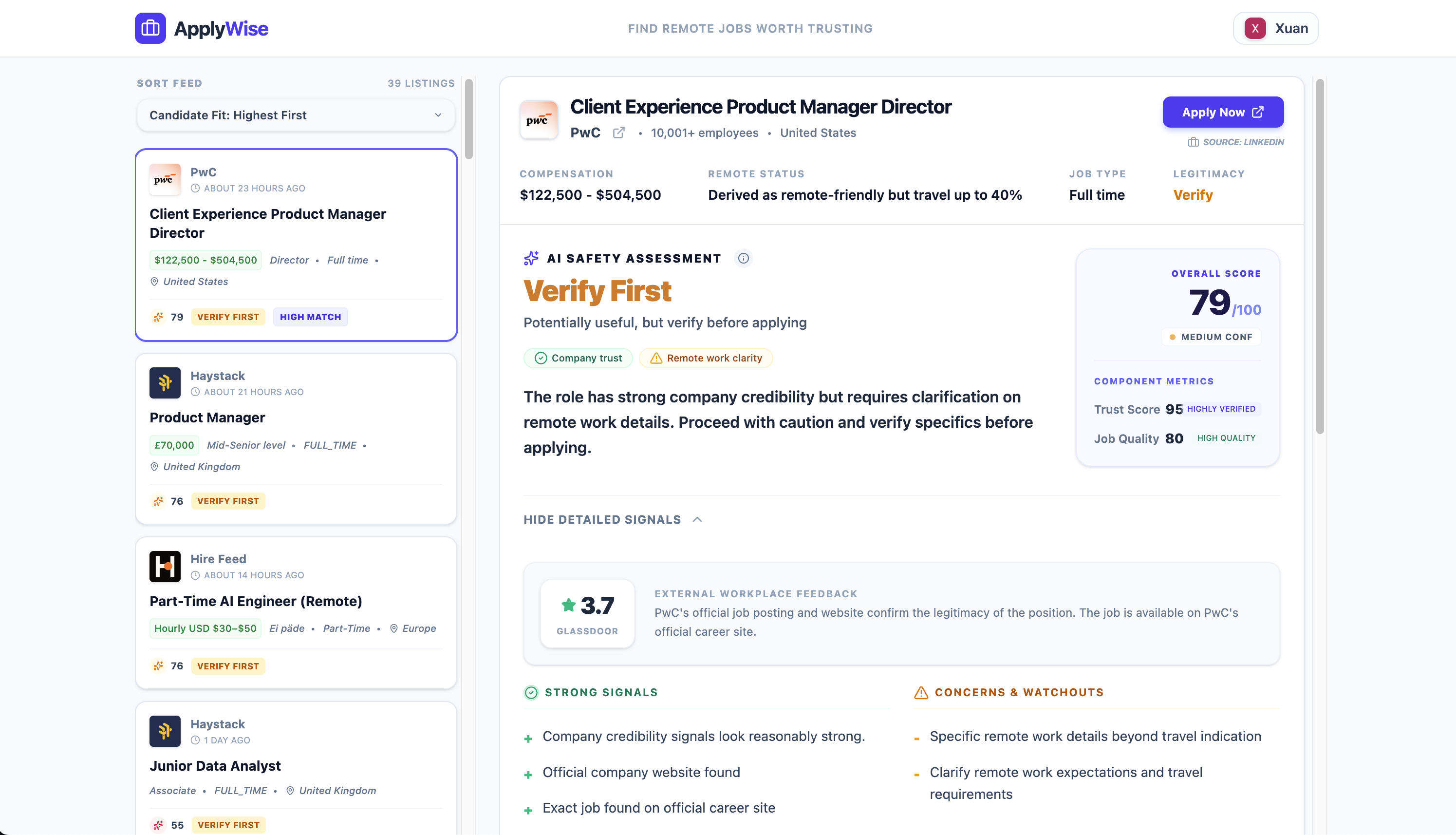
Each job is evaluated across multiple dimensions, including company credibility, application path safety, remote-work authenticity, posting freshness, role specificity, job quality, and external evidence consistency. For every recommended role, ApplyWise explains why the job made the list, what signals support its legitimacy, and what users may still want to verify before applying.
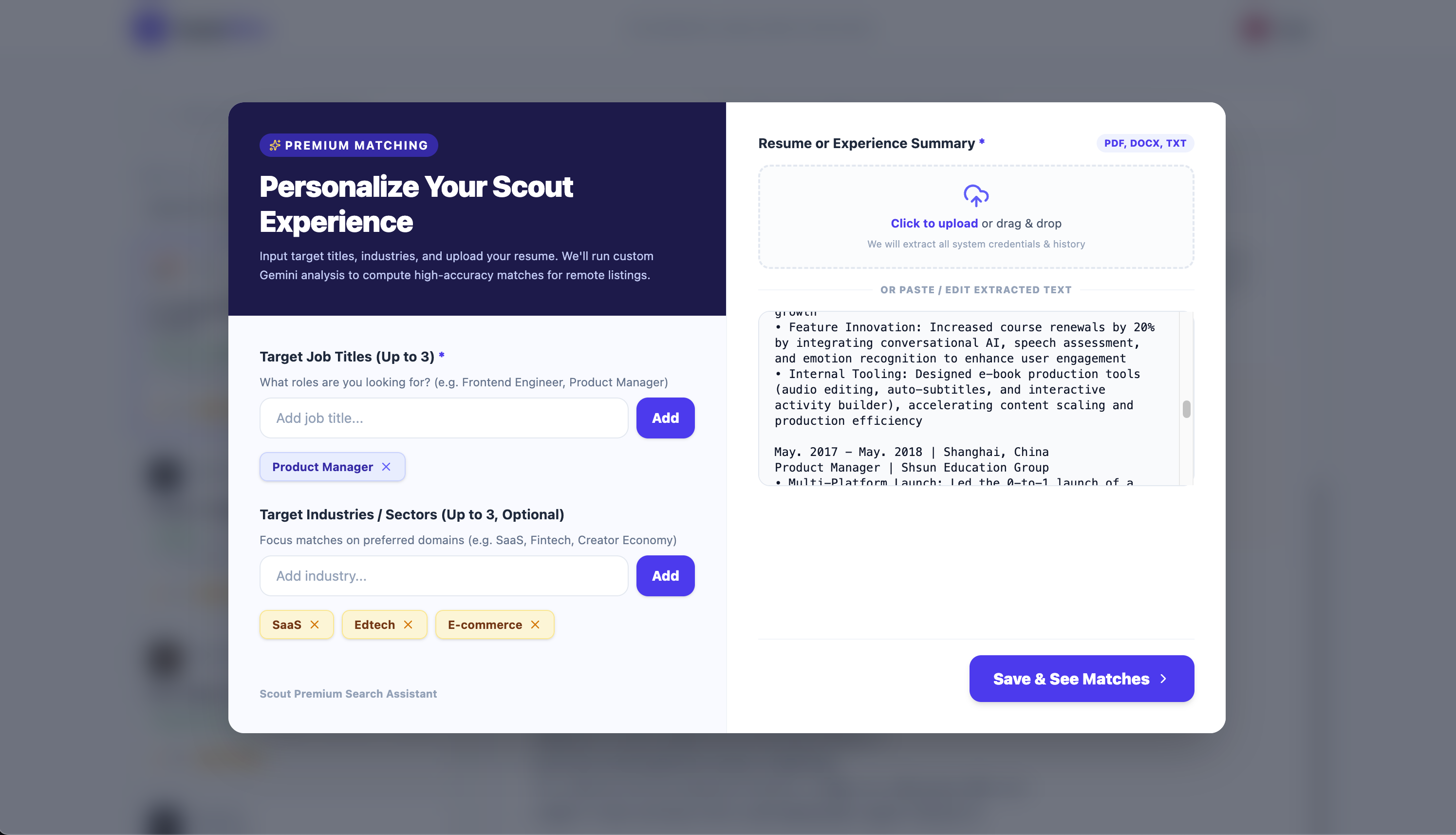
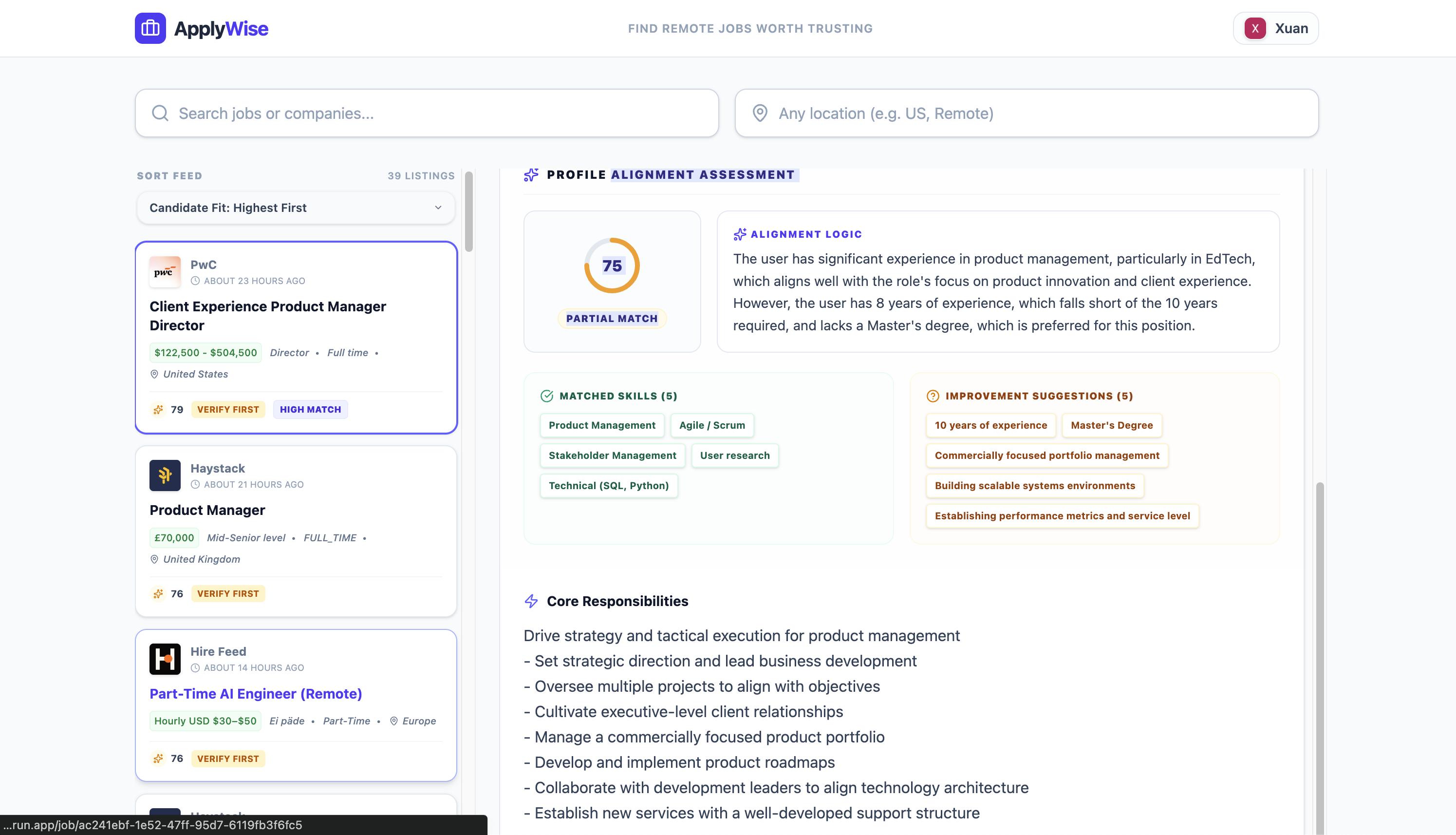
After users complete their profile and upload a resume, ApplyWise adds a personalized matching layer by comparing job requirements against the user’s background, target roles, and experience. This helps users not only find trustworthy remote jobs, but also prioritize the ones where they are more likely to be a strong fit. The goal is to support safer, smarter, and more strategic application decisions.
Why we built it
We built ApplyWise from our own experience as job seekers. We often struggled to discover newly posted opportunities in time, while many job boards were filled with ghost jobs, outdated listings, misleading “remote” roles, and even scam postings. Even when a job was legitimate, it still took a lot of time to read the description, research the company, verify the application path, understand whether the role was truly remote, and decide whether it was worth applying to.
We wanted to build something that genuinely feels useful for job seekers: a tool that reduces repetitive research work, protects users from risky or misleading postings, and helps them focus their energy on remote opportunities that are real, active, and worth their time.
What technologies we used
We used Google AI Studio vibe coding to build both the frontend and backend of the platform, with workflow orchestration and automation logic supported through n8n. For AI analysis, we used OpenAI APIs to generate structured evaluations of job legitimacy, quality, remote clarity, and candidate fit. The platform integrates third-party APIs such as LinkedIn jobs via RapidAPI for job fetching, along with external evidence checks for company and application-path analysis. For database and backend storage, we used Supabase.
Any challenges we faced
One of the biggest challenges was collaborative vibe coding. Most of our previous AI-assisted development experience came from working solo, but this project required two people to build, merge, and stabilize features together in a fast-moving workflow.
Another challenge was turning a broad problem into a practical decision system. “High-quality and legitimate remote job” is not a simple yes-or-no question. A job can be real but not truly remote, legitimate but stale, safe but low-quality, or promising but missing key information. We had to design a framework that separates risk signals from missing evidence, avoids overclaiming, and gives users clear reasons behind each recommendation.
We first aligned on the overall product direction and divided the system into separate feature modules. Then, through multiple rounds of remixing projects, manual refactoring, prompt iteration, and UI refinement, we gradually combined both sides into a unified platform. The process required a lot of communication and trust. Usually one person would finish a feature, the other would expand on it with new ideas, and then the original developer would refine and stabilize the combined result again. It honestly felt like climbing a mountain together, constantly pulling each other forward step by step.


Log in or sign up for Devpost to join the conversation.