-
-
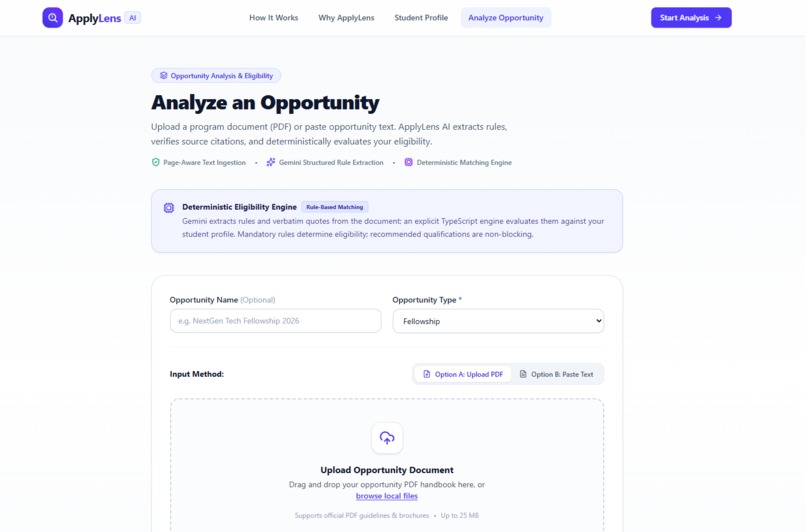
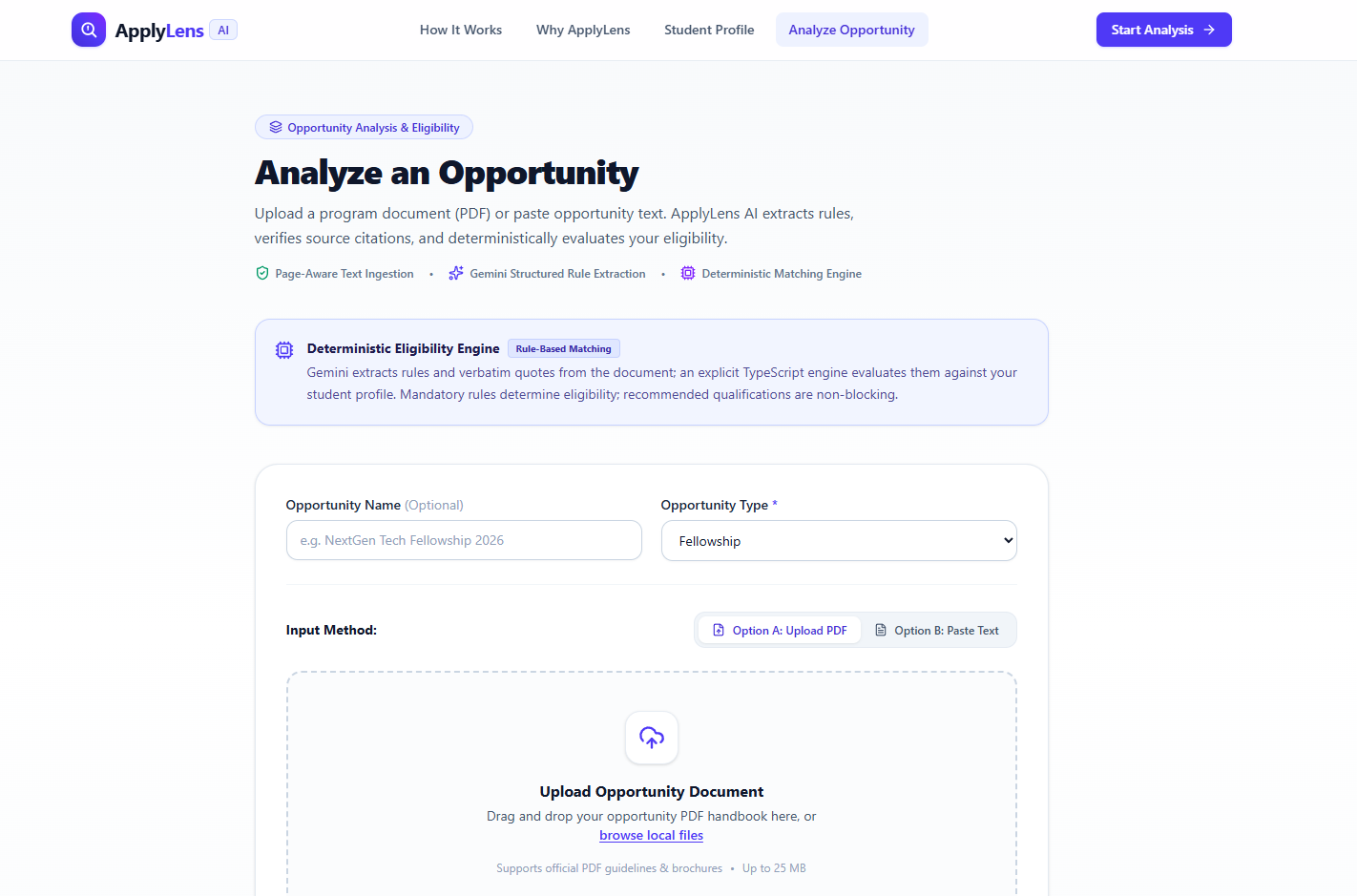
Analyze Opportunity Screen
-
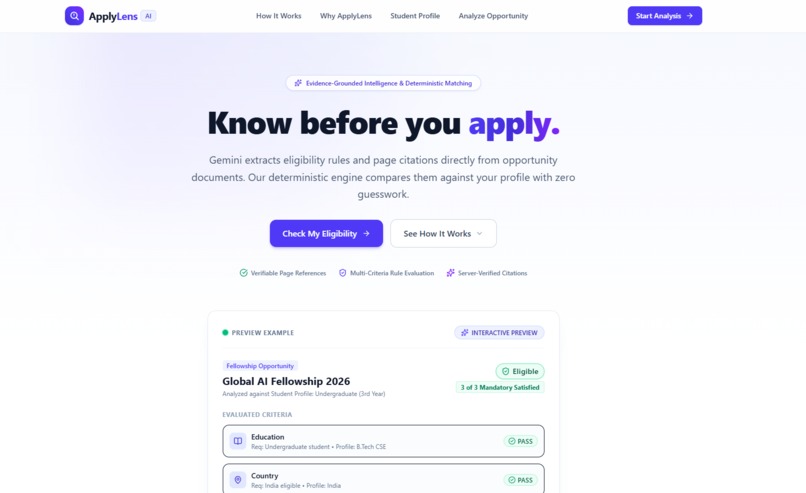
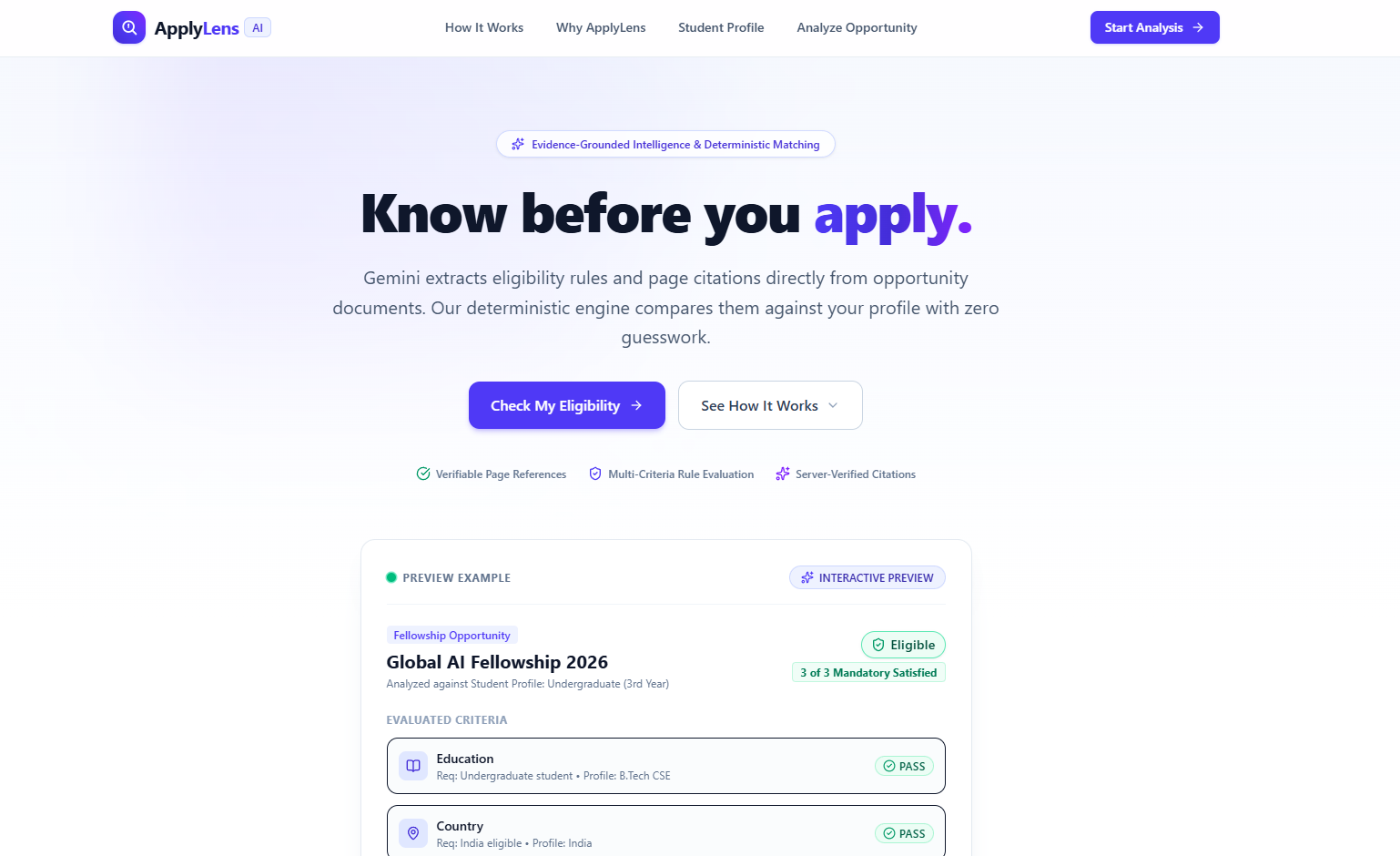
Landing Page
-
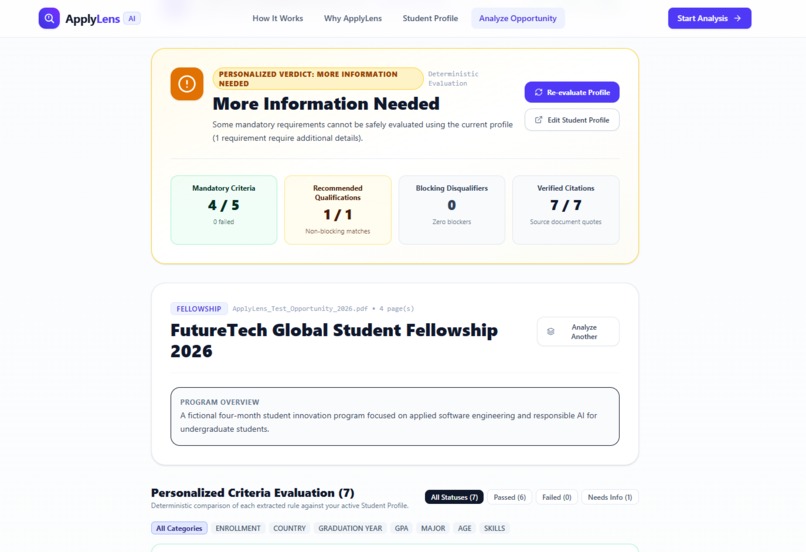
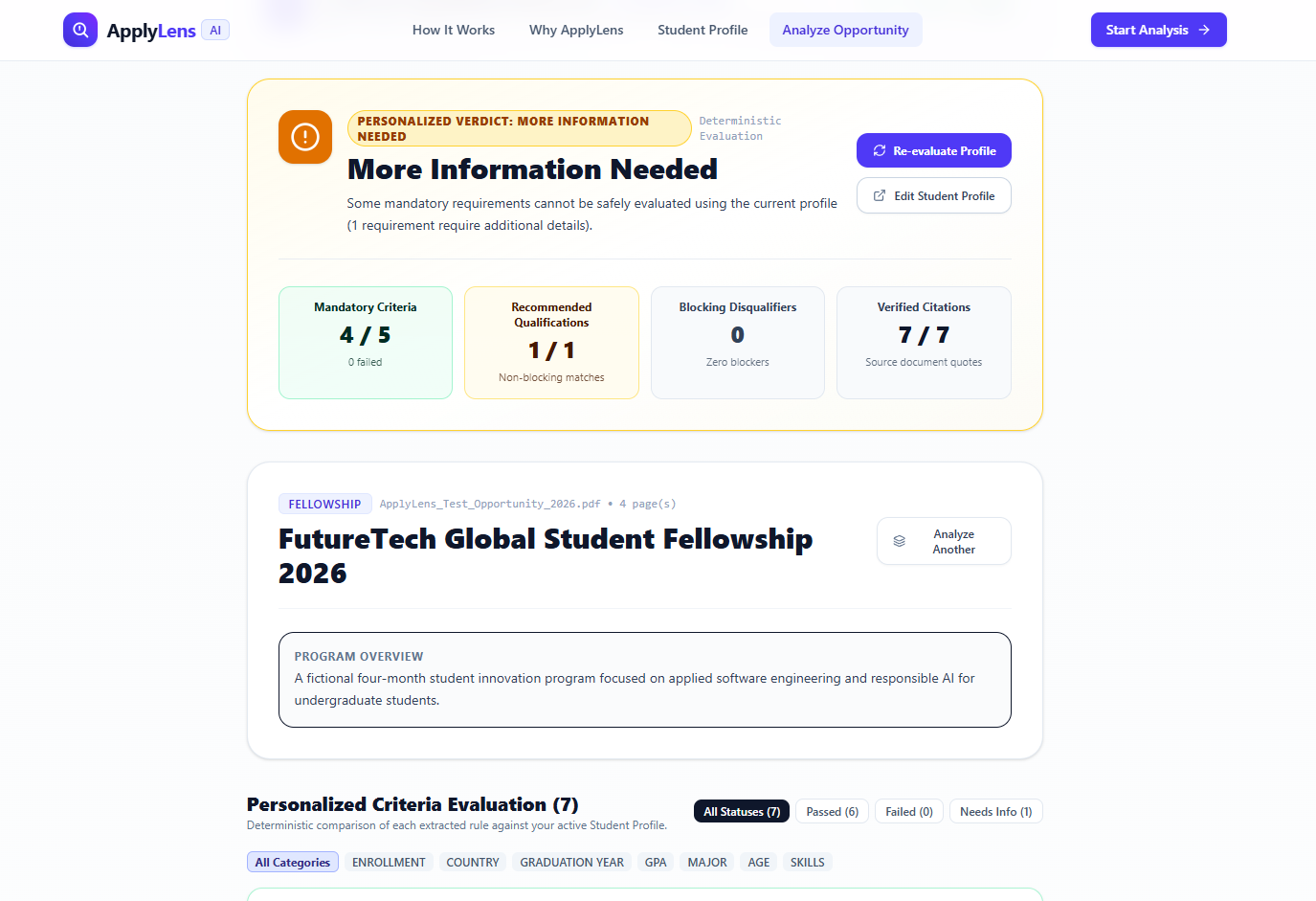
Elegibility criteria-More information Needed
-
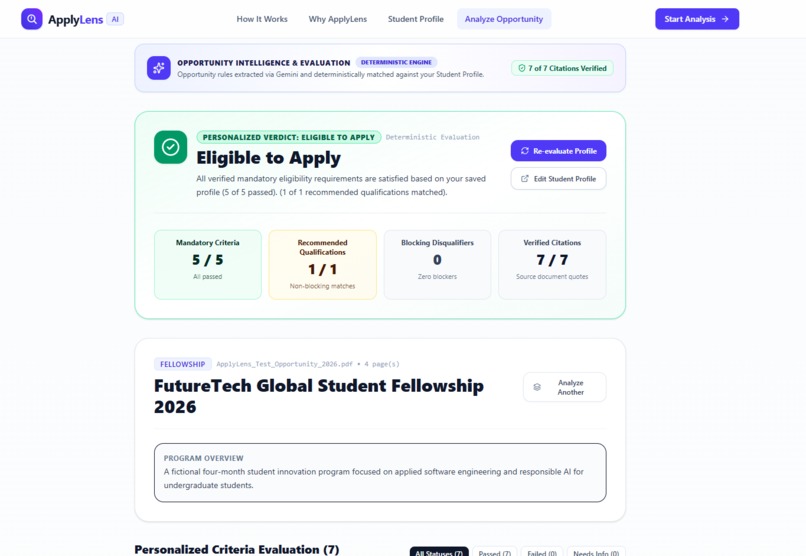
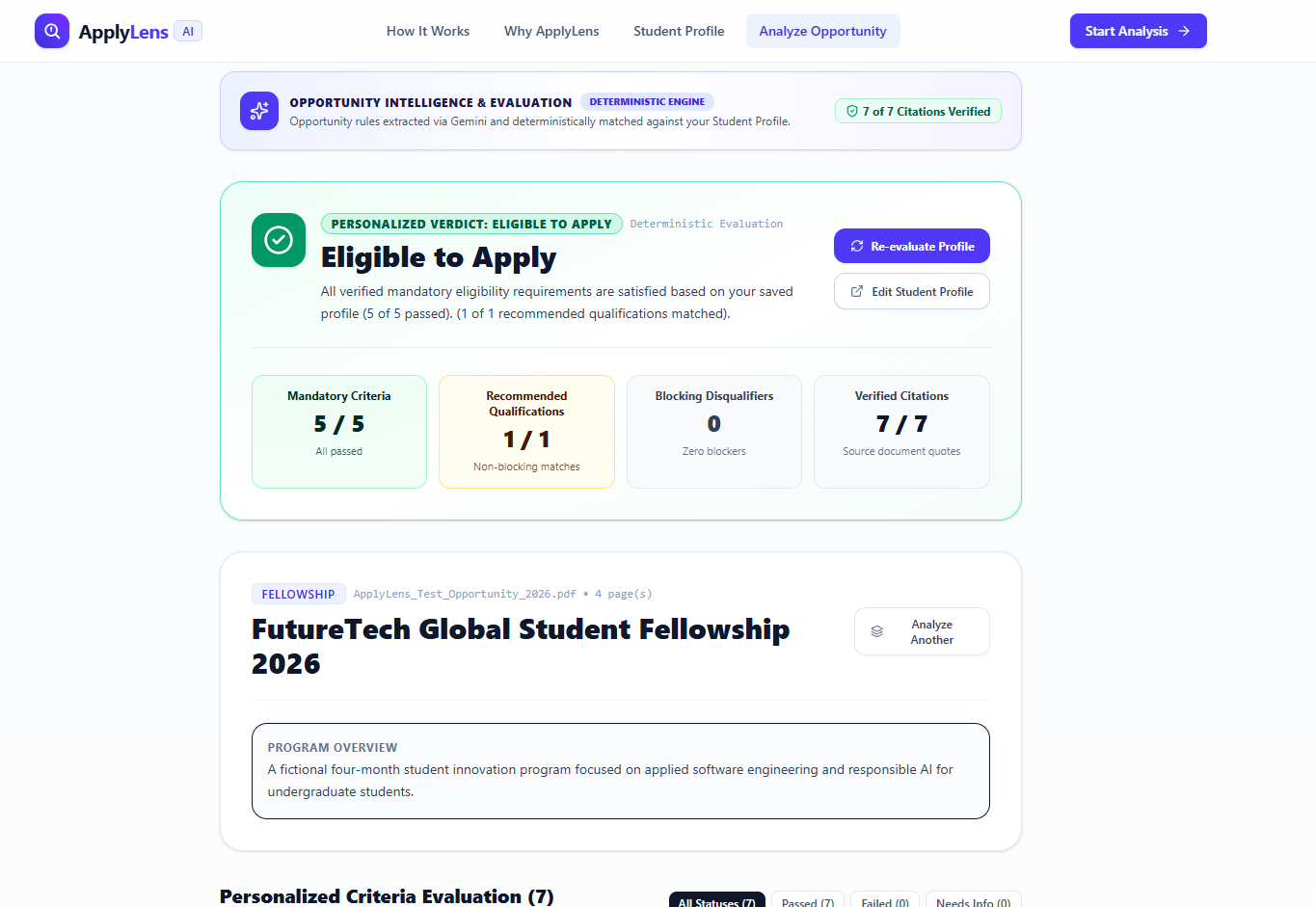
Elegibility criteria-Elegible
-
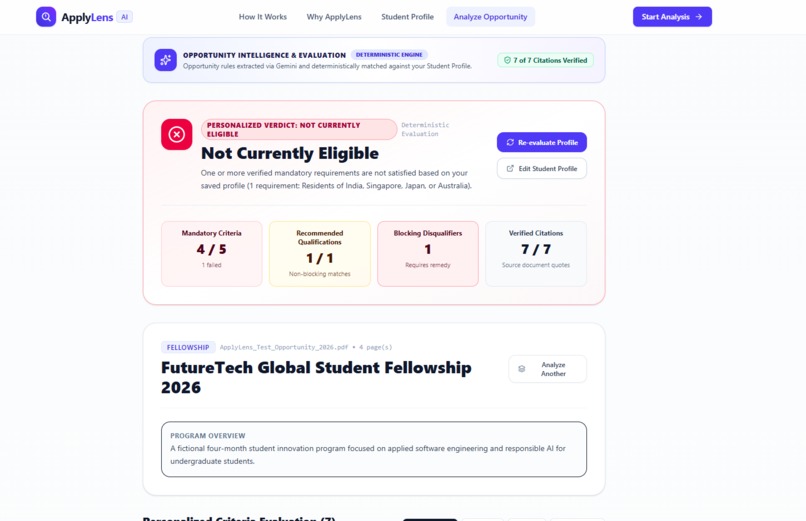
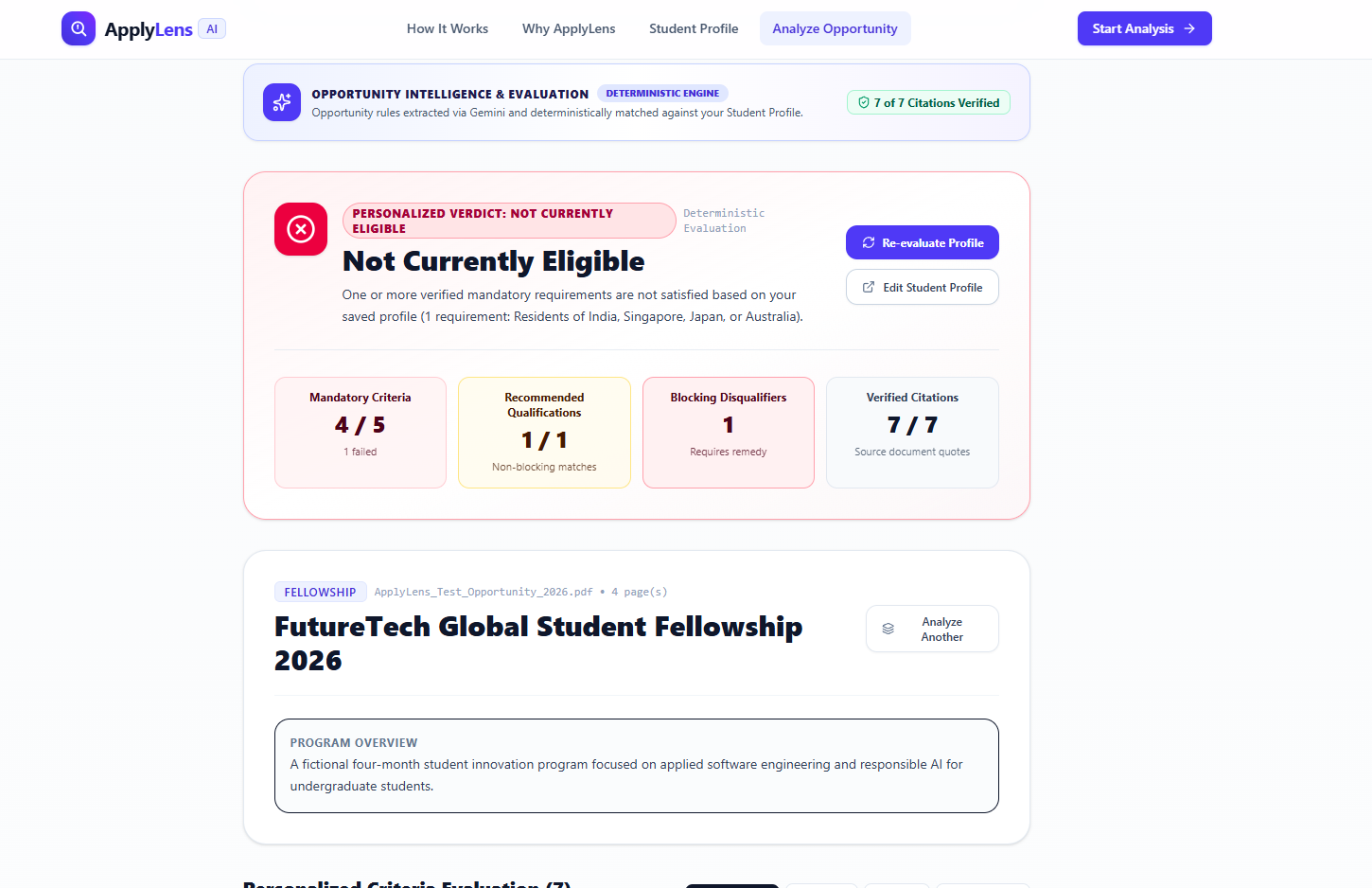
Elegibility criteria-Not elegible
Inspiration
Students often find great scholarships, fellowships, hackathons, and internships, but eligibility information is buried inside long PDFs and complex guidelines. A small clause about graduation year, location, GPA, enrollment status, or age can decide whether someone is eligible. I wanted to build a tool that helps students know before they spend hours preparing an application.
What it does
ApplyLens AI turns opportunity documents into personalized, evidence-backed eligibility decisions.
A user creates a student profile and then uploads an opportunity PDF or pastes its guidelines. ApplyLens extracts the important eligibility requirements, required documents, deadlines, and restrictions. It then compares the verified requirements with the student's profile and returns one of three clear outcomes:
- Eligible to Apply
- Not Currently Eligible
- More Information Needed
Every important criterion can include its original source quotation and page reference, so the user can verify why a decision was made.
How I built it
ApplyLens AI is built with Next.js, React, TypeScript, and Tailwind CSS.
For PDF documents, the application performs page-aware text extraction so evidence can remain linked to its original page. Google Gemini is used for structured document understanding and requirement extraction. The AI output is validated with Zod, and extracted quotations are verified server-side against the original document text.
The final eligibility decision is not generated by the AI model. A deterministic TypeScript engine evaluates verified requirements against the saved student profile using explicit rules for enrollment, country, graduation year, GPA, degree, major, age, skills, and other criteria.
This hybrid design lets AI handle unstructured documents while deterministic code handles the final eligibility decision.
Challenges
The biggest challenges were distinguishing mandatory requirements from recommendations, preserving reliable citations, handling different graduation-date formats, avoiding unsafe GPA assumptions, and dealing with AI API limits. I added requirement-strength classification, citation verification, deterministic comparison rules, and safe NEEDS INFORMATION fallbacks instead of guessing.
What I learned
I learned that AI applications become much more useful when model outputs are grounded, validated, and combined with deterministic software logic. ApplyLens is designed around that principle.
What's next
Future improvements include OCR support for scanned PDFs, support for more complex eligibility rules, richer application-readiness guidance, and downloadable eligibility reports.
Built With
- gemini-api
- github
- google-gemini
- next.js
- node.js
- react
- tailwandcss
- typescript
- vercel
- vitest
- zod

Log in or sign up for Devpost to join the conversation.