Inspiration
Applying for jobs is repetitive and time-consuming. Finding a relevant position is only the first step — candidates still have to open different job portals, fill out the same information repeatedly, answer application questions, and deal with different workflows.
We wanted to build an AI agent that could help with this process while keeping the candidate in control of the final decision.
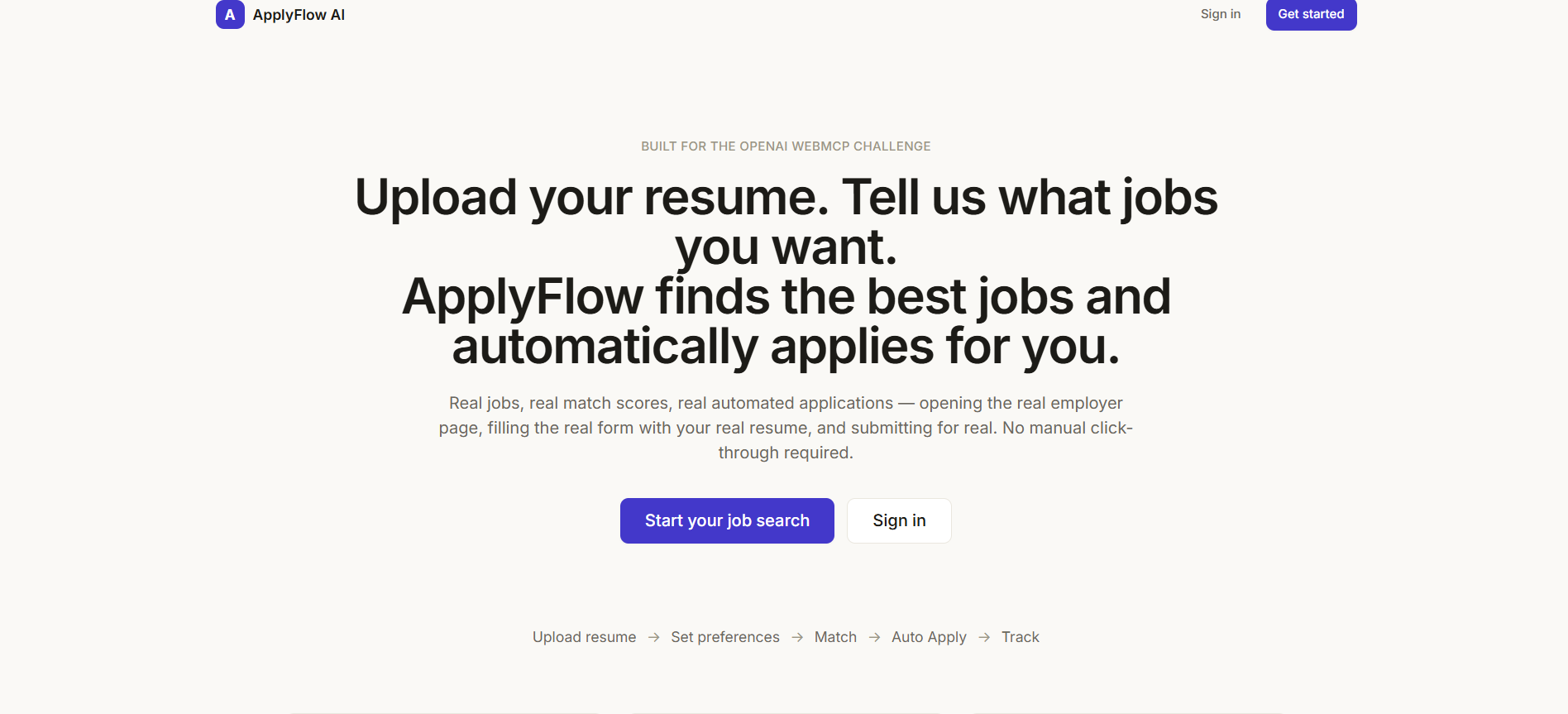
That led us to ApplyFlow AI — a job application agent designed around WebMCP.
What It Does
ApplyFlow AI helps users go from job discovery to a prepared application:
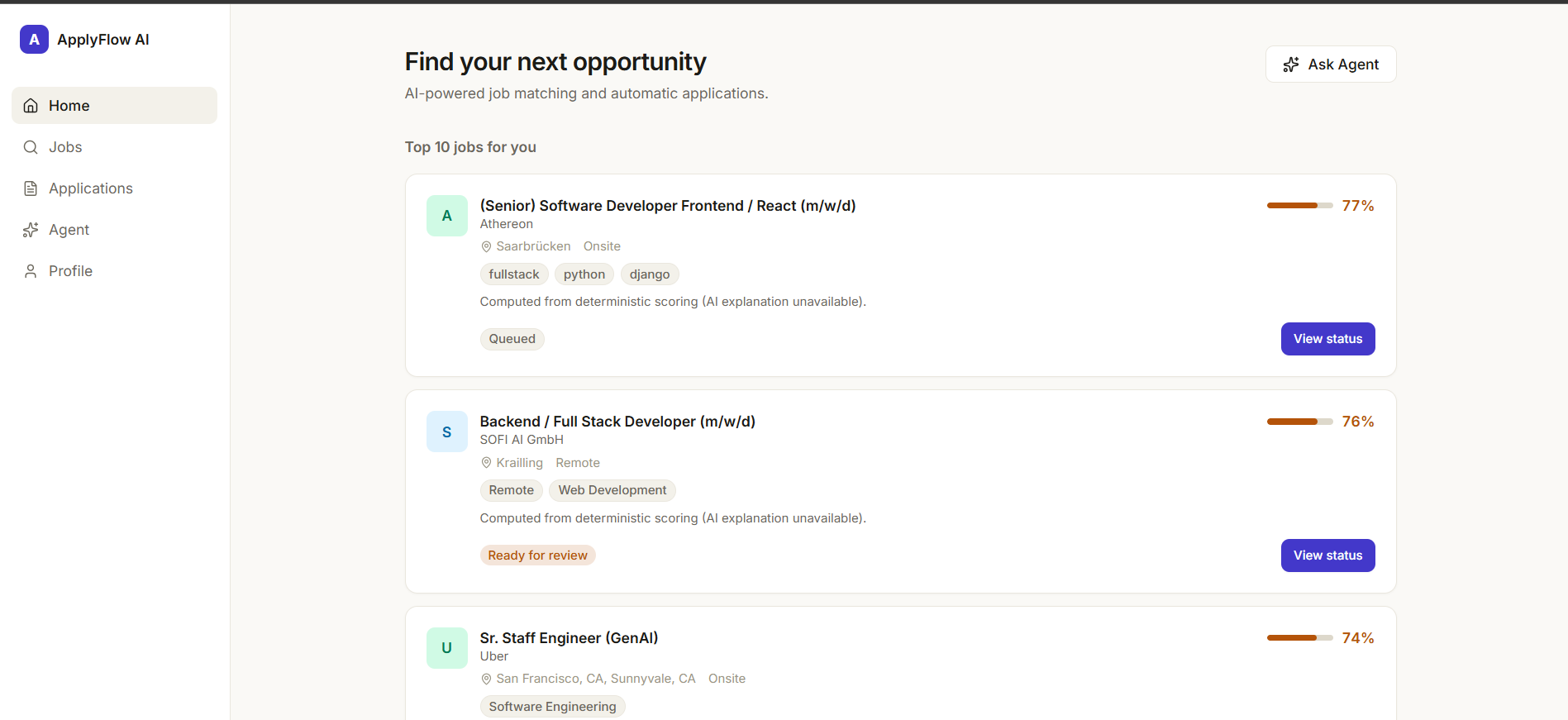
- Find Jobs — discovers real job listings from sources such as RemoteOK and Arbeitnow.
- Smart Matching — compares jobs with the user's resume and preferences and explains why a job is a good match.
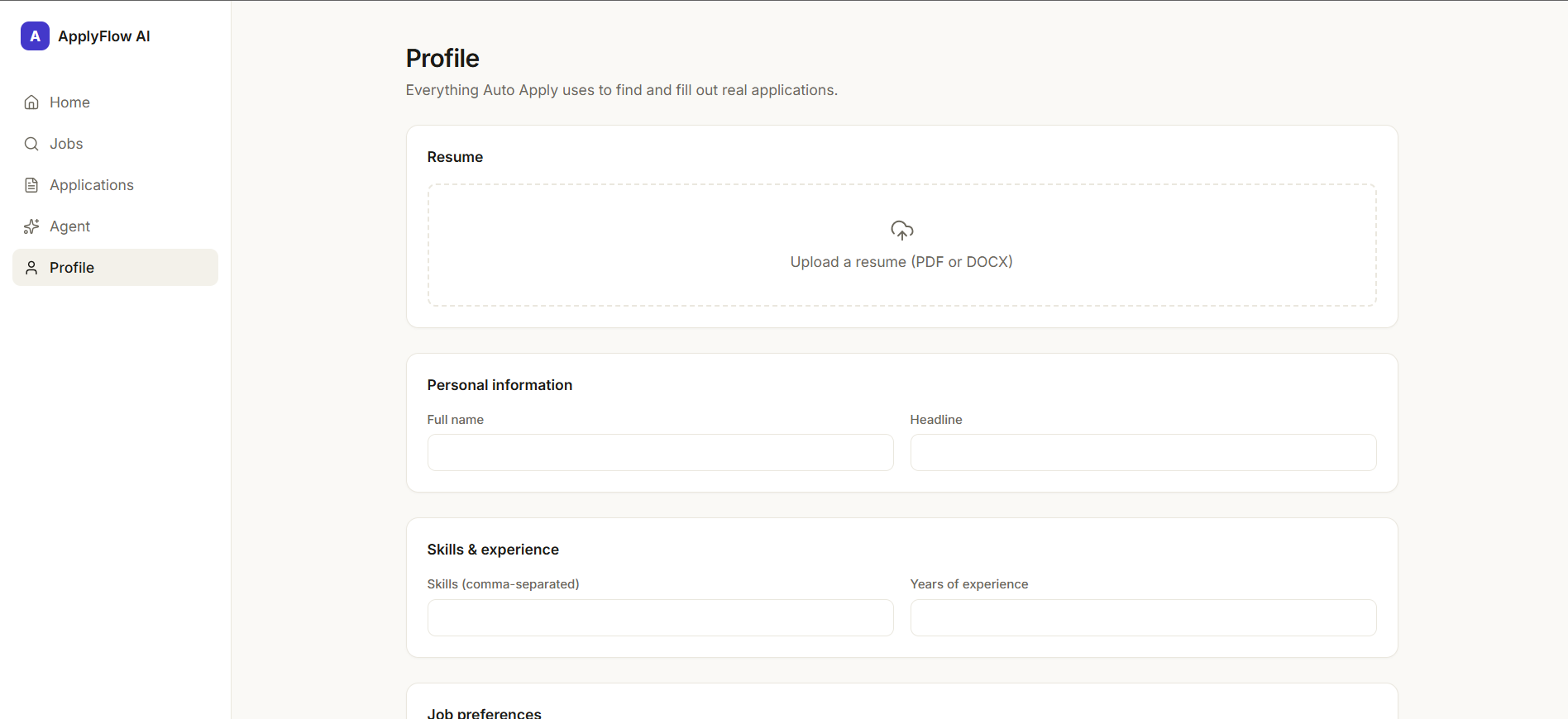
- Prepare Application — creates an application using the user's profile and resume information.
- WebMCP Automation — uses WebMCP tools to interact with supported application workflows in a real browser session.
- Human Review — stops before final submission so the user can review the completed application.
- Approve & Submit — the final submission requires an explicit human action.
The key design principle is simple:
The agent can prepare the application, but the human controls the final submission.
How We Built It
The application is built around an AI-agent workflow with WebMCP as the interface between the agent and browser-based tools.
The system includes:
- Job discovery and normalization
- Resume/profile-based job matching
- Match explanations
- Application preparation
- WebMCP tool integration
- Browser-based form automation
- Application state and automation tracking
- Human approval before submission
- Safety handling for login, MFA, and CAPTCHA situations
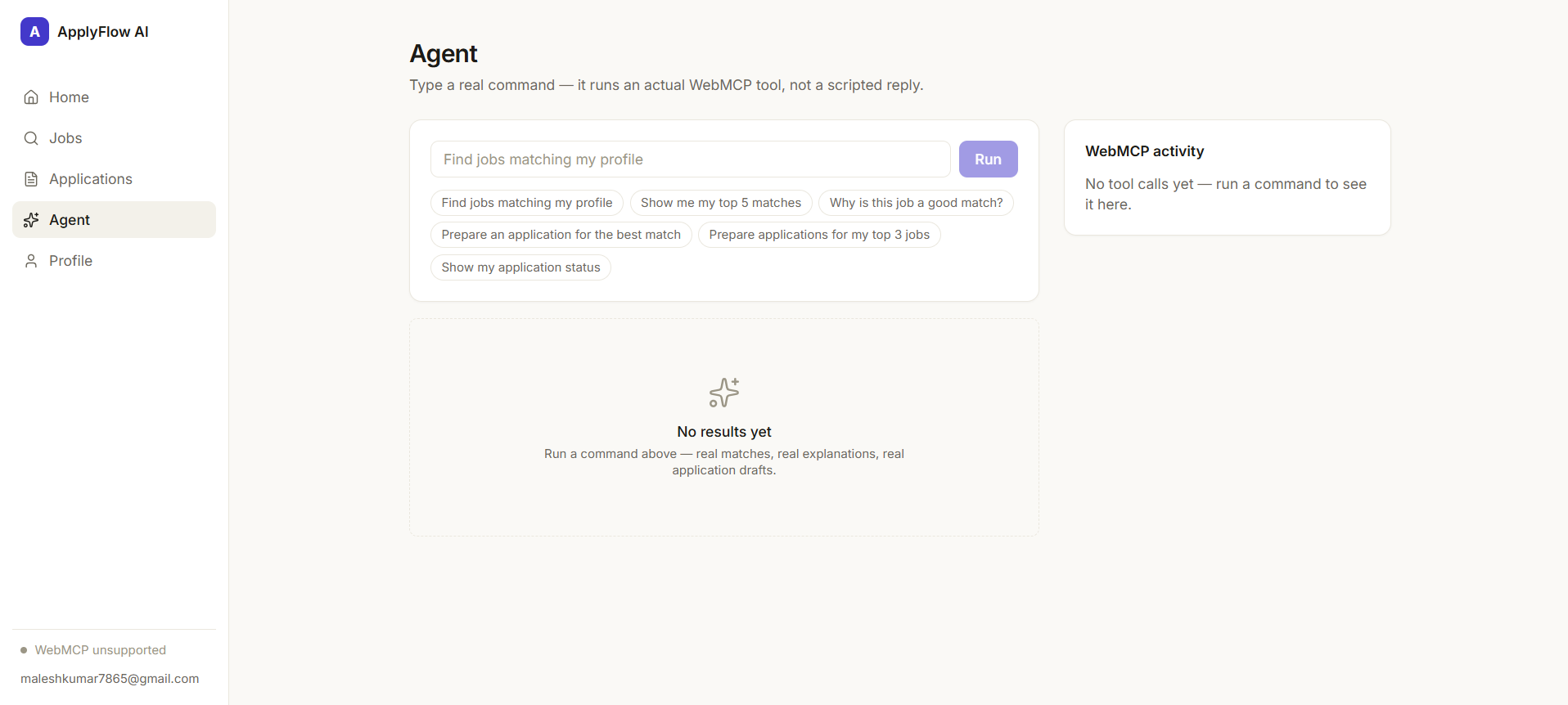
The Agent page provides a natural-language interface where users can give commands such as:
"Find jobs matching my profile."
or
"Prepare an application for the best match."
These requests are translated into authorized WebMCP tool calls such as get_top_matches and prepare_application.
The same backend authorization and application state are used by both the normal user interface and the agent workflow.
Human-in-the-Loop by Design
We intentionally did not expose the final submission action as a WebMCP tool.
The agent can discover a job, prepare the application, open the application page, and fill the form.
But when the application is ready, the workflow stops and asks the user to review it.
Only the user can click Approve & Submit.
This creates a clear boundary between AI automation and an irreversible external action.
Safety
Real job portals can require authentication, MFA, or CAPTCHA challenges.
ApplyFlow AI does not attempt to bypass these protections.
When such a step is detected, the automation pauses and explains why it stopped. The user can then handle the step directly in the real browser session.
This keeps the automation useful without attempting to circumvent website security controls.
Challenges We Faced
One of the biggest challenges was designing an agent that could interact with real application workflows without turning the system into an uncontrolled automation tool.
We had to think carefully about:
- Tool authorization
- Application state
- Human approval boundaries
- Form validation
- Handling different application workflows
- Login and CAPTCHA interruptions
- Keeping the agent's actions observable
Another challenge was making the agent's behavior understandable. Instead of hiding tool execution, we added a WebMCP Activity panel so users can see which tools are being called and what is happening during the workflow.
What We Learned
This project taught us that building an AI agent is not only about making the model capable of taking actions.
The more important question is:
Which actions should the agent be allowed to take?
WebMCP provides a powerful way for agents to interact with web-based tools, but that power needs clear authorization boundaries.
For ApplyFlow AI, we chose to automate the repetitive work while keeping the final consequential action under human control.
What's Next
Future versions could support more job sources, richer resume customization, better application-question handling, additional WebMCP-enabled sites, and stronger application tracking.
Our goal is to make job applications dramatically less repetitive while keeping the candidate — not the agent — in control.
Built With
- fastapi
- postgresql
- python
- react
- superbase
- vite
- webmcp

Log in or sign up for Devpost to join the conversation.