-
-
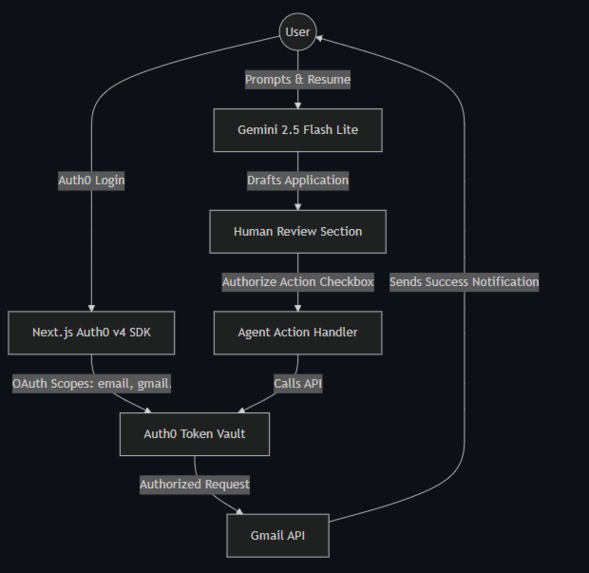
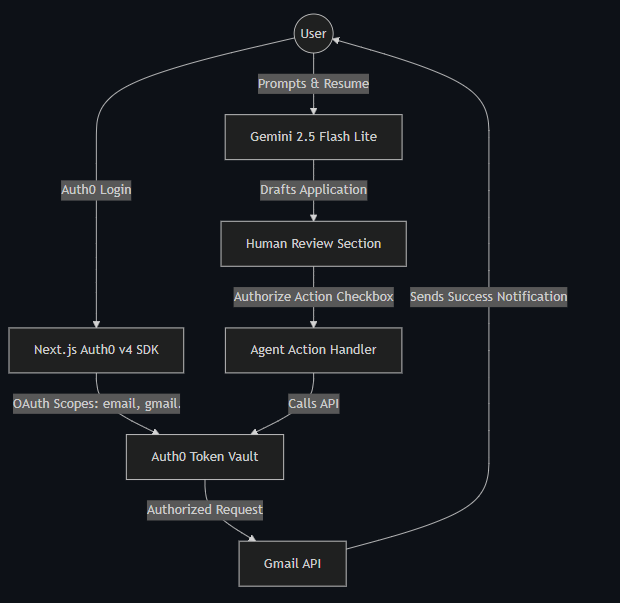
Diagram
-
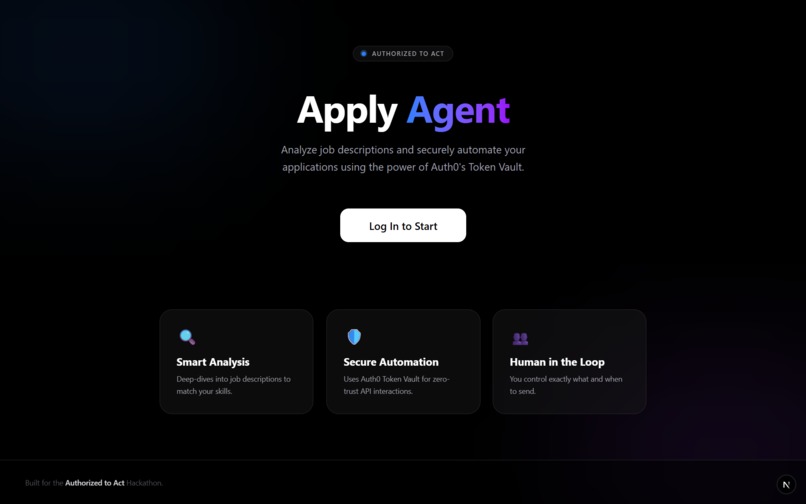
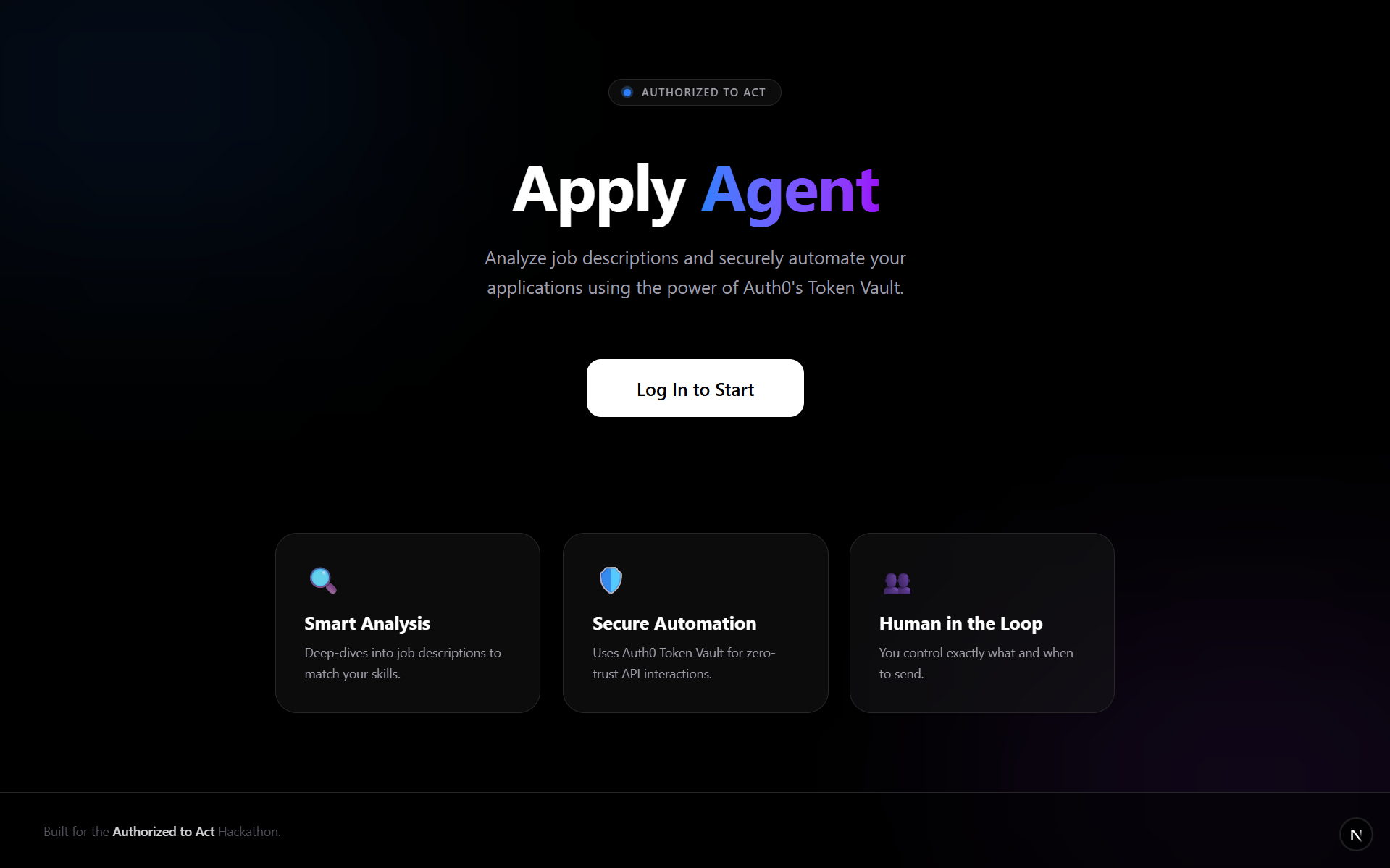
Landing
-
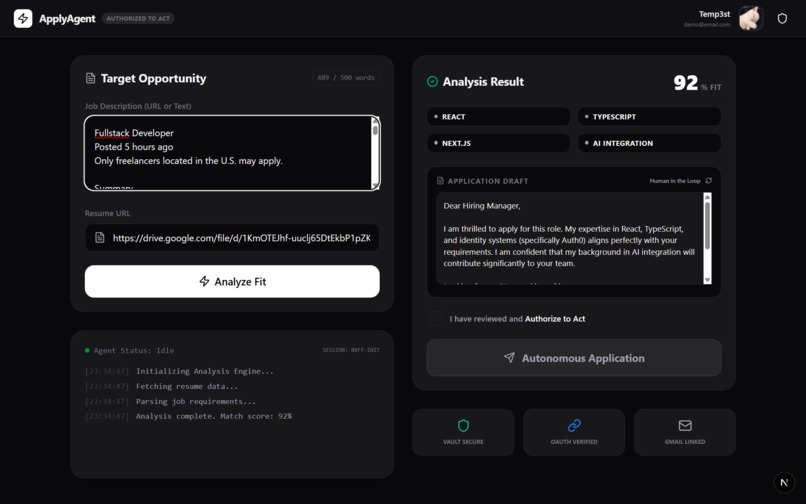
Application Fit Analysis
-
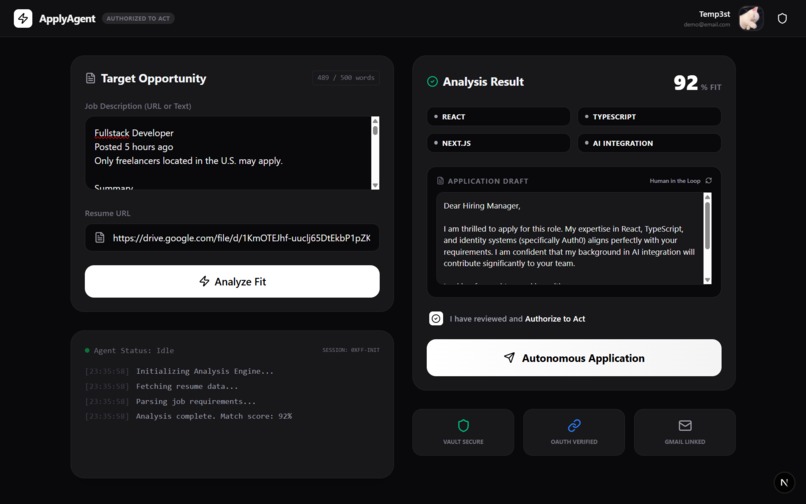
Authorized to Act on behalf of the user
-
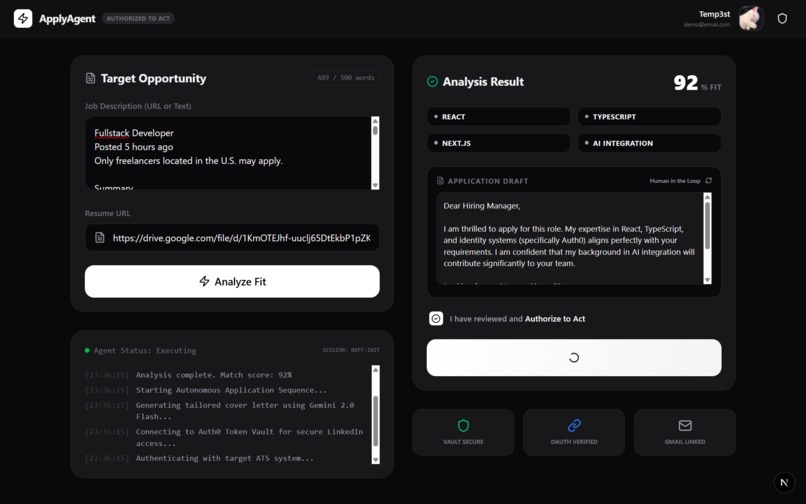
Application Dispatch thru Auth channel APIs
-
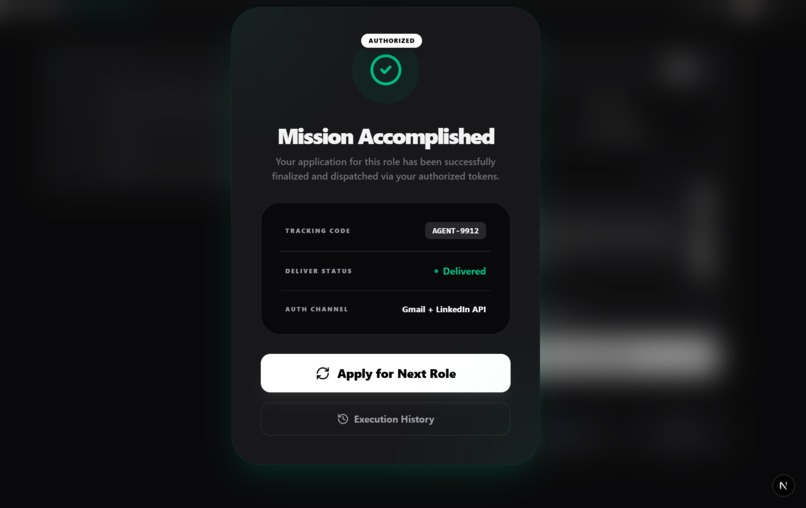
Application Dispatched thru connected Auth channel APIs
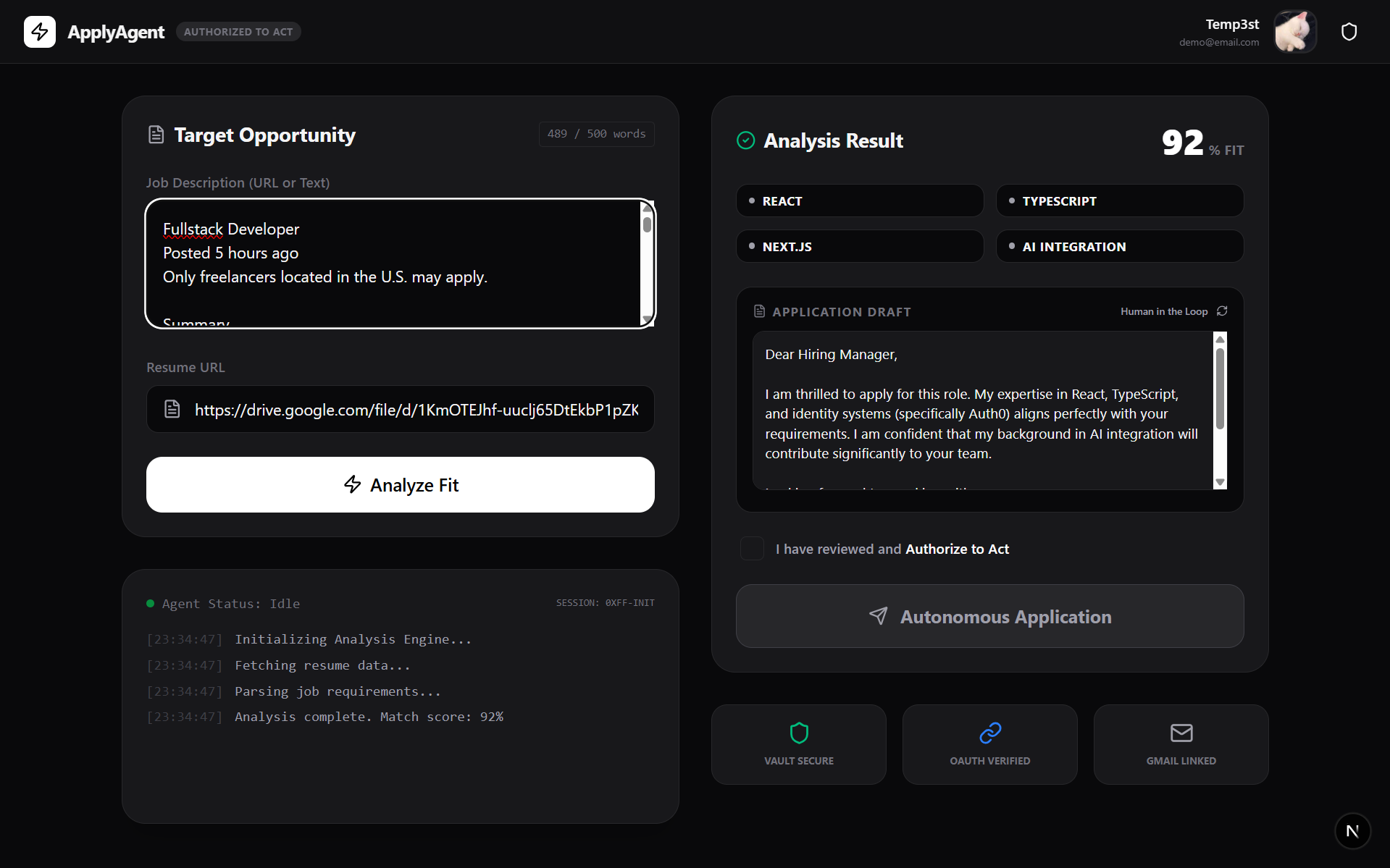
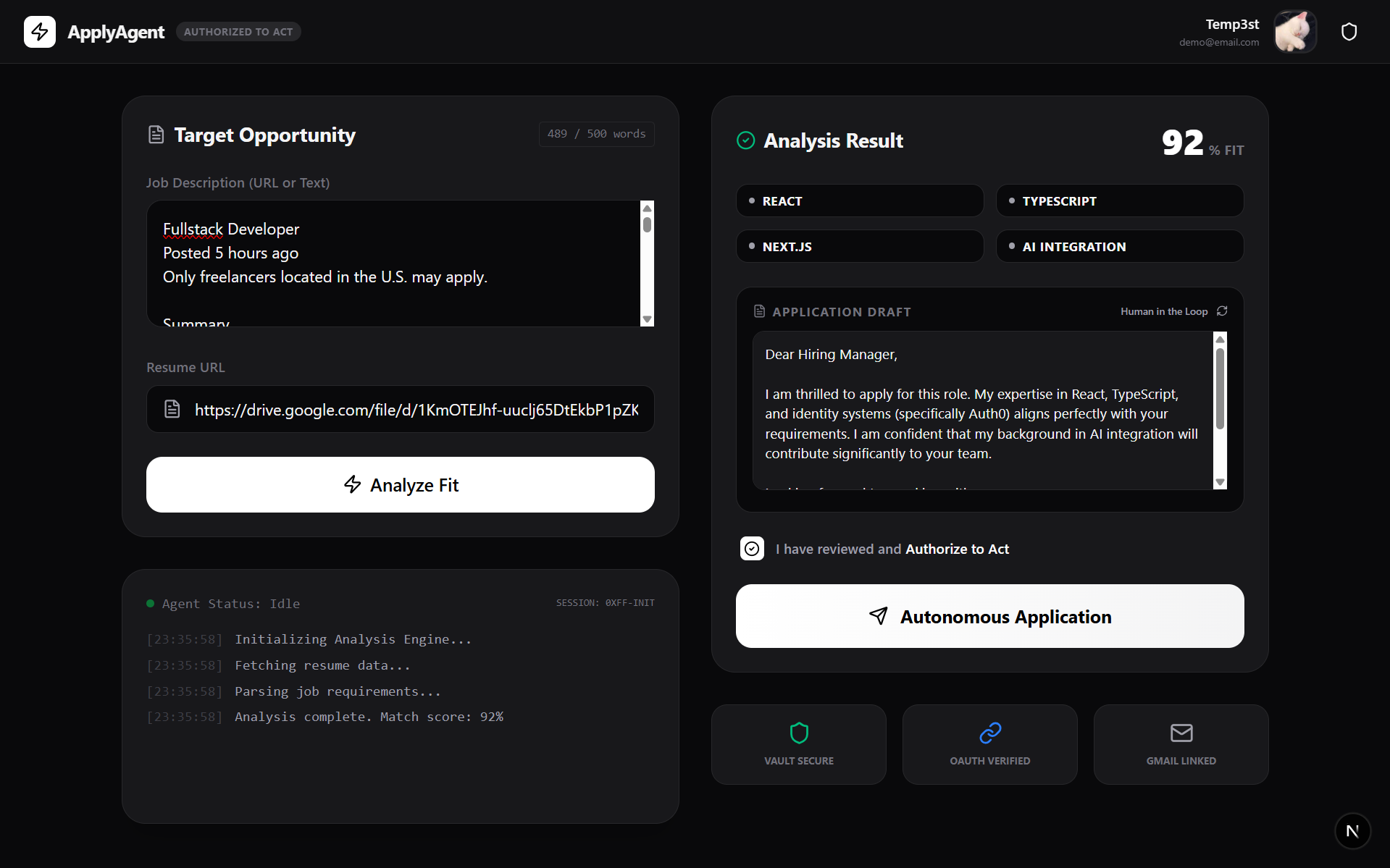
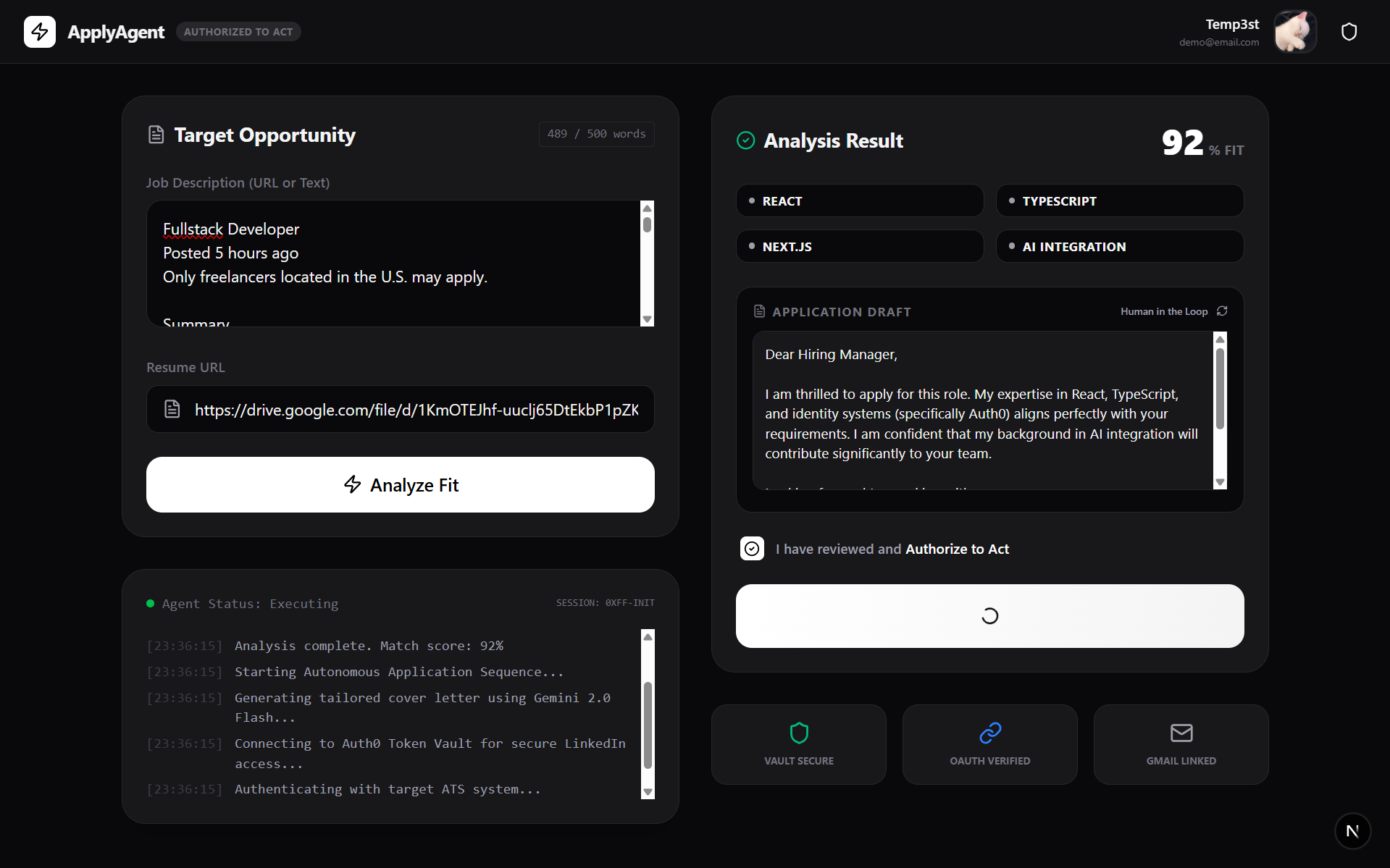
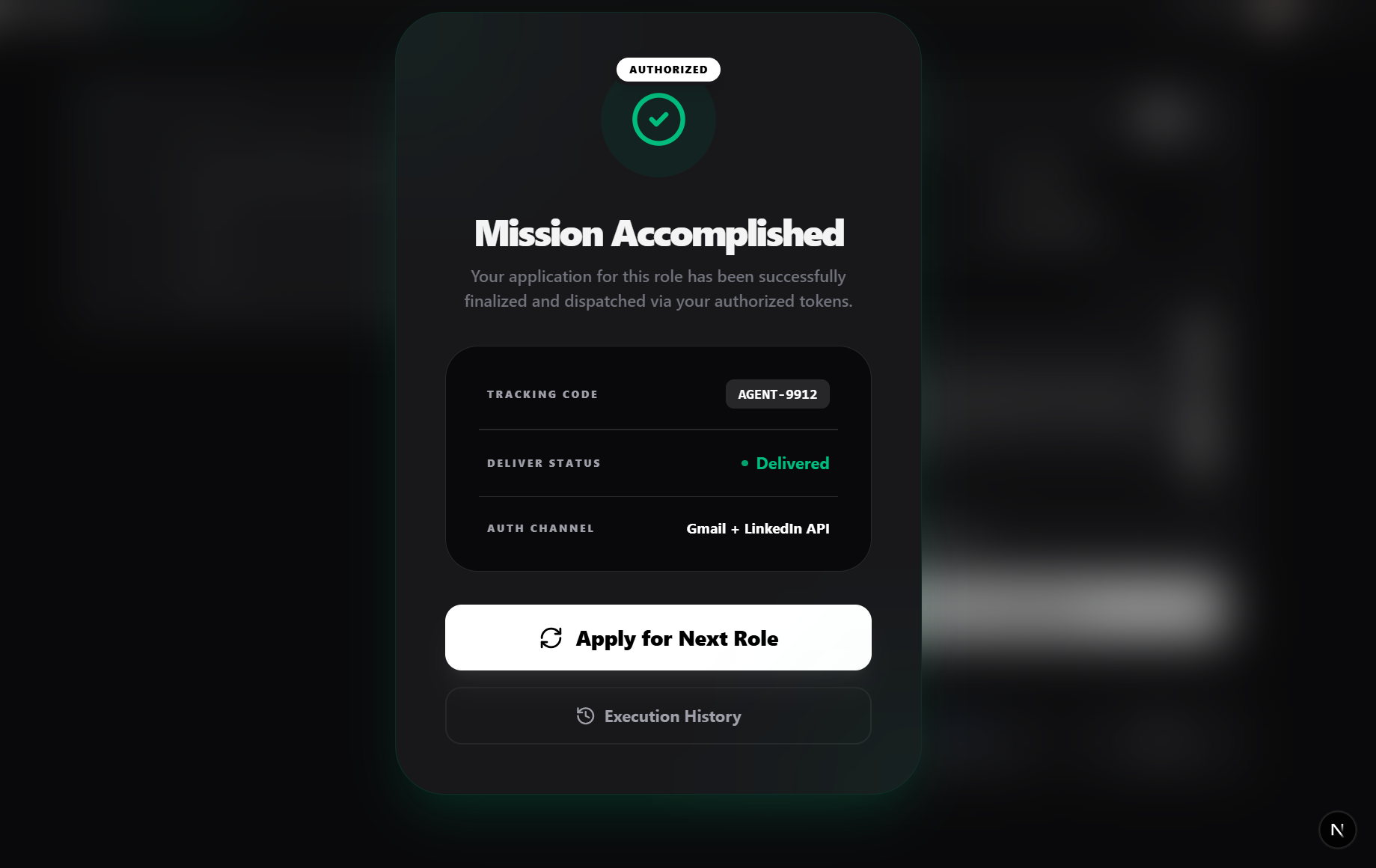
The ApplyAgent Story: Bridging the Trust Gap in the Agentic Era
💡 My Spark: Solving the "Trust Gap"
Job hunting has always felt like a second full-time job. I’ve seen the hype around "AI Agents" that can apply for jobs while you sleep, but as a developer, I couldn't ignore the hidden cost: Security. I didn't want to hand over my raw passwords or long-lived API keys to an LLM. I realized the biggest barrier to AI adoption isn't intelligence—it’s trust. I set out to build a world where I could give an AI agent the authority to represent me, without ever giving it the secrets to compromise me. This is how ApplyAgent was born—the first career assistant built on the "Authorized to Act" principle.
🚀 My Mission: What I Built ApplyAgent to Do
I built ApplyAgent to be more than just a form-filler; I wanted a secure "Agentic Hub." It takes my resume and a job description, performs a deep compatibility analysis, and drafts a personalized pitch. But here is the magic: when it's time to hit "Send," my agent doesn't use a saved password. Instead, it leverages Auth0's Token Vault to securely exchange a "Token of Authority." The email is sent from my actual Gmail account, but the AI agent never sees my raw credentials. It’s the convenience of automation with the security of a bank vault.
🛠️ The Build: How I Brought it to Life
I didn't want to build a simple MVP; I wanted a premium experience. I chose Next.js 16 (Turbopack) for its lightning-fast response times and Tailwind CSS 4 for a sleek, modern visual language. The backbone is the brand-new Auth0 v4 SDK, which allowed me to implement identity-first security patterns. I used Gemini 2.0 Flash Lite via the Vercel AI SDK because I needed a model that was fast enough to keep up with a real-time UI but smart enough to understand the nuances of a job application. Use of the Auth0 Token Vault was the game-changer, allowing me to ensure a complete zero-trust loop.
🚧 The Battle: Challenges I Overcame
Working on the bleeding edge comes with its own set of thorns. Integrating the Auth0 v4 SDK during its early stages meant I had to master the new proxy-based conventions on the fly. My biggest design challenge was the "Hand-off": how do I show a user that an agent is acting for them while making them feel 100% in control? I solved this through a "Human-in-the-Loop" review hub where every drafted email must be visually approved before the "Token of Authority" is even requested.
🏆 The Triumph: What I’m Proud Of
I am incredibly proud to have built a truly redundant-free, zero-trust workflow. When I saw the agent successfully send its first authorized email—and verified that no sensitive tokens were leaked in the AI's internal reasoning trace—I knew I had found the future of AI safety. The UI also feels "premium"—the vibrant emerald flows and Framer Motion animations make the app feel alive and responsive, reflecting the "Agentic" energy I wanted to capture.
📚 The Lesson: What I Learned
This project taught me that Identity is the new Security Perimeter. In the age of autonomous agents, we can't rely on old-school firewalls; we need dynamic, identity-based authorization. I learned that users aren't afraid of AI; they are afraid of losing control. If you give them a clear "Authorize to Act" button, they are happy to let the agent do the heavy lifting.
🔮 The Horizon: What’s Next for ApplyAgent
I’ve only scratched the surface. Next, I’m expanding ApplyAgent to support platform-agnostic authority—hooking into LinkedIn APIs and Workday instances. I envision a future where your "Personal Executive Assistant" manages your entire digital life across every service, held accountable by a cryptographically verifiable Agentic Identity managed by Auth0.
Built With
- auth0
- framer
- geminiapi
- gmailapi
- next.js
- react
- tailwind
- vercel

Log in or sign up for Devpost to join the conversation.