-
-
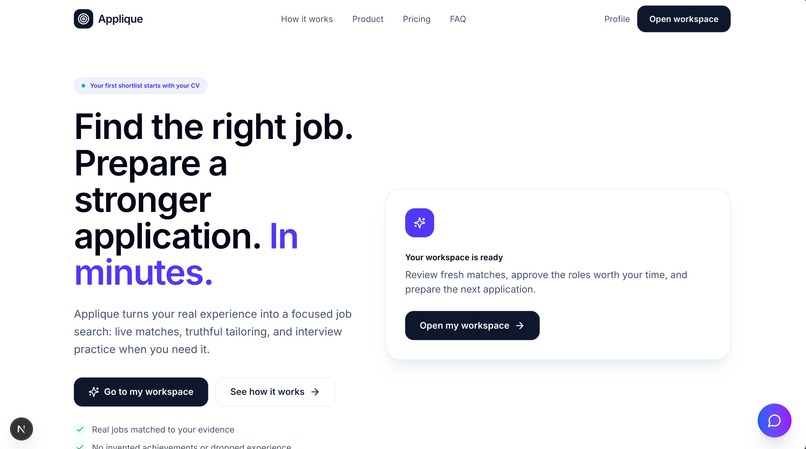
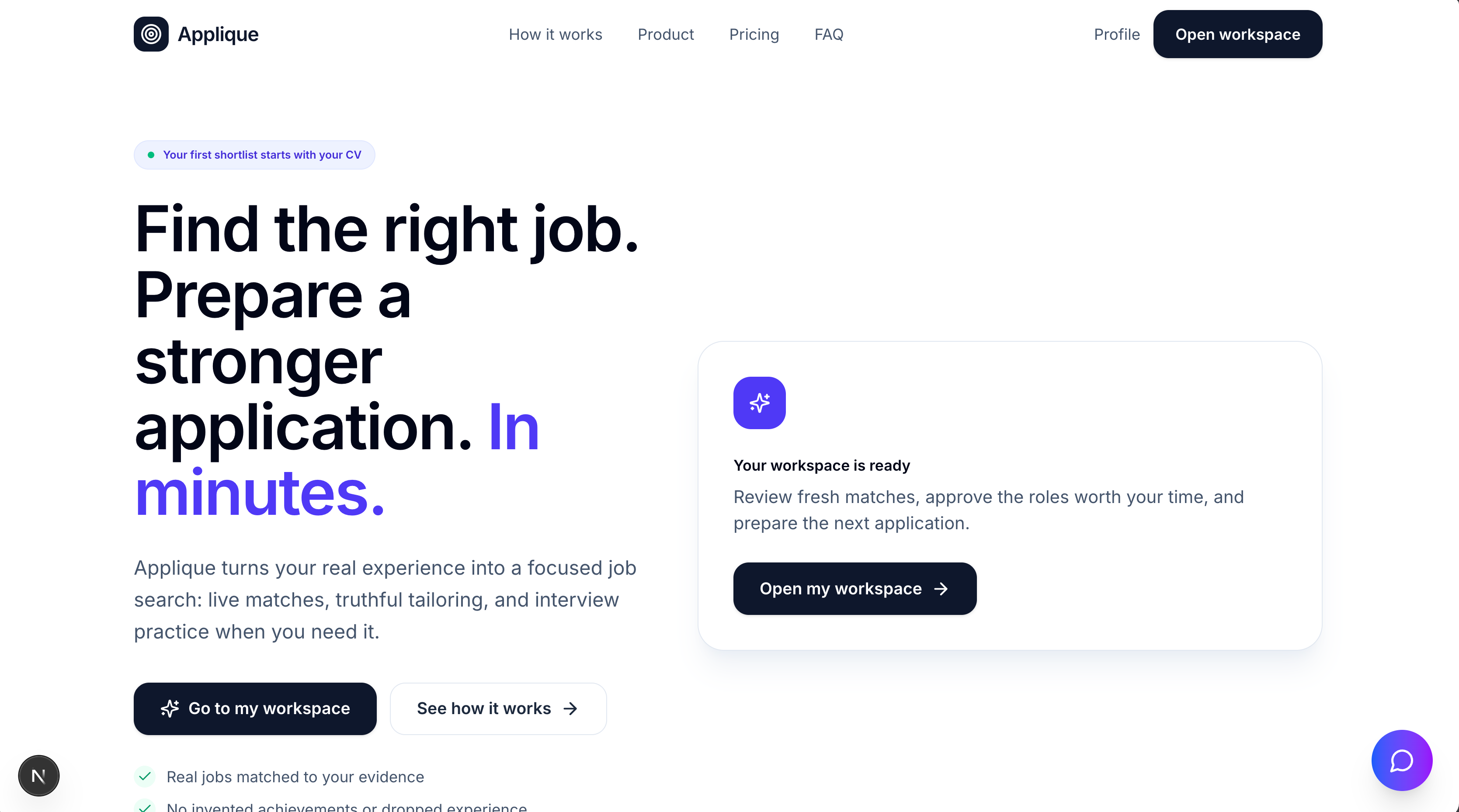
Homepage
-
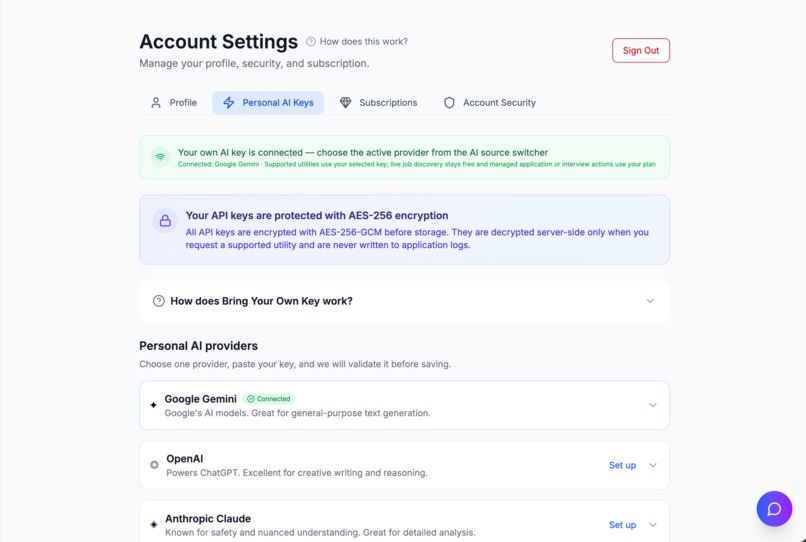
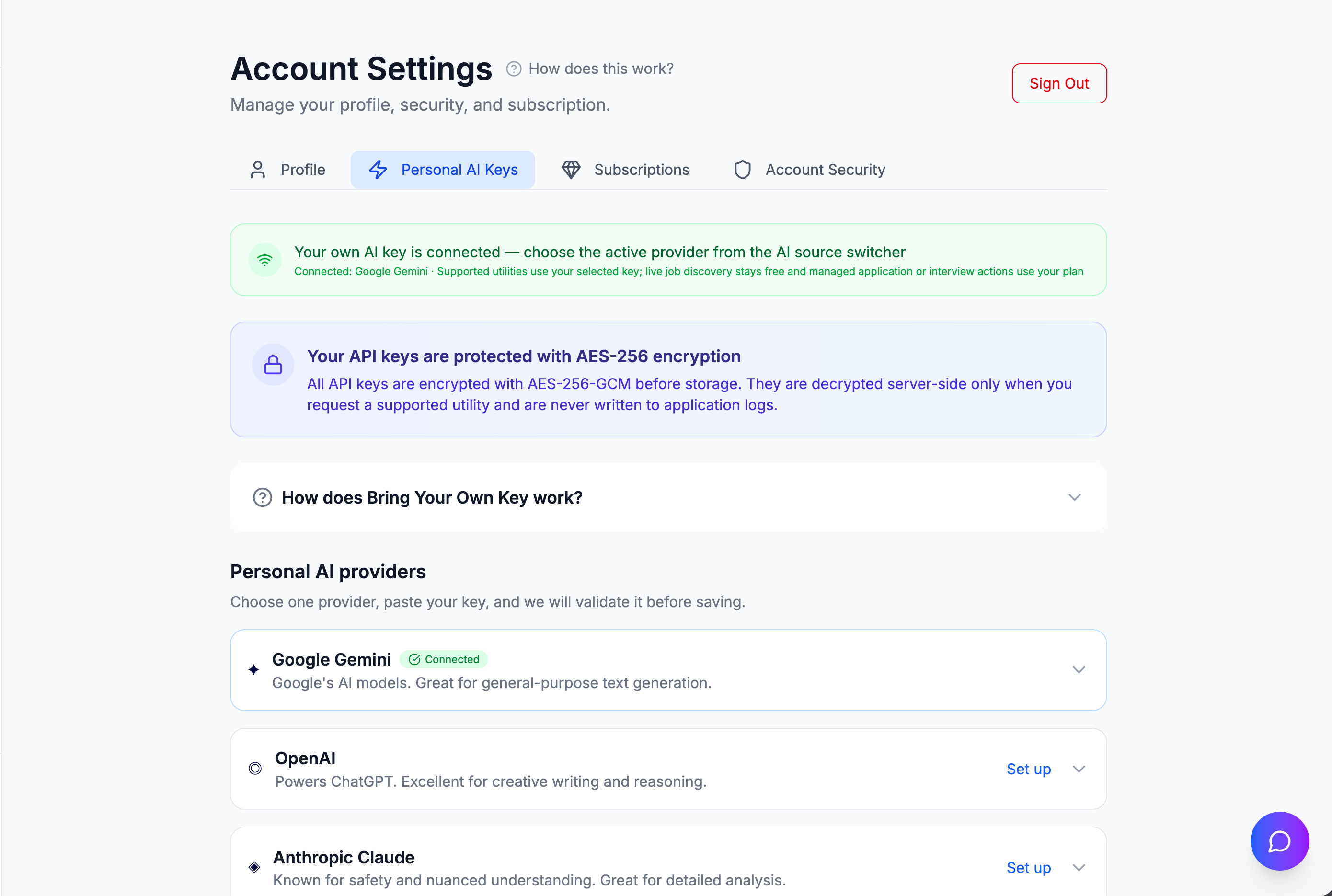
Add your personal free API keys. Use it for FREE!
-
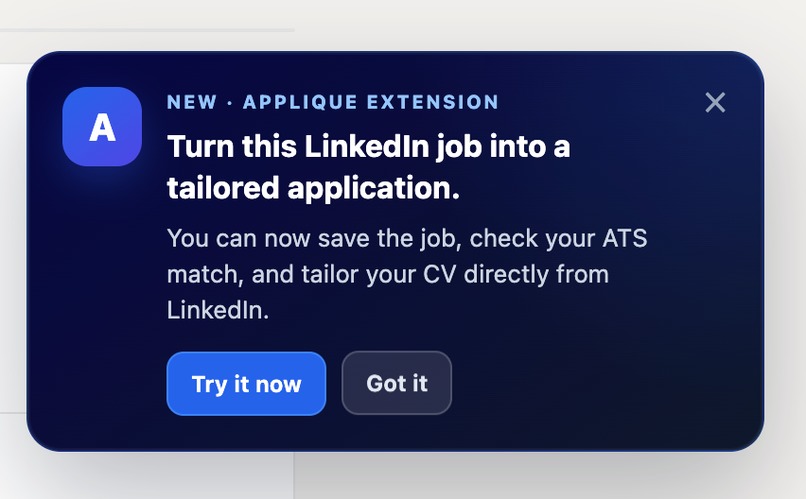
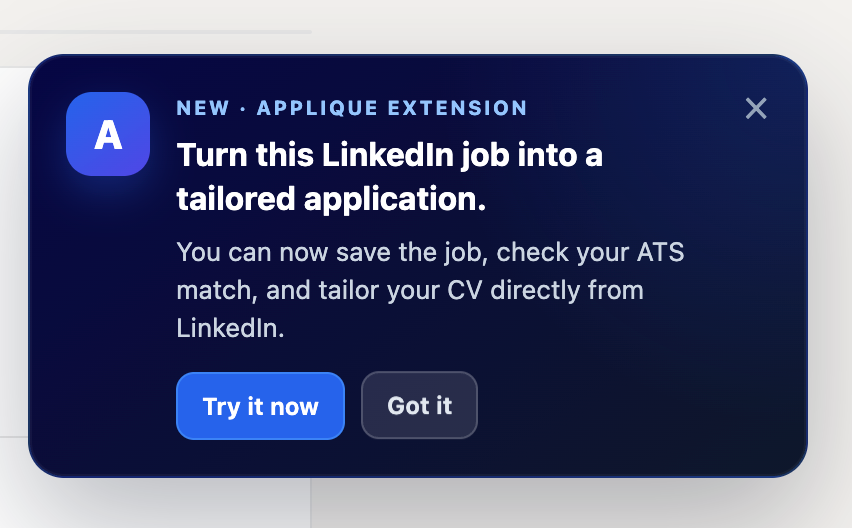
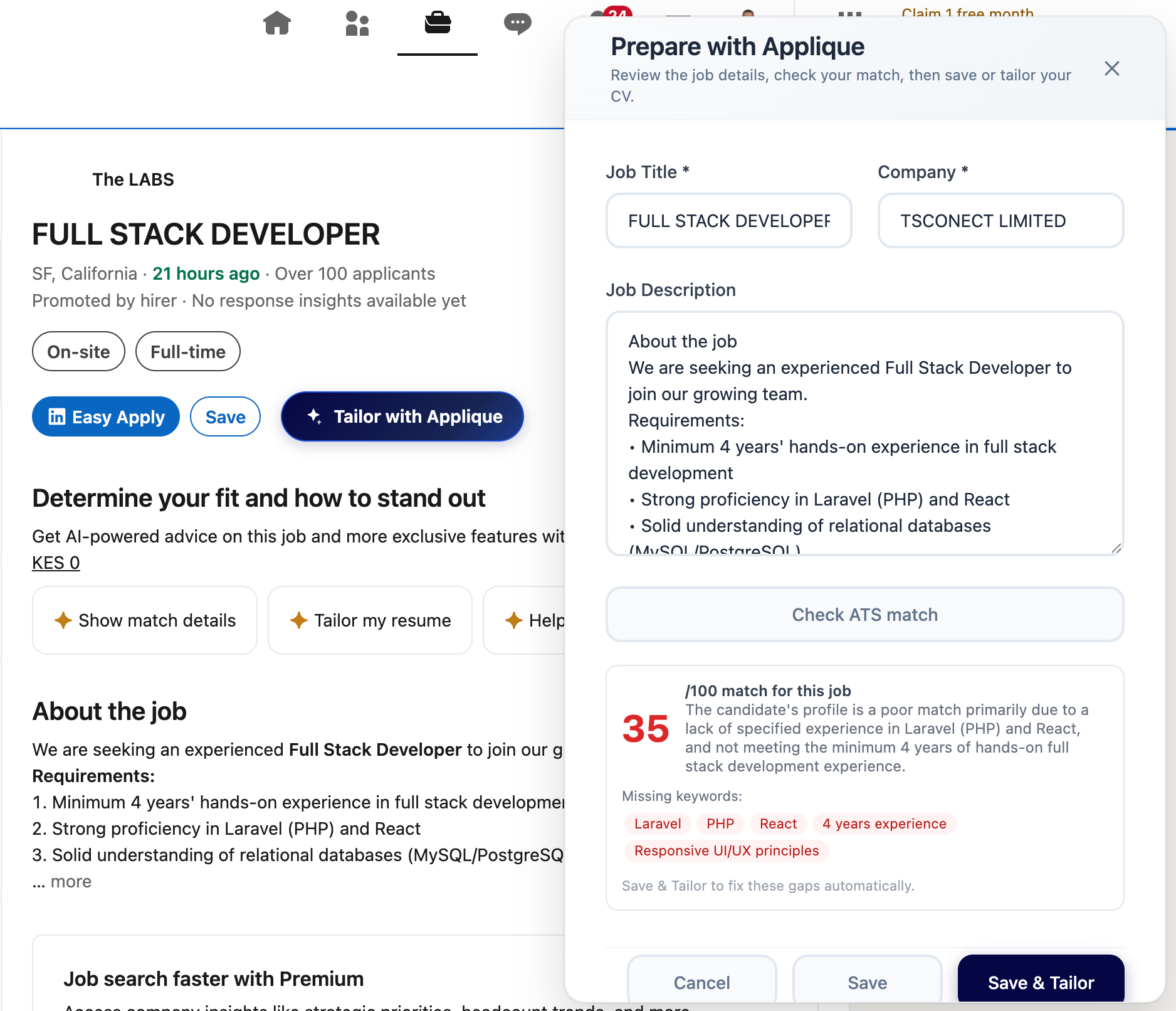
LinkedIn extension support
-
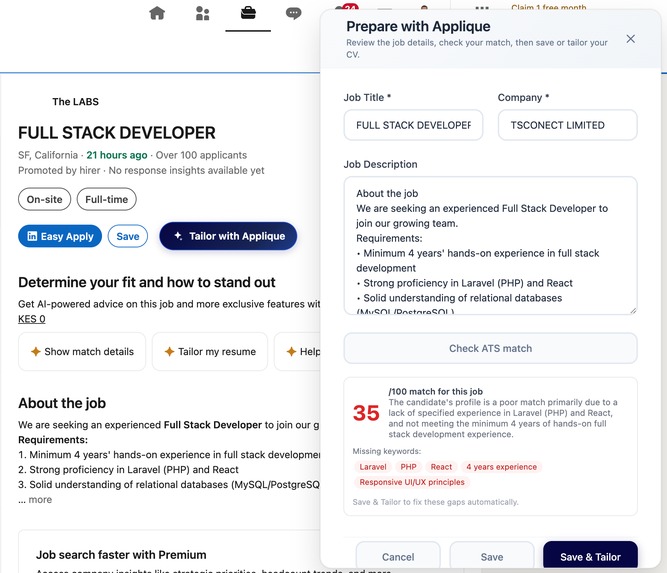
Add jobs directly from LInkedin and get ATS checked immediately
Inspiration
Job searching has become a second full-time job. Candidates jump between job boards, rewrite the same résumé repeatedly, guess what an ATS wants, draft cover letters, track applications, and prepare for interviews - often without knowing whether any of that work is moving them closer to an offer.
Most career tools solve one document. We wanted to solve the journey.
What it does
Applique is a human-in-the-loop AI career agent that helps a job seeker move from discovery to interview readiness in one continuous workflow.
Scout, the Job Search Agent, learns from the user’s CV and preferences, searches a continuously refreshed job pool, and ranks roles with an explanation of why each one fits.
When the user approves a job, the Application Agent evaluates the ATS match, identifies genuine experience relevant to the role, tailors the résumé without inventing qualifications, and creates a cover letter.
The Interview Coach then generates role-specific questions, conducts realistic mock interviews, evaluates each answer, and provides actionable communication and visible-presentation feedback. Its camera analysis is deliberately limited to observable signals such as framing and posture - it does not infer personality, honesty, disability, confidence, or emotion.
Applique also includes a Career Journal for experience that may not belong on a current CV, an application tracker, progress analytics, regional payments, and a browser extension that brings “Tailor with Applique” directly into supported job sites.
What we added during OpenAI Build Week
Applique existed before the submission period. During Build Week, we meaningfully extended and production-hardened it with Codex and GPT-5.6:
- Rebuilt job discovery as a free, CV-aware Job Search Agent.
- Added role suggestions derived from the candidate’s CV.
- Made empty searches useful instead of returning an unexplained blank state.
- Hardened the recurring job-ingestion pipeline and expanded the searchable pool.
- Added native Applique actions to supported job-board pages.
- Simplified onboarding around one obvious path from CV to matched job.
- Added the Scout companion and clearer progress guidance.
- Implemented location-aware pricing and Kenyan M-Pesa checkout.
- Strengthened BYOK routing, access policies, error recovery, tests, and production workflows.
The dated Codex session and repository history distinguish this work from the pre-existing foundation.
How Codex and GPT-5.6 helped
Codex with GPT-5.6 acted as an engineering and product collaborator throughout the build.
The founder defined the product direction, customer promises, safety boundaries, and final decisions. Codex inspected the existing codebase, traced issues across frontend components, API routes, Firebase data, browser-extension scripts, and payment flows, then proposed and implemented scoped solutions.
It was especially valuable when diagnosing changing LinkedIn layouts, simplifying onboarding without deleting essential functionality, designing CV-derived search suggestions, hardening the ingestion pipeline, localizing checkout, and verifying changes with automated tests and production builds.
The deployed career-agent runtime uses Gemini through Google’s AI infrastructure. GPT-5.6 was used meaningfully through Codex to design, implement, debug, and validate the Build Week extension.
Challenges
The hardest problem was not generating text. It was creating a coherent product across unreliable external data, browser-extension DOM changes, payments, AI routing, privacy-sensitive camera analysis, and a large existing application.
We also had to remove complexity aggressively. Every feature had to answer one question: does this help the user reach a relevant application or stronger interview faster?
Accomplishments
Applique is a working production product - not a disconnected collection of demos. A user can upload a CV, discover relevant live roles, understand the match, tailor an application, track its outcome, and practise the interview without leaving the workflow.
We are especially proud that the system preserves human approval and refuses to manufacture experience merely to improve a score.
What we learned
AI becomes much more useful when it maintains context and executes a connected workflow. The greatest improvements came from reducing decisions for users: suggesting roles from their CV, explaining matches, surfacing the next action, and recovering gracefully when data is incomplete.
What’s next
We are expanding legally authorized job sources, measuring which recommendations lead to interviews, improving the agent’s long-term career memory, and using real user outcomes to make every future recommendation more useful.
Built With
- codex
- firebase
- gemini
- javascript
- mediapipe
- next
- paystack
- react
- tailwind
- three.js
- vercel
- vertex

Log in or sign up for Devpost to join the conversation.