Inspiration
I wanted to make a tabletop game that people actually want to play. Something social that feels a bit like chess, but simpler: two players, one board, a few minutes a game. And I wanted all the little moments of a real board game: the long thinking pause, the sneaky move that ruins your plan, the laugh across the table.
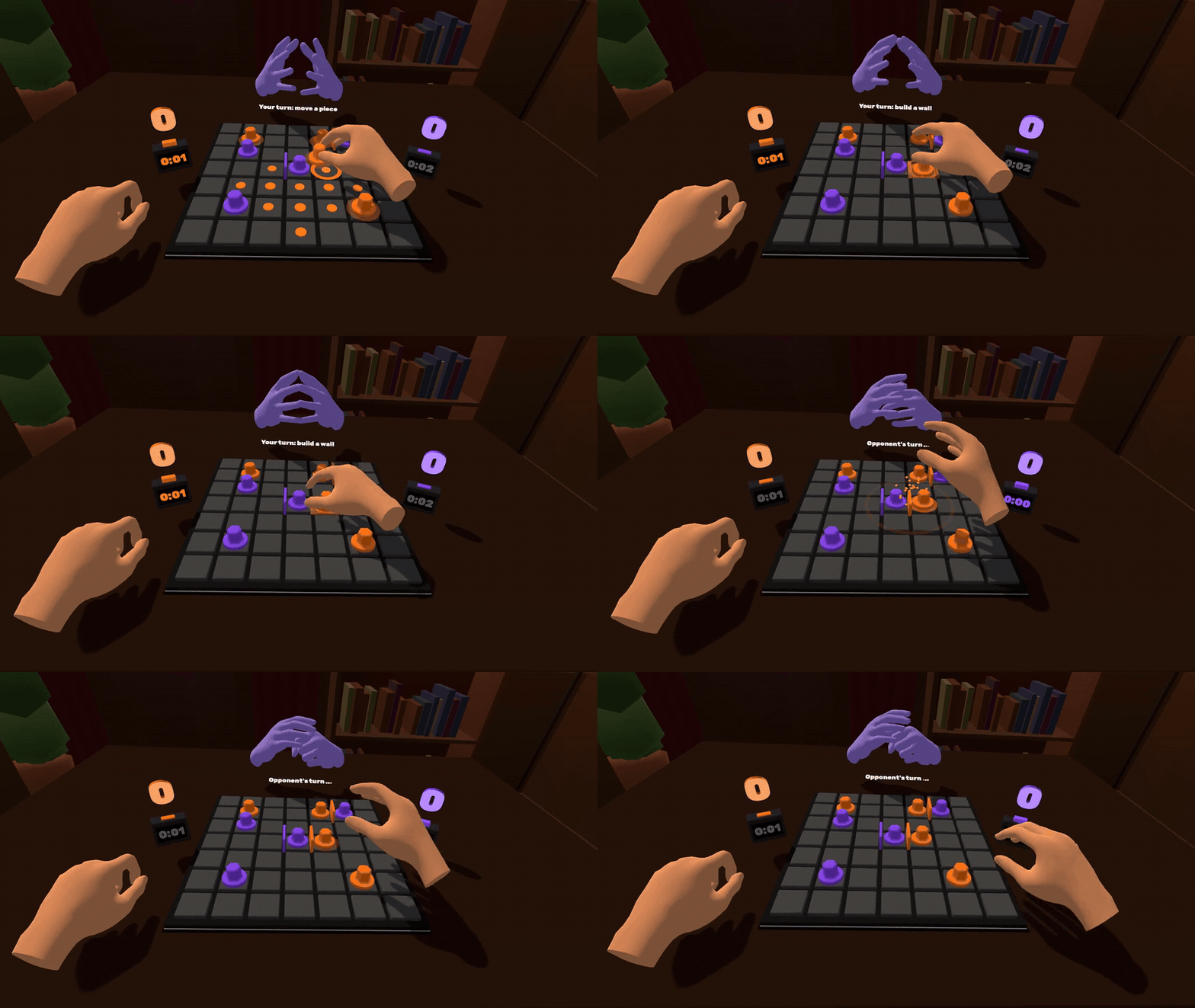
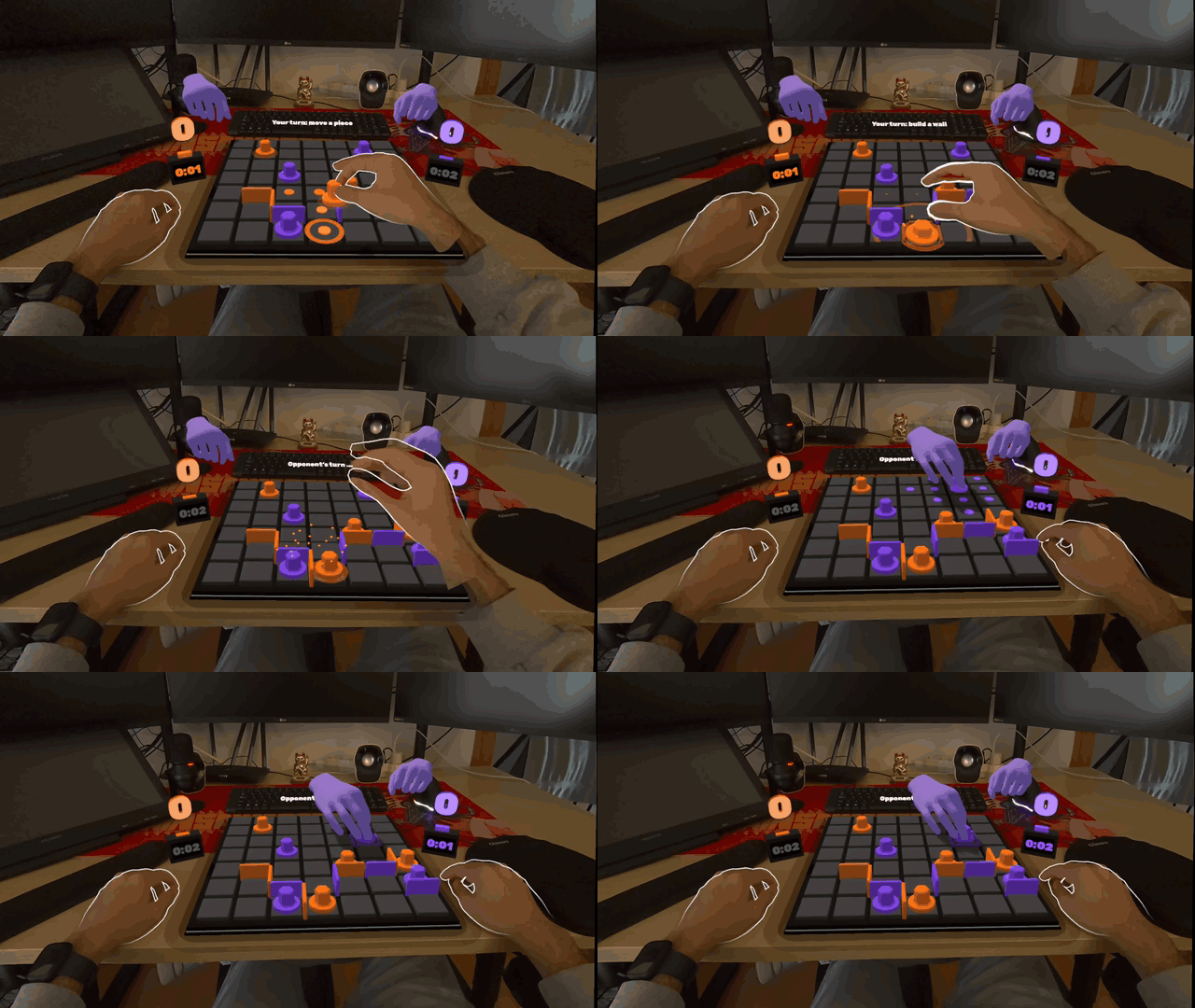
A lot of VR board games put you in a virtual lounge with a laser pointer. I wanted the opposite. The board sits on your real table, you move the pieces with your own fingers, and you see the other player's hands right there across the board.
What it does
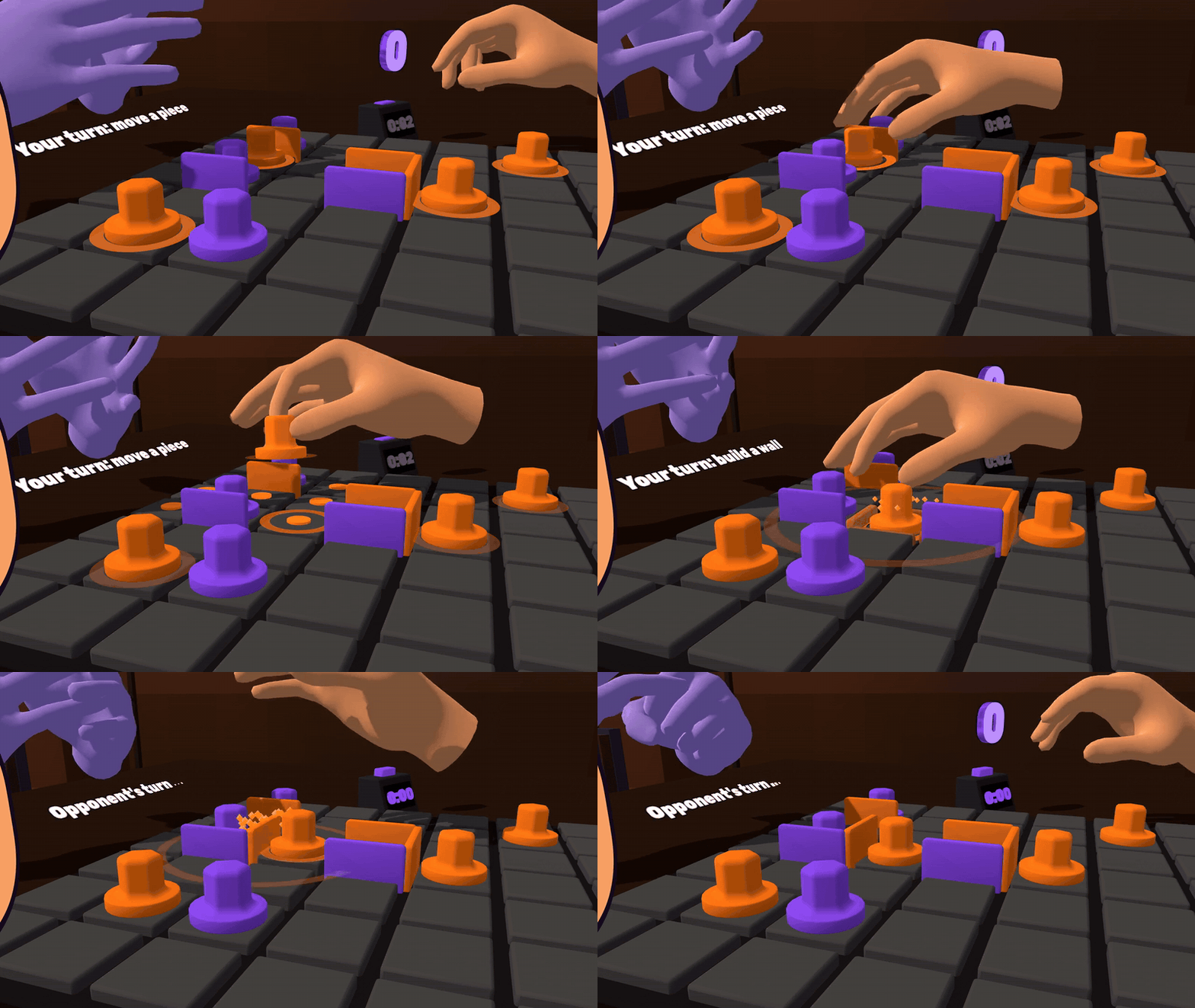
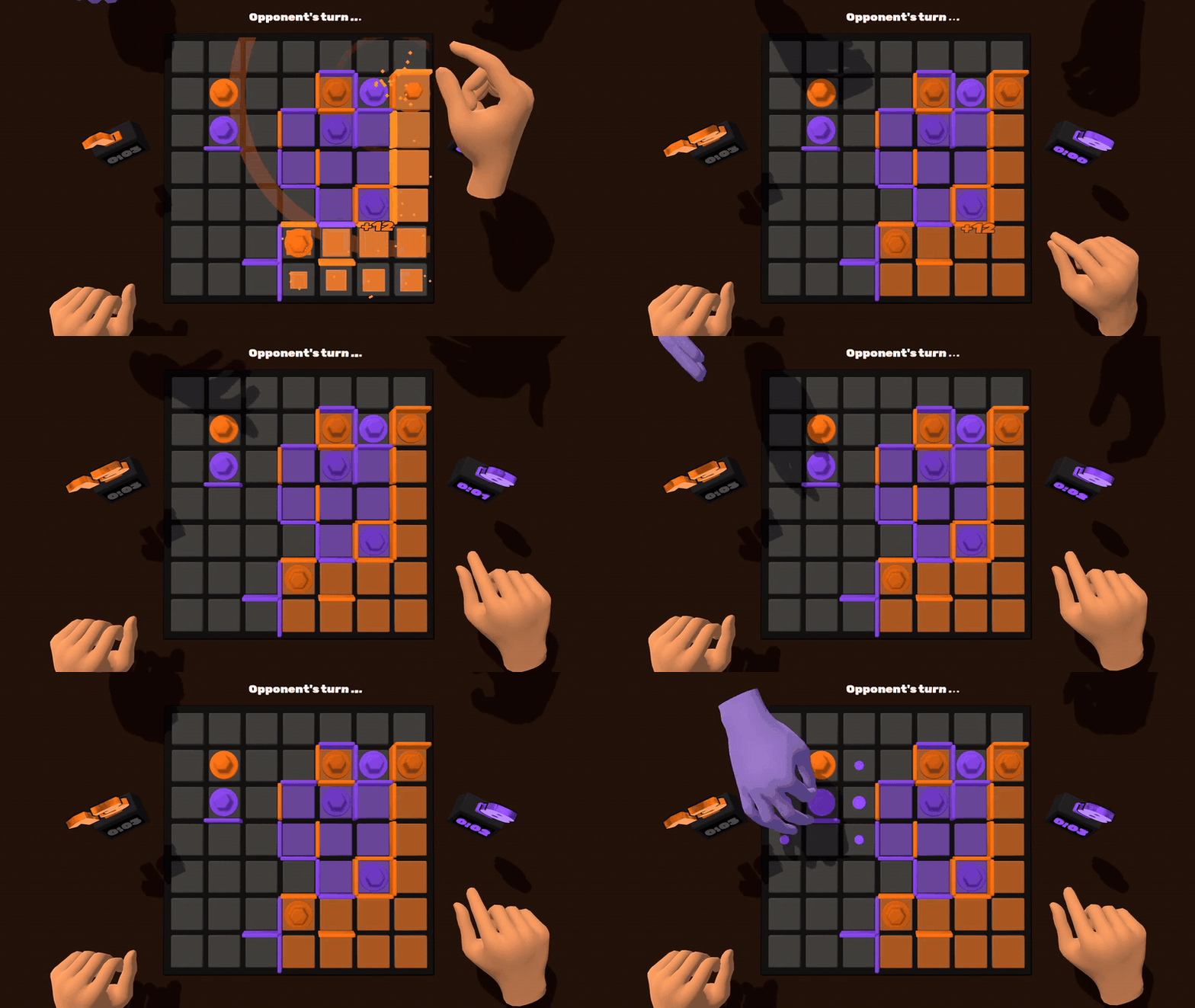
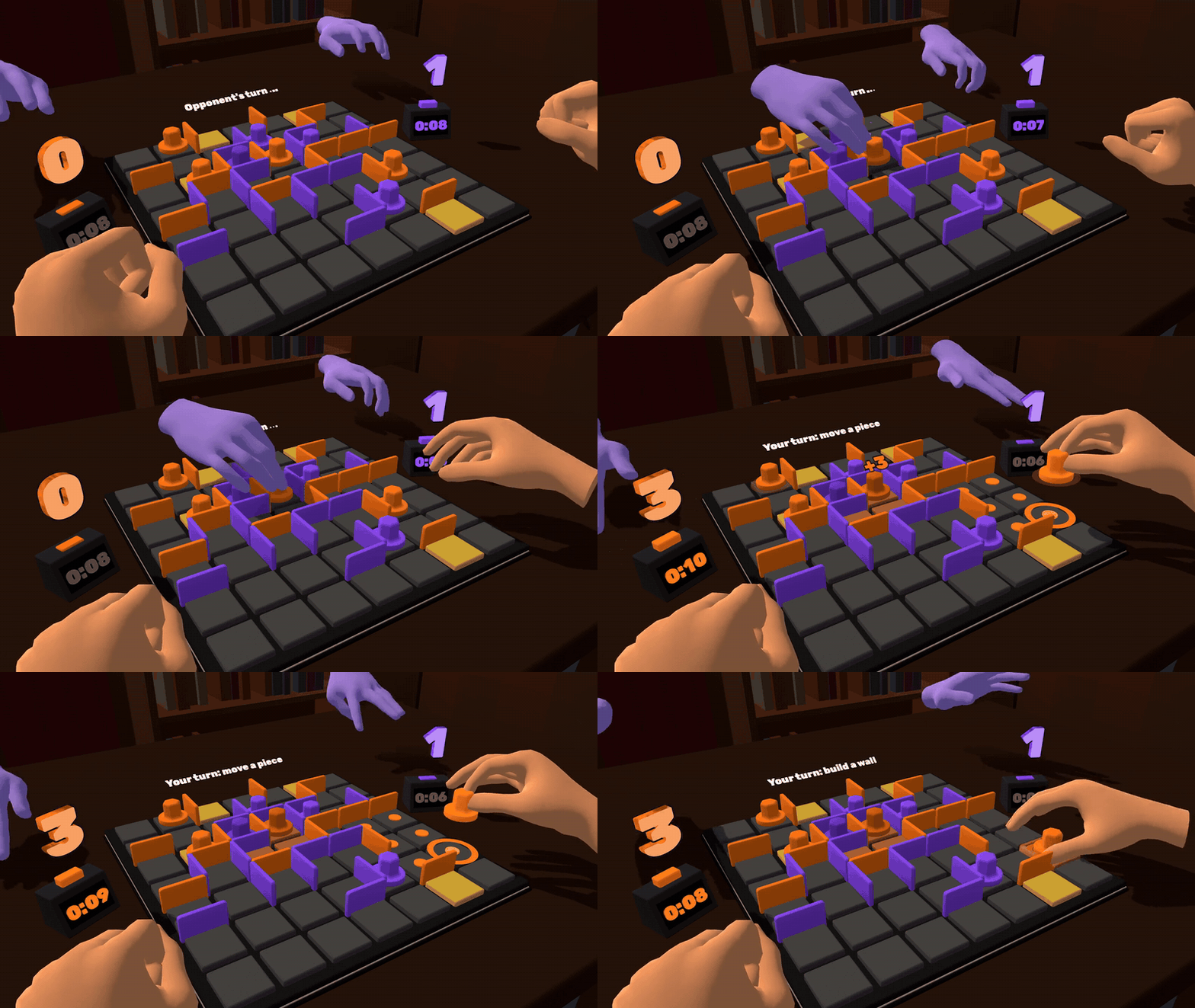
WALLFUFFLE is a two-player territory game on a 7 x 7 board. Each player has 4 pieces, and every turn you do two things:
- Pick up a piece and move it up to 2 squares.
- Pinch the edge next to it and pull a wall up out of the board.
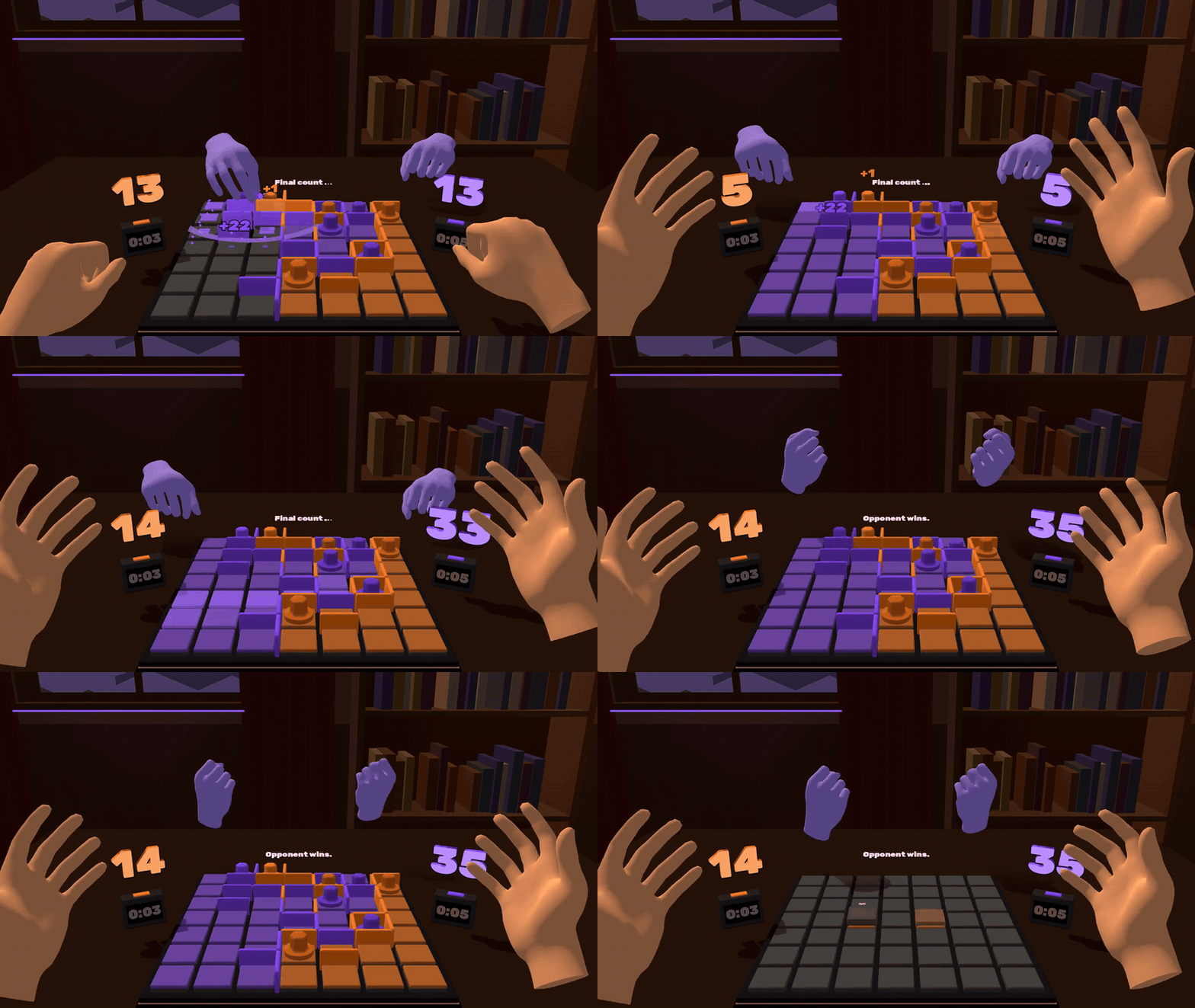
Close off an area with only your pieces in it, and it's yours: 1 point per square. The game ends when the two of you are fully walled apart, and the bigger territory wins.
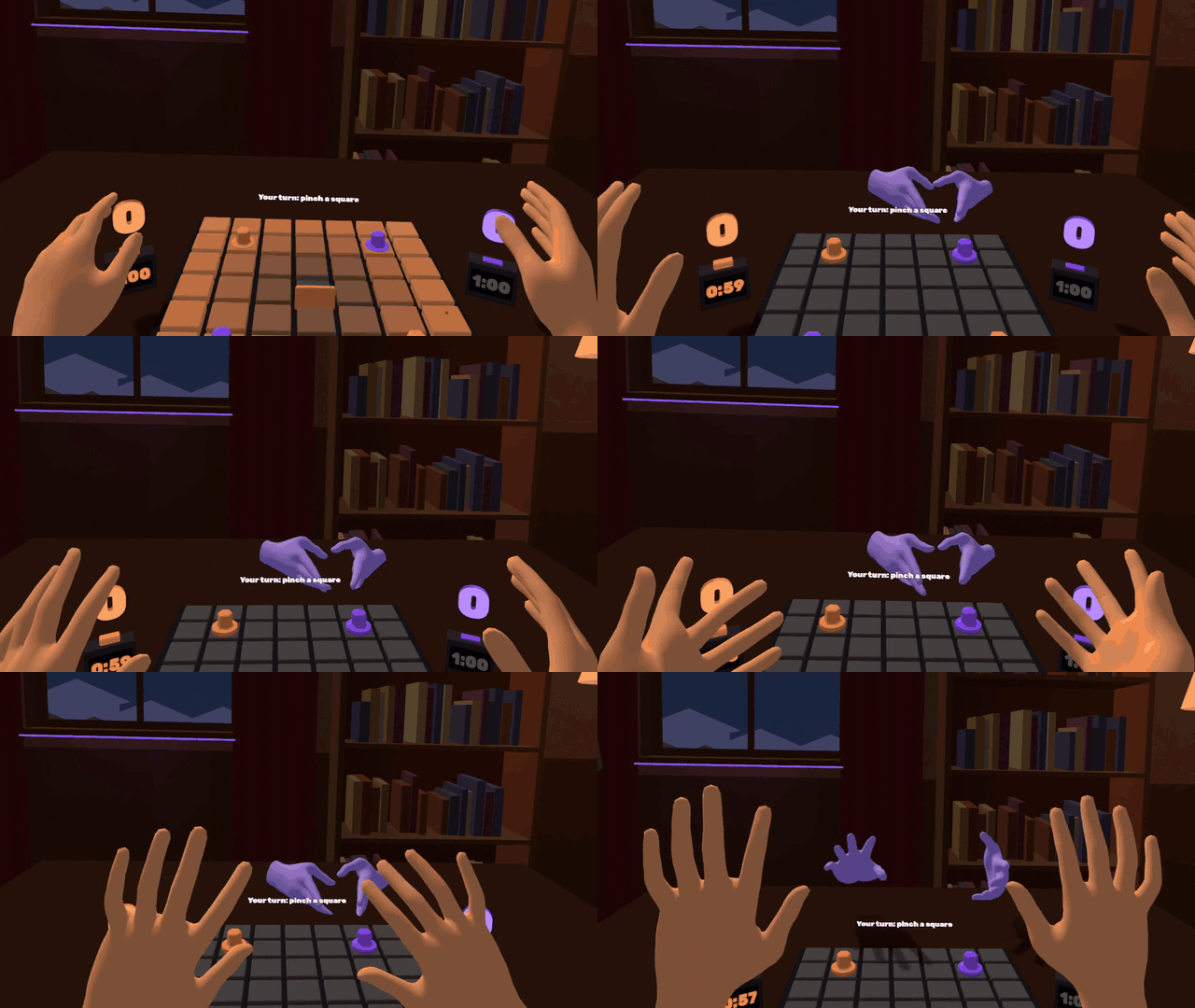
The board finds your real table, sits on it, and comes back to the same spot next time you play. Your table is the arena, and your room stays around you. No controllers, no floating panels, no laser pointers. Even the menus are part of the board: you pick an option with the same wall pull you use in a game.
You learn by playing a short guided match, with a ghost hand that shows you each move. Then take on the bot at three levels, try the Gold Rush and Bullet modifiers, or invite a friend with a 5-digit room code. The bot and your friend both show up as a pair of hands across the table.
There's always a reason for one more game. Each bot level is a new step to climb, each modifier changes how a game plays, and a rematch with a friend is one room code away.
How we built it
I built WALLFUFFLE on my own in Godot with OpenXR, for Meta Quest 3. I made every part myself with AI assistance: the code, the models, the sounds and the music.
- Hands that feel right. I tuned the pinch on the headset over and over, until a piece felt like it was really in your fingers and didn't slip out by accident.
- Your real table. The game finds the table in front of you, puts the board on it, and remembers each table for next time.
- Made for the glasses. I designed the whole layout for the smaller view of the Meta VR Glasses. A check runs after every change to make sure everything still fits.
- A bot with hands. The bot's hands hover over the board while it thinks, so playing alone still feels like playing with someone.
- Friends online. A small server connects two players, and you see your friend's hands move across your table.
- Art and sound from code. Every model comes from a Blender script and every sound from a short script, so I could change anything fast.
Challenges we ran into
- Finding the right game. I made a few prototypes before WALLFUFFLE. Each one taught me something, but none of them felt right for short, seated games with friends. The first time I played a WALLFUFFLE board on my own table, I knew this was it!
- Making a friend feel present. A score and a name aren't enough. Online, you see your friend's real hands across the board: they hesitate over a piece, reach, and pull a wall. Those hands carry all the tension of a real table. The first time a friend and I saw each other's hands, more than 1,000 km apart, we laughed out loud. Then we played for real, and every game was a close fight.
- Getting the board onto your real table. The room scan tells you where the table is, but not where on it you want to play. It took a few tries: first the near edge, then in front of you, then always inside your reach. In the end I added handles so you can drag the board where you like, and the game remembers that spot for each table.
- Small hands on a small board. A square is about 5 cm wide. The first versions dropped pieces and grabbed the wrong wall all the time. It took a lot of rounds on the headset before the gestures felt natural.
- Less space to show things. The Meta VR Glasses show less than a Quest 3. The board, the score and the turn all had to fit, so I rearranged many parts of the game until it fit perfectly!
Accomplishments that we're proud of
- WALLFUFFLE turned out to be so much fun!
- It's my first mixed reality game, and I'm really proud of how it came out.
- The board feels like a real thing on your table. Every move has its own little sound and motion.
- New players learn by playing. A ghost hand shows you what to do: no controller, no wall of text.
- A few turns in, you forget the board isn't really there!
What we learned
I knew VR well, but mixed reality was new to me. I learned the most about hand gestures and passthrough, and mixed reality ended up being my favourite part of the whole project.
I also really believe lightweight glasses are where spatial computing is going. So I built WALLFUFFLE to be ready for the new Meta VR Glasses on day 1. That's why it fits their smaller field of view, works with hands only, and plays seated in short sessions.
What's next for WALLFUFFLE
- Launch on the Meta Horizon Store, Early-access planned for December 2026. The Coming Soon page will open for wishlists.
- New modifiers: Stun, Collapse and others!
- Cosmetic skins for the pieces, walls and board.
- 4 Player battle royale mode!
- Player ratings and matchmaking, so there's always a fair opponent online.
- And the big one: WALLFUFFLE ready on the Meta VR Glasses on day 1.
Built With
- blender
- godot
- metavr
- nakama
- openxr