Inspiration:
I was inspired by my own college application experience and how difficult it can be to tell whether an application is actually complete and telling a consistent story. Students can have strong grades, essays, and activities while still having gaps or repeating the same ideas. I wanted to build something that could look at an application as a whole and help students identify what they might be missing.
What It Does:
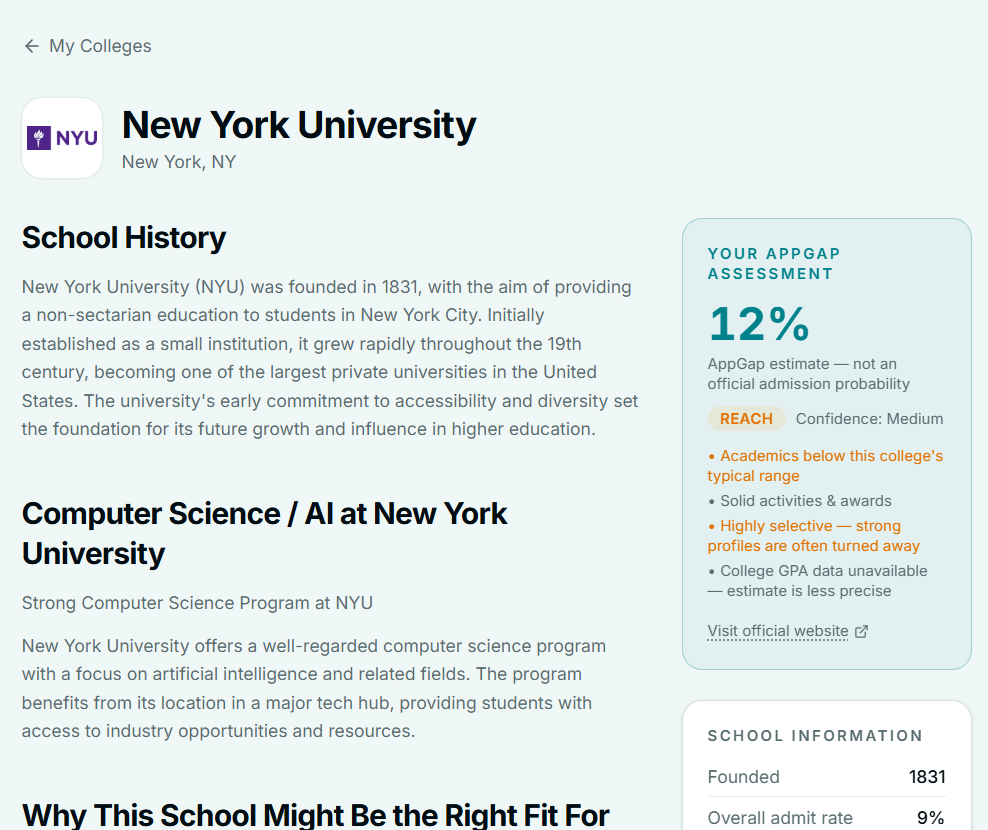
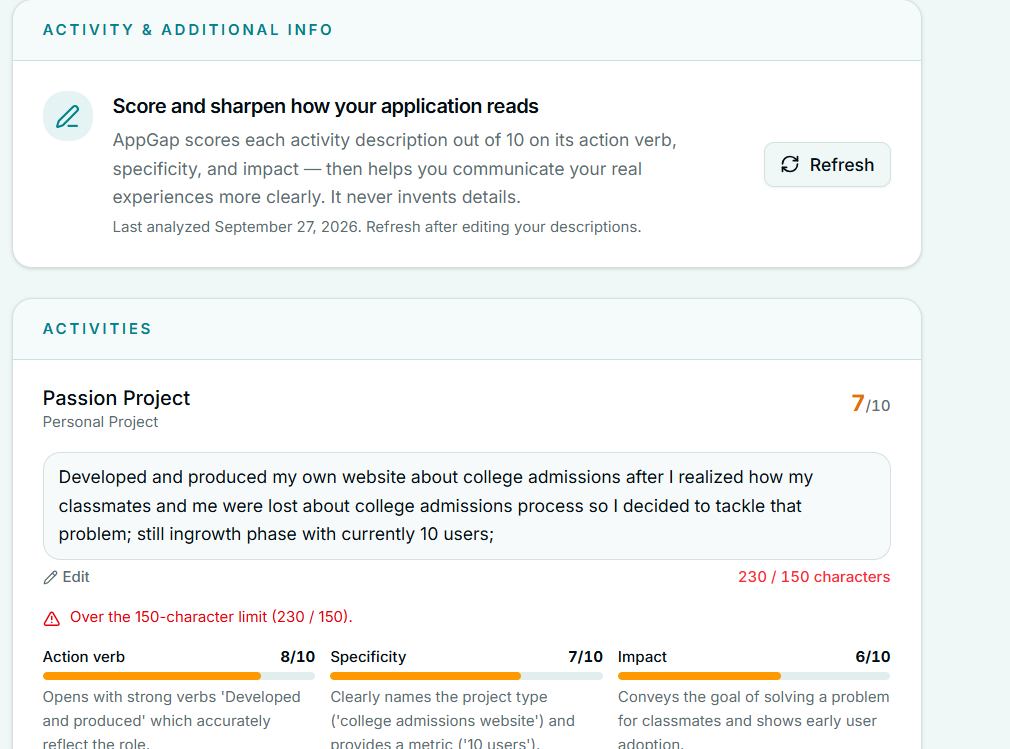
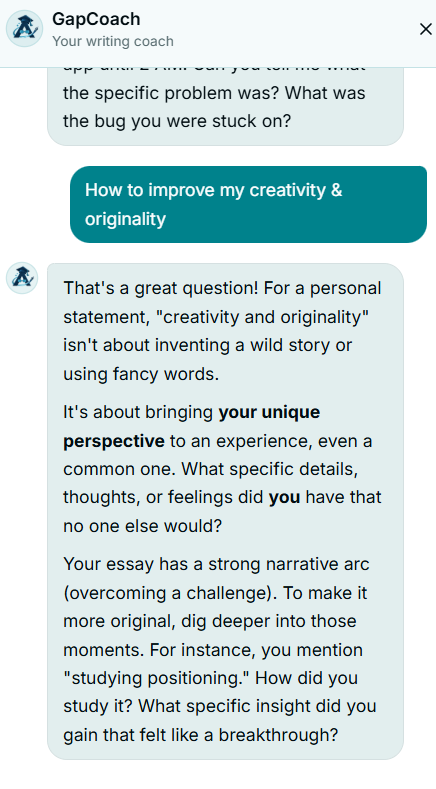
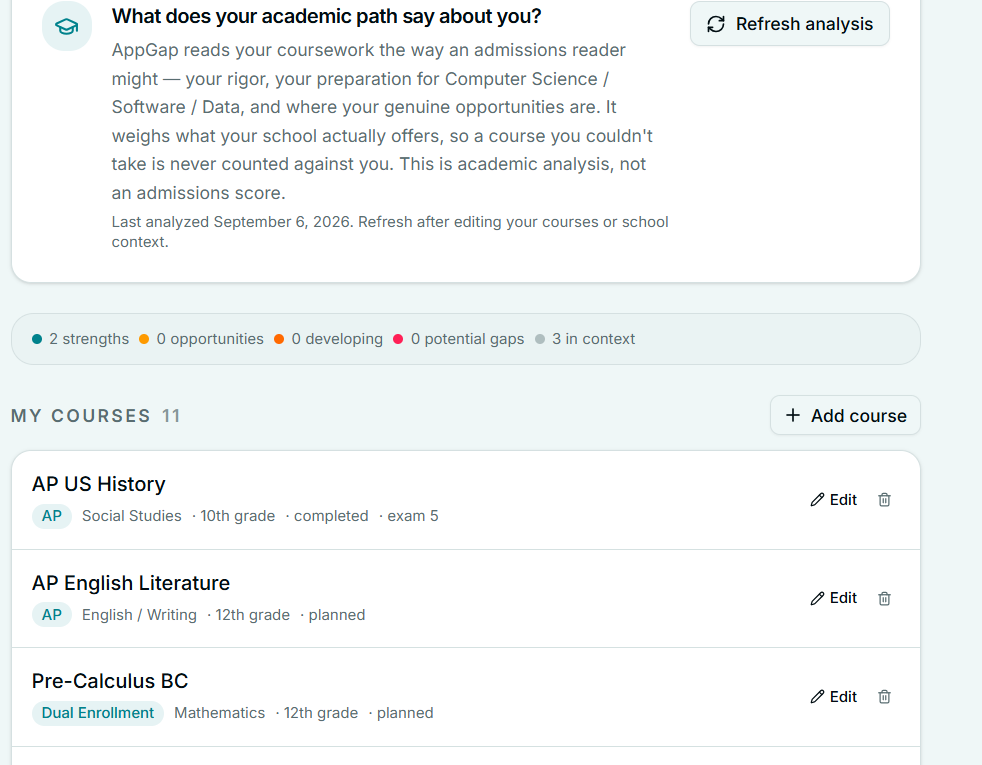
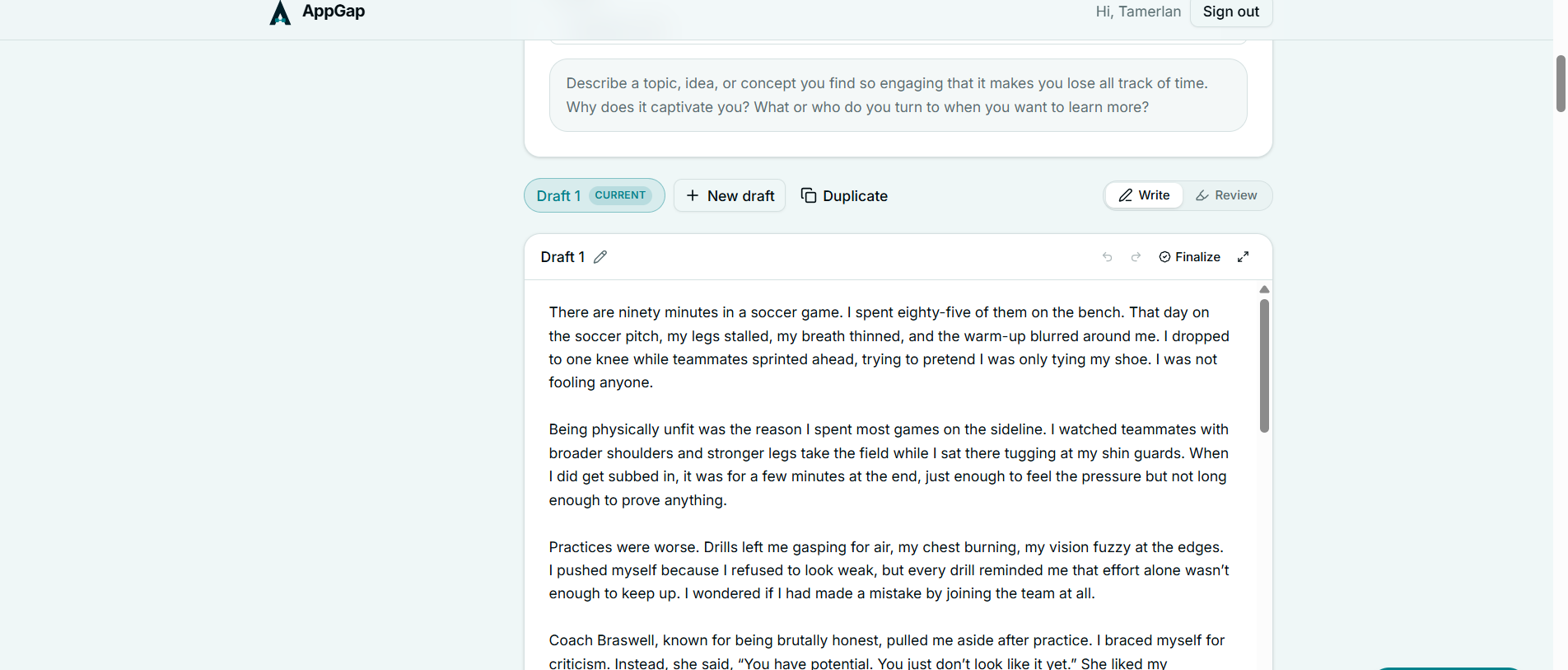
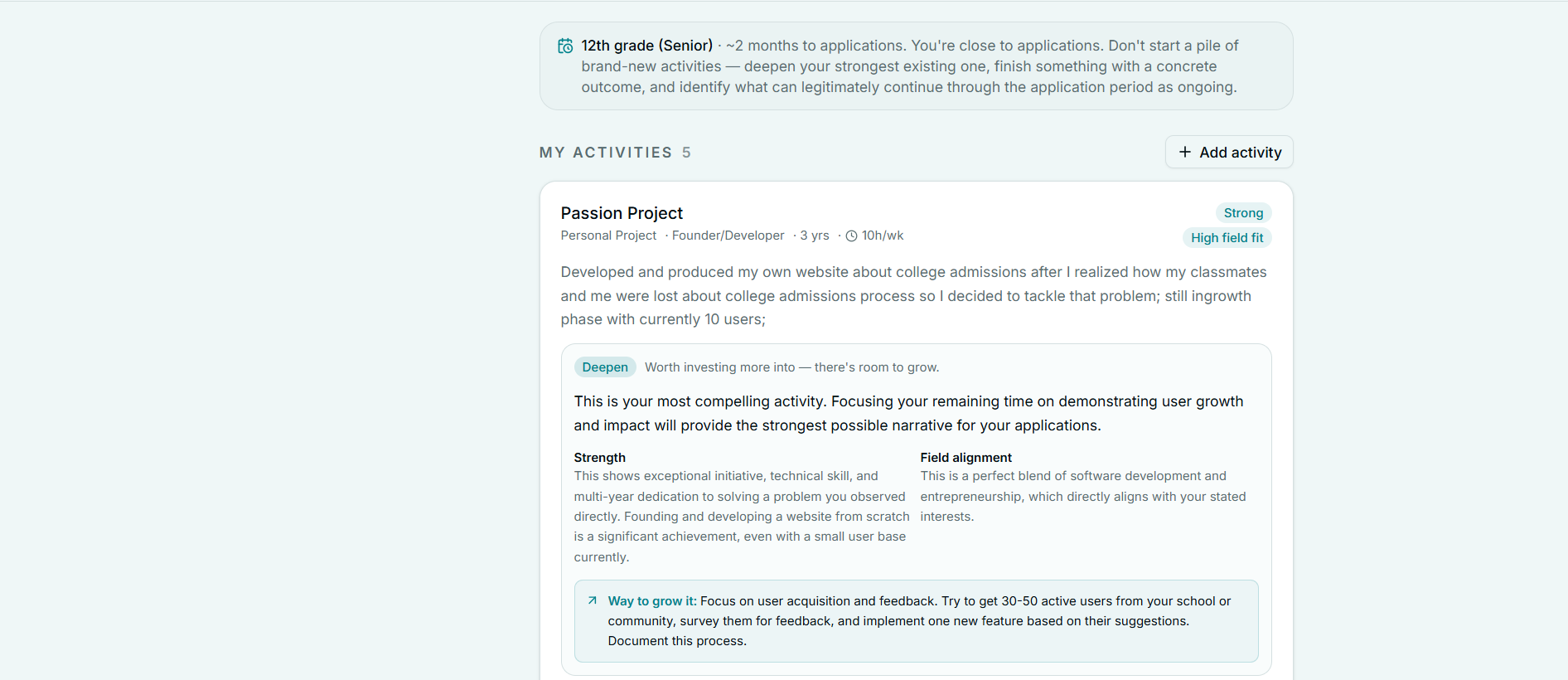
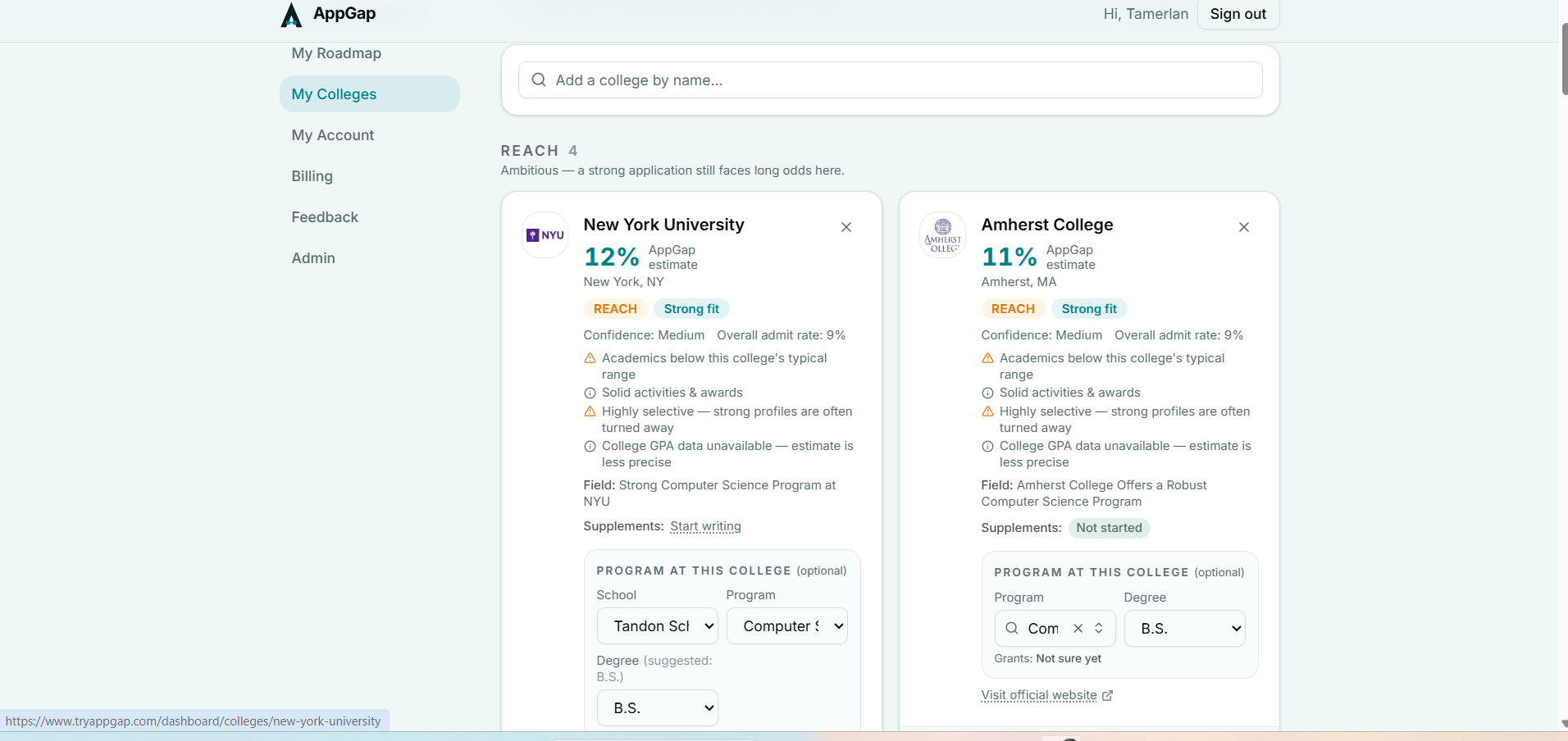
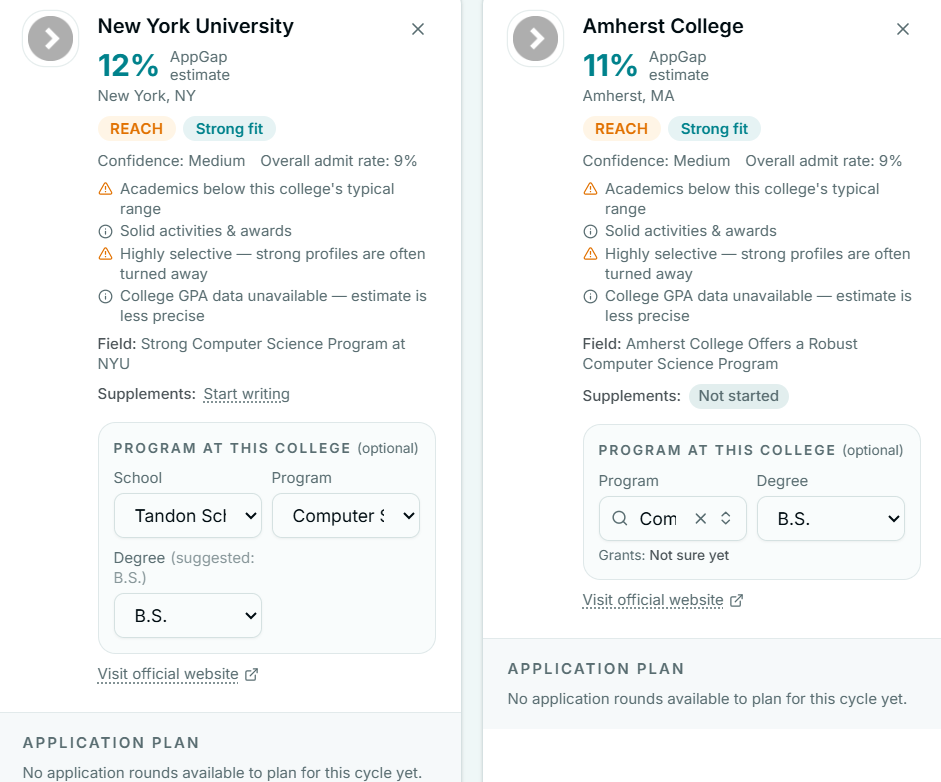
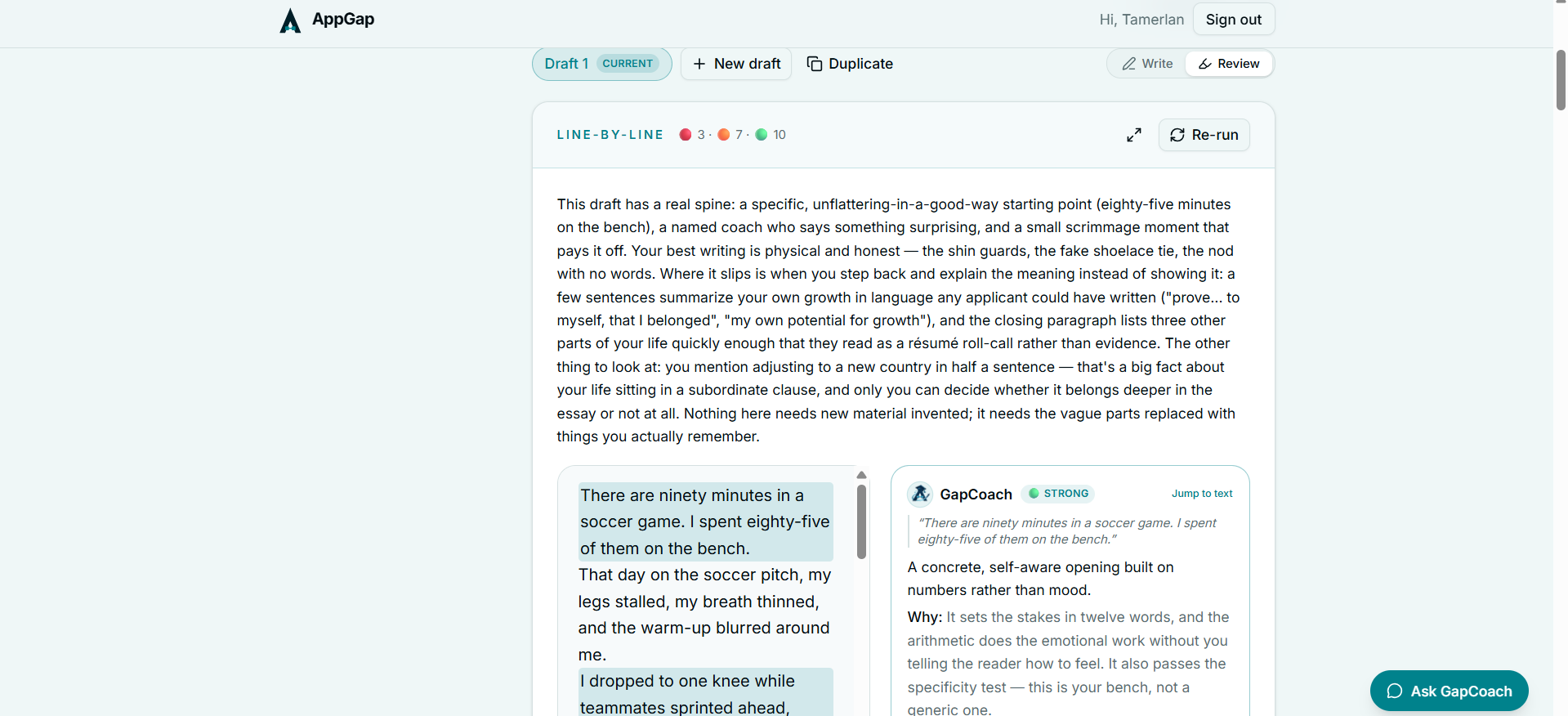
AppGap is an AI-powered college application coach that analyzes a student’s application to identify gaps, repetition, and opportunities to strengthen their overall story. It also provides college-specific guidance while keeping the student in control of their own writing.
How I Built It:
I built AppGap as a web application with a database for student application data and college-specific information such Common Data Set. I developed the core functionality and AI-powered analysis tools, while using Claude to help with parts of the frontend design and implementation.
Challenges I Ran Into:
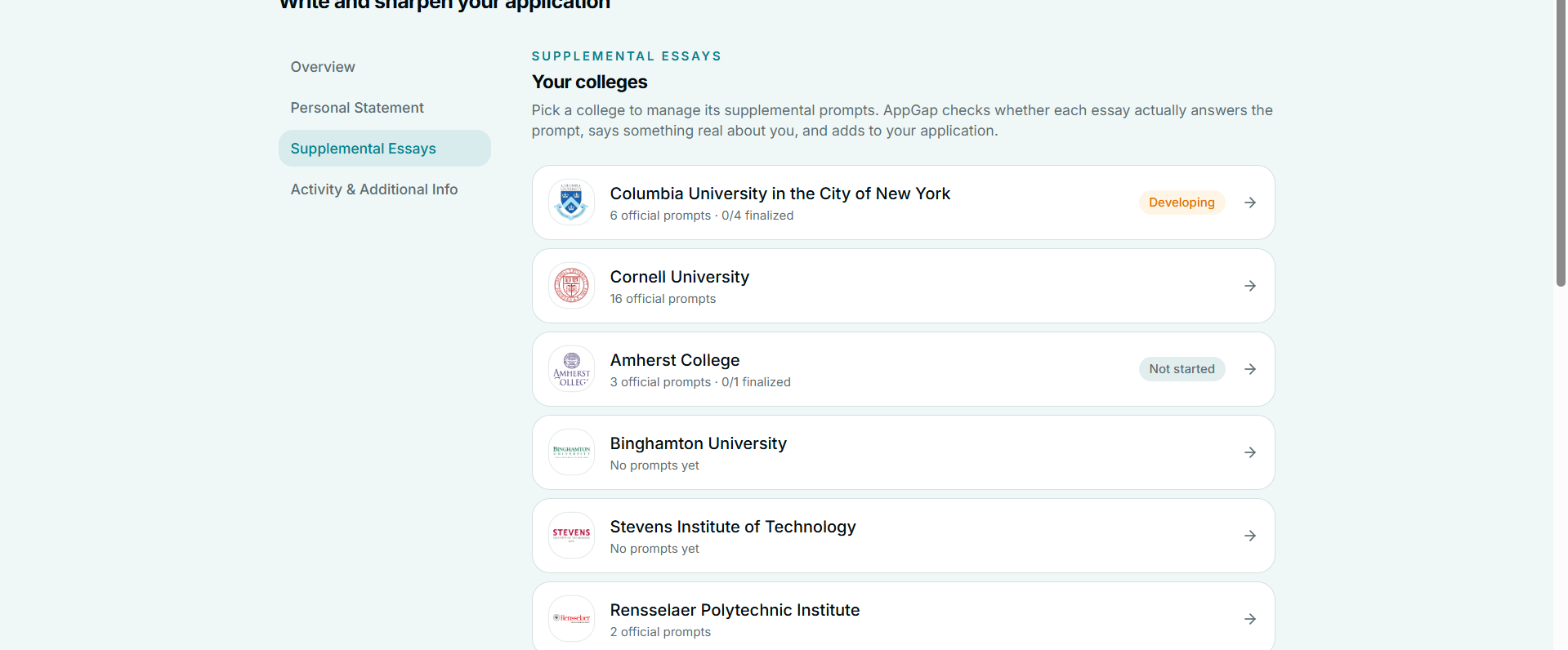
One of my biggest challenges was handling the differences between colleges and their application requirements. Colleges organize their information differently, prompts change between application cycles, and some information is difficult to access automatically. I also had to make sure the AI provided useful guidance without inventing information or taking over the student’s work.
Accomplishments I’m Proud Of:
I’m proud that I took AppGap from an idea into a working product that I could actually put in front of people. I’m also proud that I kept developing AppGap beyond the competition instead of treating it as a one-time project, continuously improving it based on problems I found while building and testing it.
What I Learned
I learned that building a real product involves much more than coding. I learned how to turn a problem into usable features, work with large amounts of changing data, design responsible AI interactions, and continuously test and improve a product based on real-world problems.
What’s Next for AppGap:
I want to continue expanding AppGap’s college-specific data, improving its AI coaching, and making its application analysis more accurate and personalized. My goal is to make AppGap a tool students can actually rely on throughout the entire college application process.
Problem Statement
The college application process can be confusing, overwhelming, and difficult to navigate without personalized guidance. Students often struggle to understand what their applications are missing, which activities or experiences they should pursue, and how to make meaningful improvements before deadlines.
This problem particularly affects students who cannot afford private college counselors or whose schools have limited counseling resources. While online resources, admissions guides, and AI writing tools can answer individual questions, students often have to piece together advice from multiple sources. They may receive feedback on an essay without understanding how it fits into their broader application, or learn about extracurricular opportunities without knowing which ones align with their interests and goals.
Existing approaches are often fragmented, generic, or focused on individual parts of the application rather than helping students understand their next steps. Students need a more organized, personalized, and actionable way to evaluate their progress and decide where to focus their efforts.
Proposed Solution
AppGap is a college application guidance platform designed to help students identify areas for improvement and turn those gaps into actionable next steps.
Students provide information about their academic background, extracurricular activities, interests, and target colleges. Based on that information, AppGap helps them evaluate their application, recognize potential weaknesses, improve application materials, and explore relevant opportunities.
Rather than simply telling students what is missing, the platform aims to help them understand what they can do about it. Its tools include personalized gap analysis and application-writing support, with a focus on practical feedback students can use to improve their work.
AppGap is intended to give students a clearer starting point, reduce the confusion of navigating disconnected resources, and help them make more informed decisions throughout the application process.
Innovation & Uniqueness
AppGap’s central innovation is its focus on connecting application feedback with actionable improvement. Many existing resources focus on one part of the process, such as essay editing, college information, or extracurricular discovery. AppGap aims to bring these needs together in a more coherent student experience.
The platform emphasizes personalized guidance rather than a one-size-fits-all checklist. Its goal is to help students identify which areas deserve attention based on their own profiles and college goals, while providing explanations and suggestions instead of merely presenting a score or generic recommendation.
AppGap also aims to make college application guidance more accessible to students who may not have the resources to work with private admissions consultants. It is designed as a support tool that helps students think critically about their applications and make their own decisions, not as a replacement for their judgment or a guarantee of admission.
Project Presentation
Expected users: High school students preparing for college applications, especially those who need more structured guidance or have limited access to personalized counseling. 100 users per month with advertisements in social media.
Implementation process: Students begin by entering relevant information about their academic background, activities, interests, and target colleges. AppGap uses this information to provide personalized feedback and identify areas they may want to strengthen. Students can then use its writing-support tools and explore possible next steps. The platform can be improved over time through user feedback, testing, and evaluation of the usefulness and clarity of its recommendations. Resources required: The existing web application, software development tools, AI services for supported features, hosting infrastructure, and feedback from students who represent the intended audience.
Potential challenges: Providing useful recommendations without making unsupported assumptions about admissions decisions; keeping AI-generated feedback consistent and reliable; protecting students’ personal information; avoiding generic or repetitive suggestions; and ensuring that recommendations remain actionable for students with different backgrounds and resources.
Expected outcomes: AppGap aims to help students better understand their application strengths and weaknesses, organize their next steps, and access more structured guidance. Its longer-term goal is to make the application process less fragmented and help students approach it with greater clarity and confidence.
Built With
- claude
- dribbble
- figma
- github
- javascript
- next.js
- react
- shadcn/ui
- stripe
- supabase
- tailwindcss
- vercel
- vercel-ai-gateway

Log in or sign up for Devpost to join the conversation.