Inspiration
As a rising high school senior, navigating the complex college admissions ecosystem firsthand opened my eyes to how overwhelming the process can be. I looked around and saw my own classmates struggling to figure out where they stood, how to organize their applications, and how to identify critical holes in their profiles. Recognizing a universal need for accessible, strategic guidance, I decided to build a solution. To refine the platform and gather real-world feedback, I even gave several of my close school friends pro access to test the software and optimize their early applications.
What it does
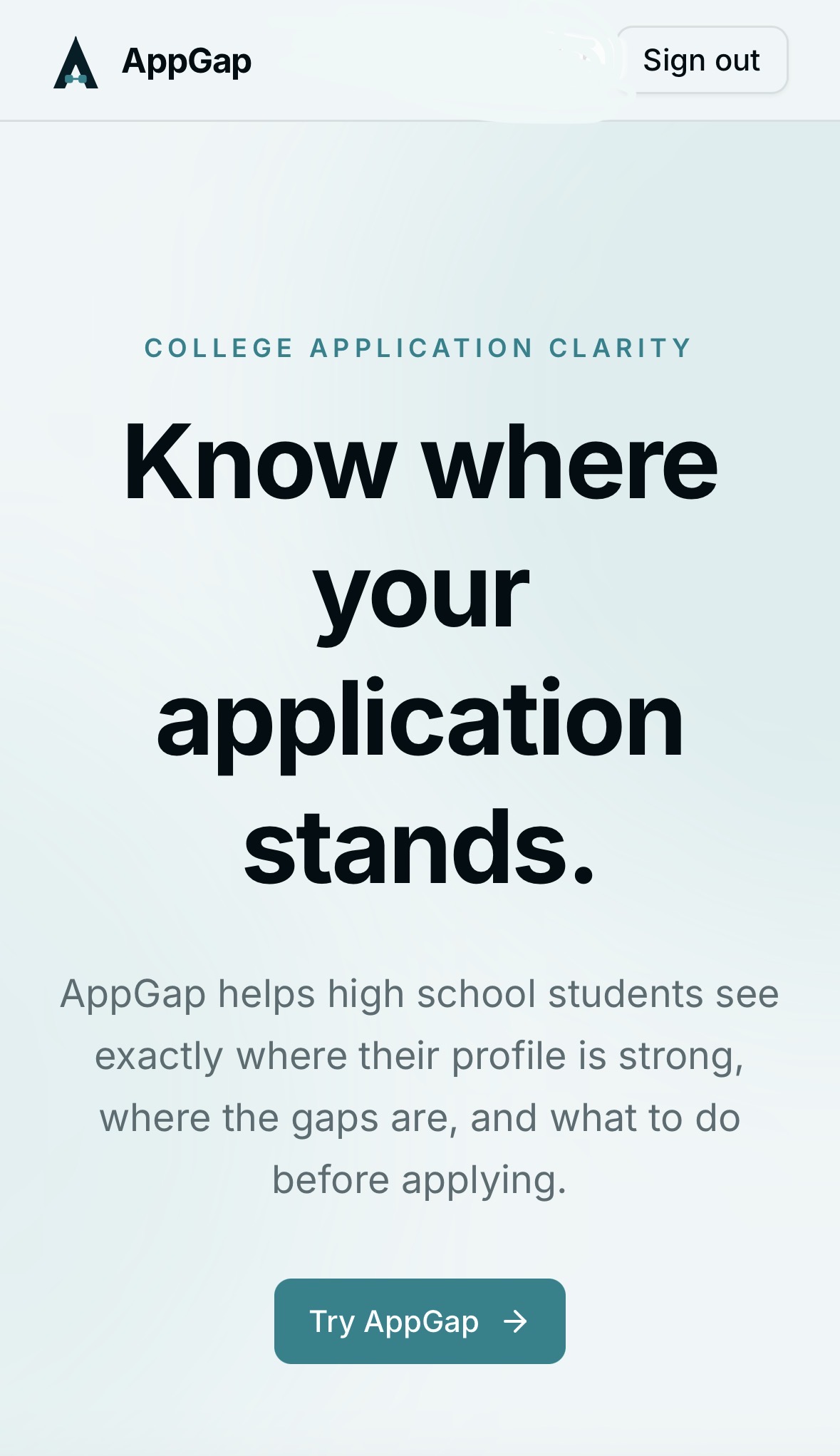
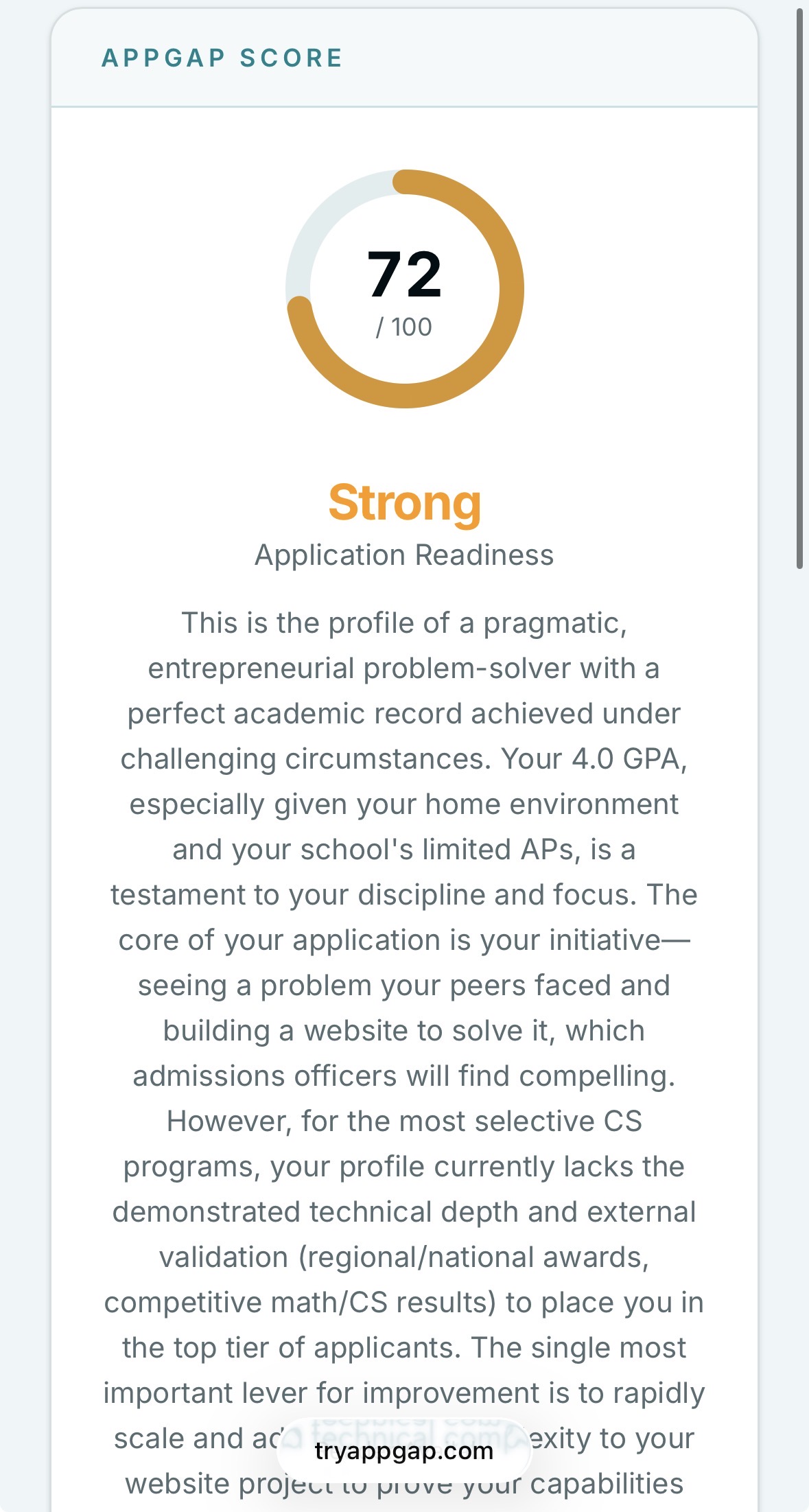
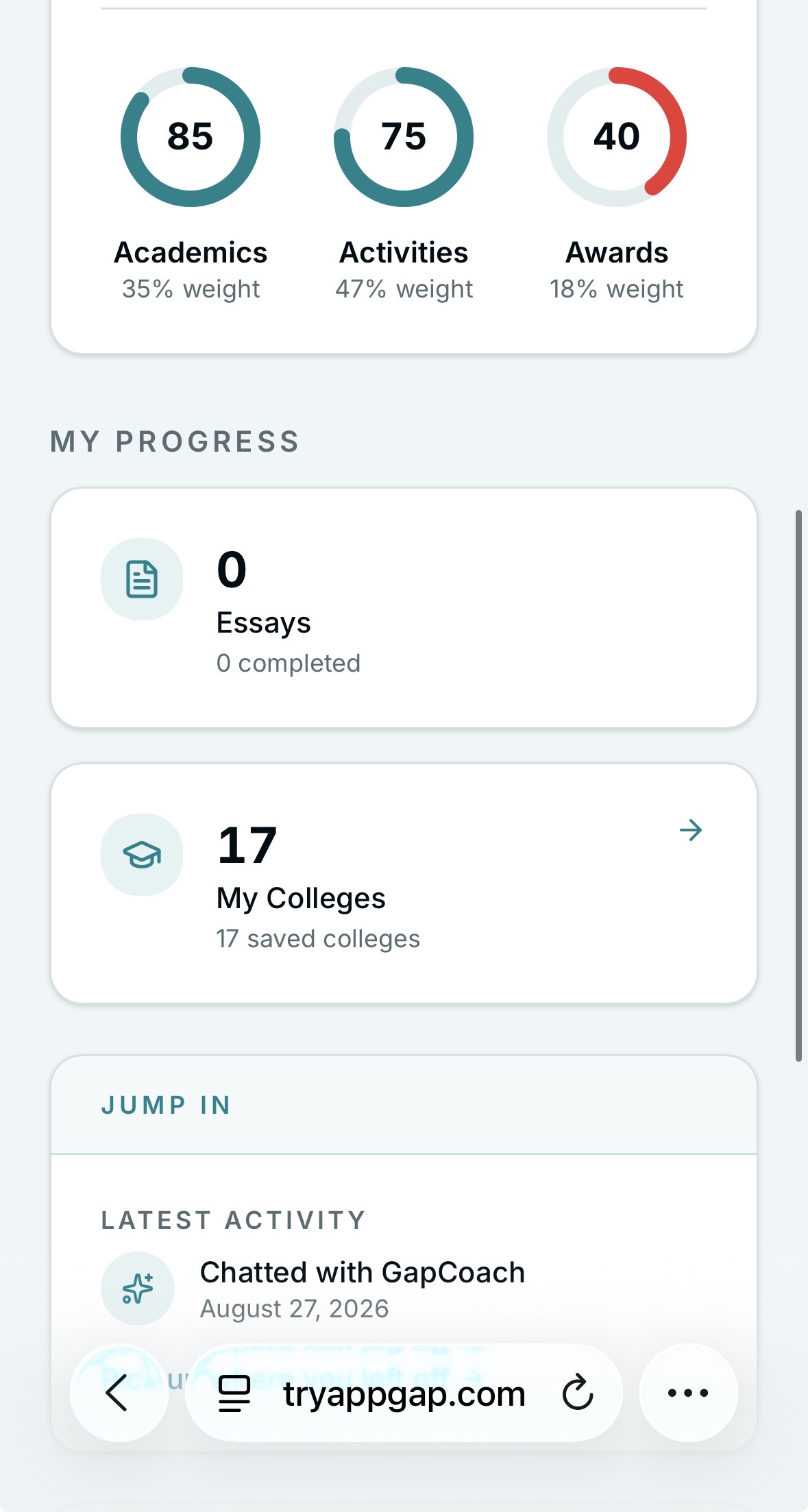
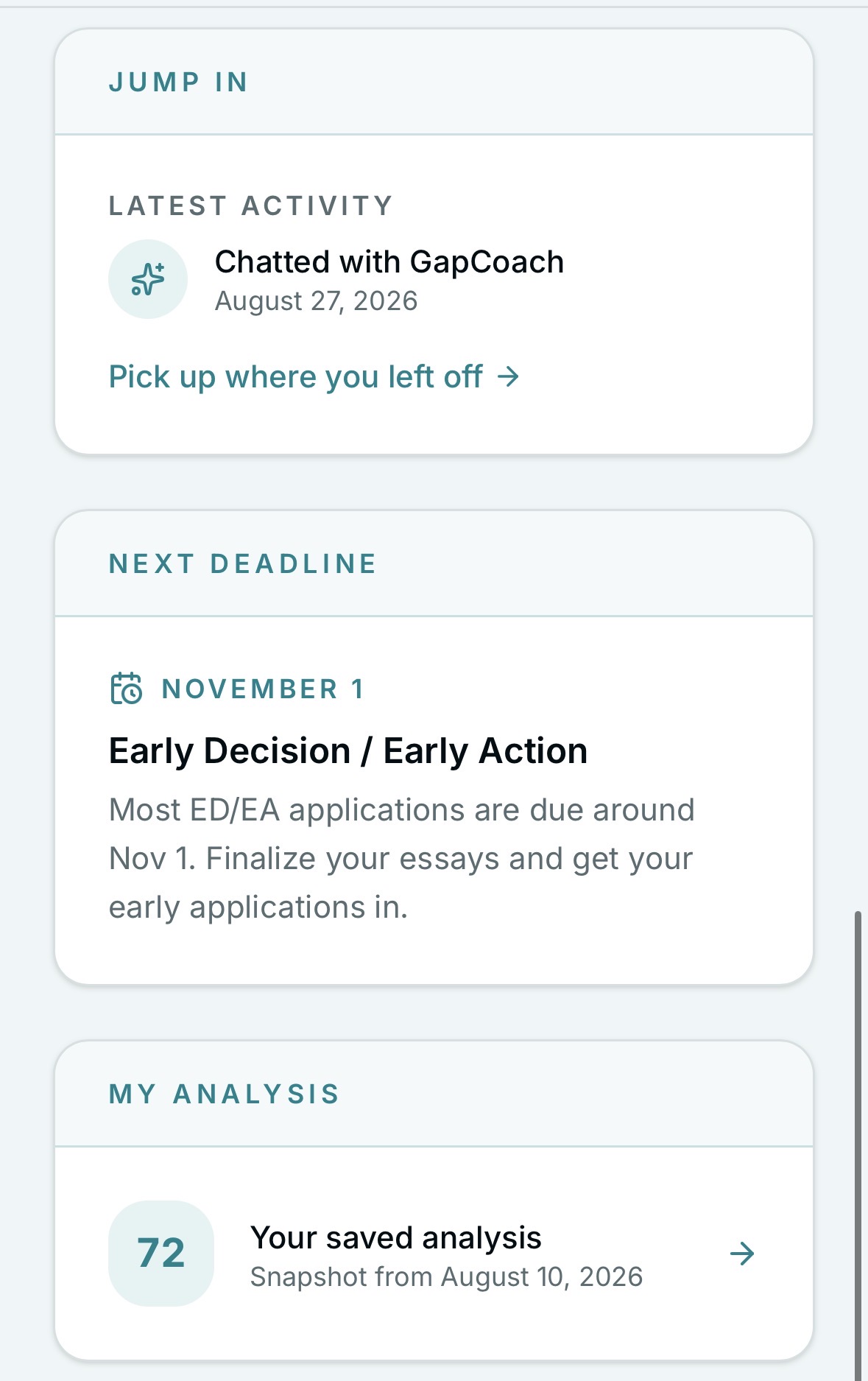
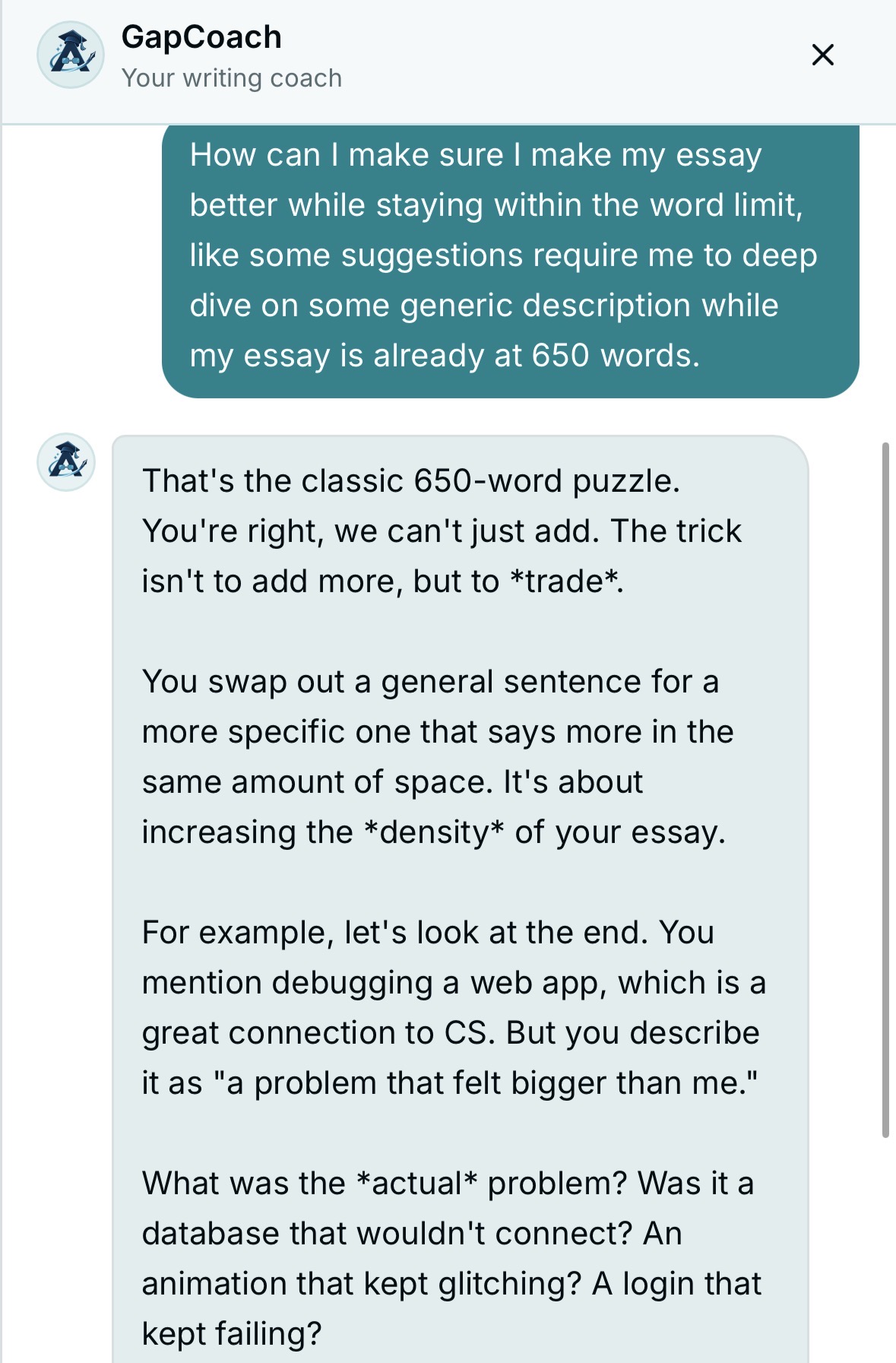
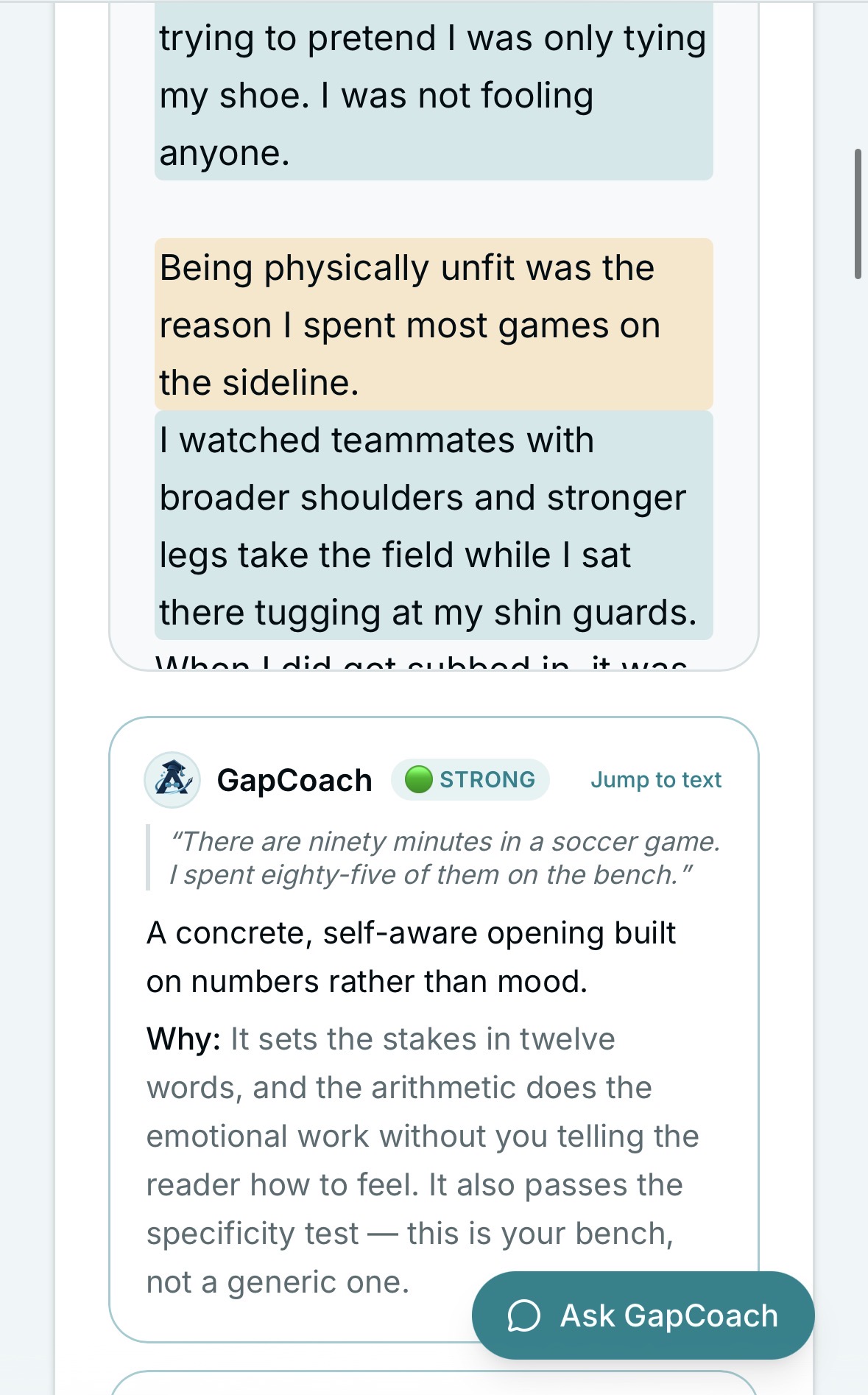
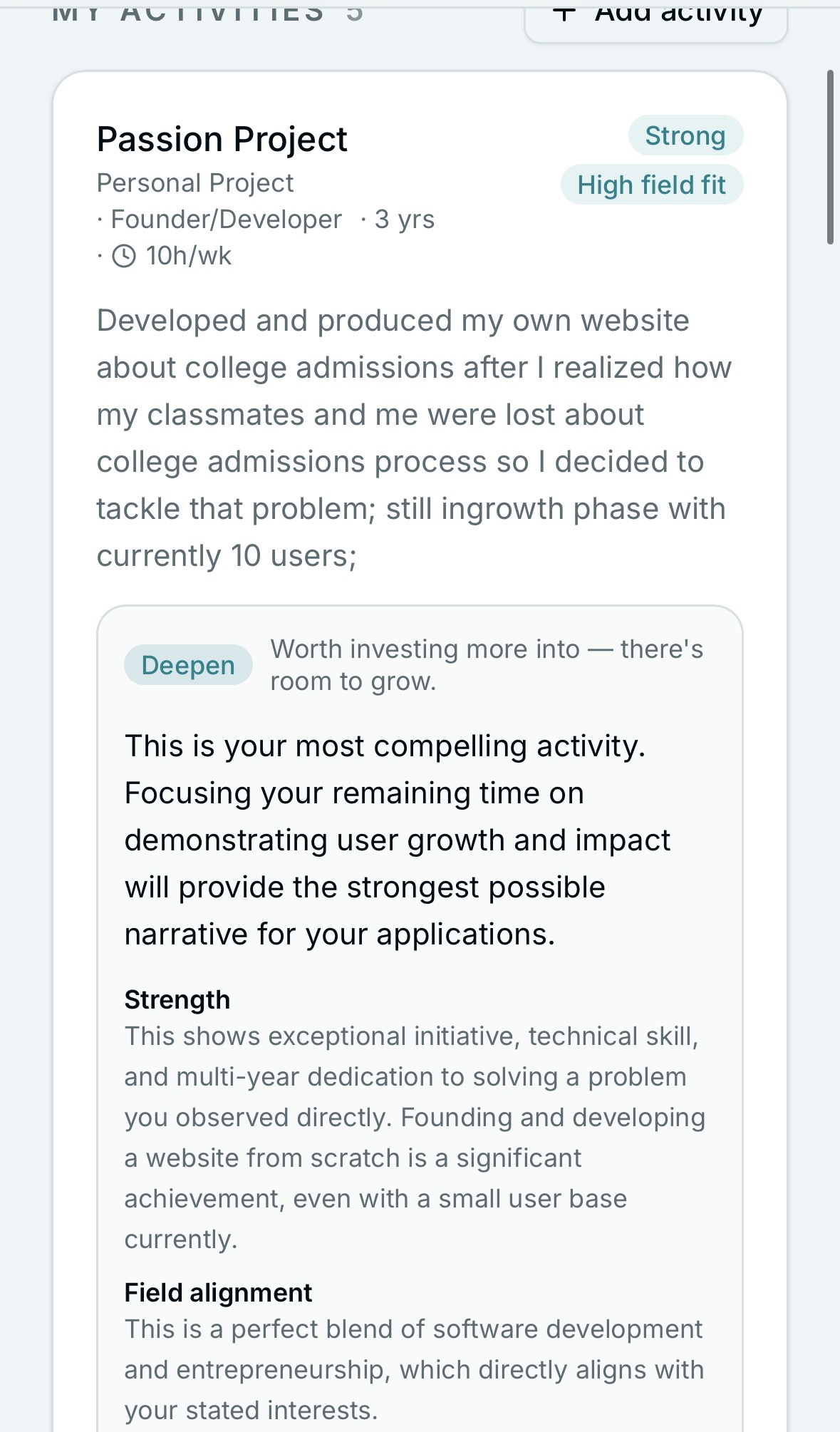
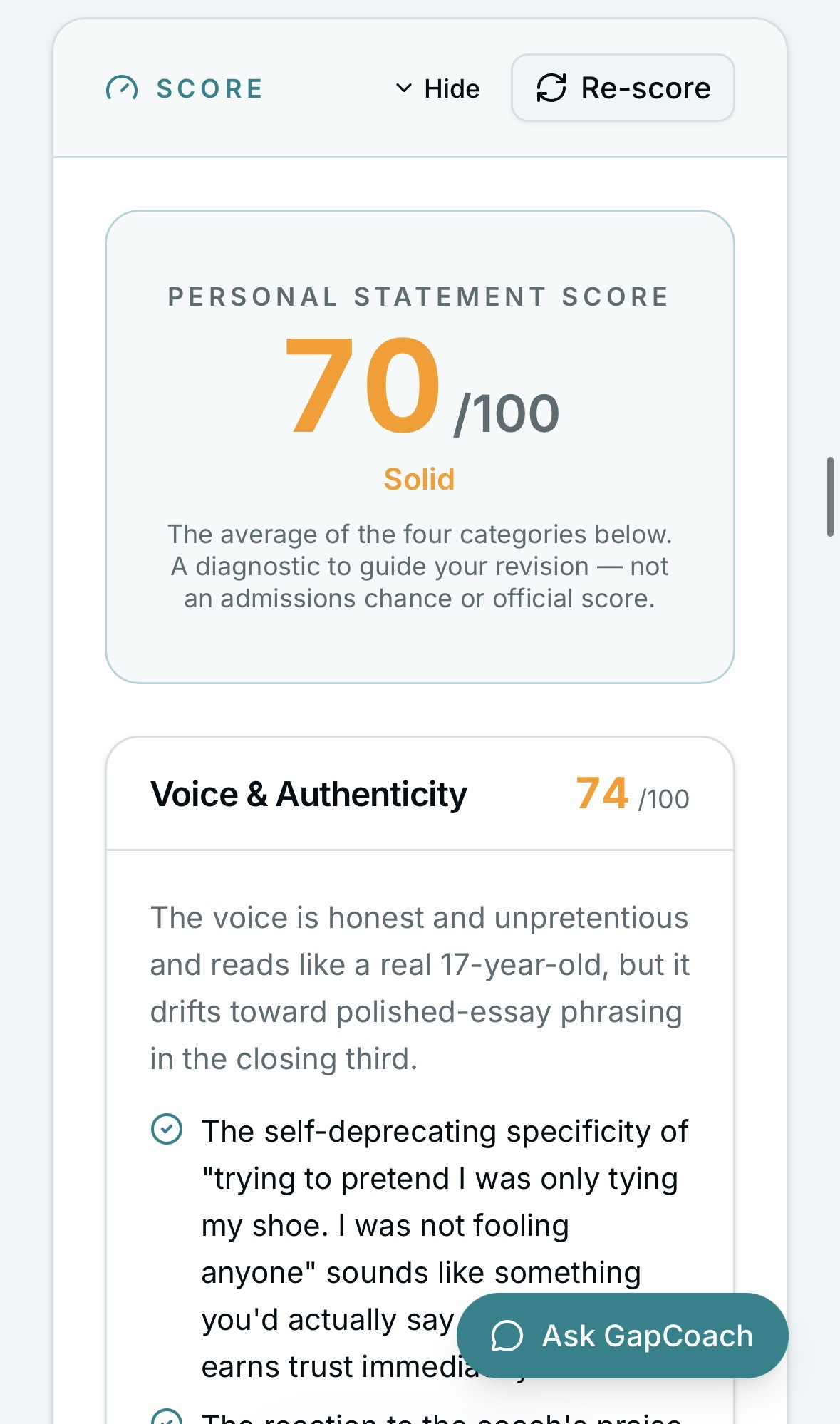
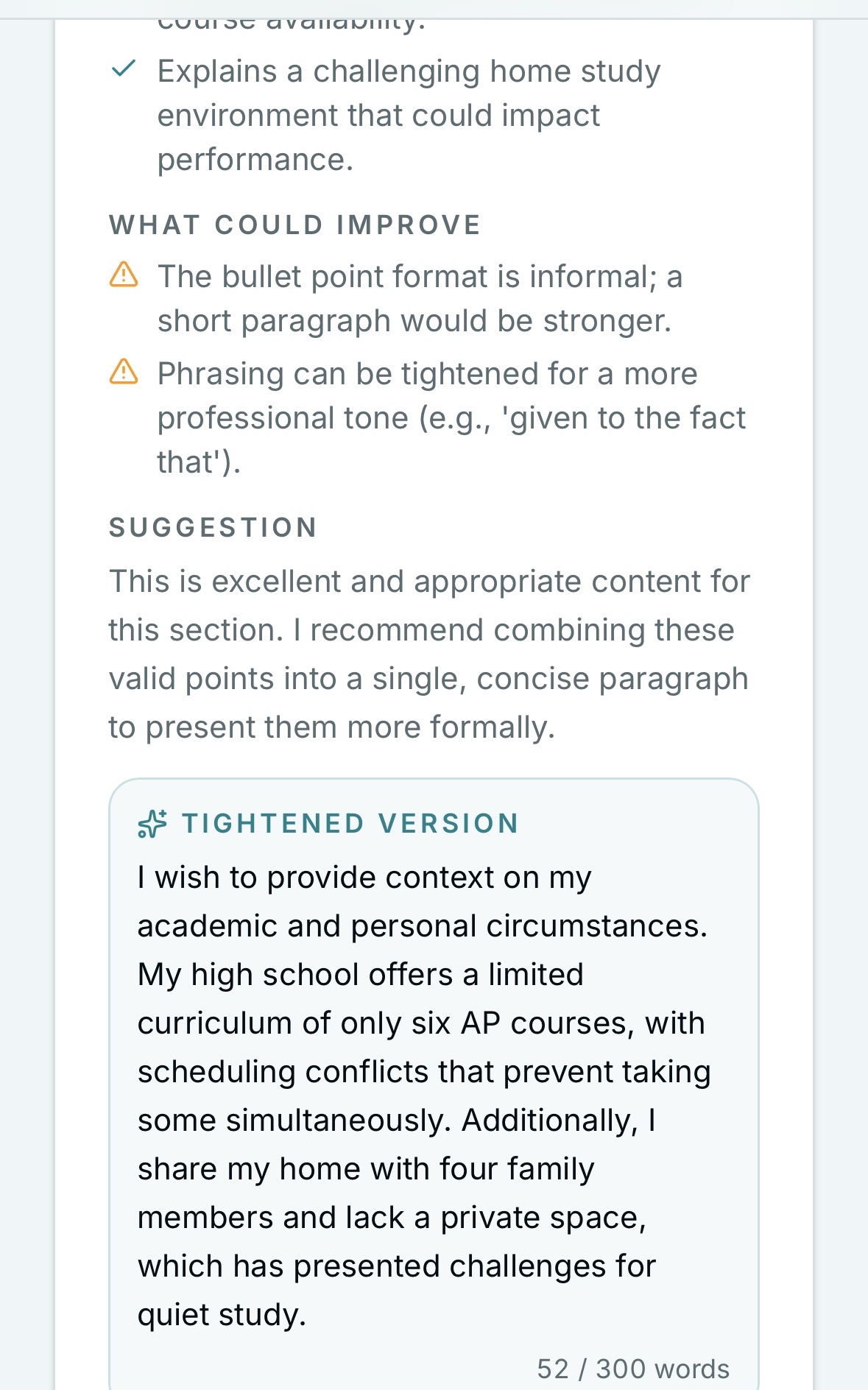
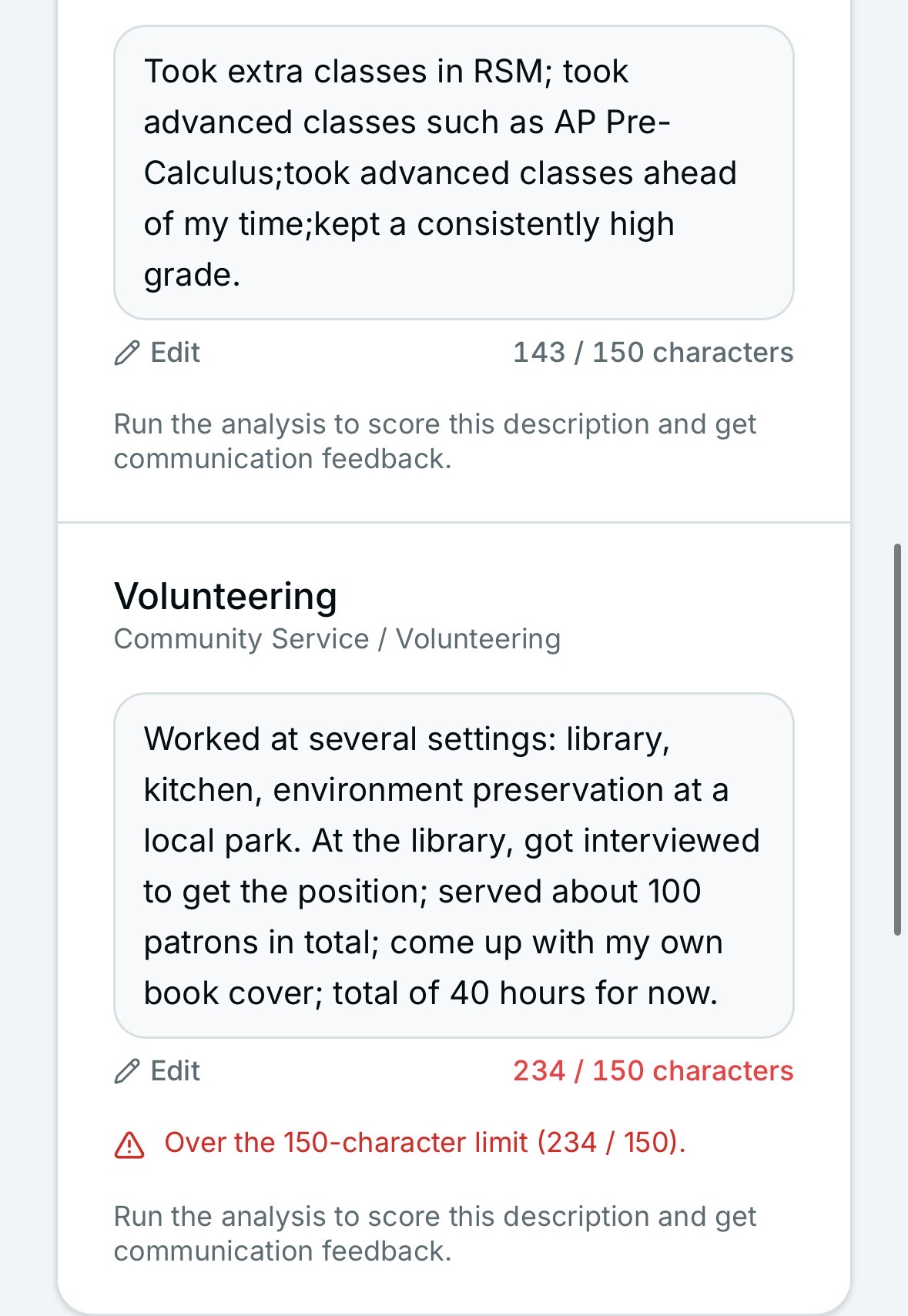
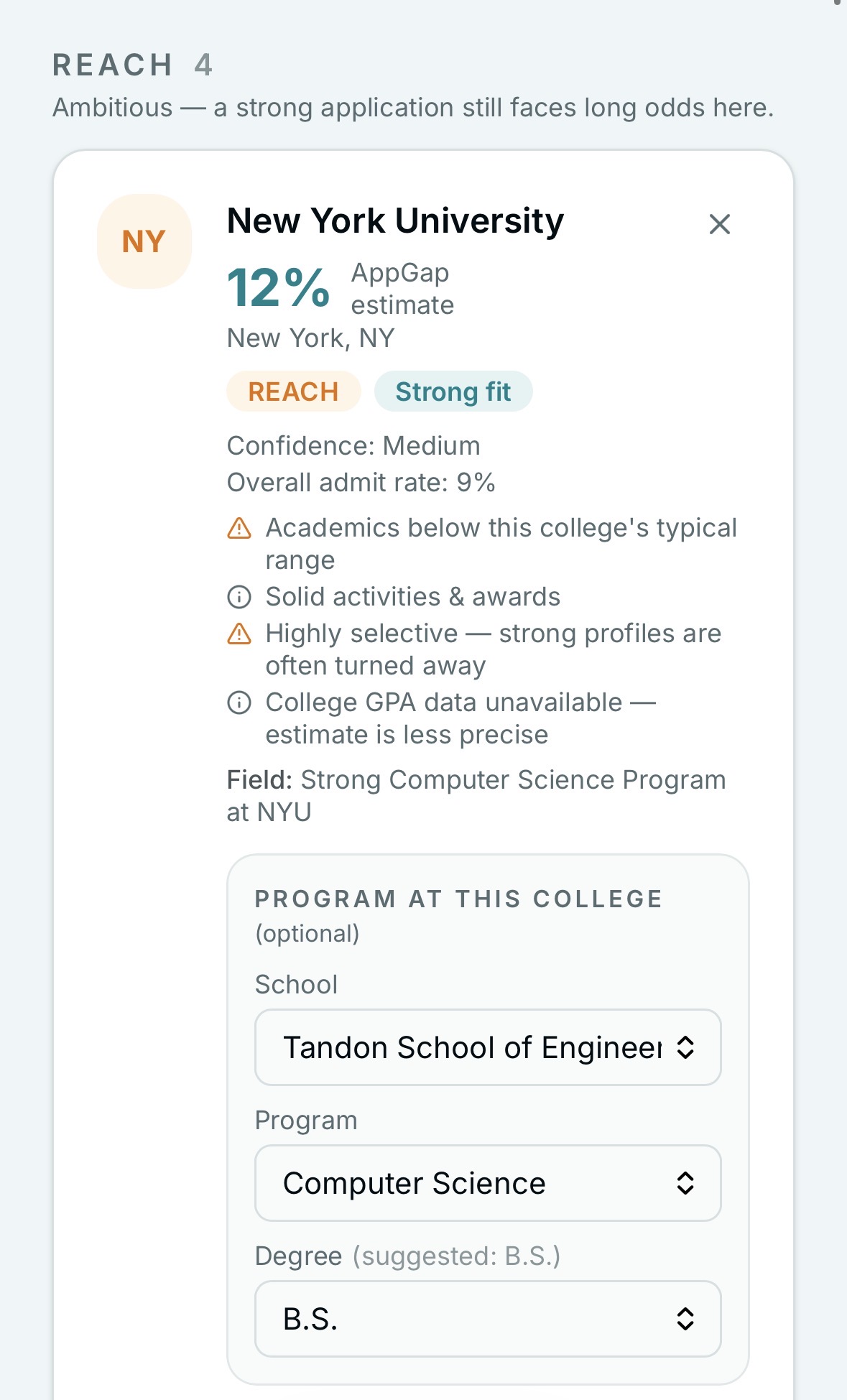
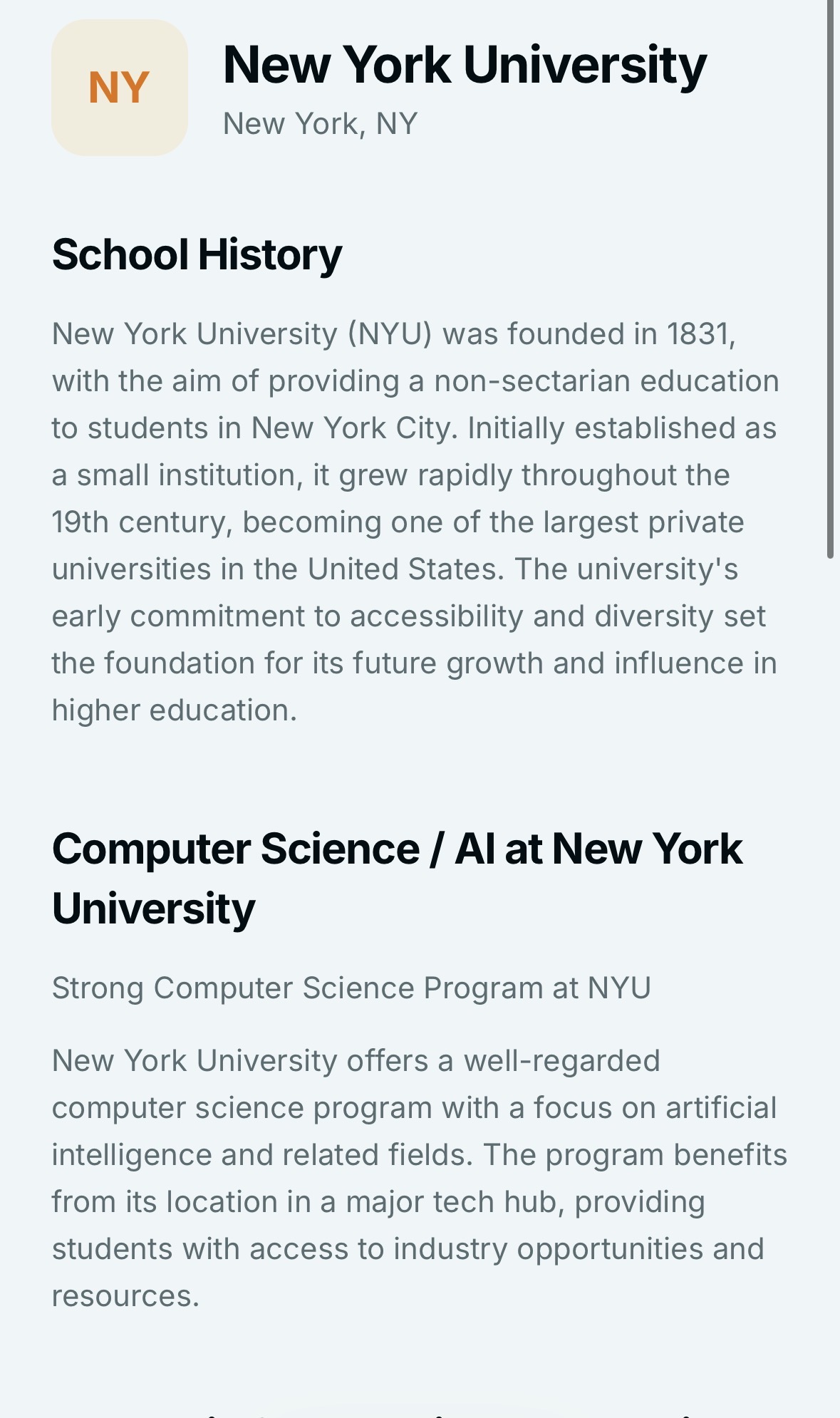
AppGap serves as an intelligent, AI-powered college admissions coach. Through a streamlined interface, users input their raw high school profiles—including academic metrics, activities, and writing drafts. The platform instantly analyzes the data to diagnose competitive gaps and generate actionable optimization insights for components like the Personal Statement and Activities section.
How we built it
The application architecture is split into a responsive frontend user interface and a secure database management layer designed to handle student data inputs efficiently. The core functionality relies on structured API data routing; user onboarding metrics are dynamically wrapped into programmatic templates and securely piped to advanced LLM engines to return personalized, university-tier feedback. For design, Claude was used to apply style and colors to the current architecture.
Challenges I ran into
A primary engineering obstacle was optimizing prompt latency while maintaining precise contextual analysis. Because high school profiles vary wildly, building a standard data wrapper that accurately maps variables—such as computing a student's standing against an average threshold like — SAT: 400-1600—required meticulous fine-tuning of system parameters to prevent algorithmic hallucinations and maintain structural accuracy.
Accomplishments that we're proud of
I am incredibly proud of taking a personal frustration with the college application process and transforming it into a fully functional, live full-stack web application. Seeing the architecture successfully scale to process real user profiles, securely route complex API payloads, and return genuinely useful, context-aware admissions strategies felt amazing. Furthermore, deploying the beta and seeing my close high school friends actually utilize the platform to improve their profiles and organize their timelines has been the ultimate validation of the project's utility.
What we learned
This project taught me the immense value of full-stack engineering and product iteration under constraints. Moving forward, I am scaling the engine to unlock the remaining algorithmic models, including "My Roadmap" automation, automated coursework tracking, and dynamic supplemental essay analysis.
What's next for AppGap
The immediate roadmap focuses on unlocking and finalizing the remaining subtabs within the core modules. I am actively developing the algorithms behind "My Roadmap" to automate chronological task tracking for users. Additionally, I am finalizing the backend pipelines for the locked Supplemental Essays, Coursework, and Awards engines so the system can evaluate localized transcripts and multi-essay prompts simultaneously.

Log in or sign up for Devpost to join the conversation.