-
-
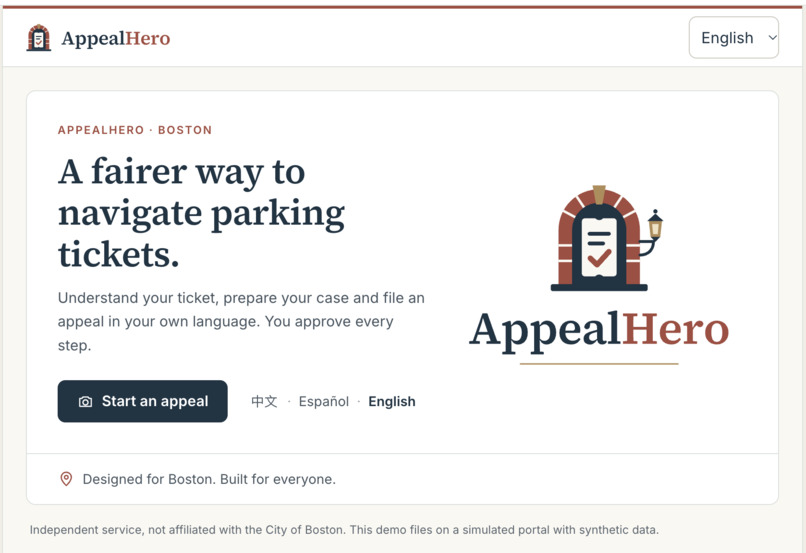
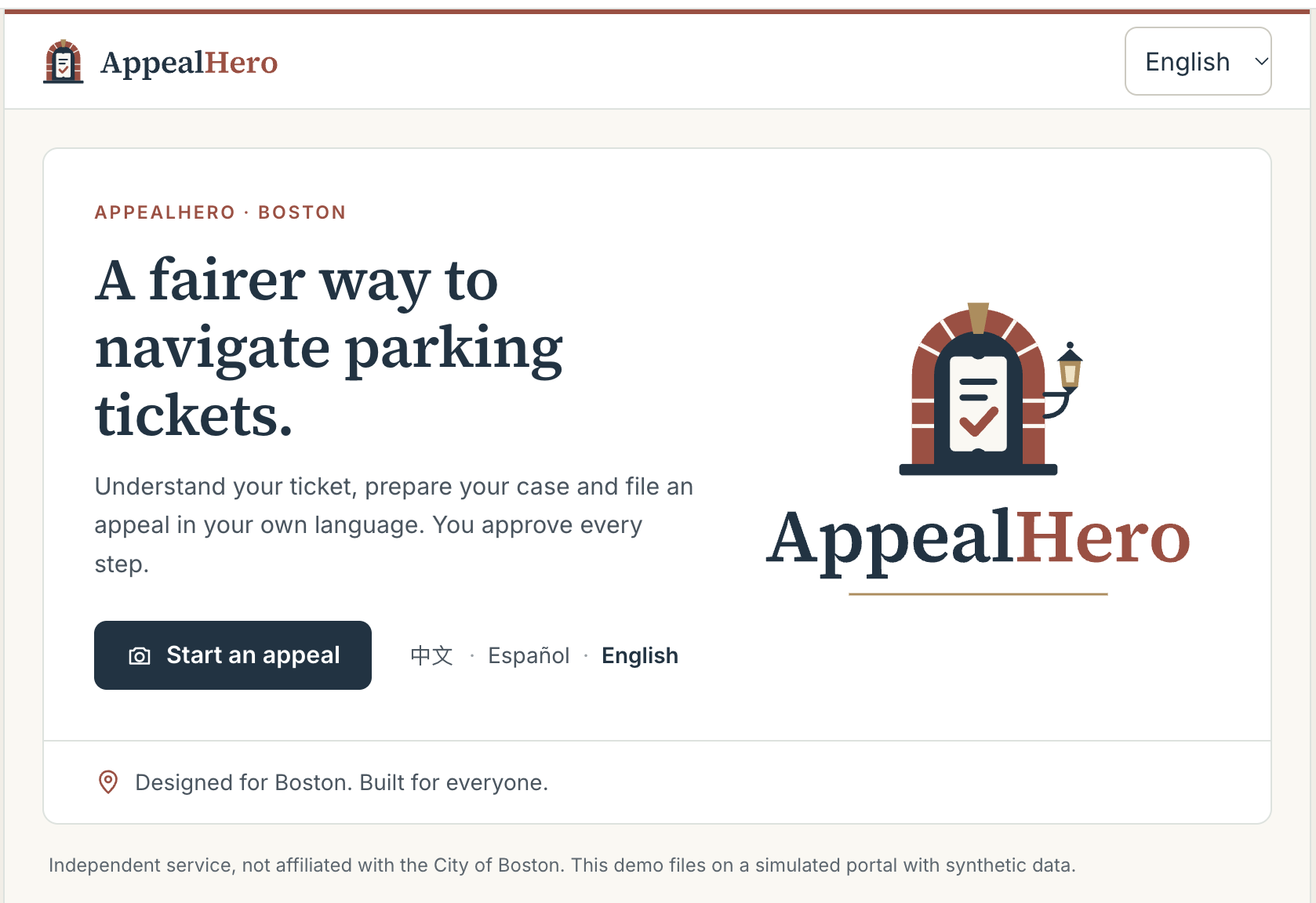
Choose Your Language, AppealHero is for Everyone
-
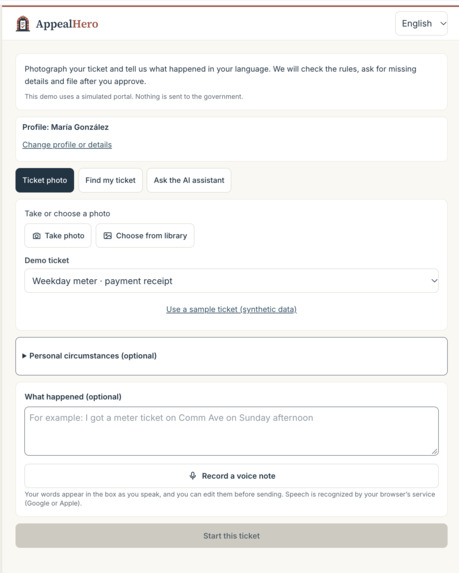
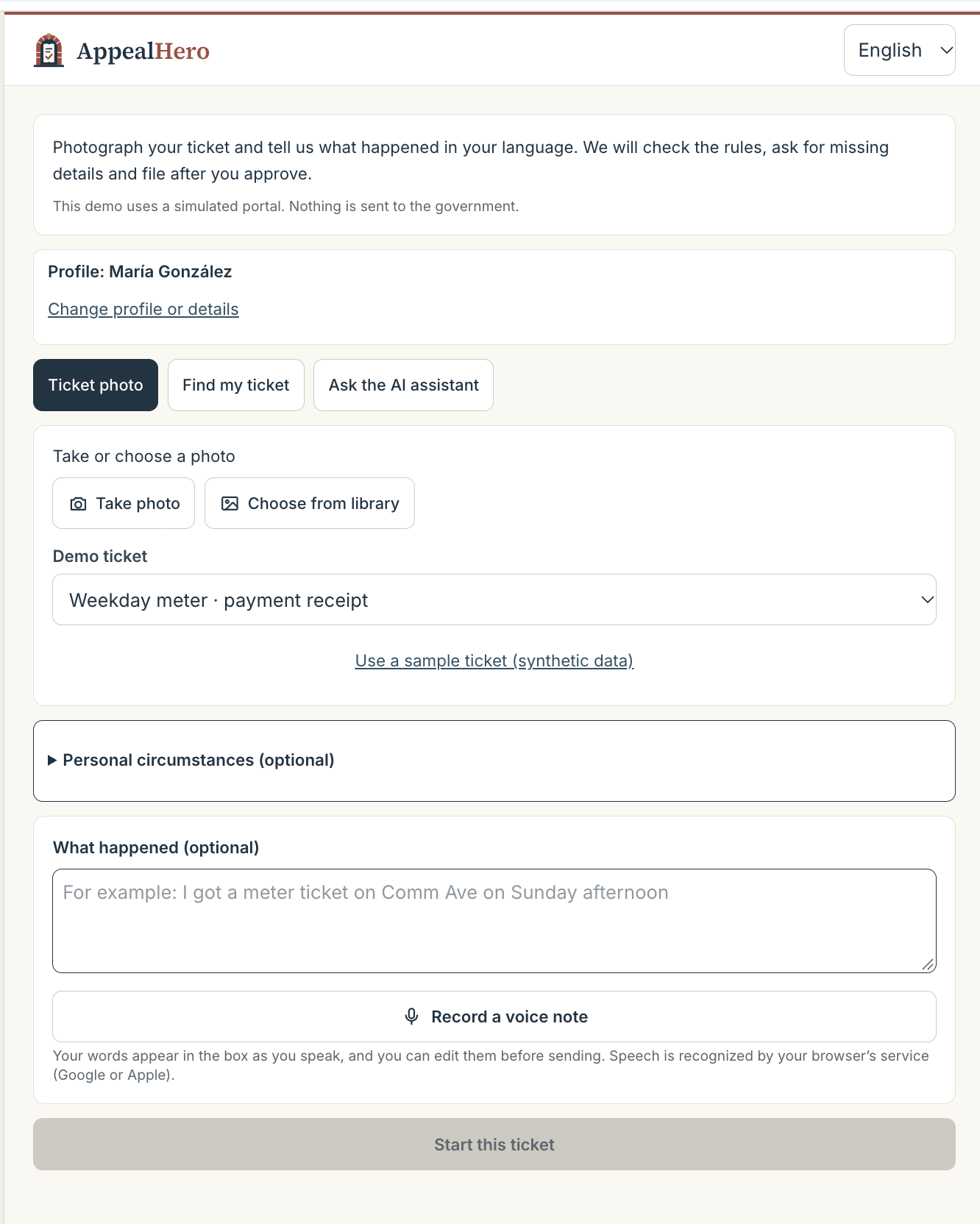
Tell Me Your Problem
-
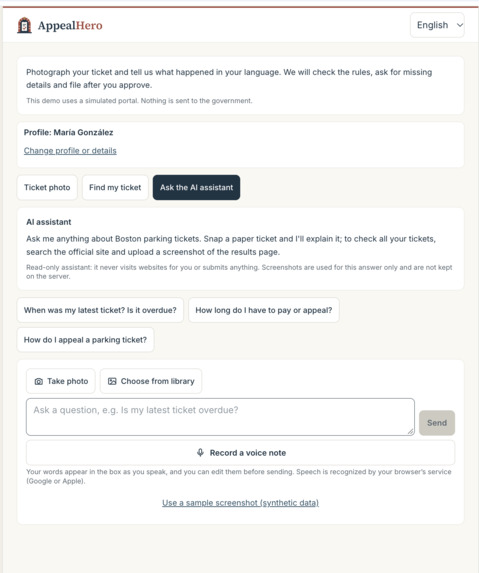
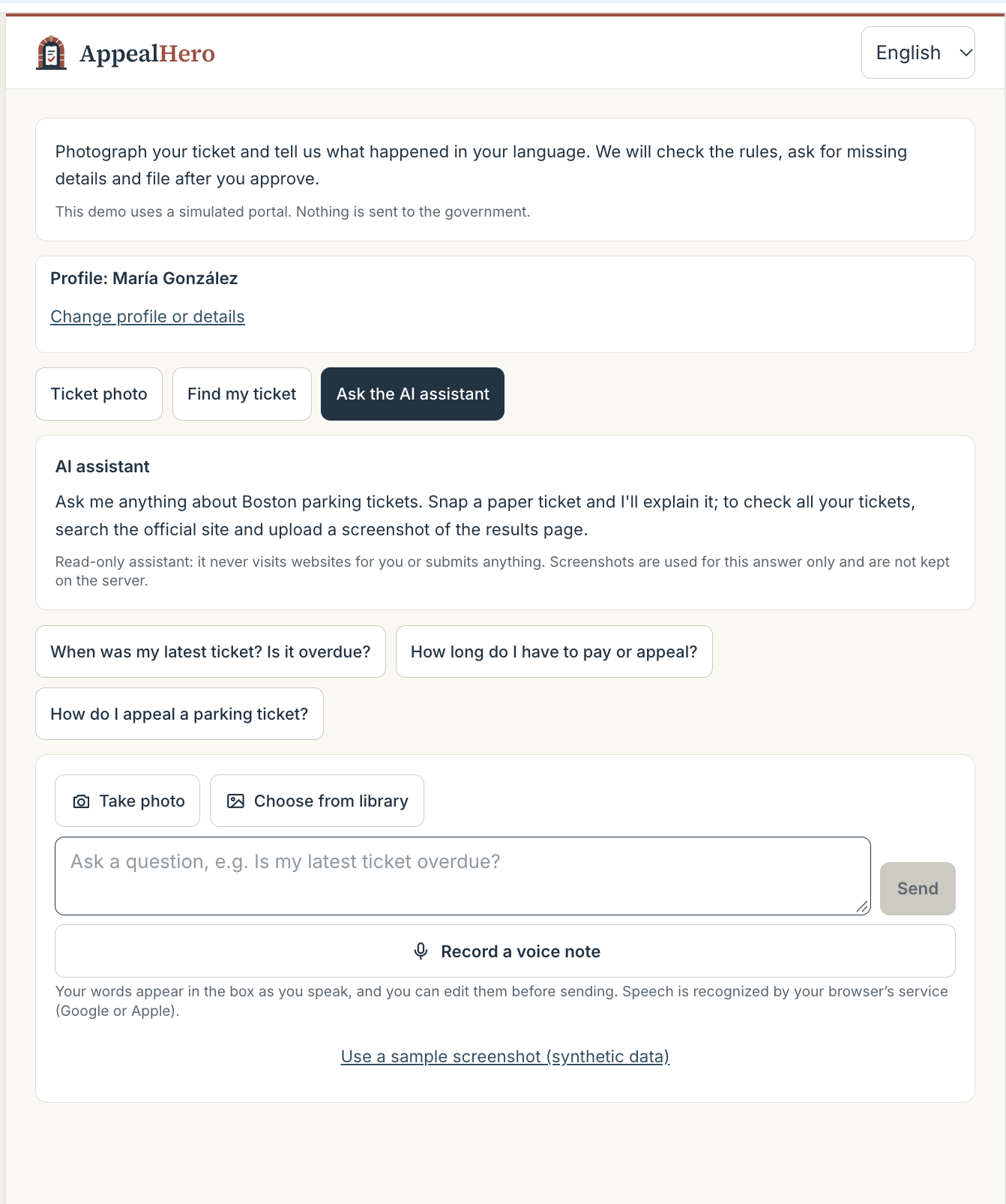
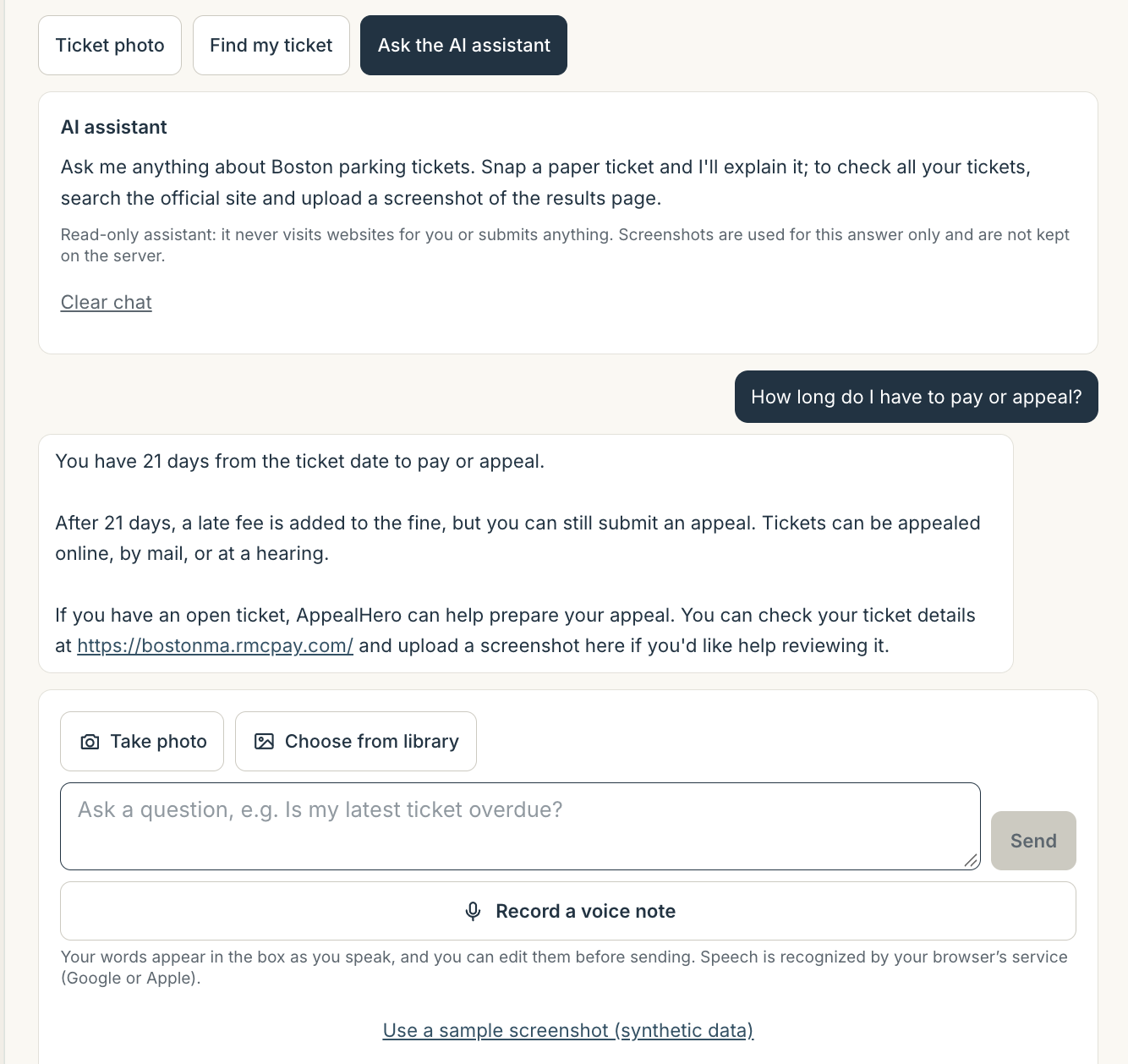
Agent Will Help You
-
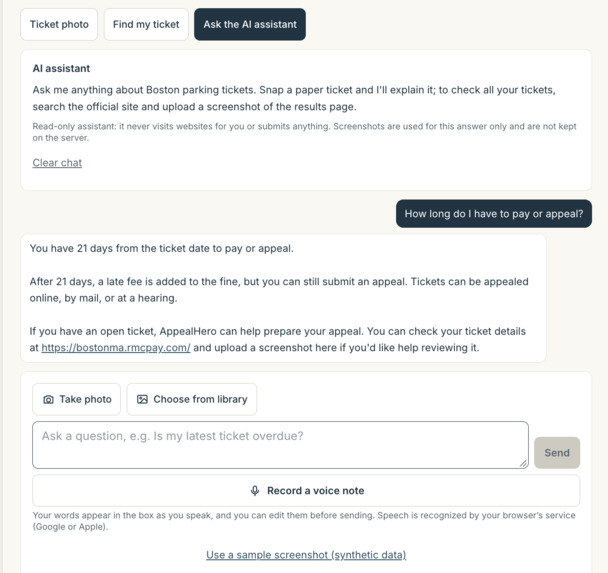
Let AppealHero help you analyze the Problem
-
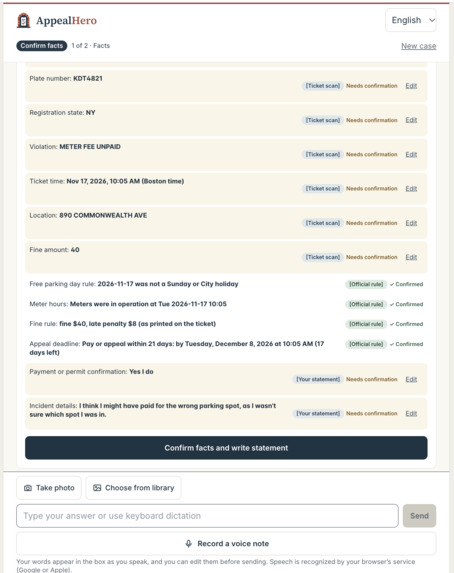
Provide your evidence and draft an appeal
-
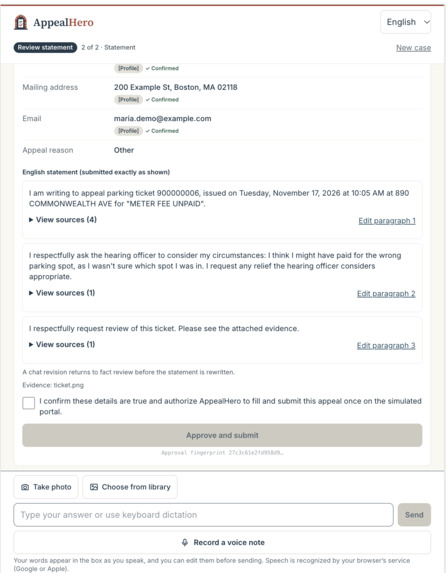
Agent will help you with your claim
-
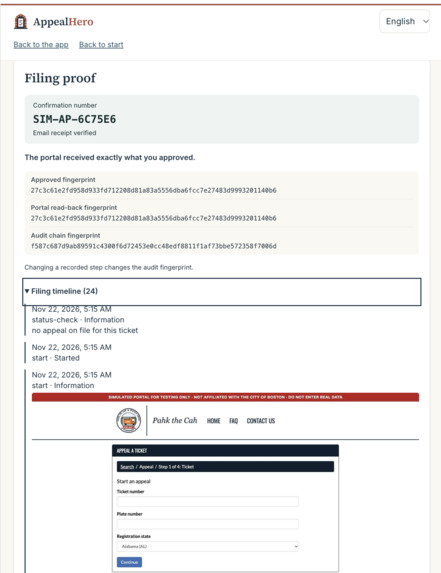
Agent assist you - completing and submitting your application.
-
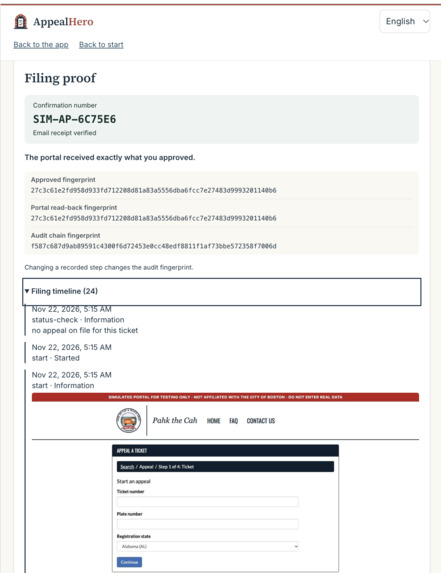
(Note: For privacy, NOT actual RMCpay; it has been created to mimic the RMCpay format in order to simulate a digital system)
Inspiration
A parking ticket is a small piece of paper that can create a much larger problem: unfamiliar rules, missing evidence, a deadline, and a form written in a language you may not feel confident using. For Boston residents, students, and newcomers, explaining what happened can be as difficult as understanding the ticket itself.
We built AppealHero for BostonHacks' Boundless Boston track to make that process easier to understand and review. Our central question was: can an AI assistant help someone prepare an appeal while keeping that person in control of the facts, the wording, and the decision to file?
What it does
AppealHero is a mobile-first web app in English, Spanish, and Chinese. Users choose their language, then explore the workflow with synthetic demo identities and tickets.
- Understand the ticket. Upload a ticket photo or select a ticket from our simulated lookup. A conversational assistant can also help interpret an official lookup screenshot supplied by the user.
- Assess the evidence. Focused playbooks cover meter, resident-permit, and hydrant cases. The app presents a qualitative case-strength rating, supporting reasons, possible objections, cited rule sources, and evidence to gather. Users can also explain personal circumstances for a discretionary request.
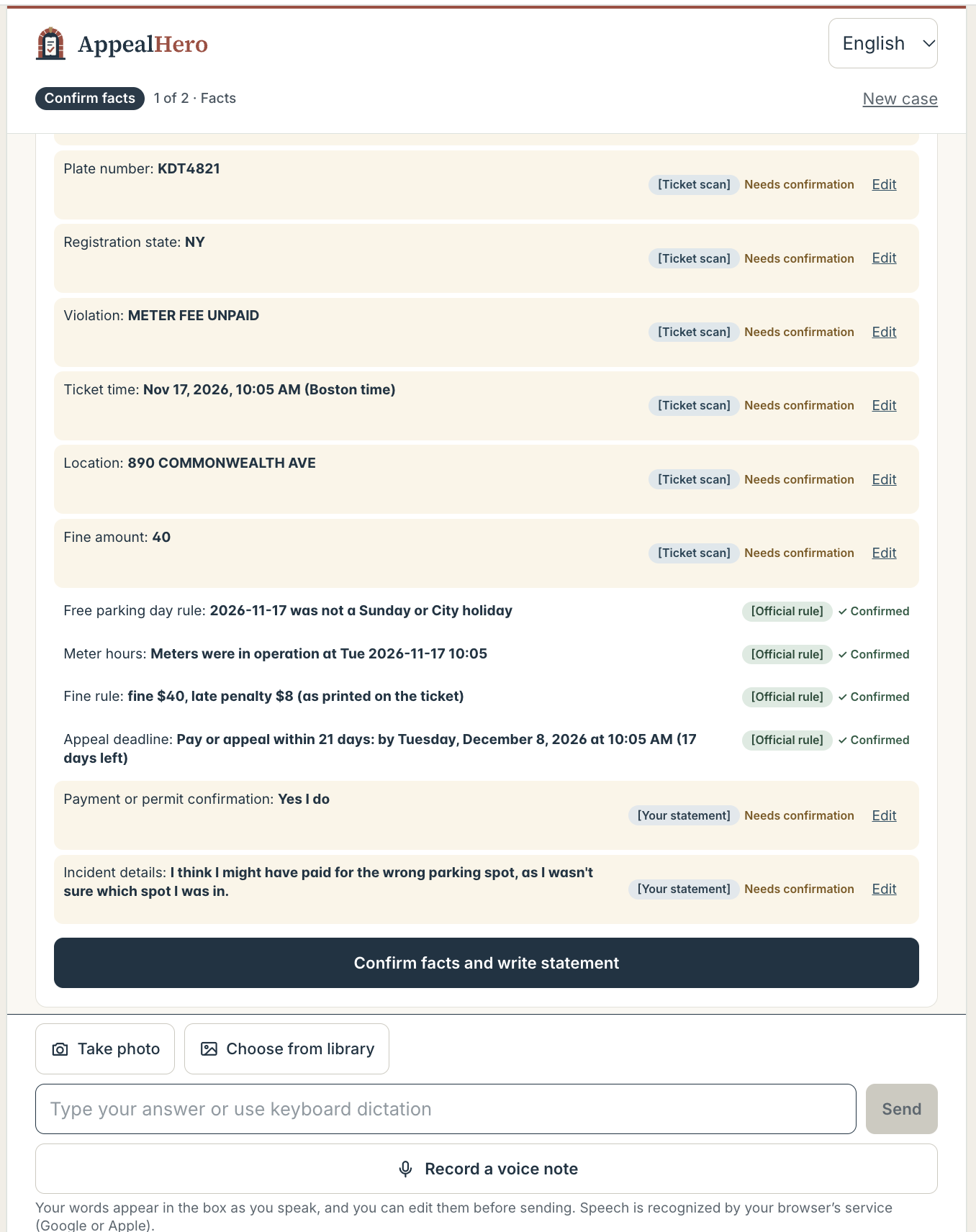
- Review the facts. Users correct extracted details and confirm the facts before a statement is prepared.
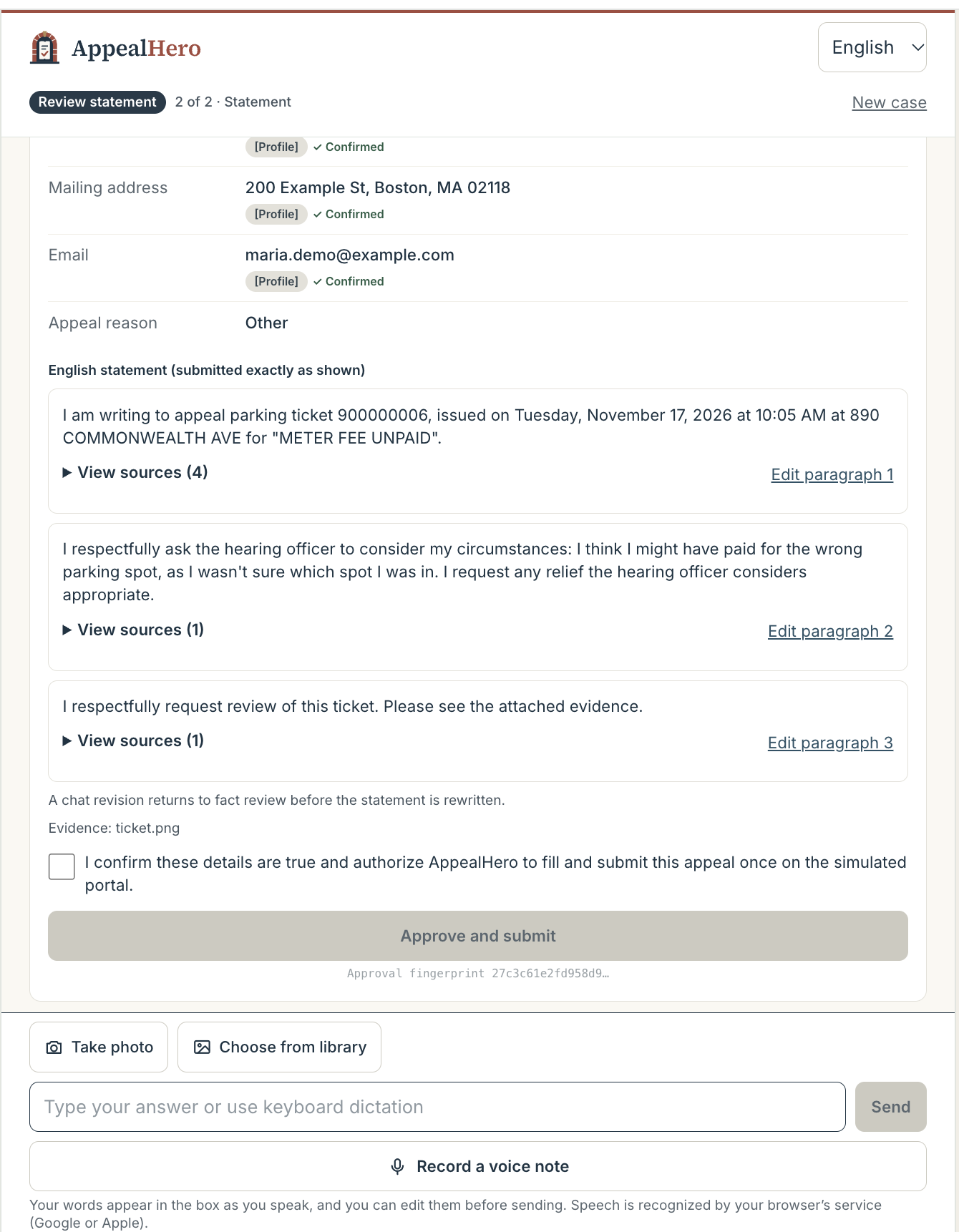
- Review every word. The app drafts an English appeal with a translation for review. Users can edit individual paragraphs and see which facts support them. Changes invalidate earlier approval, so users must approve the final wording again.
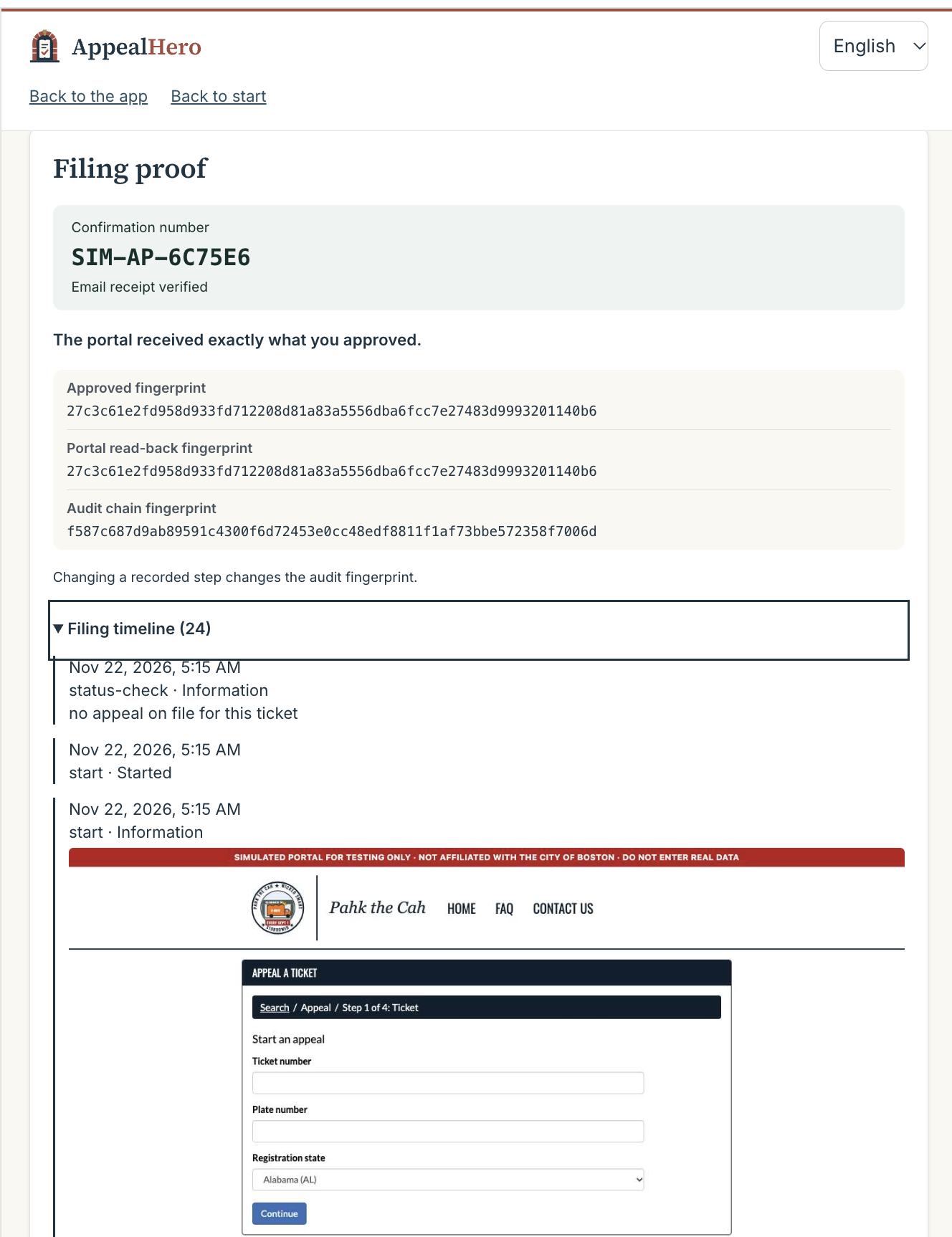
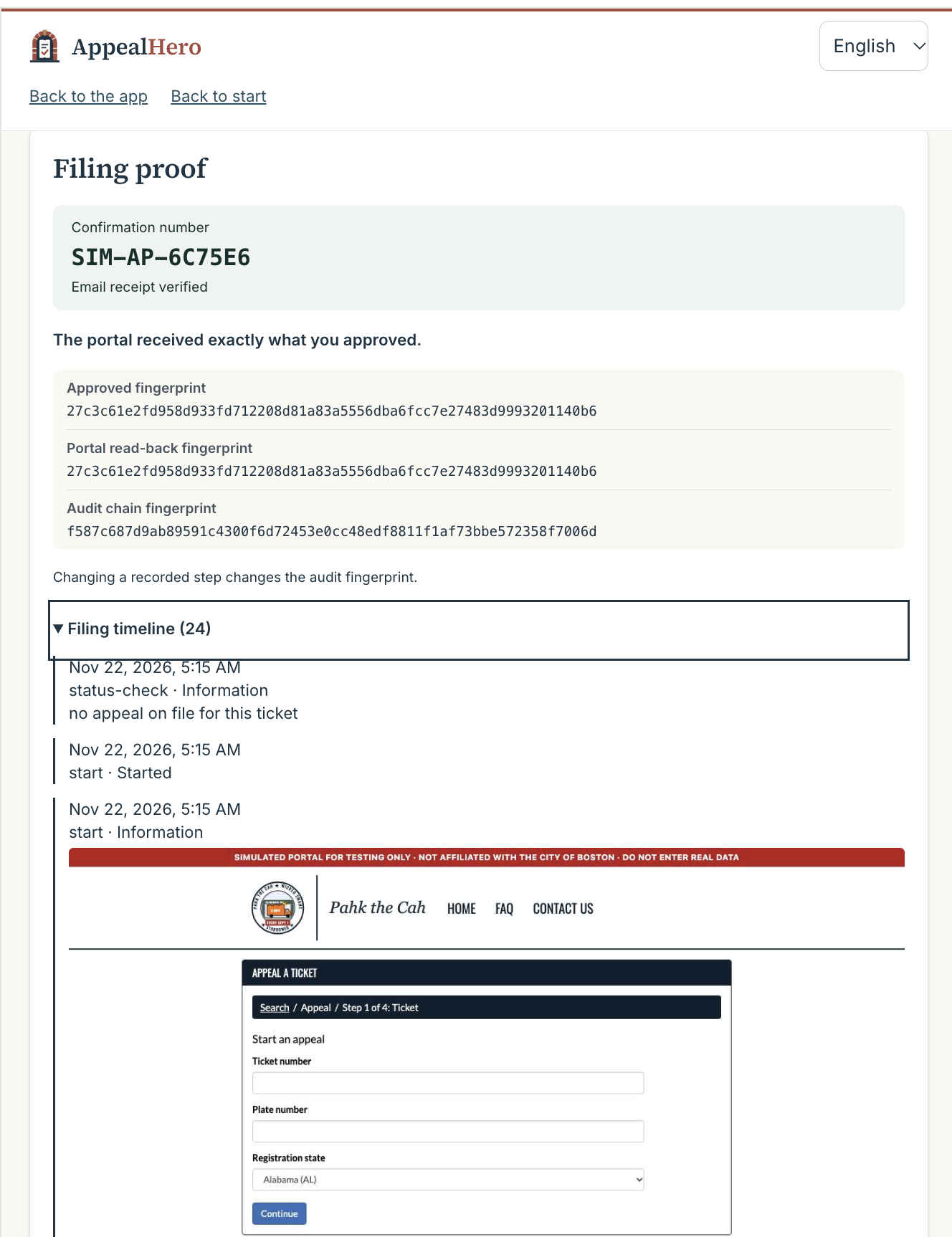
- Verify the filing. In our simulated portal, the agent fills the form, reads it back, compares it with the approved content, and submits once. A proof page shows the confirmation number, screenshots, activity timeline, mock email receipt, and a downloadable browser trace.
One demo follows a meter ticket issued at 10:05 while a matching parking receipt covers 9:30–10:30. The user supplies the evidence, reviews the facts and statement, and can inspect what the agent actually filed.
Demo scope: AppealHero is an independent hackathon prototype. Tickets and identities are synthetic, filing happens only in our simulated portal, and email receipts are mocked. It does not connect to or submit to a real government portal, provide legal advice, or guarantee a successful appeal.
How we built it
We built the interface with React, TypeScript, Vite, and Tailwind CSS, backed by a Node.js and Fastify server with Zod validation. Google Gemini supports multimodal ticket intake, explanation, translation, and statement drafting. Deterministic checks handle supported rule logic and deadline calculations rather than leaving every decision to a model.
Playwright drives the simulated filing workflow. We compare a hash of the approved form content against the portal read-back before submission, then retain an audit trail and trace for inspection. A deterministic fake-AI mode makes automated tests and recorded demonstrations reproducible; selected intake and drafting flows were also exercised with live Gemini calls.
The mobile experience includes camera and photo-library intake, photo previews, browser-supported live dictation, recording review, permission feedback, and keyboard-aware layouts. Our Boston Civic Modern visual identity uses warm ivory, navy, brick, and a ticket-inspired mark to make the interface calm and readable without implying city affiliation.
Challenges we ran into
The hardest problem was preserving user intent across translation, editing, and browser automation. We addressed it with separate fact and statement approvals, fact-linked paragraphs, and approval invalidation whenever relevant content changes.
Browser workflows also fail in ambiguous ways. An expired session, rejected attachment, or delayed response must not lead to duplicate filing. We added bounded recovery, file-specific error messages, and read-only status reconciliation after uncertain submissions. Transient model errors receive retries and a clear busy message.
Mobile input needed its own care: microphone permissions, speech support, recording review, keyboard resizing, and restoring state after a screen lock. Automated mobile-browser checks help, while physical-device validation remains a next step.
Accomplishments that we're proud of
We connected multilingual intake, evidence assessment, editable review, simulated filing, and verifiable proof in one working flow. The user can inspect both the reasoning behind a draft and the result of the agent's actions. The latest merged version also passes the repository's automated CI checks.
We are especially proud that review is part of the product itself: the interface makes it clear what is known, what needs correction, and what the user is authorizing.
What we learned
A useful civic assistant needs more than fluent text. People need clear sources, honest uncertainty, a way to correct the system, and evidence that their instructions were followed. Translation also has to support understanding and control throughout the workflow, including errors and review screens.
What's next for AppealHero
We want to test the experience with multilingual Boston users and expand accessibility testing. We also plan to improve evidence guidance and source maintenance, strengthen privacy and multi-user isolation, and explore authorized integrations before considering any real-world filing capability.
Built With
- fastify
- gemini
- node.js
- playwright
- react
- tailwindcss
- typescript
- vite
- vitest
- web-speech-api
- zod
