Inspiration
AppealDesq started from a random conversation with an online friend who moderates a community.
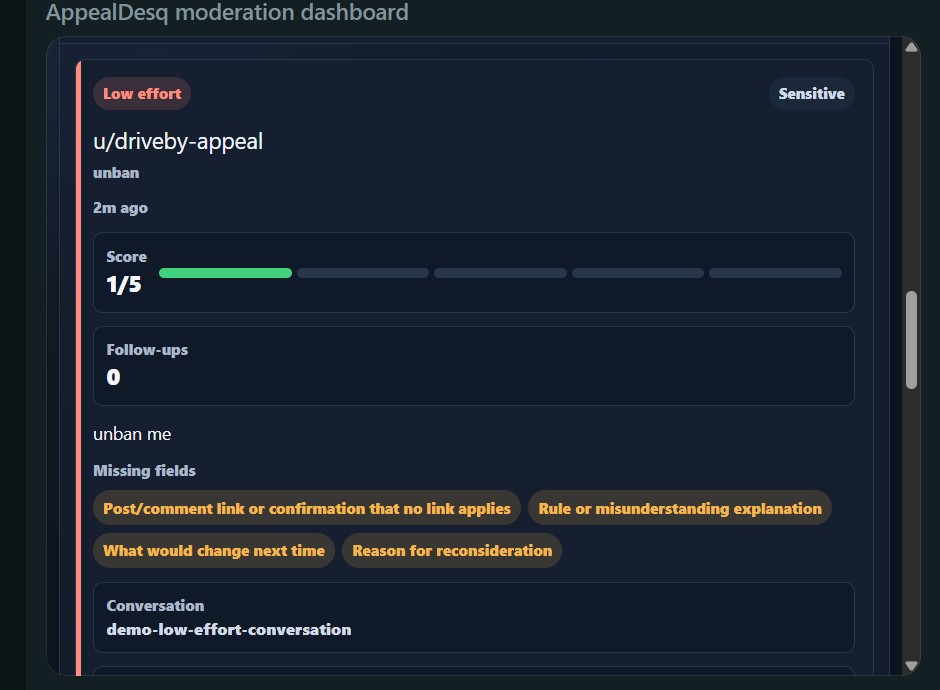
He was talking about how messy modmail can get after bans or removals. A lot of users just send things like “unban me” or “this is unfair,” while some people actually want a real second chance but do not know how to explain what happened properly.
That made me think about how much invisible work moderators do. They have to stay calm, fair, and consistent, even when the messages coming in are emotional, incomplete, or sometimes abusive.
I built AppealDesq because I wanted to make that process easier. The idea is simple: help mods turn messy appeal messages into clear case packets, so they can spend less time sorting through chaos and more time making fair decisions.
What it does
AppealDesq helps Reddit moderation teams manage ban appeals and moderation disputes from modmail.
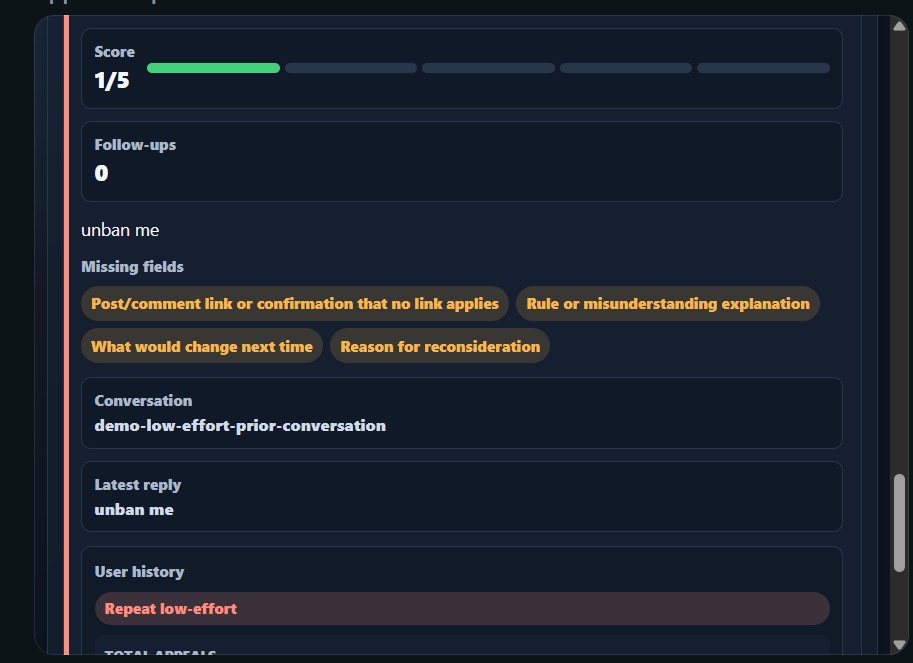
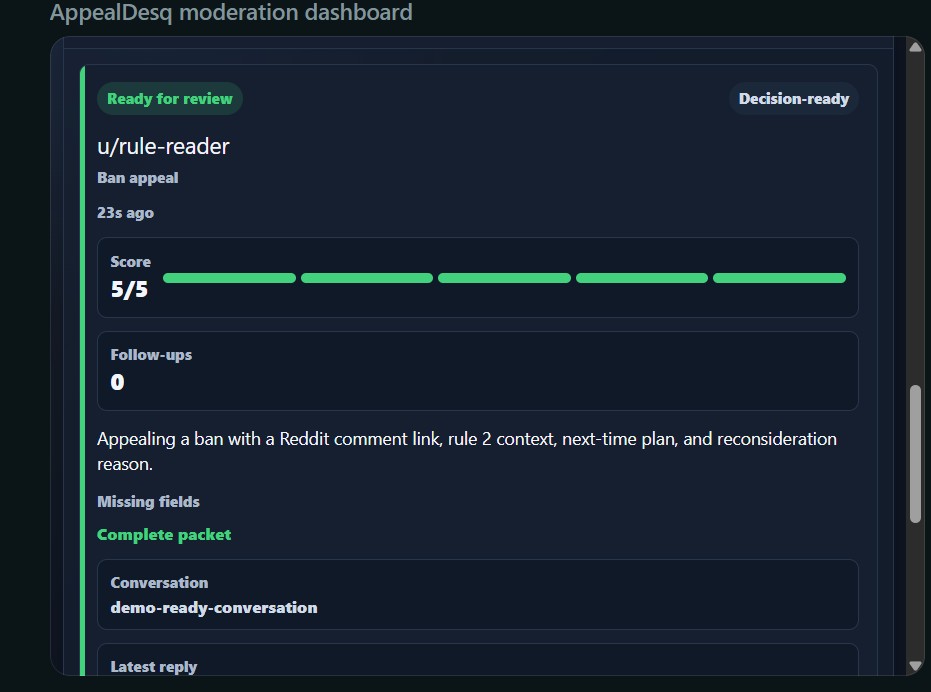
When an appeal-like message comes in, AppealDesq helps guide the user into providing the information a mod team actually needs. It checks whether the appeal is complete, shows what information is missing, flags low-effort replies, and organizes everything in a clean dashboard for moderators.
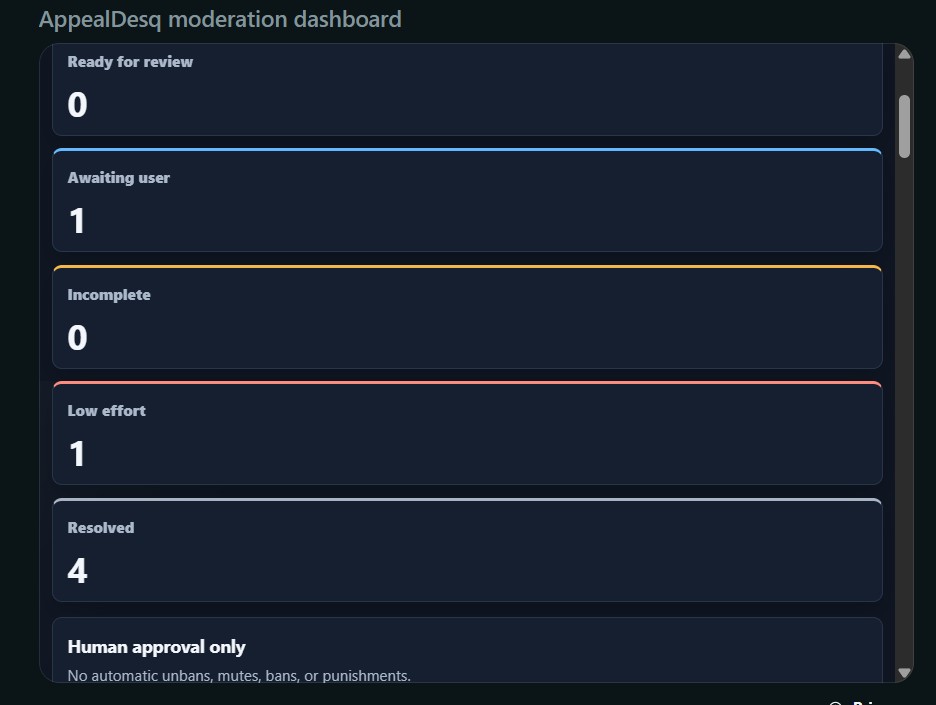
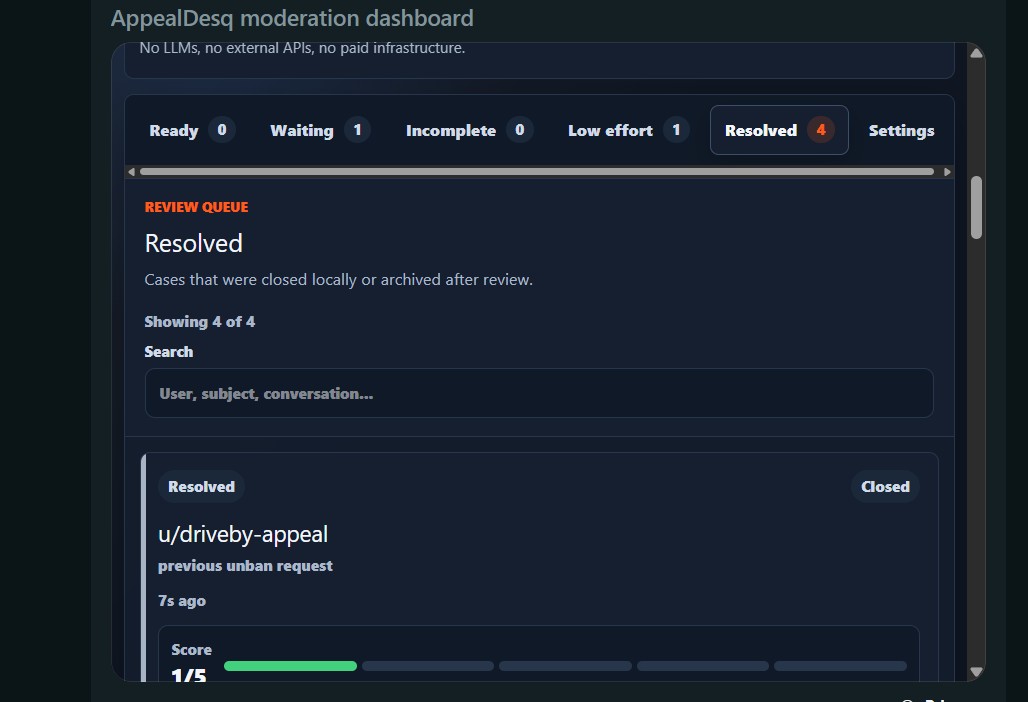
The dashboard separates cases into simple queues:
- Ready for review
- Awaiting user
- Incomplete
- Low effort
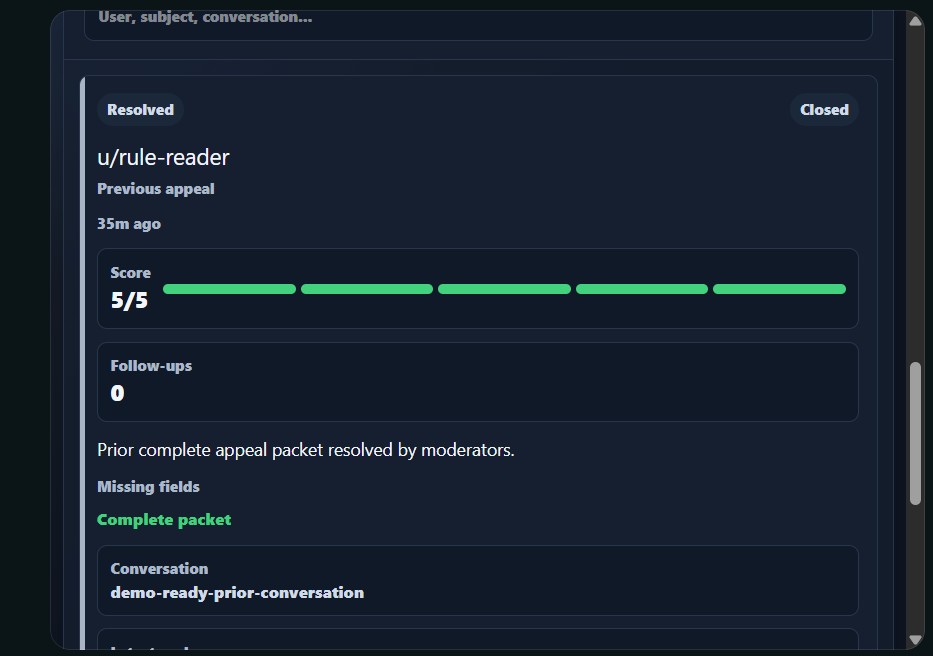
- Resolved
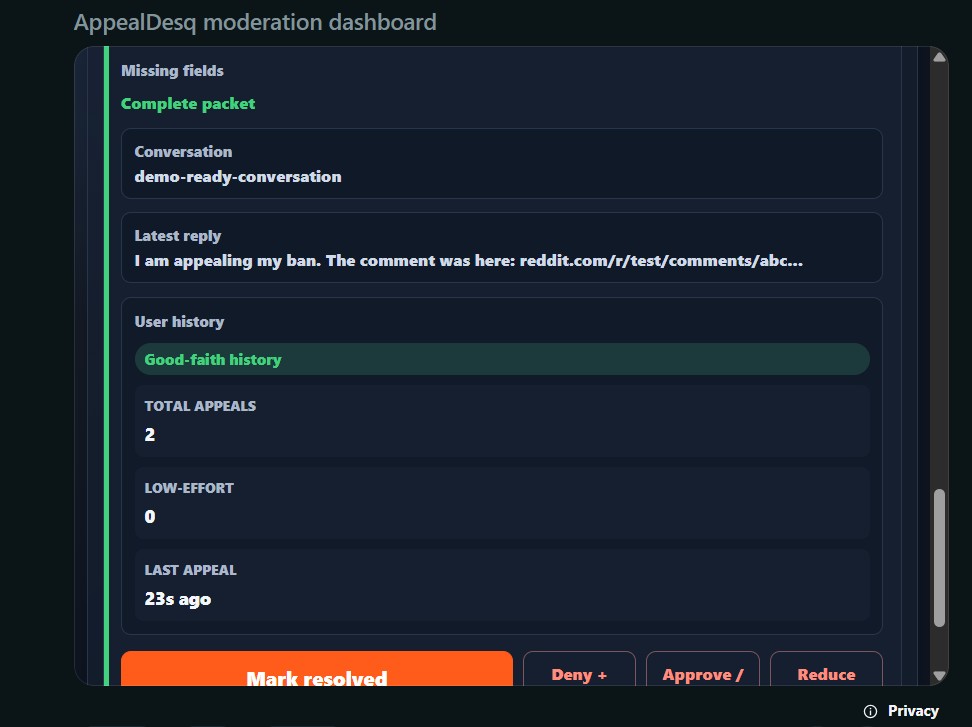
Each case shows the appeal summary, completeness score, missing fields, conversation details, follow-up count, and user appeal history.
AppealDesq does not replace moderators. It does not automatically punish users or make final decisions. It just gives mod teams a clearer workflow and better context.
How we built it
AppealDesq was built as a Reddit Devvit moderation app using TypeScript.
I kept the system rule-based instead of using external AI. That was important because appeals can contain sensitive moderation context, and I wanted the app to stay simple, predictable, and safe.
The app includes:
- Appeal detection
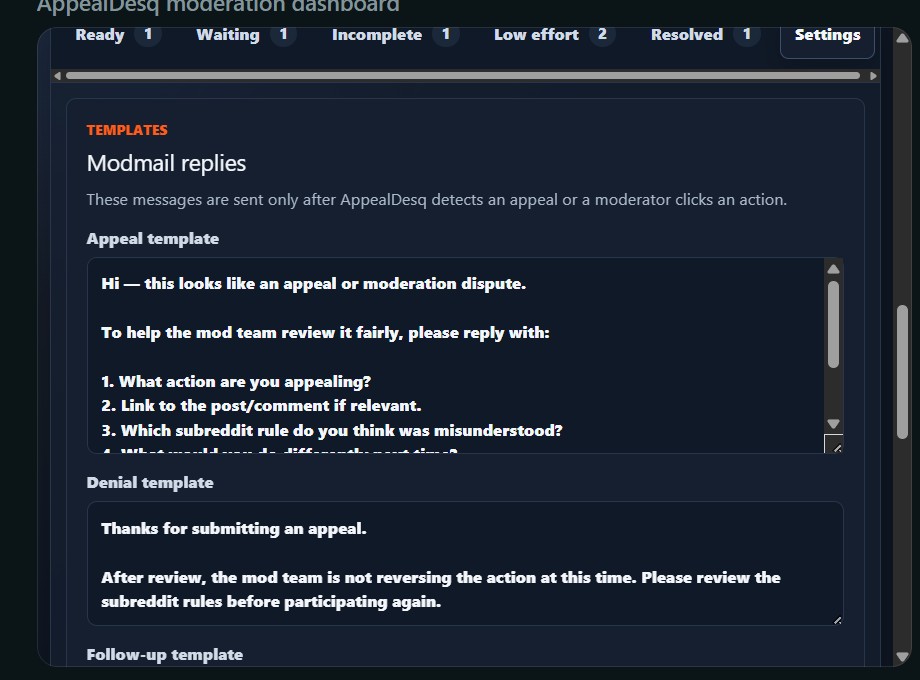
- Structured appeal templates
- Completeness scoring
- Low-effort appeal detection
- Per-subreddit case storage
- User appeal history
- A moderator dashboard
- Configurable templates
- Safe moderator action flows
The frontend was designed to feel like a real moderation desk instead of a generic admin panel. The main goal was to make every appeal easier to understand at a glance.
Challenges we ran into
The biggest challenge was finding the right balance between automation and safety.
It would have been easy to make the app more aggressive, but that did not feel right. Moderation decisions affect real users and real communities, so AppealDesq is intentionally careful. It helps organize the work, but the final decision stays with a human moderator.
Another challenge was the scoring logic. Appeal messages are not always clean. Some users write a lot but still do not give useful context, while others write short messages that are actually valid. I had to keep the logic simple enough to be reliable, but still useful for mods.
The UI was also important. I did not want the app to look like a random analytics dashboard. I wanted it to feel like a practical workspace that helps mods understand what needs attention first.
Accomplishments that we're proud of
I am proud that AppealDesq solves a real moderation problem without trying to replace moderators.
It takes one of the more stressful parts of community management and gives it structure.
The parts I am most proud of are:
- Turning messy appeals into clear case packets
- Keeping all major decisions human-controlled
- Adding user appeal history so mods can see repeat patterns
- Making the dashboard simple to understand
- Avoiding external APIs and AI dependency
- Building around moderator trust instead of over-automation
The best part is that the app is easy to understand quickly. A moderator can open it and immediately see what it is for.
What we learned
This project made me appreciate how much work goes into community moderation.
Mods are not just removing posts or banning users. They also deal with disputes, repeat appeals, emotional messages, and people who may genuinely deserve another look.
I learned that a good mod tool should not try to make every decision automatically. It should reduce noise, show the right context, and make the next step clearer.
That shaped the whole product. AppealDesq focuses on helping mods understand what happened, what is missing, whether the appeal looks complete, and whether the user has a pattern.
What's next for AppealDesq
Next, I want to make AppealDesq more useful for real mod teams.
Planned improvements include:
- Subreddit-specific rule mapping
- Assigning cases to specific moderators
- Appeal response time tracking
- Better modmail timeline views
- More customizable templates
- Richer appeal history
- Case export for internal review
- Community-specific appeal policies
- Simple analytics for time saved and appeal outcomes
The long-term goal is for AppealDesq to become a simple, safe appeal workflow for Reddit communities. It should help moderators protect their time while giving good-faith users a clearer way to be reviewed.
Built With
- and-repeat-appealer-history.-it-integrates-with-reddit/devvit-modmail-triggers-and-reddit-moderator-apis-where-supported.-no-external-apis
- and-trpc.-the-backend-runs-in-devvit?s-serverless-environment-and-uses-devvit-redis-for-per-subreddit-appeal-cases
- apis
- devvit
- hono
- moderator
- modmail
- no-llms
- no-supabase/postgres
- react
- redis
- serverless
- settings
- trpc
- typescript
- vite
- vitest
- web

Log in or sign up for Devpost to join the conversation.