-
-
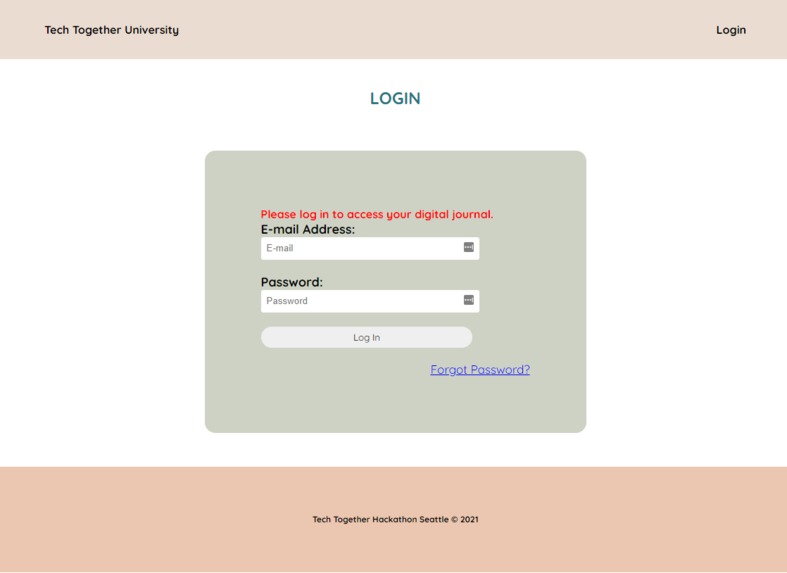
Login page
-
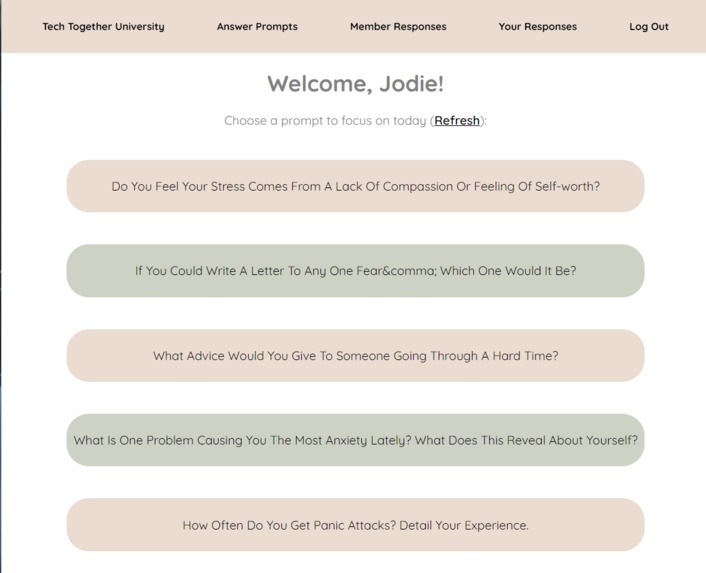
Feed
-
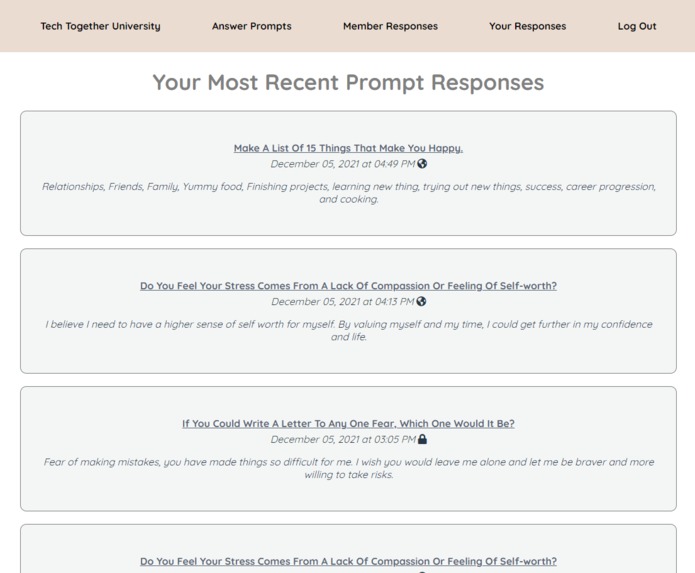
Prompt Responses
-
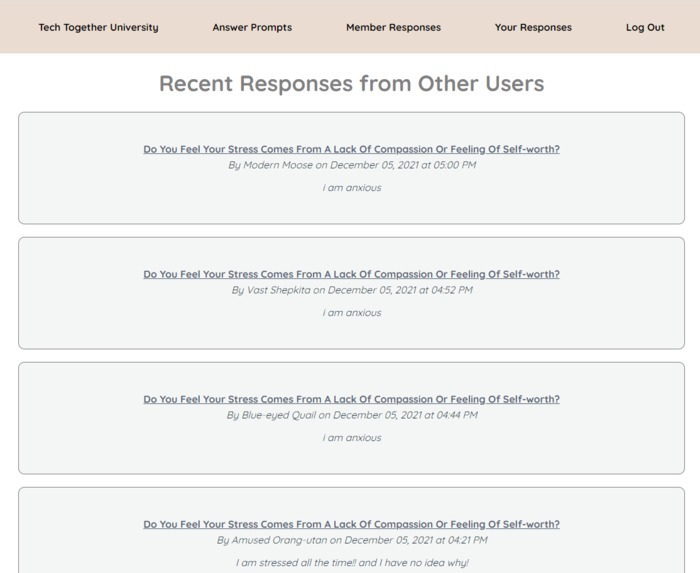
Recent Responses
-
Homepage 3
-
Homepage 2
-

Homepage 1

Inspiration
Most of our team members faced various problems with getting help for our mental health, especially as students. Most of the mental health apps and websites we have interacted with weren’t engaging enough, either only allowing us to use the app if we pay for it, or were just not interactive with the larger community. We want to create a system that is free for college students and is more engaging.
Mental health is a big issue that has only gotten bigger due to the isolation from Covid This is especially true for many college students We wanted to create a safe space for students to: Share their stories Understand that they are not alone Others are also facing the challenges as well Vent their frustrations and concerns
What it does
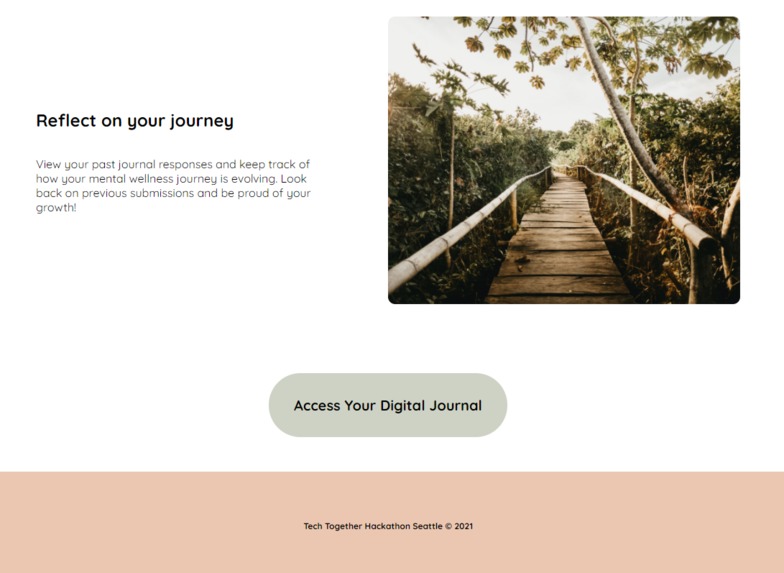
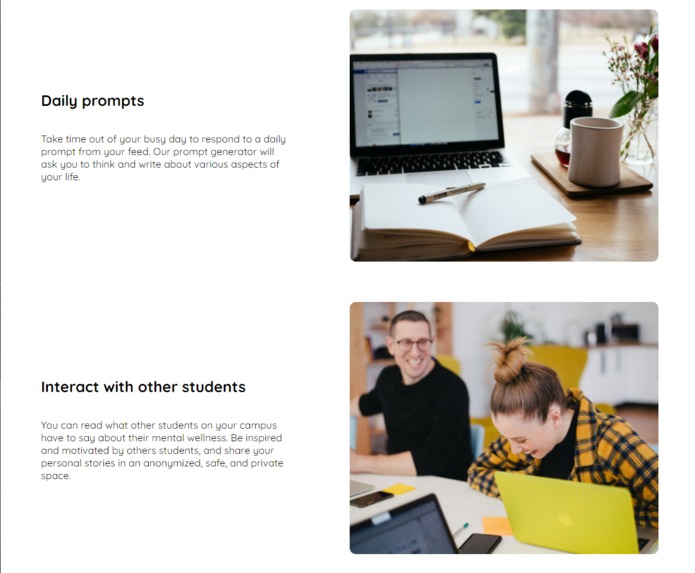
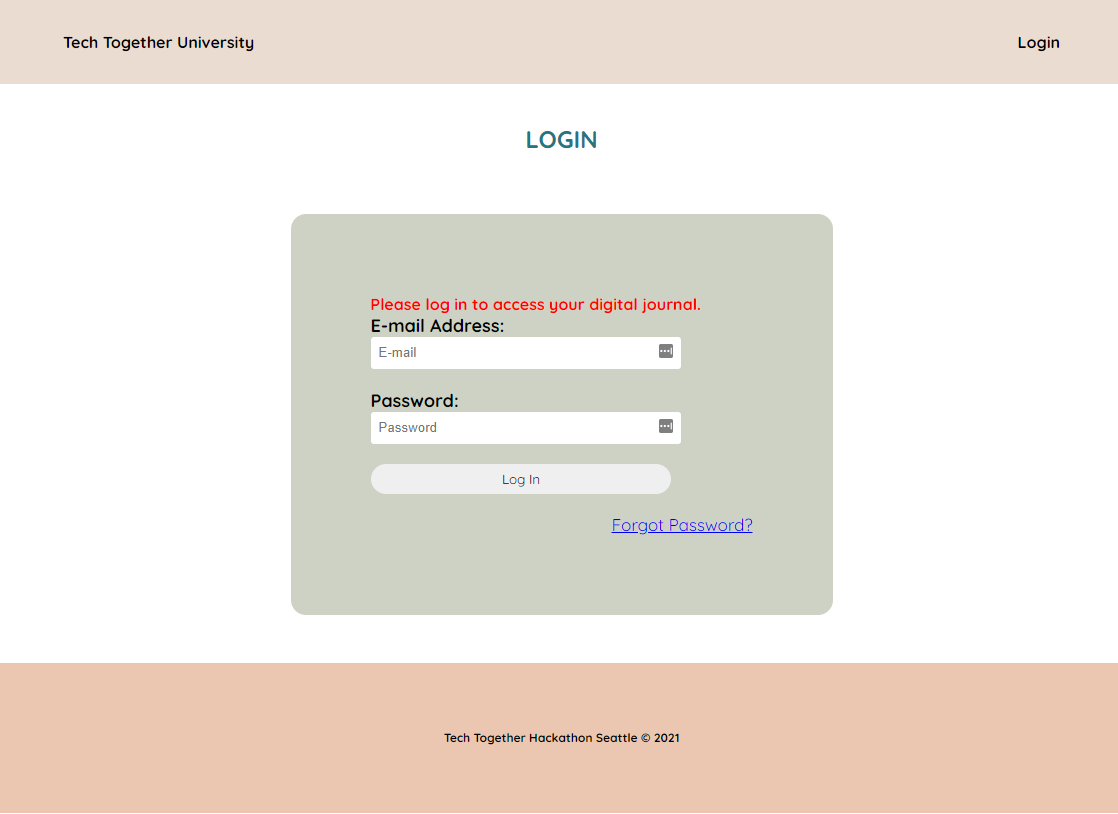
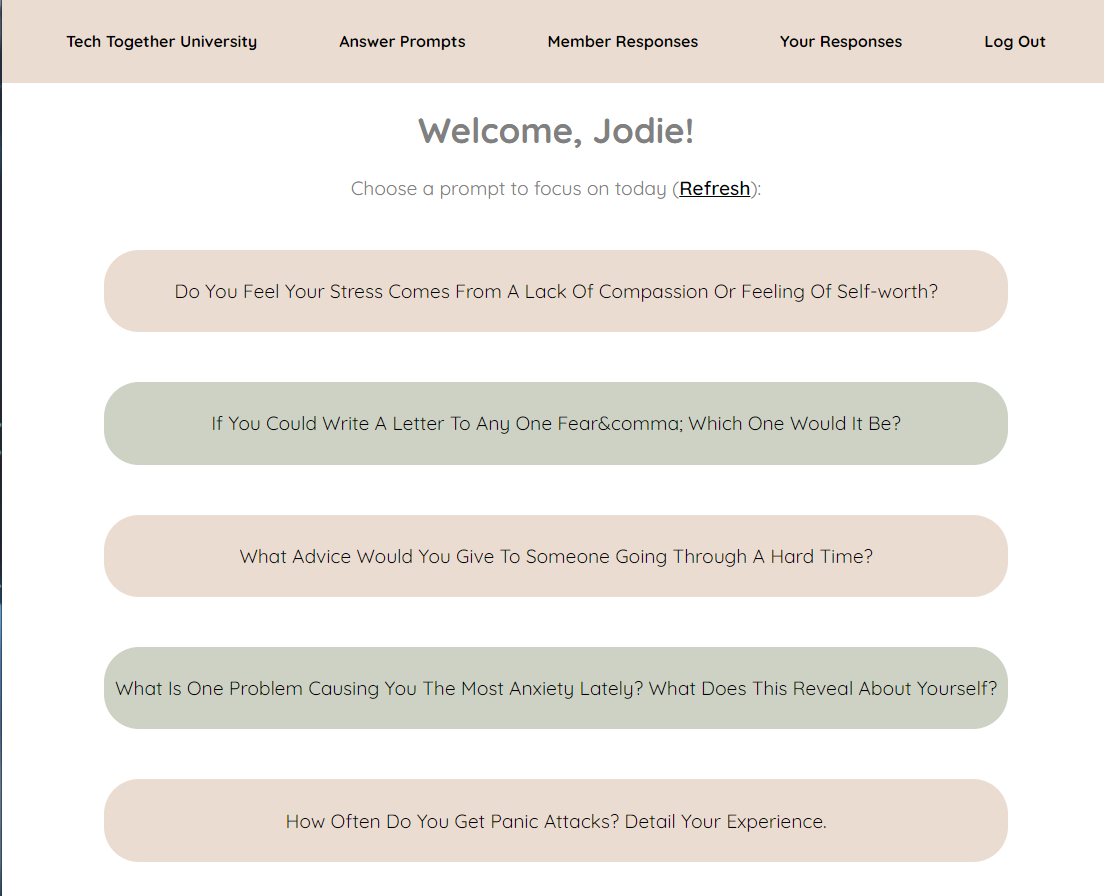
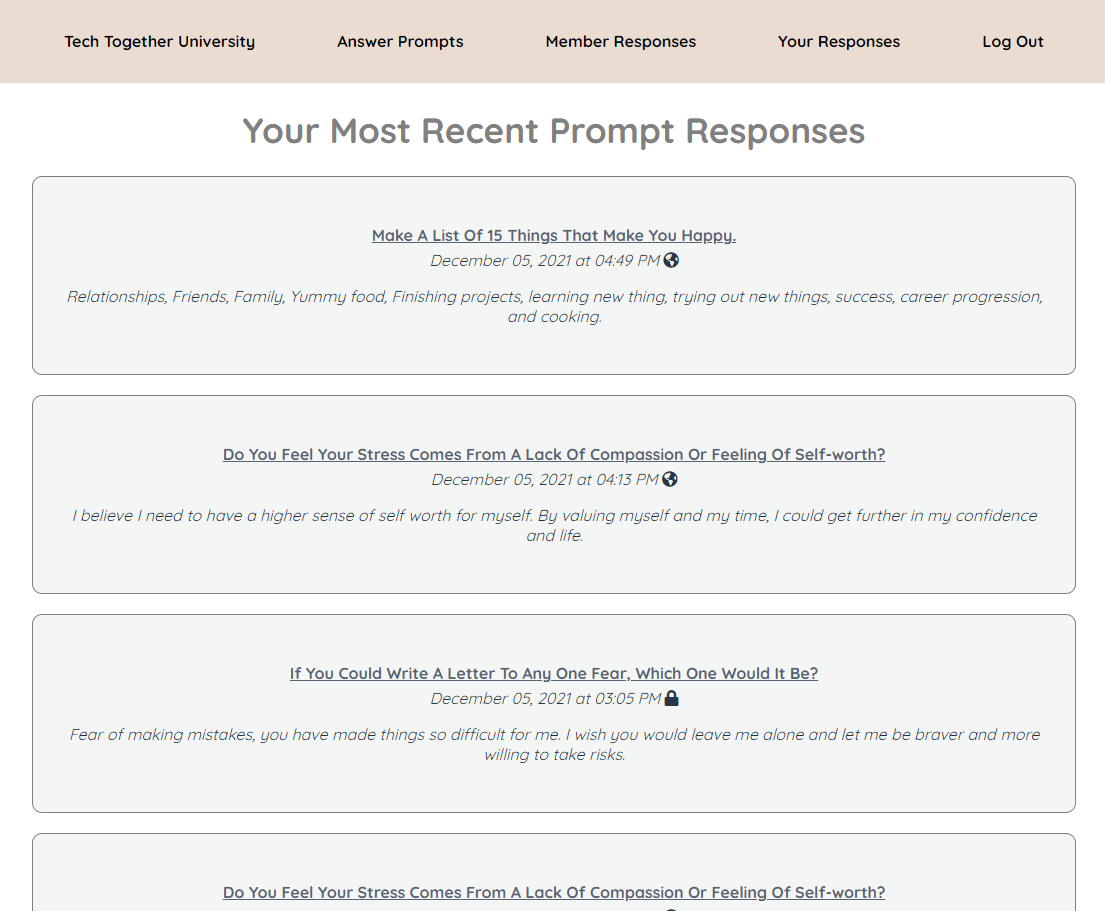
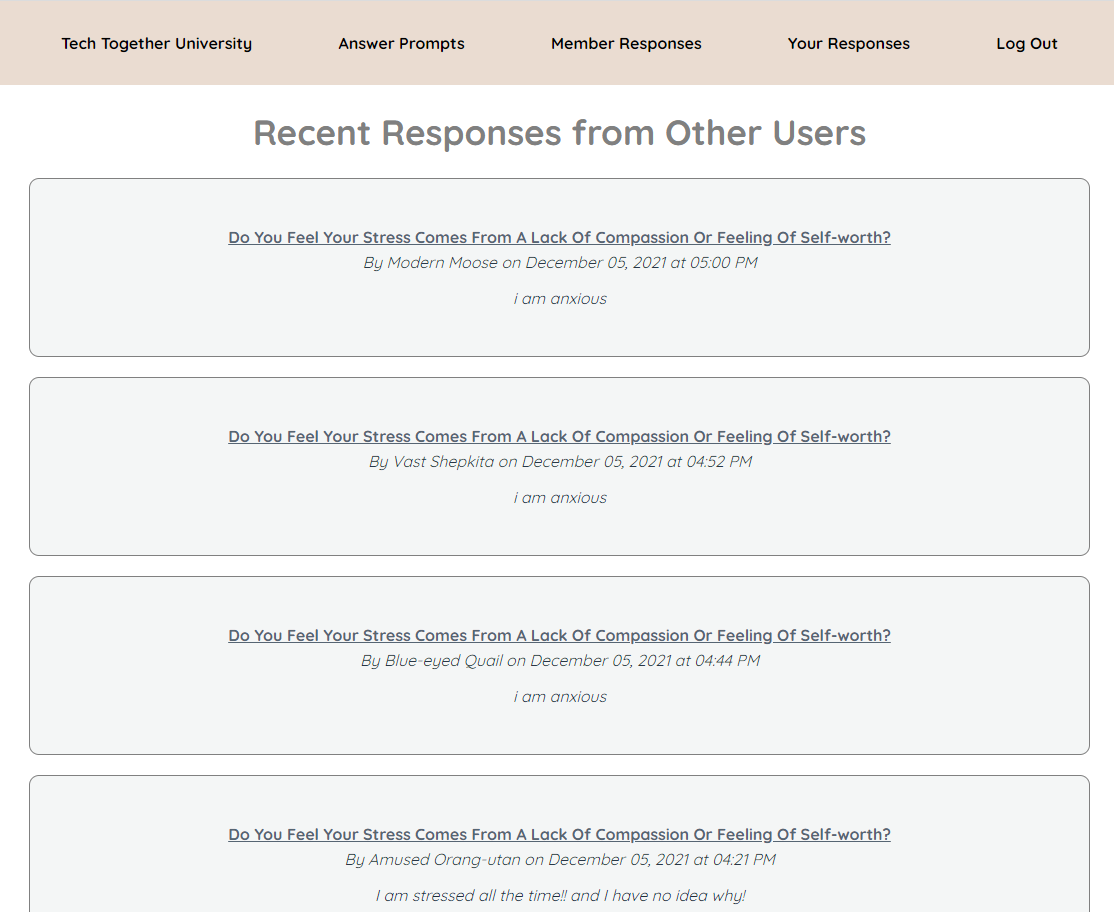
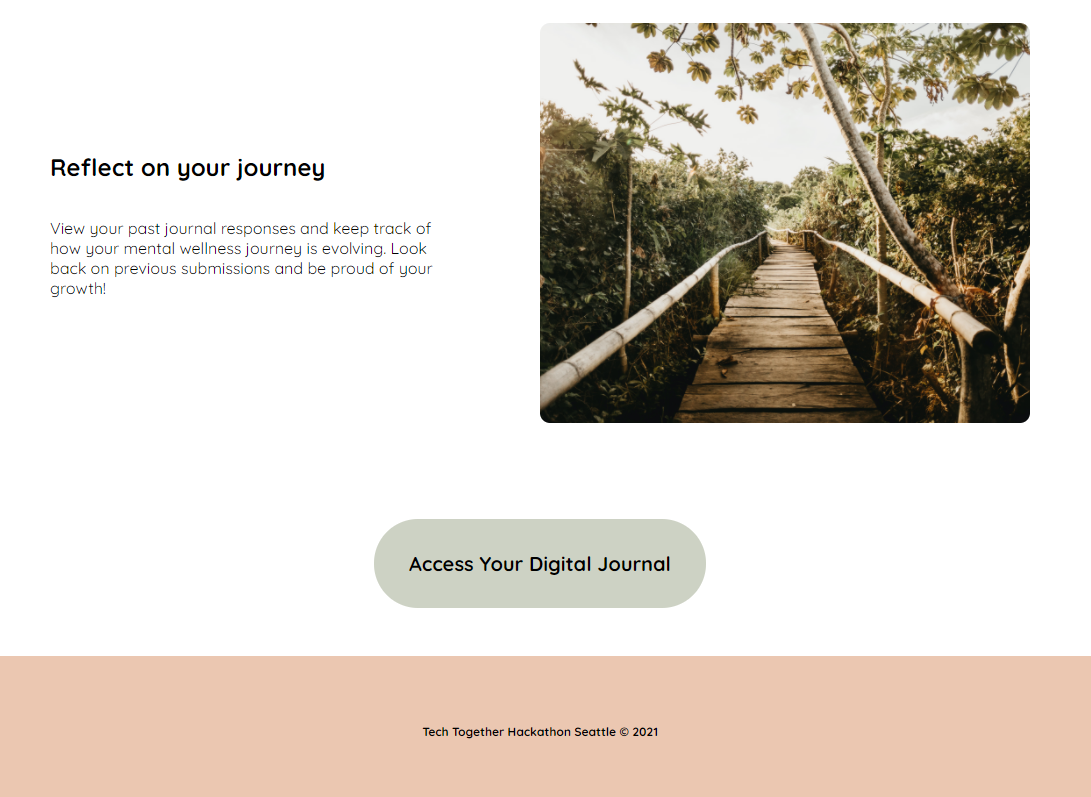
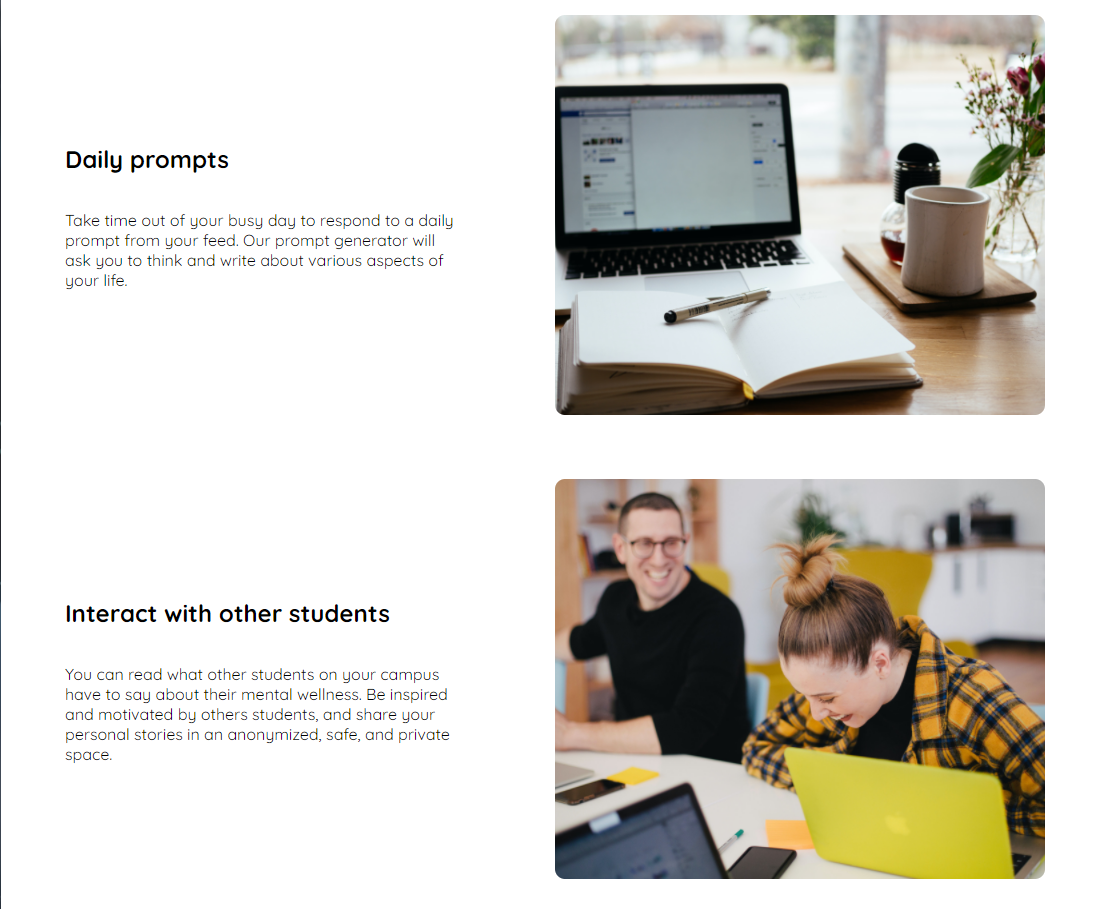
Upon logging in, users will be able to view the daily prompt and other students’ responses to that prompt. Each college will have its own Digital Journal, so a user will only be able to see responses from other students on their own campus. The user can then write their response for the prompt and post it. By seeing other students’ responses, the user can see and participate in mental wellness conversations on their campus. They can also view their past submissions as a way to document and reflect on their mental wellness journey thus far.
Key Aspects about this System that We Want to Highlight: Users can interact with the system based on their own own comfort level They can choose to make all their responses private or be selective of which ones to make public Prompts are randomly generated when the page is loaded, and users have the option to refresh the prompt list until they find a prompt of choice. All responses are anonymous and user names are auto generated on the fly. This means that a response could show up with the username Yellow Canary for one user and then show up for another user under the name Blue Butterfly. We added this functionality to support the user's anonymity and privacy.
How we built it
We started by brainstorming which functionalities we wanted to implement. Then we came up with some wireframes for how the website would look like, and implemented the frontend with HTML, CSS, and vanilla JS & JQuery. For the backend, we created a MySQL database to support the data storage for the system and our backend developer built the functionality with PHP..
Challenges we ran into
We encountered a number of challenges which led us to have to get together and deviate down alternate paths in order to complete our project in time for the deadlines. An obstacle that stood out the most was the fact that we had issues pulling and pushing to our git repos because we did not understand that we needed to branch out and merge back into the main report. This led to us having trouble accessing others' files and having to restart and do things in alternate ways.
Accomplishments that we're proud of
As most of us are first-time hackers, we are very proud of distributing workload to suit participant comfort level while ensuring everyone still felt challenged.
What we learned
I think our biggest takeaway from this hackathon was that less than 3 days is a very short period of time, and efficiency is critical. As was constant communication and support of our team members. We also learned that brainstorming and planning the web application is an extensive process and everyone’s help and input created a much better final product. Though we encountered a number of challenges, we are proud of what we were able to achieve and immensely surprised that we were able to do it in such a short period of time.
What's next for test
This is just a starting point. We envision this application having many for facets including: Verification against user’s college email Each college would have their own branch Letters to Myself Private by default but users can choose to share letters with the public They can write letters to their past self or to their future self Considering whether to add replies to public reponses Add ability to search and filter my own responses/prompts Adding moderators who are trained students that went through peer counseling The moderators will be able to: Host and share mindfulness events Social events such as: Game Nights Trivia Nights Hikes or group activities (Exercise is beneficial in support mental health) The events would show counts of expected number of participants Members can use a special code to get into events in case they have concerns about sharing their name, etc Provide resources Chat anonymously with users online Adding of goals and reward system for users to meet their response goals on a weekly, monthly and/or yearly bases





Log in or sign up for Devpost to join the conversation.