-
-
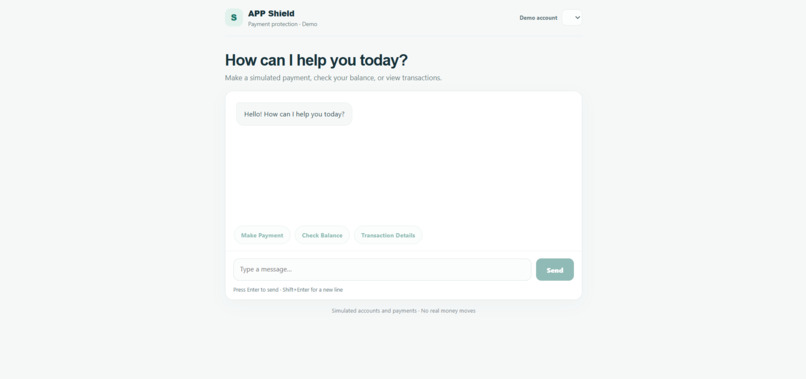
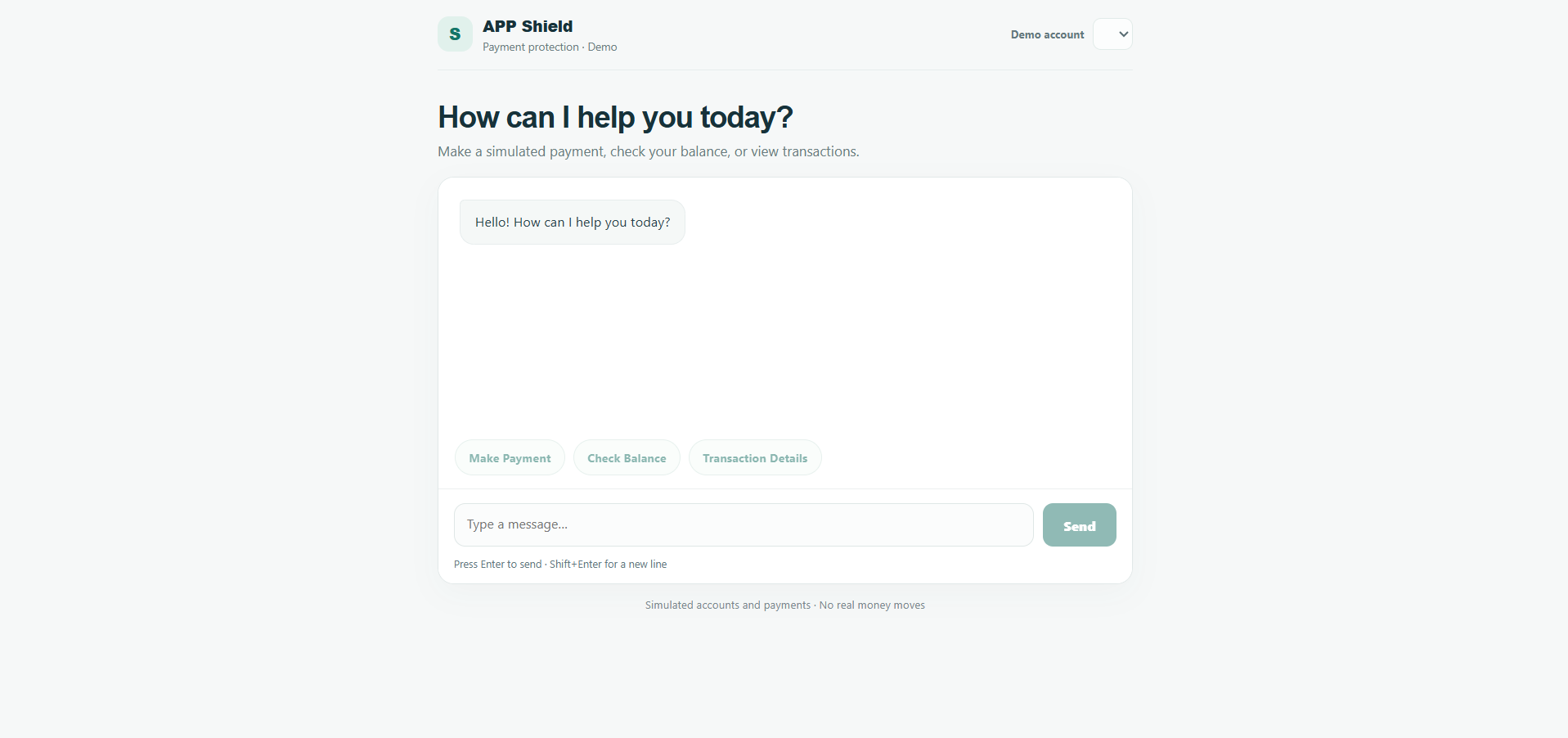
Demo View
Inspiration
APP Shield began with a simple concern: many scams persuade people to authorize a payment themselves. A payment can look ordinary in isolation while the surrounding story—urgency, impersonation, a new recipient, or a promise of guaranteed returns—deserves a closer look. We wanted to explore how a system might help someone pause before confirming.
How We Built It
We built a React frontend and FastAPI backend around a simulated payment flow. The backend combines transaction and recipient signals with graph, scenario, and psychological-manipulation evidence. It can ask a focused follow-up question, retrieve attributed guidance, and present a review before an explicit confirmation. Optional Gemini assistance can classify ambiguous chat requests and draft generic menu replies; it does not decide risk or authorize payments. The policy and payment actions remain backend-controlled.
What We Learned
Context matters, but a model’s output is not proof. User-provided claims are treated as unverified, missing evidence stays missing, and the interface distinguishes risk assessments from interventions. We also learned that an effective demo needs more than a model: the API, database, frontend, deployment configuration, and safety boundaries all have to work together.
Challenges and Limitations
Integrating those parts—especially persistent storage, production API routing, and CORS—required careful end-to-end testing. Our data and scenarios are synthetic and authored, so they cannot establish real-world fraud-detection accuracy. APP Shield is a research prototype: it does not connect to banks or payment rails, and no real money moves.
Built With
- ambiguous
- api
- deployed
- fastapi
- gemini
- generic
- guidance
- handles
- networkx
- postgresql
- python
- react
- retrieval-augmented
- scikit-learn
- sqlalchemy
- vercel
- vite

Log in or sign up for Devpost to join the conversation.