-
-
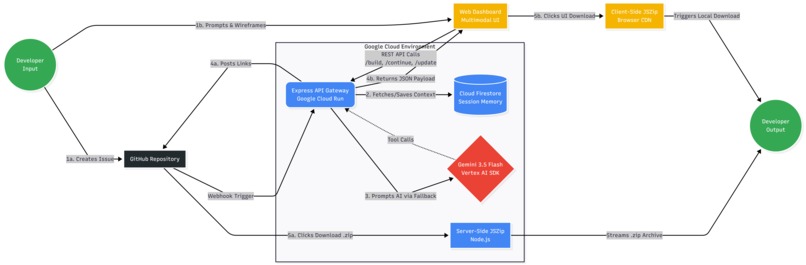
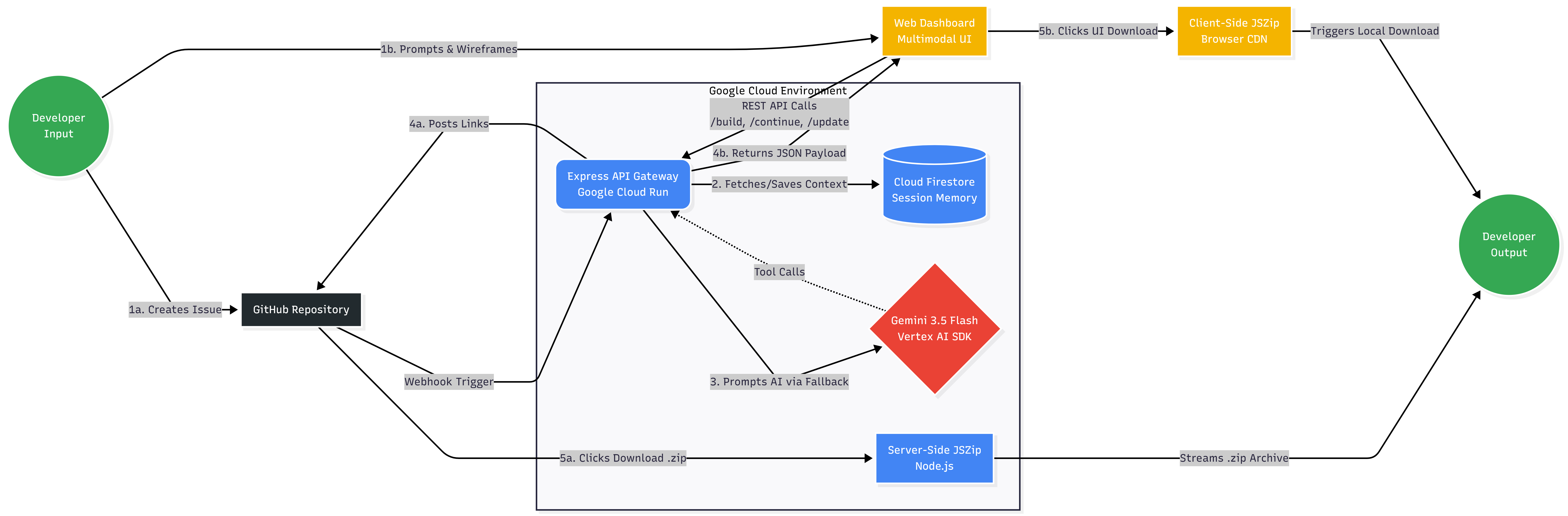
End-to-end system architecture: Cloud Run Express gateway, Vertex AI failovers, Firestore persistence, and dual-interface orchestration.
-
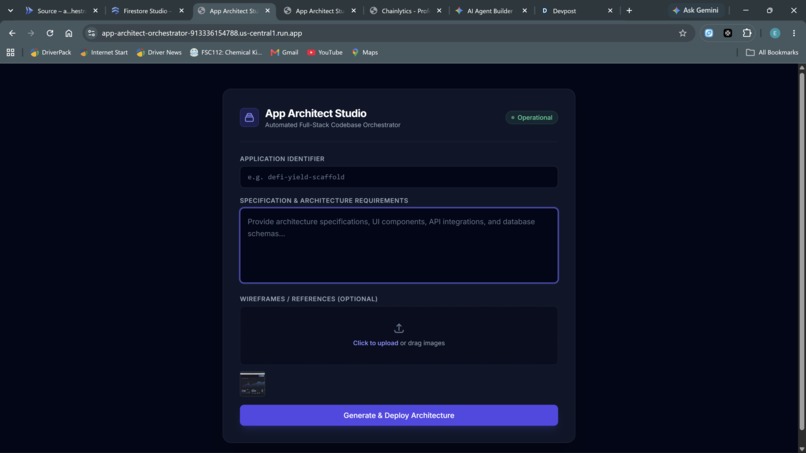
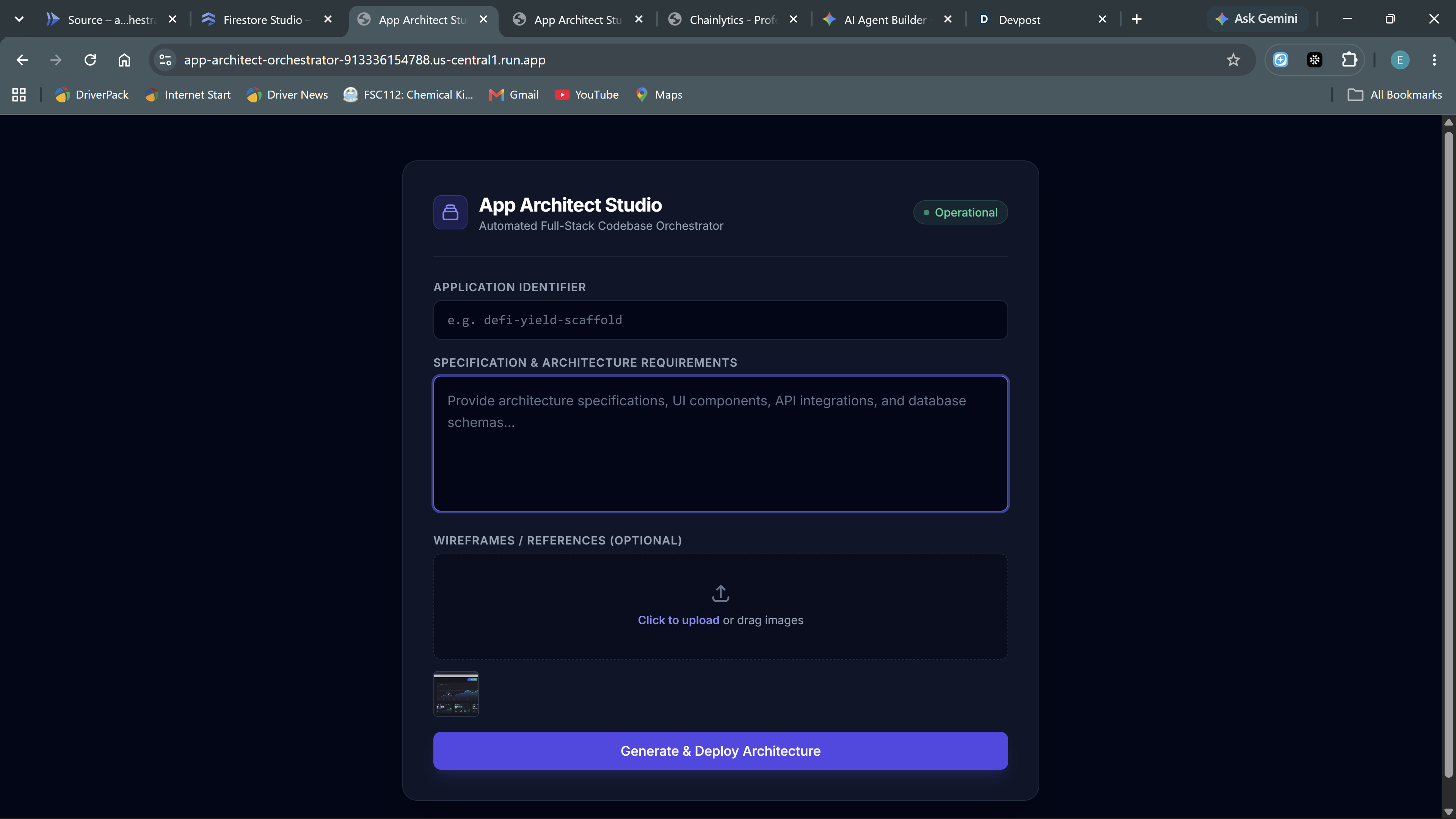
Multimodal Web Studio interface parsing reference UI wireframes into modular React and Tailwind CSS components.
-
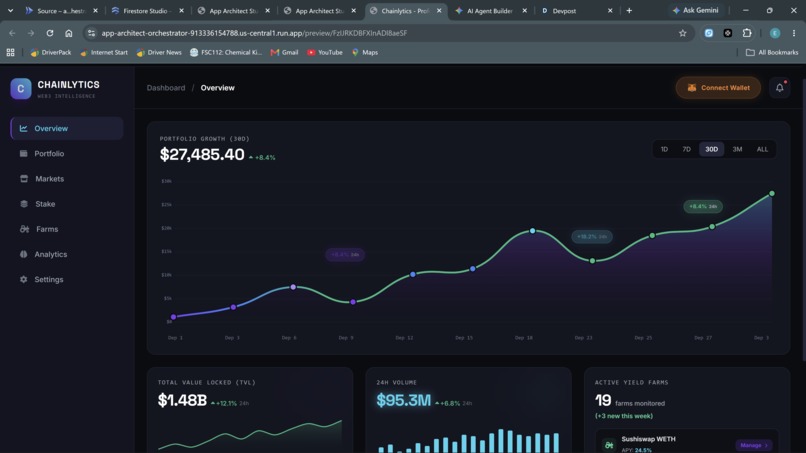
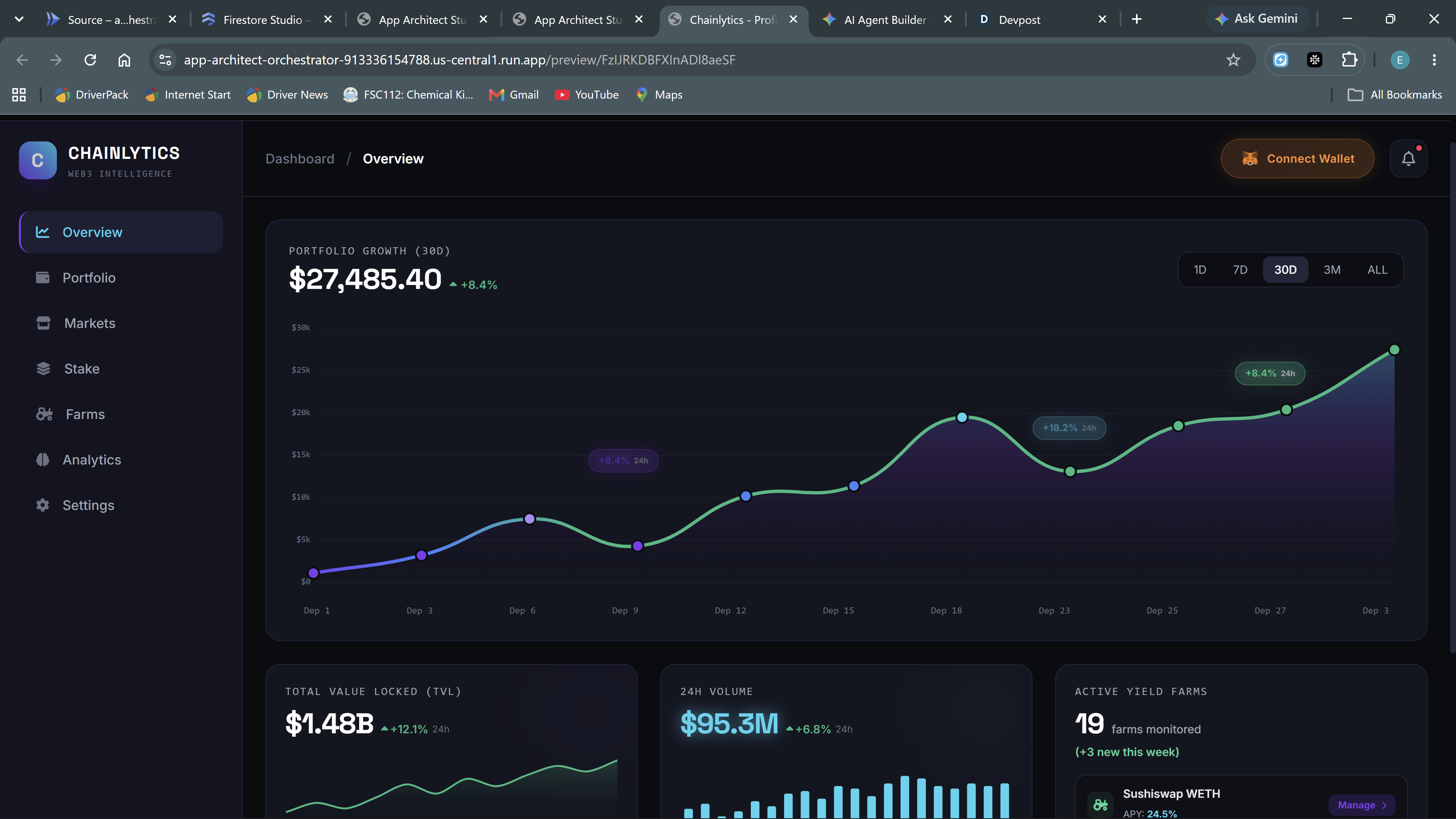
Live interactive Chainlytics analytics dashboard generated autonomously by Gemini 3.5 Flash from an uploaded UI screenshot.
-
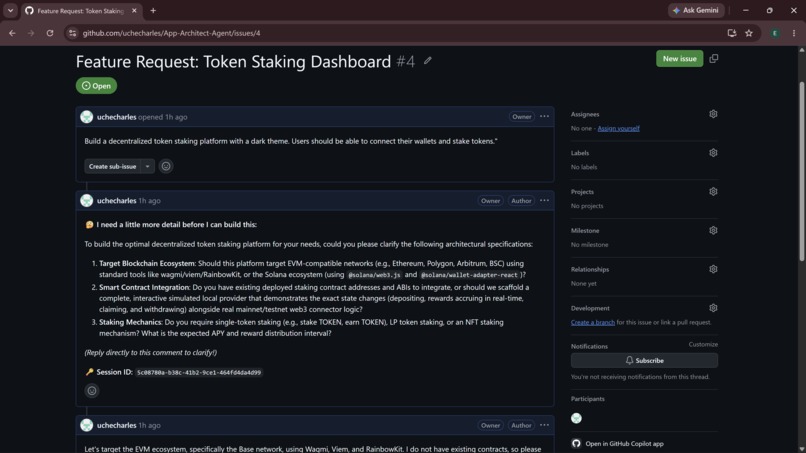
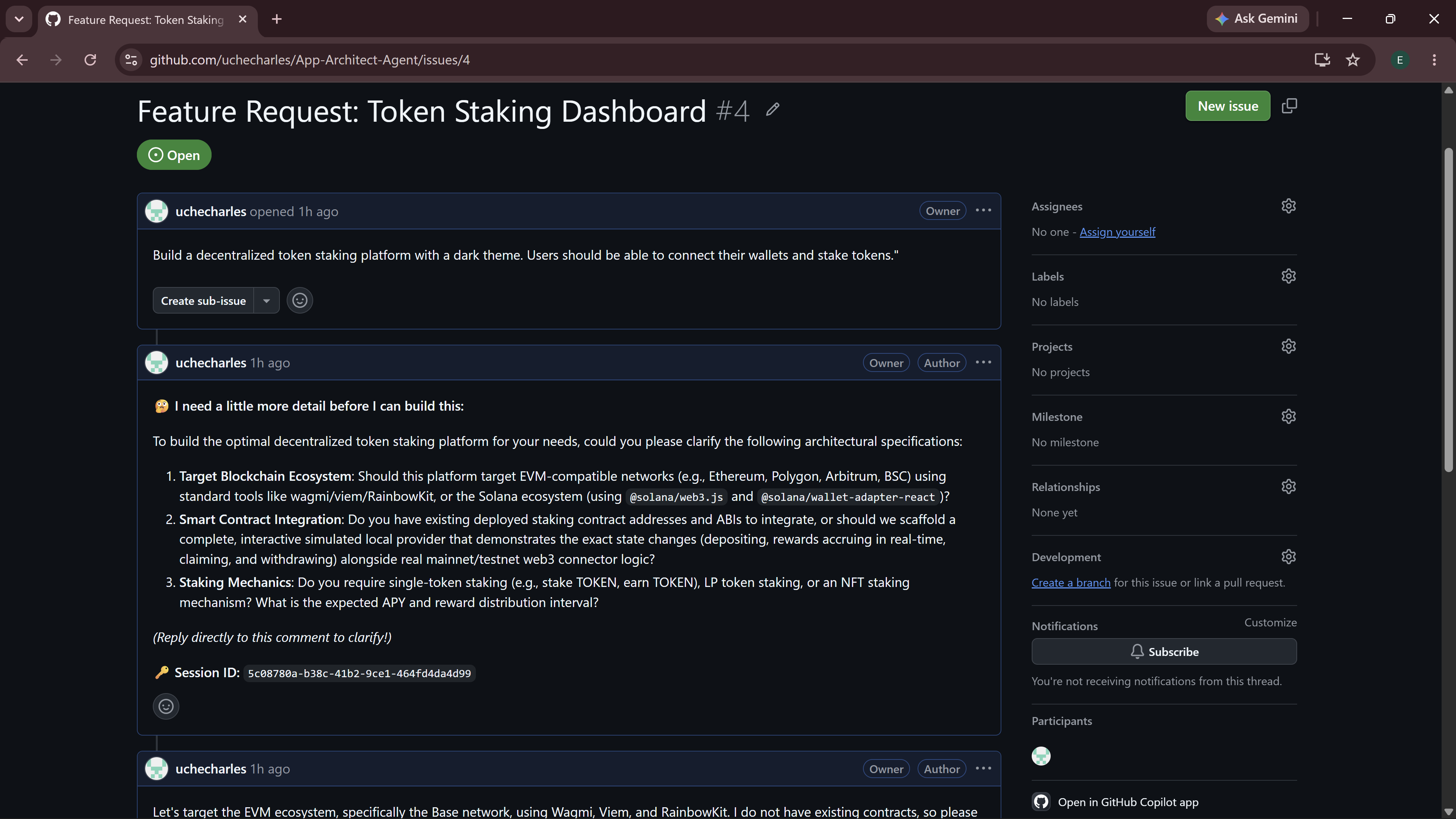
GitHub webhook agent evaluating specifications, halting on missing parameters, and injecting a unique Firestore Session ID.
-
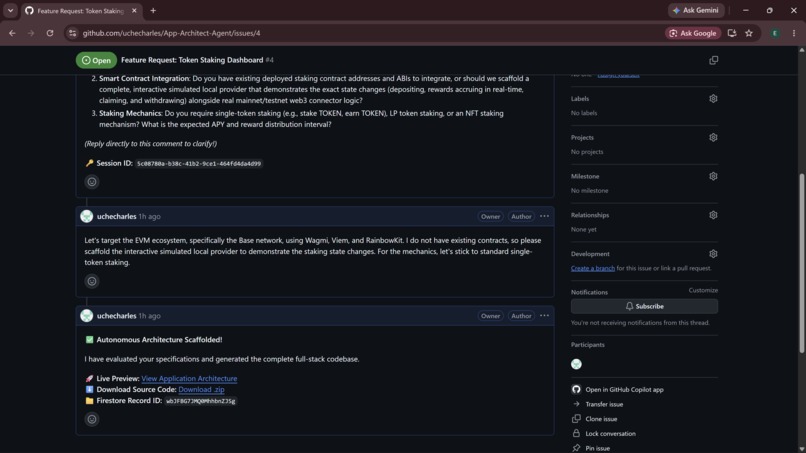
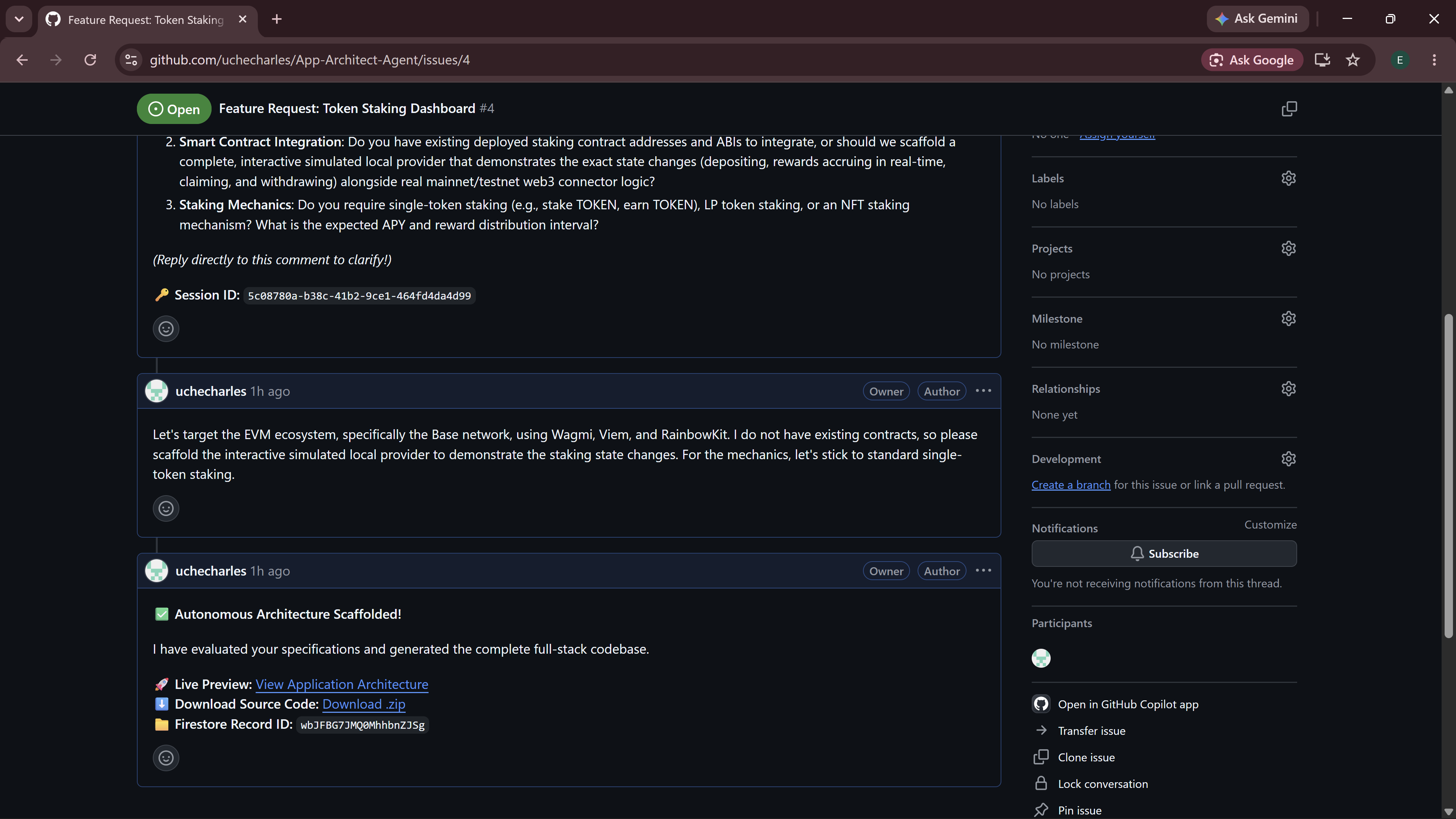
Autonomous architecture scaffolded with live preview deployment and zero-disk in-memory .zip download links.
-
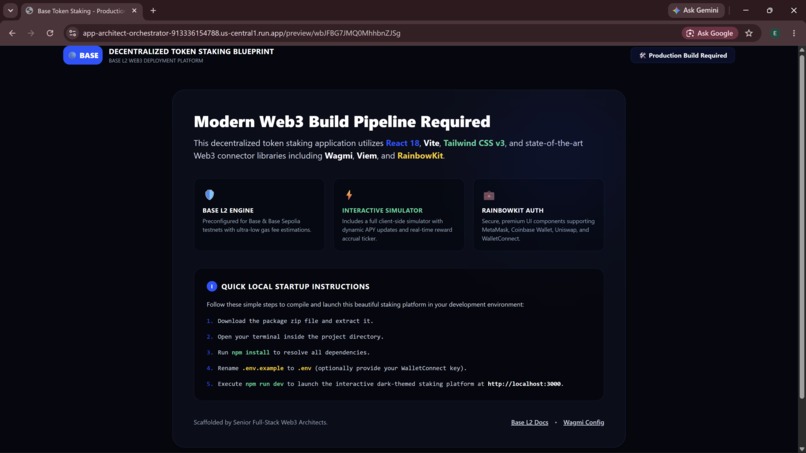
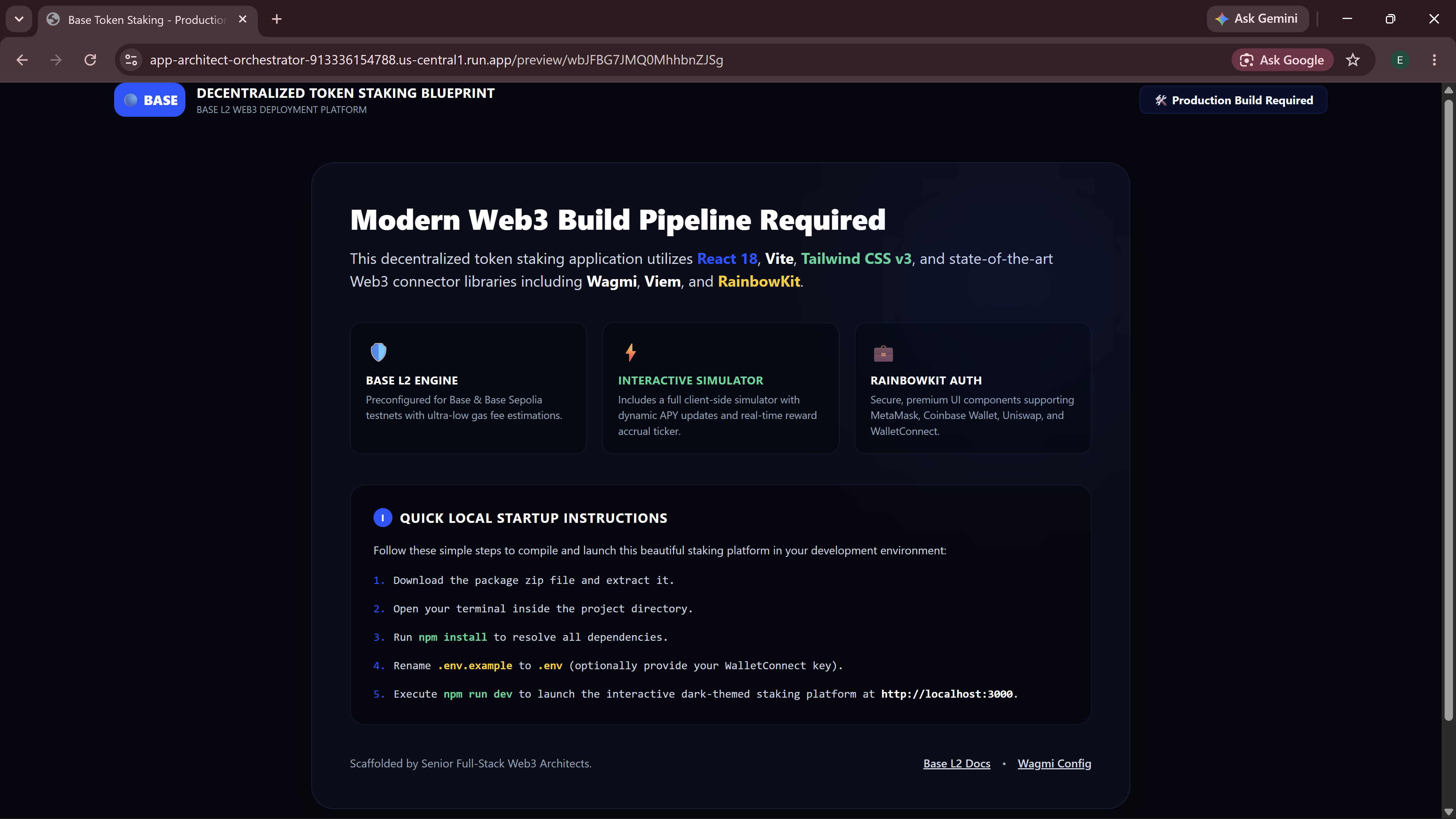
Production-ready Base L2 staking architecture preconfigured with Wagmi, Viem, and RainbowKit integration.
-
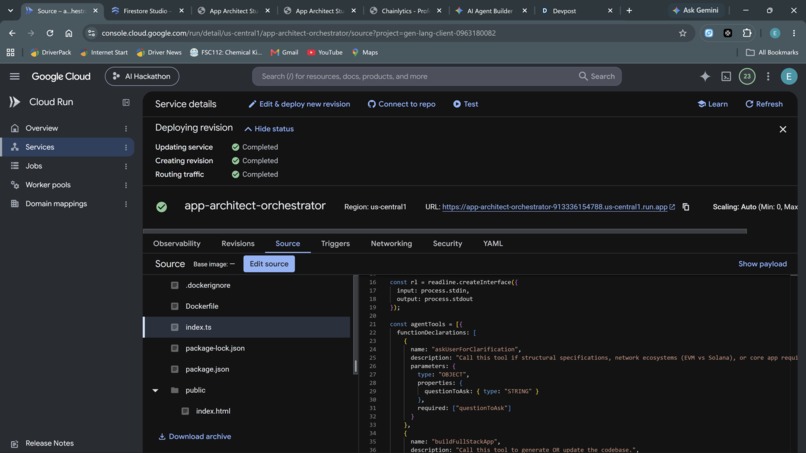
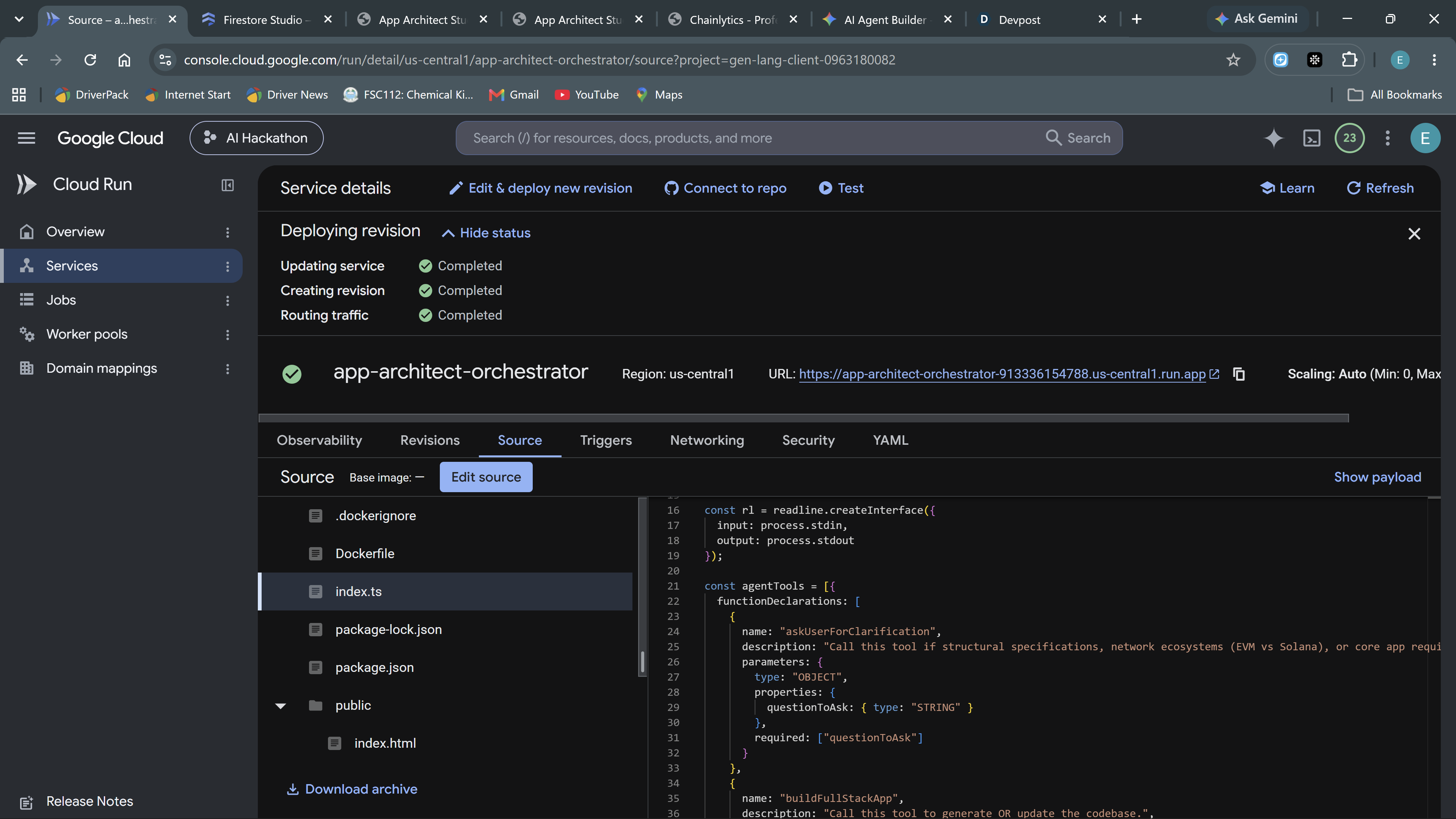
Cloud Run deployment with native Gemini tool declarations (askUserForClarification & buildFullStackApp) for autonomous orchestration.
-
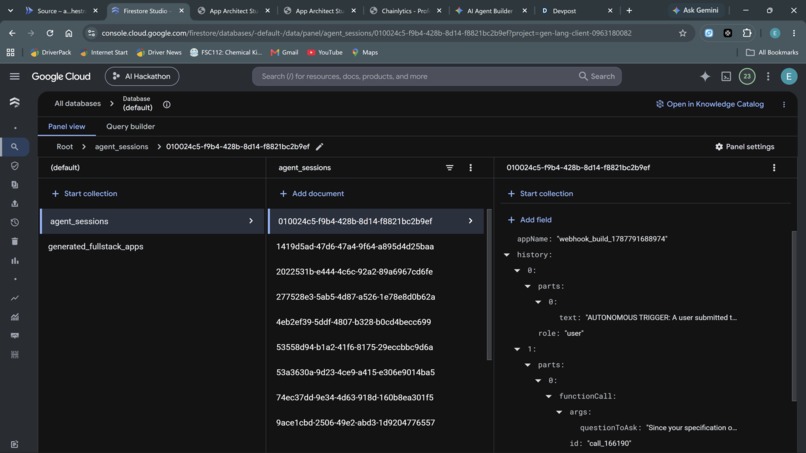
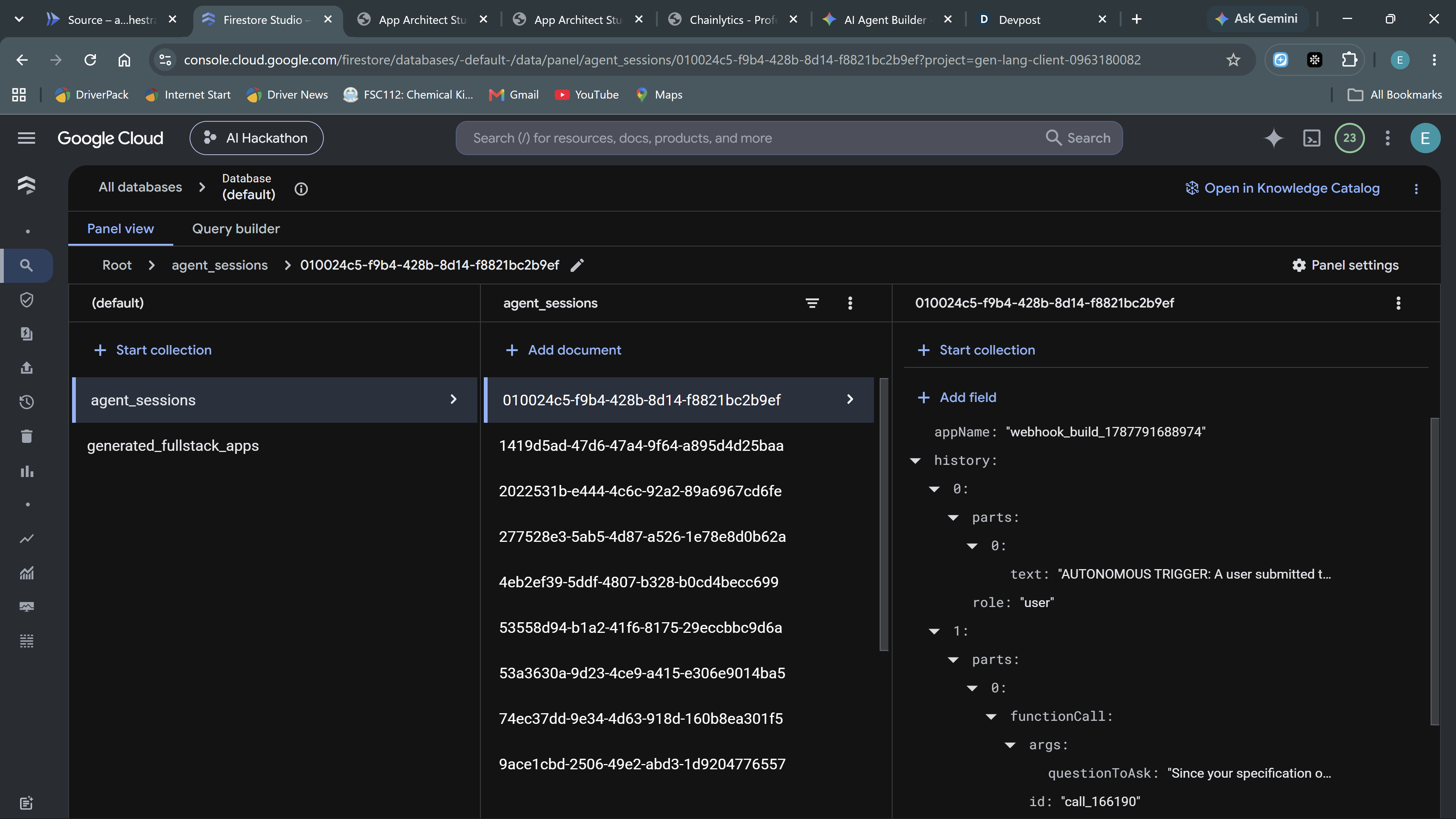
Stateless multi-turn conversation history and function calls tracked in Firestore agent_sessions.
-
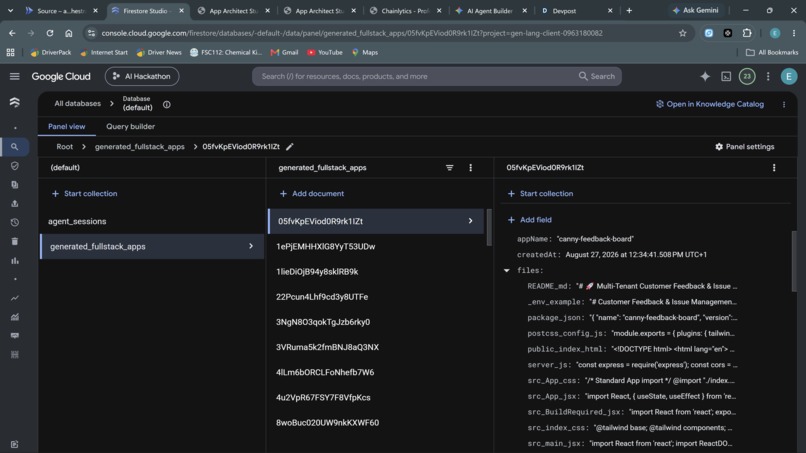
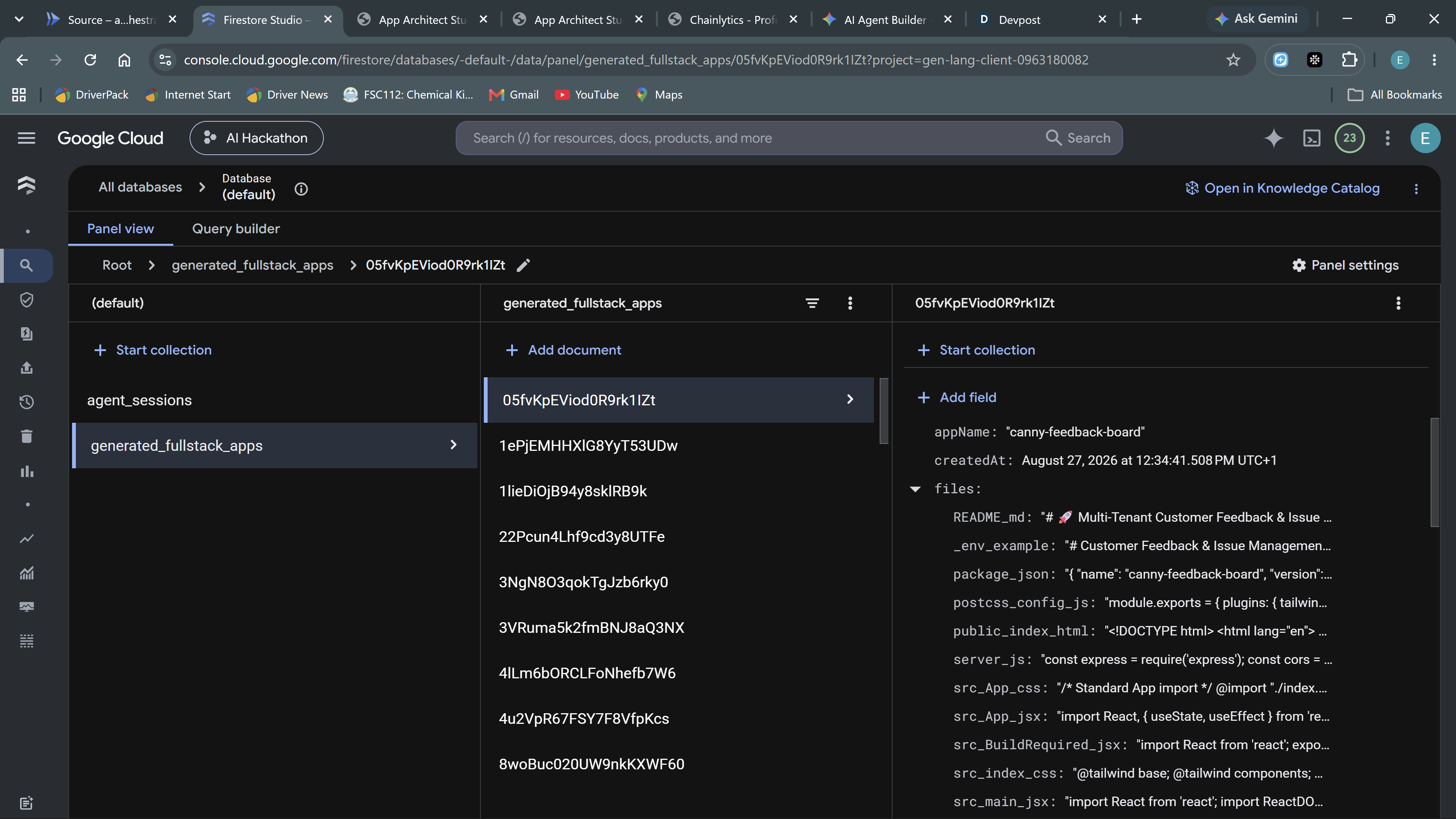
Google Cloud Firestore storing generated multi-file application schemas and metadata for stateless Cloud Run execution.
Inspiration
Building Web3 ecosystems and data analytics dashboards constantly requires wrestling with repetitive boilerplate, such as setting up wallet adapters, configuring UI frameworks, and managing complex routing. I wanted to move beyond copying and pasting disjointed snippets from standard AI chatbots. The goal was to build a true AI collaborator: an autonomous architect that evaluates requirements, clarifies ambiguities, and delivers complete, production-ready systems.
What it does
App-Architect-Agent evaluates technical specifications and scaffolds full-stack applications on demand. It operates across two primary interfaces:
The Taskmaster (GitHub): Listens to repository issues via webhooks. If a request lacks critical architectural pillars (like target blockchain or database preference), the agent pauses, asks for clarification, and injects a unique Session ID to track the conversation.
The Web Studio: A visual interface that accepts natural language or UI wireframes. It parses uploaded screenshots and translates the visual layout directly into a responsive, modular codebase.
Every successful build generates an instant live preview and a secure .zip download of the codebase.
How we built it
The core orchestrator is an Express server deployed entirely on Google Cloud Run for serverless scaling. I integrated Gemini 3.5 Flash via Vertex AI to handle both complex logical reasoning and advanced multimodal visual parsing. Google Cloud Firestore acts as the persistence layer, tracking stateless multi-turn sessions and codebase metadata. Incoming GitHub payloads are verified using strict HMAC-SHA256 signature validation via Google Secret Manager. Finally, JSZip dynamically bundles the generated architecture entirely in memory, eliminating disk writes and optimizing server load.
Challenges we ran into
Handling the sheer volume of code generation in a single request risked triggering quota interruptions and server timeouts. This required engineering a multi-region model failover system to route traffic dynamically if one region became saturated. Synchronizing GitHub webhook payloads with secure Cloud Run secrets also required strict environment variable management to ensure the HMAC-SHA256 signatures matched perfectly across the cloud infrastructure.
Accomplishments that we're proud of
Engineering the agent to refuse to guess. By injecting a Firestore Session ID directly into a GitHub comment, the agent successfully tracks conversational state statelessly. It pauses to ask the user exactly what Web3 SDKs or databases they prefer before writing a single line of code. I am also exceptionally proud of the image-to-UI Web Studio pipeline, which flawlessly translates flat design mockups into precise, responsive frontend architectures.
What we learned
Orchestrating Gemini 3.5 Flash for deterministic, multi-file code generation requires rigorous system prompting and robust failover handling. I significantly deepened my expertise in serverless cloud architecture, specifically optimizing Google Cloud Run to execute heavy, asynchronous AI workloads reliably.
What's next for App Architect Agent
User Authentication and Monetization: Adding a secure login system to the Web Studio paired with payment tiers, enabling tiered rate limiting, custom token quotas, and saved user project histories.
Automated CI/CD Deployment: Integrating direct webhooks to push generated repositories directly to hosting providers such as Vercel, Netlify, or Cloudflare Pages.
Autonomous Contract Deployment: Expanding the Web3 pipeline so the agent can compile, test, and deploy smart contracts directly to testnet environments during the scaffolding phase.
Built With
- api
- base
- express.js
- full-stack
- gemini
- github-api
- google-cloud-firestore
- google-cloud-run
- jszip
- node.js
- rainbowkit
- react
- secret-manager
- smart-contracts
- solana
- tailwind-css
- typescript
- vertex-ai
- viem
- vite
- wagmi
- web2
- web3

Log in or sign up for Devpost to join the conversation.