Inspiration
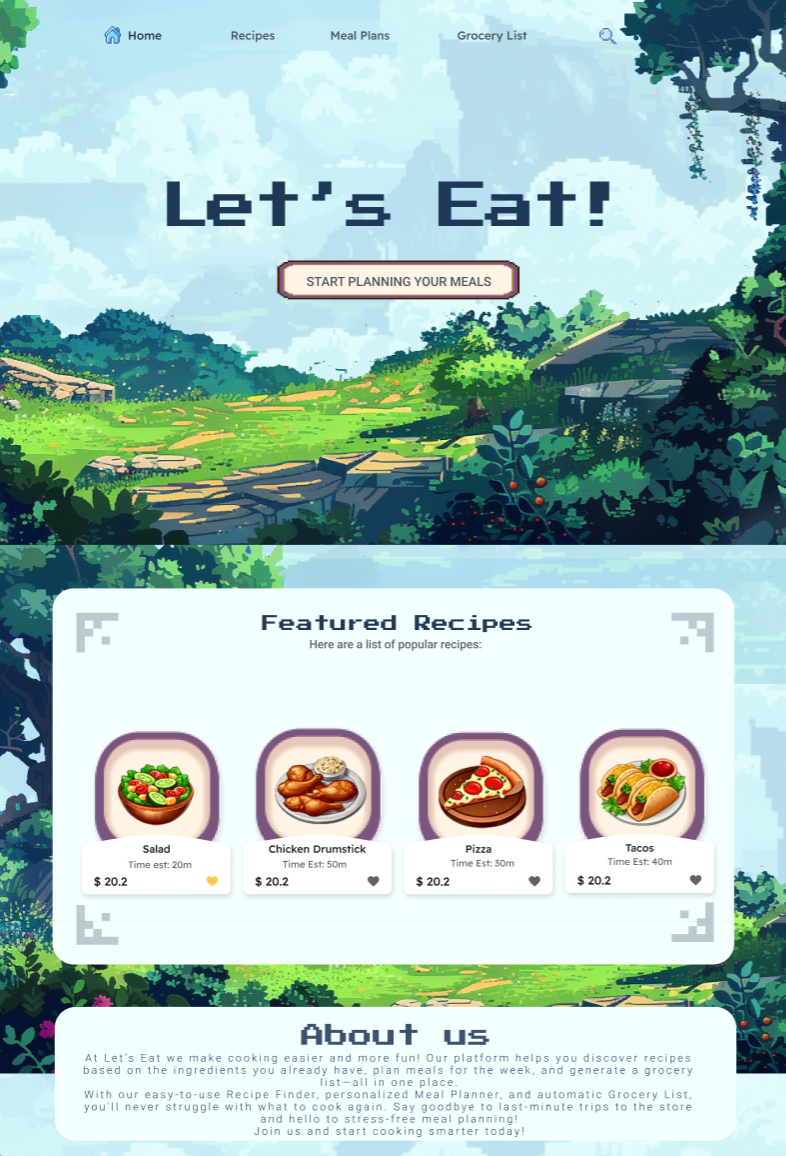
We were inspired by Stardew Valley for its charming 2D pixel art style and its ability to make everyday activities fun. Initially we had a Papa’s Pizzeria-style concept in mind, where tasks felt like a game. As college students, we know that cooking isn't always the most exciting part of the day, so we wanted to create an app that would help find recipes and plan meals more fun.
What it does
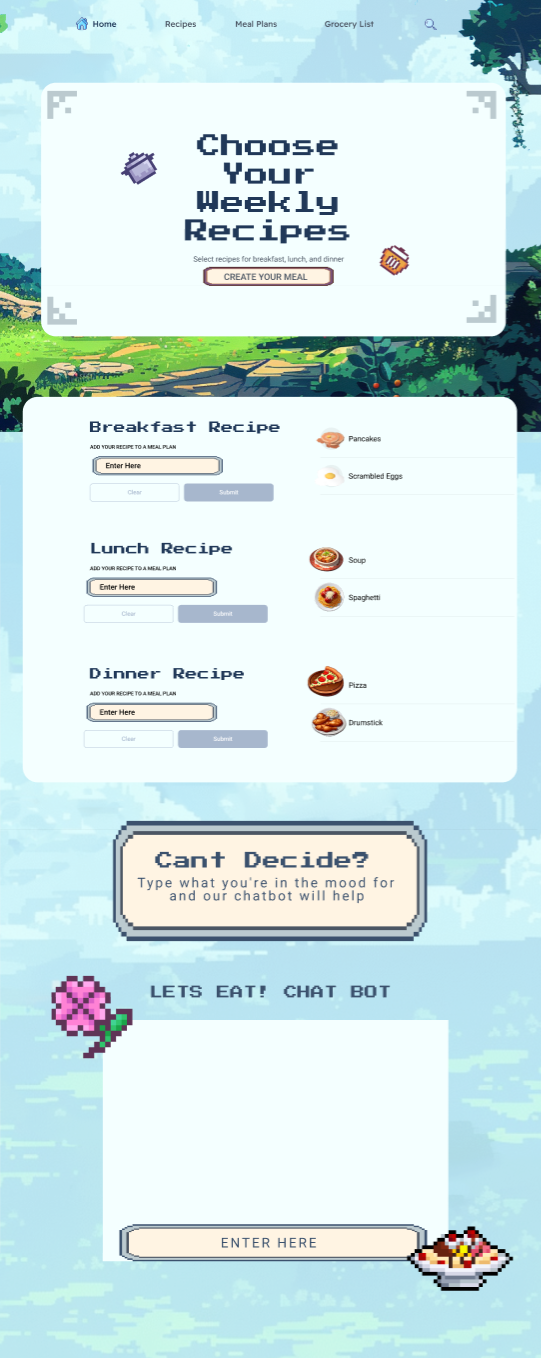
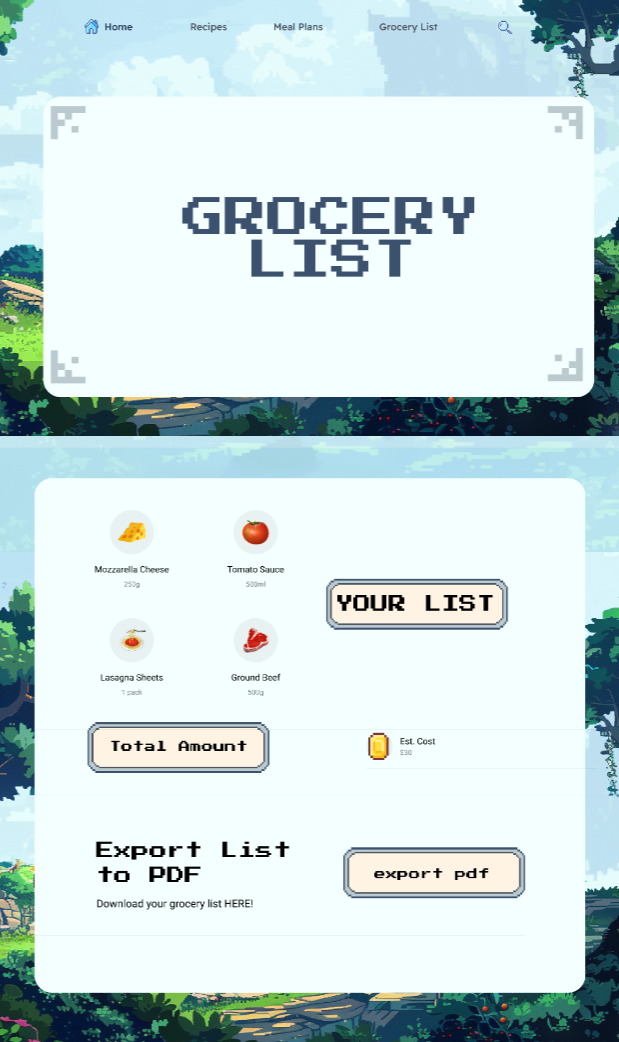
The Recipe Finder App is designed to help college students find fun and easy recipes based on the ingredients they have on hand. The goal was to make cooking more enjoyable and less intimidating by gamifying the experience.
How we built it
Front-End Development: The front-end was built using CSS and HTML, which was our first time implementing, so we had to learn as we built it. However, we had a Figma design mockup which made the process a little better.
Back-End Integration: We integrated Flask to handle the back-end, which allowed us to process and display the recipes. This added another layer of complexity to the project, especially in maintaining a seamless connection between the front-end and back-end.
Design & Layout: We started with a Figma layout to visualize the app's interface and user flow. The design was heavily inspired by the 2D pixel art style, focusing on making the app visually appealing and fun to use. However, merging this style with functional elements proved difficult, especially since we wanted animations and game-like features to be part of the experience.
Challenges we ran into
Design vs. Development: Combining the fun, game-like design with the actual coding was tough. Back-end development in Python, especially with Flask was difficult as we had to balance design elements with the the front end side.
Game-Like Features: We struggled with making the app feel truly gamified while still being practical and easy to navigate. Incorporating animations, sound, and interactive elements would have taken a lot longer and had to resort to simplifying it.
Back-End Integration: Connecting the back-end (Flask) to the front-end presented its own set of challenges. Making sure the recipes were properly displayed while keeping the app’s design intact was tricky.
Accomplishments that we're proud of
First Hackathon Success: Completing our first hackathon and delivering a fully functional app in a short time was a huge achievement.
Teamwork & Collaboration: We worked well together, improving our skills in planning, time management, and communication.
Targeting College Students: Most of all, we’re proud to have created an app that makes cooking enjoyable for college students, turning a chore into a fun experience.
What we learned
Using Web Frameworks, Learning to Quickly Understand Topics: The biggest challenges we faced involved combining the final components of our design. As a team, we had to learn how to use the web framework Flask to make our front-end and back-end design interact. This experience taught us how to efficiently learn necessary bits of a language or framework in a short amount of time, as we've been accustomed to exploring subjects in breadth with ample time.
Real-World Team Organization Skills: We also learned how to effectively manage our commitments as a group and worked to better streamline our design process, experience we aren't often able to gain through our academic coursework!
What's next for app :3
Improvements to the app would revolve around adding features beyond the ingredient list maker. A great feature to include down the road would work almost inversely to how the ingredient finder works, taking a list of ingredients on hand and returning a variety of meals that can be made with them.
And of course, bug fixes and UI tweaks are not to be forgotten!
Thanks for checking out Let's Eat!



Log in or sign up for Devpost to join the conversation.