-
-
Apollo Logo
-
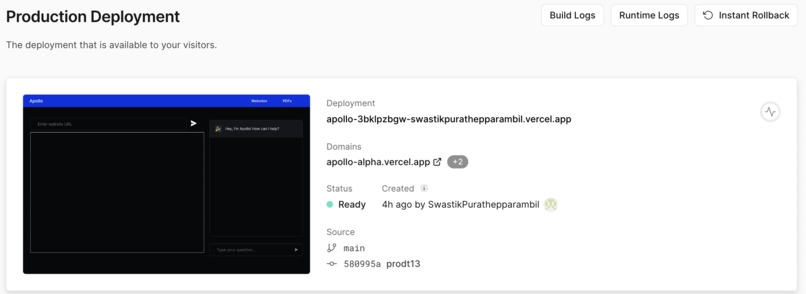
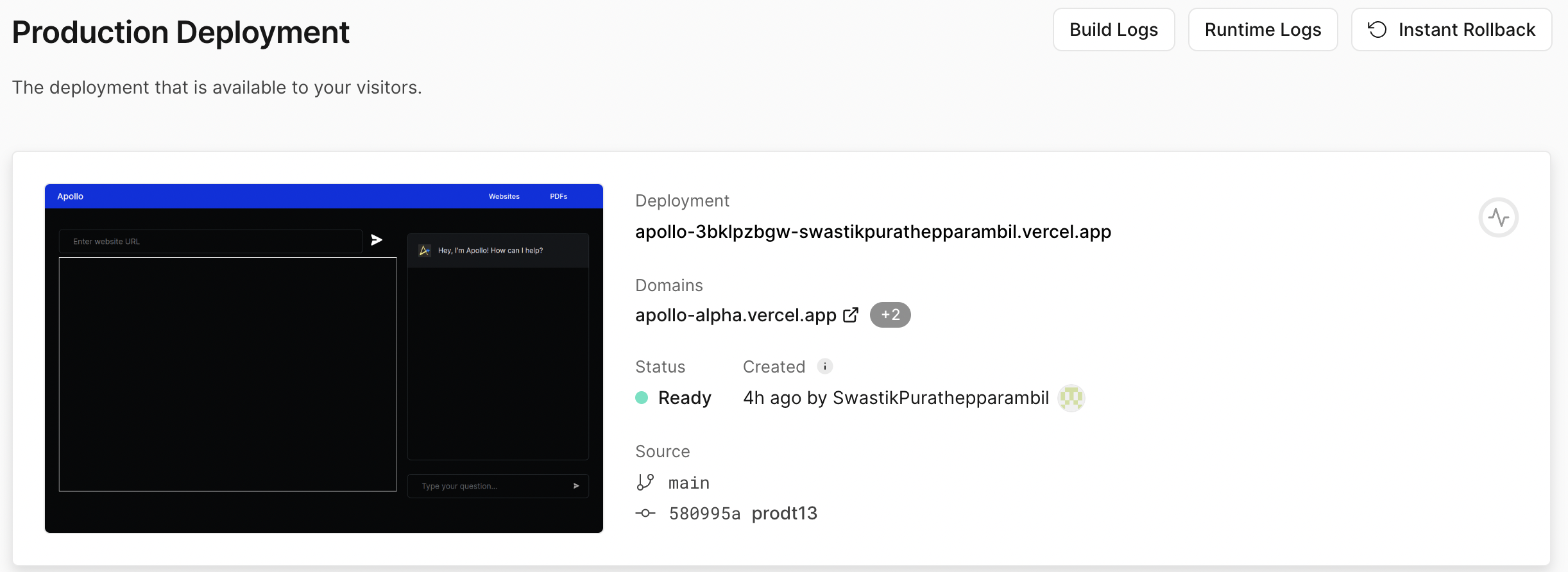
Vercel Production
Inspiration
Reading has always been a personal struggle. Building an app that would enhance my understanding of lengthy articles and personal documents is something that I personally would find extremely valuable, and many others I asked held the same view. Apollo aims to solve this by utilizing AI and LLMs to provide users with the valuable information they need.
What it does
Apollo gives users the ability to upload personal PDF documents and look through the internet for websites, which are then processed using advanced AI algorithms for users to question or manipulate.
How we built it
Apollo makes use of Vector Databases, enabling the application to retrieve relevant information from a document that can be used to answer questions that a user has. It also uses NextJS/CSS and a variety of APIs for complete frontend/backend architecture.
Challenges we ran into
This hackathon was challenging from start to finish. From building my first real NextJS project to figuring out how to parse PDFs through Langchain, I was constantly challenged to learn new information and build my skills as a full-stack developer through this hackathon.
Accomplishments that we're proud of
- Creating a way to send PDF data over to Langchain quickly and learning how to use a new framework in NextJS alongside Vercel.
What we learned
I learned how to use NextJS, Vercel, and Langchain, and also how to build a pdf viewer.
What's next for Apollo
- Saving PDF files and chat messages
- Increasing PDF file limit in production
- Ability to input audio files (i.e: lectures)
- Fully integrated User Management system
Built With
- cheerio
- langchain
- nextjs
- openai
- vercel


Log in or sign up for Devpost to join the conversation.