-
-
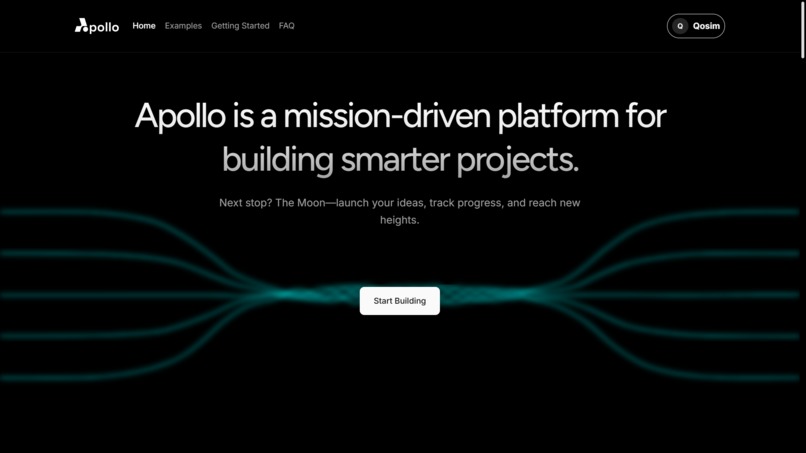
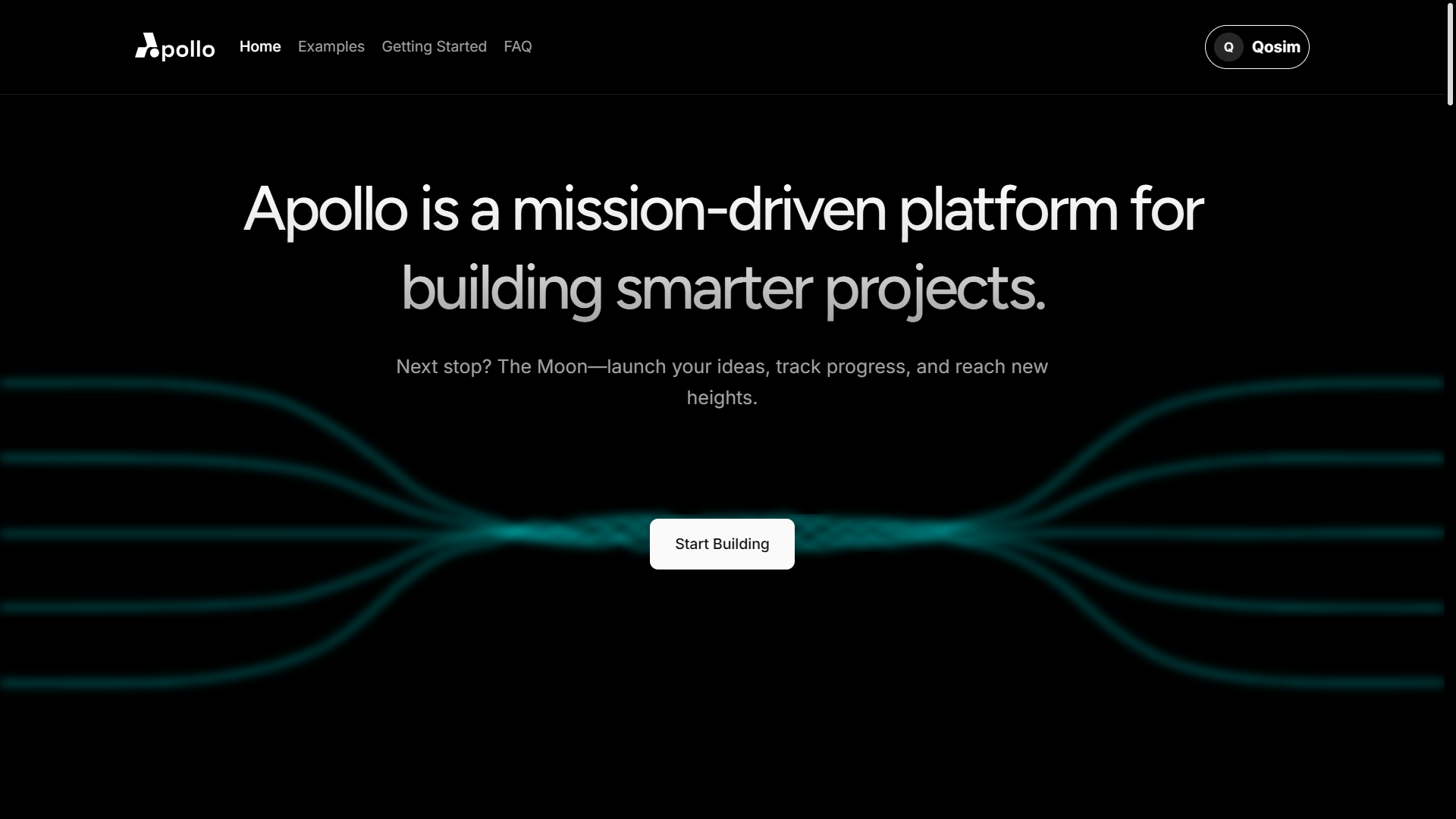
Hero Section
-
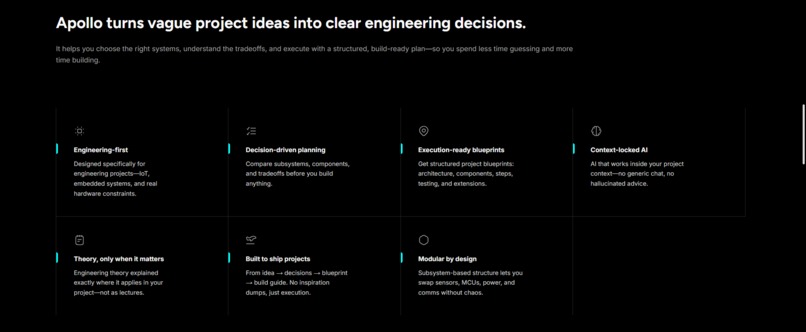
Features Section
-
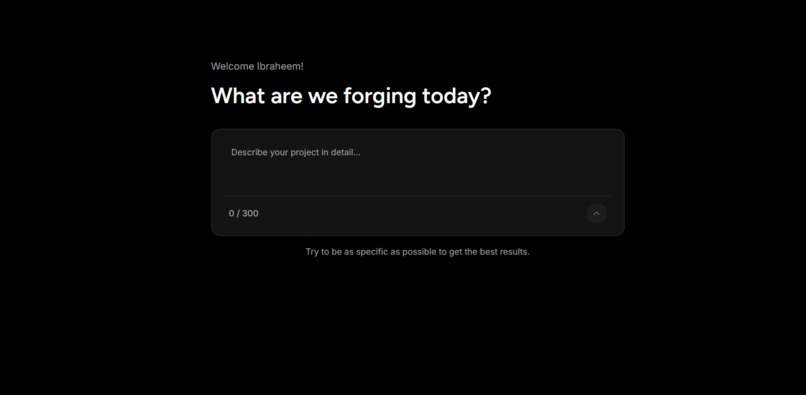
Interactive Prompting Page
Inspiration
Most engineering students don’t fail because they can’t code or solder — they fail because they make bad system-level decisions early. Wrong sensors, incompatible power systems, unrealistic components, or designs copied blindly from YouTube.
Apollo was built to fix that.
Instead of generating inspiration or generic explanations, Apollo forces structured thinking:
- What systems does this project actually need?
- What are the tradeoffs?
- What happens if I choose option A instead of B?
What It Does
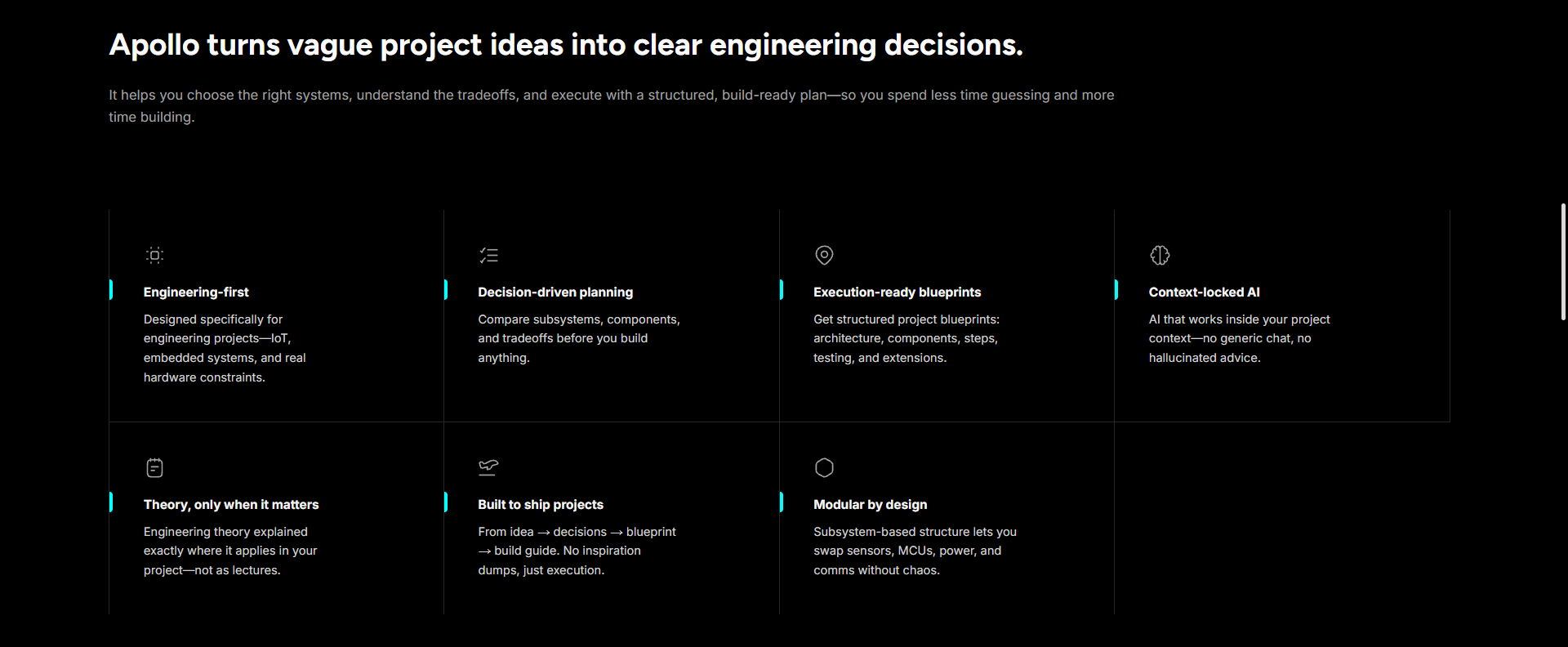
Apollo is a project-based learning platform that converts a project idea into three structured layers:
- Decision Matrix Breaks a project into subsystems (sensing, control, power, etc.) and compares realistic options with clear tradeoffs.
- Blueprint Freezes chosen decisions into a coherent, system-level architecture.
- Build Guide Translates the blueprint into practical execution steps. The goal isn’t inspiration — it’s decision clarity and execution readiness.
How We Built It
- Next.js frontend renders structured engineering data into clear UI blocks.
- Context-locked AI backend generates strict JSON outputs (no free-form chat).
- PostgreSQL (Supabase) caches AI responses to reduce cost and latency.
- Prisma enforces schema consistency.
- Outputs are deterministic and data-driven, enabling diagrams and UI to be generated directly from JSON.
Challenges We Ran Into
- Preventing the AI from behaving like a generic chatbot.
- Designing schemas that reflect real engineering block diagrams.
- Handling API rate limits and long generation times.
- Translating dense JSON into readable, intuitive UI components.
Accomplishments We’re Proud Of
- Designed a clear engineering workflow that turns vague ideas into buildable systems.
- Created a Decision Matrix → Blueprint → Build Guide pipeline that mirrors real engineering thinking.
- Enforced hard separation between exploration and execution.
- Integrated context-aware constraints (location, cost, availability, skills).
- Built a working end-to-end prototype producing machine-readable engineering outputs, not just text.
- Avoided feature bloat to keep Apollo focused, explainable, and demo-able.
What We Learned
- Structure matters more than verbosity.
- Engineering tools should prioritize tradeoffs, not features.
- Deterministic outputs unlock powerful visualizations like auto-generated block diagrams.
What’s Next for Apollo
- Validation & checks: automatic sanity checks for power, compatibility, and feasibility.
- Visual system diagrams generated directly from structured data.
- Team workflows: reviews, flags, and iteration history (intentionally deferred).
- More domains: expansion beyond IoT into robotics, power electronics, and other engineering fields.
Built With
- ai:
- api
- backend:
- database:
- gemini
- javascript-frontend:-next.js
- languages:-typescript
- next.js
- postgresql
- prisma
- react
- responses
- routes
- shadcn/ui
- tailwind-css


Log in or sign up for Devpost to join the conversation.