-
-
Apollo
Inspiration: Predicting the right crop variety is crucial for modern agriculture. It allows farmers to boost yield, reduce risks, and make efficient use of resources. This project was inspired by the growing need for sustainable farming methods that adapt to local soil, climate, and environmental conditions. By making data-driven decisions, farmers can better manage challenges posed by pests, disease, and climate change, ultimately promoting food security and profitability.
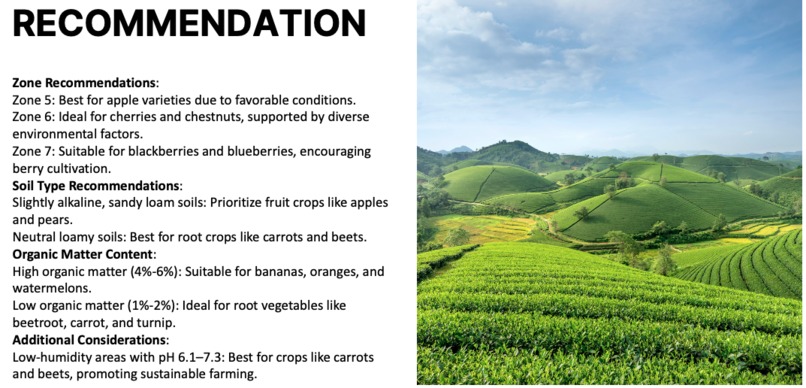
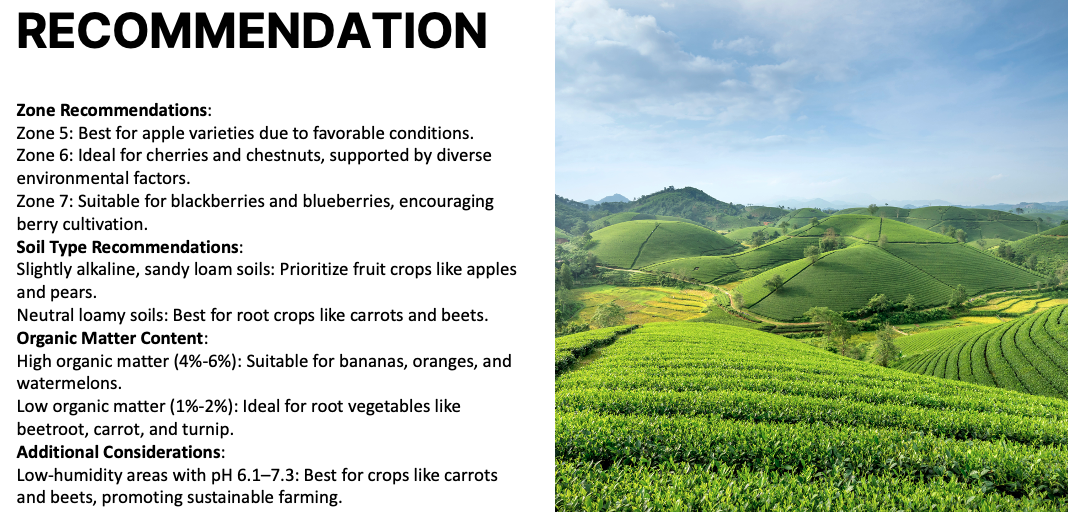
What it does: The project uses predictive modeling to recommend the ideal crop variety based on zone, soil type, and environmental conditions. By analyzing historical agricultural data, it delivers real-time predictions and personalized recommendations that help farmers make informed decisions.
How we built it: We used Python along with libraries like Pandas, NumPy, Seaborn, and Scikit-learn to load, clean, and process the data. After conducting exploratory data analysis (EDA), we engineered relevant features and trained a Random Forest classifier. Hyperparameter tuning was done using Grid Search to maximize model performance, achieving around 80% accuracy. The project includes dashboards and visualizations to display trends and prediction outcomes.
Challenges we ran into: One of the key challenges was handling an imbalanced dataset, which affected the performance of early model versions. Additionally, tuning model parameters required significant computational resources and time, especially during cross-validation.
Accomplishments that we're proud of: We’re proud to have achieved strong model accuracy and meaningful recommendations tailored to specific agricultural zones. The project earned the 2nd Runner-Up Prize in a competitive Datathon challenge, validating its potential impact and technical soundness.
What we learned: We enhanced our understanding of data preprocessing, feature engineering, and visualization. Working with imbalanced data taught us the importance of proper sampling techniques and evaluation metrics. We also gained practical experience using Grid Search for hyperparameter tuning and interpreting machine learning outputs effectively.
What’s next for Apollo: Future plans include integrating an AI-powered chatbot to assist farmers interactively and expanding the system to include weather-driven crop forecasting. We also aim to enhance the recommendation system with real-time environmental data and extend its usability through a mobile-friendly interface.


Log in or sign up for Devpost to join the conversation.