Inspiration
I have known a lot of AD patients throughout my life. I was very young when my grandfather got diagnosed with AD. Since we used to live together with my grandparents, I got to observe every aspect and stage of the AD. This has made me interested and also knowledgable at a certain level. When my grandfather got diagnosed with AD, there weren't many known facts about the disease. Research has developed much more during the past 5 years. I was always told that AD was caused due to unknown mutations and/or environmental factors. They always explained to me that the main risk factors were aging and "genetics". Fast forward to high school, I got interested in studying bioinformatics. I wanted to learn what bioinformatics was so I decided to join this hackathon. I've done a lot of research about this field during these 5 days and I came to the level where I could analyze gene sequences using python (considering that I started from nearly 0 knowledge, I find this great). This hackathon inspired me to thoroughly research one of the biggest questions that occupied my mind: What causes AD? So I researched and found an explanation which inspired me to do such a project.
What it does
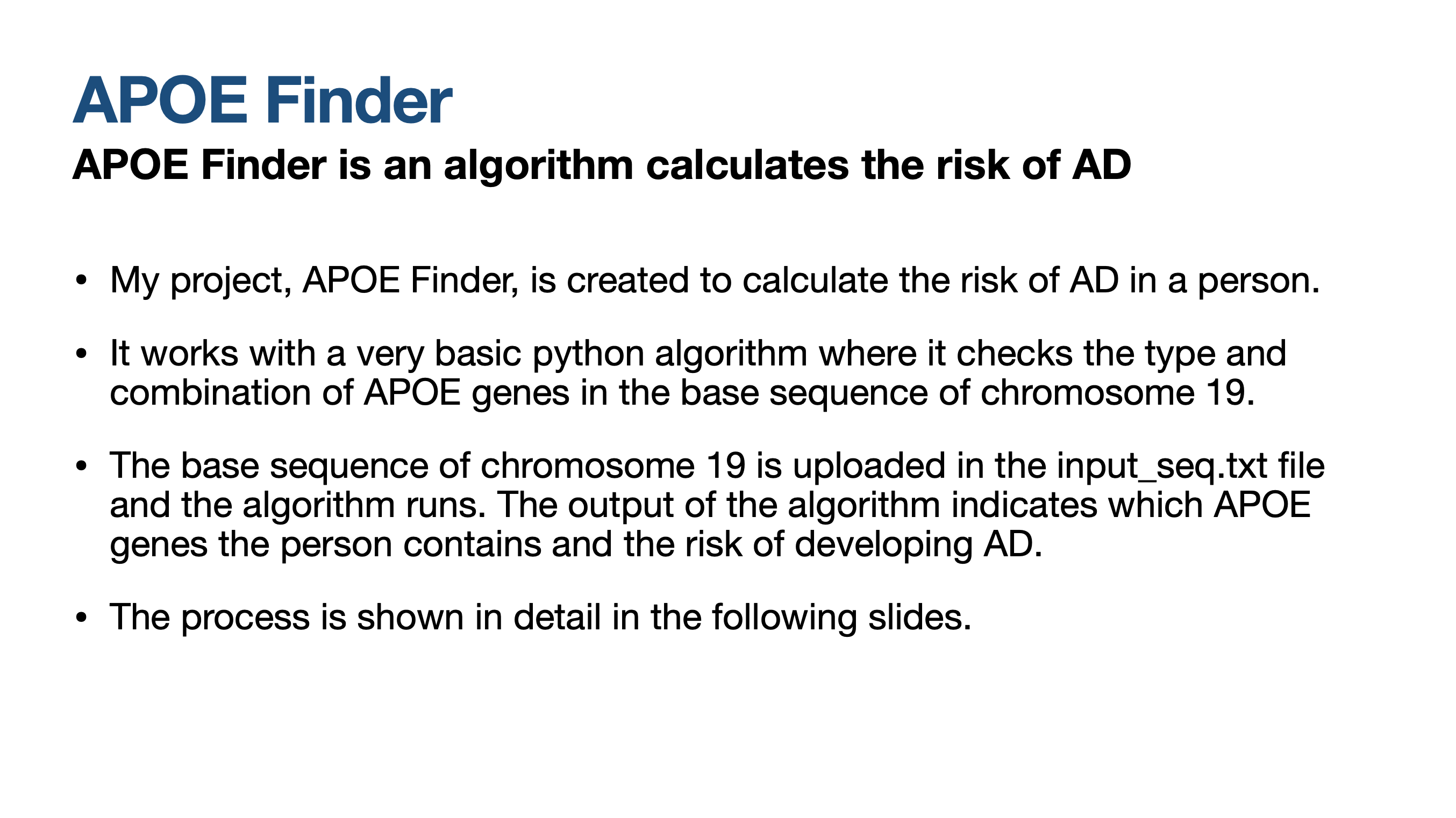
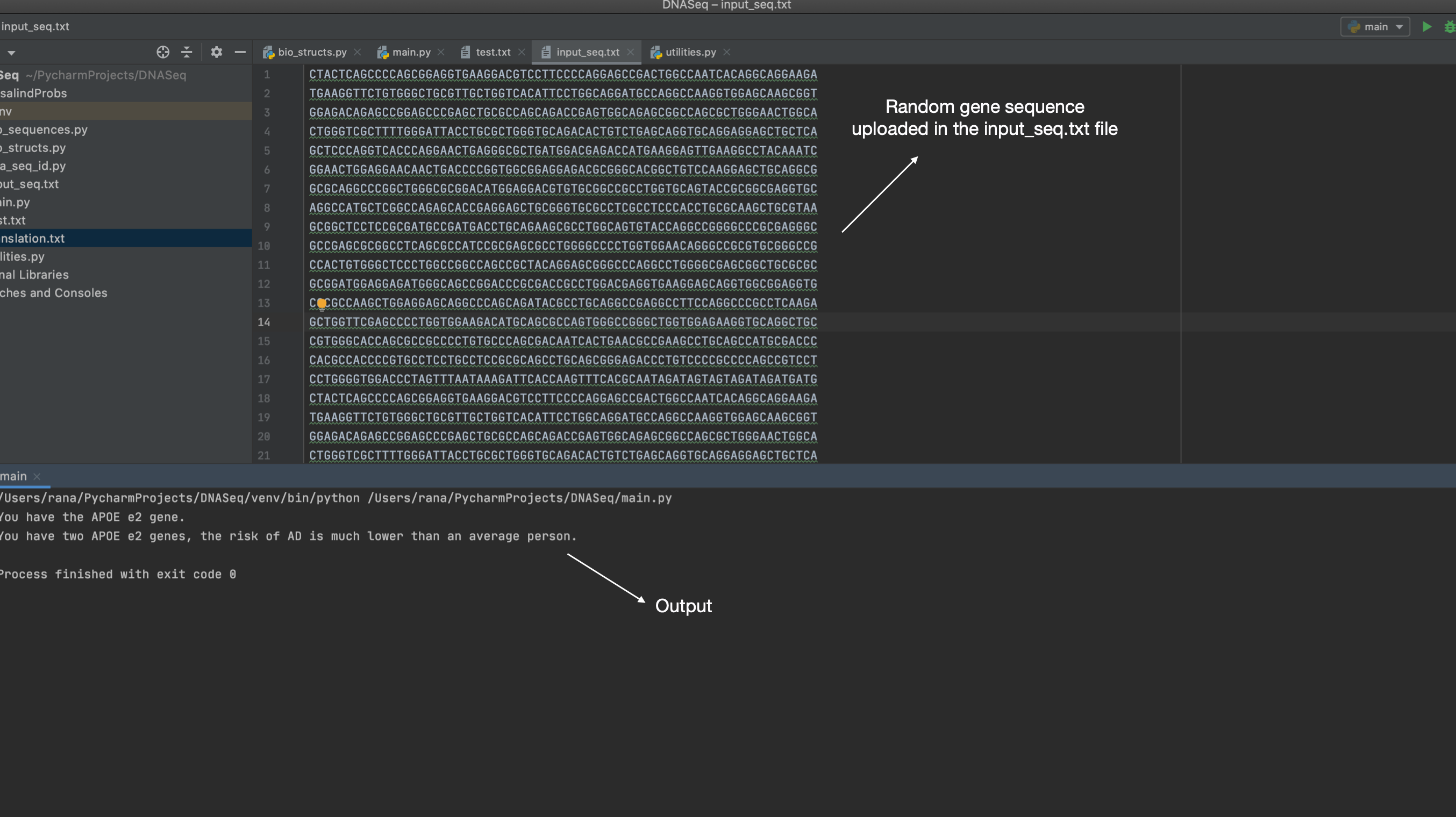
It reads the patient's chromosome 19 DNA sequence and determines which combination and type of APOE gene the patient has. Then, it outputs the risk of AD.
How I built it
I built it using python algorithms. The project is mainly based on file reading and conditionals.
Challenges I ran into
I knew absolutely nothing about bioinformatics so I ran into numerous challenges. I'll list them because I just can't explain all in detail.
- I had to know and understand what bioinformatics was
- I had to learn more about basic python
- I had to learn how to implement biology into python
- I researched about the causes of AD
- I had to focus on one specific cause so I could produce something.
- I had to learn about the relation of APOE and AD.
- I had quite a lot of mistakes in my code in reading files, generating DNA sequences, transforming the seq into proteins.
I can't really call these as challenges, but they took most of my time and energy. While doing these, I guess the biggest challenge I faced was stepping into a brand new field that I knew nothing about. I had to develop myself and gain knowledge in about 5 days and that was pretty challenging. I stayed up most nights and also had a migraine attack due to the lack of sleep I got but it was worth it lol.
Accomplishments that I'm proud of
- I developed my basic knowledge in python
- I finally got to know what bioinformatics is
- I learned how to implement biology to code
- I found the answer to one of the biggest questions that occupied my mind, the cause of AD
- I terminated a project - even though it's the first prototype and it has a long way to go
- I was engaged all through the 5 days which made me realize that this was the field I wanted to study in
What I learned
I kind of wrote all of these in the accomplishments part because I'm mainly proud of learning more about bioinformatics.
What's next for APOE Finder
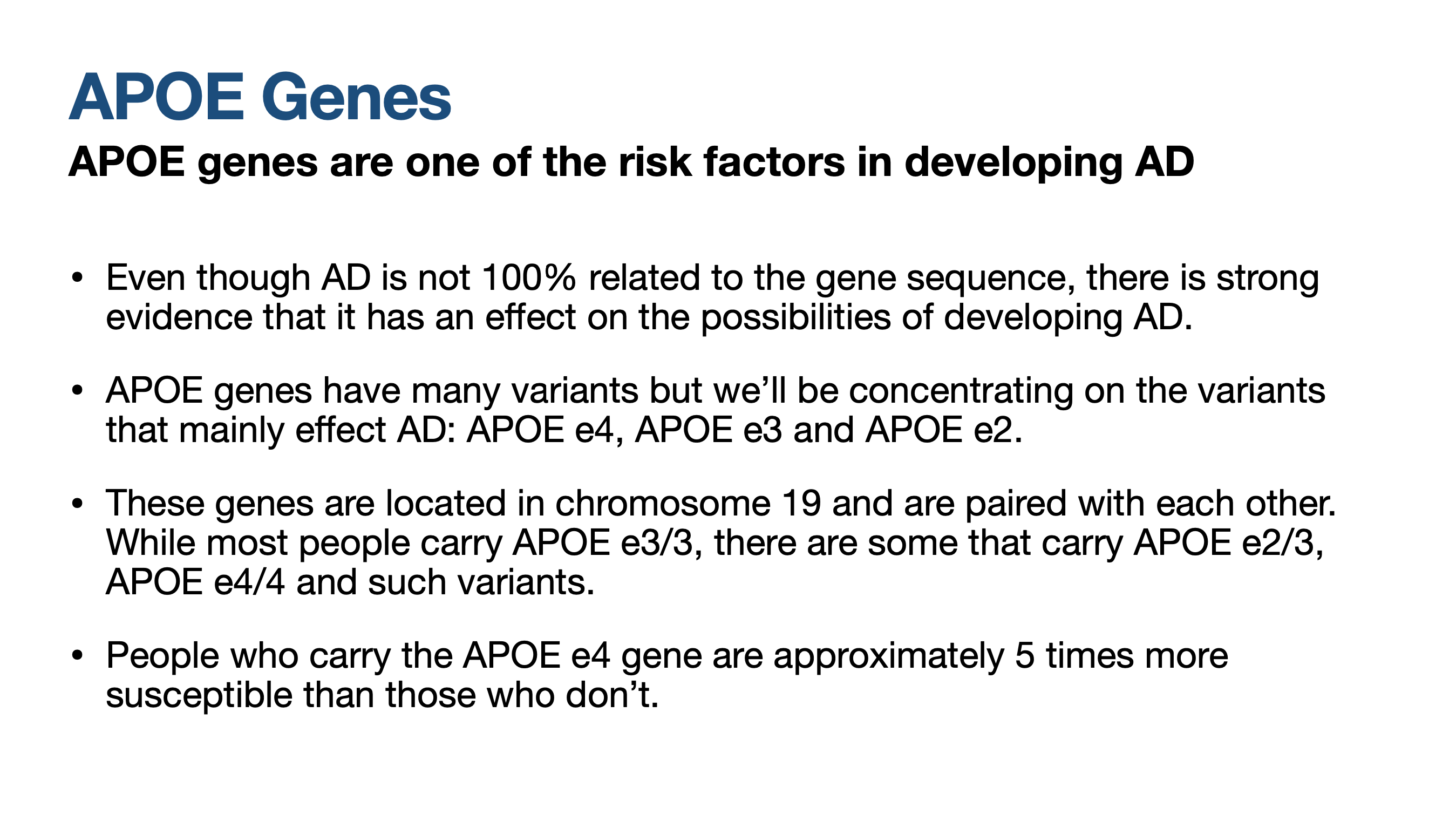
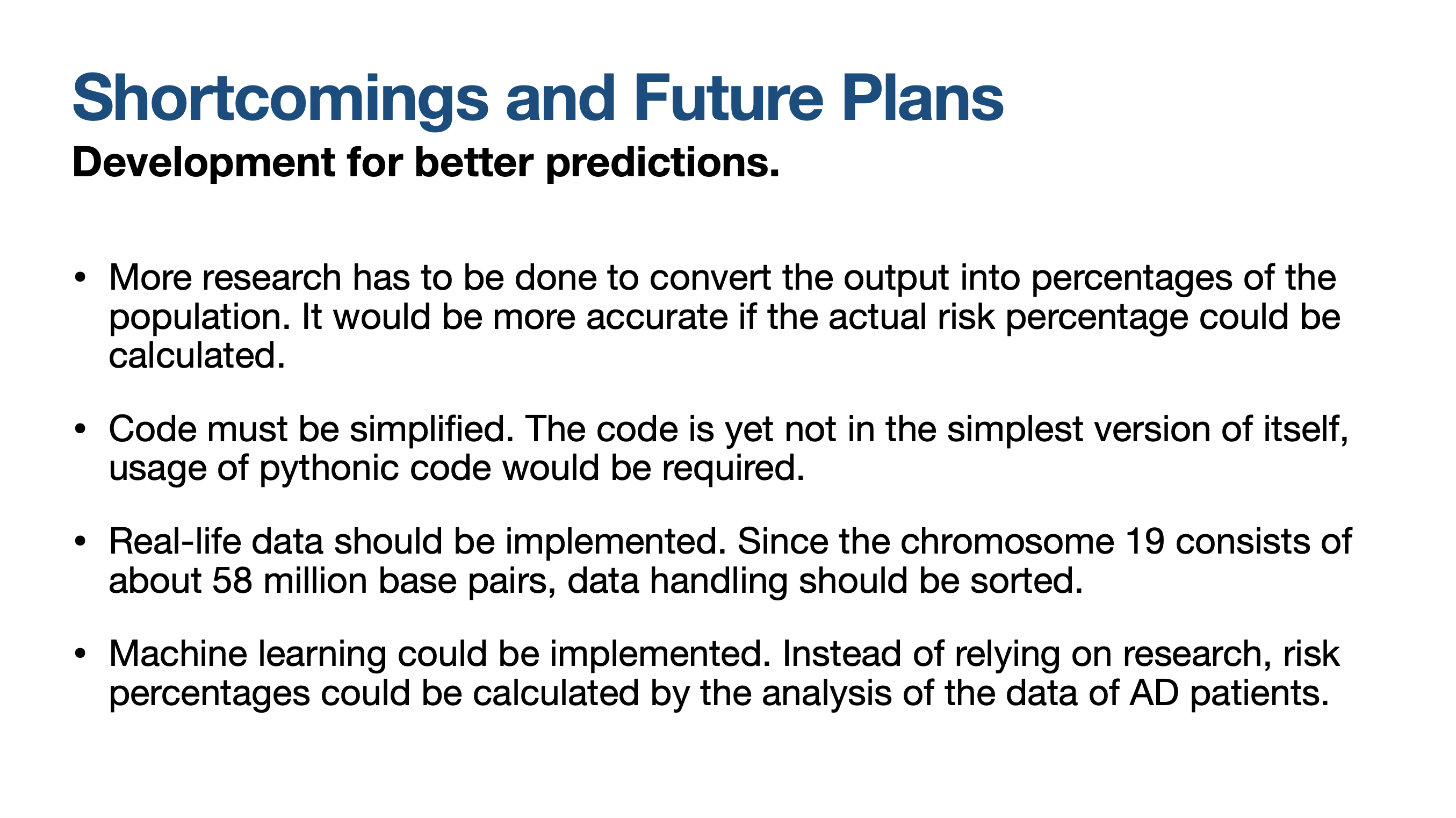
I've explained this in detail in the presentation. However, I want to implement machine learning in this project because I think it would be a great opportunity to process real-life data and do the predictions according to that data. Another thing that has to be improved is big data handling- the chromosome 19 is approximately 58 million base pairs long and I have only been testing sequences that I've randomly generated.


Log in or sign up for Devpost to join the conversation.