-
-
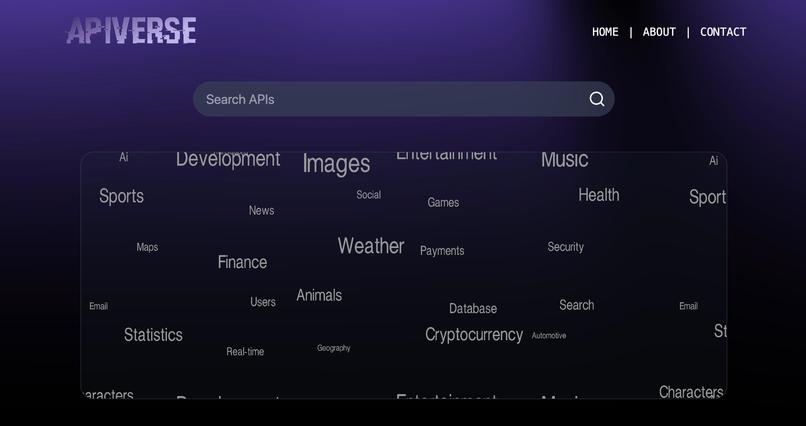
landing page
-
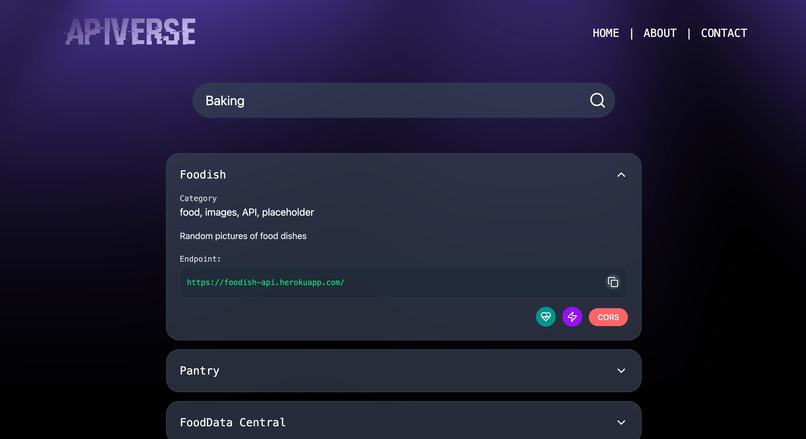
search results
-
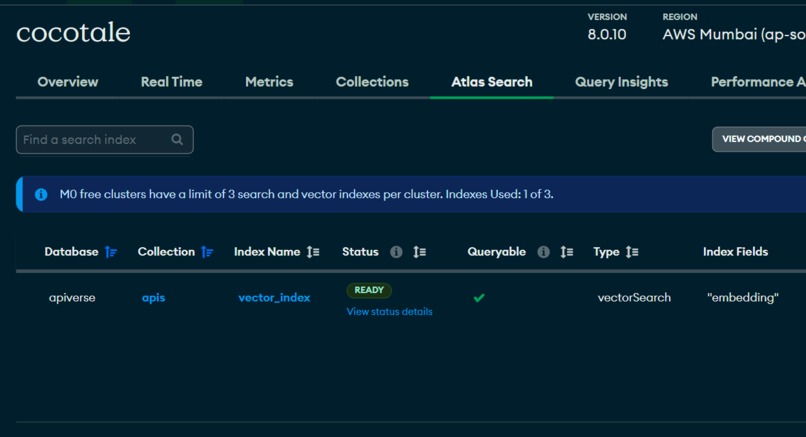
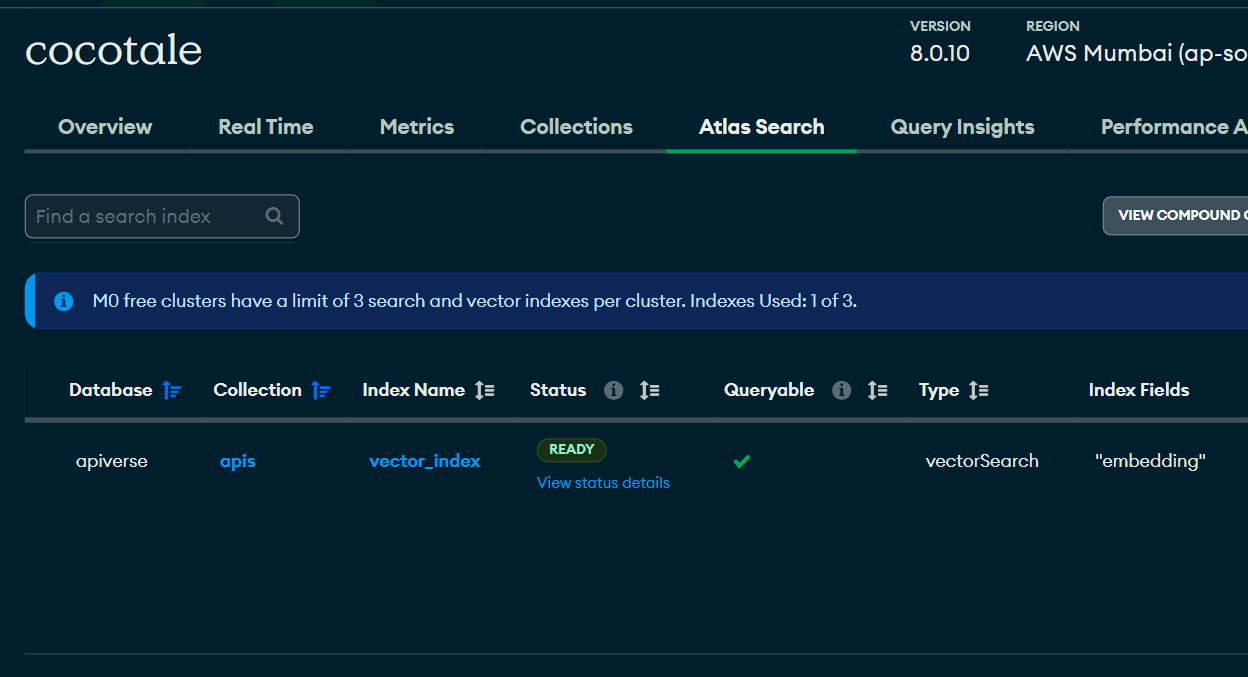
MongoDB vector search index


Inspiration
While working on various development projects, we repeatedly encountered challenges in discovering and verifying reliable APIs. Browsing through platforms like GitHub, RapidAPI, and scattered public repositories often meant spending significant time filtering through unstructured data, outdated links, or broken endpoints.
These pain points led us to create APIVerse — a centralized API discovery platform powered by MongoDB that simplifies how developers search, evaluate, and integrate public APIs. By aggregating APIs from multiple sources, organizing them into meaningful categories, and adding key features like real-time health checks and AI-generated integration code, APIVerse aims to make API discovery fast, reliable, and developer-friendly.
What it does
APIVerse simplifies API discovery by combining semantic search, real-time validation, and AI-powered integration assistance into one platform. Key features include:
- Semantic search using MongoDB Atlas Vector Search with embedding-based matching.
- Rich API metadata, including endpoints, descriptions, authentication type, and CORS support.
- Live health checks for verifying API status.
- Auto-generation of React integration code using the Gemini API.
- 3D category-based API exploration with Three.js.
How we built it
We built APIVerse using a cloud-native stack centered around MongoDB Atlas for both data storage and vector-based semantic search. The tech stack is organized as follows:
- Database & Search: MongoDB Atlas
- Backend: FastAPI (Python)
- Frontend: React.js, Tailwind CSS, Three.js
- AI Integration: Google Gemini API for code generation , MongoDB Vector Search
Challenges we ran into
Building APIVerse required solving several technical challenges, especially around:
- Aggregating and cleaning API data from multiple inconsistent sources.
- Structuring metadata (auth, CORS, tags) into a searchable format.
- Optimizing load performance with Three.js visualizations.
Accomplishments that we're proud of
We successfully delivered a full-stack, cloud-deployed application with:
- Vector-based search using MongoDB Atlas.
- Live health checks for each API.
- Seamless deployment via Render.
What we learned
This project gave us hands-on experience with vector search, AI integration, and scalable cloud deployment. We deepened our understanding of:
- MongoDB Atlas Search and semantic querying.
- Efficient frontend optimization for interactive, data-driven UI components.
What's next for APIVerse
We aim to evolve APIVerse into a community-driven, developer-first API hub. Future plans include:
- Expanding the API dataset and sources.
- Adding user reviews and ratings.
- Supporting code generation in multiple languages.
- Introducing advanced filters for SDKs, rate limits, and usage tiers.


Log in or sign up for Devpost to join the conversation.