-
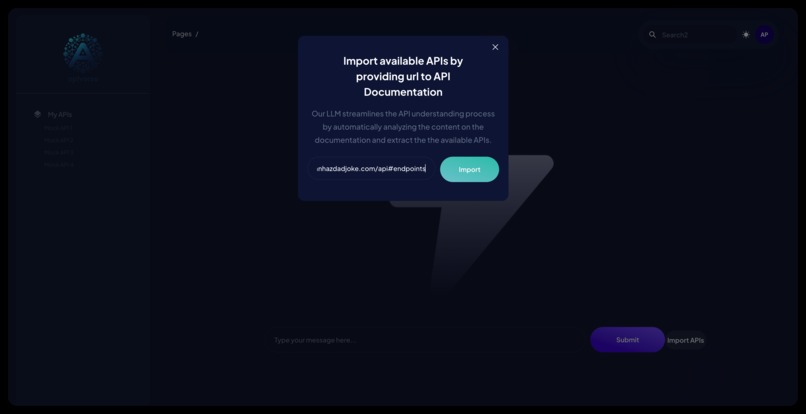
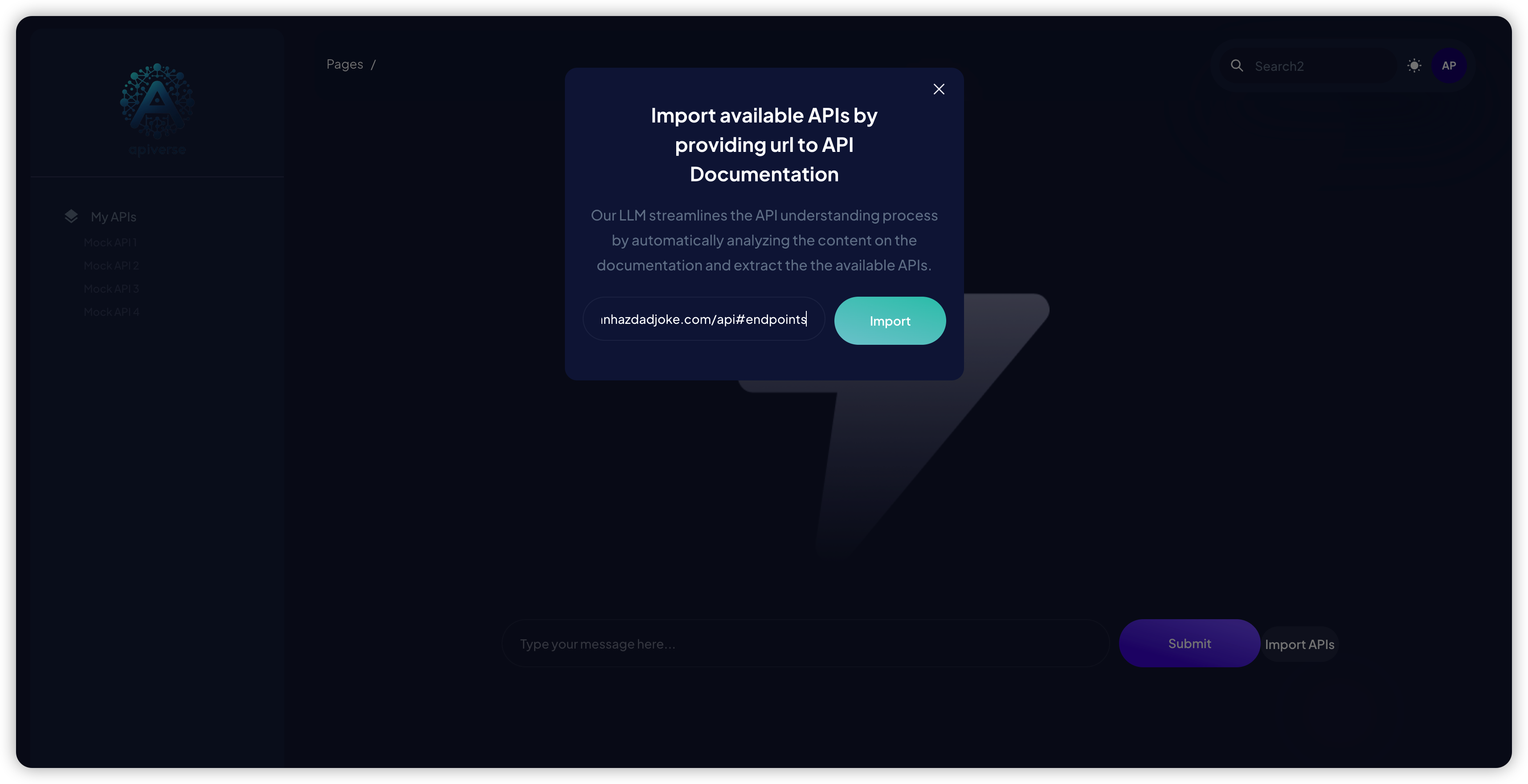
Import APIs by URL Doc
-
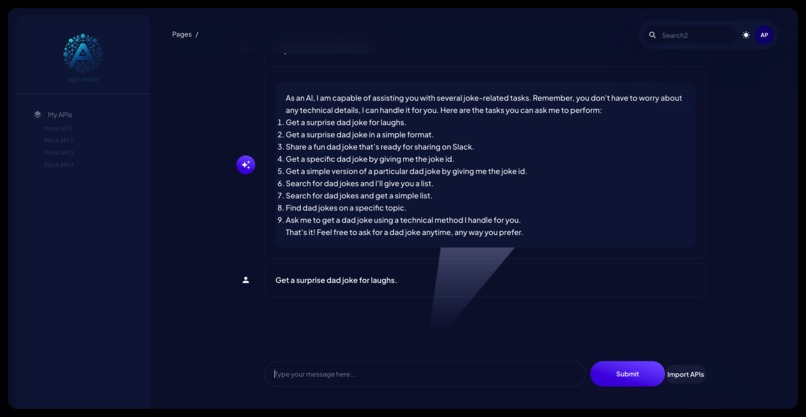
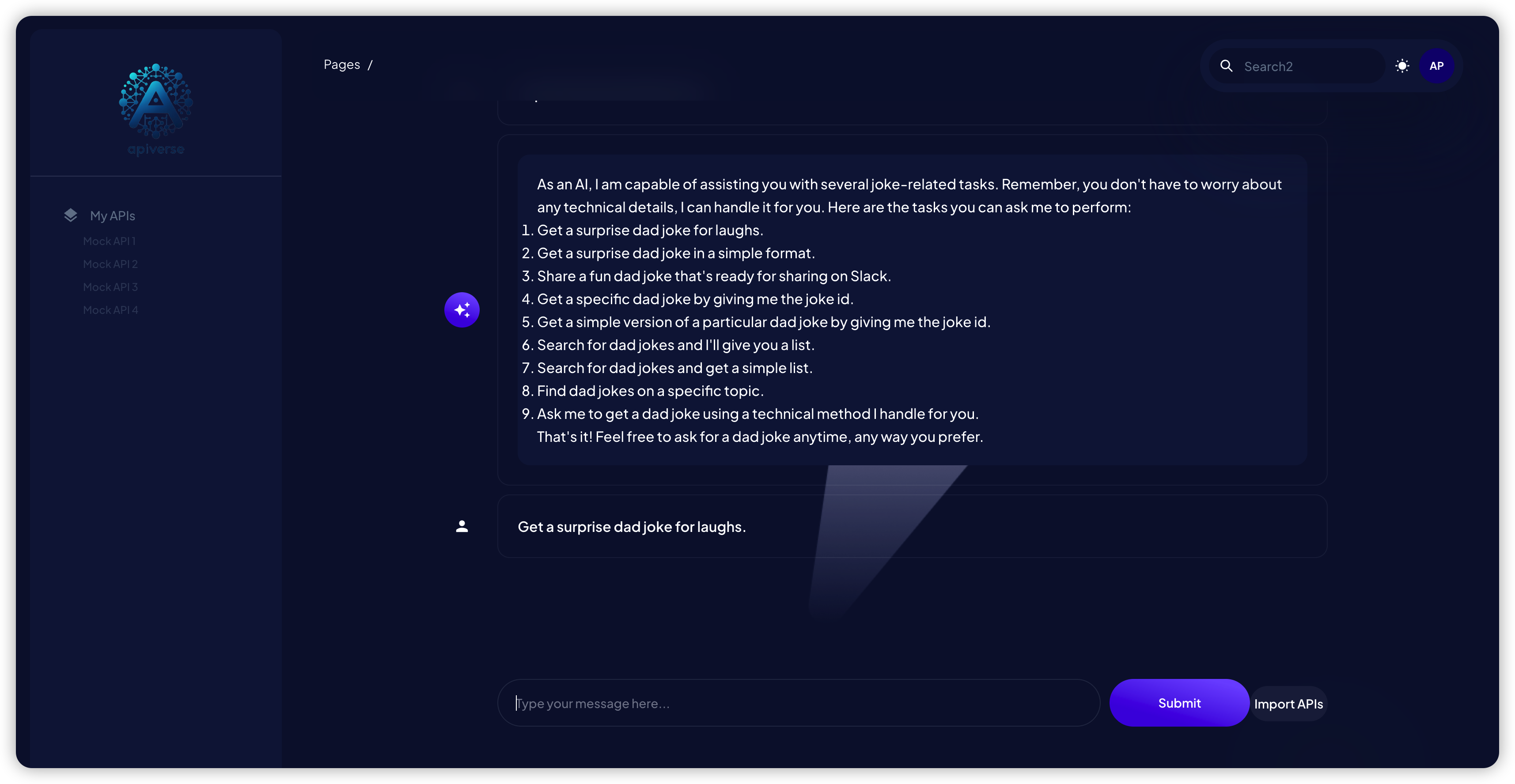
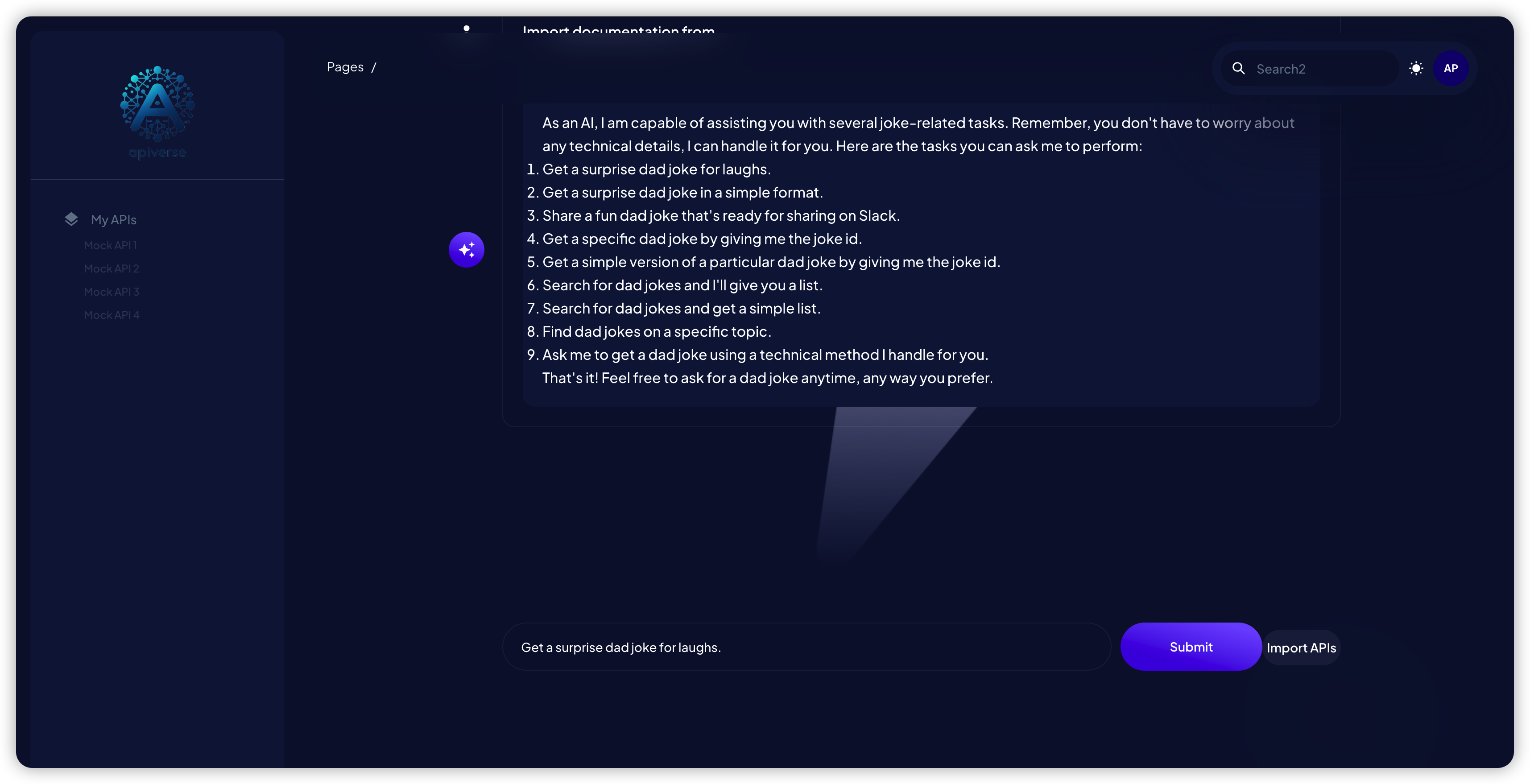
User choose API to call by asking
-
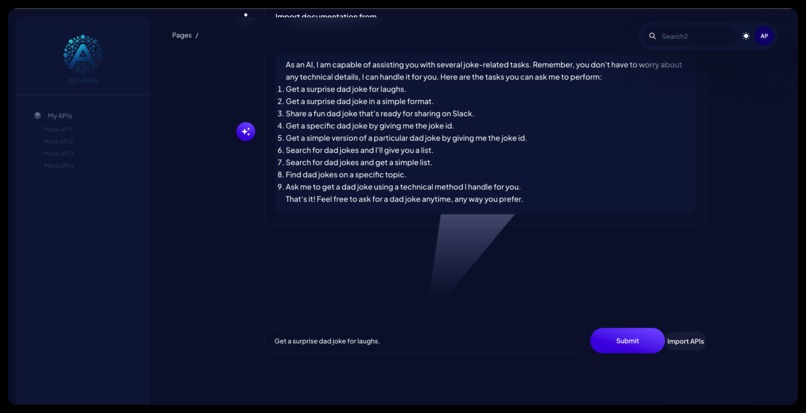
AI listing description of APIs
-
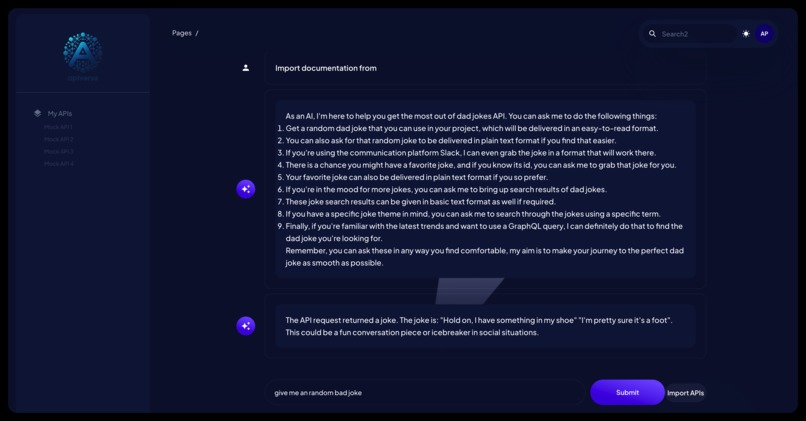
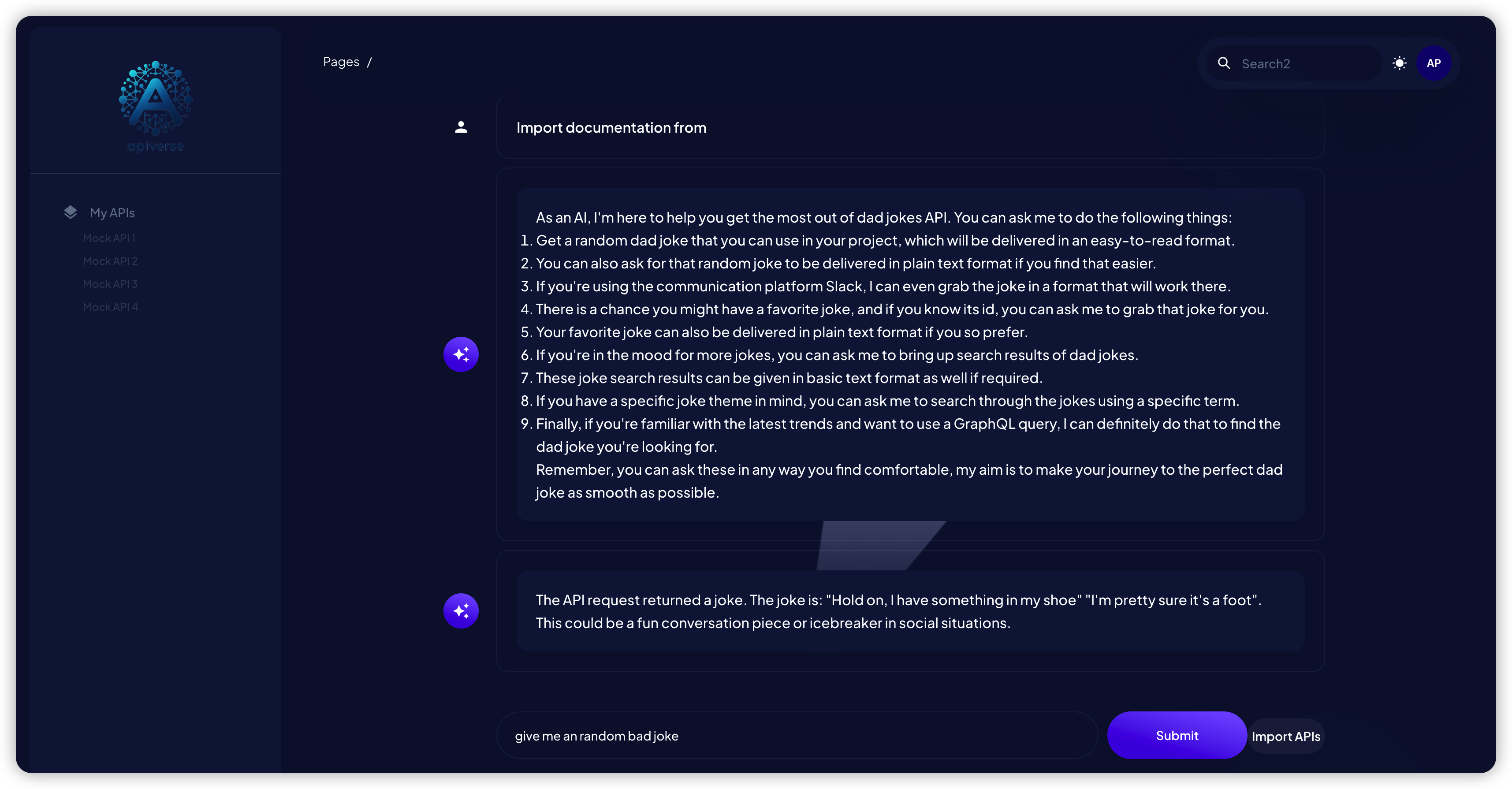
AI help call the api and return human readble result under the scene
Inspiration
The inspiration behind APIVerse stems from the common frustrations and time-consuming processes that developers and users alike face when integrating and utilizing APIs. Traditionally, users have to sift through extensive documentation to understand how to work with an API, figure out the required parameters, manage authentication tokens, and more. We wanted to create a platform that not only simplifies these steps but also leverages the power of Large Language Models (LLMs) to provide intuitive and conversational interactions with APIs.
What it does
APIVerse serves as a centralized platform that radically simplifies the API integration and utilization process. Users can effortlessly import APIs by uploading their documentation, while companies have the ability to publish and manage their APIs on the platform. With the assistance of LLMs, users can interact with APIs through natural language, asking for recommendations, and even sending requests verbally. Developers have the option to export configurations, making the platform versatile and adaptable to different needs. Essentially, APIVerse streamlines the entire API experience, making it more accessible, efficient, and user-friendly.
How we built it
APIVerse is built on a robust framework that integrates LLMs to interpret and process natural language inputs. The platform has a user-friendly interface for importing API documentation and managing API listings. On the backend, we developed algorithms to parse and interpret API documentation, extracting necessary information like endpoints, parameters, and authentication details. The LLMs are trained to understand API-related queries and provide accurate and helpful responses, recommendations, and assistance to the users.
Challenges we ran into
One of the major challenges was ensuring that the LLMs could accurately interpret and provide relevant information and recommendations based on varied and sometimes incomplete API documentation. Developing a system that could handle different documentation formats and standards required extensive testing and refinement. Additionally, ensuring a seamless and intuitive user experience while managing the complexities of API interactions posed significant design and development challenges.
Accomplishments that we're proud of
We are incredibly proud of creating a platform that democratizes API interactions, making them accessible to a wider audience beyond just developers. APIVerse’s ability to provide conversational interactions with APIs, backed by the power of LLMs, represents a significant advancement in simplifying complex technical processes. The platform’s capacity to understand and process a variety of API documentation formats is another achievement that we are particularly proud of.
What we learned
Through the development of APIVerse, we gained valuable insights into natural language processing, machine learning, and the intricacies of API interactions. We learned about the challenges associated with interpreting diverse API documentation and the importance of a user-centric design to ensure an intuitive and efficient user experience.
What's next for APIVerse
The future of APIVerse is focused on continuous improvement and expansion. We plan to further enhance the LLMs’ capabilities, ensuring even more accurate and helpful interactions. We aim to expand the platform’s functionality to support more API types and documentation formats. Additionally, we are looking at integrating additional tools and resources to aid in API development and testing, creating a comprehensive ecosystem for API management and integration.
Built With
- flask
- langchain
- openai
- python
- react
- typescript

Log in or sign up for Devpost to join the conversation.