-
-
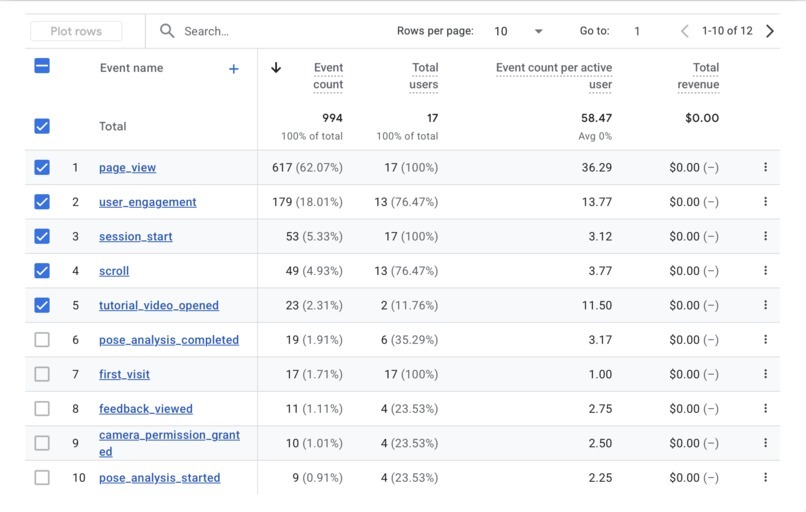
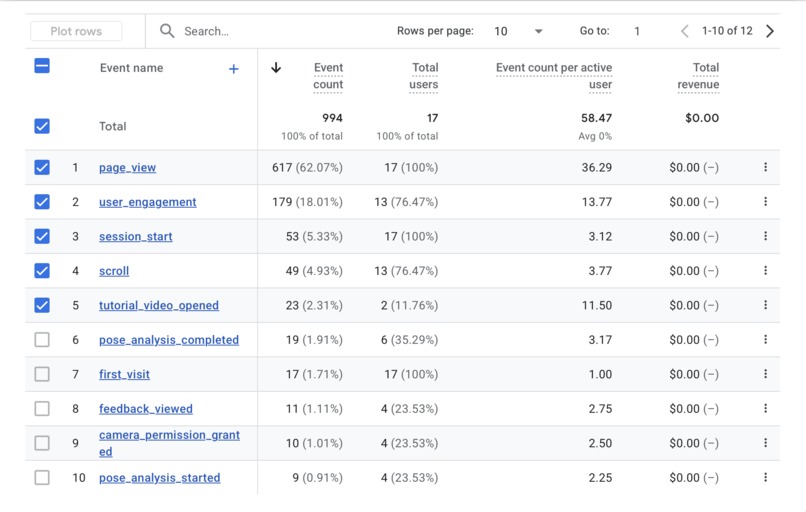
We are at around 1000 users for ApexShield Dojo
-
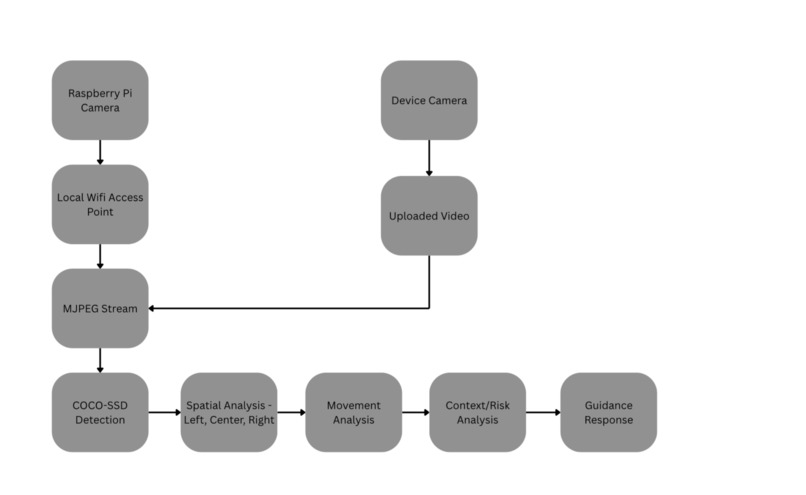
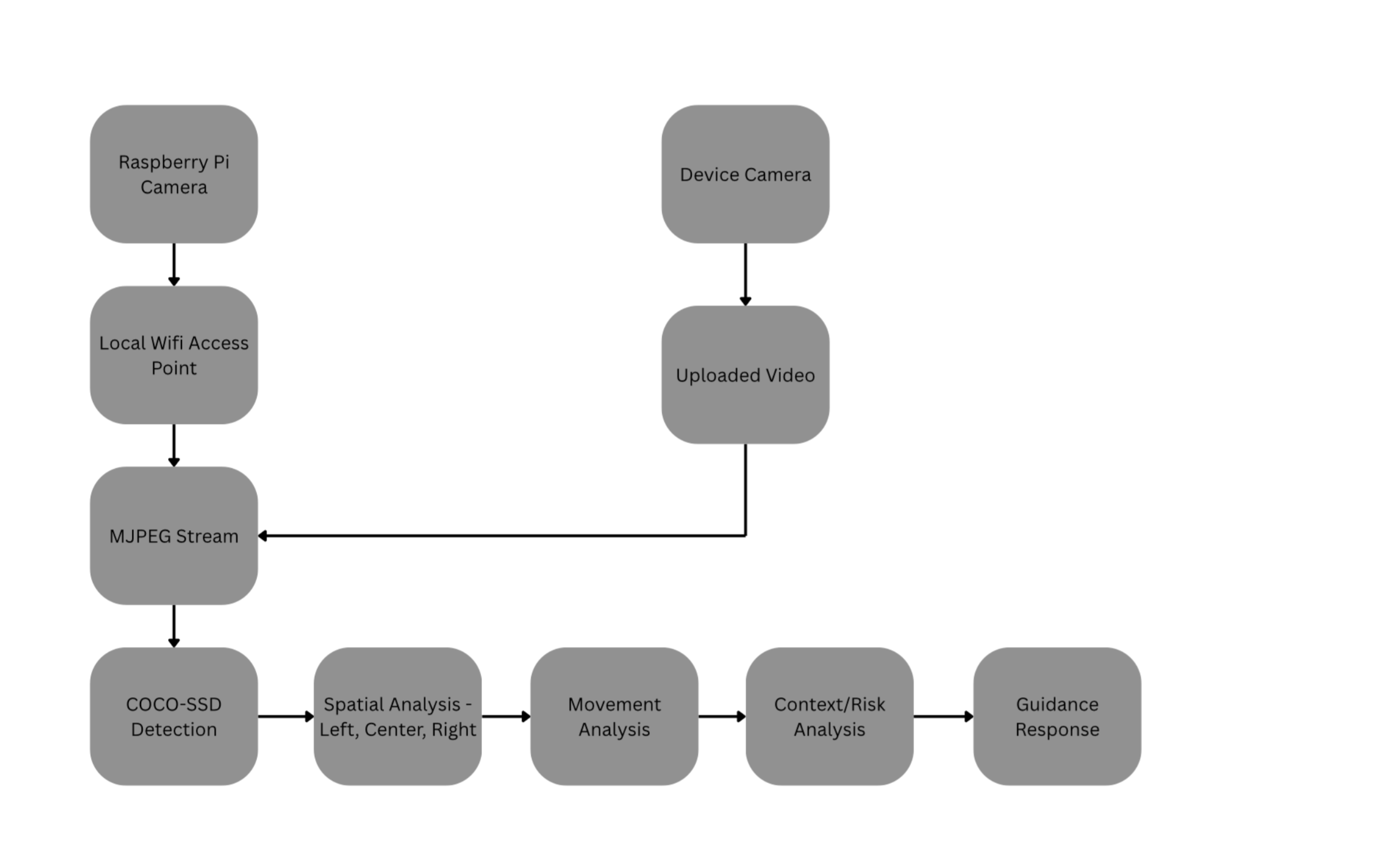
Diagram for ApexShield Vision
-
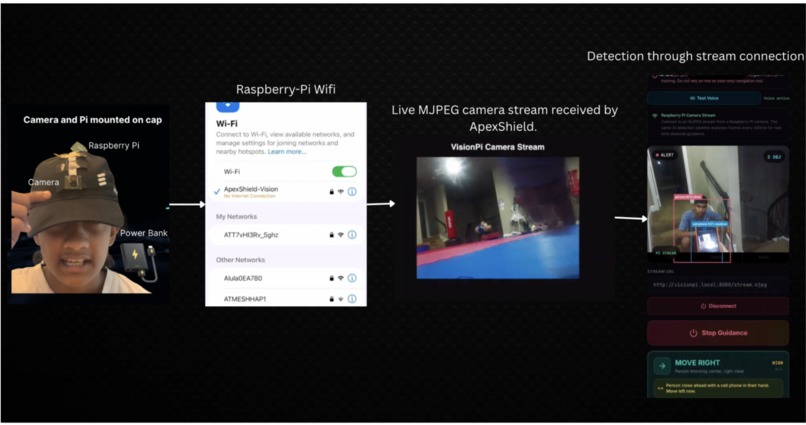
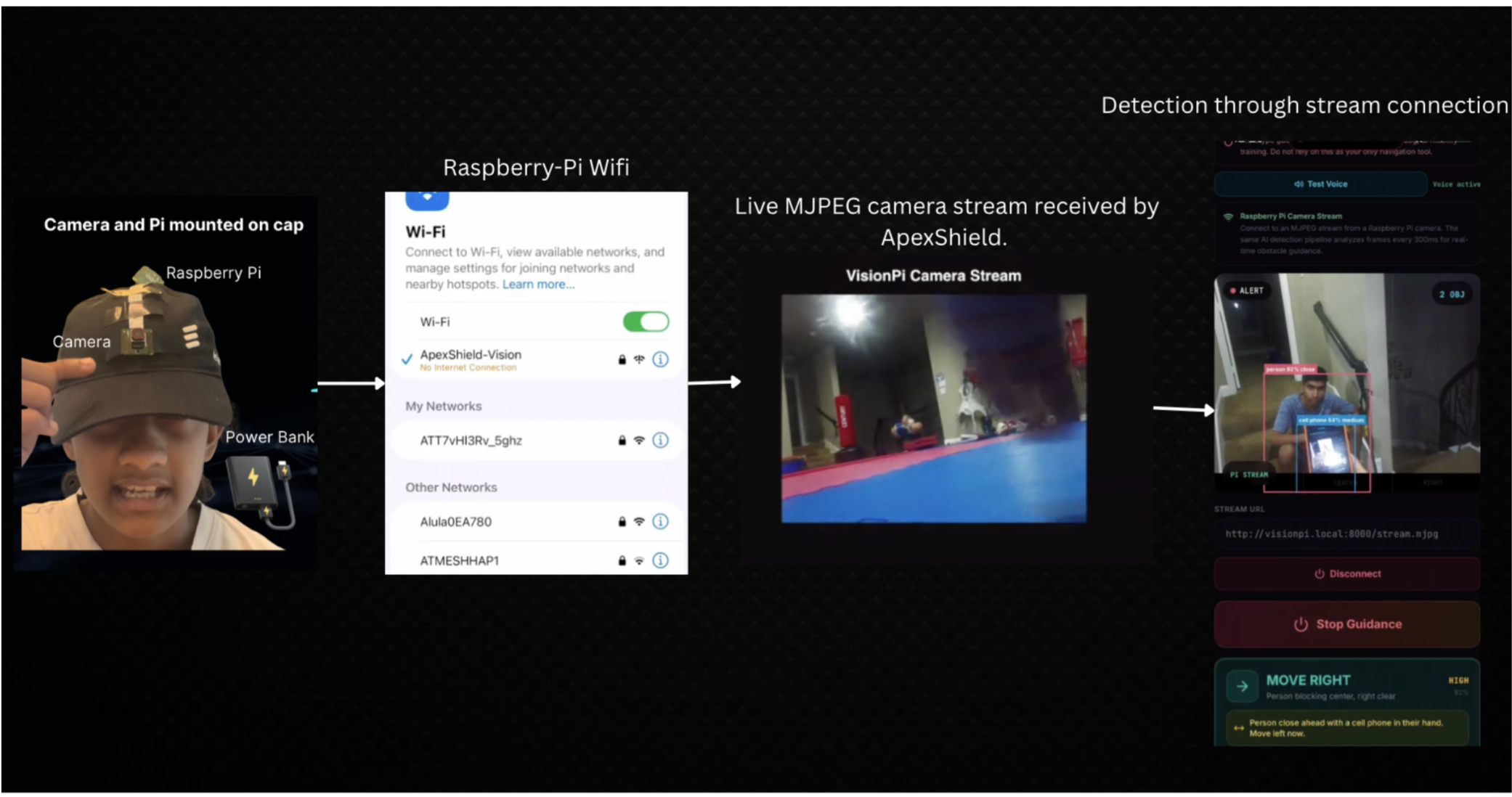
Flow for ApexShield Vision
Inspiration
ApexShield began with a simple question: How can technology help protect people who may not always be able to protect themselves?
I was inspired after witnessing unsafe situations where people could not immediately get help. This problem can be even greater for people who are blind or visually impaired, since many environmental dangers are communicated visually.
I trained in Taekwondo for 14 years and competed at the national and international levels, representing Team USA for three years. That journey brought many challenges, including losses, injuries, and a fractured arm that left me temporarily disabled. Around the same time, my dog had a severe eye problem and almost lost his vision, which made me understand what it feels like to be vulnerable. Because of my training, I know how valuable self-defense education is, but quality instruction is not equally accessible to everyone. I want to change that and make self-defense education available to those who need it.
These experiences inspired me to create ApexShield, a nonprofit project consisting of two connected platforms: ApexShield Vision, which uses computer vision to improve environmental awareness and personal safety, and ApexShield Dojo, which uses AI to make martial arts and self-defense education more accessible.
What it does
ApexShield Vision is an AI-powered wearable safety and navigation system designed primarily for blind and visually impaired users. A camera connected to a Raspberry Pi captures the user's surroundings and sends a live video stream to the ApexShield Vision mobile application. Computer vision analyzes the environment, identifies objects and people, and provides spoken information so the user can understand what is around them.
The system also includes safety-focused features such as environmental alerts, voice commands, location assistance, trusted-contact calling, and an emergency siren. Most importantly, I designed the Raspberry Pi to create its own local Wi-Fi network, allowing the camera and phone to communicate directly without requiring internet or cellular connectivity.
ApexShield Dojo focuses on prevention through education. Its AI Poomsae Coach uses pose-estimation technology to analyze a martial artist's movements through their camera. It compares body positioning and technique against expected movements and provides real-time feedback, scoring, and specific suggestions for improvement. The platform also provides Poomsae instruction, kick analysis, and self-defense education so athletes can practice beyond a traditional training environment. Together, the projects approach safety from two directions: ApexShield Vision helps users understand and respond to their surroundings, while ApexShield Dojo makes physical self-defense education more accessible.
How we built it
ApexShield combines computer vision, embedded systems, web/mobile development, networking, and artificial intelligence.
For ApexShield Vision, I connected a Raspberry Pi Zero 2 W to a Camera Module 3 and developed a Python-based camera server that produces a live MJPEG stream. I configured the Raspberry Pi as its own wireless access point called ApexShield-Vision. The phone connects directly to this private network and receives the camera stream through the Pi's local IP address. This allows the core camera system to operate even when no external Wi-Fi network or cellular signal is available.
The application was developed using React, TypeScript, and Vite and converted into a native iOS application using Capacitor and Xcode. Computer-vision models analyze incoming frames for objects and people. I also developed logic for directional awareness, movement detection, spoken guidance, and emergency functions.
For ApexShield Dojo, I integrated pose estimation with custom movement-analysis logic. Instead of simply showing a prerecorded technique, the system analyzes the user's body landmarks and uses them to evaluate technique and generate personalized feedback.
Challenges we ran into
One of the biggest challenges was turning individual technologies into a system that could actually work reliably outside of a development environment.
ApexShield Vision initially depended on normal network connections, which was a major limitation for a safety-focused device. I redesigned its networking so the Raspberry Pi itself creates a local wireless network. I also had to troubleshoot camera access, automatic startup, IP addressing, streaming, iOS local-network permissions, microphone permissions, and audio conflicts between continuous speech recognition and spoken feedback.
Computer vision created another challenge. Detecting an object in one frame is much easier than understanding its relationship to a moving person or determining whether an obstacle actually blocks the user's path. I developed additional logic around object position, movement, proximity, and different regions of the camera frame to make the information more useful.
ApexShield Dojo presented a different problem: two people can perform the same Taekwondo technique slightly differently. Pose estimation therefore had to be translated into useful coaching feedback without expecting every athlete's body to produce identical coordinates.
These challenges taught me that building an AI model is only one part of engineering a useful system. Reliability, hardware, networking, accessibility, latency, and user experience are equally important.
Accomplishments that we're proud of
One of my proudest accomplishments is taking ApexShield beyond an idea and developing two functional systems that people can actually interact with. ApexShield Dojo has reached more than 1,000 users, and feedback and testimonials from Taekwondo athletes and coaches have helped demonstrate its potential as an accessible training resource. Seeing athletes use technology based on a sport that has shaped much of my own life has been especially meaningful. For ApexShield Vision, one of the most meaningful accomplishments has been seeing older members of my community use and interact with the system. Their experiences helped move the project beyond testing the technology itself and toward thinking about simplicity, accessibility, and how real users would depend on the information it provides. I am also proud that ApexShield Vision has progressed from a browser prototype into a physical system combining a wearable camera, Raspberry Pi, independent local network, AI analysis, voice interaction, and an installed iPhone application. The system can transmit its camera feed to the phone without depending on internet or cellular connectivity.
What we learned
ApexShield taught me that successful engineering is not just about making something work once. A useful technology has to work for the person who actually needs it. I learned how computer-vision models interpret images, how pose landmarks can represent human movement, how embedded devices communicate with mobile applications, and how local networking can remove dependence on internet infrastructure. More importantly, testing showed me the limitations of AI. A model can detect an object without understanding the entire situation around it, and a technically correct output is not necessarily useful to a person relying on it. This pushed me to think beyond model accuracy and consider context, false alerts, accessibility, response time, and user trust. Developing ApexShield also taught me how much engineering is iterative. Many of the project's most important improvements came from something failing, understanding why it failed, and redesigning the system around that limitation.
What's next for ApexShield
The next step is to move ApexShield from a functional prototype toward a system that can be tested systematically with larger groups of users. For ApexShield Vision, I want to improve object and person tracking, environmental awareness, navigation guidance, latency, and offline functionality while making the wearable hardware smaller and more practical. I also want to conduct structured testing with blind and visually impaired participants and use their feedback to determine which alerts and interactions are genuinely useful in everyday environments. For ApexShield Dojo, I plan to expand the movement library, improve technique scoring, support more Taekwondo forms and skills, and continue incorporating feedback from athletes and coaches. Ultimately, my goal is for ApexShield to remain centered around one principle: using technology to give people greater awareness, confidence, and access to tools that can help keep them safe.
Built With
- apa
- coco
- media-pipe
- raspberry-pi
- tenor

Log in or sign up for Devpost to join the conversation.