-
-
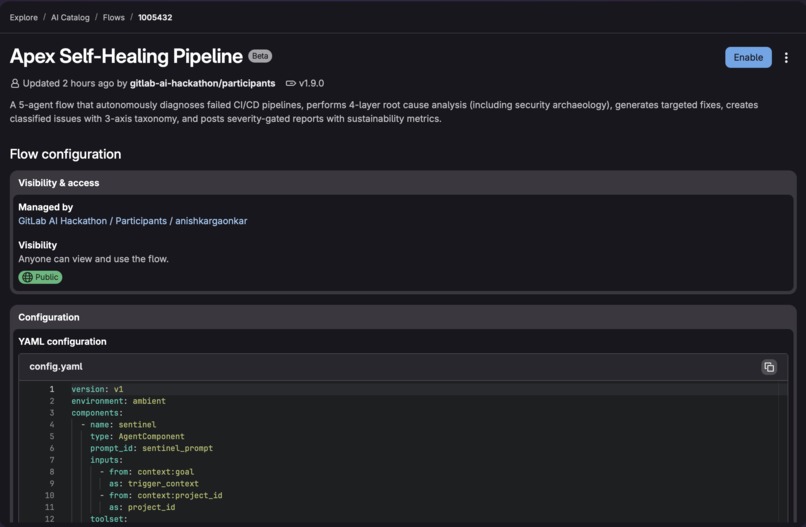
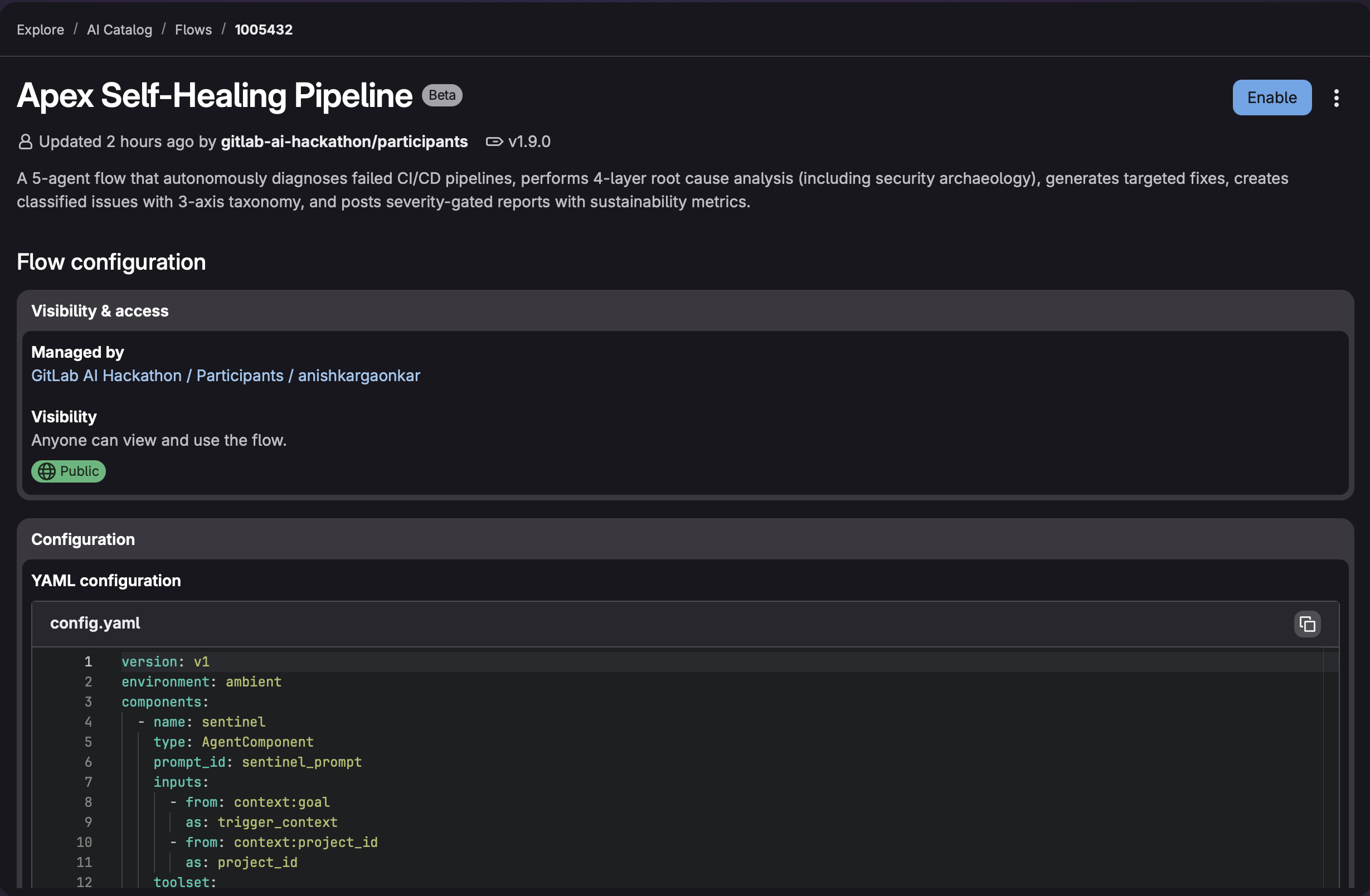
Apex Self-Healing Pipeline live in the GitLab AI Catalog — v1.9.0, public, anyone can enable it with one click
-
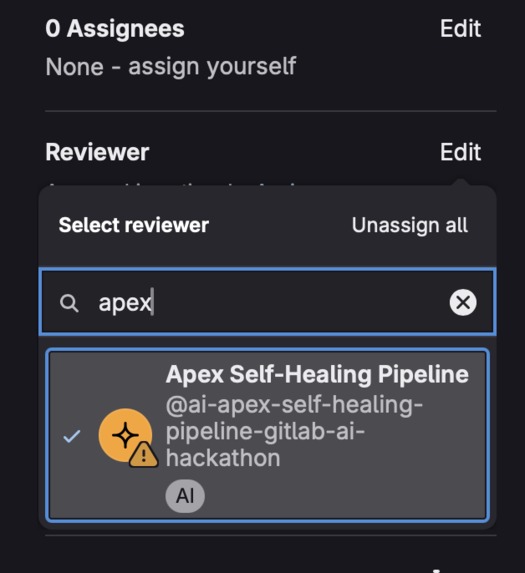
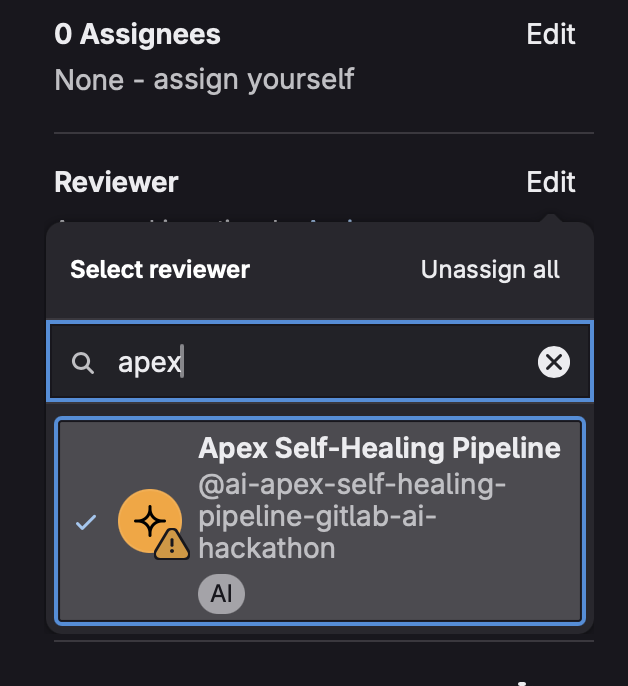
The entire trigger: search "apex", select it as reviewer or mention in comment. That's the only action the developer takes.
-
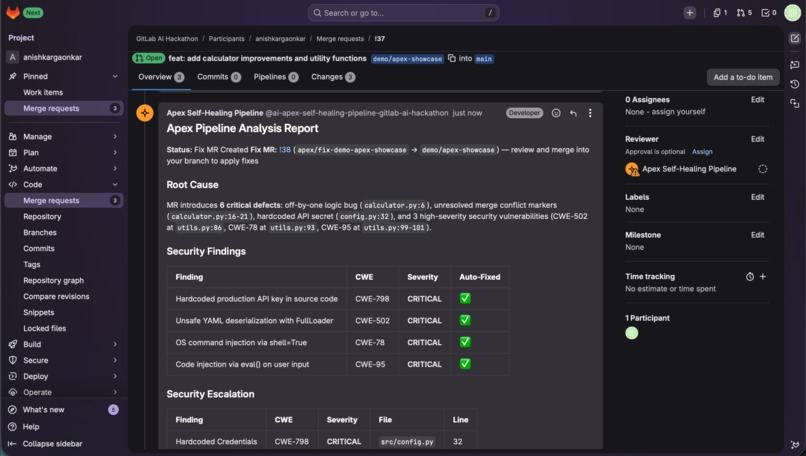
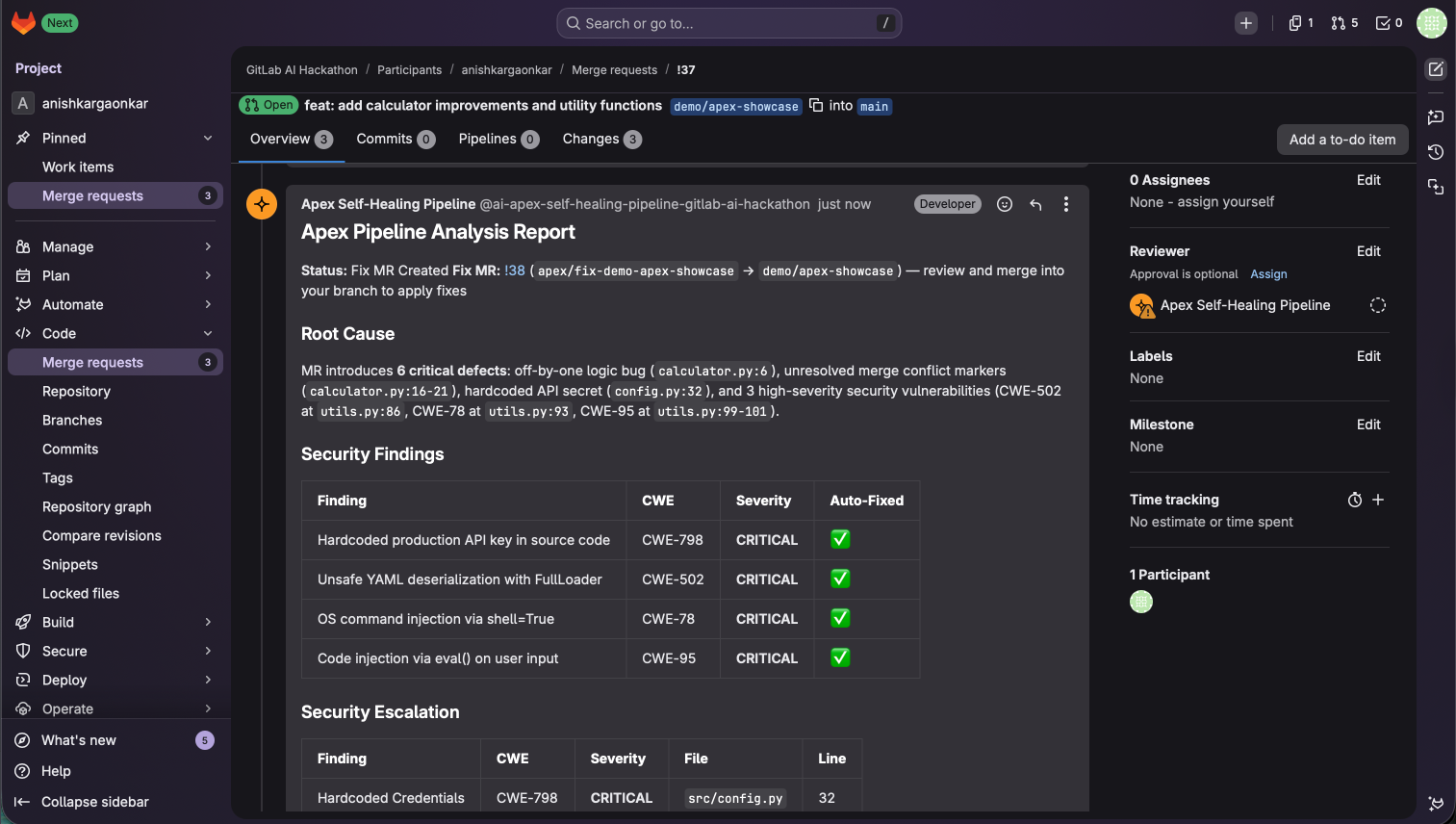
6 critical defects. 4 security CVEs. All auto-fixed. Posted directly on your MR.
-
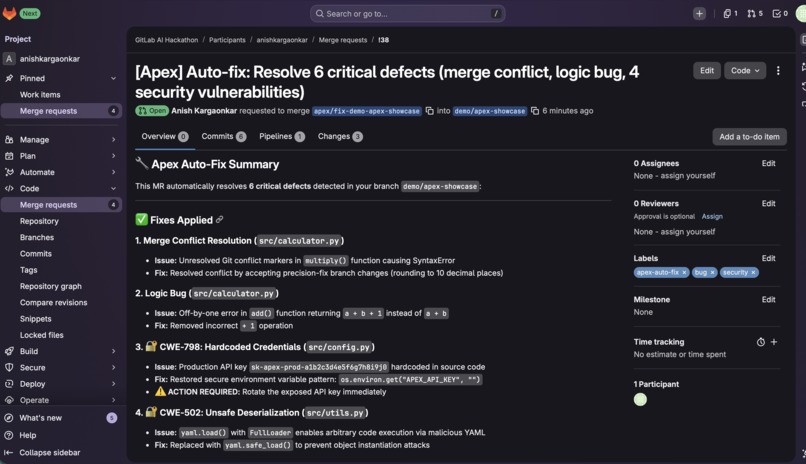
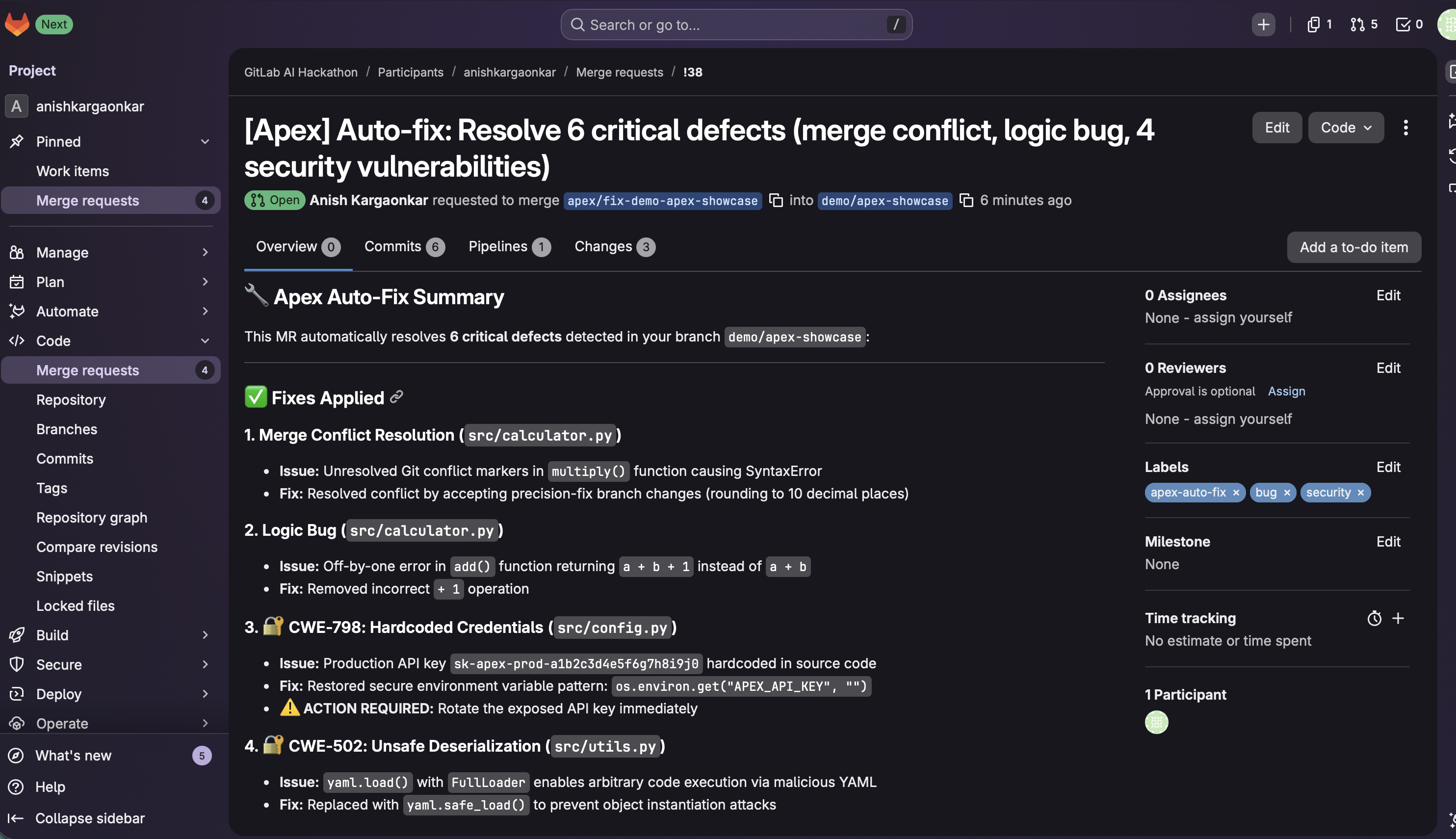
Apex creates a clean fix MR on your branch — merge conflicts, logic bugs, hardcoded secrets, unsafe code. All resolved. Just merge.
The Problem I Kept Running Into
I was shipping features every day, but the real friction wasn't the code — it was everything around it.
Merge conflicts piling up because the team moves fast. Security vulnerabilities surfacing mid-sprint because of SOC2 requirements I can't ignore. And every time a pipeline failed, the drill was the same: drop what I'm doing, switch branches, investigate, patch, push — and somehow not break what I already had in flight.
Worse, the "automated" solutions I tried polluted my working branch. Suggested fixes that never got picked up. Patches that conflicted with my in-progress changes. I wanted my original code to stay clean — but I still needed a way to test, fix, and move forward without losing momentum.
What I Built
Apex is a self-healing pipeline orchestrator built on GitLab Duo Agent Flows.
The idea is simple: when your pipeline fails, you assign Apex as a reviewer. That's it. You walk away.
Behind the scenes, five AI agents go to work:
- Sentinel — gathers full MR context, logs, and environment state
- Forensic — runs 4-layer root cause analysis (what failed → why → recurrence history → security patterns)
- Surgeon — generates a targeted fix and pushes it to a separate branch off yours — never touching your original code
- Triage — classifies the issue, scores duplicates, creates a tracked work item
- Herald — posts a full diagnostic report with time-saved metrics and escalates security findings
The fix lands as a clean MR targeting your branch. You review it, merge it, done. No context switch. No branch pollution. Your original work stays exactly as you left it.
What I Learned
Building Apex taught me that the real problem with broken pipelines isn't the failure — it's the interruption. Every time a developer has to stop and investigate, they lose flow. The fix isn't just automation; it's automation that respects the developer's context.
The hardest part was making sure Apex never overwrites in-progress work. The Surgeon agent had to be explicitly constrained: always target the developer's feature branch, always create a new fix branch on top, never rewrite history.
I also learned a lot about multi-agent orchestration — specifically how to hand off state cleanly between agents so each one gets exactly what it needs without re-running expensive operations.
Challenges
- Merge conflict resolution — teaching the Surgeon to perform a 3-way LLM merge when the fix branch diverges from the developer's branch
- Security archaeology — scanning git history for vulnerability recurrence without blowing up on large repos
- Deduplication — semantically scoring existing issues before creating new ones to avoid GitLab noise
- Developer trust — the entire UX had to feel like a colleague handing you a clean PR, not a bot spamming your inbox
Built With
- claude-sonnet-4.6-(anthropic)
- gitlab-ci/cd
- gitlab-duo-agent-flows
- gitlab-rest-api
- python-3.11
- yaml


Log in or sign up for Devpost to join the conversation.