Inspiration
Formula 1 races are often decided by incredibly small margins, and one of the biggest deciding factors isn’t just driver skill or car performance—it’s strategy. While watching races and reading post-race analyses, it became clear that many pit-stop decisions are still influenced by heuristics, experience, and time pressure. That raised a simple question: what if race strategy could be computed, not guessed? That question became the foundation of APEX-GRAPH.
What I Built
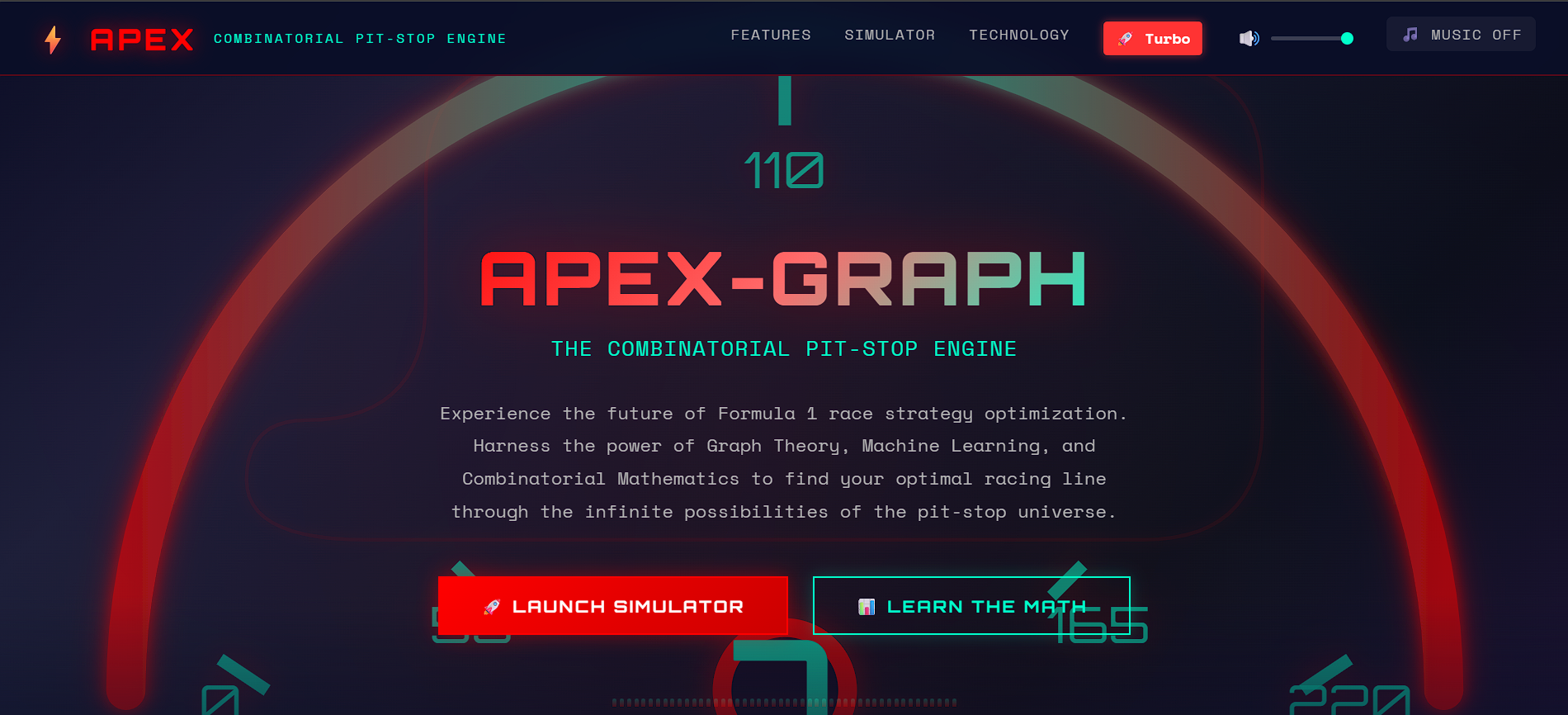
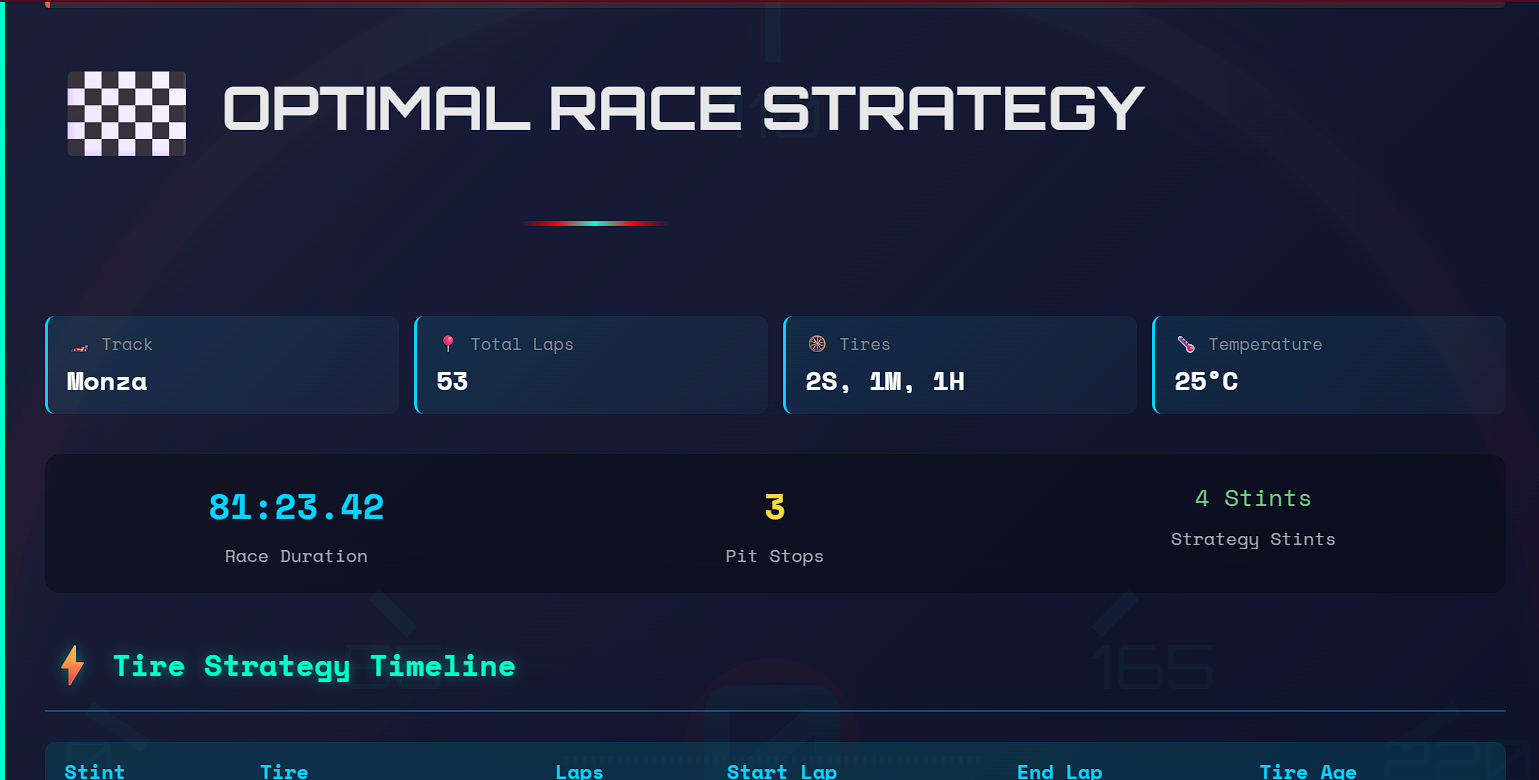
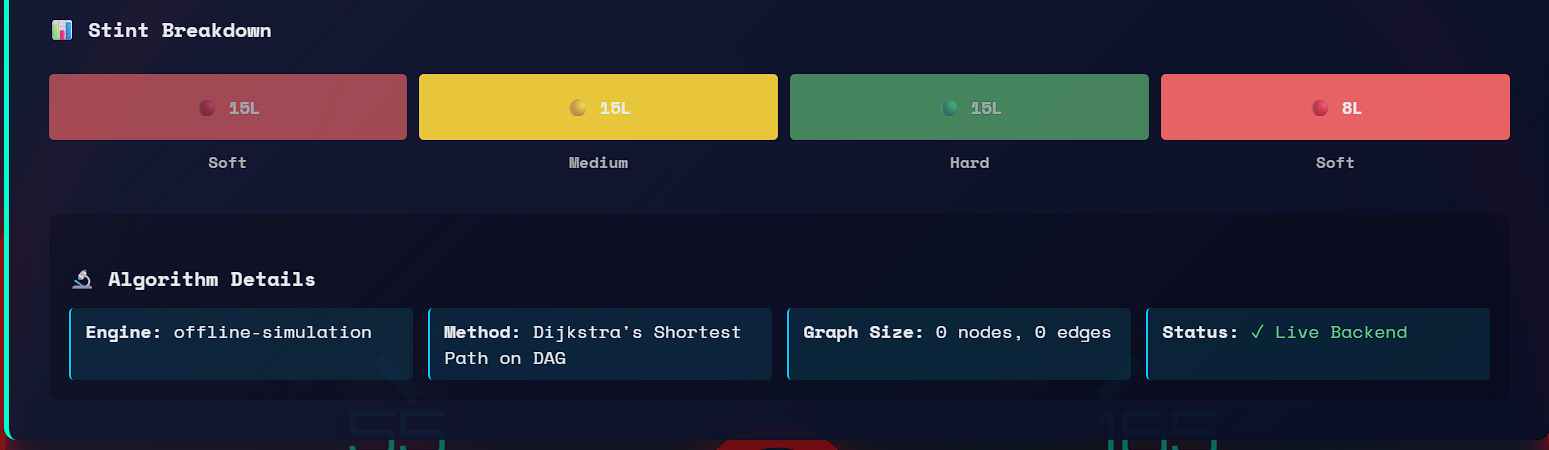
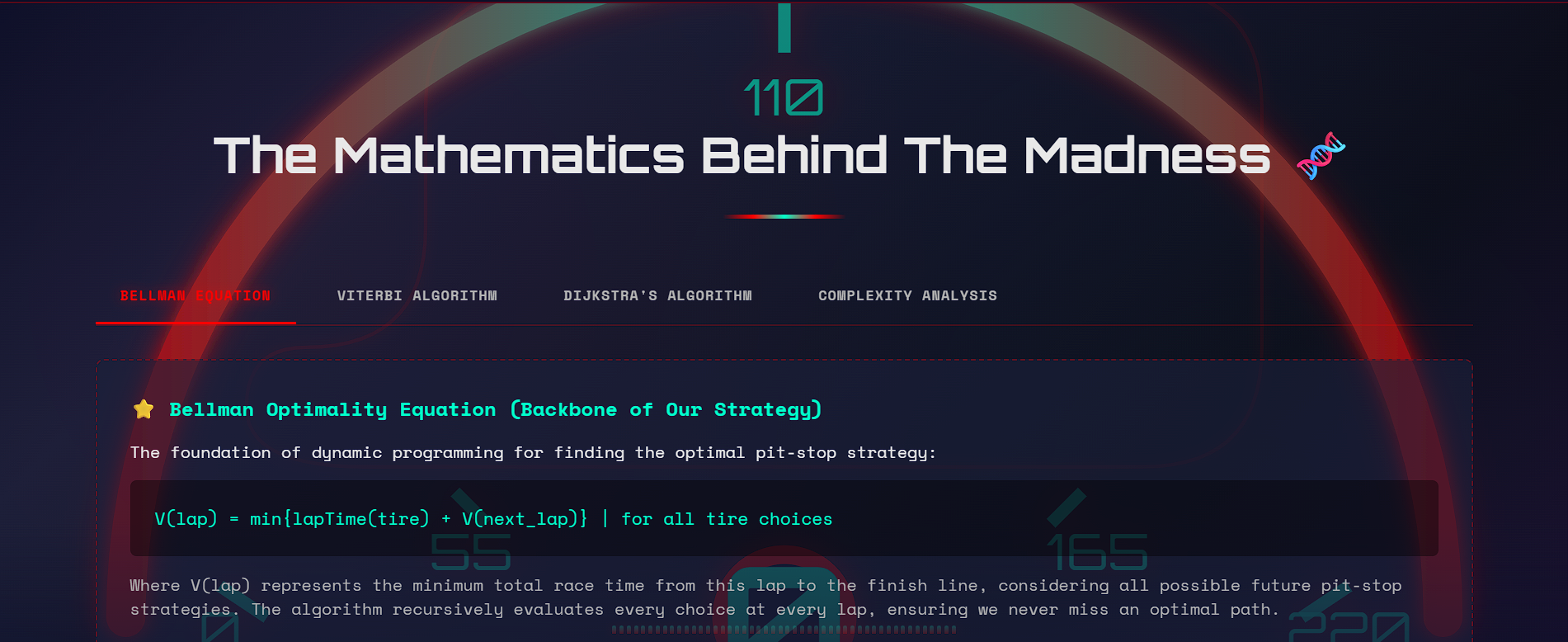
APEX-GRAPH is an AI-powered race strategy simulator focused on optimizing pit-stop timing and tire selection. I modeled a race as a graph of evolving states, where each node represents a race condition and each edge represents a strategic decision. Using graph algorithms, dynamic programming, Monte Carlo simulations, and machine-learning models for tire degradation, the system evaluates thousands of possible strategies to find the fastest one. The simulator also quantifies uncertainty, providing confidence levels instead of just single-point answers.
What I Learned
This project deepened my understanding of optimization, graph theory, probabilistic modeling, and how real-world constraints change algorithm design. More importantly, I learned how to translate complex mathematics into decisions that are practical and explainable.
Challenges Faced
Balancing realism with computational speed was the biggest challenge. Race strategy is chaotic, time-sensitive, and uncertain. Designing models that were accurate yet fast enough for real-time decision-making required careful trade-offs, experimentation, and iteration.
APEX-GRAPH represents my attempt to bring mathematical clarity to one of motorsport’s most high-pressure problems.

Log in or sign up for Devpost to join the conversation.