
Inspiration
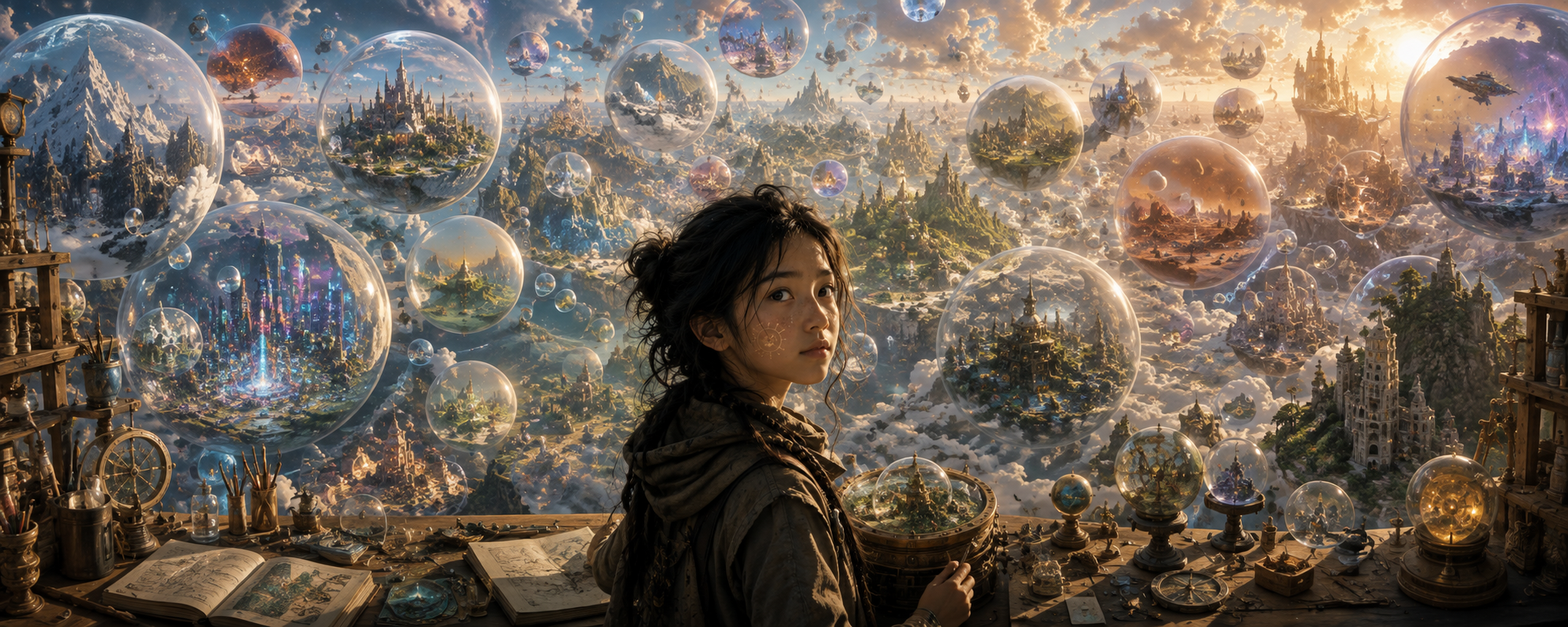
Photos capture a world, but then flatten it.
We wanted to ask a simple question: what if a photo were an aperture instead of an endpoint?
APERTURE started from the idea that generative AI can transform photography from something you look at into somewhere you can explore, manipulate, and eventually inhabit.
The first version begins with the smallest expression of that idea:
Turn a photo into a space.
What it does
APERTURE transforms a photo into an interactive 3D spatial reconstruction.
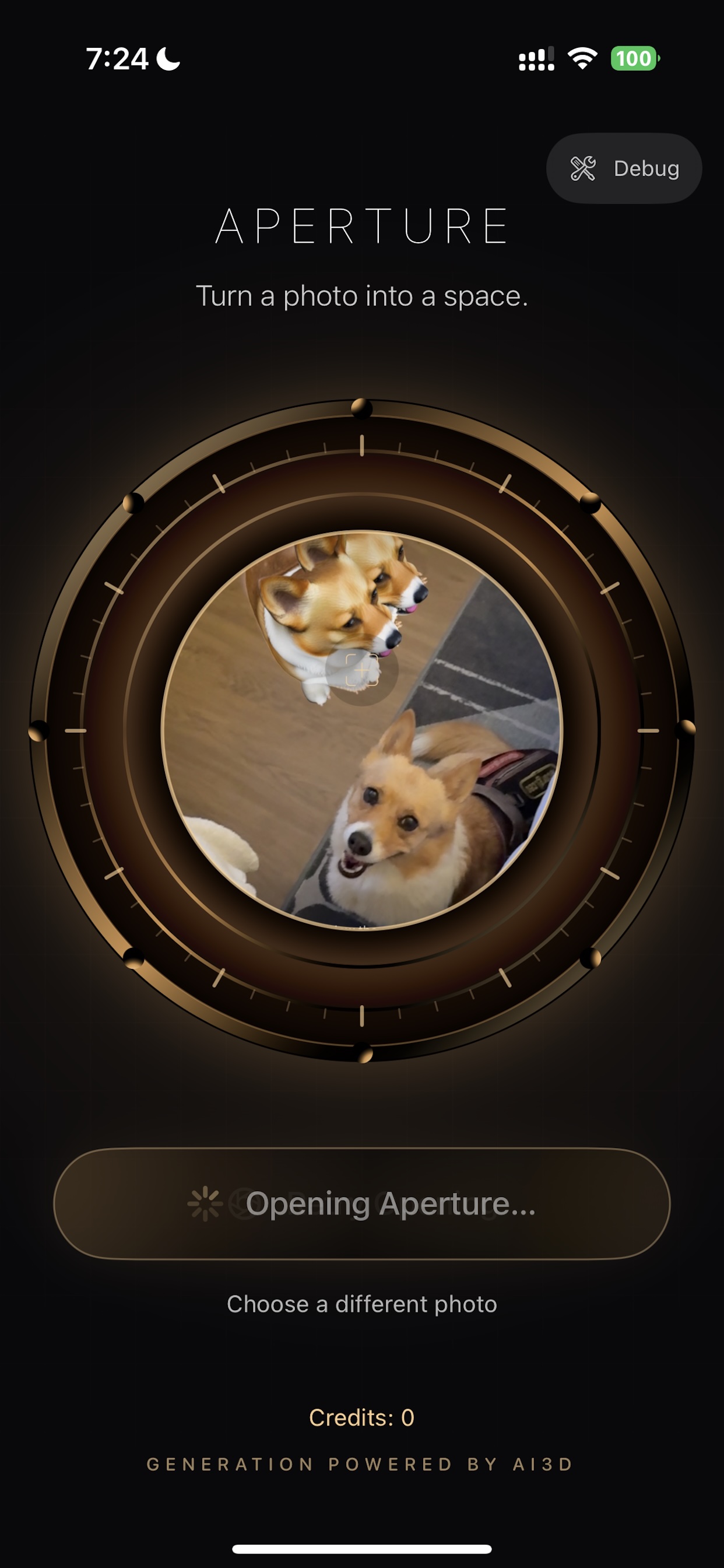
Take a photo or select one from your library, open the Aperture, and AI reconstructs the image as a 3D scene that can be explored from new perspectives.
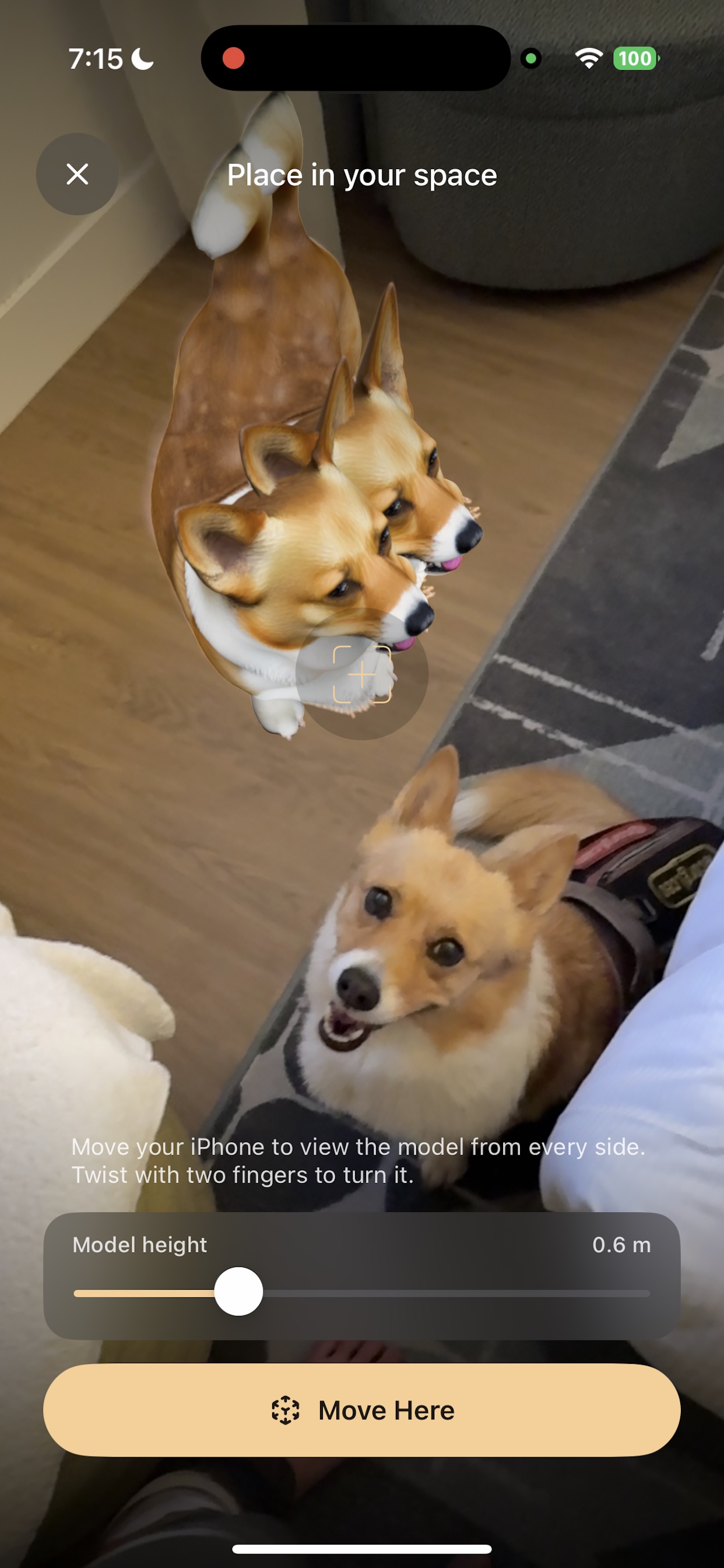
From there, APERTURE begins turning the generated scene into a creative space rather than simply an AI output. Users can augment the space with 3D content and interact with what they add.
Generations are integrated with RevenueCat, giving APERTURE a foundation for sustainable generative-AI creation rather than treating inference as an invisible unlimited resource.
The result is a deliberately simple loop:
Photo → Aperture → 3D Space → Augment
How we built it
APERTURE is a native iOS experience built around a skeuomorphic optical interface inspired by mechanical apertures, precision instruments, and the increasingly physical, glass-like language of modern iOS.
The app combines:
- Native iOS and spatial interaction
- RevenueCat for monetization and generation access
- fal.ai for generative inference
- TripoSplat for transforming images into spatial 3D representations
- ARKit/RealityKit for augmenting spatial content
We intentionally kept the first release extremely focused. Rather than building accounts, feeds, libraries, or a large editor, we concentrated on making one interaction feel complete: opening a photograph into space.
Challenges we ran into
The biggest challenge was convergence.
Generative AI makes it extraordinarily fast to build more, but shipping requires doing the opposite: deciding what not to build.
APERTURE could immediately expand into world generation, spatial editing, AI-generated objects, persistent scenes, creation agents, and collaborative worlds. For the first release, we had to continually collapse that possibility space back into one coherent experience.
There was also an interesting technical boundary between generating spatial representations and treating those representations as editable environments. A generated 3D result is one thing. Making it feel like a place the user can interact with is another.
Finally, generative AI has real inference costs. RevenueCat gave us a way to begin connecting the economics of generation directly to the creative experience.
Accomplishments that we’re proud of
We’re proud that APERTURE feels like a product rather than an AI model demo.
There is intentionally very little interface. The aperture itself communicates what the application does.
A photograph goes in.
The aperture opens.
A space comes out.
That simplicity gives us a foundation that can become dramatically more capable without changing the fundamental interaction.
We’re also proud of integrating monetization from the beginning. Generative applications need economic models that can scale with creation, and APERTURE treats that as part of the product architecture rather than something to bolt on later.
What we learned
The most important lesson was that AI generation becomes much more interesting when the output stops being the endpoint.
Image generation usually ends with an image. 3D generation often ends with a model.
But a generated space can instead become the beginning of another act of creation.
We also learned that constraining an AI-native product can be harder than expanding one. Models and APIs make dozens of additional features tantalizingly accessible. Creating a coherent product requires deciding which single transformation actually matters.
For APERTURE, that transformation is:
image → space
What’s next for APERTURE
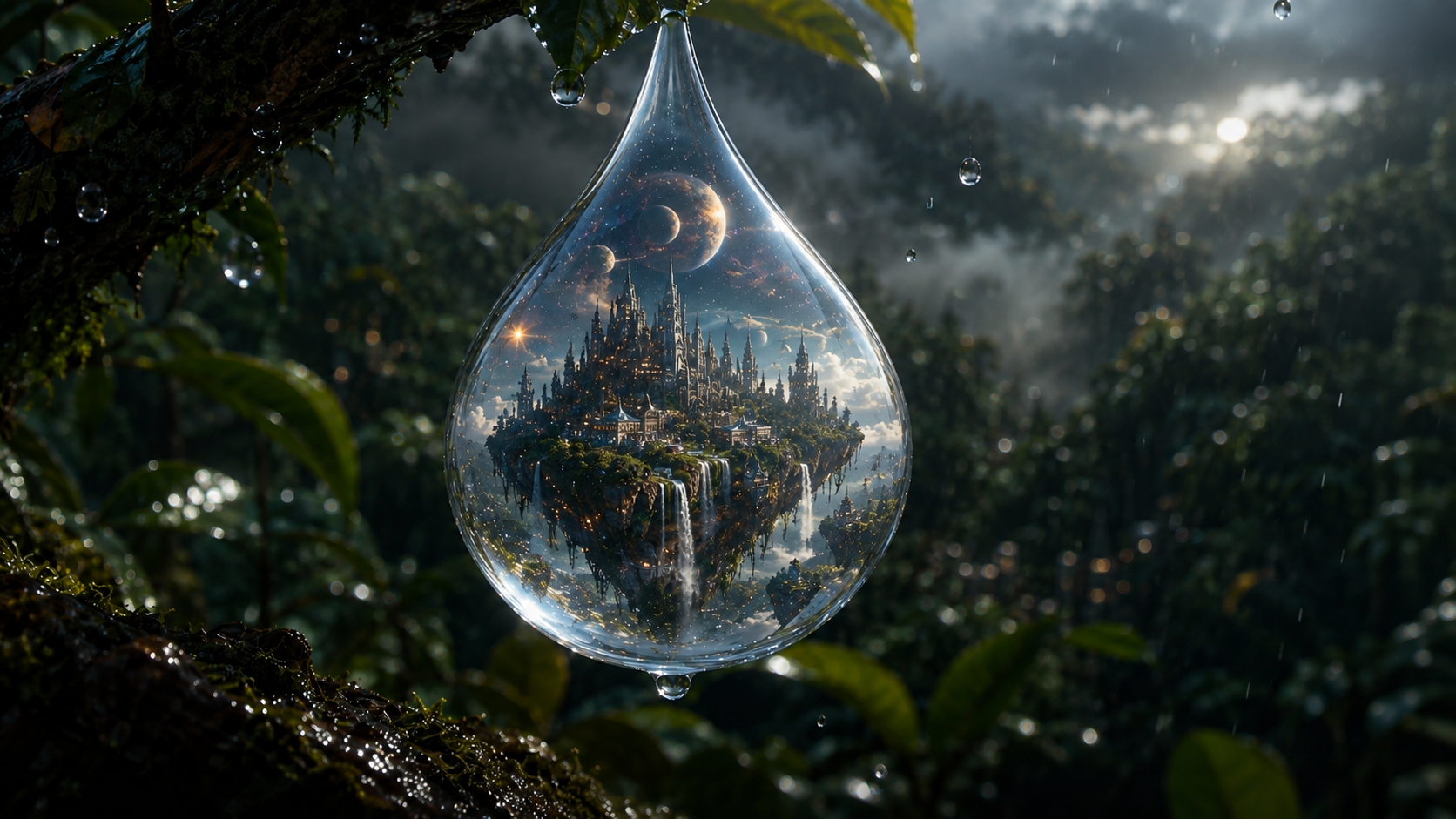
The next step is moving from reconstructing what a photograph can see to generating the world that might exist beyond it.
World models make that possible.
Future versions of APERTURE will explore turning individual photographs into larger navigable environments, then allowing people to augment those worlds with generated 3D objects, spatial media, and AI creation tools.
From there, APERTURE becomes less like a camera and more like a doorway.
Take a picture of a room, landscape, drawing, memory, or imagined place.
Open the Aperture.
Enter the world of any photo.
Built With
- ai3d-api
- arkit
- gaussian
- ios
- realitykit
- revenuecat
- splatting
- storekit
- swiftui
- triposplat

Log in or sign up for Devpost to join the conversation.