Inspiration
The inspiration behind Aperture came from watching beginner photographers repeatedly hit a wall with the steep learning curve of photography. Mastering the exposure triangle (aperture, shutter speed, and ISO) alongside composition rules can feel overwhelming when you are just starting out. Many beginners end up frustrated or stuck on auto mode, missing out on the creative potential of their cameras. We wanted to build an accessible tool that demystifies camera setups and bridges the gap between technical complexity and creative expression.
What It Does
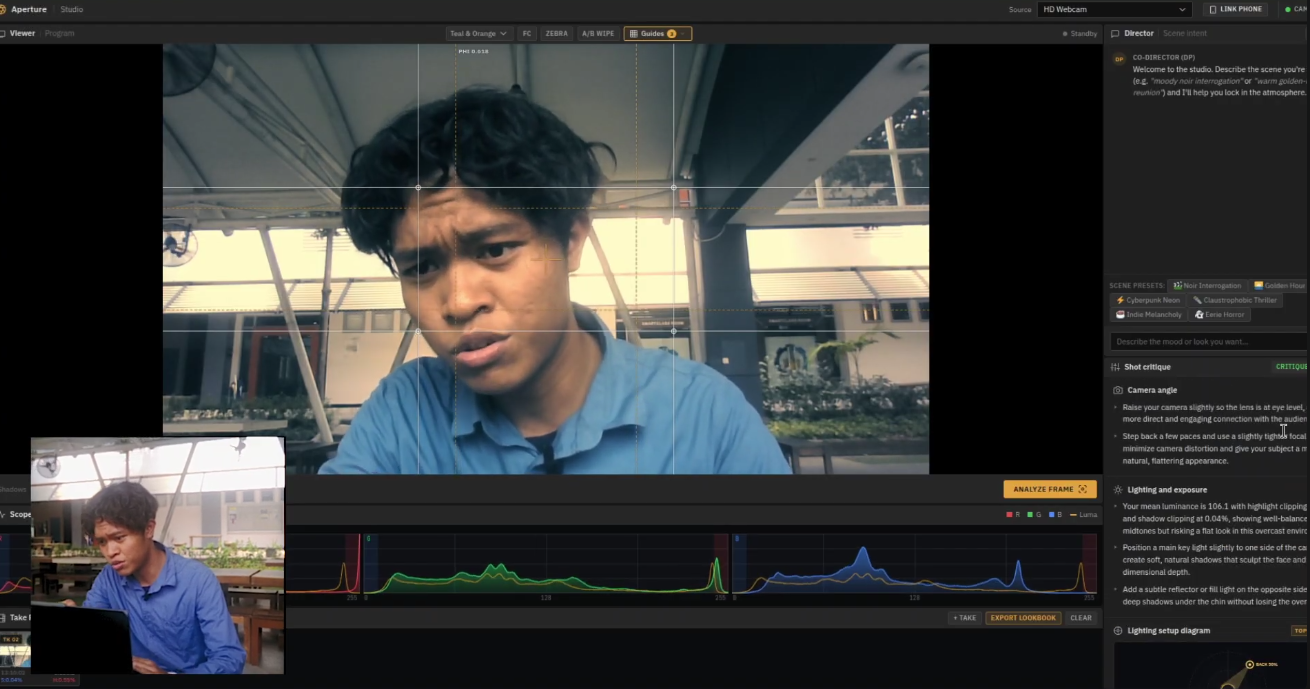
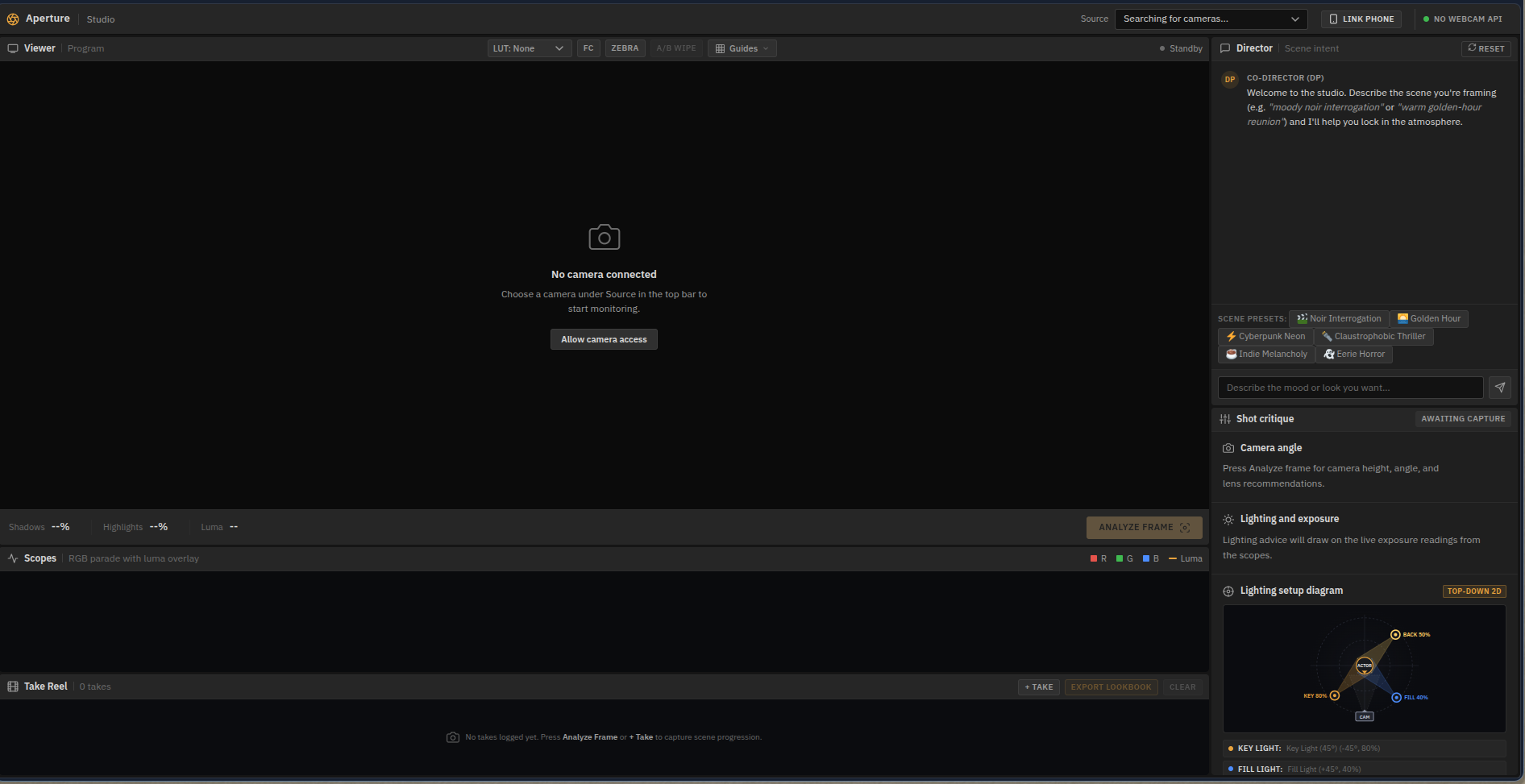
Aperture serves as an intelligent photography assistant that leverages artificial intelligence to analyze your photos and scene context. Instead of generic advice, it evaluates elements like lighting, framing, and depth of field to deliver constructive, actionable critiques. It suggests concrete camera setting adjustments and compositional tweaks tailored to the specific scene, empowering users to understand why a shot works and how to immediately retake it for the best possible result.
Challenges We Ran Into
One of the most demanding hurdles during development was effective task delegation. Coordinating a multifaceted project across a team proved challenging, particularly when balancing front-end interface design, AI integration, and core logic. We initially ran into workflow bottlenecks where dependencies stalled progress. To solve this, we restructured our workflow: we broke large milestones into modular, well-defined user stories and micro-tasks, assigning clear ownership so everyone could build concurrently without friction.
Accomplishments That We're Proud Of
We are most proud of successfully taking Aperture from a rough concept to a fully functional working product. Building an end-to-end pipeline that takes an image, processes visual attributes, and returns meaningful, high-quality critiques in seconds was a major technical milestone for us. Seeing the AI accurately identify framing flaws and suggest setting changes that noticeably improve the final photo proved that our core thesis works in practice.
What We Learned
Throughout this project, we gained firsthand insight into how AI can be applied to subjective, creative disciplines. Beyond crunching data, modern AI models can effectively evaluate artistic visual elements, such as the rule of thirds, leading lines, and negative space, and translate them into simple, encouraging advice. On a collaborative level, we learned how critical agile task decomposition is to keeping a development team aligned and productive.
What's Next for Aperture
Moving forward, we plan to expand Aperture beyond post-capture analysis and turn it into an active shooting companion:
Real-Time AR Viewfinder: Implement live-camera guidance with augmented reality overlays that guide framing, horizons, and composition before the shutter is even pressed.
Hardware-Specific Profiles: Add support for specific camera brands and models (Canon, Sony, Nikon, Fujifilm), allowing Aperture to recommend the exact dial adjustments and menu settings for the user's specific gear.
Progress Tracking & Challenges: Introduce personalized learning modules and interactive photo challenges to help beginners track their improvement over time.
Native Mobile App: Package the web prototype into an iOS and Android app so photographers can take Aperture directly into the field
