-
-

Logo
-
-
-
-
-
Inspiration
One of us is a student at UT Austin, where the on campus dorms can only accommodate ~9,000 of the 50,000 students. This has led to massive growth of the apartment housing market in the "West Campus" area of Austin. Most students have to start searching for apartments ~1 year in advance, and -- amongst the hundreds of options -- finding the ideal balance between location, quality, and price is incredibly hard.
This is not an issue isolated to Austin, either. About 60% of college students nationwide live in some form of off-campus housing -- that is nearly 10 million undergraduates who can immediately benefit from Aptly.
What it does
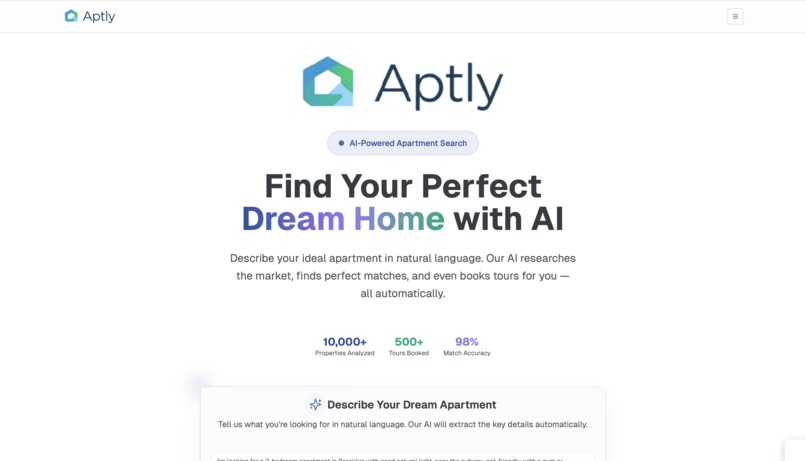
Aptly is the smartest way to rent your next home. Students, young adults, and anyone searching for home options use Aptly to research, schedule, and organize their entire rental hunt end-to-end. Our voice-first platform processes hundreds of listings automatically based on your criteria, calls the top options and schedules tours with them based on your schedule, and keeps track of all the information you need -- so you spend minutes deciding, not hours dialing.
How we built it
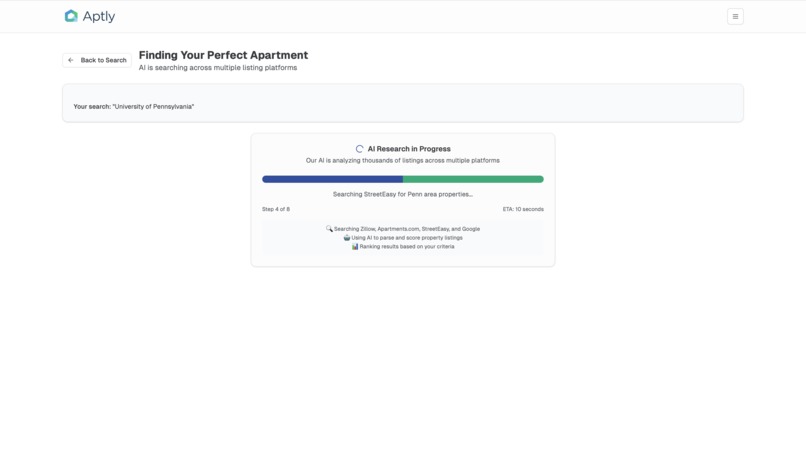
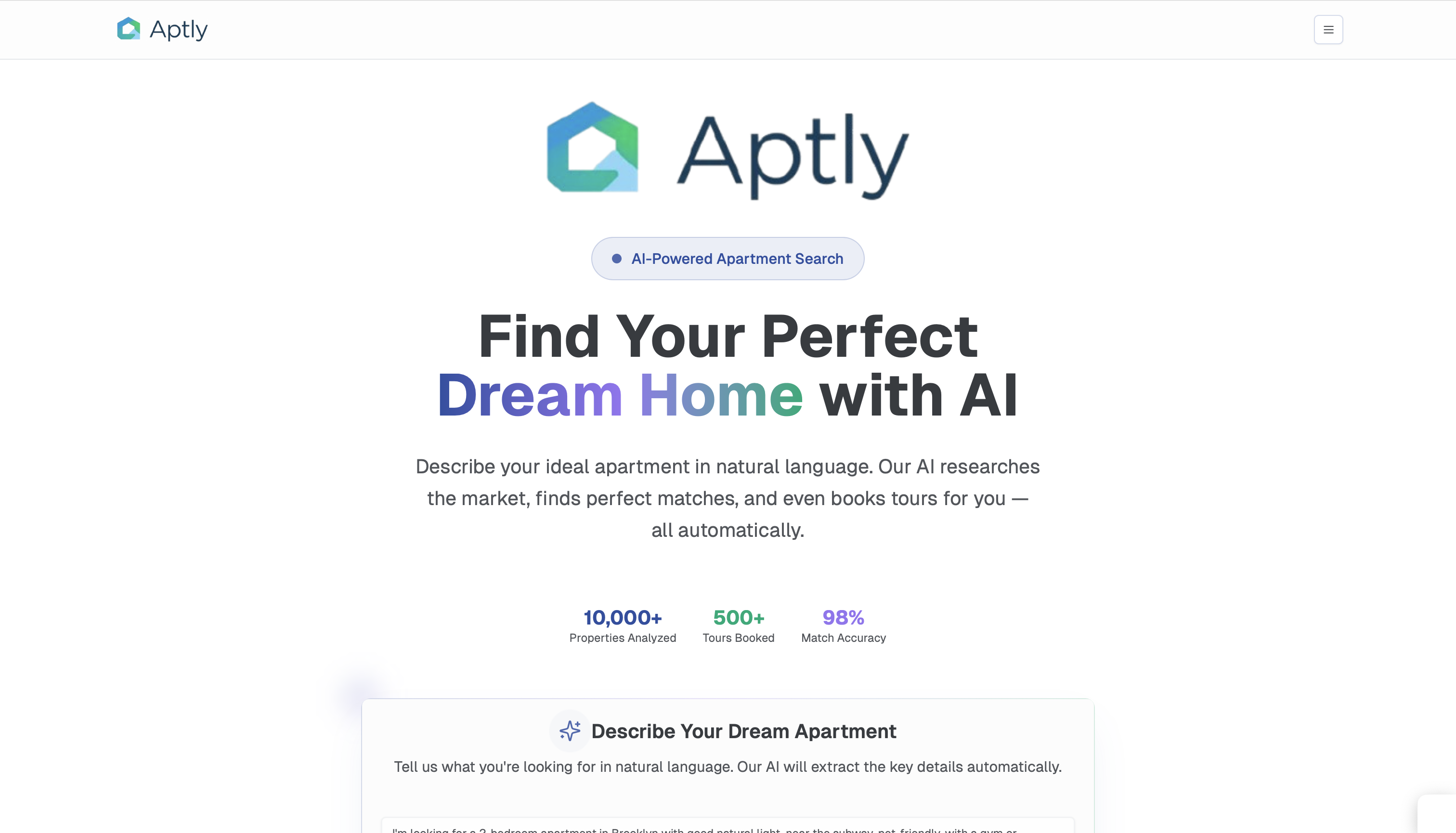
Aptly is an AI-powered apartment hunting platform that uses natural language to understand user preferences and automatically researches properties, makes phone calls, and books tours.
- We use the Qwen 3 Instruct model through Cerebras to rapidly parse natural language apartment descriptions into structured search criteria like bedrooms, budget, neighborhoods, and amenities.
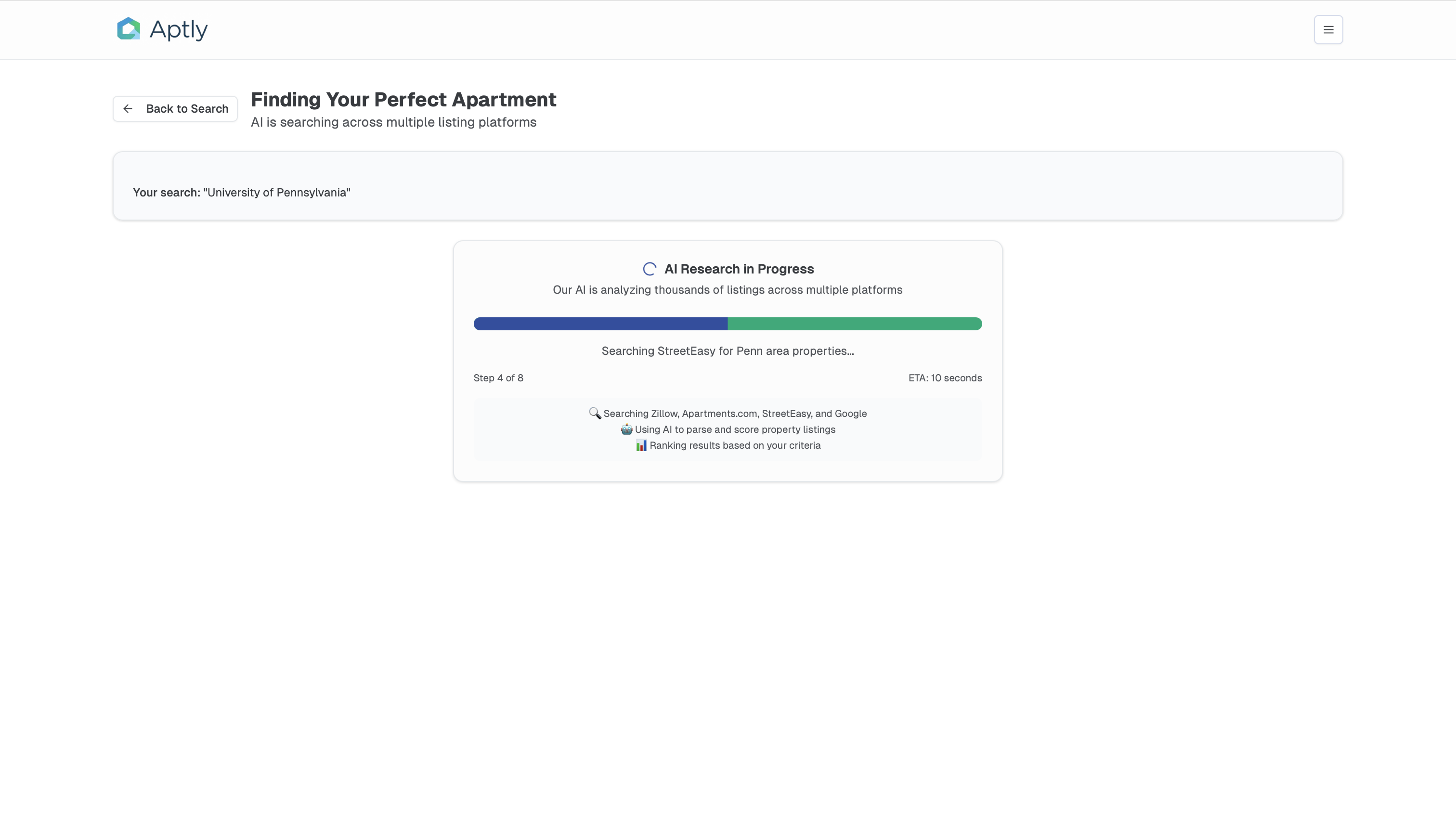
- The Exa API powers our intelligent web scraping across major real estate platforms like Zillow, Apartments.com, and StreetEasy to gather comprehensive property listings.
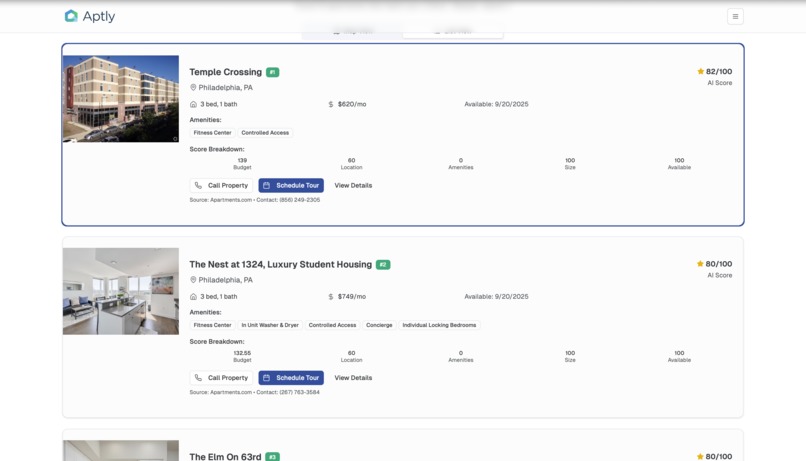
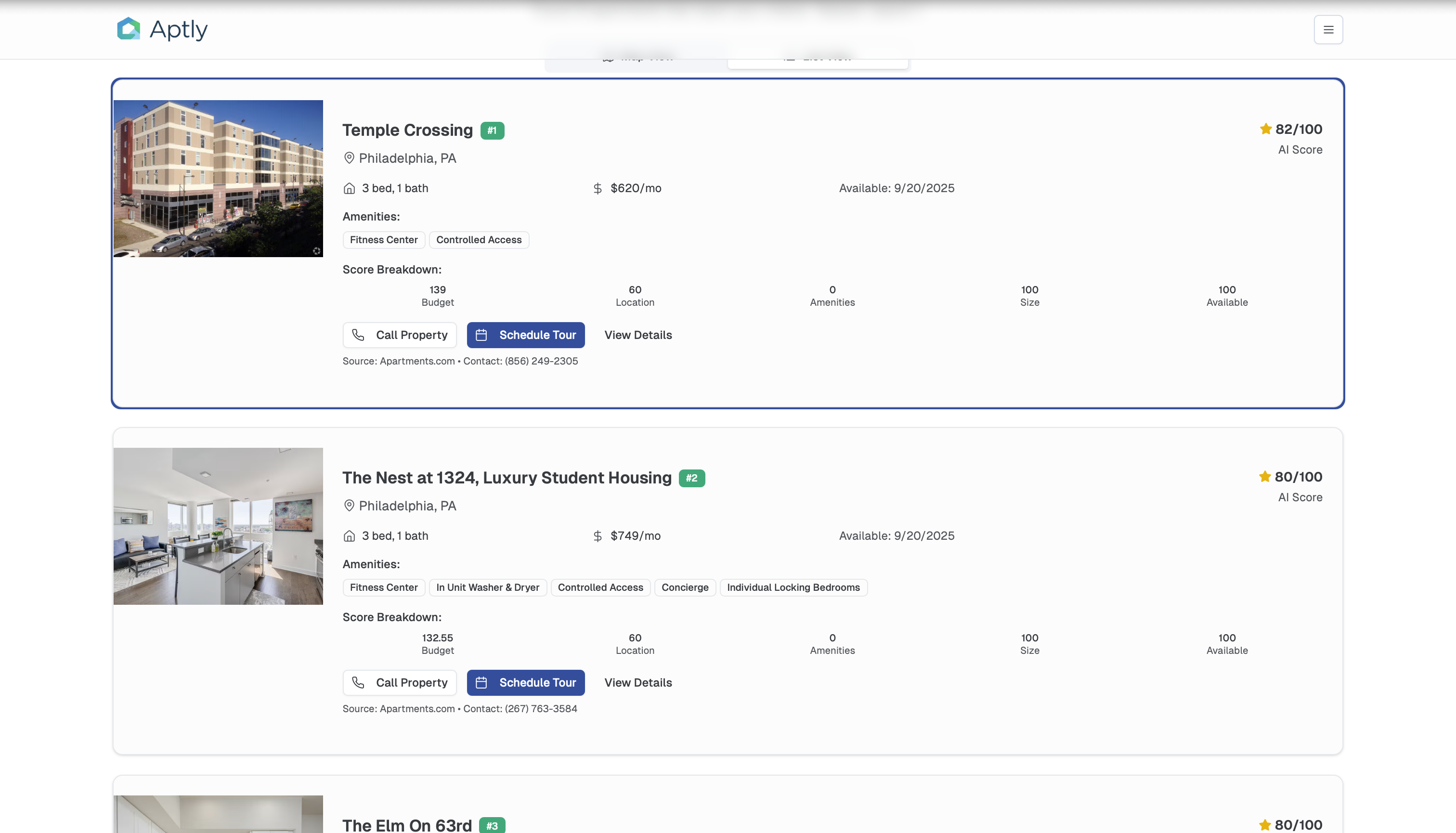
- We used Google's Gemini API to process the scraped content through Gemini 2.5 Pro and extract structured property data -- including rent, beds/baths, amenities, and contact information -- from unstructured web content.
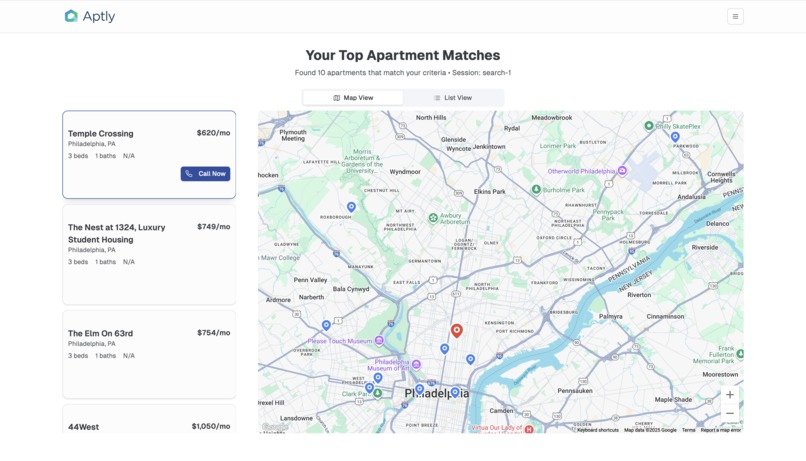
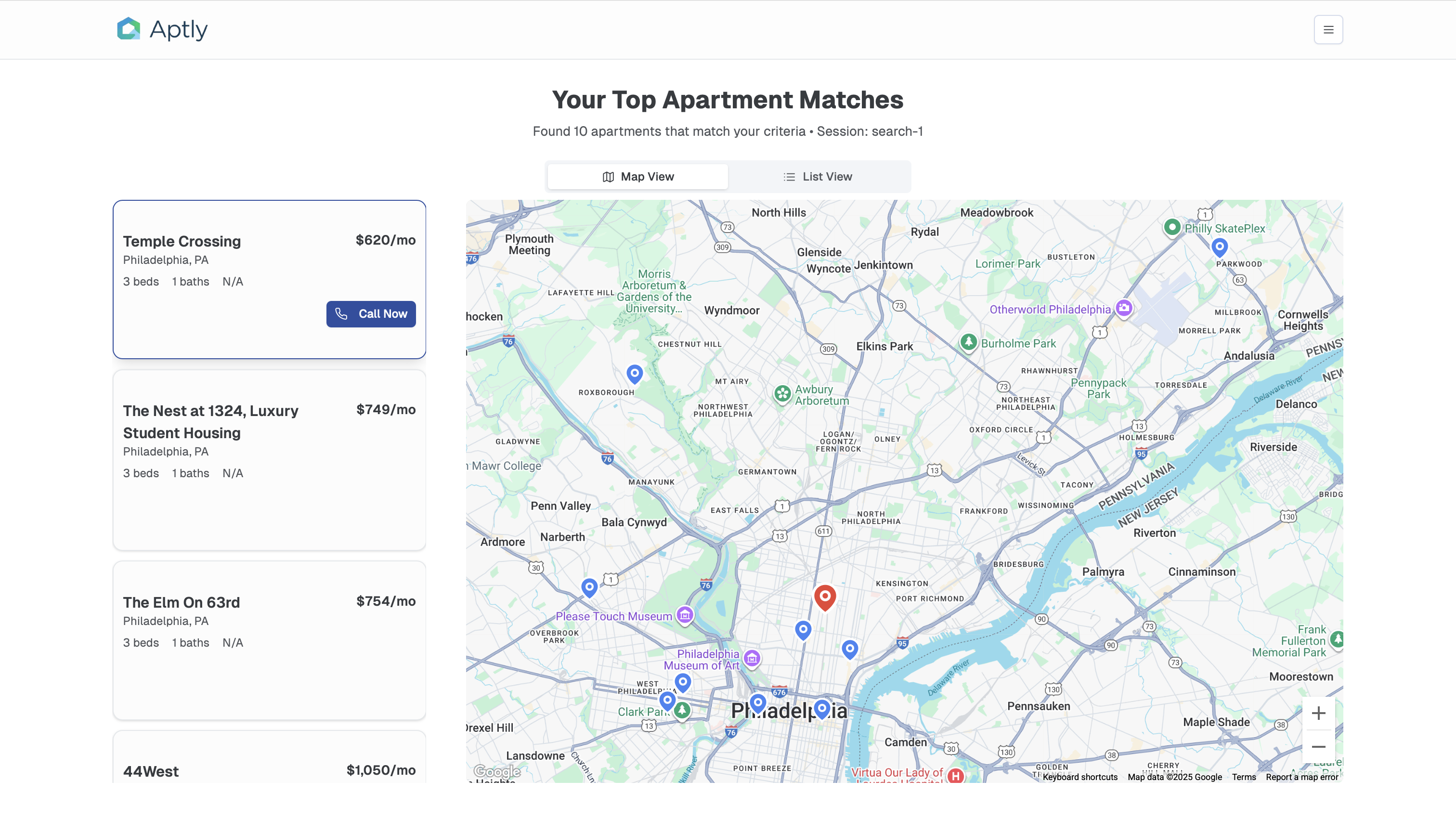
- We built an interactive map interface that visualizes the top 10 property listings (based of a weighted scoring algorithm we built) with detailed insights.
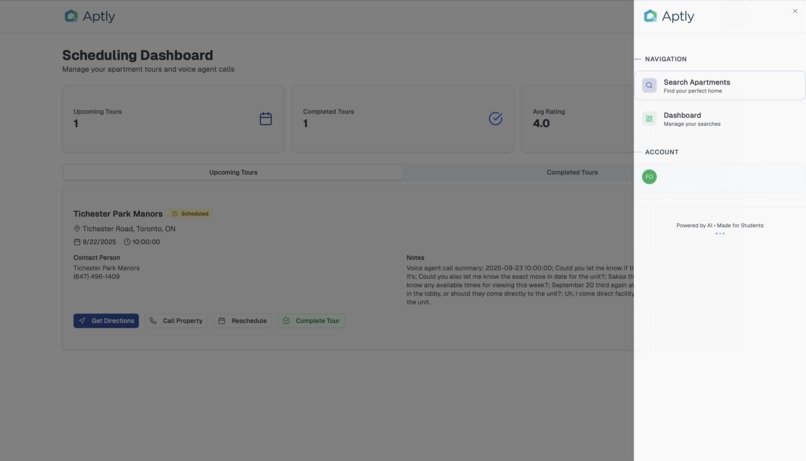
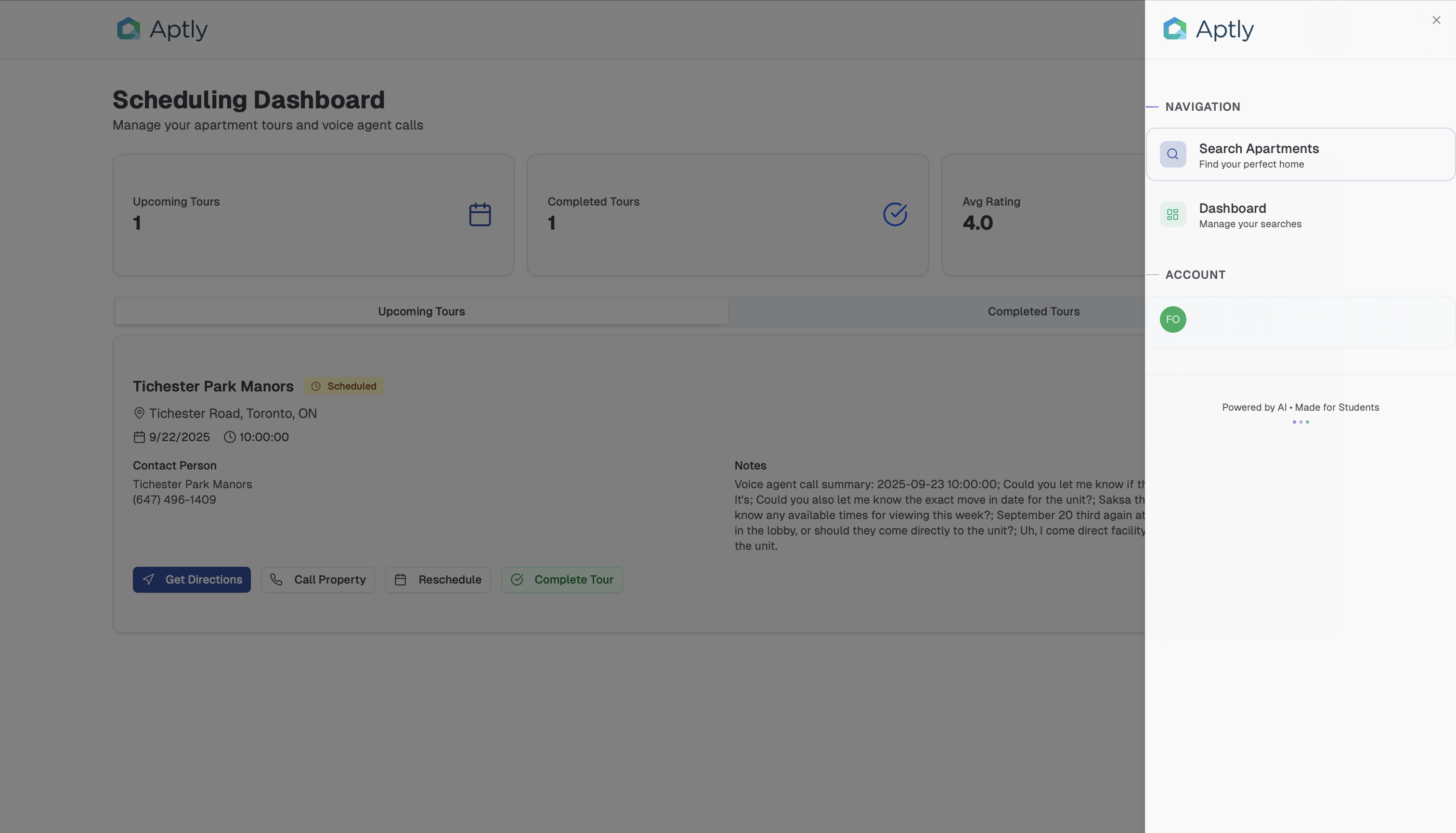
- We used Vapi to build AI voice agents that automatically call properties to verify availability, ask user-specific questions, and schedule tours -- and we implemented Vapi and Google Calendar integrations to provide call transcripts/summaries and automatically add booked tours to the user's calendar.
All of this transforms apartment hunting from a weeks-long manual process into an automated experience that can research hundreds of properties and schedule tours in just a few hours.
Challenges we ran into
- Coordinating Multiple AI Models & APIs: Integrating Qwen, Gemini, Exa, Vapi, and Google APIs into a single, seamless workflow required careful orchestration and robust error handling.
- Messy, Inconsistent Data: Property listings from different platforms varied wildly in format and completeness, making it difficult to extract and standardize key details like rent, amenities, and contact info.
- Real-Time Voice Automation: Getting the Vapi voice agent to reliably call properties, gather accurate information, and handle unexpected responses was more complex than anticipated.
- Mapping & Visualization: Building an interactive map that dynamically updated with top listings while maintaining performance was a technical balancing act.
- Time Constraints: As a hackathon project, we had to prioritize features and make trade-offs to deliver a functional MVP within the deadline.
- User Experience Under Pressure: Designing a clean, intuitive interface while backend systems were still evolving meant constant iteration and quick decision-making.
Accomplishments that we're proud of
- We're incredibly proud of the fact that we were able to get the end-to-end user pipeline built while also creating a beautiful web app. With all of us being first-time hackers, it seemed quite daunting at first due to the many moving pieces, but through clear separation and ordering of tasks we were able to get through everything.
- We're also very happy that we were able to build out all of our planned core features in this web app. We expected that our MVP would have to be a significantly scaled down version of the idea we initially had, but we were actually able to make an MVP that incorporated all the core features we had in mind from the start (of course, that is not to say that we don't think there's a lot more that can be added).
What we learned
Building Aptly taught us far more than just technical skills:
- API Orchestration is Tricky: Coordinating multiple AI models, scraping tools, and APIs in real time required careful planning and robust error handling.
- Data Cleaning is Half the Battle: Raw property listings are messy; structuring them into a consistent, comparable format was a major challenge.
- Voice AI Has Huge Potential: Integrating Vapi voice agents showed us how conversational AI can replace tedious manual calls.
- User Experience Matters: Even the smartest backend won’t shine without a smooth, intuitive interface.
- Teamwork Under Pressure: Working across time zones and skill sets during a hackathon pushed us to communicate clearly and make fast, informed decisions.
- The Value of Iteration: Our first prototype looked nothing like the final product — and that’s a good thing.
What's next for Aptly
- Expand to more cities and property platforms.
- Add user accounts with saved preferences.
- Implement advanced filtering and recommendation algorithms.
- Integrate with more calendar and messaging platforms.
Built With
- cerebras
- exa
- gen-ai
- node.js
- supabase
- typescript


Log in or sign up for Devpost to join the conversation.