-
-
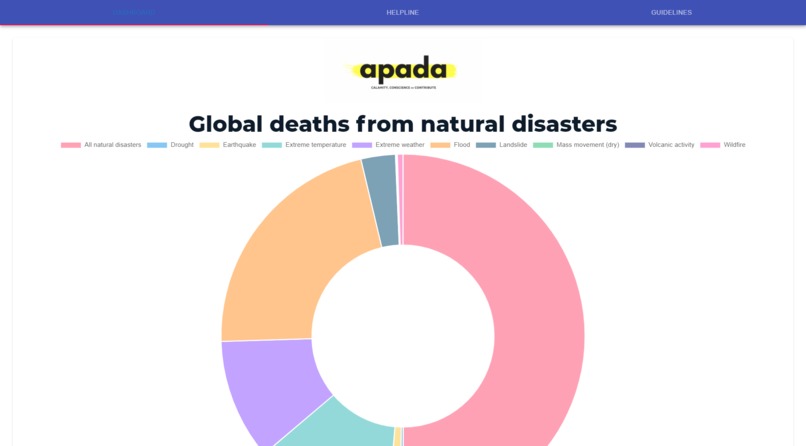
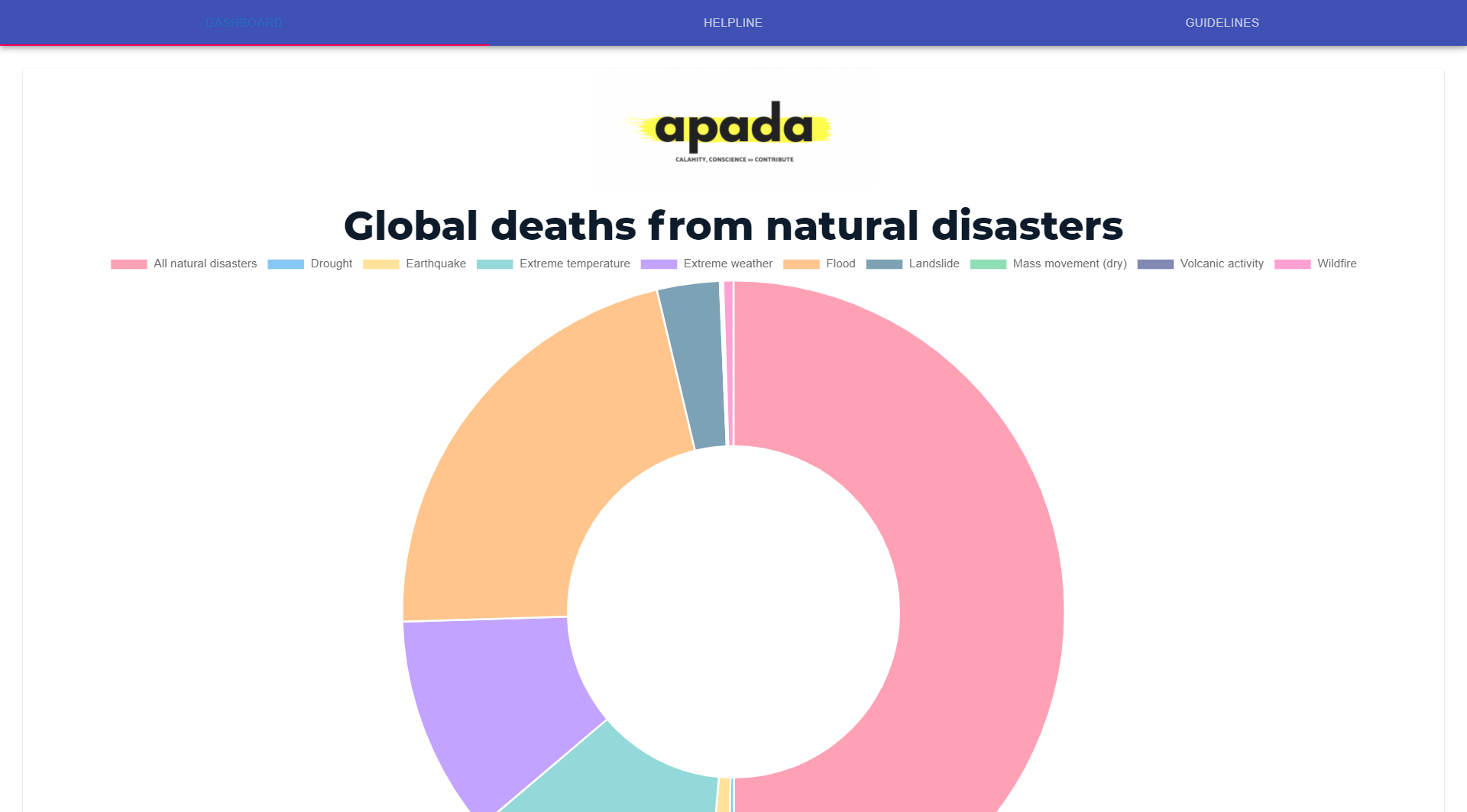
First Tab displays data of the global disasters and news regarding that disaster.
-
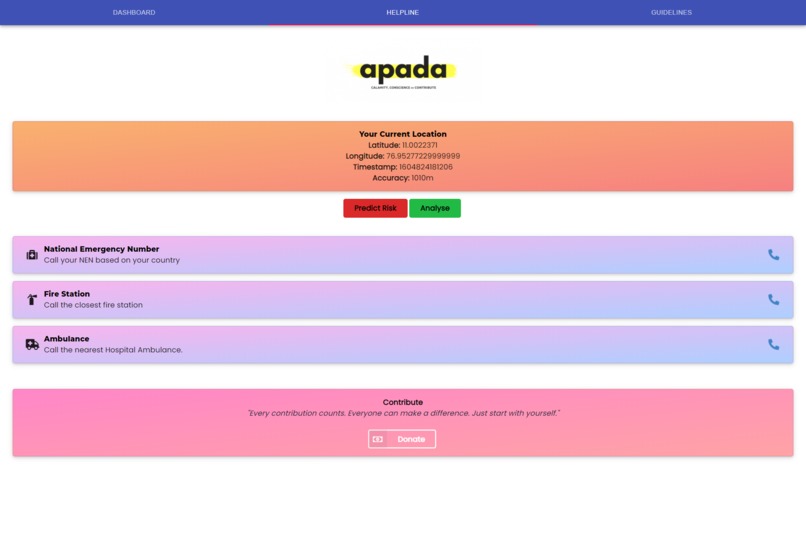
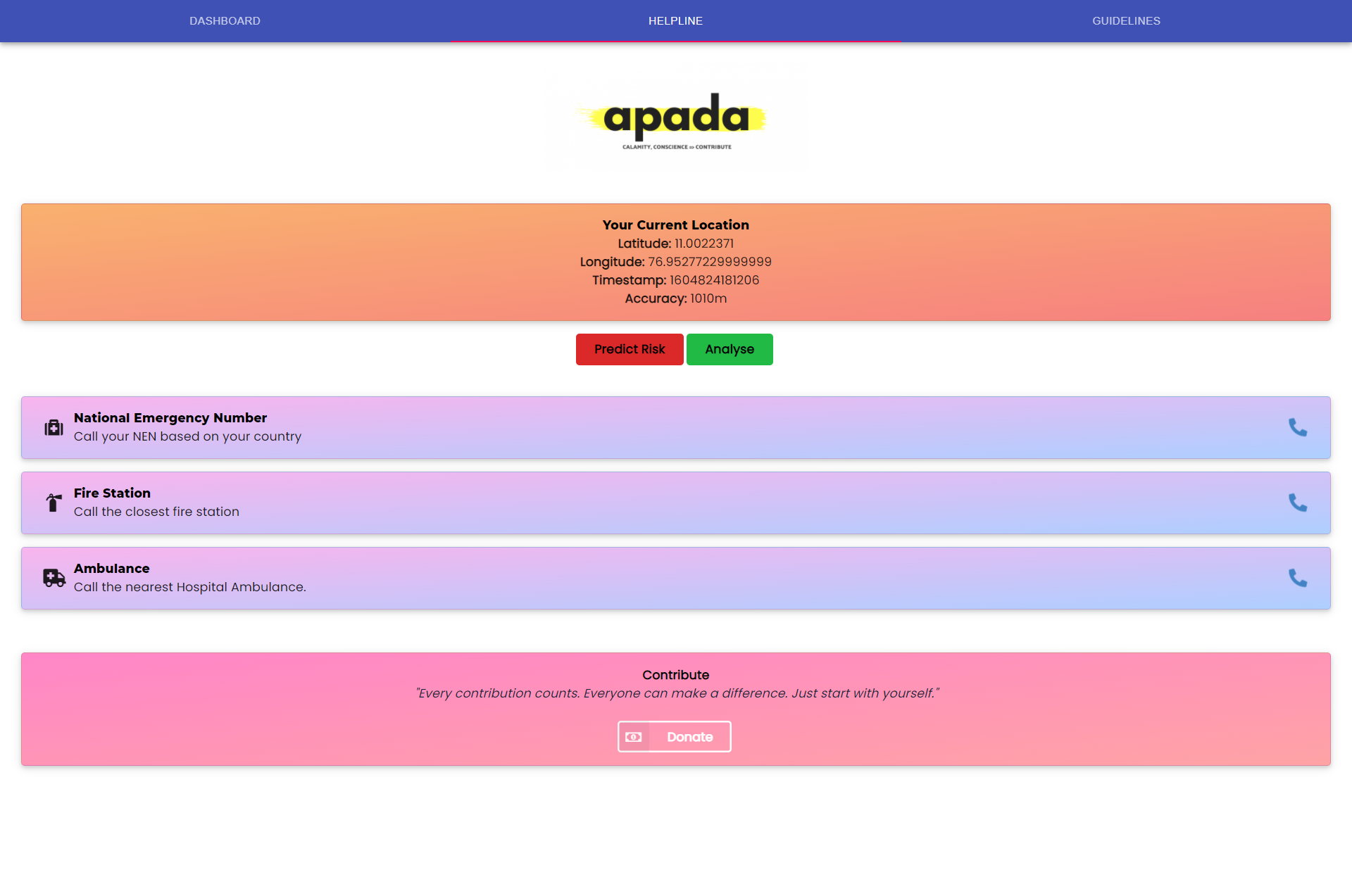
Second Tab to predict the risk factor and do sentimental analysis. The Emergency Numbers have been with quick call option.
-
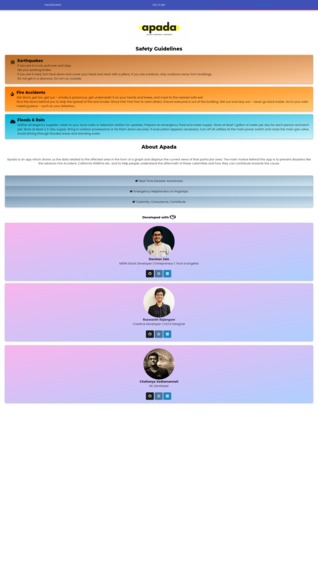
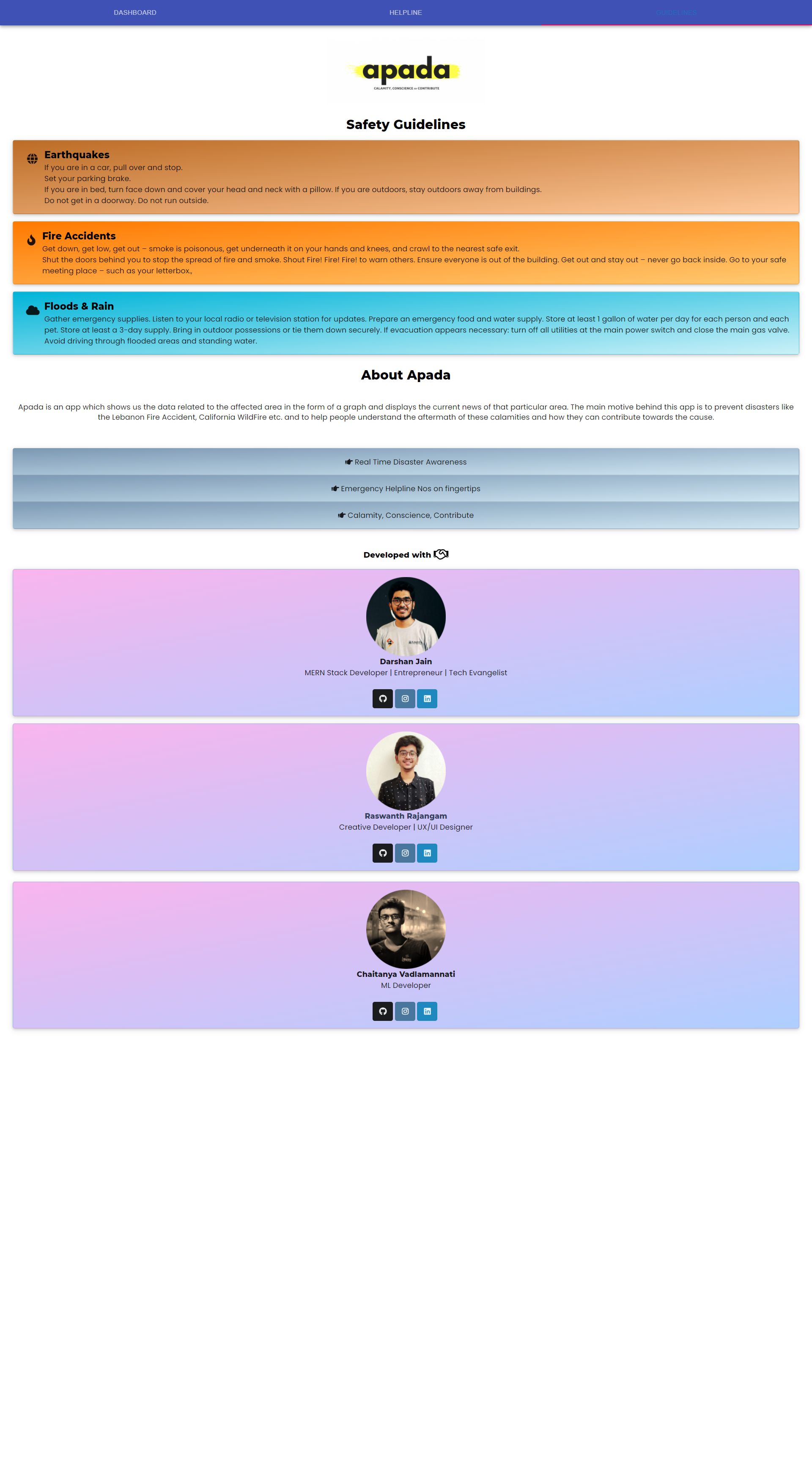
Third Tab displays the basic protocols needed to be followed for various disasters.
-
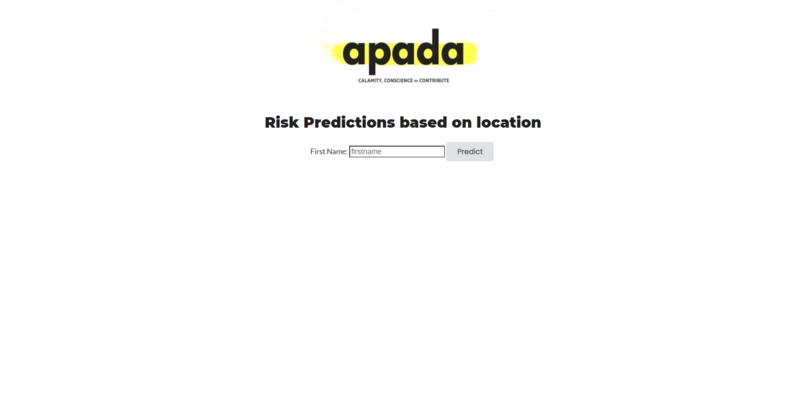
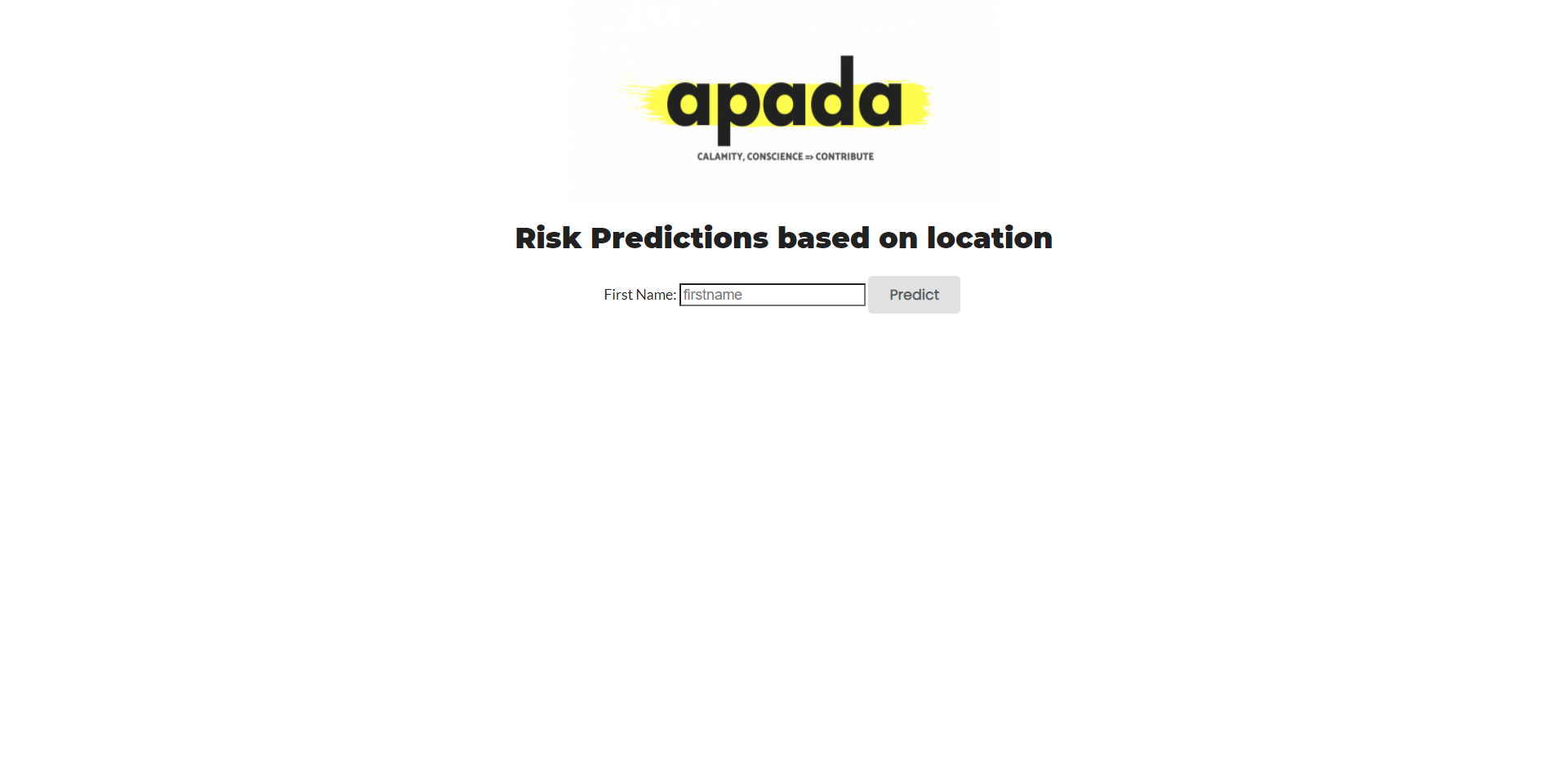
The Risk Analysis Page to predict the risk factor.
Inspiration
Even though a lot of money is invested in keeping track of the Earth’s tectonic plates,sea level ,elevation points etc. it is very difficult to make considerable efforts to reduce damage to life and property. With Lebanon fire accident and Assam floods last year, there are a lot of destruction of property, loss of financial resources, and personal injury or illness. The loss of resources, security and access to shelter can lead to massive population migrations in lesser-developed countries. To overcome this problem, we built apada . Apada is a completely user-friendly application developed in the motive of helping the members affected by the natural disasters and serve as an helpline in these tough times by integrating advanced technology for smarter prediction.
What it does
Apada is a cross platform react application which shows us the data related to the affected area in the form of a graph and displays the current news of that particular area. The app also provides an interface where the user can contribute to the NGO involved in the relief issues of that location. All the safety helplines will be displayed and accessed using this app. (Eg: Fire Safety, Ambulance etc.).It also has Machine Learning Models to predict the risk at an particular location and do sentimental analysis.
How I built it
We used React.js to create a user-friendly interface and rendered visually appealing components using Chart.js, Semantic-UI. Using flask-python and Tensorflow.js , we used a machine learning model to predict the risk at a particular location and run sentimental analysis of tweets.
Challenges I ran into
- Rendering Chart.js with respect to all dimensions was quite difficult while developing the first tab which we solved using dynamic(fluid) card.
- Fetching the searched news with API was challenging.
- Integrating Quick Call was challenging which was successfully done and tested.
- ML model on a every location which was successfully done and tested.
- Sentimental Analysis of tweets which was completed using Tensorflow.js.
- Deploying the site on github pages.
- News API works on localhost and not on production build.
Accomplishments that I'm proud of
- Sentimental Analysis of tweets.
- Risk Analysis using Tensorflow.js.
What I learned
- React and react-dom
- react - routers
- API calls
- ML using Tensorflow.js
- Flask and pandas
What's next for Apada
- Usage of Blockchain to make the funds transparent and providing a interactive dashboard for NGO.
- Using the data from Apada about the nature of the calamity or disease, Health officials can keep track of infections, spreading and make pre-emptive decisions about stocking up pharmacies or designing quarantine protocols specific to different regions.
Built With
- api
- chartjs
- flask
- javascript
- learningpythonapichart.jssemantic
- machine-learning
- node.js
- python
- react
- reactnode.jsjavascriptflaskmachine
- reacttensorflow
- tensorflow.js
- ui


Log in or sign up for Devpost to join the conversation.