-
-
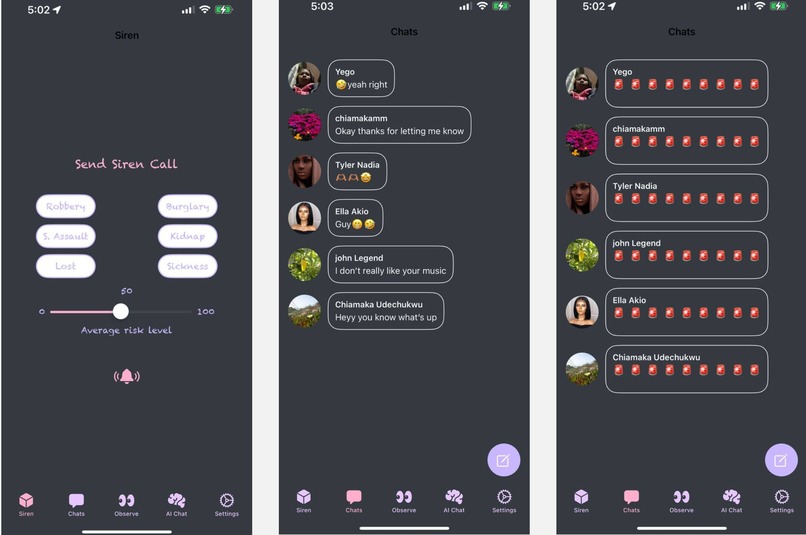
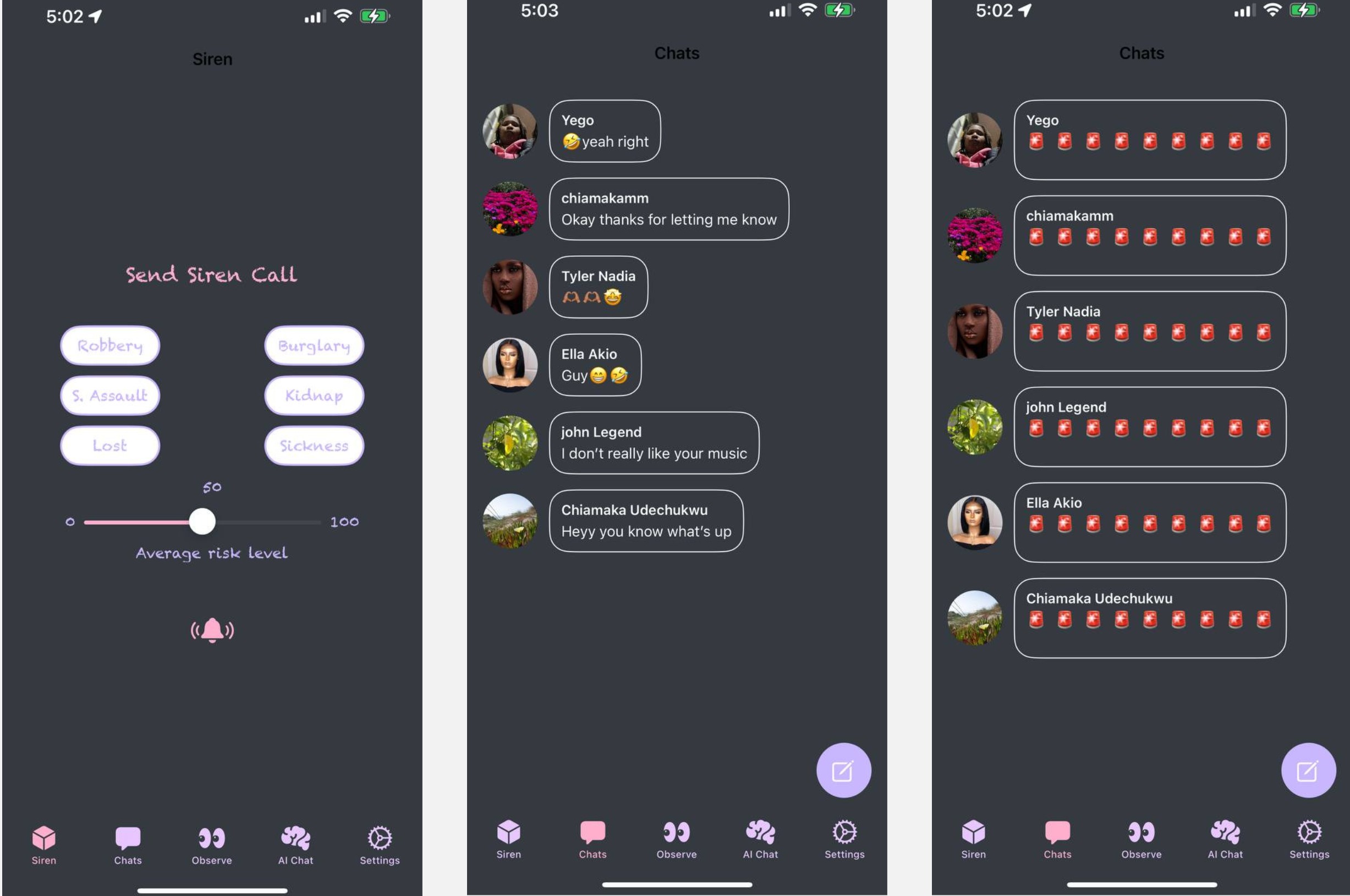
Siren View (Home Page), Chat View (Pre-Siren Alert ), Chat View (Post Siren Alert)
-
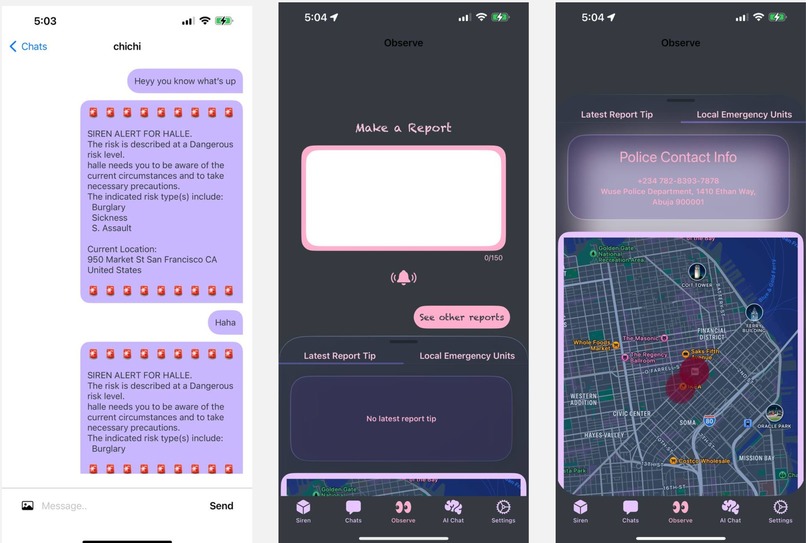
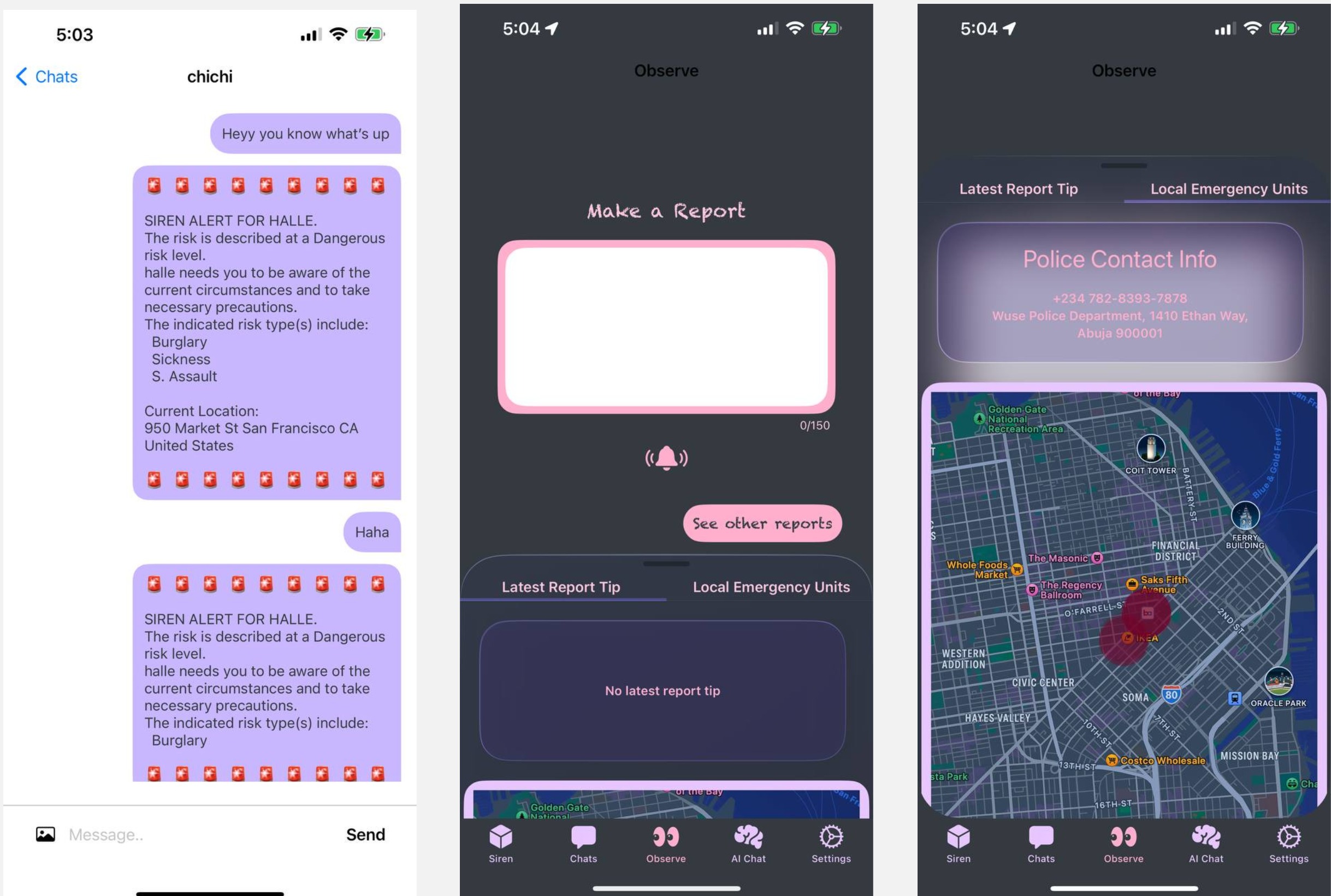
Detail in Siren Text, Observation View, Map View
-
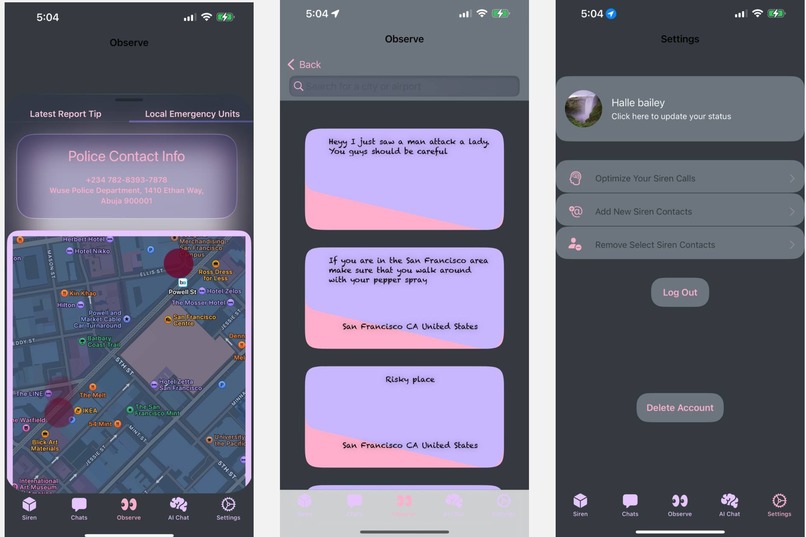
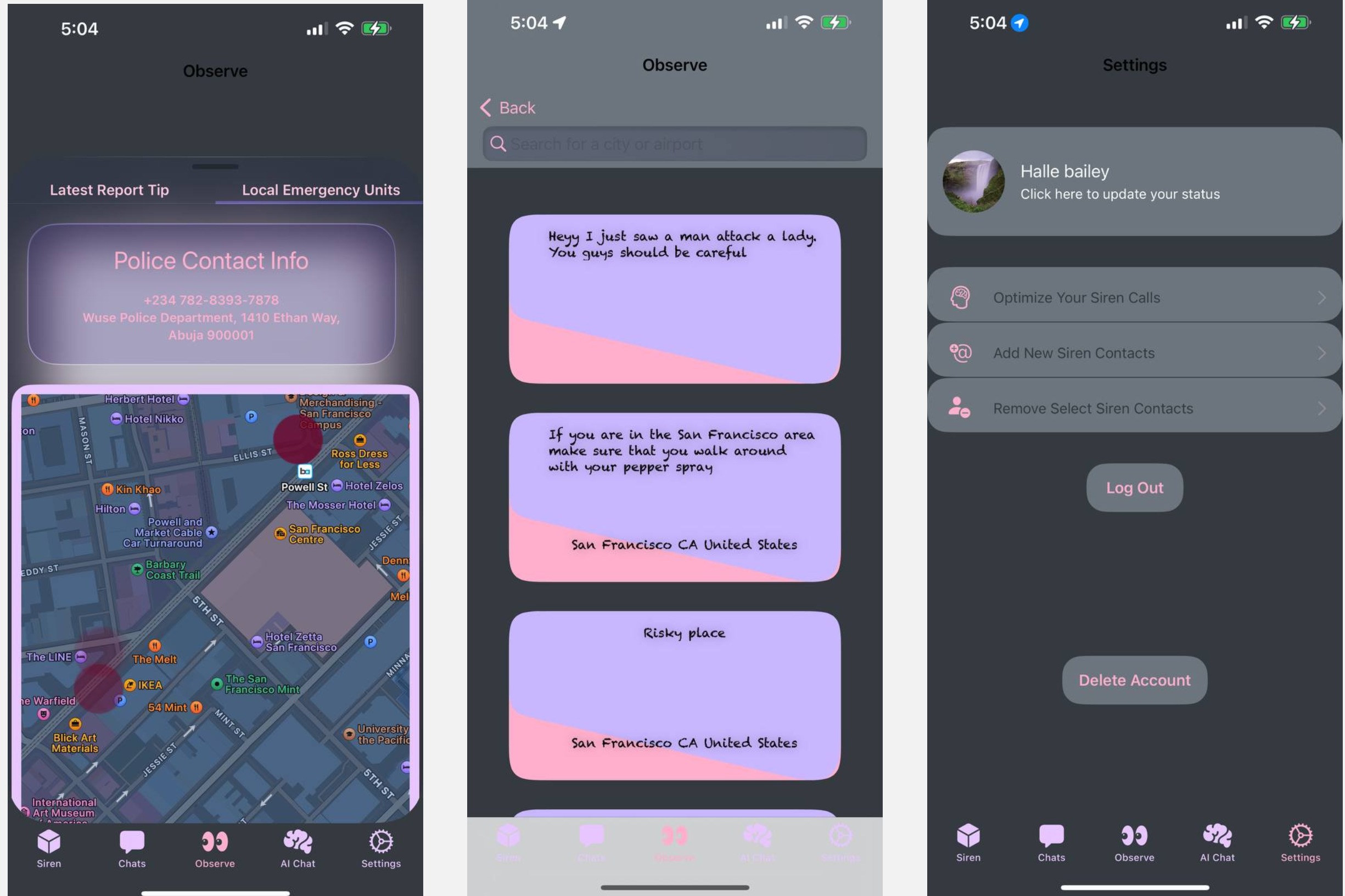
Zoom in showing the target on siren triggers, Reports view showing public announcements, Settings View
-
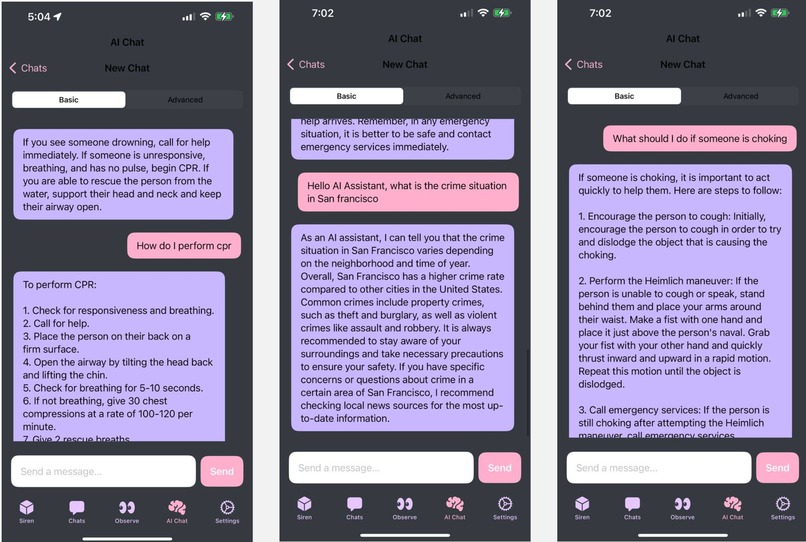
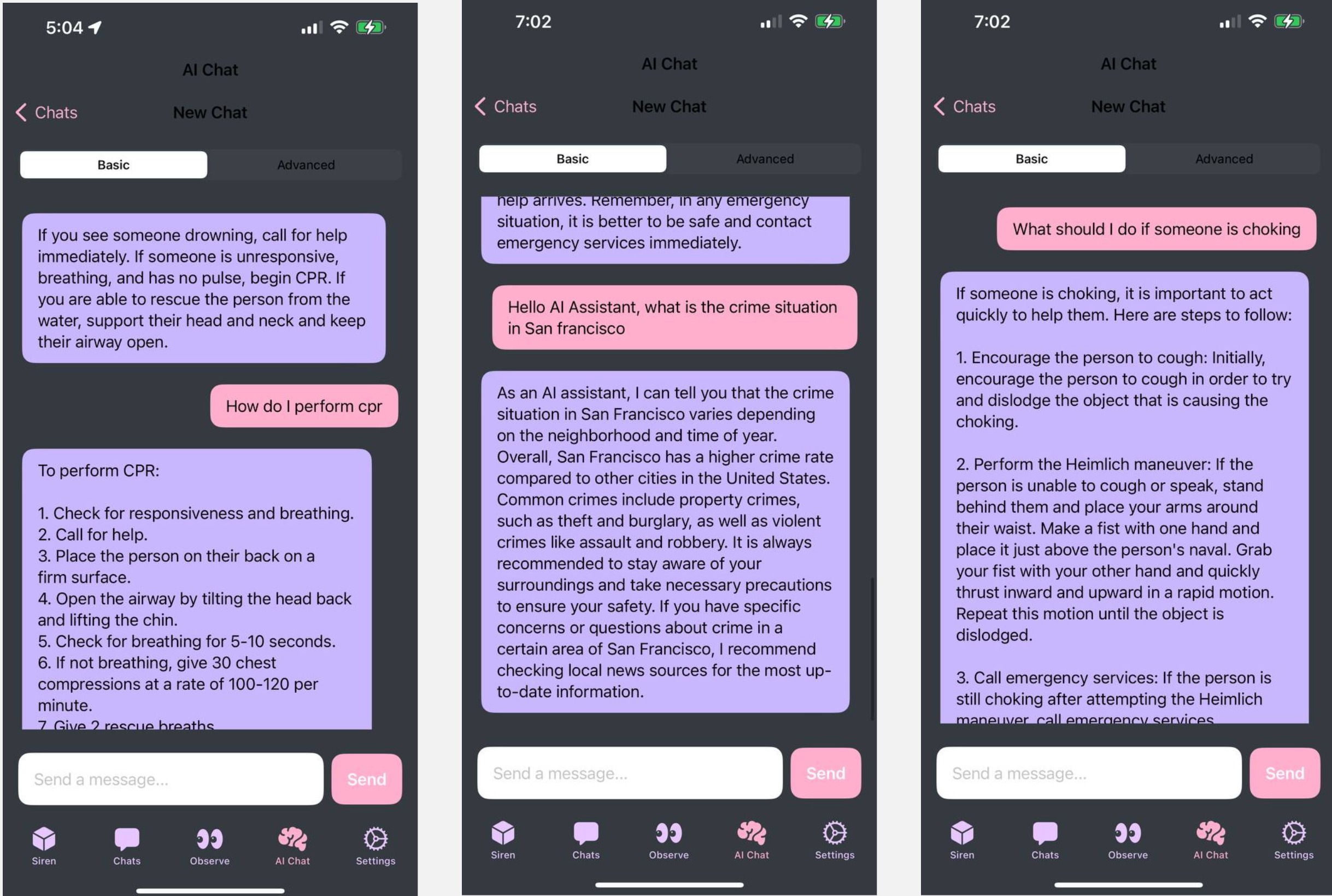
Conversation between user and Gemini AI assistant
Inspiration
Anyaa, was inspired by the challenges faced in third-world countries where limited resources and information lead to inefficient crime enforcement. Noticing that Twitter is often used in Nigeria to alert others about crimes—though it’s not ideally suited for immediate security alerts—I developed Anya. This mobile application is tailored to enhance community safety and crisis awareness in regions with poor security infrastructure. By providing a dedicated platform for rapid communication and alerts, Anya not only boosts safety but also supports economic development by fostering a more secure environment for businesses to operate and for citizens to engage in daily economic activities without fear, thus encouraging investment and local commerce.
What it does: Core Features
Real-time siren alerts: Users can quickly send private help-pod messages to a predetermined set of emergency contents. The help message will contain information about the risk incident type, the degree of danger, and the geolocation of the individual. The timely dissemination of crucial information would assist the receiver in escalating the threat to the necessary law enforcement. The metadata from these siren calls are also used to generate the risk update of an area, allowing individuals within a 20 mile radius to visualize “hot spots” around them where siren triggers have been made. The users are also able to indicate the time frame of the criminal index. For example, clicking the 24 hour button to visualize the criminal index within the last 24 hours.
Observatory Module: Building on this, the data from the siren report is used to generate a risk visualization map so that other users within a particular vicinity can monitor the risk index and make decisions accordingly. The current risk index is then compared with previous periods to inform the user. Beyond just a reporting tool, Anya aims to create a community-driven platform where users can utilize the trusty tips shared by individuals within their vicinity. The module also creates a means for the users to make public reports and to read about reports made by other individuals. It also has an API to retrieve the emergency contacts of the police, ambulance, law enforcement, and fire fighters. So that in cases of higher-tier danger, the user can easily communicate with the needed organization.
Artificial Intelligence Assistants: The application has an inbuilt chatbot powered by Gemini API that acts as a guiding responder for when conflicted users need answers to security and health concerns that they may have. For instance, if a user moves to a new region they could ask the AI assistant about information regarding the area such as the frequency of particular crimes, riskiest times, etc. Or if a user is in a health emergency such as being biten by a snake or having a friend that is experiencing an asthma attack, they can ask the AI assistant for emergency actions. Note that this feature does not replace professional help (eg ambulance or Police) but rather allows the user to respond to emergency situations in more coordinated terms. The primary resources and features within this app contains internal user generated data with reference to how the siren alerts are displayed in the observatory and how the reports are enlisted. However, this AI assistant plays a crucial role in drawing unto external public generated data to serve the users.
How we built it
Users expect a seamless interaction with the app, where their desired actions lead to predictable and satisfying outcomes. As a developer, I must anticipate these expectations and translate them into tangible codes and functionalities. This requires a deep understanding of user behavior, needs, and preferences. The process begins with developing wireframes that map out the user's potential actions. These wireframes serve as a blueprint for the application's design, guiding me in structuring the app's code to mirror these behaviors accurately. By converting wireframes into code, I aim to fulfill the expected user interactions and strive to create an engaging and efficient user experience. To summarize, I built the application using Figma for wire framing, Swift UI for the primary IOS development, Firebase for Data Management, and Gemini-pro api for LLM modeling and response generation.
Challenges we ran into: Mostly technical Issues
I experienced a thread configuration error. In Swift applications, the main thread is the central processing unit, orchestrating UI and functionality events. Initially, following Firebase's package dependency installation instructions may appear straightforward, requiring the configuration call to be added in the default main thread file. However, as the project's complexity increased, particularly with integrating features like notifications, I opted for a more efficient threading system, such as using the App Delegate. The App delegate collaborates with the application to manage shared behaviors, acting as the root object. It's here that a significant oversight can occur—forgetting to add the "@main" signature at the top of the file. This minor detail, if overlooked, can disrupt the application's ability to recognize the upgraded thread route, leading to severe functionality issues.
Accomplishments that we're proud of
My ability to dedicate a great deal of time and effort to implement four concrete features before the deadline.
What we learned
I learned how to implement Google's Gemini API in a mobile application. I had never done this before. I learned more about SwiftUI development
What's next for Anya Security Surveillance IOS Application
Continue development. I would love to engage in a beta testing process, and when I feel ready, I would release it for public use.


Log in or sign up for Devpost to join the conversation.