-
-
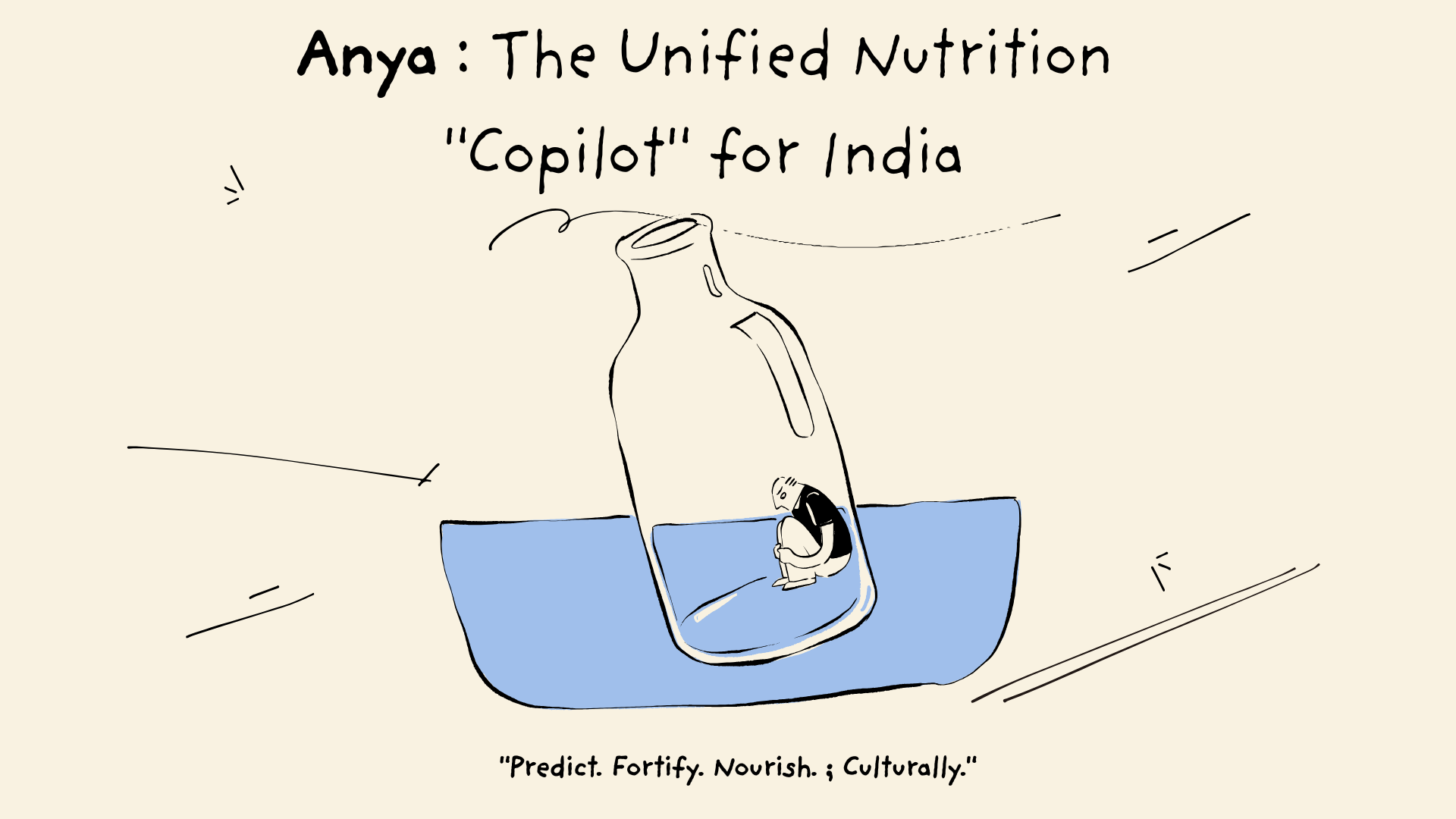
Project-Theme-Image
-
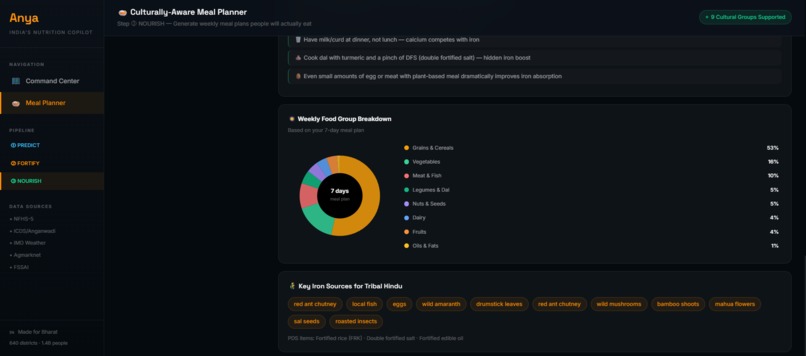
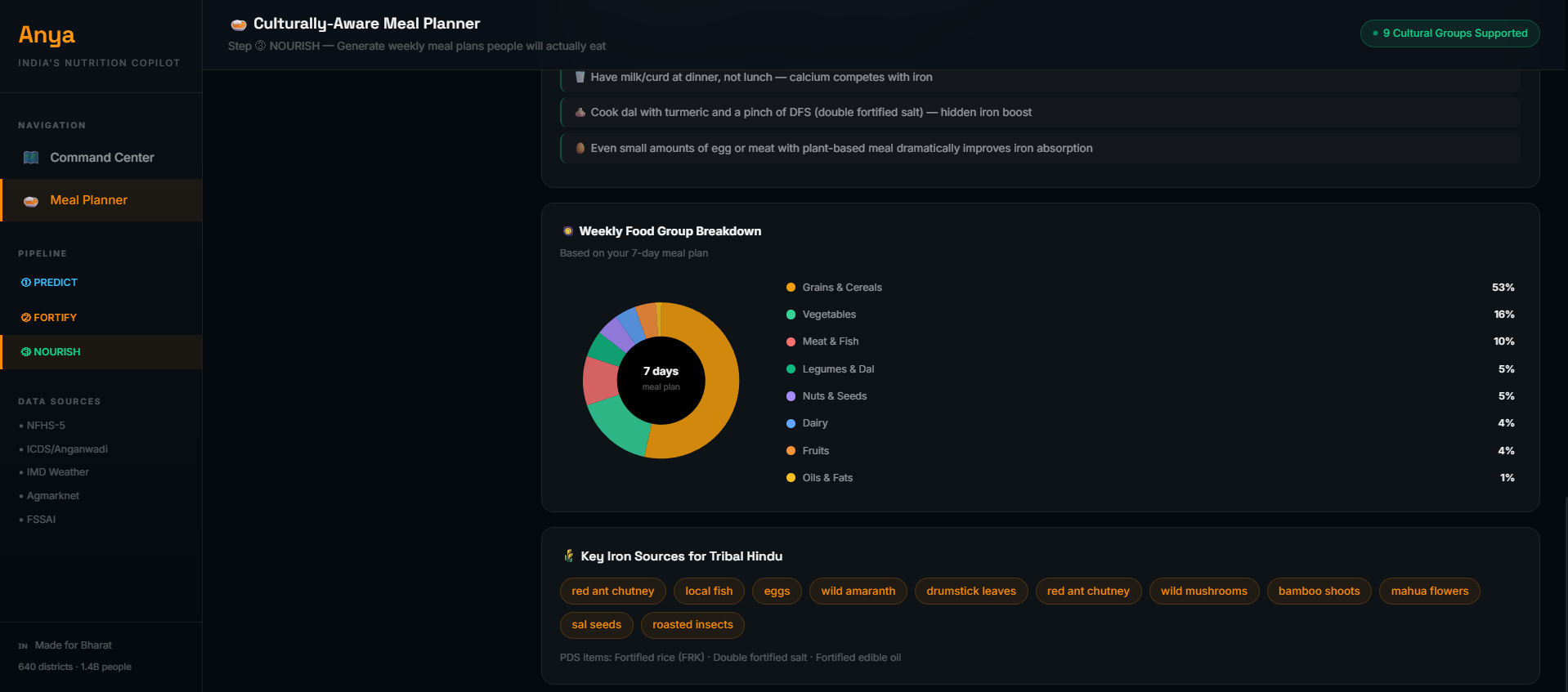
a pie chart in meal generation showing food components
-
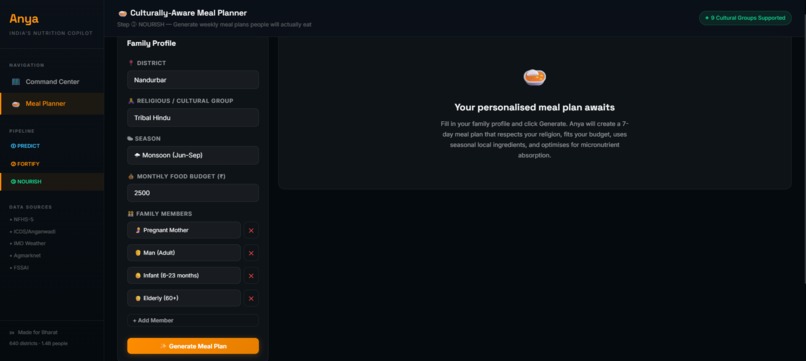
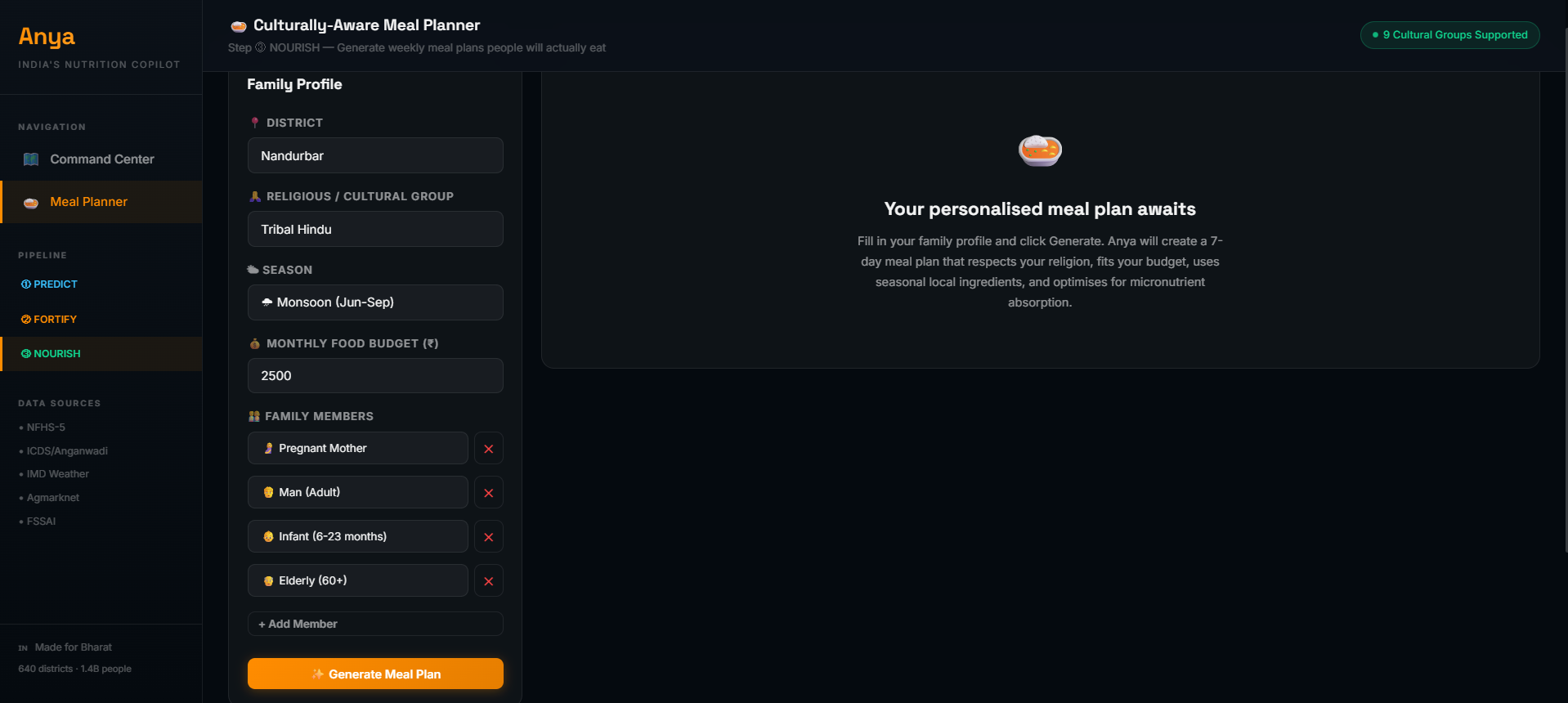
creation of meal plan according to geo-data
-
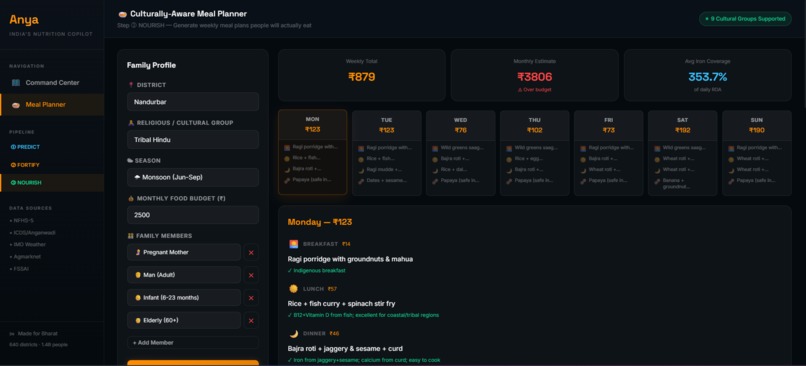
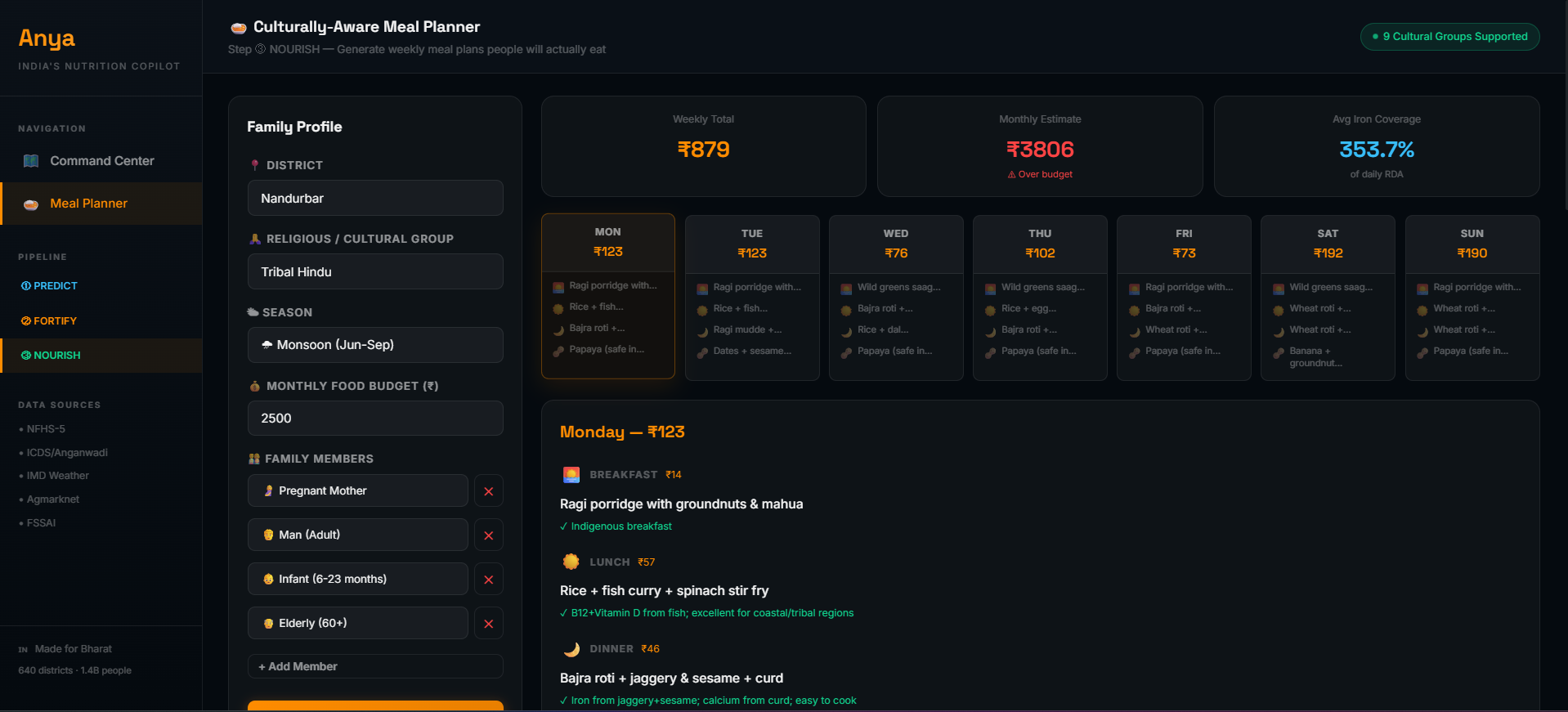
7-day custom plan being created with given geo-data accordingly
-
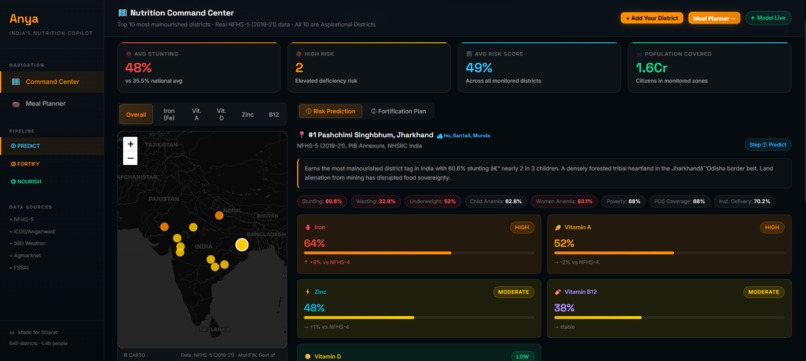
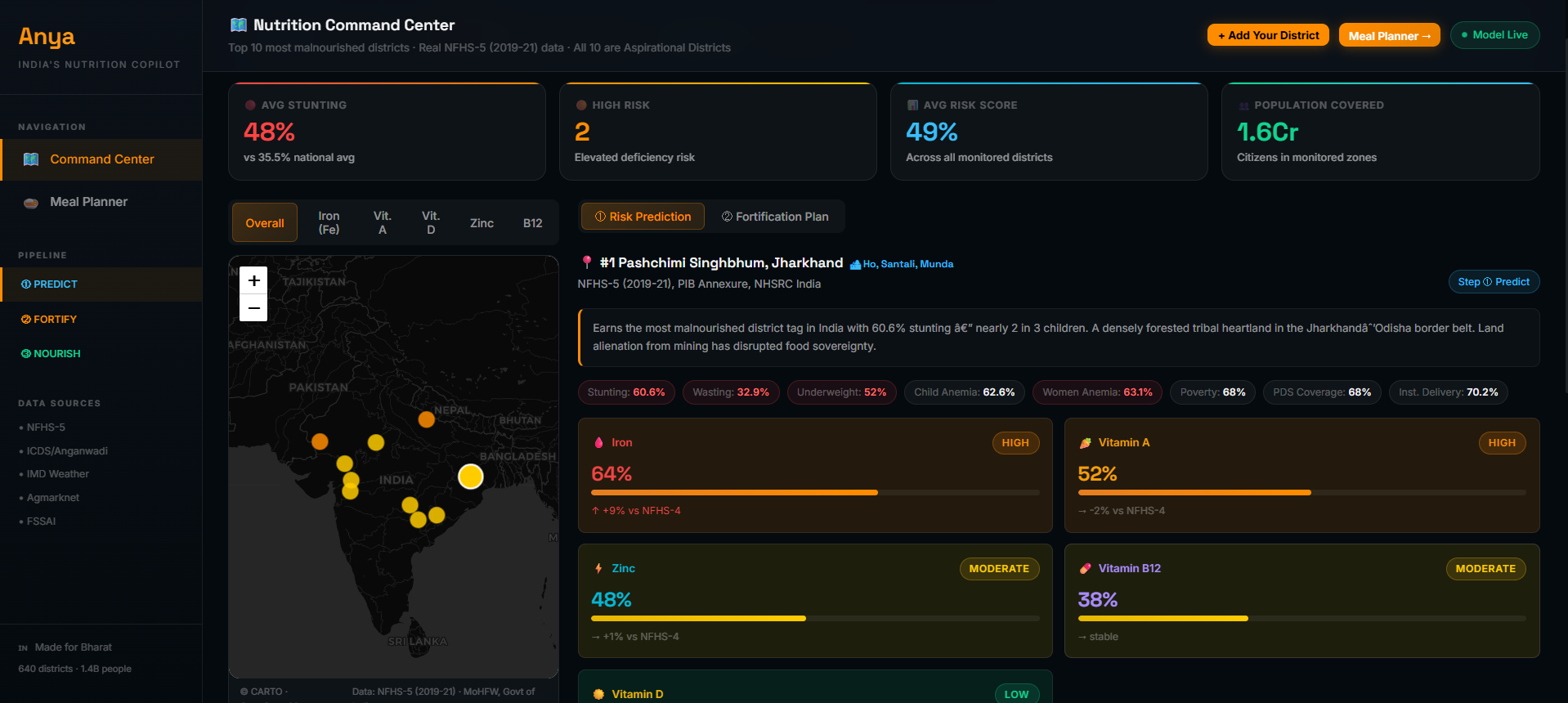
command center (prediction)
-
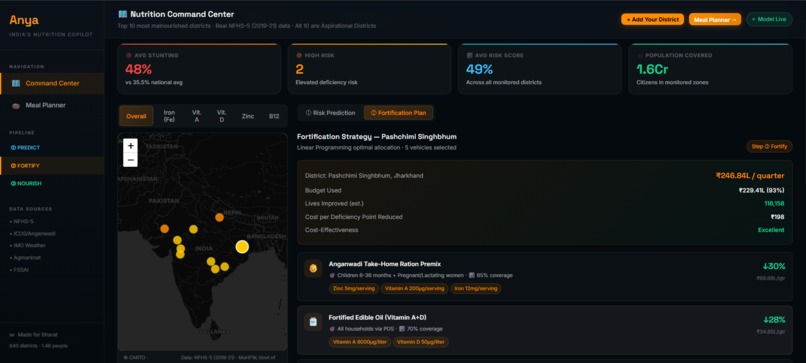
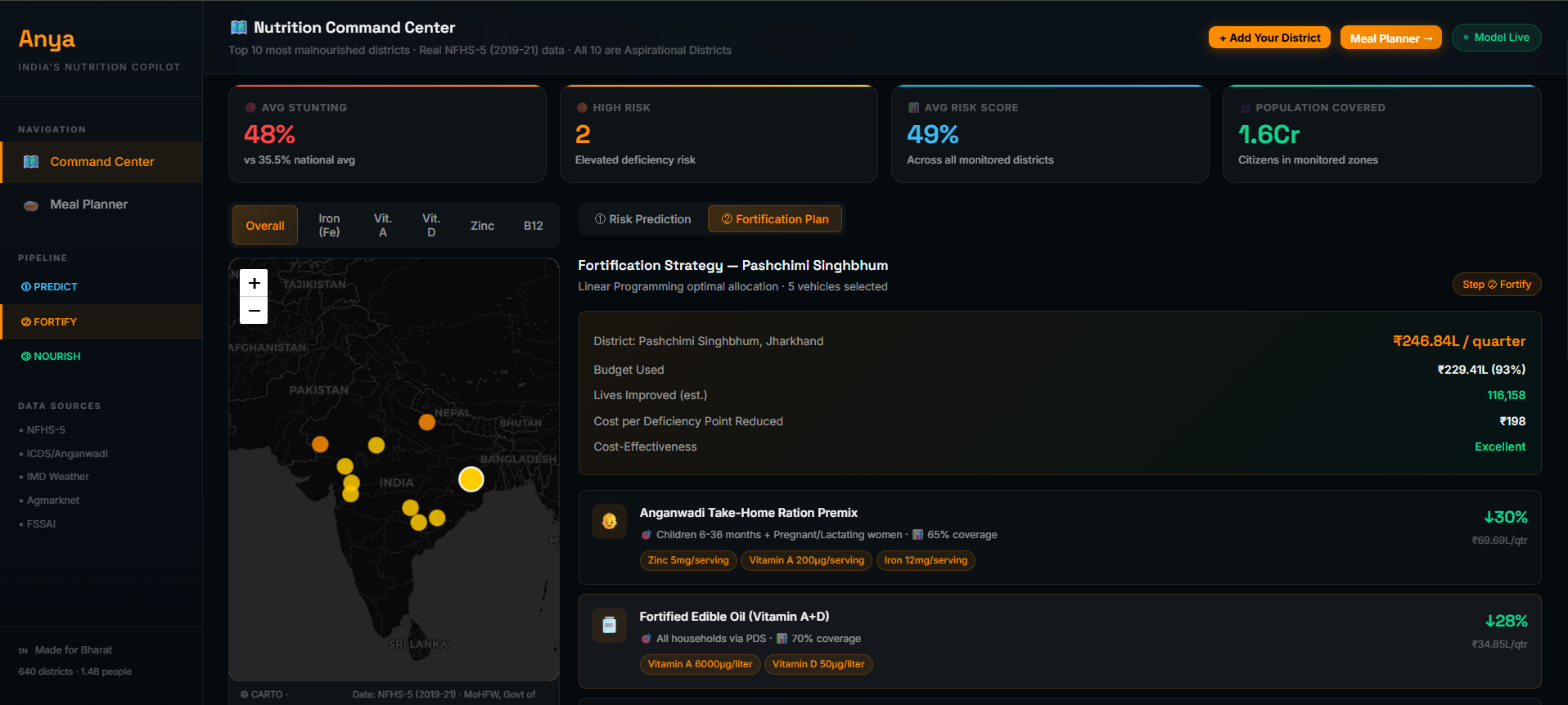
command center (fortification)
-
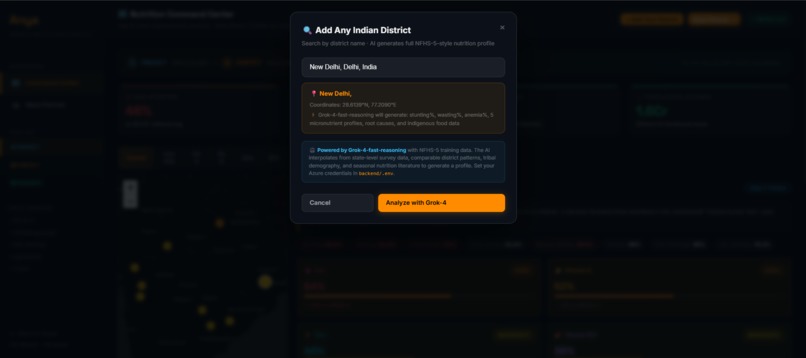
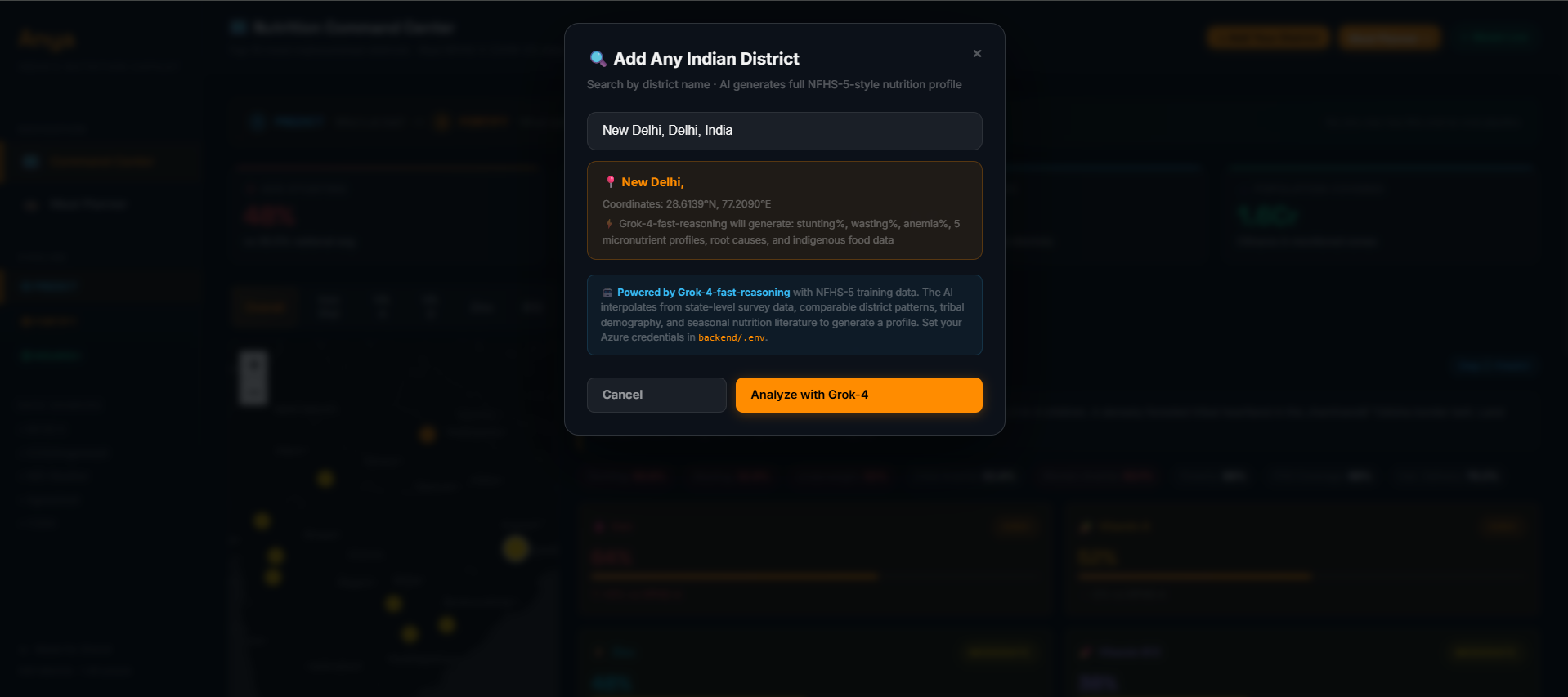
feature to add custom district location
Inspiration
India produces enough food to feed its entire population — yet 35.5% of children under 5 are stunted and 57% of women are anemic. We don't have a food crisis. We have a nutrition intelligence failure.
When we analyzed NFHS-5 data across India's 640+ districts, we found something striking: in Alirajpur, Madhya Pradesh, 79% of children are anemic — just 800km from Mumbai. These crises are predictable and preventable, but India's nutrition response is always too late, too generic, and culturally disconnected.
The data to solve this already exists — health surveys, food prices, weather patterns, PDS records — but it sits in silos, never connected, never predictive.
So we asked: What if one platform could predict which deficiencies will spike where, generate precision fortification strategies, and create culturally appropriate meal plans families will actually eat — all within their budget?
That became Anya — meaning "grace" in Sanskrit. Because every child deserves adequate nutrition, regardless of which district they were born in.
What it does
Anya is an end-to-end AI-powered nutrition intelligence platform built specifically for India. It operates as a three-stage pipeline:
1. PREDICT — Who's at risk?
- Fuses data from NFHS-5, Agmarknet food prices, IMD weather, and PDS records to generate per-district, per-micronutrient risk scores (Iron, Vitamin A, Zinc, B12, Vitamin D)
- Flags emerging hotspots before crises escalate
- Covers India's top 10 most malnourished aspirational districts with real data for 1.6 crore citizens
2. FORTIFY — What nutrients are needed?
- Generates cost-optimized fortification strategies per district using linear programming
- Recommends the right fortification vehicle (PDS rice, edible oil, double fortified salt, mid-day meal flour) based on the district's specific deficiency profile
- Incorporates bioavailability science — e.g., pairing iron with Vitamin C sources, separating iron and calcium across meals
- Projects 3-month outcomes with estimated reduction in anemia, VAD, and zinc deficiency
3. NOURISH — Meals people will actually eat
- Generates 7-day culturally aware meal plans for families based on:
- District and religion/cultural group (9 groups supported including Tribal Hindu, Muslim, Jain, Sikh, and more)
- Season and local food availability
- Monthly budget (as low as ₹2,500)
- Family composition (pregnant mothers, infants, elderly)
- Uses only locally available, affordable ingredients including indigenous superfoods (ragi, moringa, drumstick leaves, wild amaranth)
- Shows per-meal cost, nutrient coverage, and bioavailability tips
- Includes a weekly food group breakdown and key nutrient sources specific to each cultural group
Our model calculates it costs just ₹847 per person to shift them out of nutritional risk through this pipeline.
How we built it
- Frontend: React.js with a dark-themed command center dashboard, Mapbox for India district heatmaps, D3.js for charts and visualizations
- Backend: Python with FastAPI serving the prediction, fortification, and meal generation engines
- Risk Prediction: XGBoost model trained on real NFHS-5 district-level data (stunting, wasting, anemia rates) fused with food price indices, seasonal features, and poverty indicators
- Fortification Optimizer: Linear programming (PuLP/SciPy) that maximizes deficiency reduction per rupee spent, subject to FSSAI safety limits and bioavailability interaction constraints
- Meal Generator: Constraint satisfaction engine combining the Indian Food Composition Tables (ICMR), WHO/ICMR RDA values, cultural dietary rules database (9 groups), local market pricing, and PDS entitlement data
- Data Sources: NFHS-5, Agmarknet, IMD, FSSAI fortification standards, ICMR Dietary Guidelines, Soil Health Card Portal
Everything runs on real government open data — no synthetic or mock datasets.
Challenges we ran into
- Indian food is incredibly complex to model. A single dish like "dal" varies in ingredients, nutrition, and cost across every state. Building the cultural rules database for 9 religious/cultural groups with accurate dietary restrictions, pregnancy taboos, and fasting calendars was the hardest non-technical challenge
- Data inconsistency across government sources. NFHS-5 has district-level data but Agmarknet food prices are at mandi (market) level — reconciling geographic granularity required careful mapping
- Bioavailability modeling. Iron absorption varies 3-10x depending on what else is in the meal. Building the nutrient interaction matrix (iron + Vitamin C = good, iron + calcium = bad) and enforcing it in meal generation was scientifically demanding
- Budget constraint optimization. Generating a meal plan that simultaneously meets nutrition targets, respects cultural rules, uses only locally available foods, AND fits a ₹2,500/month budget required solving a multi-constraint optimization problem in real-time
- Handling "undefined" edge cases where certain districts had incomplete NFHS-5 data — we had to build fallback estimation logic
What we learned
- Malnutrition in India is not a food problem — it's a data, delivery, and cultural sensitivity problem. The food exists. The government programs exist. What's missing is the intelligence layer connecting prediction to action
- Cultural context is non-negotiable. A nutrition solution that ignores caste, religion, regional food habits, and pregnancy taboos will fail in India, no matter how technically impressive it is
- Indigenous foods are nutritional powerhouses. Red ant chutney (iron-rich), ragi (calcium + iron), moringa (Vitamin A), wild amaranth — these traditional foods outperform expensive supplements, but have been systematically overlooked
- Bioavailability matters as much as quantity. You can eat enough iron on paper but absorb almost none if paired with the wrong foods. This invisible factor is a major driver of India's anemia crisis
- Government open data is a goldmine — NFHS-5, Agmarknet, Soil Health Cards, IMD — the infrastructure for intelligent nutrition planning exists, it just needs to be connected
What's next for Anya
- Expand to all 640+ districts with full NFHS-5 coverage and real-time Agmarknet price feeds
- Integrate with POSHAN Tracker — the government's existing Anganwadi monitoring platform — so Anya's predictions and meal plans reach 1.4 million Anganwadi workers directly
- Add an Anganwadi worker mobile app with offline-first architecture, voice-based UI in 12+ Indian languages, and camera-based MUAC (mid-upper arm circumference) measurement for instant child malnutrition screening
- Pilot in Nandurbar, Maharashtra — partner with the district ICDS office to deploy the fortification strategy and meal plans across 50 Anganwadi centers serving ~2,000 children
- WhatsApp-based meal plan delivery — send personalized weekly meal plans to mothers via voice messages in their local language, reaching the 500 million Indians already on WhatsApp
- Real-time food price integration — dynamically adjust meal plans when local ingredient prices spike, automatically substituting affordable alternatives
- Open-source the platform so other countries with similar malnutrition challenges can adapt Anya to their context
Built With
react python fastapi xgboost mapbox d3js pulp scipy tensorflow postgresql nfhs-5 agmarknet


Log in or sign up for Devpost to join the conversation.