
thanks claude for the writeup ;)
Inspiration
Anxiety often blows threats way out of proportion. CBT (cognitive behavioural therapy) deals with this by comparing perceived threat to actual threat — we wanted to automate that comparison with AI. However, since AI cannot diagnose or be 100% objective, it's simply used as a baseline here. But against any baseline we can identify our biases and patterns of overthinking.
What it does
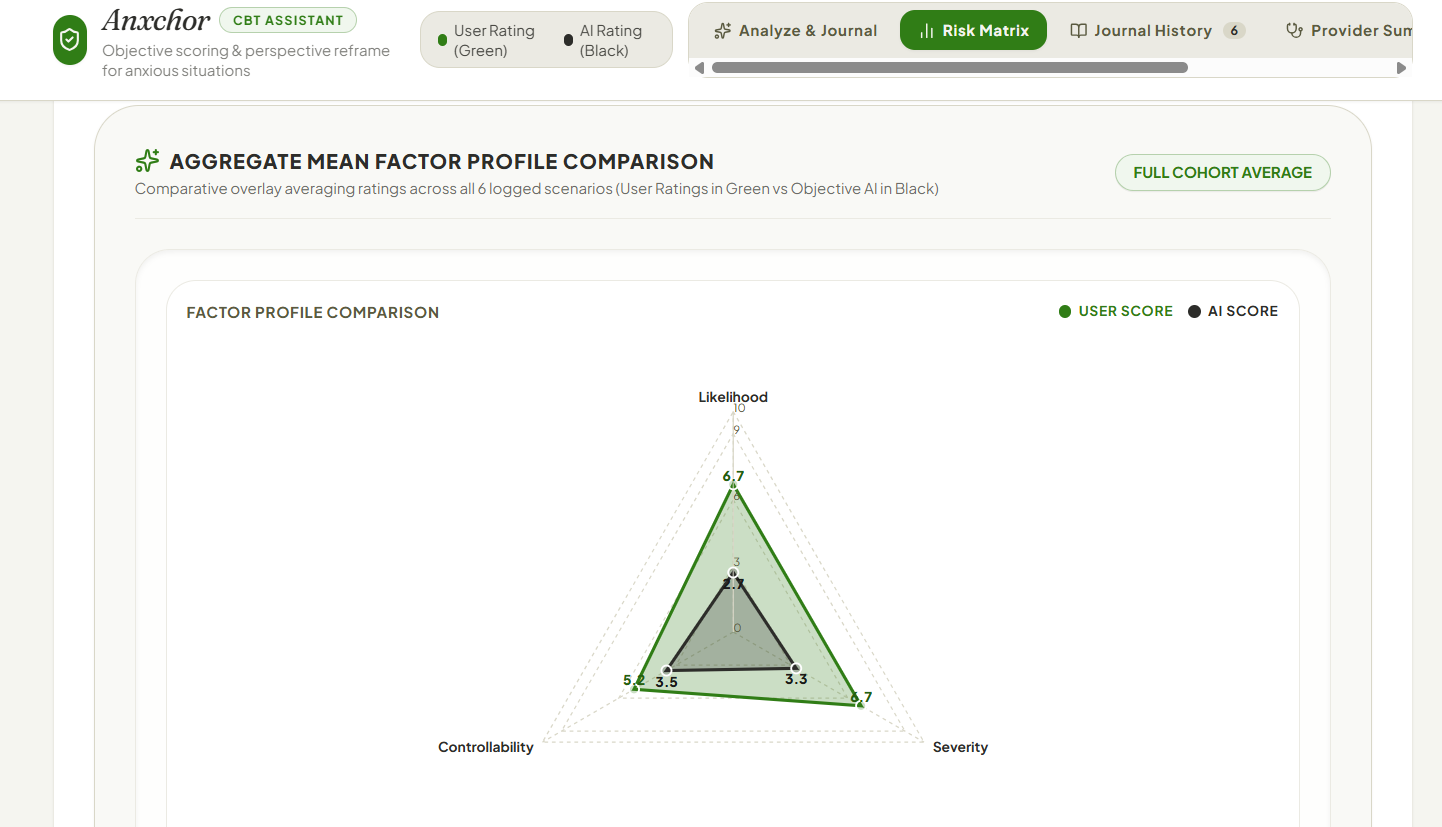
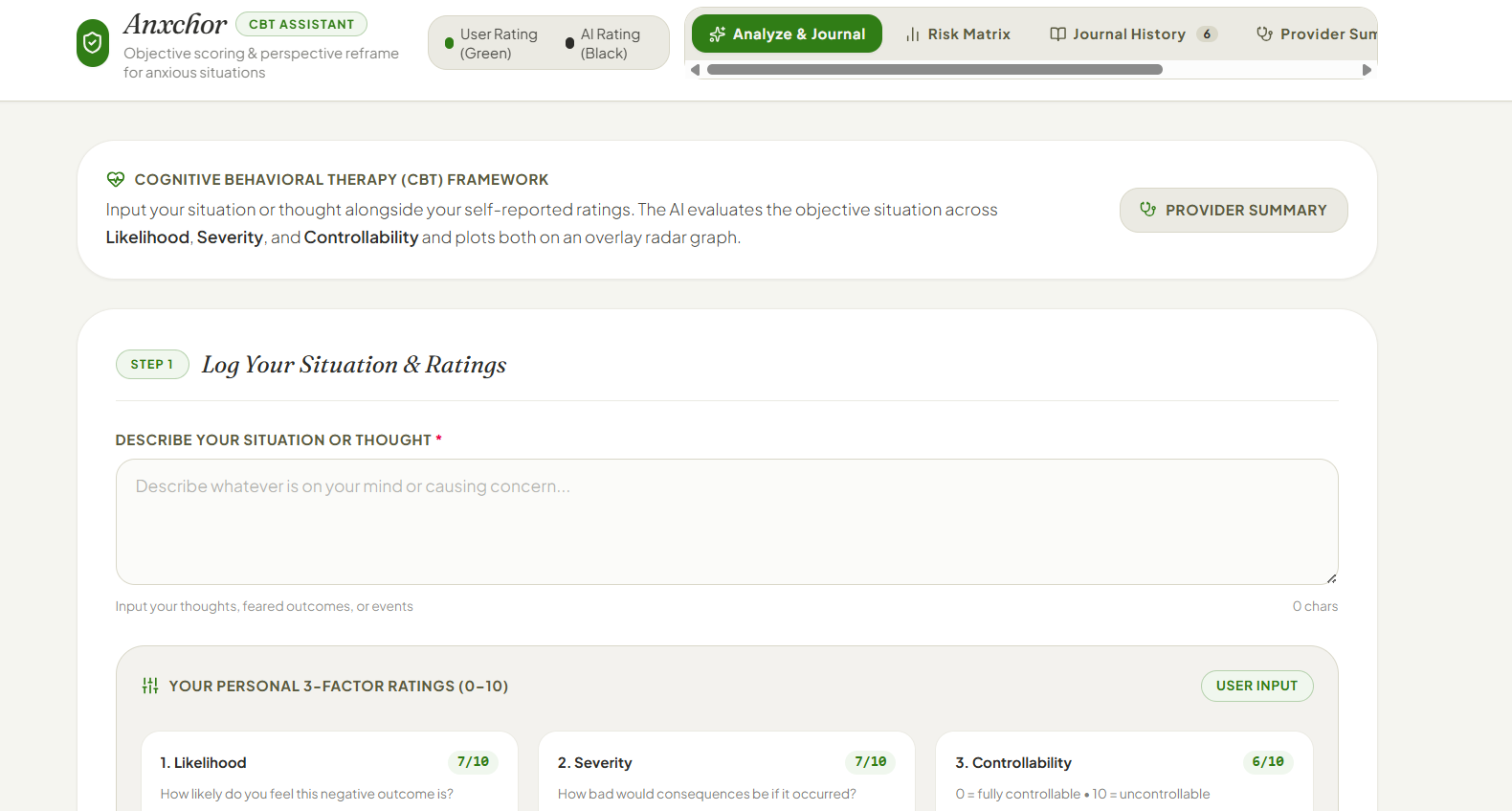
You describe an anxious situation and score it yourself on Likelihood, Severity, and Controllability (0-10). AI scores the same situation independently. Both get plotted so you can see the gap between how scary it felt and how scary it actually was. Entries save to a history + trend view over time, and if the gap pattern looks consistent, the app gently flags that it might be worth mentioning to a doctor (no diagnosis, just a nudge + a summary you can bring with you).
How we built it
Rough draft in Google AI Studio (form, sliders, basic Gemini wiring), then exported into VS Code to build the trend chart, history view, and pattern flagging. Gemini call is locked to a strict JSON schema so scoring stays consistent. Added a crisis-keyword check that runs before any API call, and a fallback response so the app doesn't break if the API is slow or rate-limited.
Challenges we ran into
Auth errors after exporting from AI Studio (env vars needed a specific prefix to reach the frontend), and burning through Gemini's daily rate limit mid-build after not realizing "latest" model aliases can silently point to a heavier model.
Accomplishments that we're proud of
Getting a real clinical mechanism (not just an AI wrapper) working end to end, and building in crisis-detection + non-diagnostic language without being asked to.
What we learned
Debugging AI-generated code is way faster once you actually read it yourself instead of asking the tool to keep guessing. Also learned a lot about how careful the language needs to be around mental health content.
What's next for Anxchor
Tagging entries with specific distortion types (catastrophizing, probability overestimation), tracking avoidance behavior, and a more robust crisis-detection system before this touches real user data.

Log in or sign up for Devpost to join the conversation.