Inspiration
I have always been fascinated by antiques and vintage objects, spanning all historical periods—from ancient ceramics to early 20th-century mechanical pocket watches. I wanted to explore how the design, craftsmanship, and cultural context of these objects evolved over time and gain insight into their potential historical and market value.
What it does
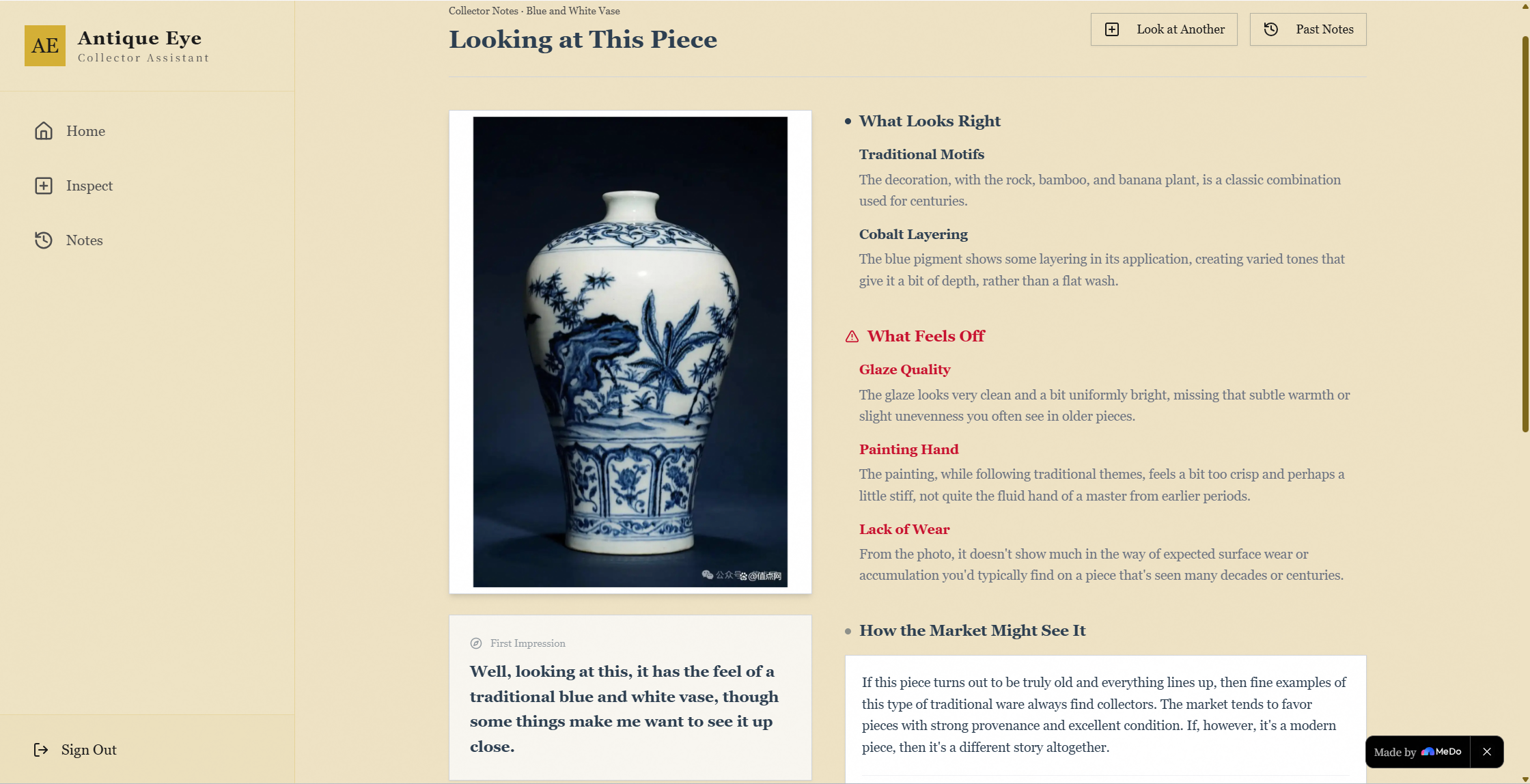
Antique Eye uses AI-assisted image analysis to generate detailed reports about antiques. Given a photo of an object, it can:
Identify stylistic features, decorations, and craftsmanship details. Evaluate glaze, material, and surface characteristics in ceramics. Assess visual signs of age, wear, and authenticity markers. Provide preliminary period attribution and estimated market value ranges for authentic pieces versus reproductions.
These outputs help collectors and enthusiasts quickly understand an object’s historical and aesthetic context, as well as its potential market positioning.
How we built it
The project relies on a combination of AI analysis and human supervision:
Image Input and Analysis: Users provide photos of objects. The AI examines visual features such as shape, pattern, color distribution, glaze, and wear. Content Generation: The AI generates structured reports that include style evaluation, period estimation, craftsmanship observations, and price ranges. Reference Cross-Check: Generated insights are compared with auction records, historical literature, and public datasets to validate findings.
The system leverages Python and image processing tools to annotate and organize visual features, making comparisons across multiple objects easier.
Challenges we ran into
Limited information from images: Photos cannot show internal mechanisms (e.g., watch movements) or tactile qualities (glaze depth, texture). Complexity of authenticity assessment: Different periods may share similar styles; AI can only provide probabilistic assessments. Market value estimation: Prices are influenced by rarity, condition, and collector demand; AI-generated estimates are for reference only.
Accomplishments that we're proud of
Successfully generated detailed stylistic and period reports for a variety of objects, from Ming dynasty ceramics to 20th-century pocket watches. Provided estimated market value ranges for both authentic and reproduction pieces. Demonstrated a practical workflow for combining AI tools with human evaluation in antique research.
What we learned
AI can significantly speed up preliminary analysis of antique images, highlighting key stylistic and material features. Hands-on inspection is indispensable for confirming authenticity and fine details. Market valuation is nuanced and context-dependent; AI estimates serve as guidance but cannot replace expert appraisals.
What's next for Antique Eye
Integrate multi-angle image input and higher-resolution analysis to improve accuracy. Explore AI-assisted comparison with verified museum collections for more robust period attribution. Develop an interactive interface where users can submit photos and receive structured, AI-generated insights while keeping expert verification in the loop.
Built With
- medo


Log in or sign up for Devpost to join the conversation.