Inspiration
A prescription is only the beginning of a care journey. Between consultations, patients have to manage medications, tests, and follow-up appointments, while doctors need to understand whether the plan is being followed and where difficulties arise.
We created Antimony around a simple idea: care should follow through. We wanted patients to have a clearer view of their next steps and doctors to have better visibility into progress, missed tasks, and barriers that need attention.
What it does
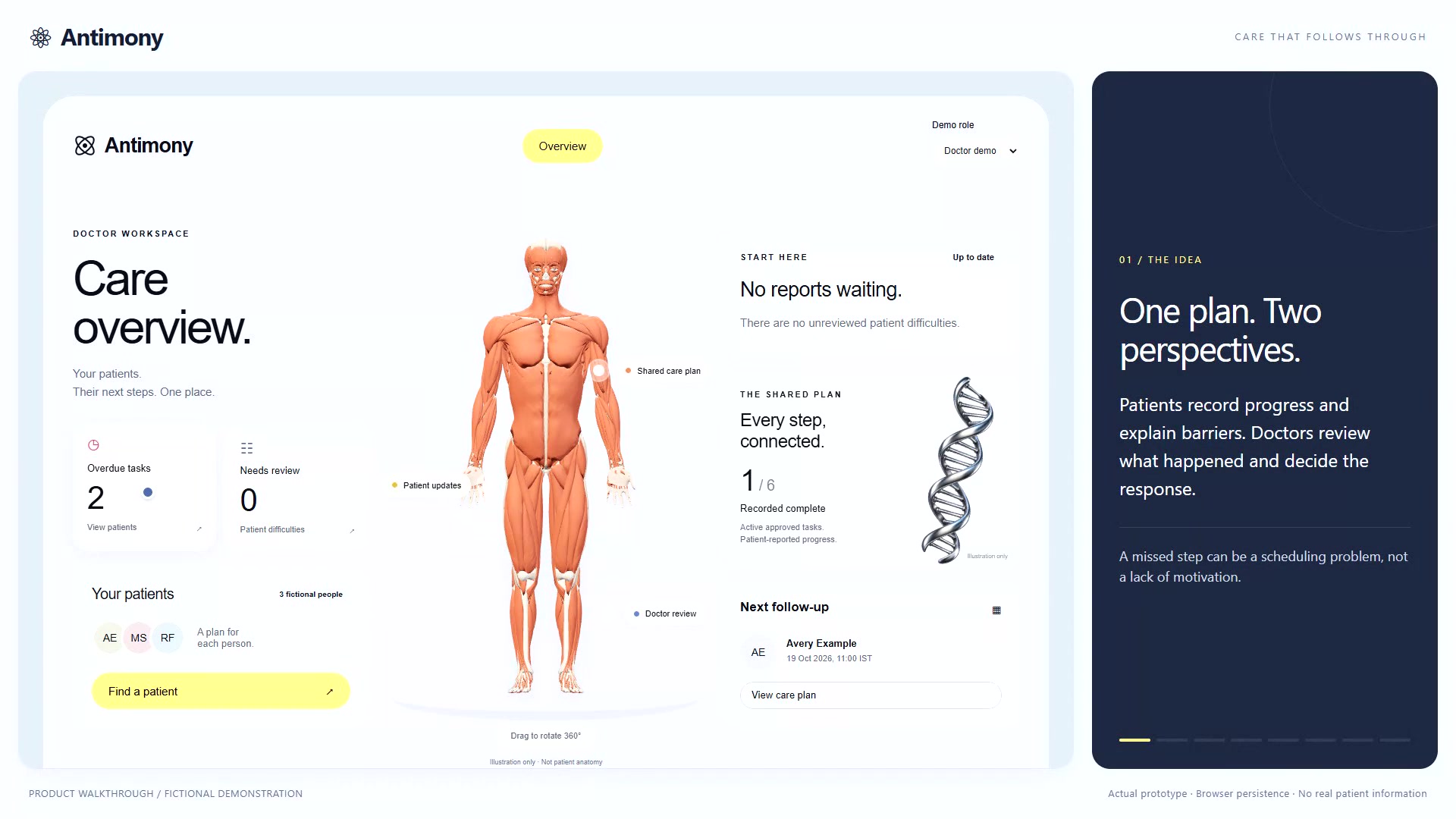
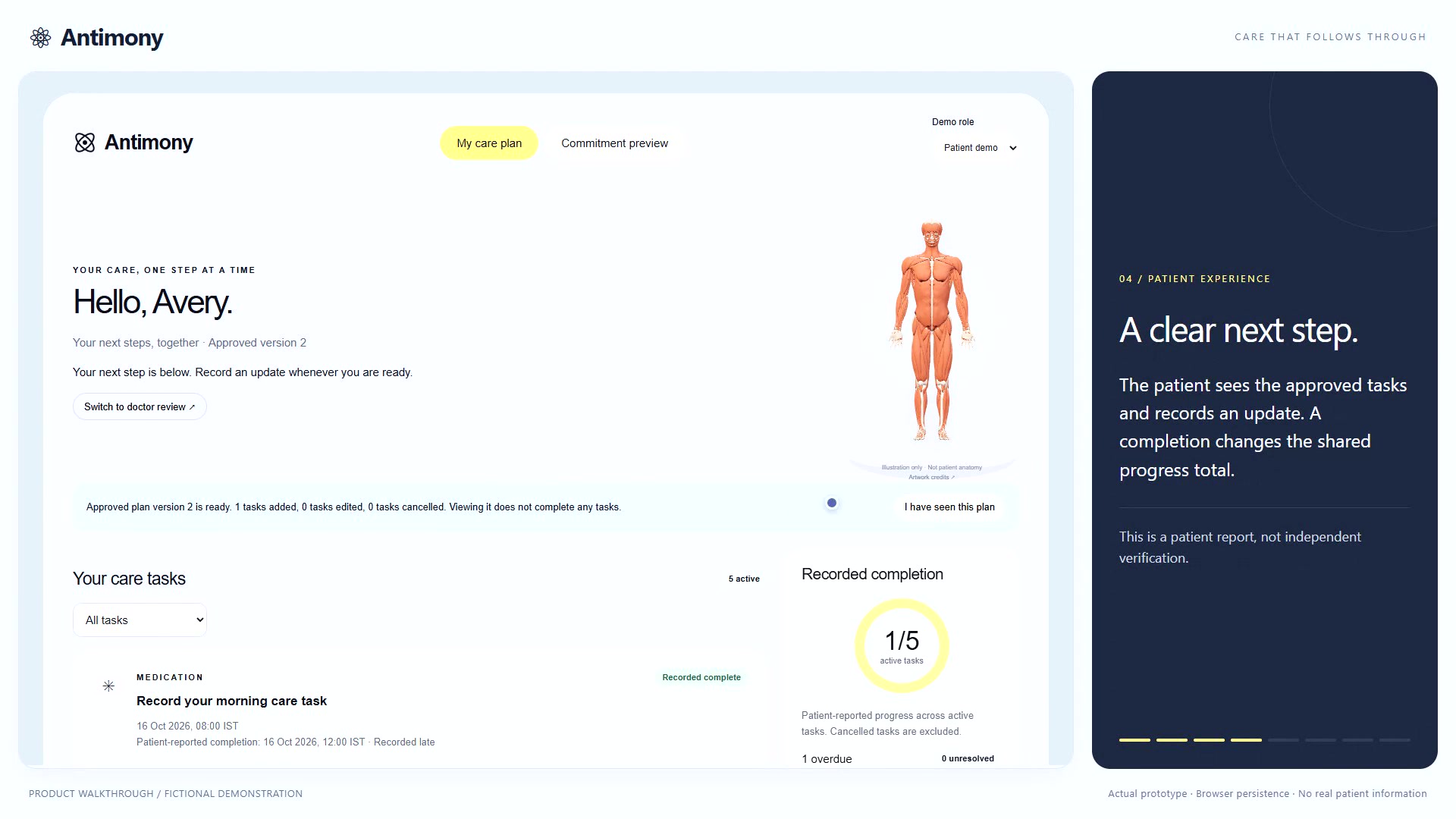
Antimony connects patients and doctors through a shared care plan.
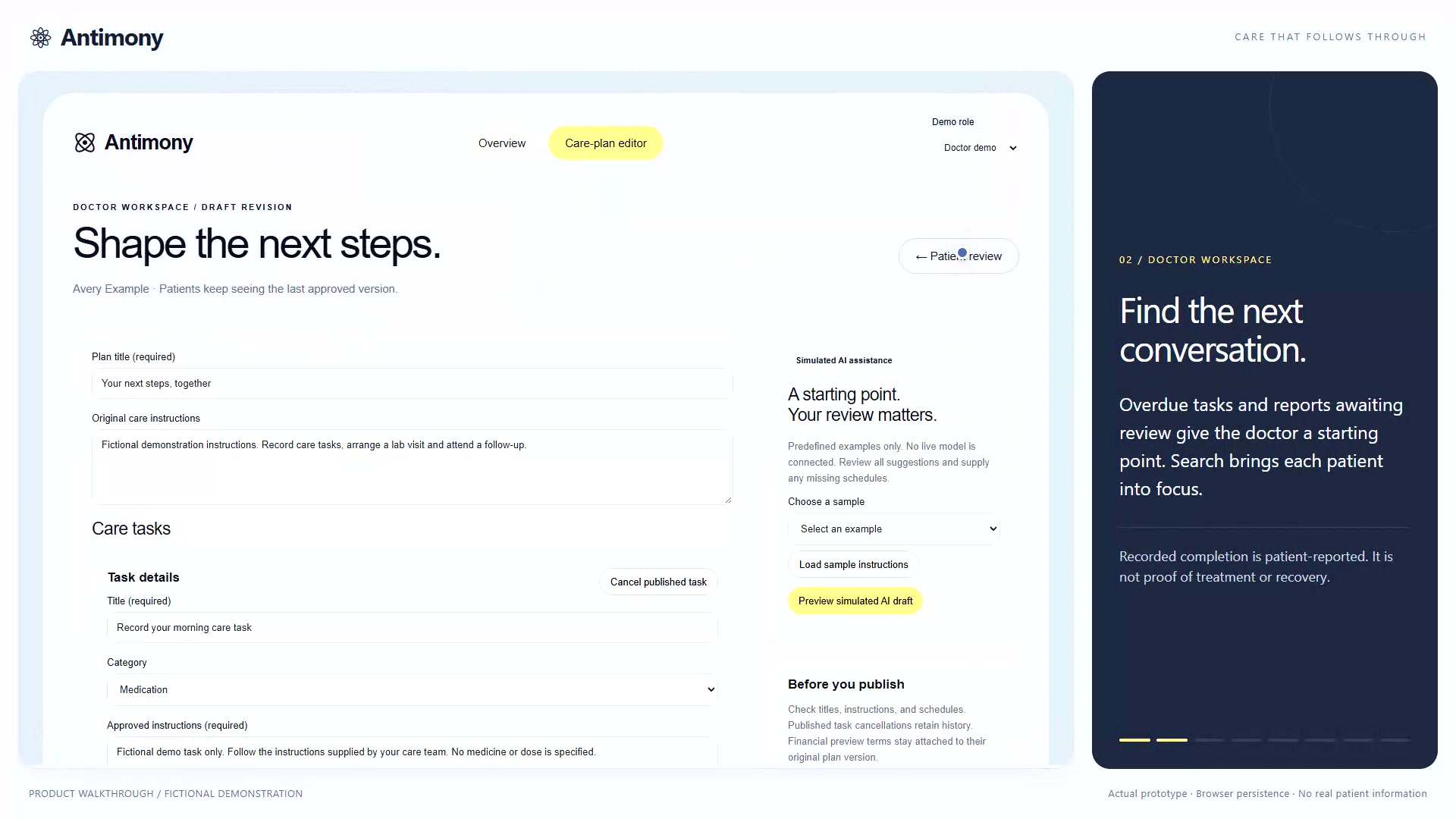
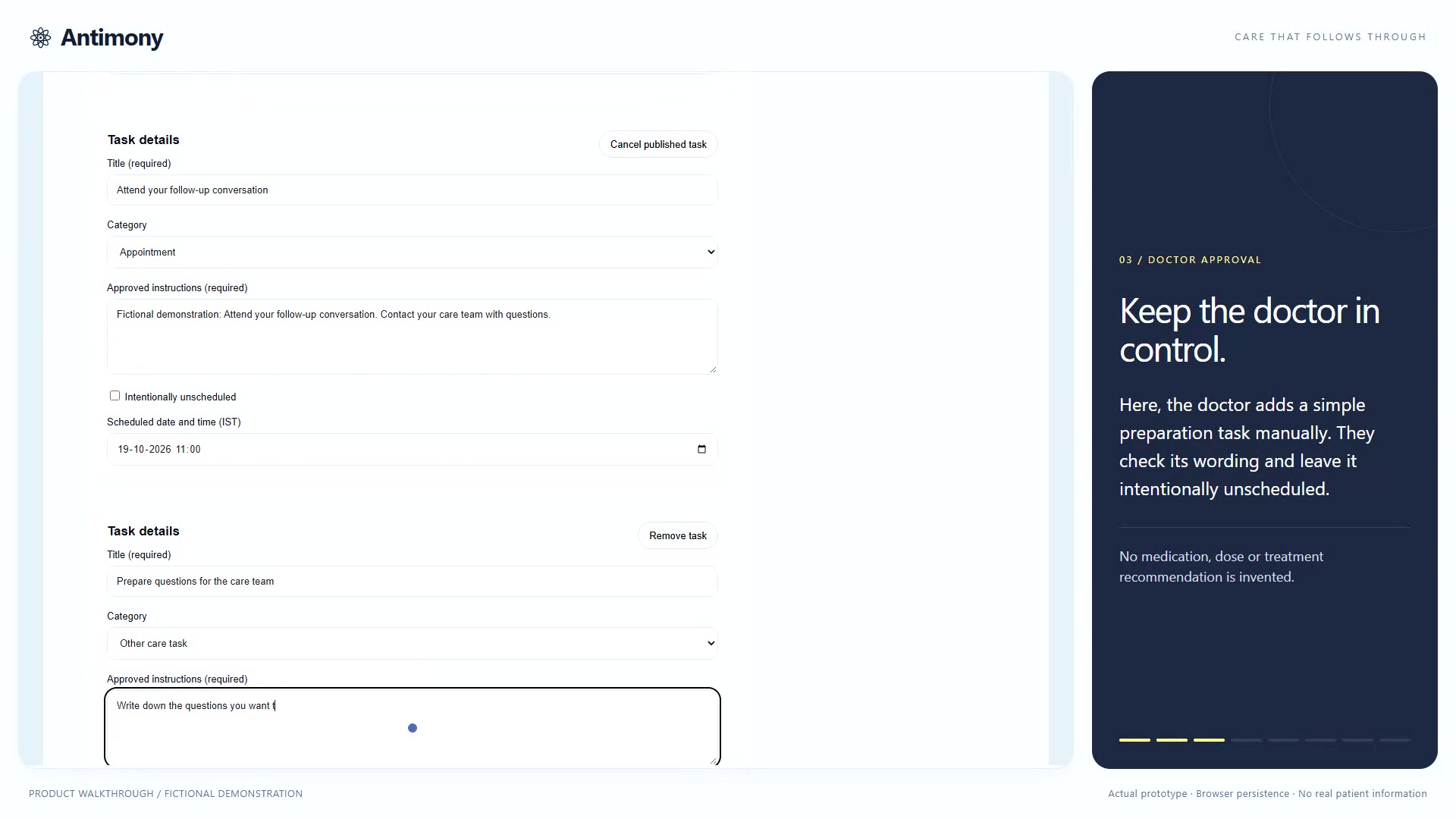
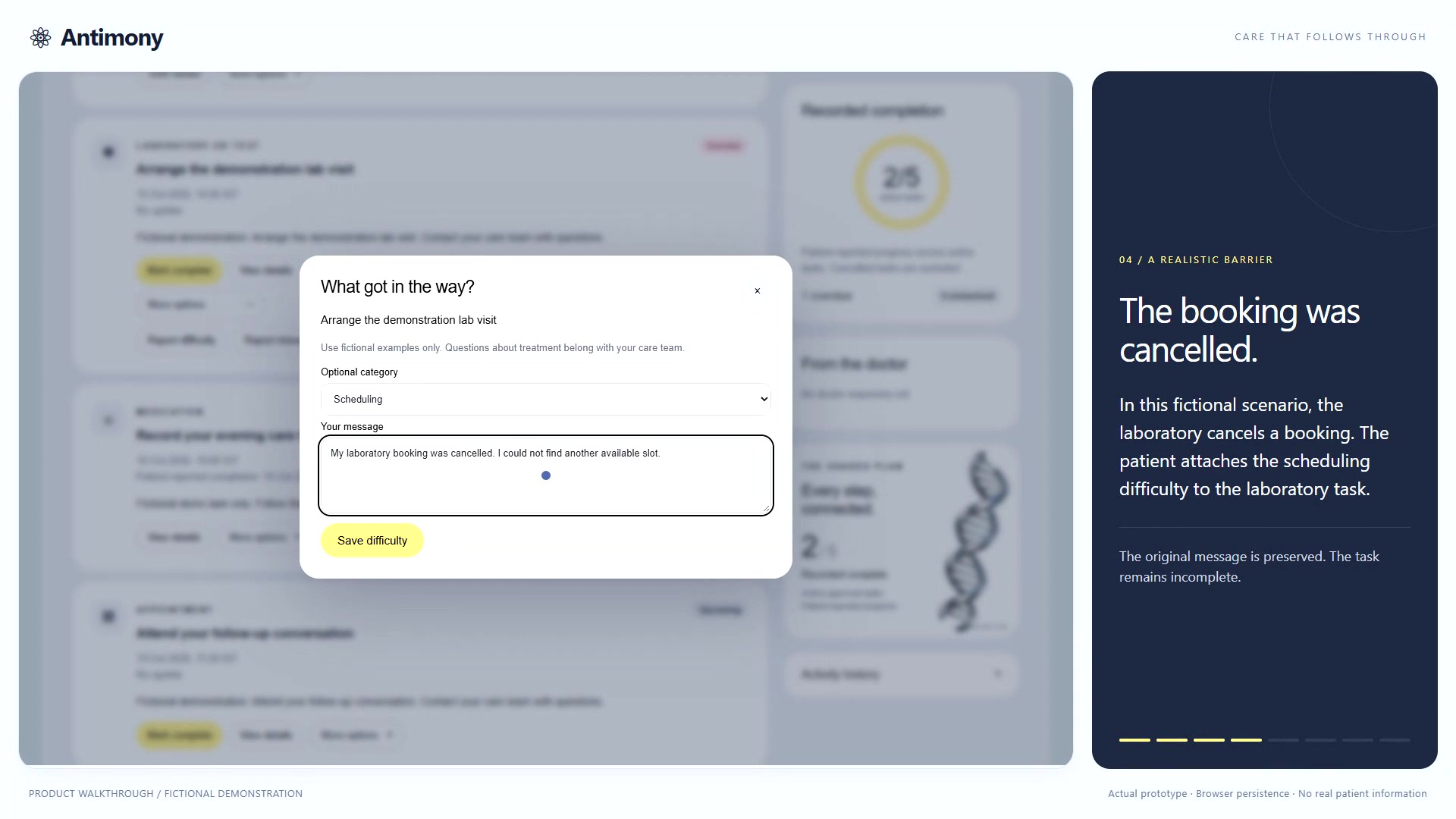
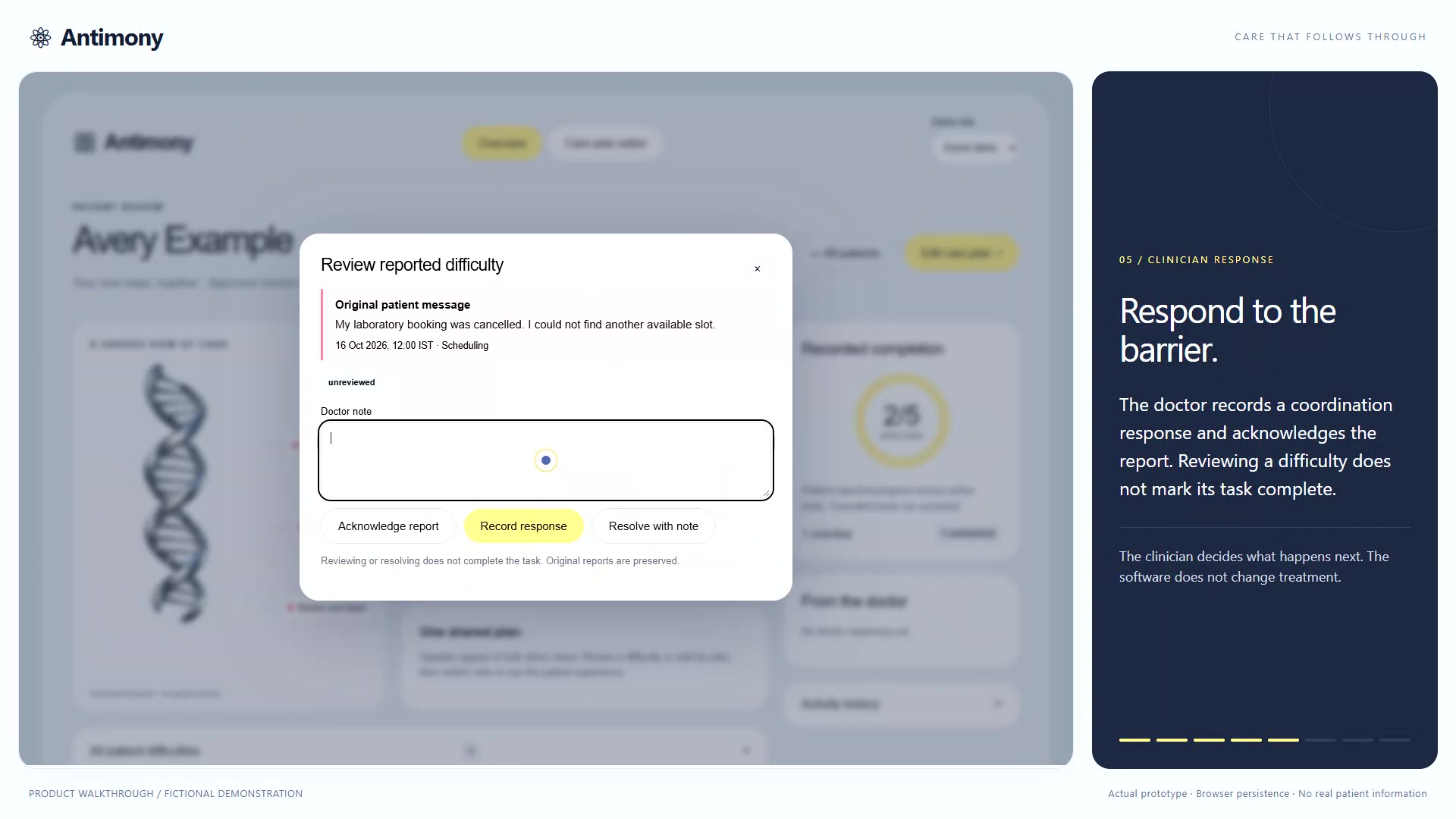
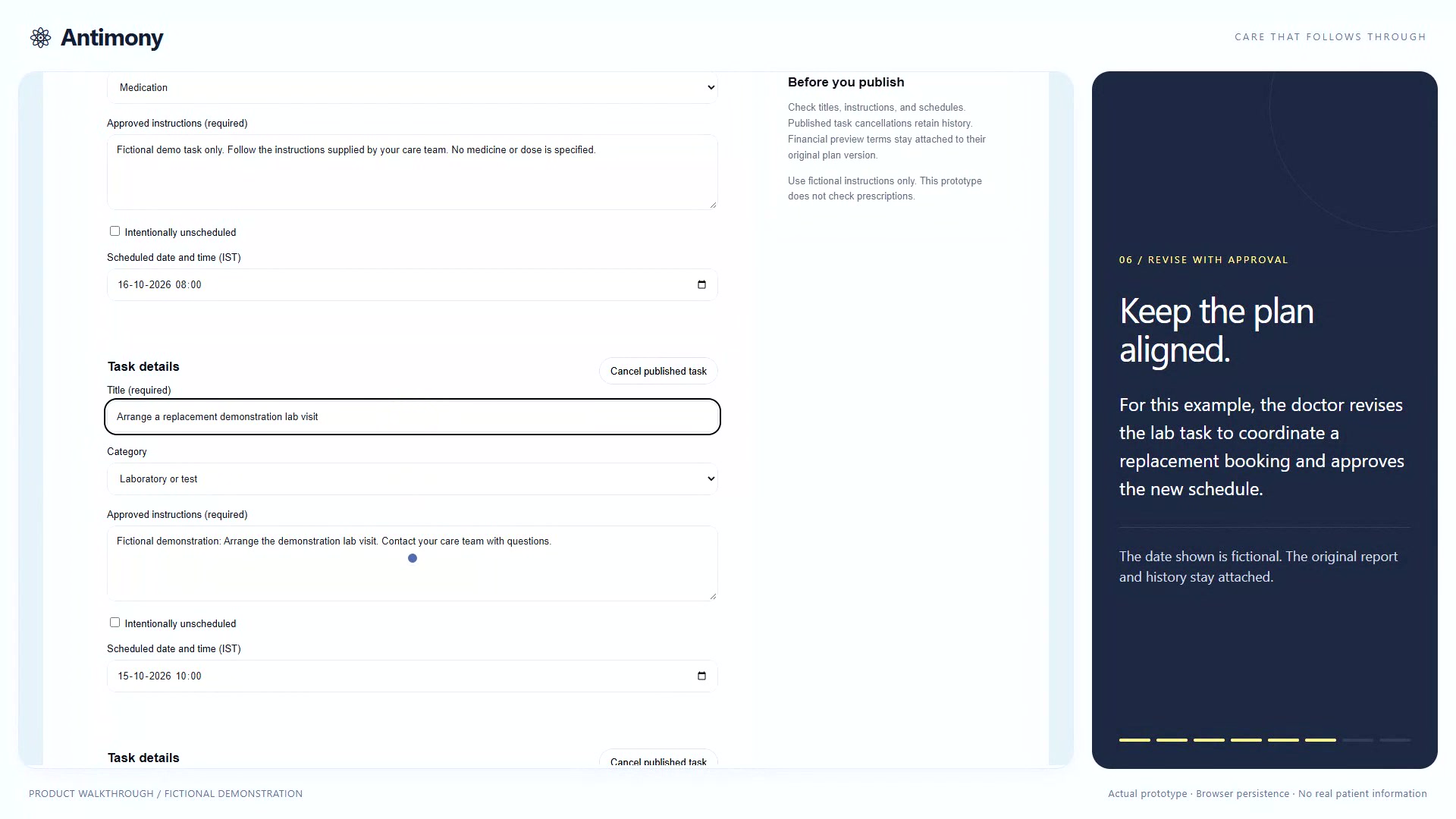
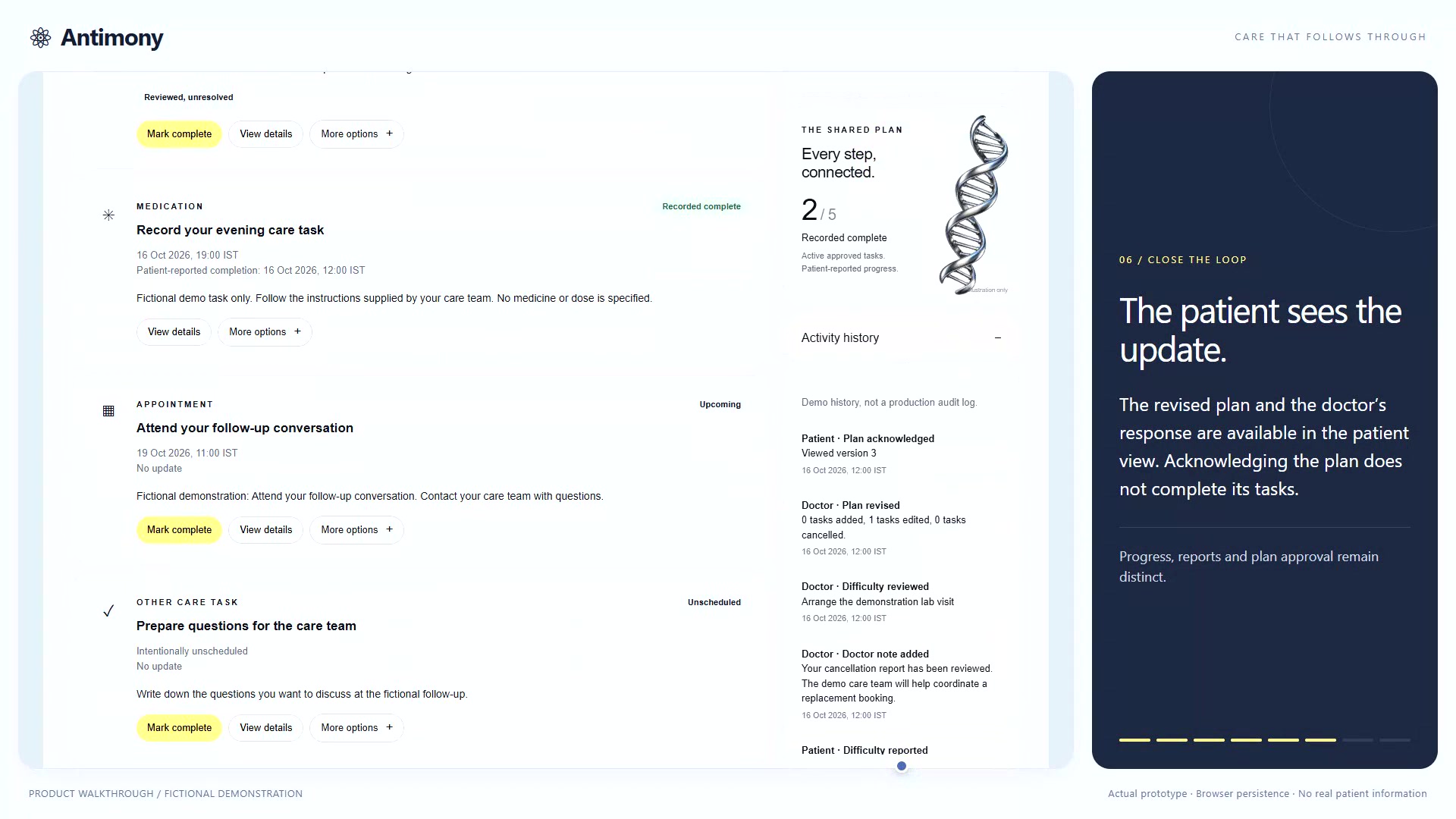
Patients can view their approved tasks, record progress, and report difficulties. Doctors can review care gaps, understand patient updates, and decide when to provide support or revise the plan.
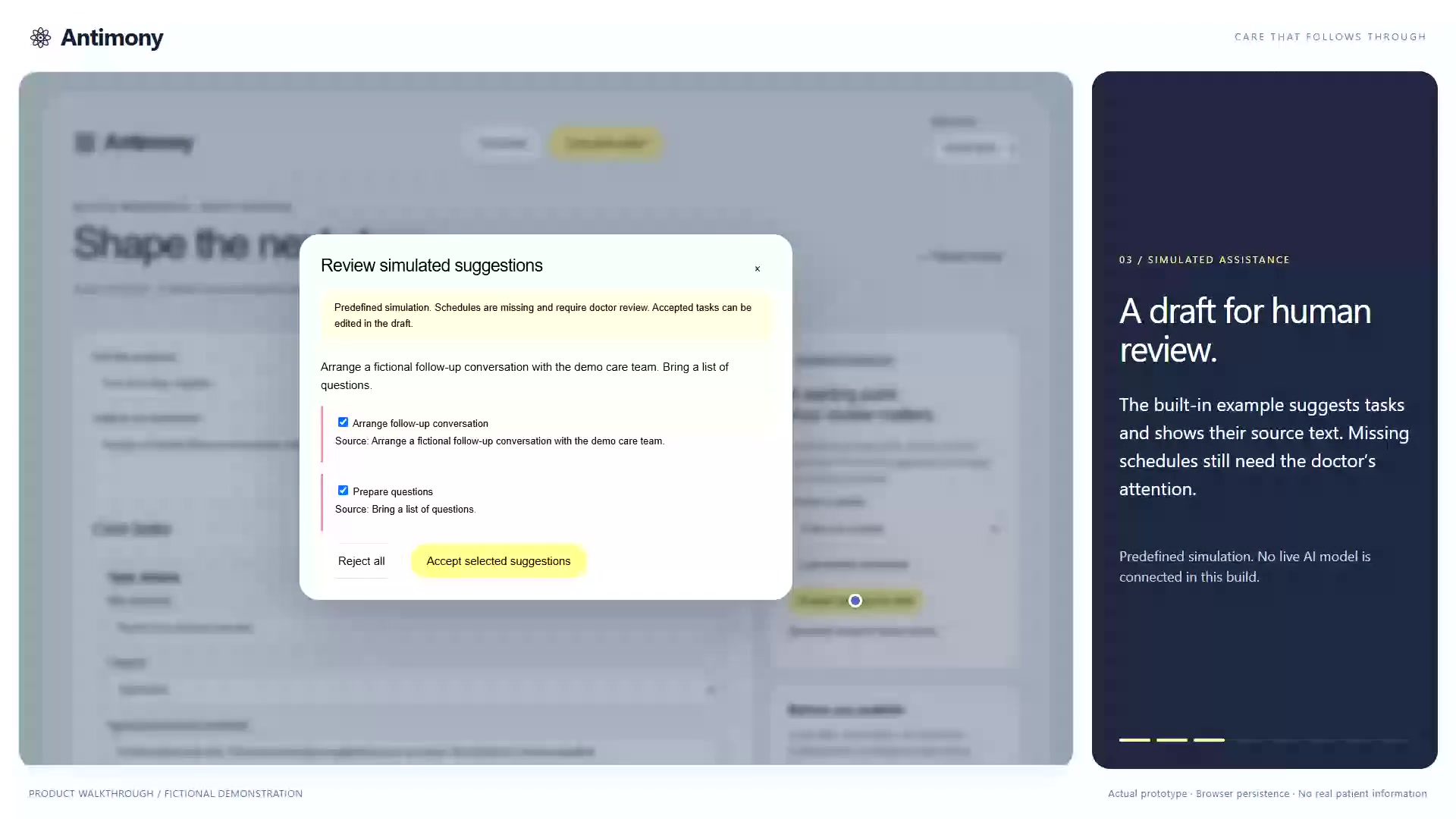
The proposed AI assistance helps turn care instructions into draft tasks and summarise patient messages for doctor review. Clinical decisions remain with the doctor.
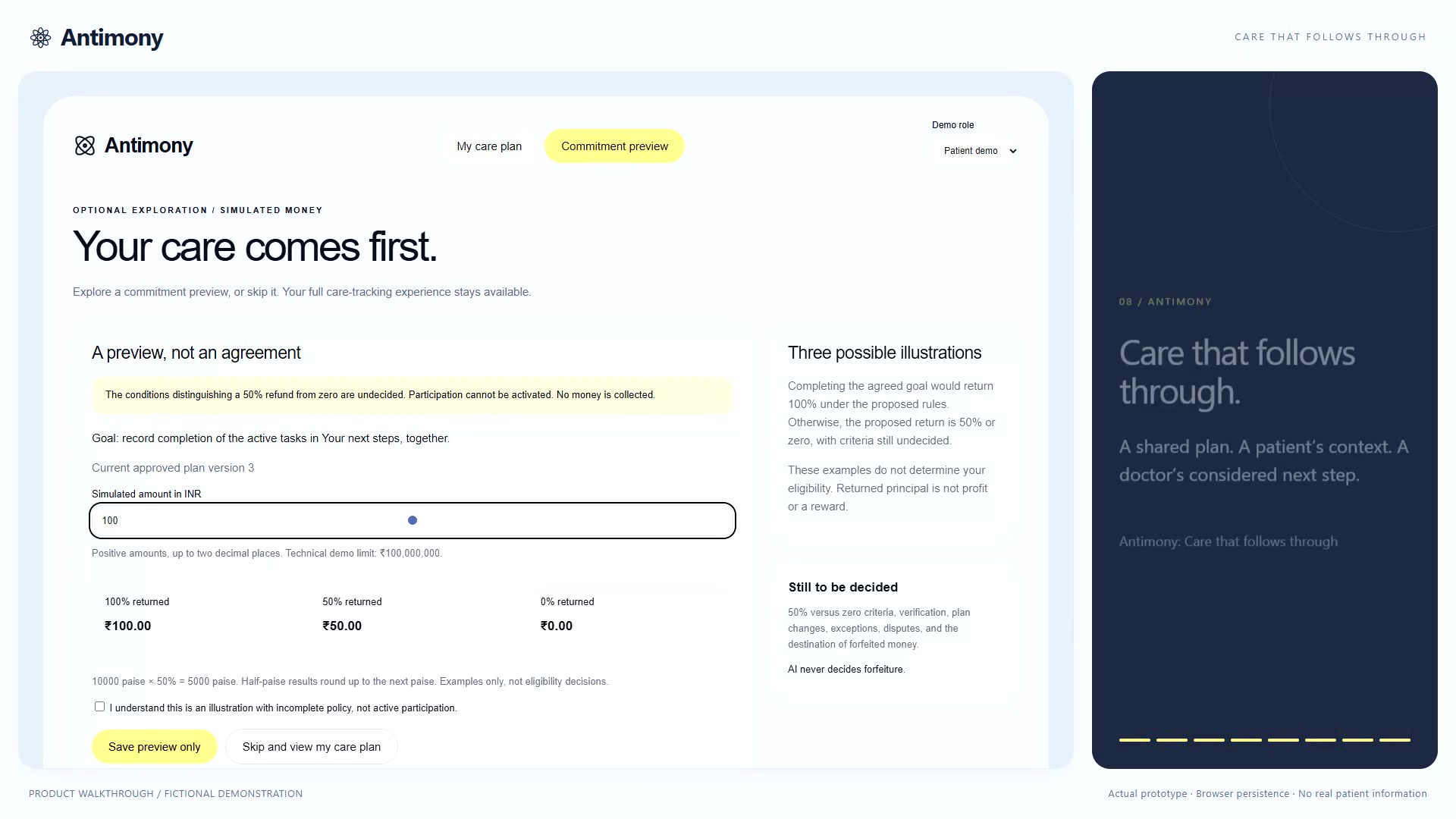
Antimony also includes an optional financial commitment concept. Patients choose whether to participate and how much to commit. Completing the agreed goal returns their full amount. Otherwise, the proposed outcomes are a half refund or no refund, with the eligibility rules still requiring definition.
How we built it
We developed Antimony as a web prototype with separate patient and doctor experiences. We mapped the care journey from creating a plan to recording progress and reviewing missed steps.
We supplied our product requirements and UI direction to Codex, then used it to help implement the website. We reviewed and customized the interface and worked through testing and hosting.
Our development brief covered navigation, care-plan approval, task updates, reported difficulties, and consistent information across both views. We also separated AI assistance from functions that can use fixed rules, such as calculating whether a task is overdue.
Challenges we ran into
One challenge was defining what a care gap actually means. A task with no update is different from a task a patient reports missing. A cancelled appointment also needs a different response from a forgotten task.
Another challenge was keeping the doctor involved without making the workflow unnecessarily complicated. AI-generated tasks need review, and patient summaries must preserve the meaning of the original message.
The optional financial commitment introduced further questions about verification, changed treatment plans, unavoidable difficulties, and fair refunds. Those questions remain important work before any real-money use.
Accomplishments that we're proud of
We are proud of turning Antimony from an initial idea into a hosted web prototype.
We developed the concept around both sides of care coordination: patients following their plans and doctors reviewing progress and gaps. We also kept financial participation optional.
Researching existing products helped us describe Antimony more honestly. Rather than claiming that care tracking or financial commitments are entirely new, we focused on the workflow we want to improve and the evidence we still need.
What we learned
We learned that a missed task does not explain why it was missed. Useful care coordination needs to capture difficulties and help the care team respond.
We also learned that AI needs a specific purpose. Organising free text may benefit from AI, while schedules and progress calculations can use straightforward rules.
Most importantly, building a working prototype is different from proving that it improves healthcare. Patient feedback, clinician evaluation, and measured results are necessary before making claims about effectiveness.
What's next for Antimony
Our next step is to evaluate the workflow with patients and clinicians using fictional cases. We want to understand whether users can follow the plan, report difficulties, and review care gaps without unnecessary effort.
We will document the implemented AI behaviour, measure errors and correction effort, and compare the experience with simpler alternatives.
Before using real patient information, we need appropriate privacy protections, access controls, and clear responsibilities for reviewing updates. The financial feature also needs complete rules for verification, exceptions, and disputes.
Our goal is to develop Antimony into a useful tool for a clearly defined care setting, guided by evidence and user feedback.

Log in or sign up for Devpost to join the conversation.