-
-
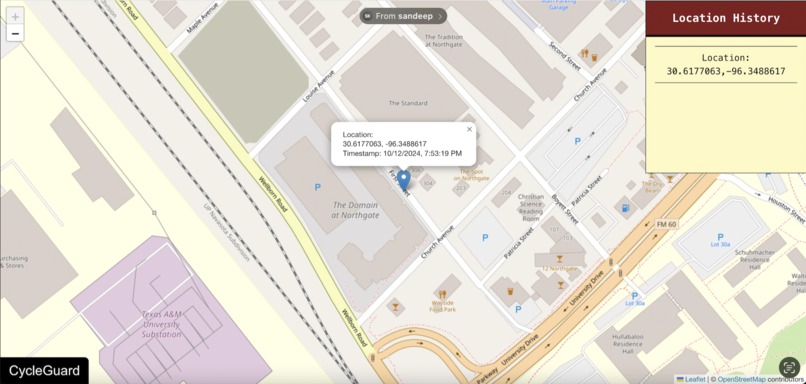
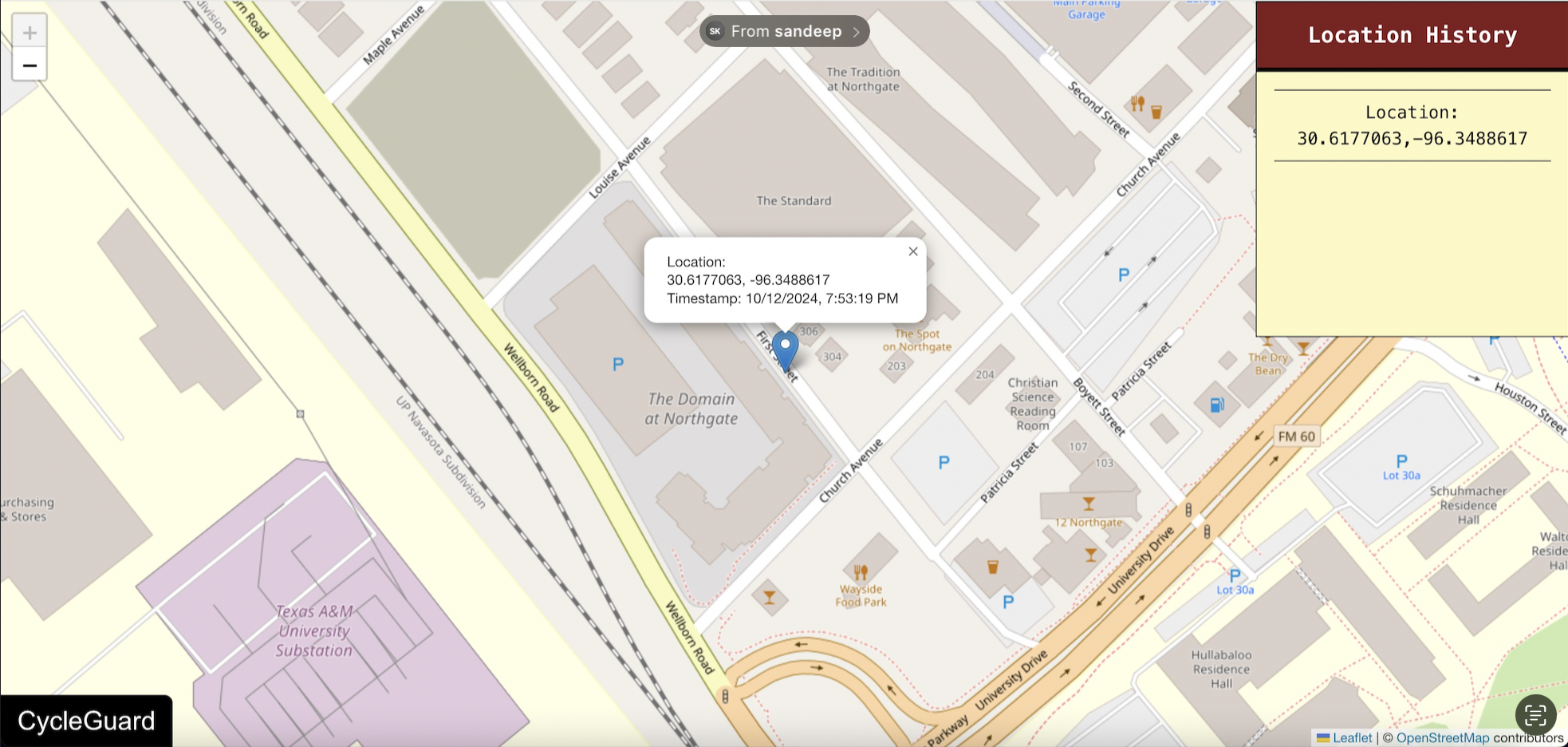
Screenshot of the CycleGuard webapp with a pin at the coordinates from the notification
-
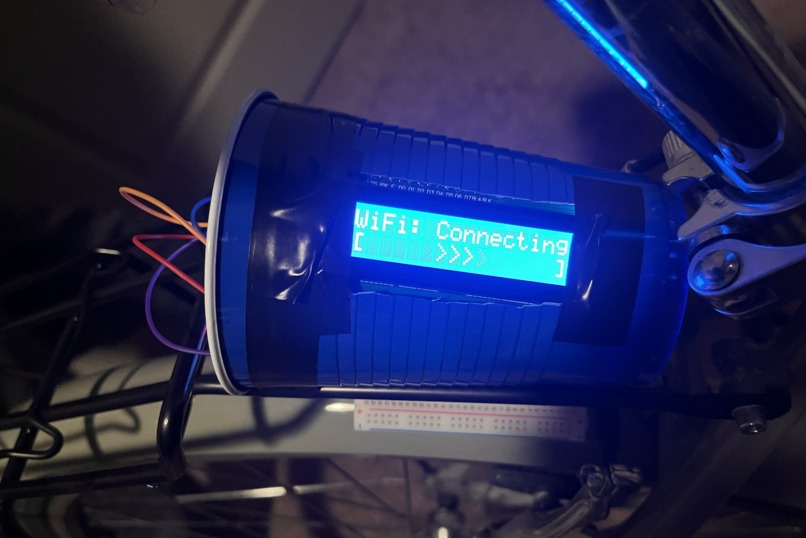
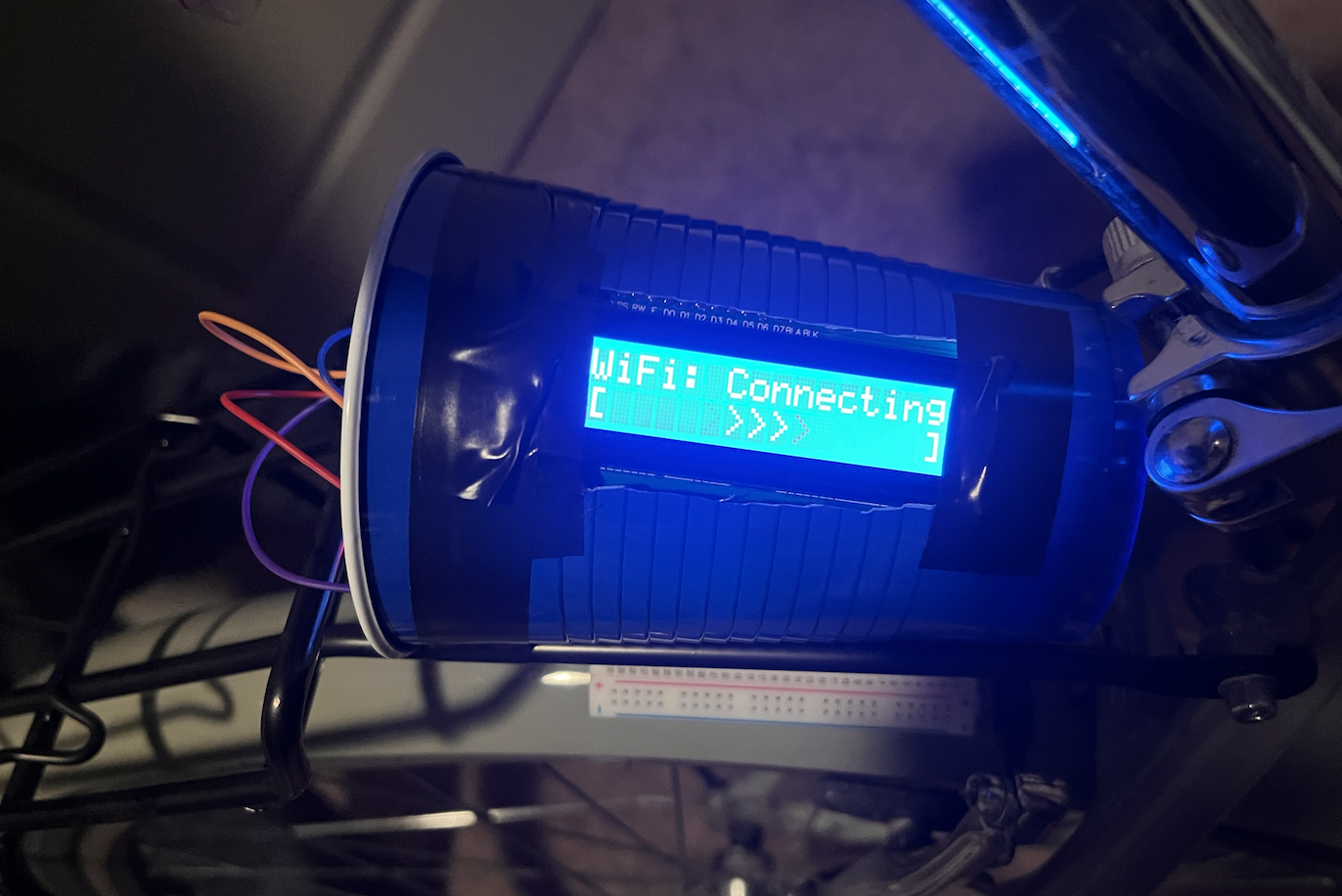
CycleGuard system on bike booting up, wifi connecting
-
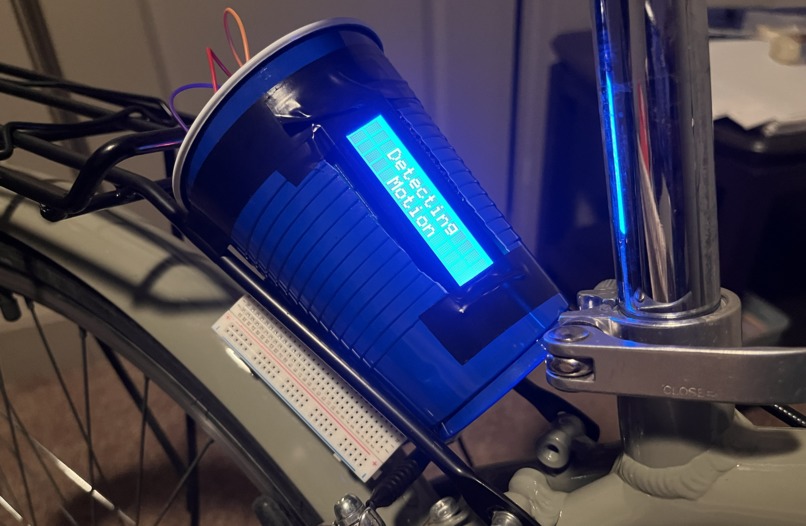
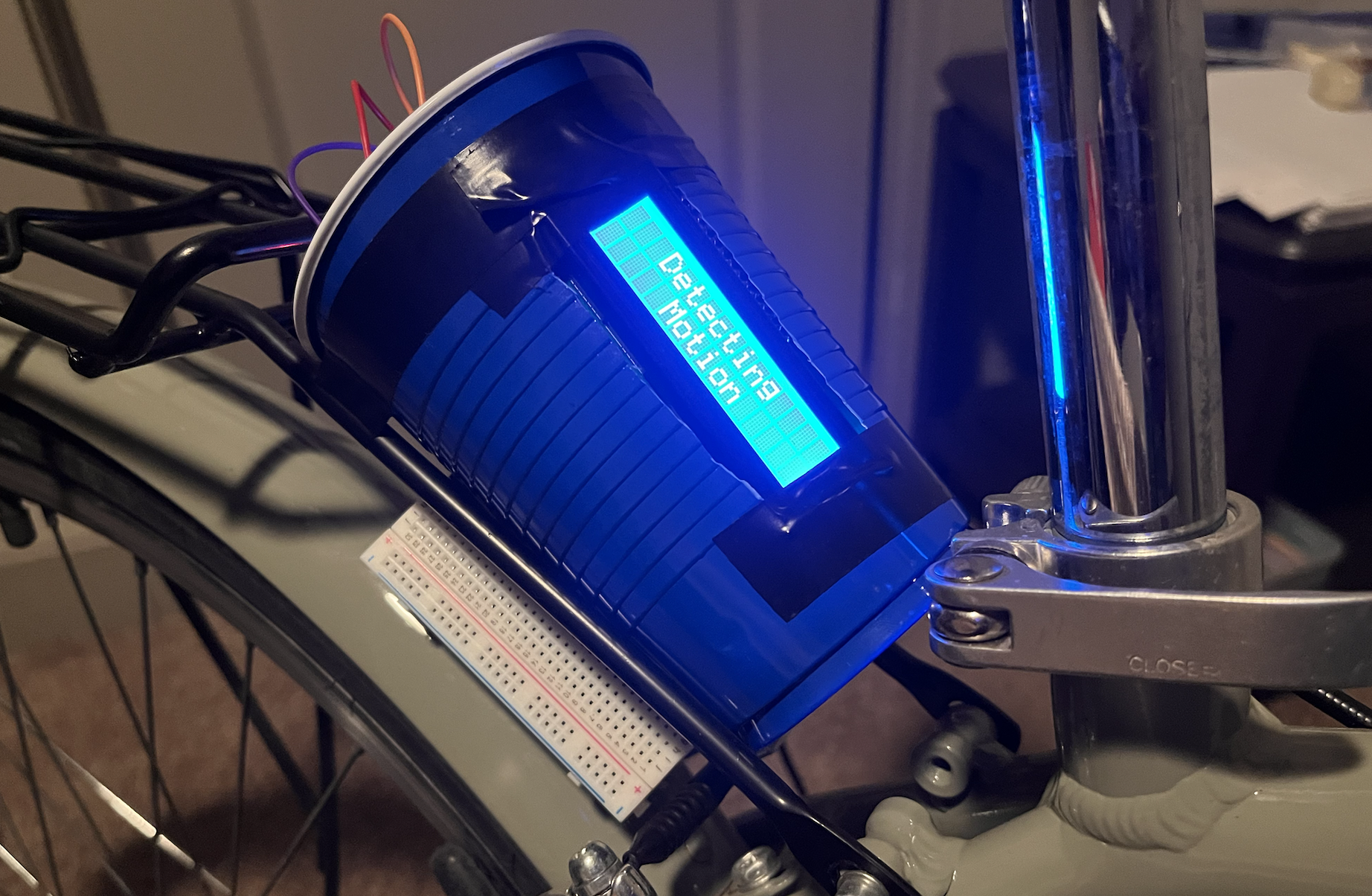
CycleGuard anti theft system activated, ready to detect motion in any direction
-
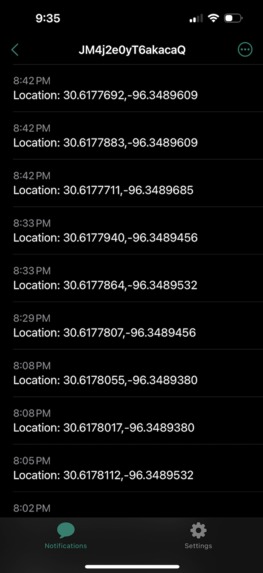
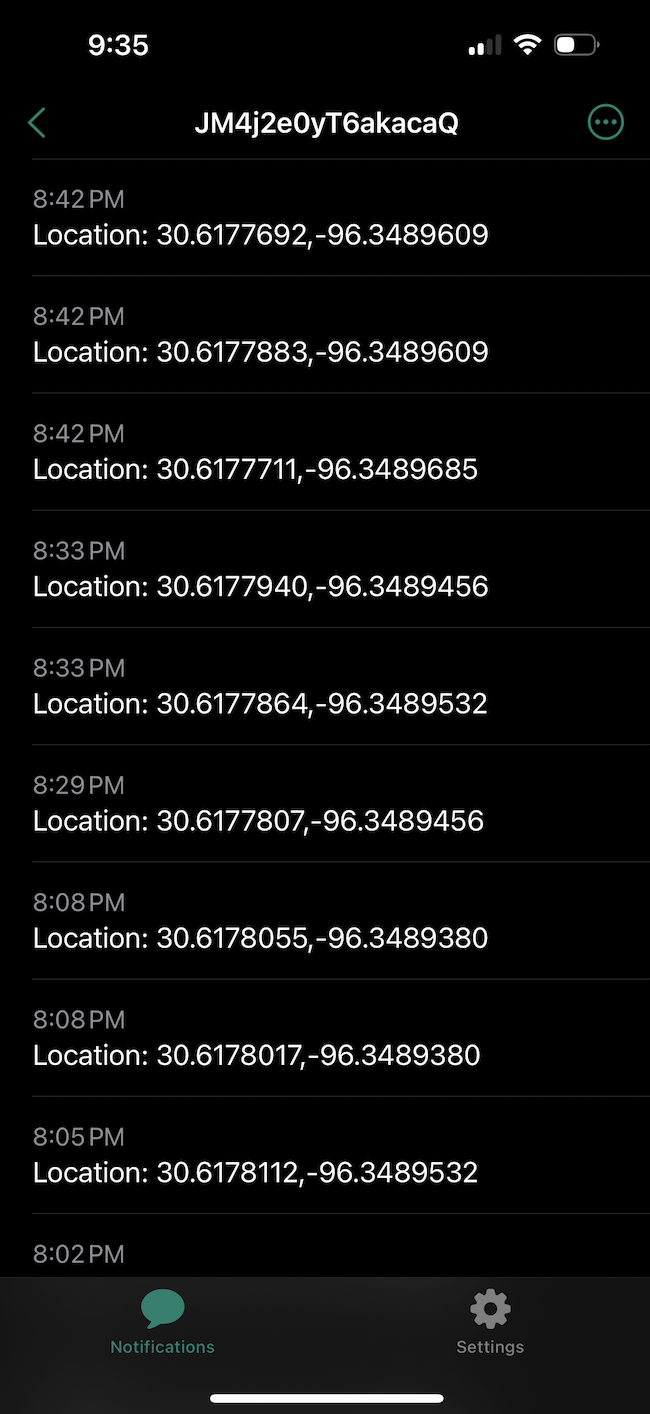
Screenshot of notifications that are received when motion is detected
Inspiration
Ever since we arrived at Texas A&M, one email subject has become all too familiar: Crime Alert - Theft of Motor Vehicle. From our first day to now, we've witnessed a steady stream of reports about stolen electric scooters, bicycles, and other small vehicles. We never imagined it would happen to us—until it did. One of our team members had their bike stolen, leaving them distraught and without a reliable way to locate it due to a lack of security cameras in the area. Despite the diligent efforts of the University Police Department, thefts persist. Frustrated by the ongoing alerts and motivated to spare others from this experience, we knew we had to take action. That’s why we created CycleGuard.
What it does
CycleGuard is an advanced anti-theft system designed specifically for small vehicles like bicycles and electric scooters. It significantly reduces the chances of theft by providing real-time tracking notifications. Once activated, the system utilizes an accelerometer to sense any sudden movement of the bike or scooter. When motion is detected, users receive an immediate notification on their device, including the precise latitude and longitude of their vehicle and a map pin marking its location. This information is updated every two seconds, ensuring users can track their vehicle in real-time.
How we built it
The physical design of CycleGuard is powered by an ESP32 microcontroller, which provides robust Wi-Fi capabilities and serves as the system's brain, coordinating all the connected sensors and modules. An LCD screen acts as a user-friendly interface, displaying system processes to enhance the user experience. A button allows users to easily toggle the anti-theft system on or off, with a red LED indicator showing the system's status, lit when active and off when deactivated. The microcontroller, modules, and sensors were all programmed using the Arduino IDE. To detect potential theft, we utilize an accelerometer that monitors acceleration across all three axes, allowing us to identify any sudden movements of the bike. When such movement is detected, a notification is sent to a web server, which in turn alerts the user’s mobile device. This web server also connects to a Next.js web app that provides real-time tracking of the bike’s location, displaying its position on a map with a pin. This seamless integration of hardware and software ensures that users have complete visibility and control over their vehicles' security.
Challenges we ran into
One of the significant challenges we encountered while developing the CycleGuard system was dealing with loose connections, particularly with the accelerometer. The intermittent disconnection caused erratic behavior in our program, leading to inaccurate motion detection and unreliable notifications. To address this issue, we implemented a makeshift solution by using electrical tape to secure the accelerometer in place, ensuring it maintained a stable connection throughout testing and operation. Another hurdle we faced was accurately displaying status messages on the LCD screen in relation to the system’s current operations. We needed to ensure that the information presented was not only clear and concise but also dynamically updated based on user interactions and system events. This required us to carefully design the messaging protocol and integrate it seamlessly with the microcontroller’s processing logic. Fine-tuning this feature involved multiple iterations and testing to ensure that users could easily understand the system's status at a glance, ultimately enhancing the overall user experience.
Accomplishments that we're proud of
We are incredibly proud of developing CycleGuard, an innovative anti-theft system designed for bicycles and electric scooters, addressing the pressing issue of vehicle theft on campus. One of our key milestones was creating a fully functional web app that provides real-time tracking, allowing users to monitor their vehicles effortlessly and see their exact location on a map. Additionally, we implemented a robust notification system that alerts users immediately when tampering is detected, empowering them to respond quickly. The project has offered us invaluable hands-on learning experiences in hardware and software integration, enhancing our technical skills. Most importantly, we are excited about the positive impact CycleGuard can have on our campus community, helping to create a safer environment for students who rely on small vehicles for transportation.
What we learned
In developing CycleGuard, we learned to harness the Wi-Fi capabilities of the ESP32 microcontroller to send and receive data efficiently. This involved configuring the ESP32 for reliable connectivity, enabling us to transmit real-time notifications directly to users’ mobile devices whenever tampering was detected. We also connected this data to our web app, allowing users to track their bikes or scooters on a live map. This integration required us to develop a robust communication protocol, ensuring that updates were delivered promptly and accurately. Additionally, we gained hands-on experience working with a variety of sensors, such as the accelerometer, which was essential for detecting motion. By integrating these sensors with the microcontroller, we learned how to gather and process movement data, triggering notifications based on specific conditions. Overall, this project significantly enhanced our understanding of how to build interconnected systems using microcontrollers and sensors, while also deepening our technical skills in data transmission and web app integration.
What's next for CycleGuard
As we move forward with CycleGuard, we plan to explore enhancements based on user feedback, such as adding geofencing capabilities to alert users if their bike moves beyond a designated area and integrating compatibility with other smart devices for a more comprehensive security ecosystem. Additionally, we aim to develop a dedicated mobile app to facilitate push notifications and streamline access to tracking features, enhancing the overall user experience. Finally, we are focused on planning for scalability by exploring manufacturing options for larger production runs, ensuring high-quality materials and rigorous quality control measures to meet growing demand and broaden our impact in preventing vehicle theft.
Built With
- arduino
- esp32
- iot
- leaflet.js
- next.js
- openstreetview
- react
- websockets

Log in or sign up for Devpost to join the conversation.