-
-
-
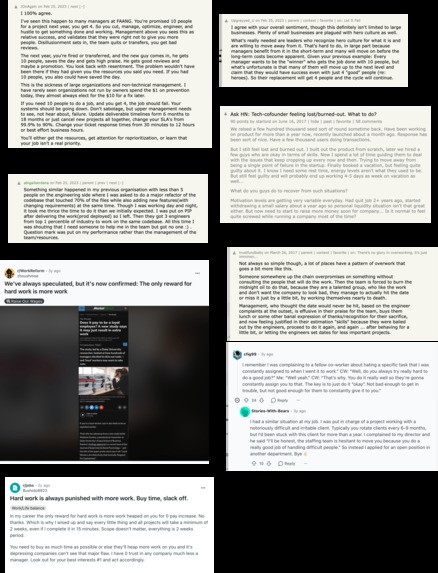
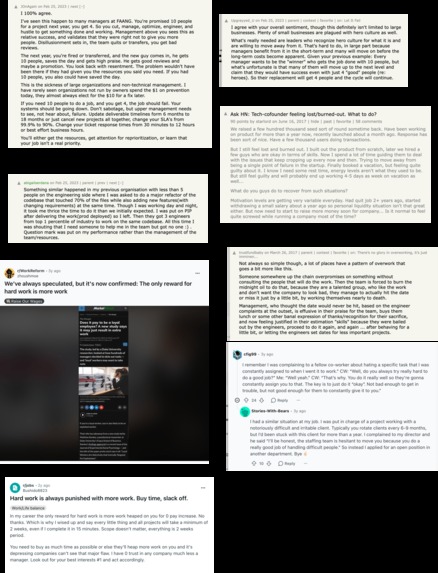
Overworked community notes
Inspiration
Anti Hero began as a lightweight implementation of a GTD board. I needed somewhere to put everything occupying my attention: work, ideas, worries, household needs, and unfinished obligations. But ordinary task management created a second problem. The more I captured, the more the list felt like an overwhelming record of everything I missed.
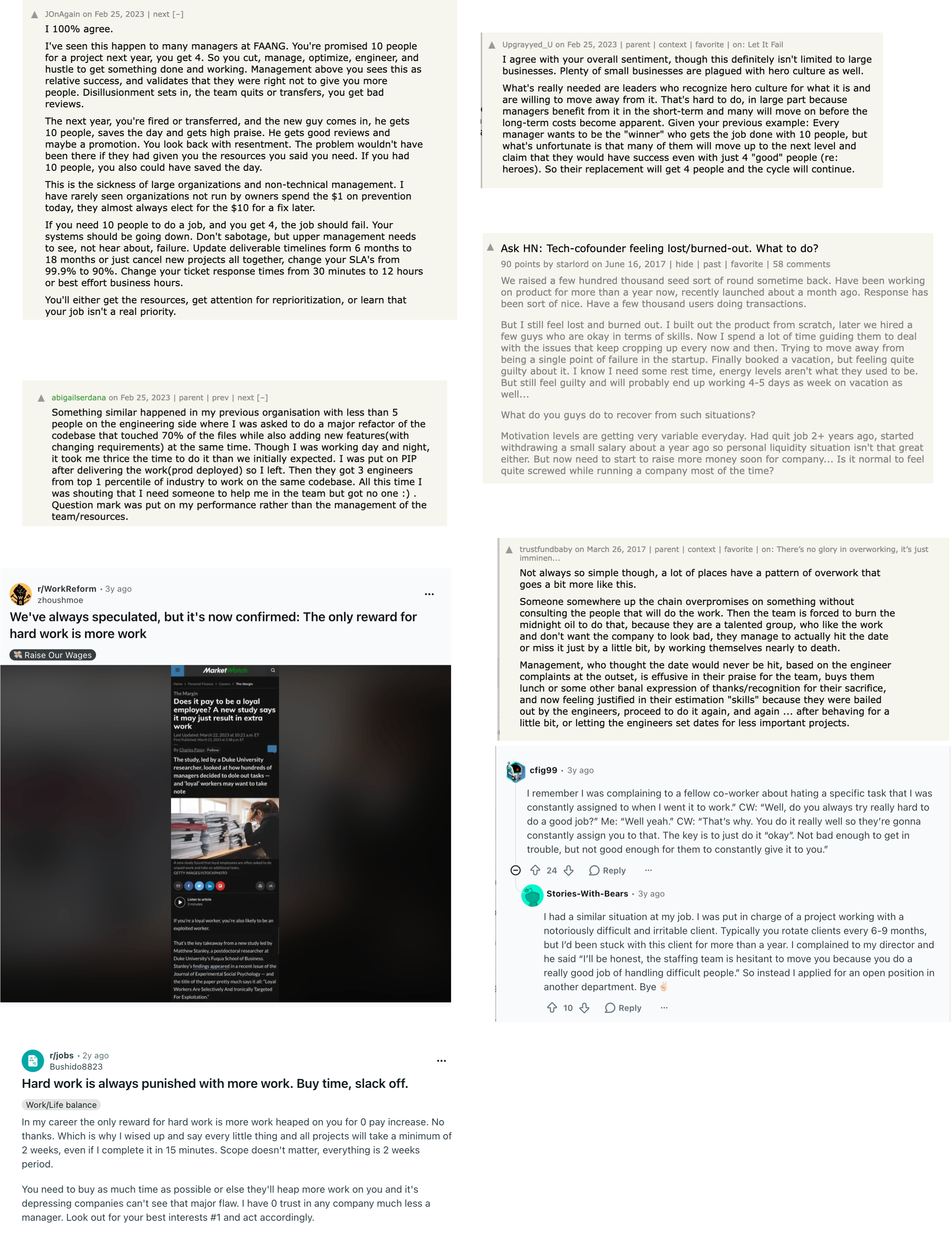
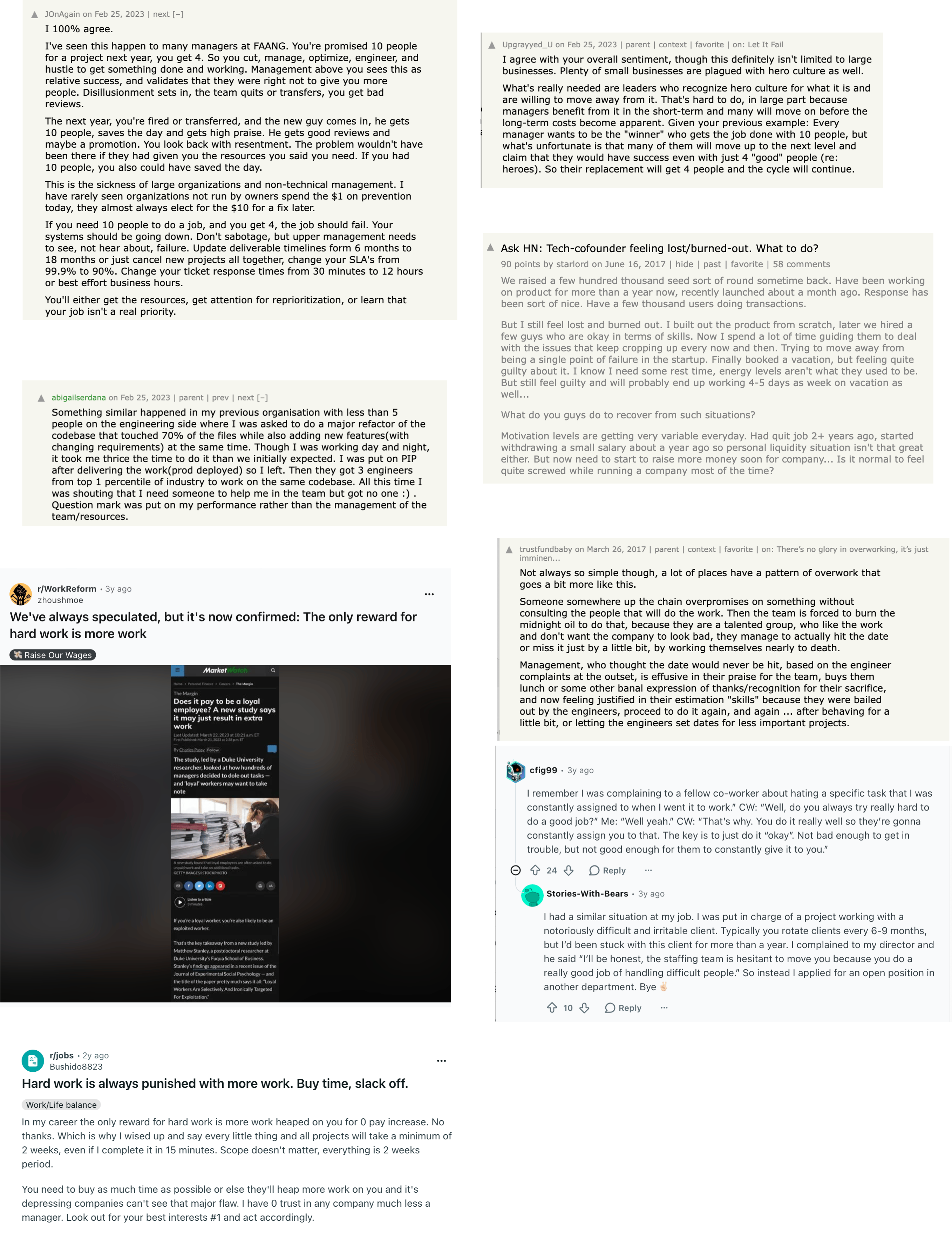
At the same time, I noticed a broader pattern at work. Capable people are often rewarded for handling difficult ambiguity with more emergencies, and more responsibility. Their competence becomes human infrastructure. AI is amplifying this problem by giving leadership free generation of plans and assignments, even though human attention remains finite.
This is why my central idea is: I need one place to carry everything without adding guilt about whether I’m doing busywork, glue work, essential work, or truly innovative work.
Anti Hero is not anti-ambition. It is anti-sacrifice as infrastructure.
What it does
It's a combination of 2 complementary tools. A canvas that creates space, and operational clarity to protect space.
The first tool is a local-first canvas is where I can capture my thoughts free of judgement. Cards can be dragged into categories like Next, Waiting, Projects, and Someday.
I'm not aiming for perfect classification. It's a place where I can see everything I want to achieve, and the physical ritual of choosing what is essential is incredibly freeing.
The app supports
- fast capture and copy-paste
- drag-and-drop sorting
- completion backup
- fresh dated canvas at the start of each day
- browser-local persistence
- versioned JSON backup and restore
- Review view where important projects can be merged and connected to completed actions.
The second tool is a set of prompts for operational clarity. Before accepting a demand as a commitment, it helps me ask:
- What is the actual problem?
- What does done mean?
- Who owns the outcome?
- What authority do I have?
- Is this essential, and what would it displace?
- What bounded help can I provide?
- Should this be closed, assigned, or deferred?
How we built it
The project is intentionally small: one HTML file containing its interface, styles, and JavaScript. It runs directly in the browser without a server, framework, build step, account, or external dependencies.
Application state is saved to localStorage after each action. The data model supports multiple dated canvases, completed-item history, persistent projects, migrations, and project assignments. Backups are portable JSON files, which can be restored.
GPT-5.6 helped analyze product-research notes, challenge conventional productivity assumptions, compare possible feature directions, and extract the Operational Clarity protocol from recurring real-world patterns.
Codex helped implement, test, refine, and document the working application. It handled persistence, migrations, backups, fresh canvases, the Review workflow, project correction, and duplicate handling.
It was my partner as I dogfooded my way through my day, to set the product direction, gave feedback on privacy decisions, feature boundaries, and balanced real-world commitments.
Challenges we ran into
Ironically, the hardest challenge was deciding what not to build.
I didn't want just another productivity board. I didn't want to build out complex prioritization, detailed activity attribution, and overdue states. It was very easy to recreate the vigilance and guilt the product was meant to reduce.
Handling persistence was an important design challenge. I needed a place that I could trust to safely store my state, but I absolutely needed a feeling of freshness and clear mind. I had to find a way to make moving, completing, archiving, restoring, and carrying work forwards without making it feel like a generic task completion.
Accomplishments that we're proud of
Over the course of the week, I genuinely changed how I respond to overwhelm. I started as the default problem absorber. I started the day with critical work, and still as new tasks & requests came in, I would accidentally commit to even more.
By building & using Anti-Hero, I went through a transformation. I learned to capture demands without automatically accepting it. I felt agency to push back on busywork, and clarify what the actual problem was. I started making it a point to understand who owned the outcome, whether I could actually solve it, and the trade-offs of accepting it. I learned to offer bounded contributions.
The canvas helped me overcome my fear of forgetting, recurring dread, and ability to feel like I could choose a direction instead of reacting to whatever was visible. I still took note of ambitious ideas without immediately going all-in on it to the detriment of my planned work.
The application is an embodiment of
- Capturing everything without implying they must do it all to feel happy
- "Not now" is an important decision
- Preserve history without a feeling of surveillance
- Supports the feeling of wins, instead of punishing mistakes or incomplete
- Connects to my long-term dreams without judgement of my worth
It gave me the clarity I needed to feel like I can actually find clarity and build boundaries, and replace myself as the human infrastructure with actual systems.
What we learned
Separating capture of tasks from commitment and real-time reduces mental weight.
Every ambitious thought deserves a safe place, regardless of execution. You don't need a productivity score to celebrate completing something.
Missing structure, not missing functionality. Weak attribution, repeated reminders, untouched cards can provide psychology safety where I used to fear forgetting. Now I feel a place for preservation, and a silent nod of consideration.
Most importantly, AI is not only valuable in generation or output of code or documents. It can help find the essentials needed for innovations, challenge assumptions, expose hidden tradeoffs, consolidate patterns, and genuinely make the case for building less.
What's next for Anti Hero
Next, I want to test Anti Hero with more people who see themselves in my story. I want to learn whether others can move through the progression I experienced: Default problem absorber → frustrated solver → ownership detector → bounded contributor → designer of a better operating system.
If someone feels overwhelmed, emotionally numb, persistently exasperated, or unable to make time for themselves, can Anti Hero help them reset? Can it help them separate what is merely asked from what is truly essential. Can you recover sense of agency, purpose, and peace of mind?
Longer term, Anti Hero is not meant to help people carry infinite workloads more efficiently. It is meant to expose the silent organizational failures that turn one capable person into a single point of failure. When the “bus factor” is 1, that person can give their all and still their contribution will remain invisible.
Anti Hero should help people move beyond quietly absorbing systemic failures. By empowering their judgment to have structure around ownership, authority, tradeoffs, and bounded help, it can help them make systemic problems visible, contribute without inheriting everything, and turn hard-earned insight into improvements their organization can recognize and sustain.

Log in or sign up for Devpost to join the conversation.