-
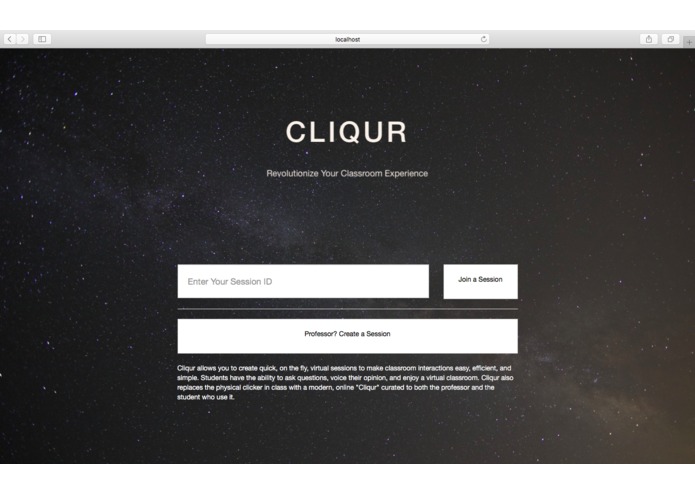
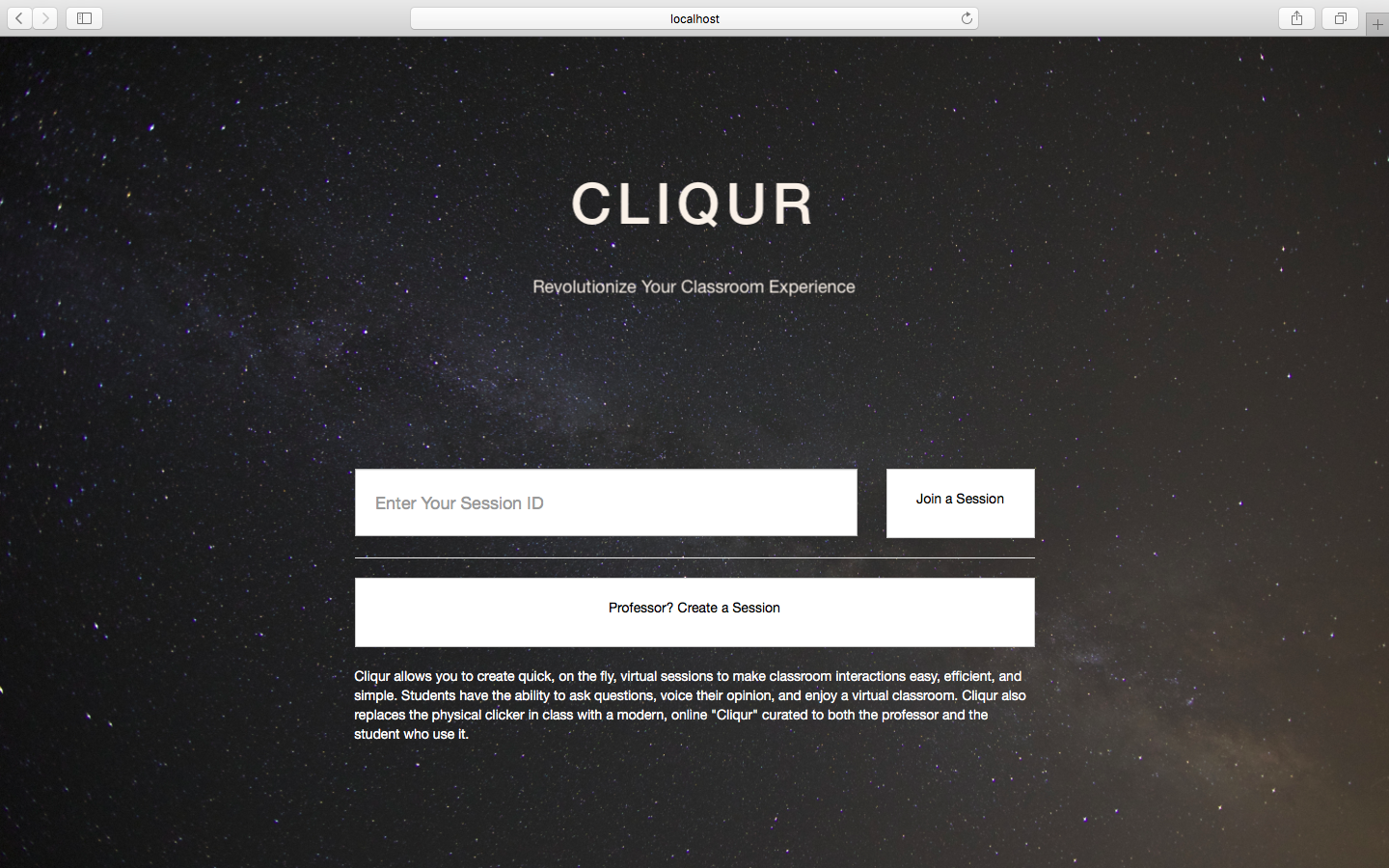
Splash-page
-
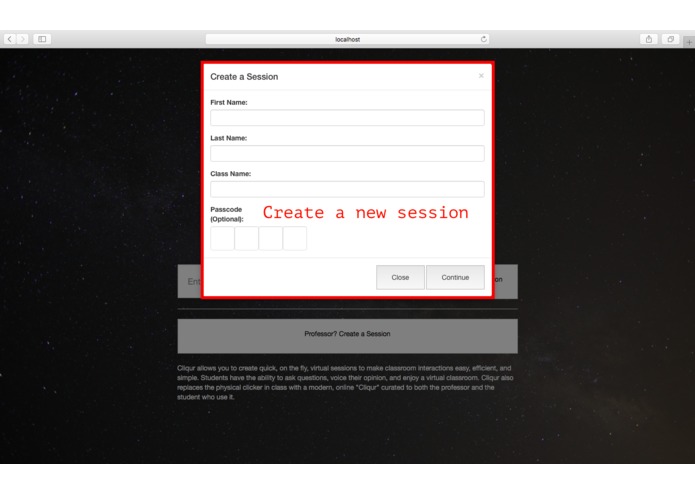
Interface 1
-
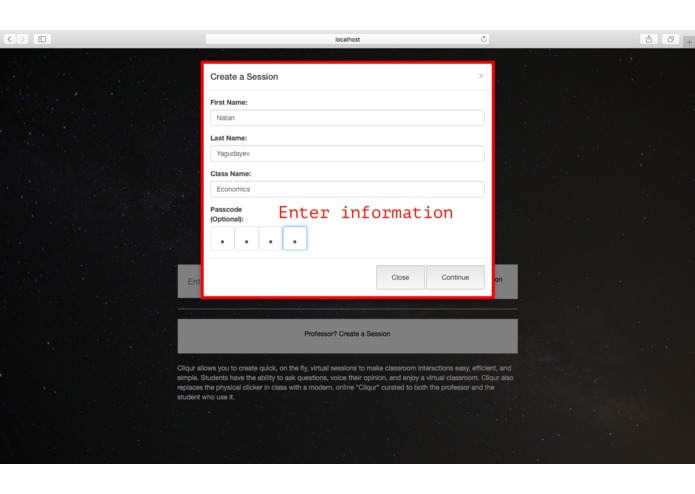
Interface 2
-
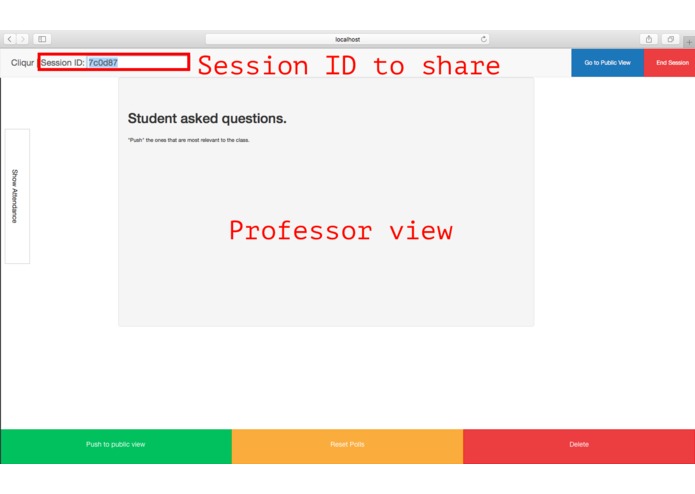
Interface 3
-
Interface 4
-
Interface 5
-
Interface 6
-
Interface 7
-
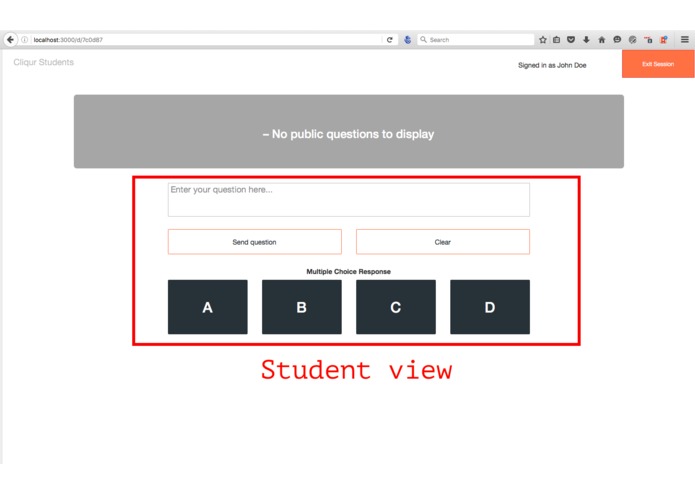
Interface 8
-
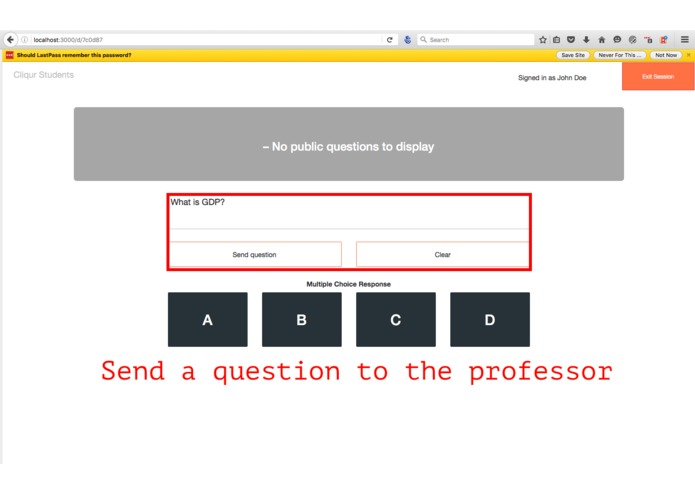
Interface 9
-
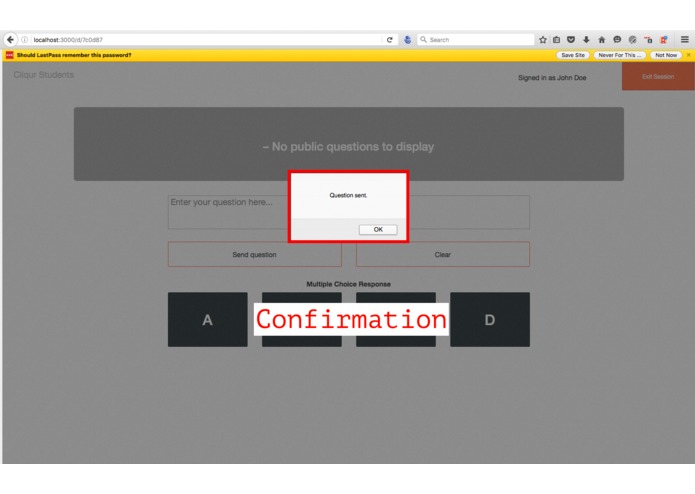
Interface 10
-
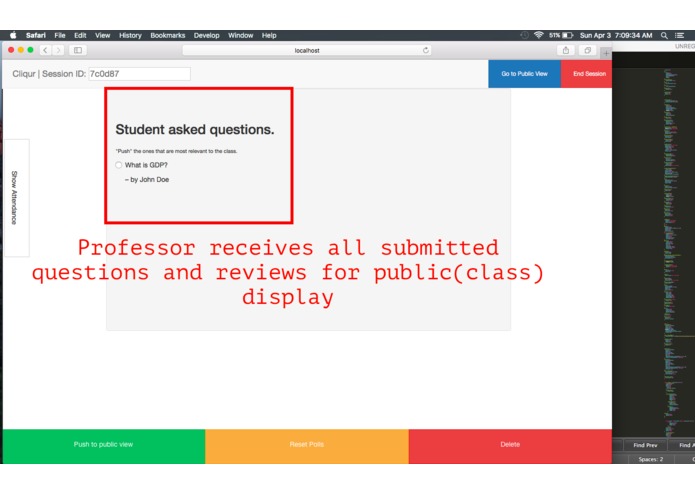
Interface 11
-
Interface 12
-
Interface 13
-
Interface 14
-
Interface 15
-
Interface 16
-
Interface 17
-
Interface 18
-
Interface 19
Cliqur (Pronounced "Clicker")
The original intention of building this web app was derived from our own experiences when sitting in a large classroom. It is difficult enough to communicate with the lecturer when there's more than thirty people sitting in the room, it is almost impossible when the classroom size
Inspiration
The inspiration came from the difficulties of communicating with the professors in a large classroom setting. While many classrooms may choose to use clickers as temporary solutions, they prove to be highly inefficient and expensive to replace. Thus, came the idea of building a modern and innovative solution for millions of students across the world.
What it does
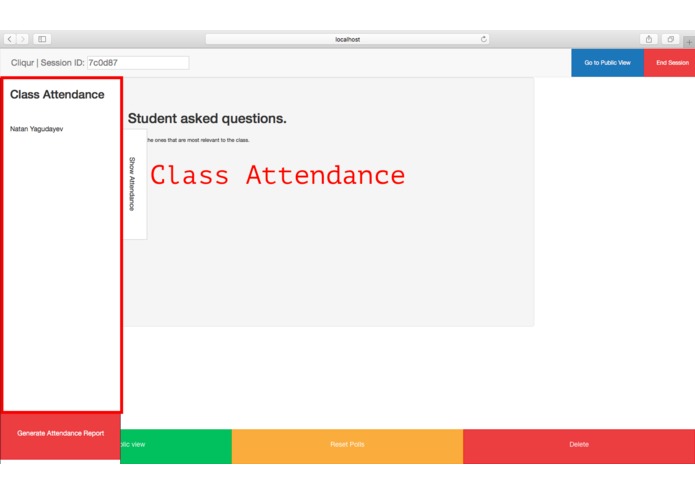
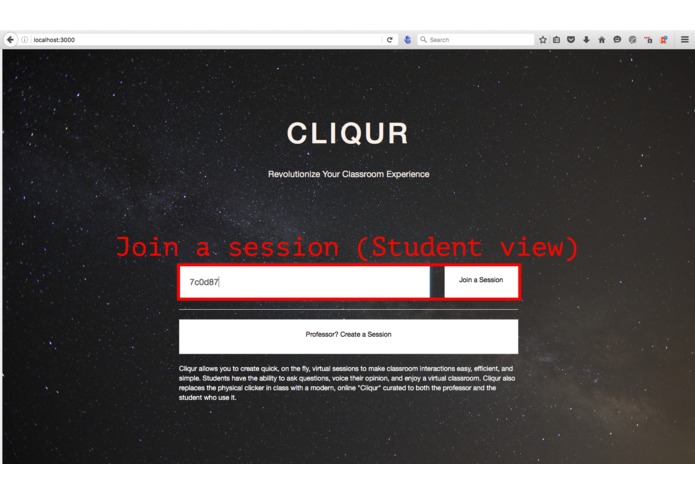
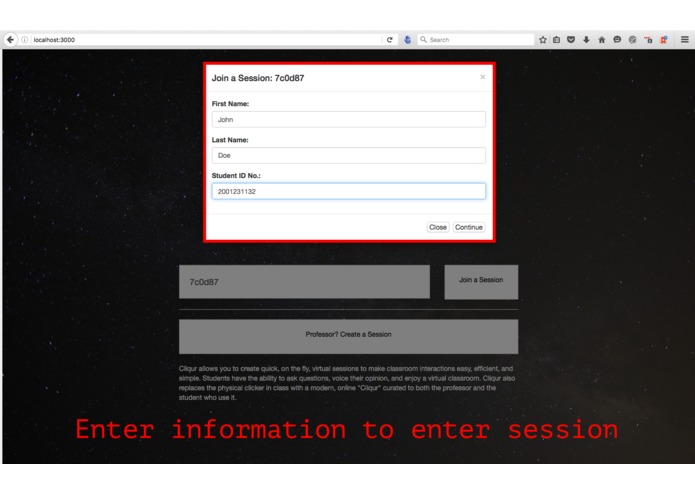
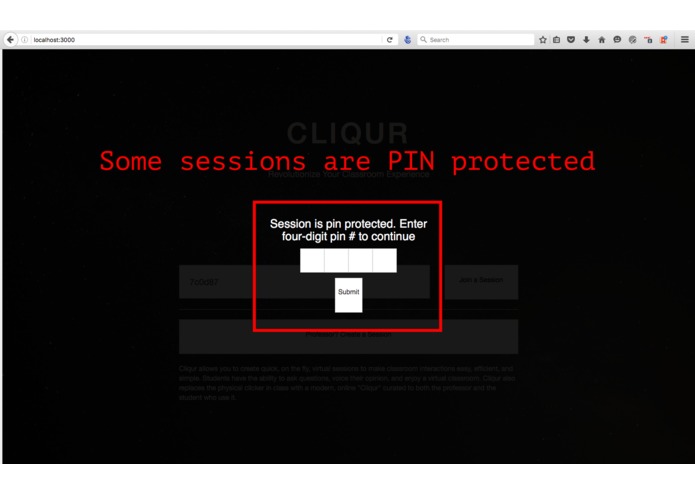
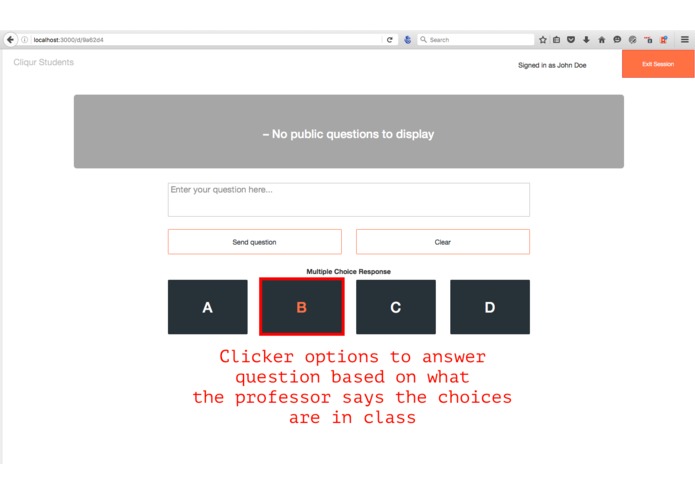
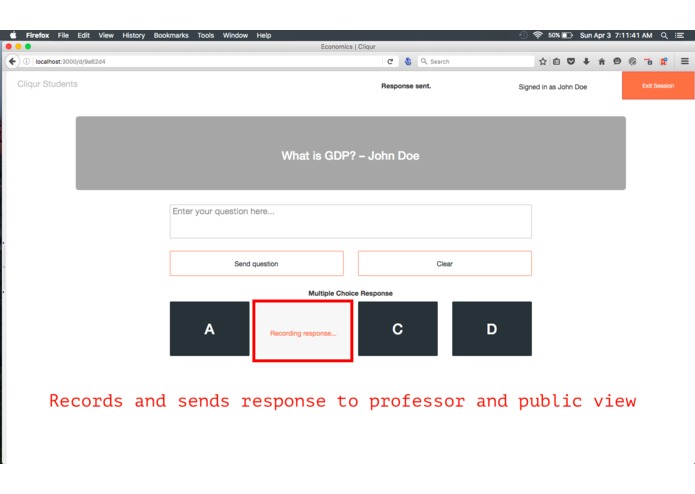
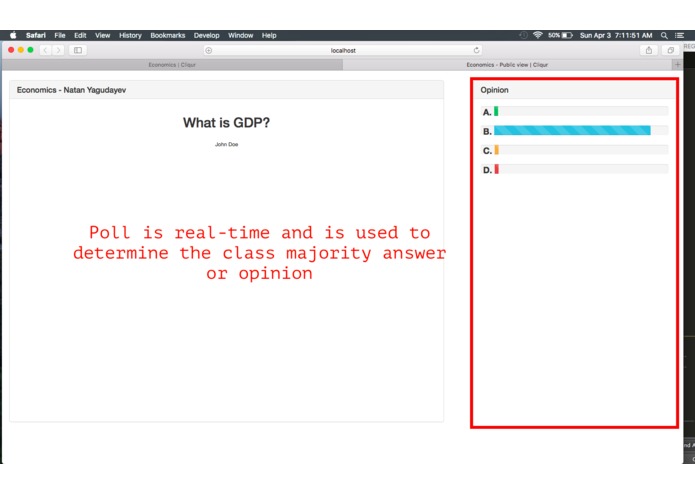
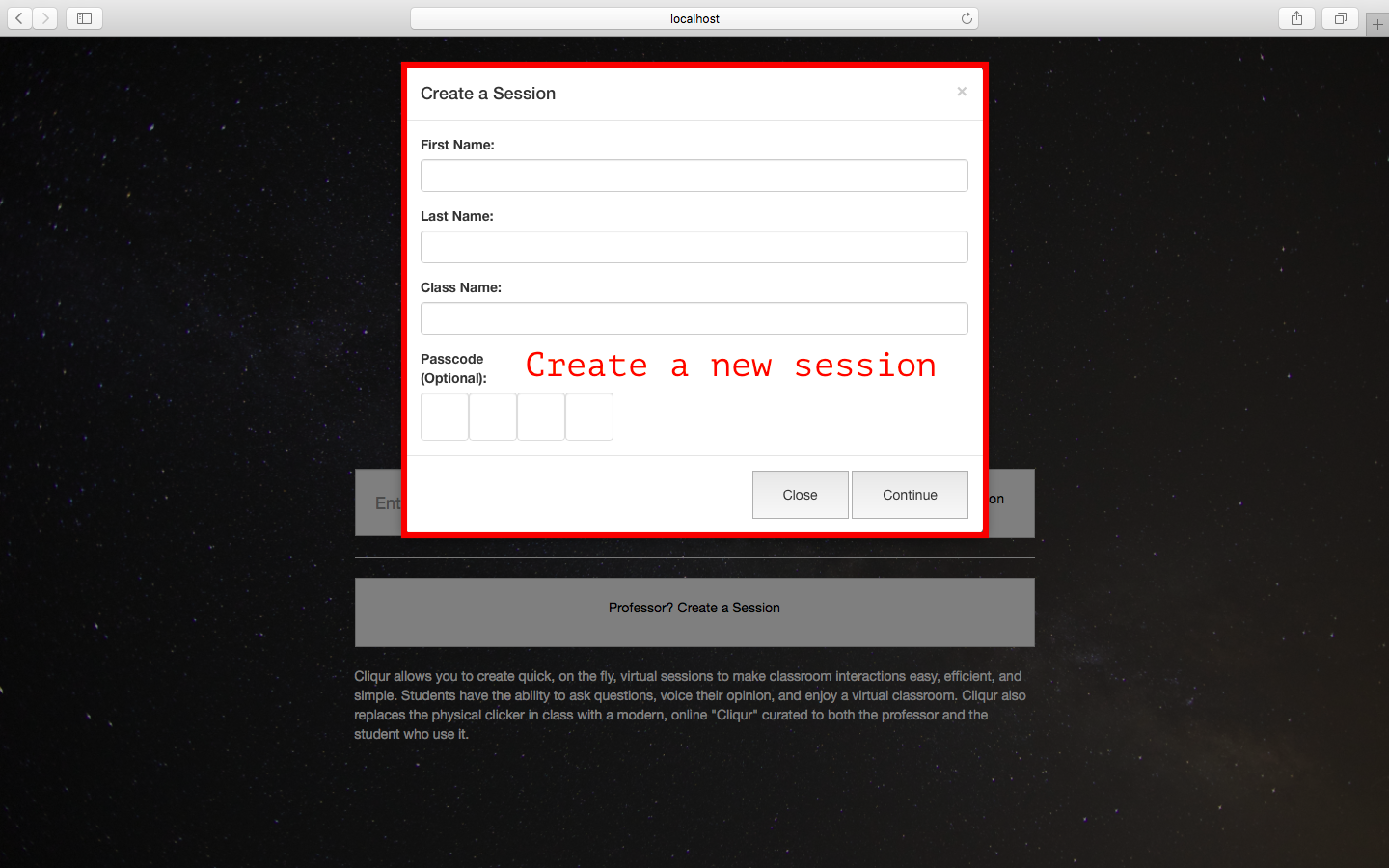
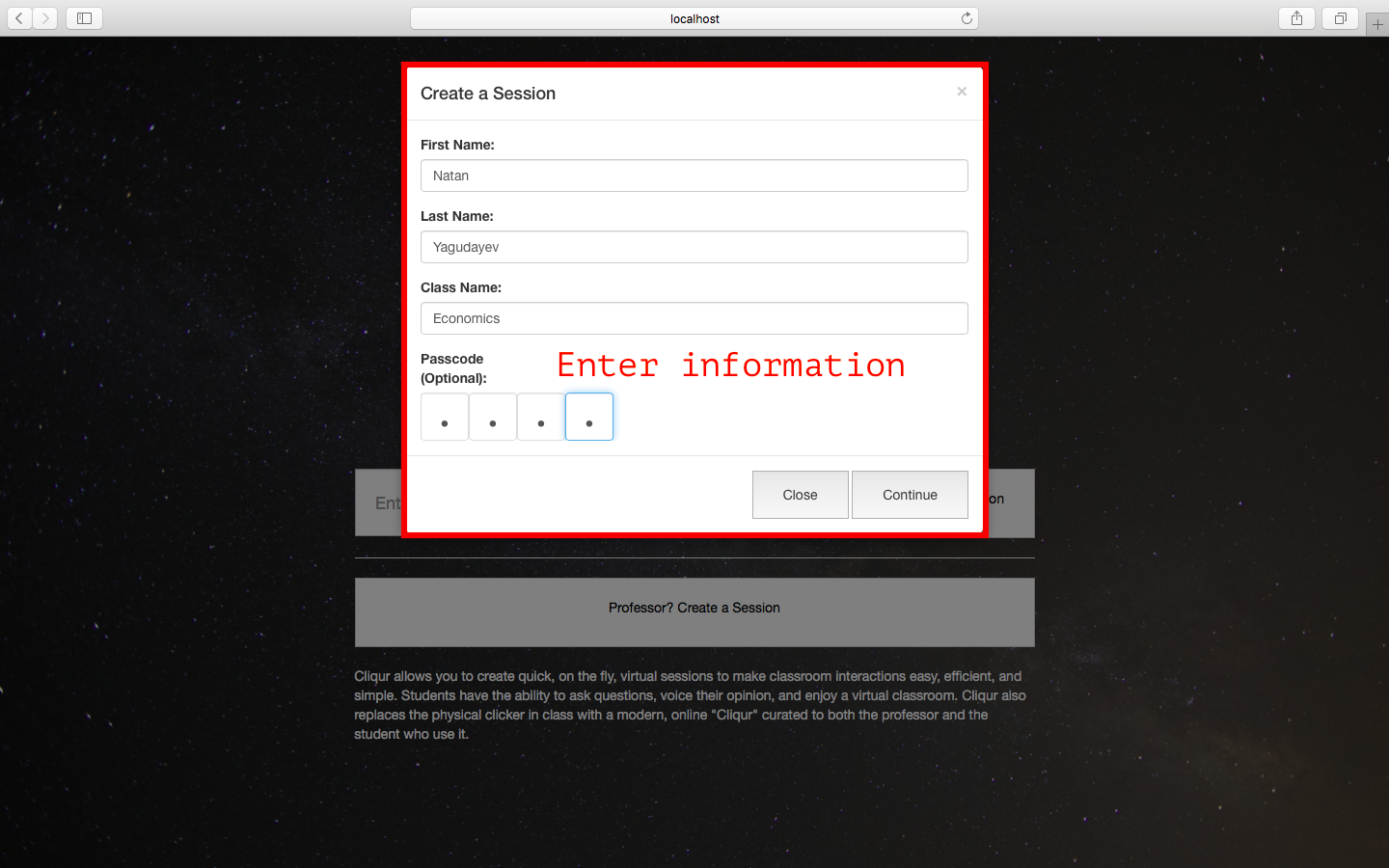
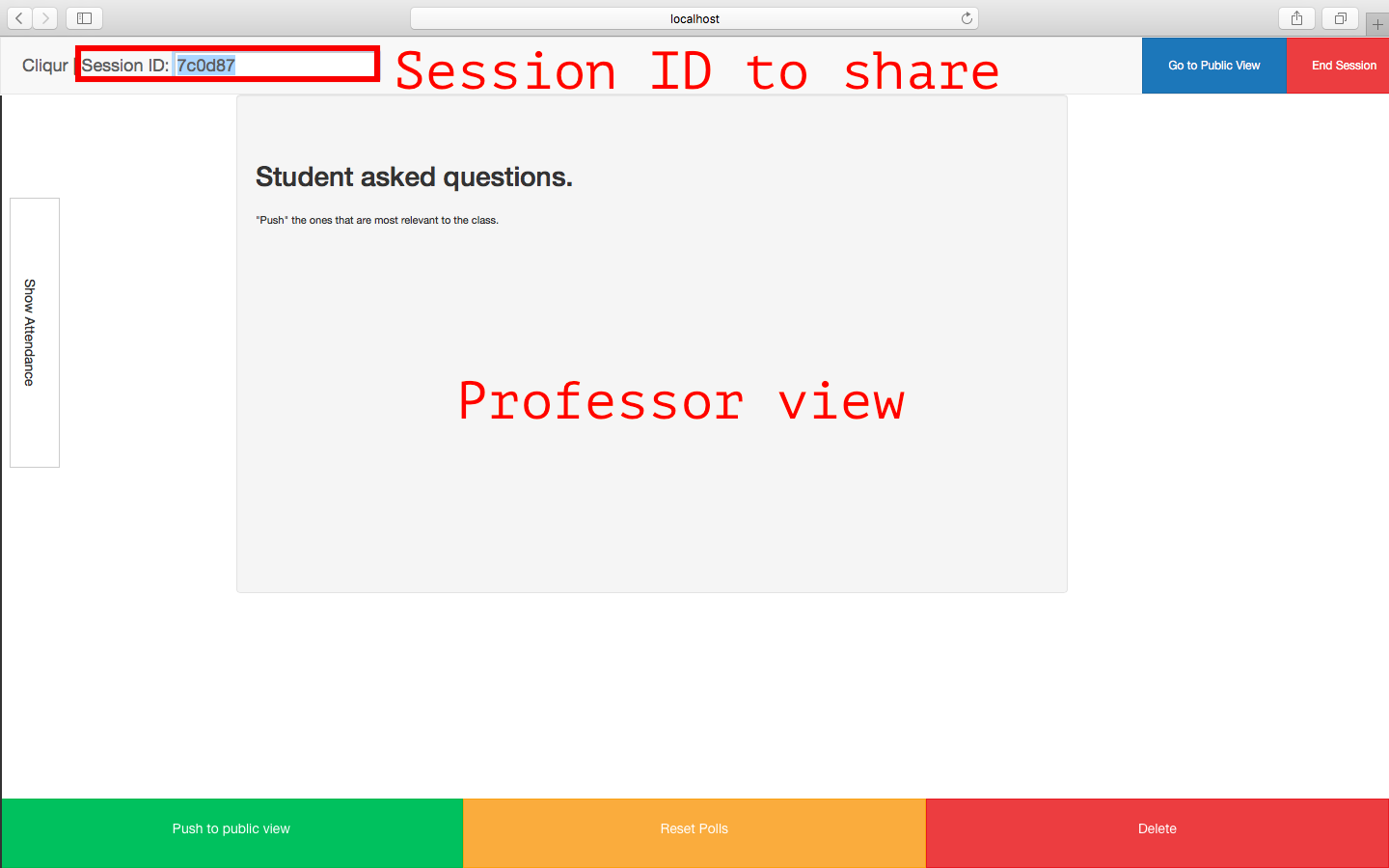
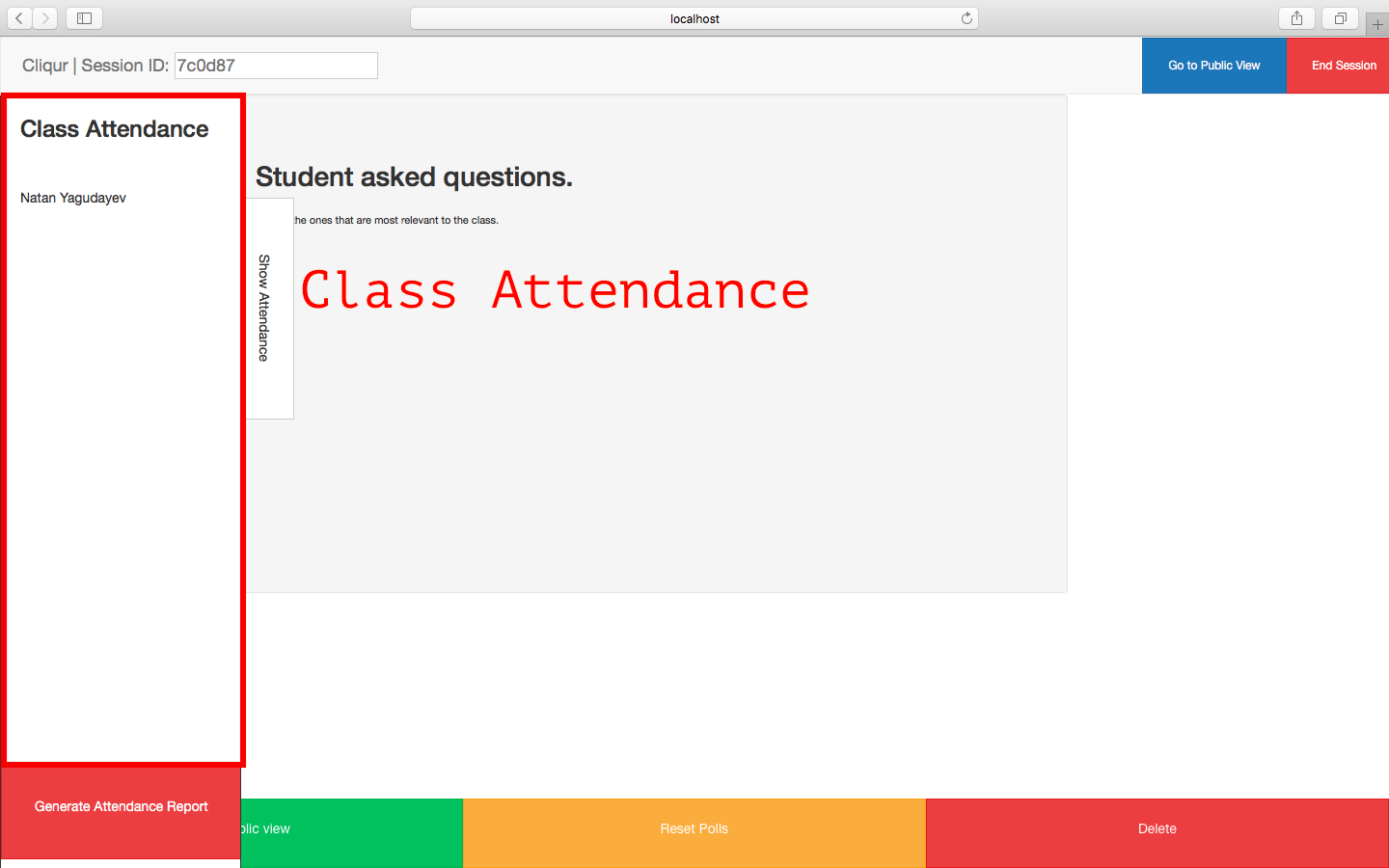
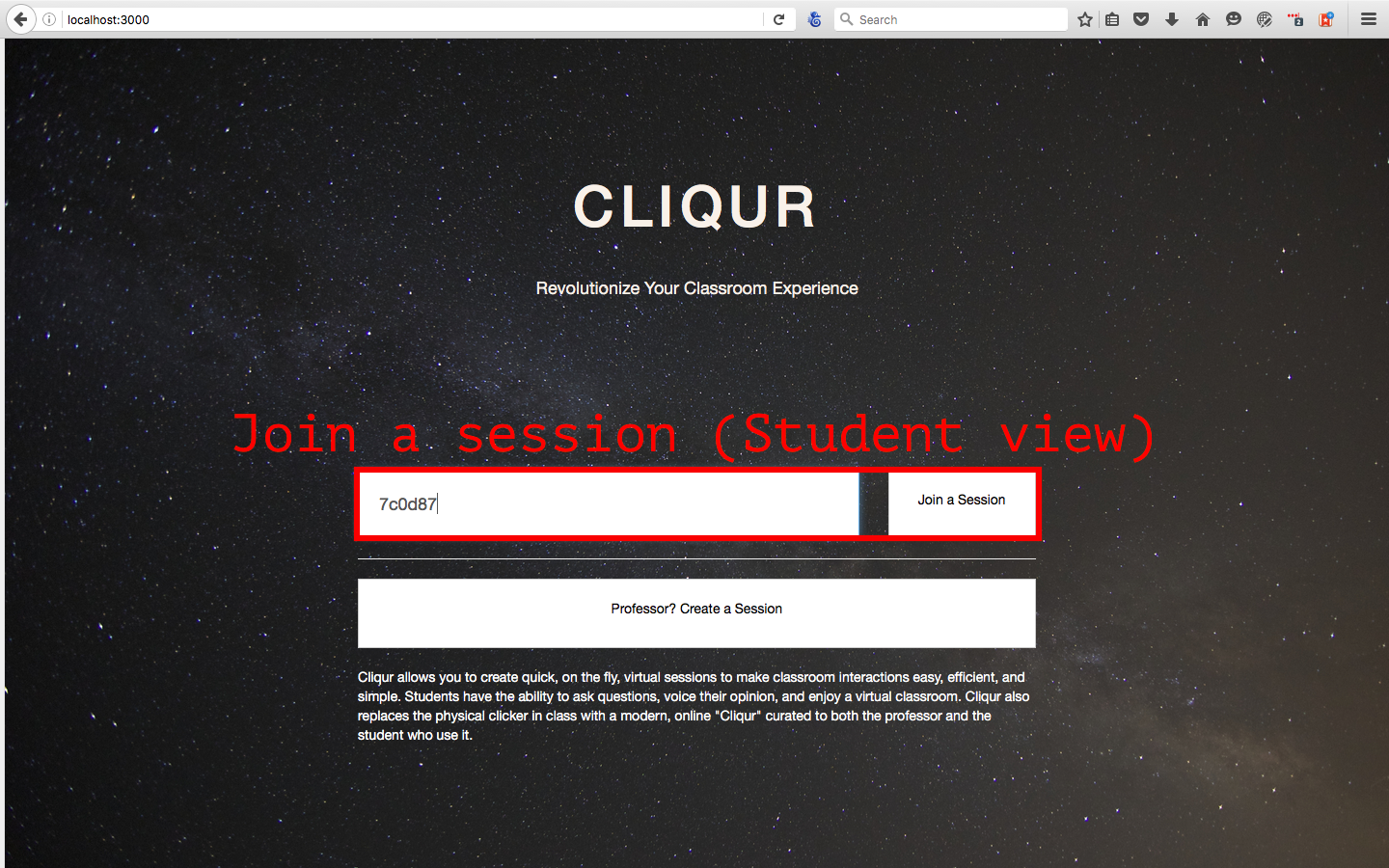
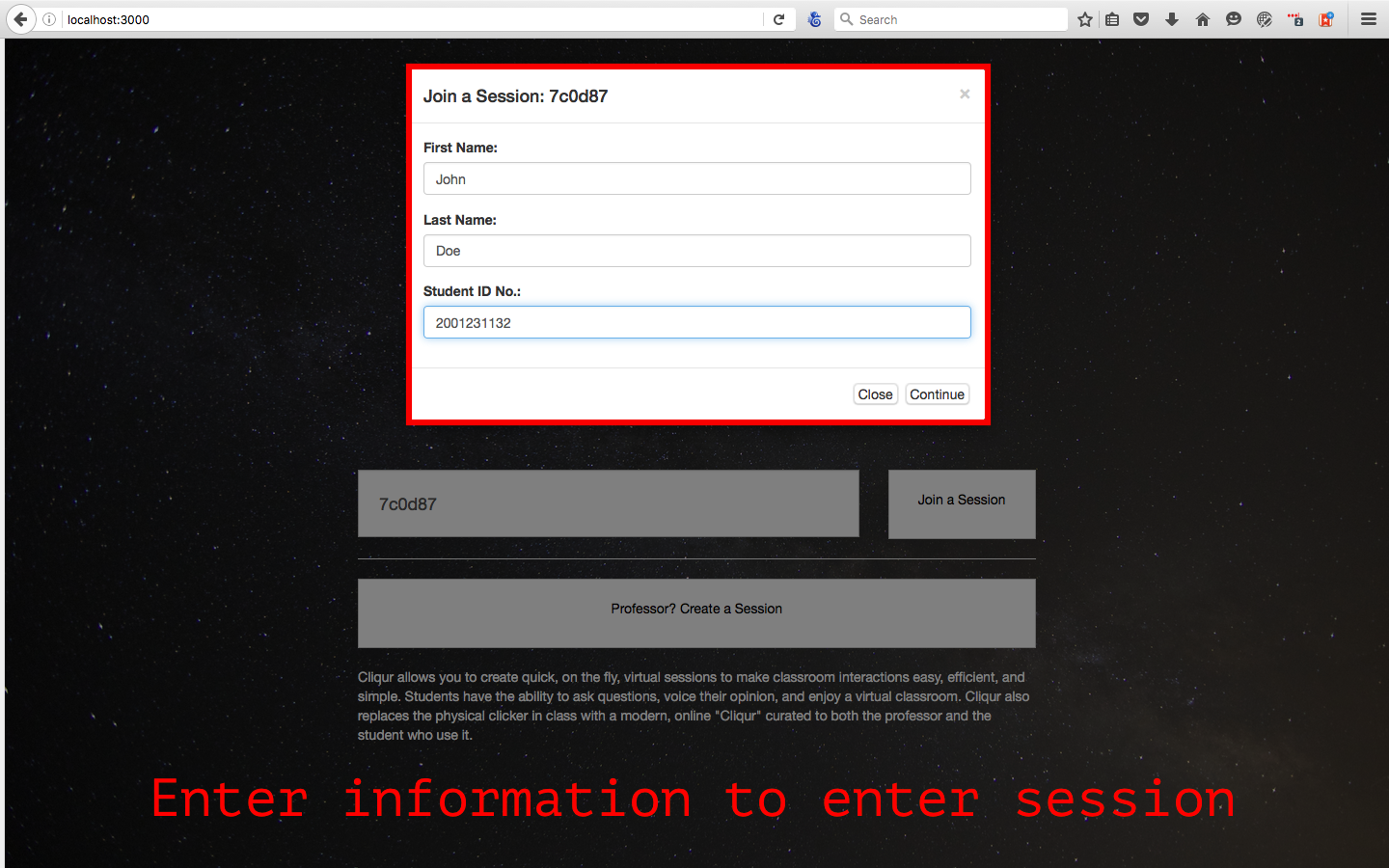
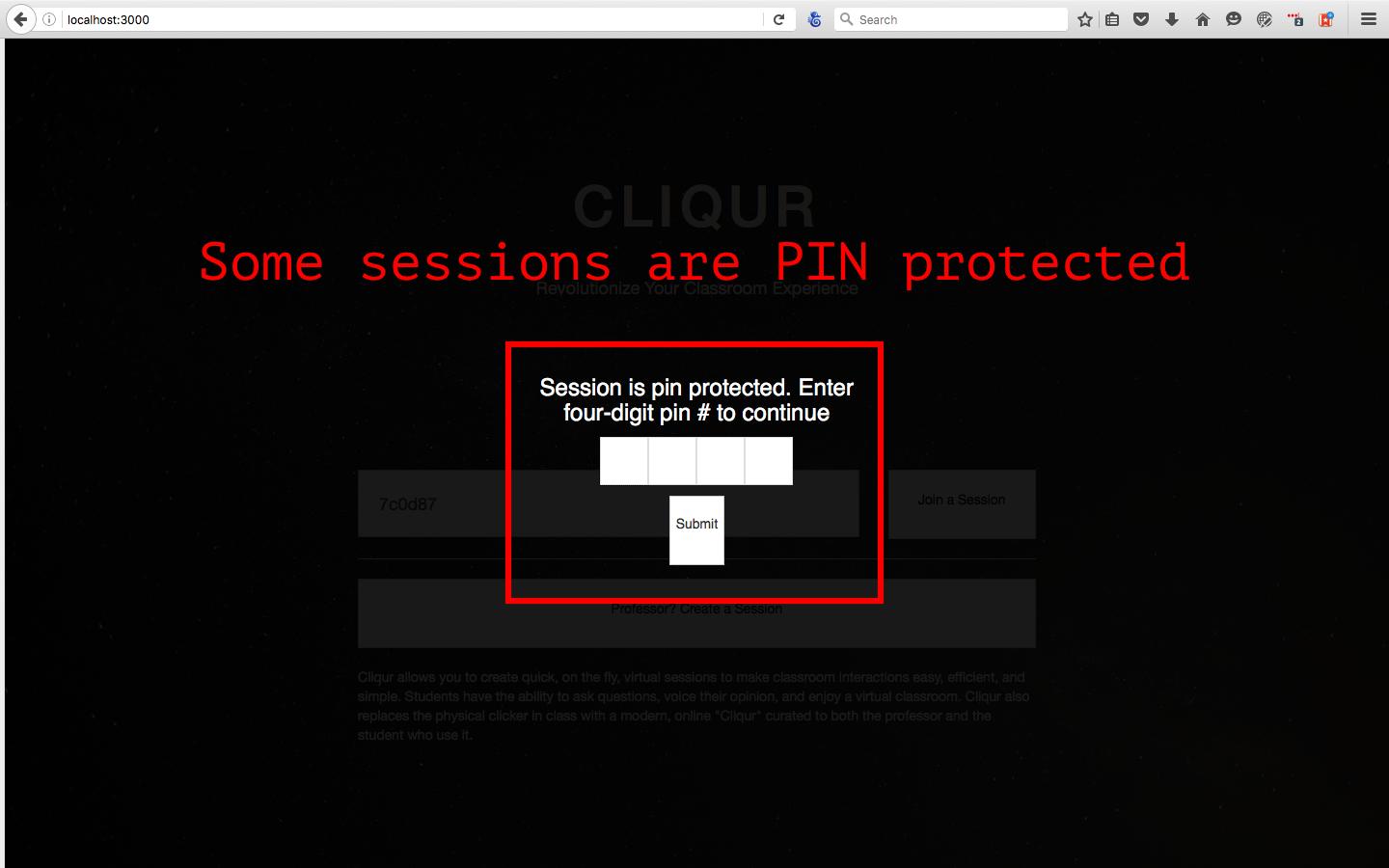
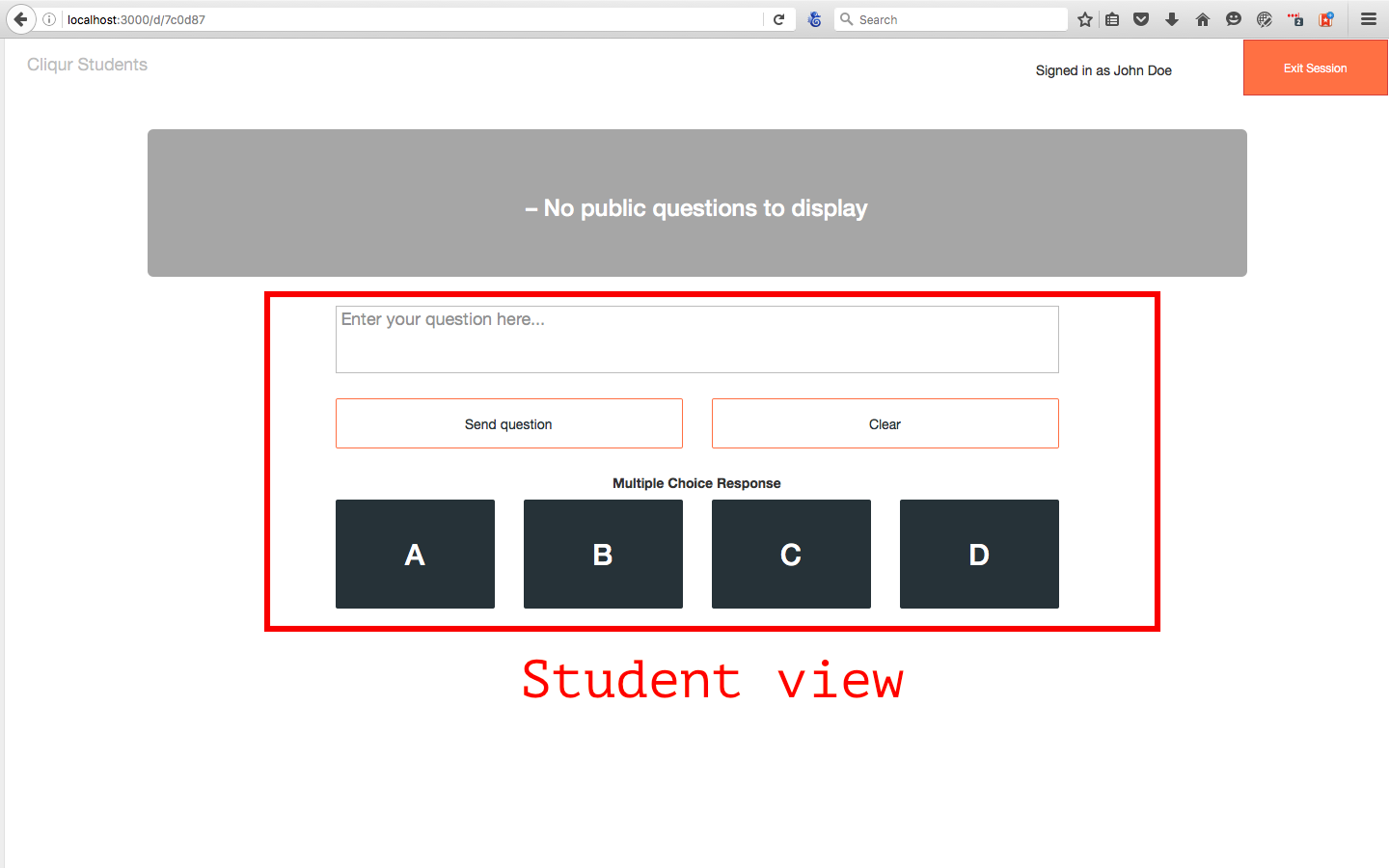
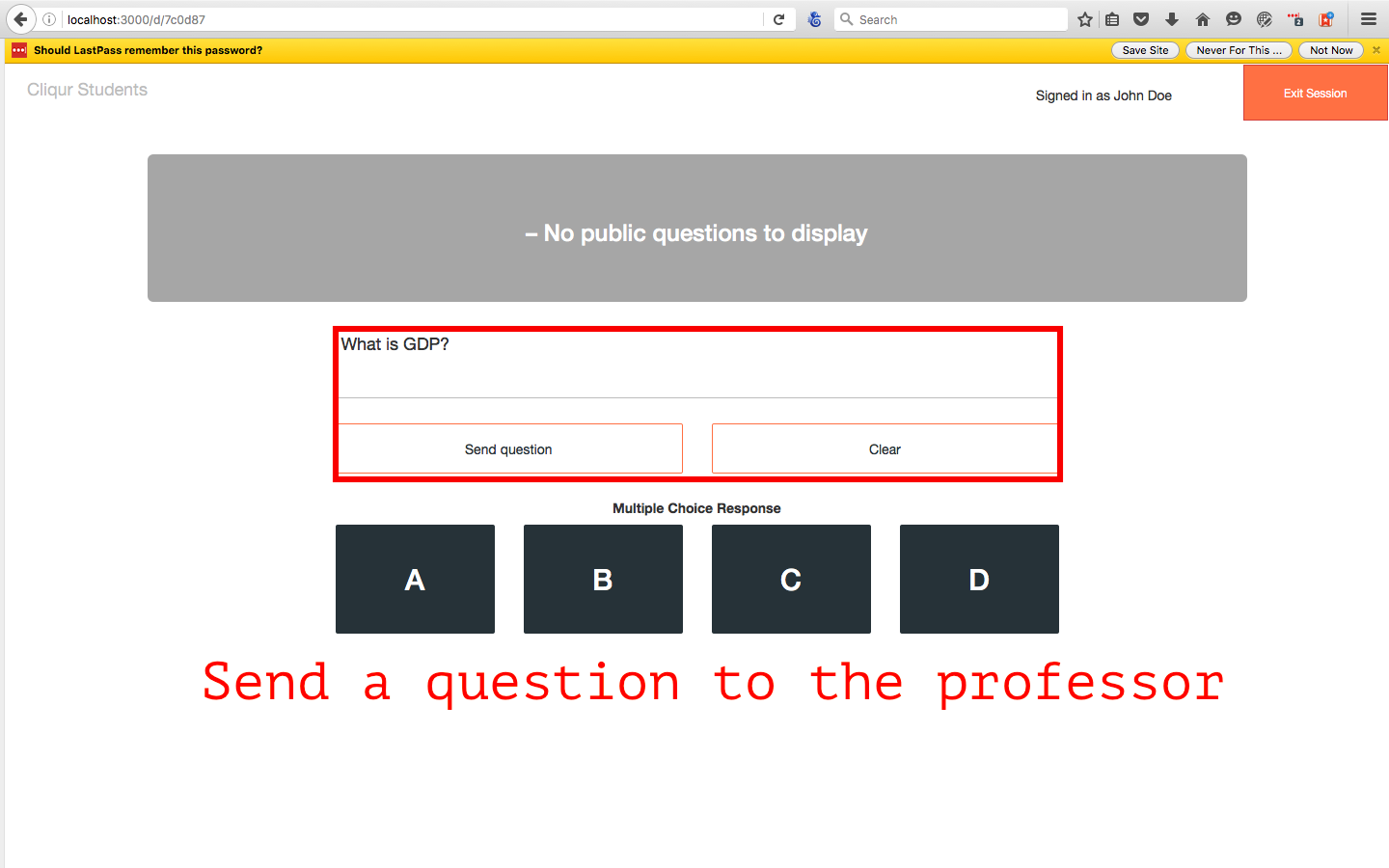
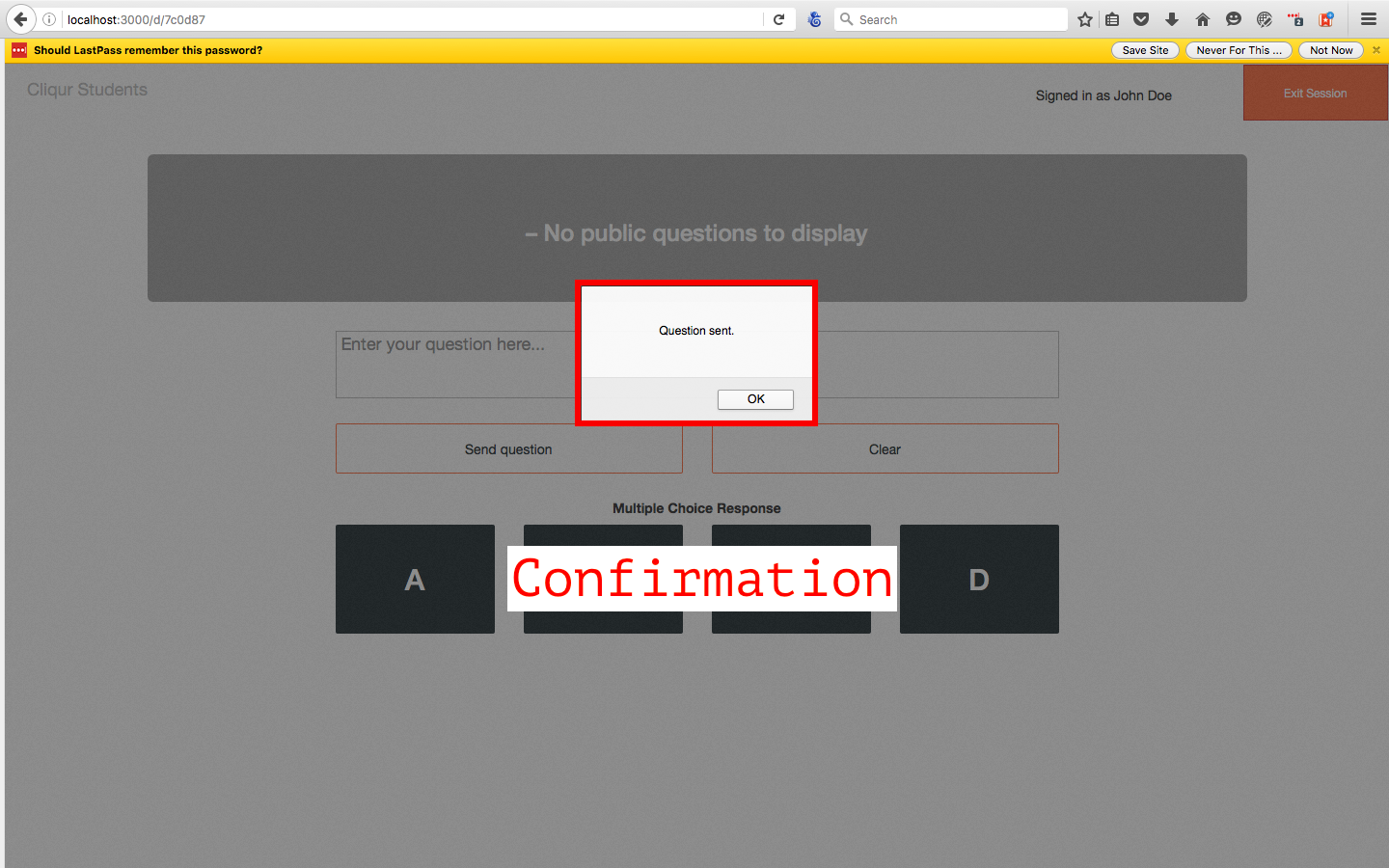
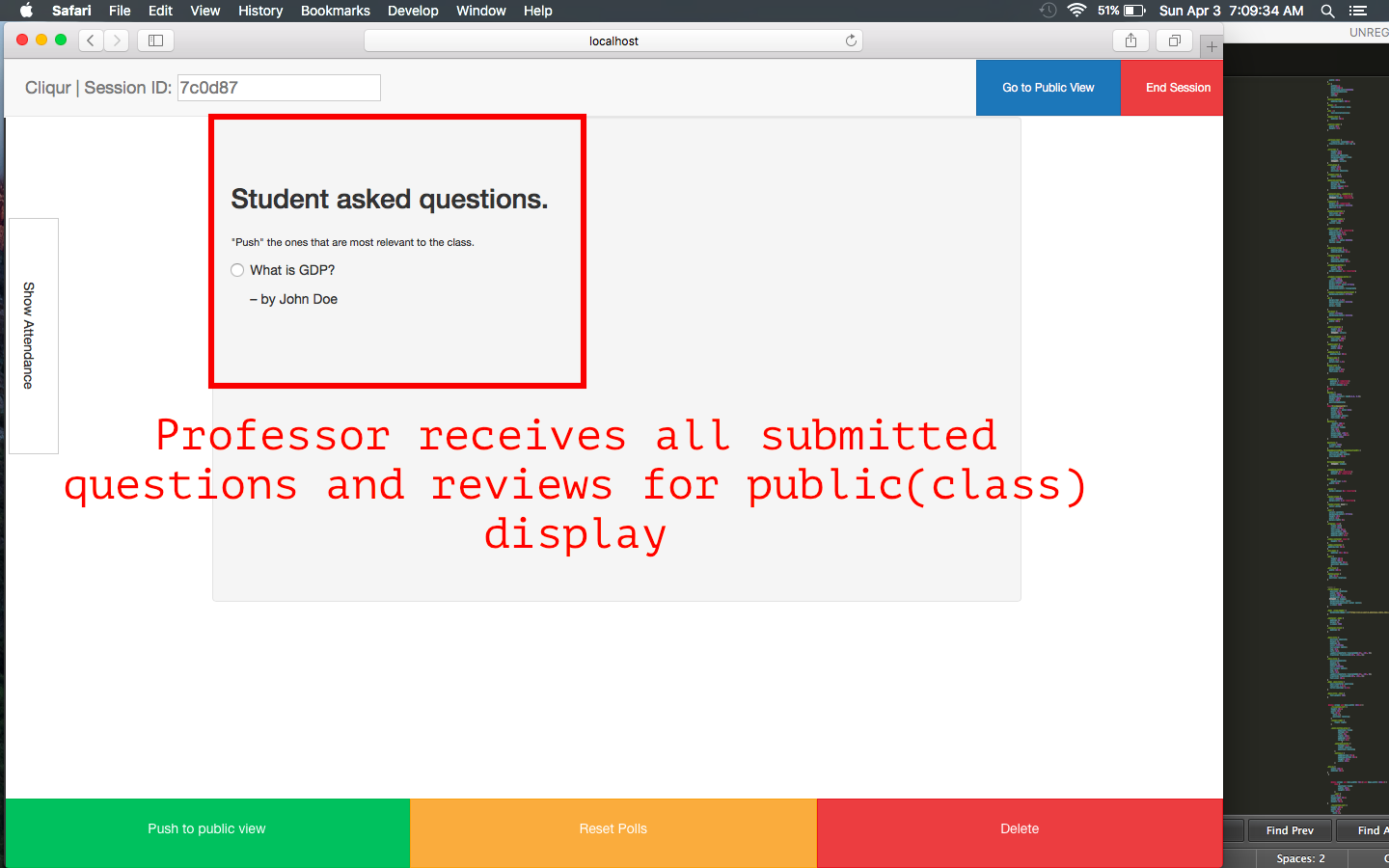
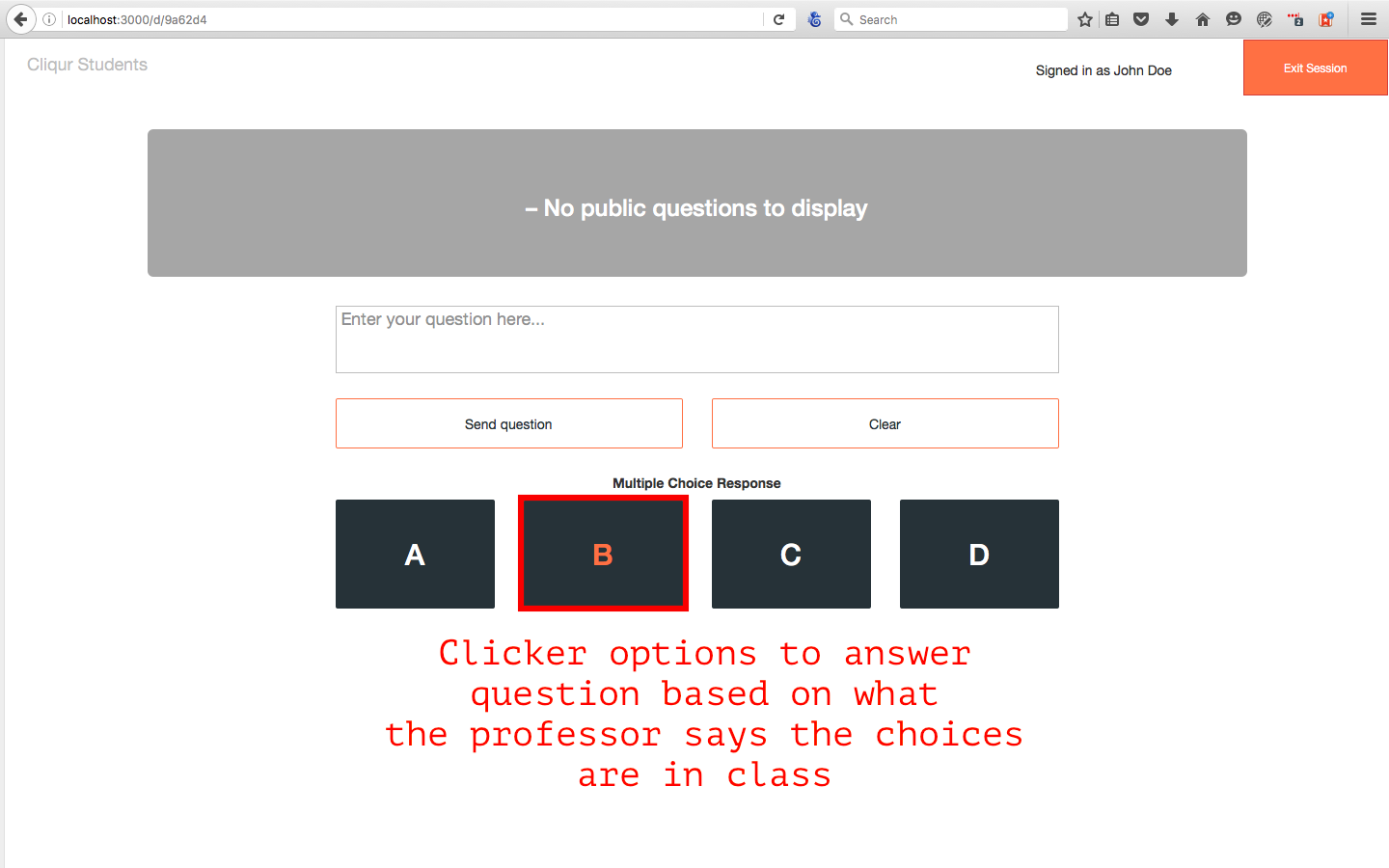
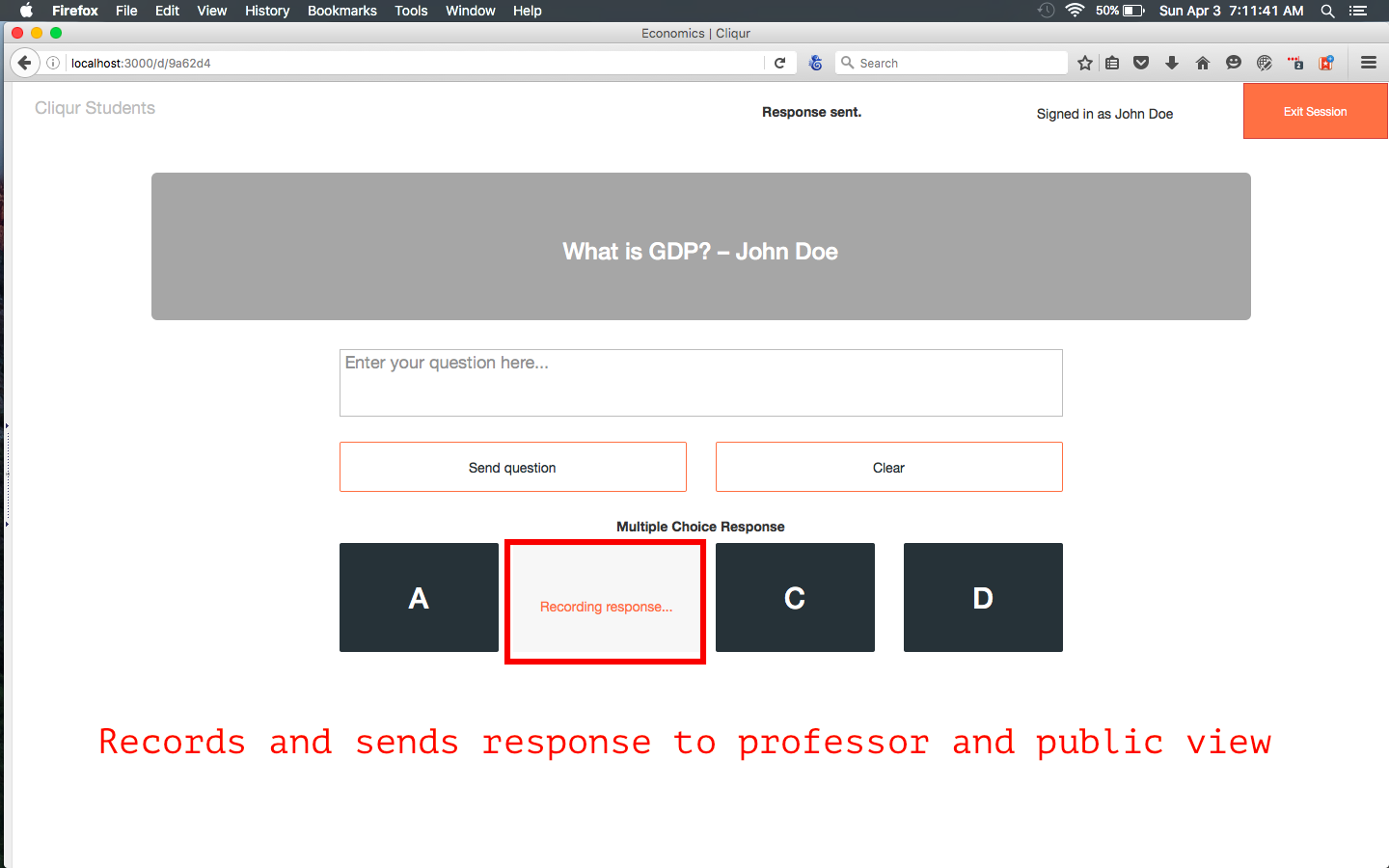
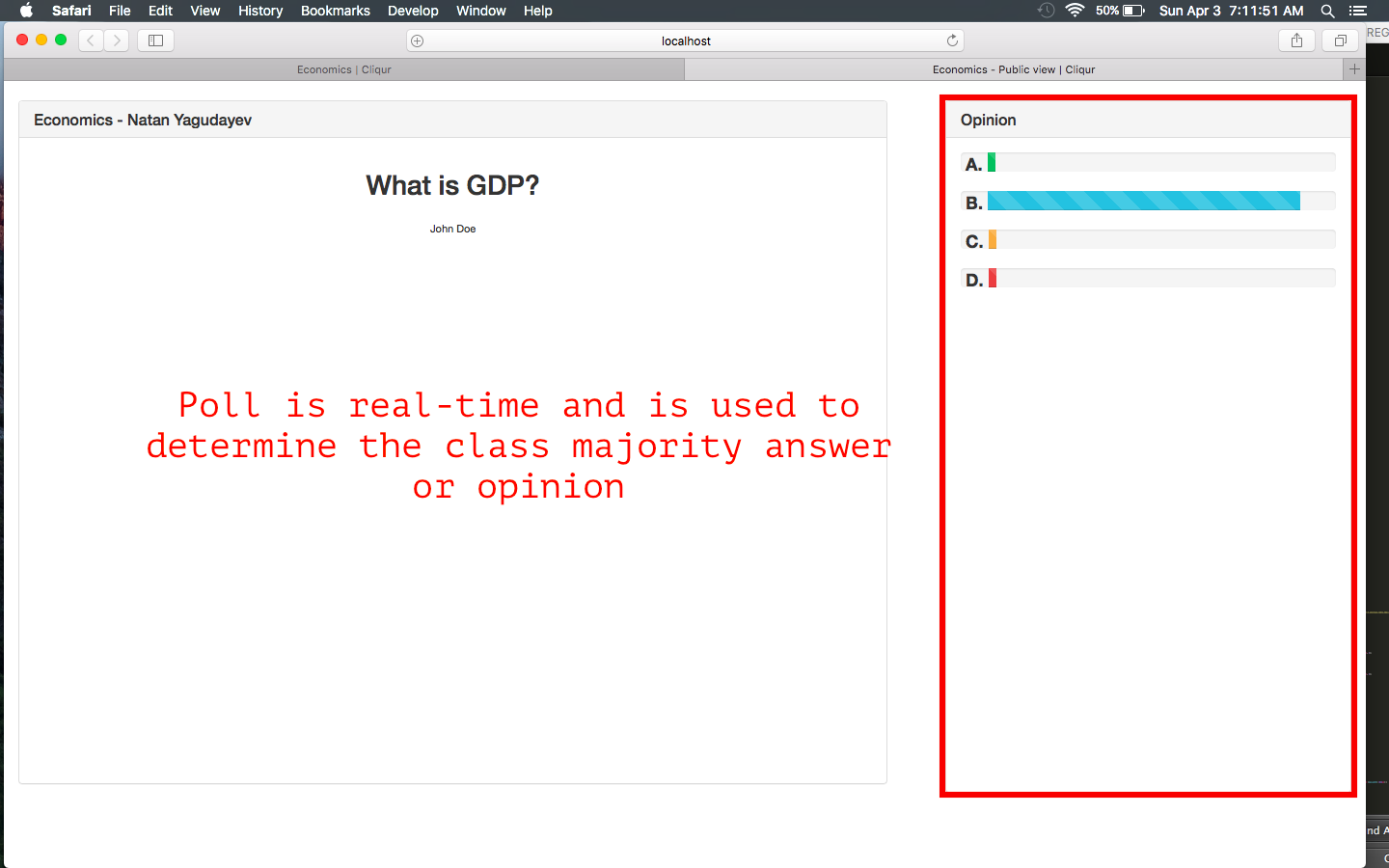
Cliqur allows instructors to create virtual sessions and invite students to participate in the session with an unique session ID. Students are able to ask questions, input multiple choice responses and visualize the results of the classroom performance. On the other hand, instructors can take advantage of our neat attendance verification system, which lets the instructors print out a pre-formatted attendance sheet with accurate record of attendance for that session.
The "Push" and Clicker
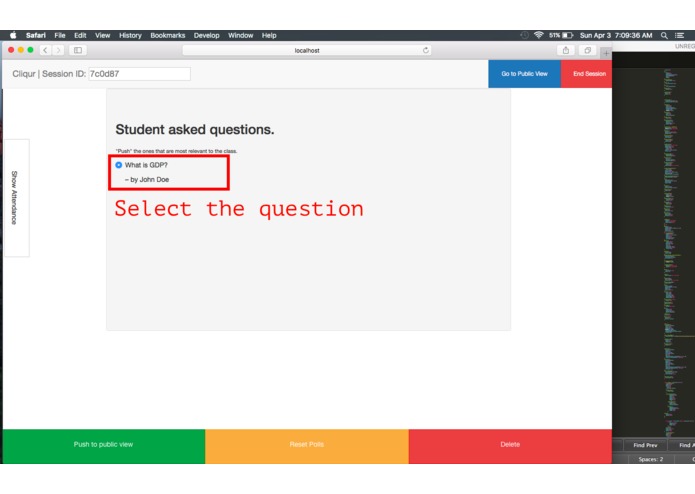
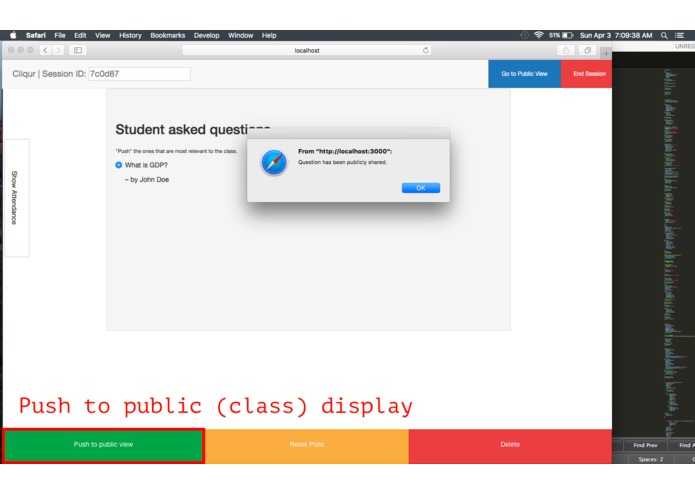
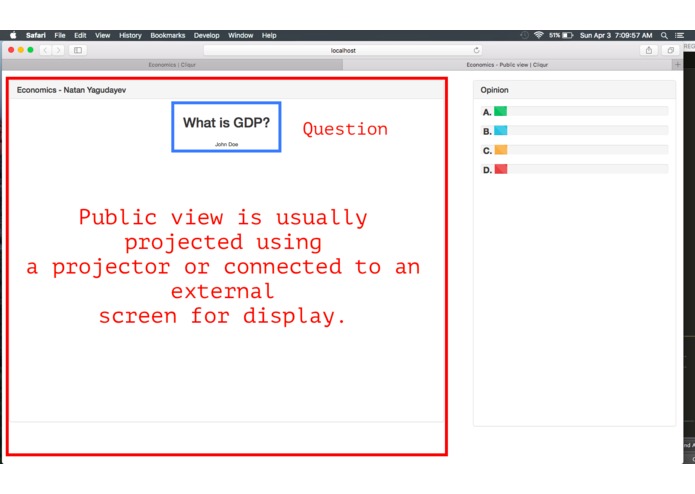
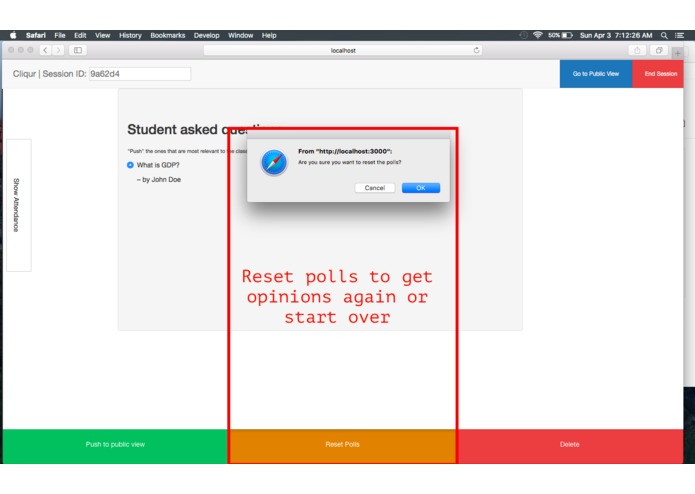
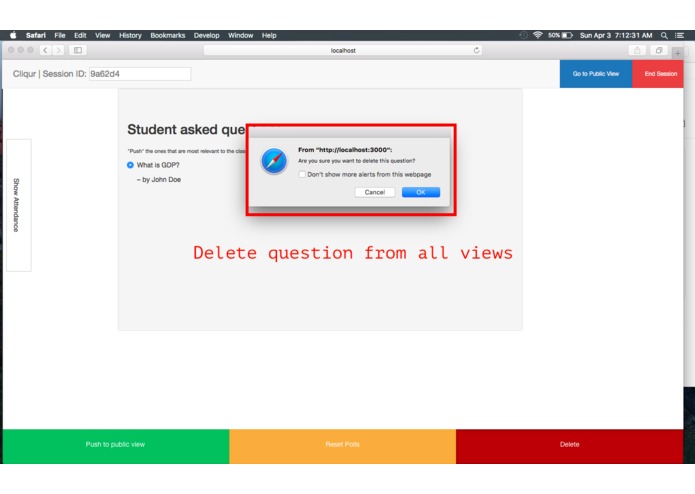
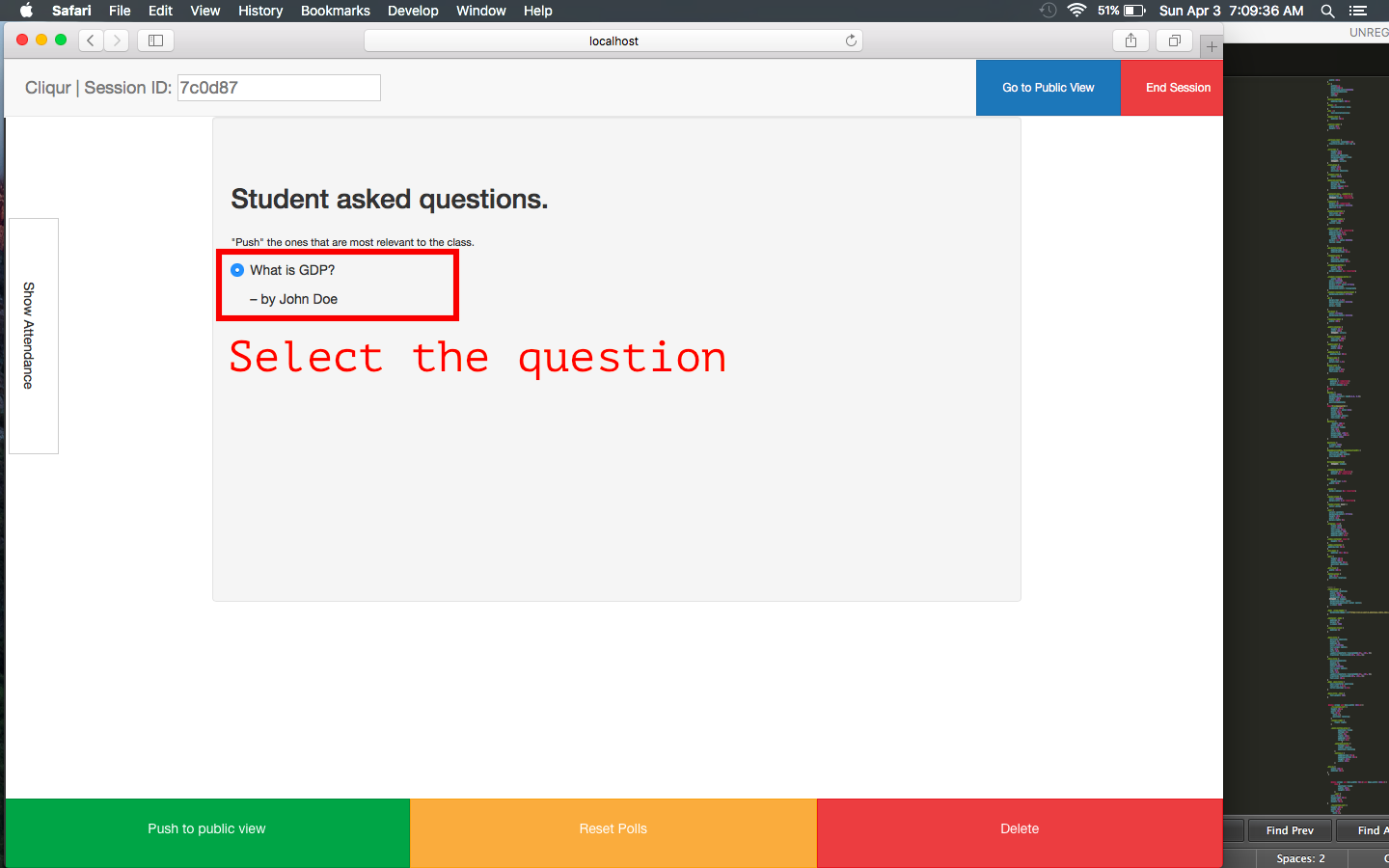
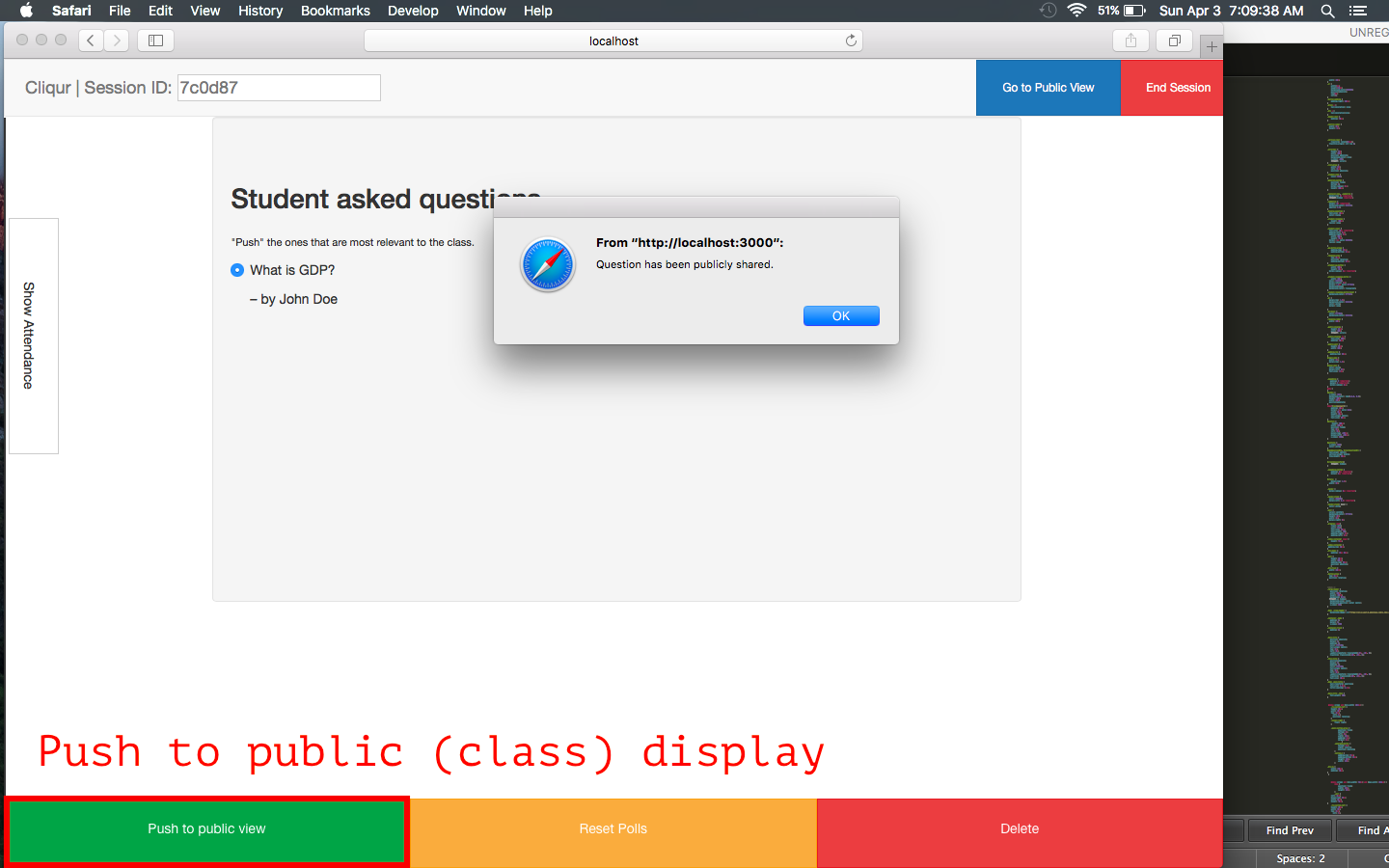
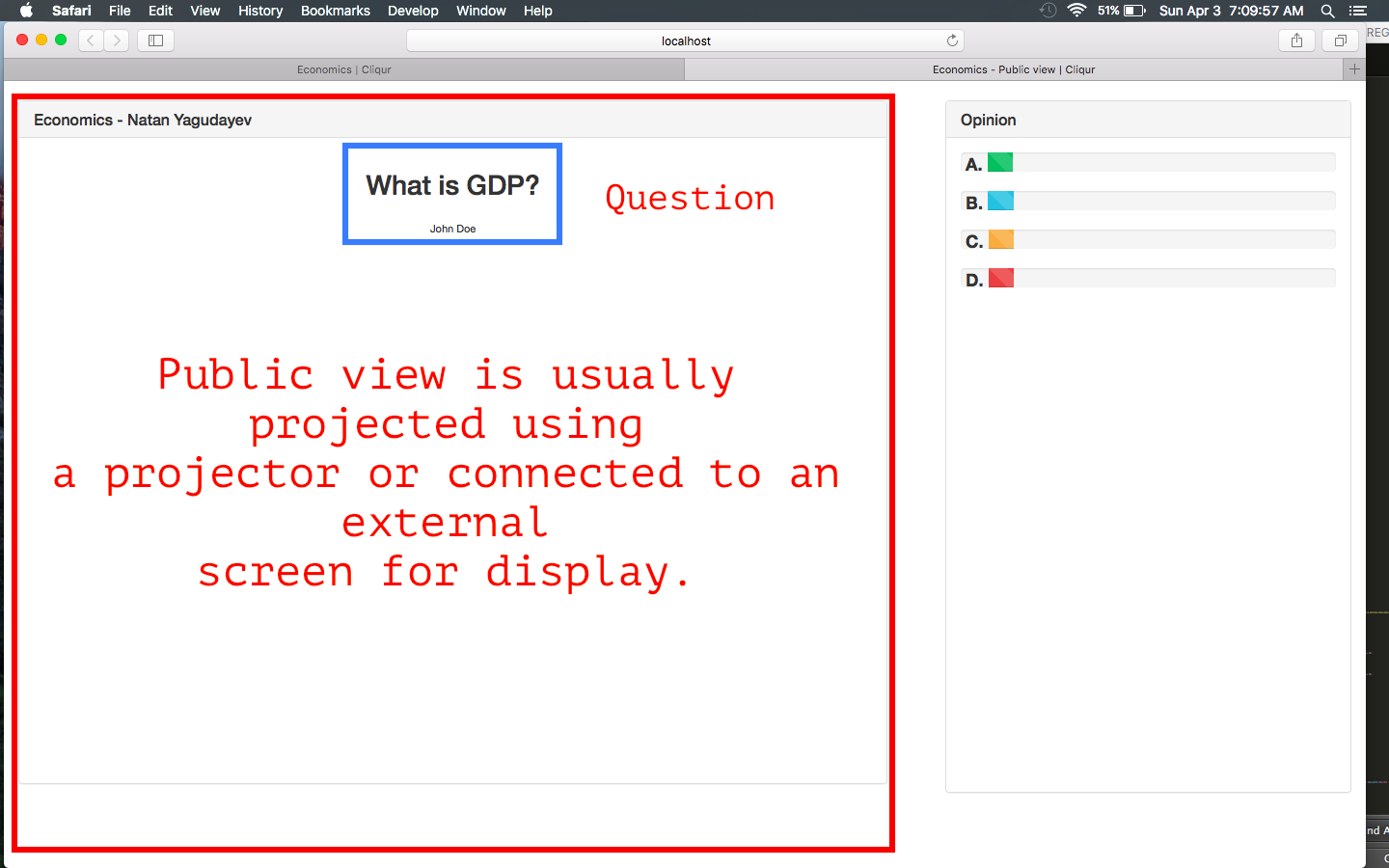
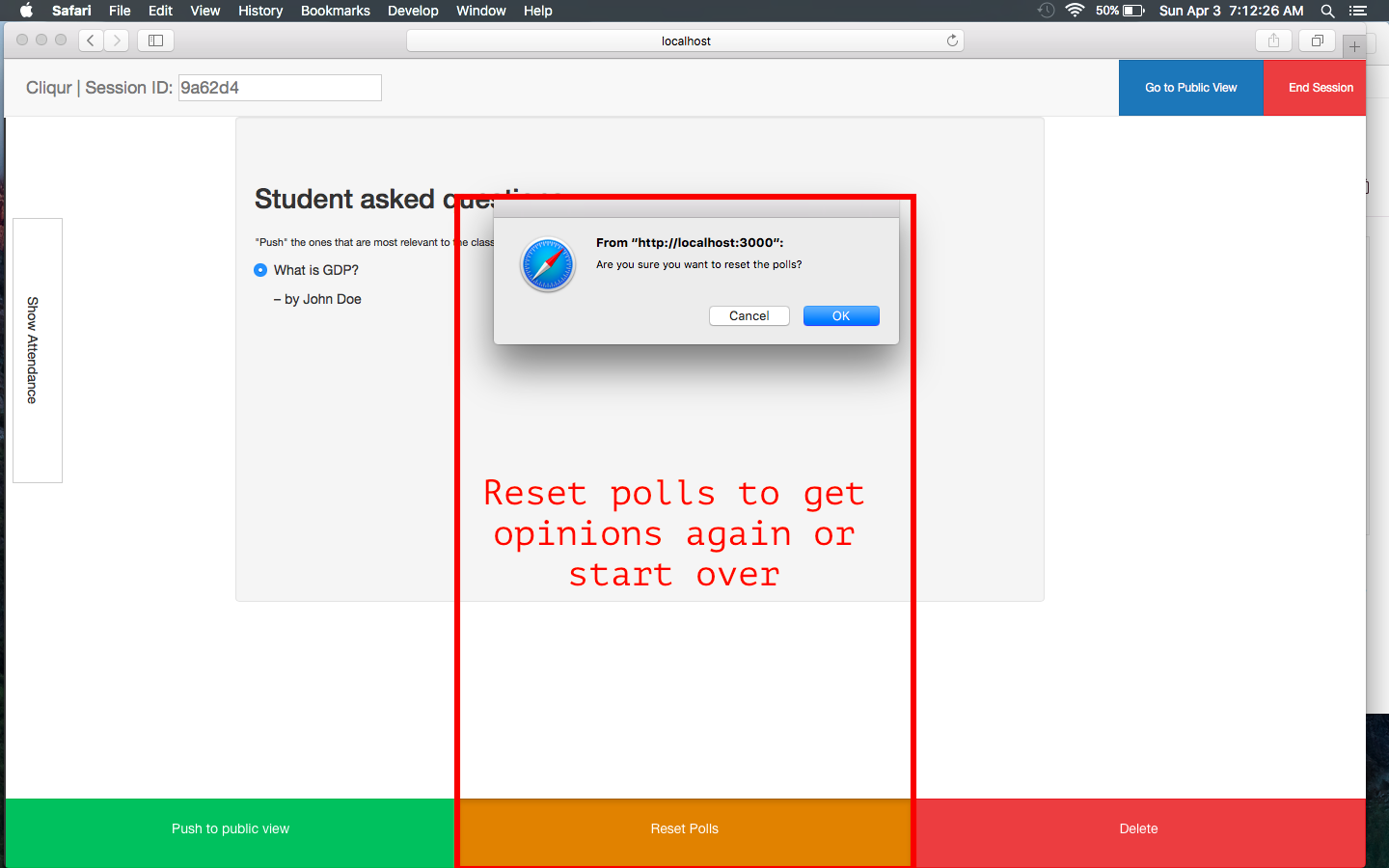
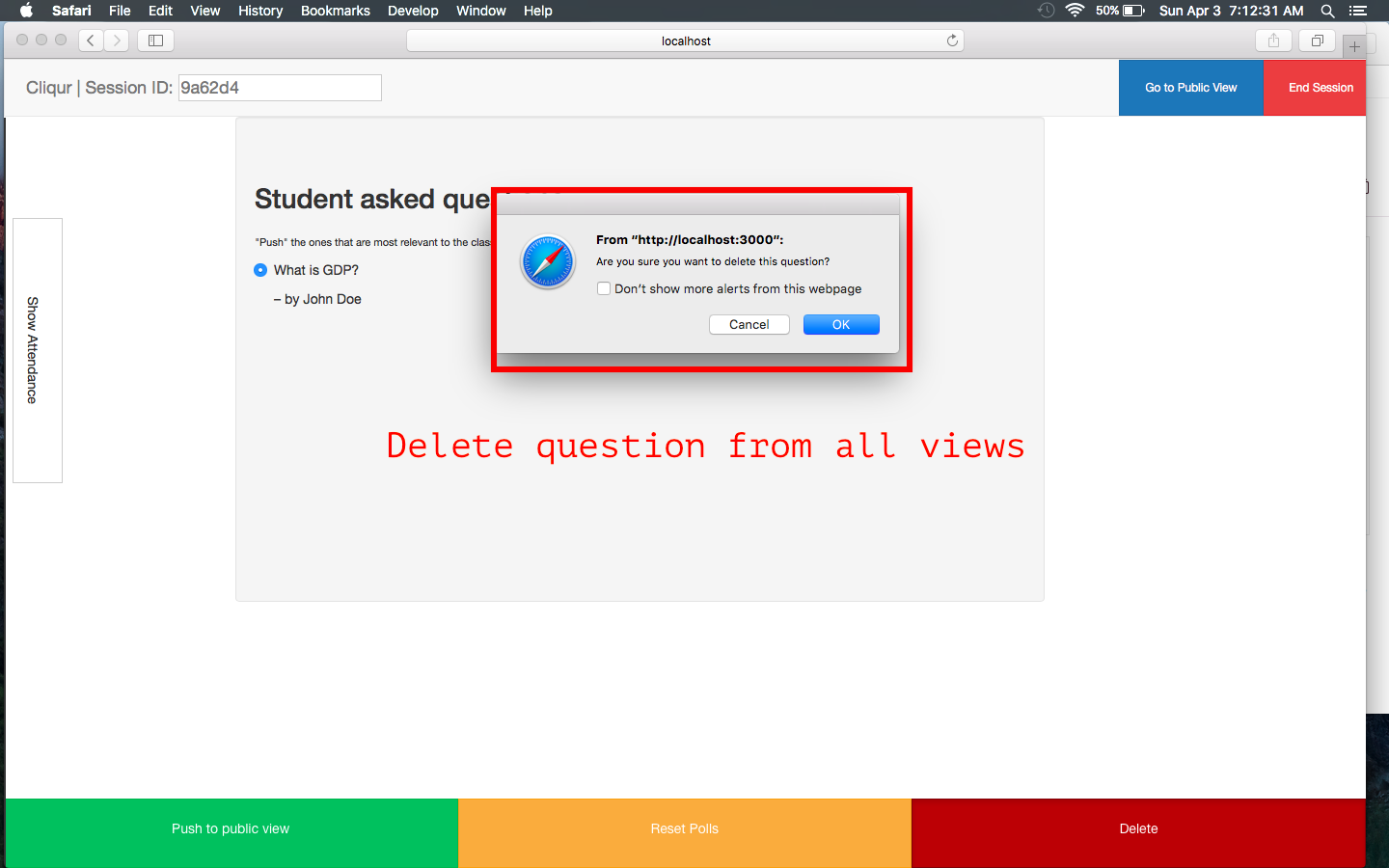
Another main component of Cliqur was to completely redesign the clicker used in classrooms all over the world. Everyone carries an iPhone, laptop, tablet, etc. which allows for a wide array of applications that are curated to serve the user. Cliqur works together with the professor through an web interface and allows real-time opinion based response methods. "Push" was a feature that we really wanted to push above and beyond. Cliqur is made up of three basic "screens." A student can "Push" a question to the professor, the professor can then choose to "Push" the question (on an administrative level) and display it publicly on a projector with a simple "Push" of a button. Cliqur hopes to revolutionize the way you ask questions, voice opinions, and interact in a classroom all with a simple push.
How it was built
Cliqur was primarily built on Meteor stack. The front-end was created using HTML, CSS, and JS.
Challenges we ran into
A major challenge we faced was learning something completely new to us. Meteor was something new to all of us. We had developed applications using PHP and Python as backends but nothing like that of Meteor. We faced many sleepless nights, two of our back-end developers only slept 2 out of the 36 hours because of the urge to keep learning and of course finishing the project. Meteor is an incredible framework and allows for a wide-array of useful tools as well as really pushes the limits of development on both ends.
What we learned
We learned that learning a new language and really starting fresh at a Hackathon is a tough task but is well worth it in the long run. We pushed ourselves to really learn the language, express it, and create something that we hope everyone will enjoy.
What's next for Cliqur
Incorporating more features as time progresses as well as a larger user base. We hope to have messaging, file transferring, and quick and easy remote voice conferences with a push of a button.
Support & Documentation
Meteor documentation can be found at http://docs.meteor.com/




Log in or sign up for Devpost to join the conversation.