-
-
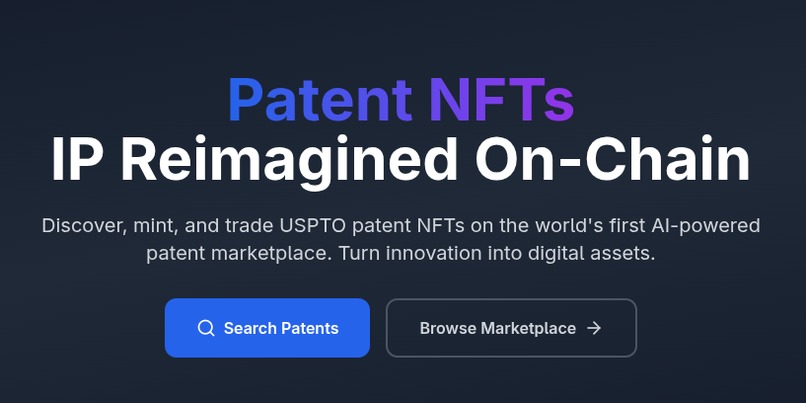
Home Page
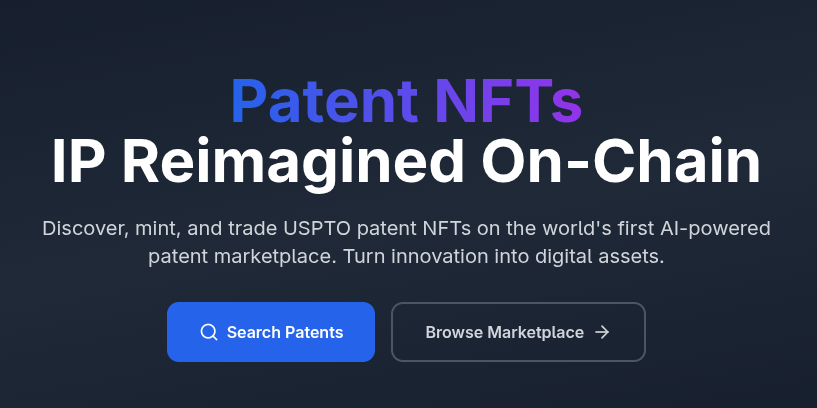
PatentNFT Project Story
The Inspiration
The spark for PatentNFT came from my own frustrating experience navigating the patent process. After securing a patent for a novel design, I was shocked by how slow, complex, and US-centric the system was. As a blockchain developer with experience in NFT projects, I saw an opportunity to blend AI and blockchain technology to revolutionize intellectual property (IP) management. I envisioned a world where patents could be owned, traded, and monetized as easily as digital assets, unlocking liquidity in the $180 billion IP market and empowering inventors globally.
What I Learned
Building PatentNFT taught me the intricacies of integrating real-time patent data with blockchain technology. I deepened my understanding of Ethereum smart contracts, USPTO API integration, and AI-driven search algorithms. I also learned how to balance user experience with technical complexity, ensuring the platform remains accessible to inventors, investors, and patent attorneys alike. Legal considerations—like verifying patent ownership and ensuring compliance—presented significant learning curves that fundamentally shaped the project's design.
How I Built It
PatentNFT is an AI-powered NFT marketplace for patents, built with a focus on scalability and usability. The tech stack includes:
Frontend: React with Tailwind CSS for a clean, responsive interface
Blockchain: Ethereum smart contracts for minting and trading patent NFTs
USPTO API Integration: Pulls real-time patent data for verification and metadata
AI Search Engine: Natural language processing to simplify patent discovery
Web3 Integration: MetaMask for seamless crypto transactions
// Example smart contract snippet for minting
contract PatentNFT {
    function mintPatent(address to, uint256 patentId) public {
        _mint(to, patentId);
    }
}
The platform allows users to search for patents using natural language queries (e.g., "solar energy quantum dots"), mint verified patents as NFTs, and trade them on a marketplace. Real-time analytics track patent values and market trends, while user profiles enable comprehensive portfolio management.
Challenges Faced
Patent Verification: Ensuring only legitimate USPTO patents could be minted required robust API integration and validation checks to prevent fraudulent NFTs.
AI Search Complexity: Building an AI system that could handle complex patent terminology and deliver relevant results proved to be a significant technical hurdle.
Scalability: Designing a system to handle millions of patents while maintaining performance demanded careful optimization of both smart contracts and database queries.
Legal Compliance: Navigating the complex legal landscape of IP ownership and blockchain-based assets required extensive research to ensure the platform aligns with existing regulations.
Despite these challenges, PatentNFT emerged as a functional prototype with a clear path to scalability. As a first-mover in the patent NFT space, it leverages AI and blockchain to create a liquid, global marketplace for intellectual property.


Log in or sign up for Devpost to join the conversation.