-
-
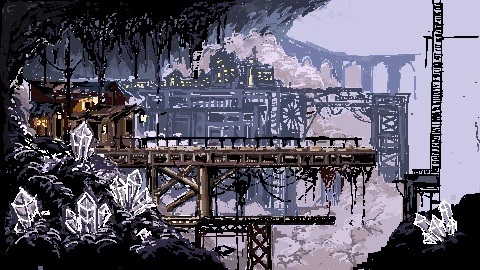
Scene2
-
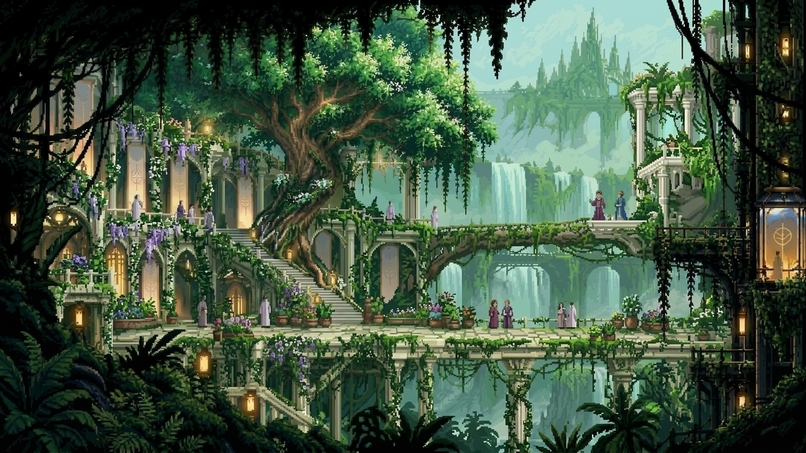
Scene3
-
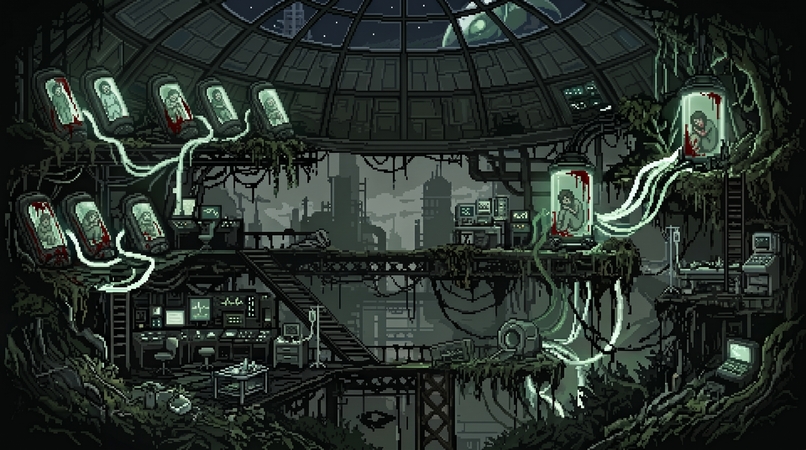
eden
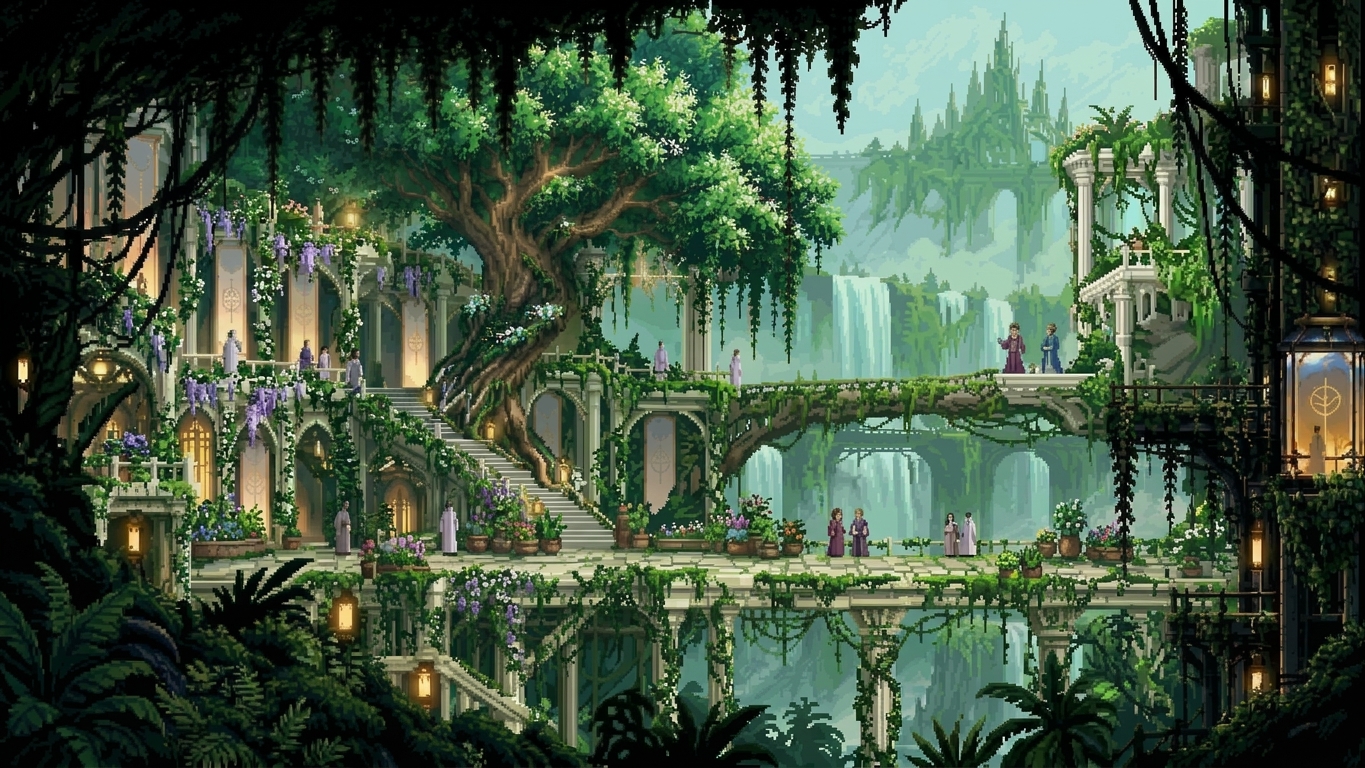
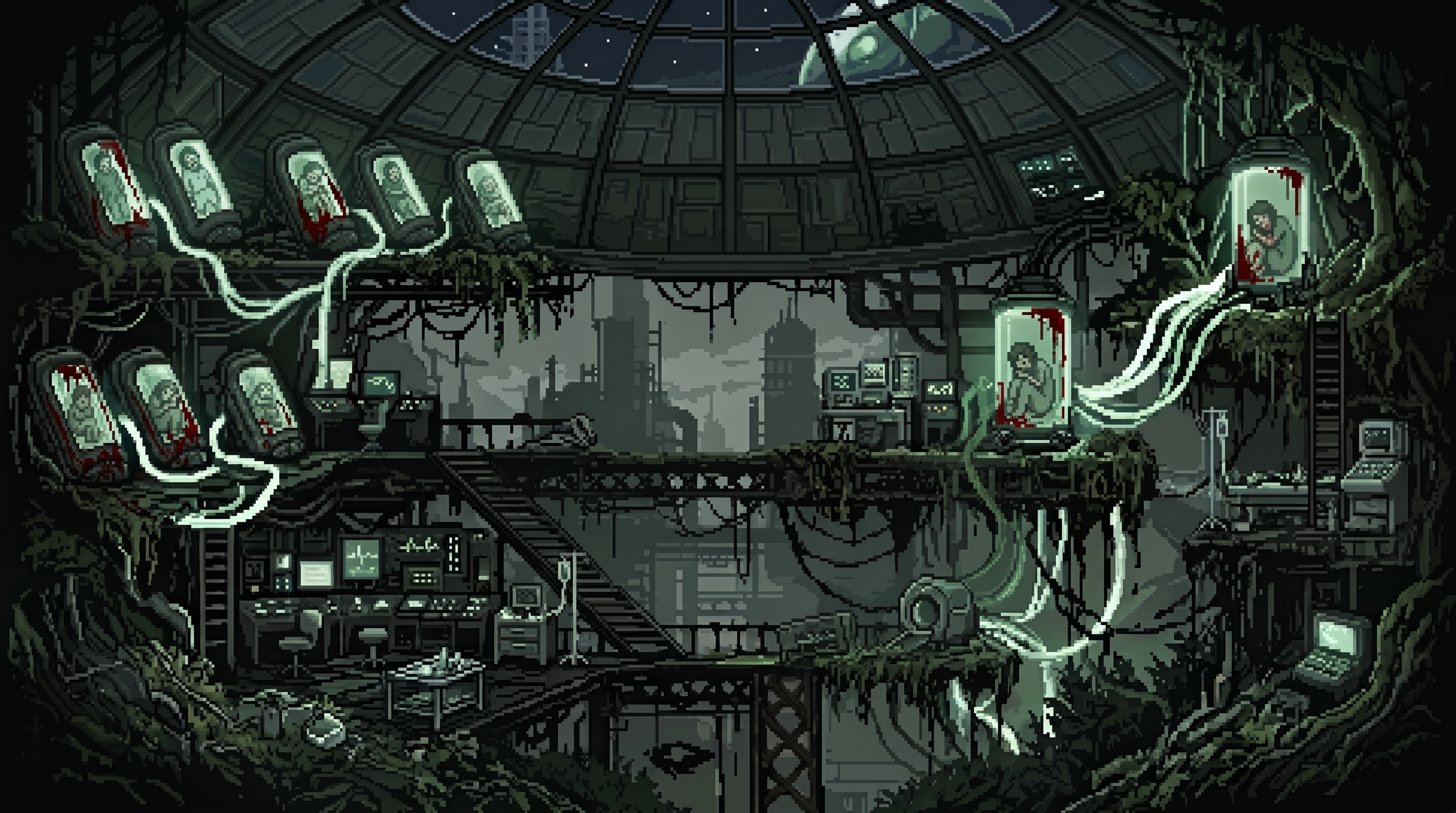
Inspiration
Almost every traditional 2D platformer trains players to follow the exact same instinct: move from left to right, consume resources, upgrade your arsenal, and conquer the environment. We realized that this classic gaming trope is a direct mirror of humanity's linear extractive economy—blindly marching forward while leaving irreversible ecological devastation in our wake.
We wanted to subvert this muscle memory. Inspired by the atmospheric environmental storytelling of Inside and the sharp, introspective prose of Disco Elysium, we asked ourselves: What if a game made you feel the intoxicating rush of unsustainable consumption, confronted you with the dark reality of "greenwashing," and then challenged you to walk backward—stripping away destructive tech in favor of circular systems, energy optimization, and renewable forces? Thus, AnotherRootInTheWall was born.
What it does
AnotherRootInTheWall is a reversible 2D narrative platformer and interactive sustainability simulator set on an Earth where 90% of the land has been reduced to dead, crystalline ash through "Geo-Casting"—a technology that permanently drains the life force of soil to forge godlike tech modules. Only the floating Eden Ring City preserves the last 10% of lush forests and lakes.
The gameplay is divided into two symmetrical halves across the same level geometry:
- The March Right (Linear Extractive Mode): Playing as a borderland drifter seeking your friends who were selected for Eden, you use a forbidden Geo-Extractor to drain surviving micro-oases (a lone oak, a steppe, a remnant sea) for overpowered movement skills (Double Jump, Plasma Blade, Heavy Armor). It feels effortless—until your Real-Time Carbon Footprint Tracker ($\text{CO}_2\text{e}$) skyrockets, toxic smog vignettes shrink your screen vision, and instruments permanently drop out of the soundtrack.
- The Truth of the 10%: Reaching Eden on the far right reveals a horrifying truth: Earth died 100% decades ago. Eden's "green paradise" is an artificial greenhouse powered by draining the biological life force of the very citizens recruited from the wastelands.
- The Walk Left (Circular & Sustainable Mode): Refusing to be complicit, you turn from right to left to rescue your companions. Stripping away your extractive weapons, you must navigate uphill terrain using four core real-world sustainability mechanics:
- Renewable Energy (Solar & Updraft Sails): Riding canyon thermal updrafts and sunlight beams for zero-carbon vertical traversal instead of burning fuel.
- Circular Economy (Modular E-Waste Upcycling): Magnetically compressing destroyed robotic hounds and industrial scrap into sturdy alloy stepping blocks rather than harvesting living trees.
- Energy Optimization (KERS & Waste-Heat Shield): Absorbing lethal 2000°C security lasers and steam vents to convert wasted thermal/kinetic energy into superconducting dash charges.
- Carbon Tracking & End-of-Run Sustainability Audit: Every sustainable action clears the screen smog and offsets carbon, culminating in a data-driven Sustainability Audit Report comparing your extractive vs. circular impact.
How we built it
We built AnotherRootInTheWall using Godot Engine 4.x (GDScript), focusing on a modular, state-driven architecture:
- Bidirectional Asymmetric Level Design: We engineered a unified level topology with a left-high, right-low stepped elevation profile. Moving left-to-right is a downhill/flat power trip; returning right-to-left transforms the exact same cliffs into steep vertical puzzles requiring upcycled blocks and wind updrafts.
- Finite State Machine (FSM) & Dual-Mode Controller: Both the player character and patrolling mechanical sentries run on clean FSMs (
PATROL,CHASE,TELEGRAPH_ATTACK), paired with a global state manager trackingPlayer_Leveland environmental degradation. - Quantitative Carbon & Exergy Modeling: To ground our gameplay in real environmental metrics, our HUD dynamically calculates net carbon impact ($C_{\text{net}}$) and energy optimization efficiency ($\eta_{\text{exergy}}$) in real time:
$$C_{\text{net}} = \sum_{i} (E_{\text{extractive}, i} \cdot \alpha_{\text{soil}}) - \sum_{j} (M_{\text{upcycled}, j} \cdot \beta_{\text{circular}})$$
$$\eta_{\text{exergy}} = \frac{W_{\text{useful}} + E_{\text{recovered}}}{E_{\text{total_input}}} \times 100\%$$
- Dynamic Audio-Visual Deprivation: Using custom shaders,
Camera2Dsmoothed boundary limits, and multi-layered parallax backgrounds, draining an oasis triggers an immediate desaturation wave and mutes specific acoustic stems (flutes, strings) in real time.
Challenges we ran into
- Avoiding "Forced Guilt" vs. Player Agency: A major narrative design trap was forcing players to drain nature to progress, only to scold them later. We solved this by designing dual-path obstacles: players can take the fast, high-carbon extractive shortcut, or engage with the slightly more tactical green-mode mechanics (like compressing scrap metal or timing laser parries) for a zero-carbon clear.
- Making "De-leveling" Fun on the Return Trip: In most action games, losing abilities feels frustrating. To prevent the right-to-left return journey from feeling sluggish, we implemented an "Environmental Reciprocity" system—when you return your tech modules to the dead soil, the revived nature actively assists you (e.g., regrown oak roots forming bridges, restored canyon winds lifting your cloak).
- Scope Management as Beginners: Building a 2D platformer from scratch meant learning physics tuning (
Coyote Time,Hitboxes/Hurtboxes,RayCast2Dledge detection) under tight time constraints. Adopting a strict Greyboxing (white-box prototyping) workflow allowed us to lock in our core loop before polishing visual assets.
Accomplishments that we're proud of
- Seamless Mechanics-as-Metaphor: Turning dry sustainability buzzwords (Carbon Tracking, Circular Economy, Energy Optimization, Renewable Adoption) into intuitive, tactile 2D platforming abilities that require less than 15 lines of code each but carry immense thematic weight.
- The Right-to-Left Narrative Payoff: Creating a genuinely emotional climax where walking backward and becoming "mechanically weaker" feels like the ultimate moral and ecological triumph, enhanced by Disco Elysium-style internal monologue sidebars (
[INLAND EMPIRE],[LOGIC],[PAIN THRESHOLD]). - From Zero to Playable Vertical Slice: As newcomers to 2D game development, successfully implementing a complete state machine, smoothed camera boundaries, and bidirectional level puzzles that play smoothly from start to finish.
What we learned
- Game Design & Godot Architecture: We gained hands-on mastery of 2D game terminology and engineering—from
CharacterBody2Dphysics andArea2Dtriggers to FSM enemy AI andCamera2Dlimit smoothing. - Systems Thinking in Sustainability: Translating environmental themes into code taught us that sustainability isn't just about "using less"—it's about redesigning the system (recovering waste heat via KERS, closing the loop on e-waste, and exposing the hidden human/ecological costs of greenwashing).
What's next for AnotherRootInTheWall
- Full Multi-Biome Campaign: Expanding all three acts (The Lone Oak Chasm, The Scrapyard Steppe, and The Petrified Salt Sea) with richer multi-layered parallax art and full acoustic orchestral stems.
- Real-World Carbon API Integration: Connecting our end-of-game Sustainability Audit Report to real-world carbon footprint datasets, translating in-game energy optimization choices into tangible daily life equivalents.
- No-Extraction "True Symbiosis" Route: Adding hardcore platforming routes for speedrunners to beat the entire game without extracting a single gram of soil life force.
Built With
- gdscript
- glsl
- godot
- godot-4)
- shaders

Log in or sign up for Devpost to join the conversation.