Inspiration
We often think of ourselves as separate from the universe, but our moods and health are deeply tied to the environment—and even the cosmos. From the "Monday blues" during a heatwave to the physical toll of solar activity, these human experiences usually go unrecorded. We were inspired to create a bridge between human sentiment and scientific data, using NASA’s vast datasets to see if the "pulses" of the Sun and Earth resonate in our collective emotional temperature.
What it does
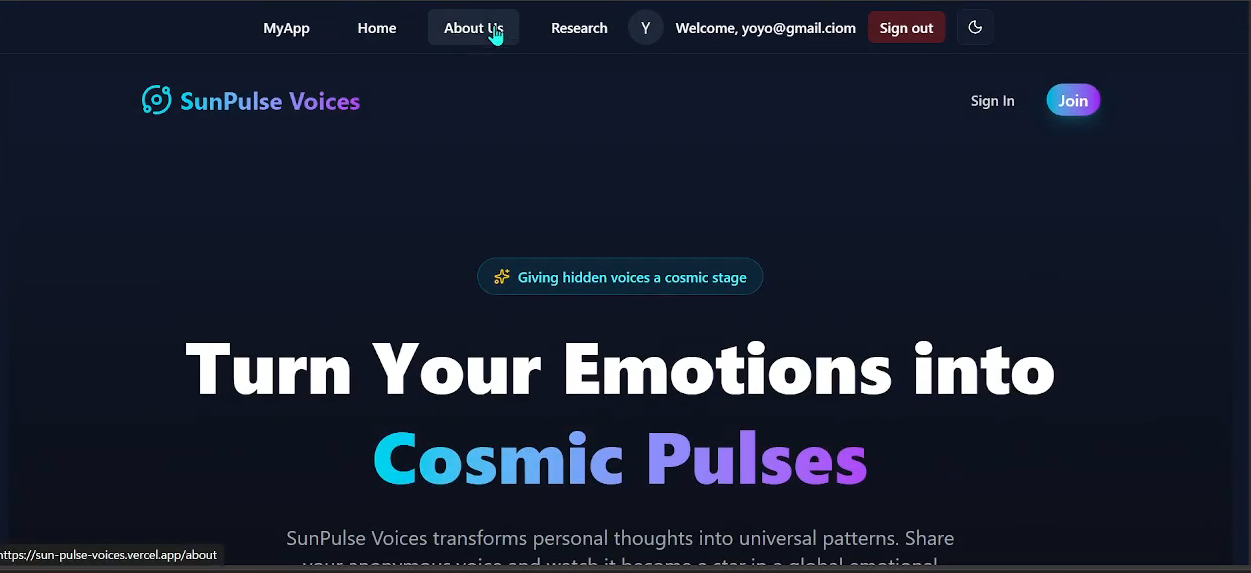
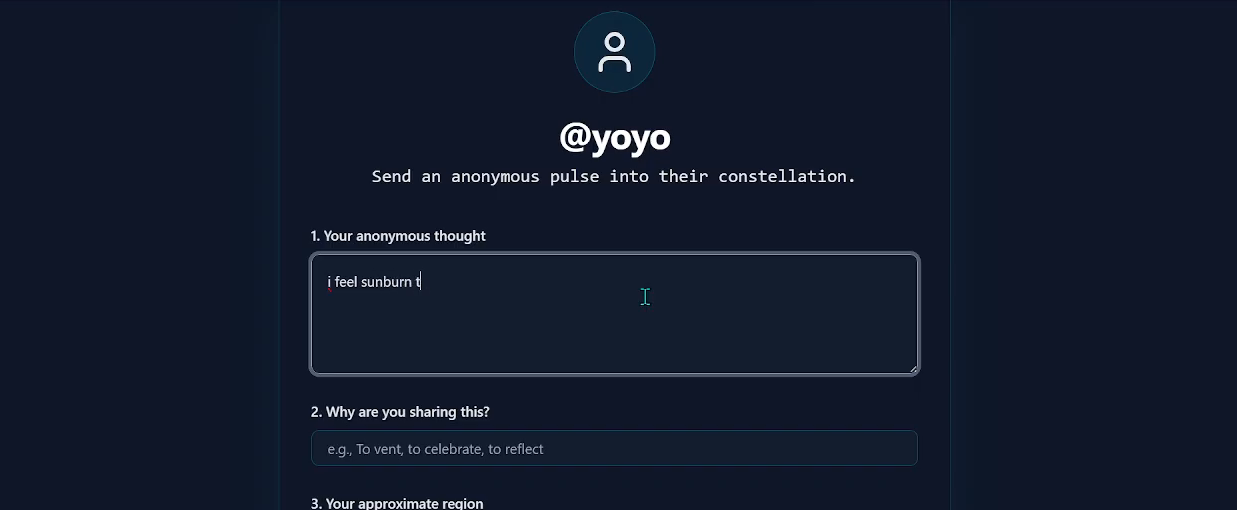
SunPulse Voices is a data-correlation platform that transforms anonymous human confessions into cosmic insights.
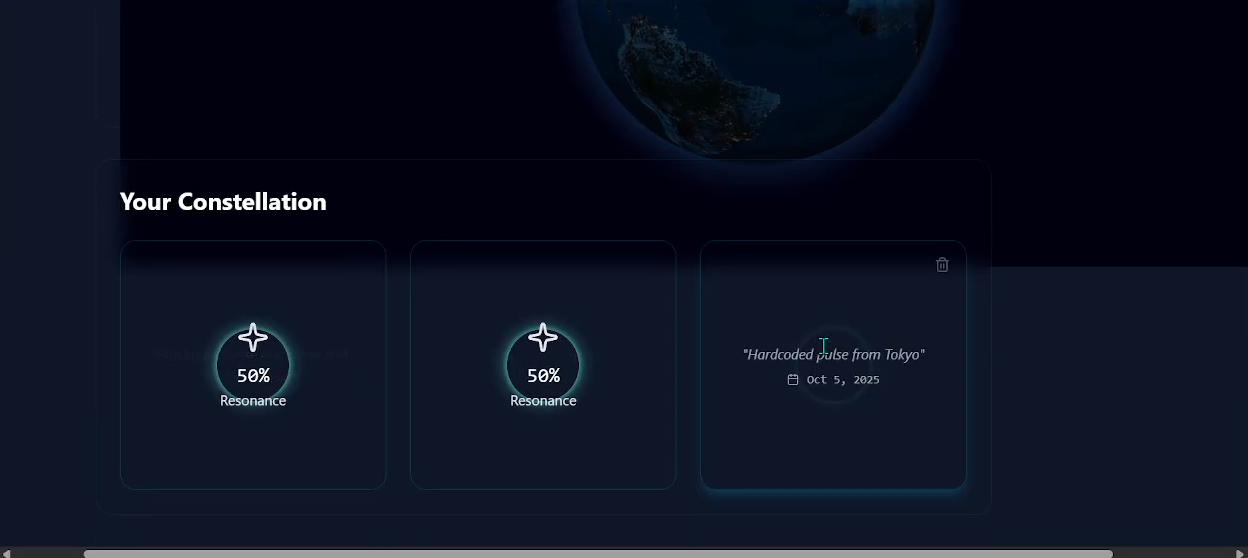
Emotional-Scientific Correlation: When a user shares a confession, the system analyzes the emotion (Calm, Intense, Stormy) and correlates it with real-time NASA space weather and climate data.
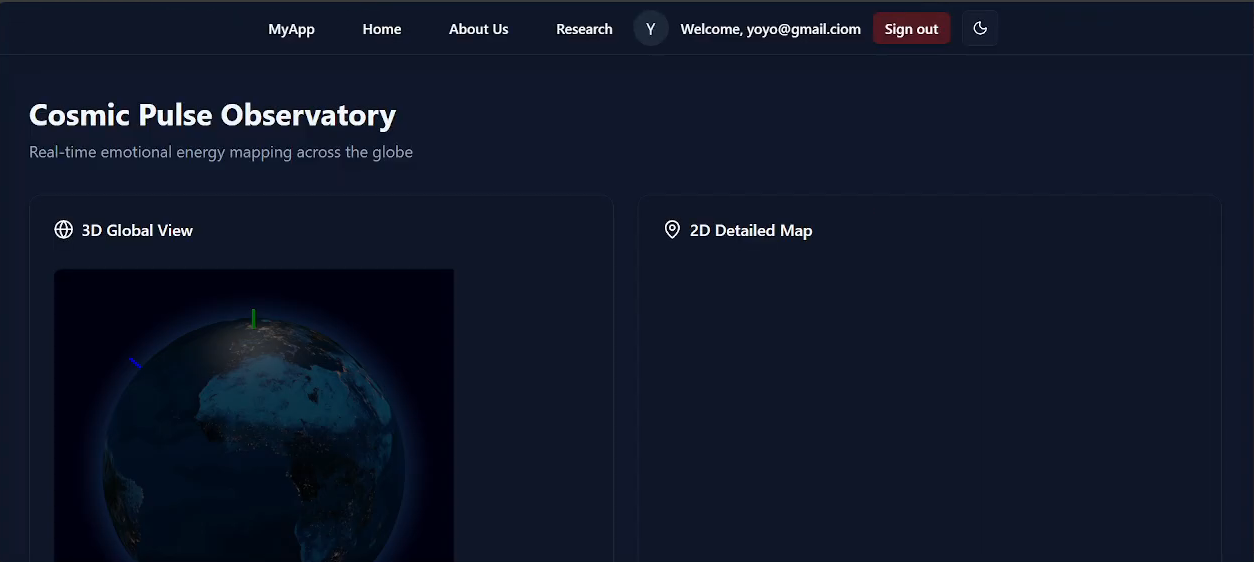
Interactive Data Mapping: Features a 3D Globe (react-globe.gl) and 2D maps to visualize where emotional "hotspots" align with geographic climate patterns.
AI-Powered Health Assessment: Uses Google Gemini to scan confessions for health risks related to UV exposure or solar activity, providing evidence-based safety recommendations.
Research Dashboard: A dedicated space for researchers to view tables of NASA research reports alongside real-world user experiences.
How we built it
The project is built on a high-performance, data-heavy stack:
Framework: Next.js 15 (App Router) for bleeding-edge performance and SEO.
Visualization: react-globe.gl for the 3D celestial interface and Leaflet for terrestrial mapping.
Intelligence: Google Gemini AI handles the Natural Language Processing (NLP) to categorize emotions and link them to scientific keywords.
Backend: MongoDB stores confessions, while custom API integrations fetch real-time data from NASA APIs.
UI/UX: Tailwind CSS and shadcn/ui allow for a "Space-Age" aesthetic that remains accessible and mobile-friendly.
Challenges we ran into
Data Synthesis: Marrying qualitative data (how someone feels) with quantitative data (solar flare magnitude) was a major logic hurdle. We had to design custom prompts for Gemini to ensure scientific accuracy.
3D Rendering Performance: Managing a 3D globe with real-time data markers in a React environment required heavy optimization and dynamic imports to prevent lagging on mobile devices.
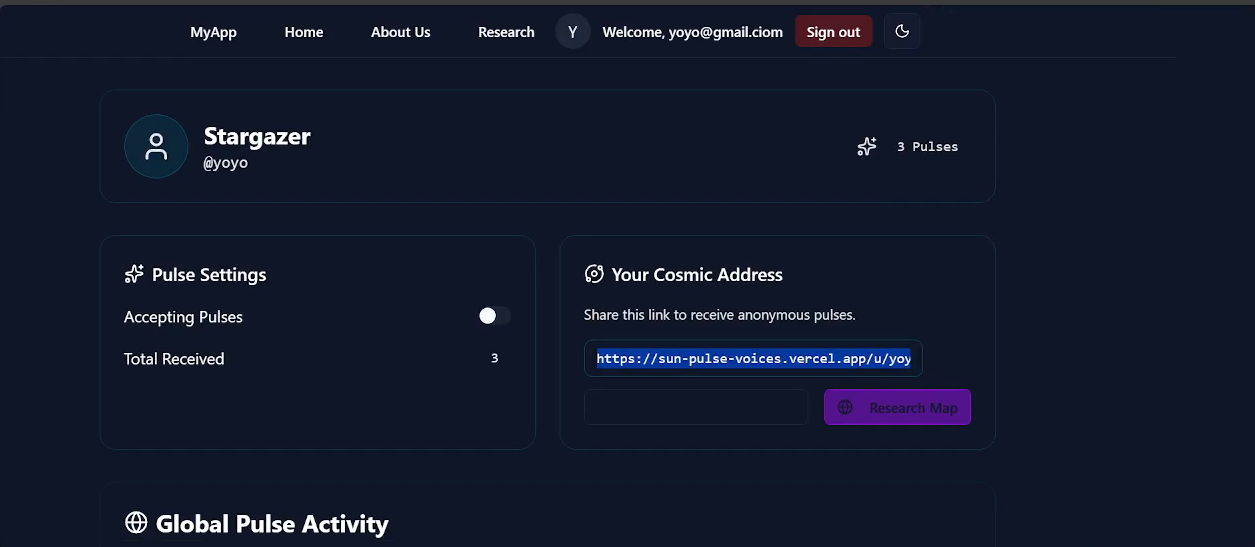
Authentication Security: Ensuring the platform remains anonymous while maintaining the integrity of the data points for research purposes.
Accomplishments that we're proud of
NASA Data Integration: Successfully creating a pipeline that pulls complex scientific reports and makes them understandable to the average user.
The "Cosmic Alignment" Algorithm: We developed a unique way to calculate how "aligned" a person's current state is with the cosmic weather.
System Architecture: Building a system that handles everything from JWT authentication to 3D rendering and AI analysis in one cohesive package.
What we learned
We gained deep insights into how environmental factors—like the UV index and solar activity—actually impact human health and psychology. Technically, we mastered Next.js 15's new features and learned how to build ethical AI systems that provide health advice without overstepping into medical diagnosis.
What's next for SunPulse Voices
Predictive Analytics: Using historical data to predict "emotional stormy weather" based on upcoming solar activity.
Wearable Integration: Connecting with IoT devices to correlate heart rate and sleep patterns directly with the SunPulse dashboard.
Community Challenges: Gamifying the "scientific reporting" process to encourage more users to contribute data for global climate research.

Log in or sign up for Devpost to join the conversation.