-
-
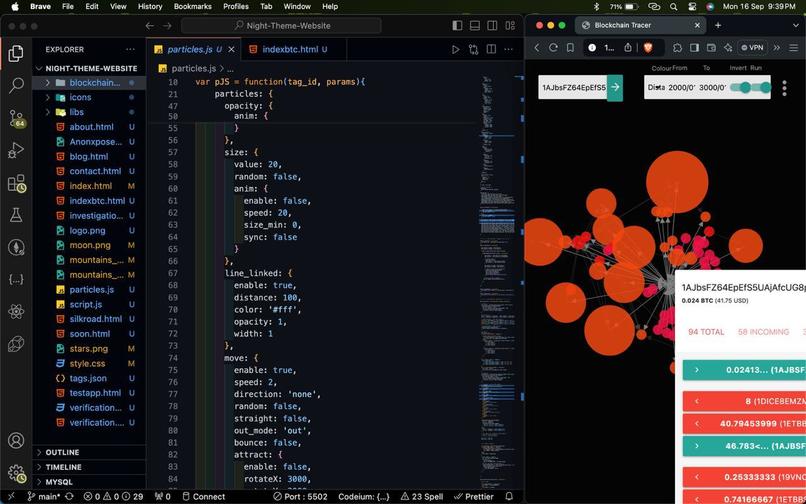
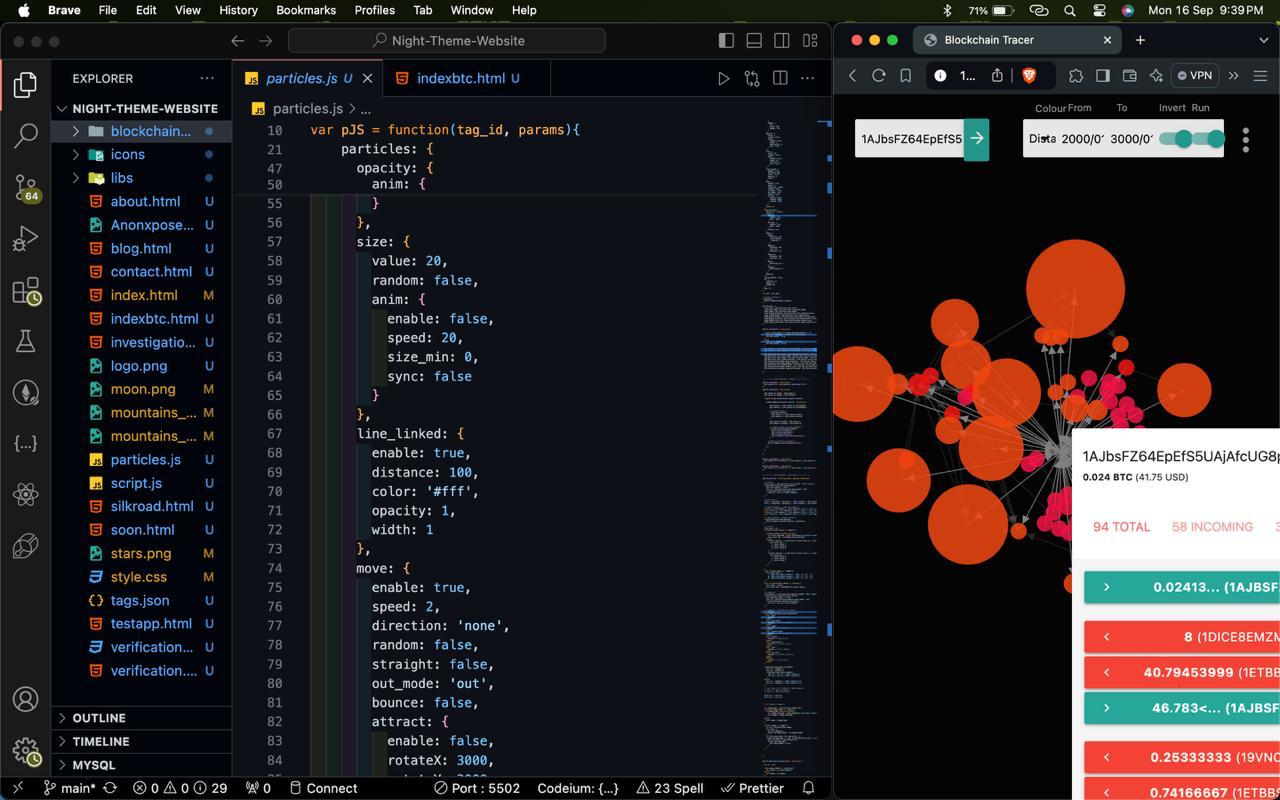
Visualised data of traced addresses of dark web
The inspiration for AnonXpose came from the rising challenges faced by law enforcement agencies in identifying and tracking illegal activities on the dark web. The anonymity provided by cryptocurrency transactions and onion sites operating on the TOR network has created significant barriers to de-anonymizing criminals. Our team wanted to develop a tool that could bridge this gap by leveraging blockchain analysis and machine learning to provide actionable insights for investigators.
We aimed to create a solution that not only tracks cryptocurrency transactions but also maps identities, ultimately helping authorities to uncover underground operators.
What We Learned
Working on AnonXpose was an incredible learning experience. Here are the key takeaways: • Blockchain Analysis: Gained in-depth knowledge of transaction tracing, clustering algorithms, and the behavior of mixers like Tornado Cash. • Identity Mapping: Explored methods to map wallet addresses to real-world identities using tools like CEX databases, ENS mappings, and NFT interactions. • Machine Learning: Implemented and fine-tuned clustering algorithms to detect patterns in transaction flows. • Collaboration: Worked effectively as a team, balancing the demands of technology development, research, and presentation.
How We Built It 1. Tech Stack: • Frontend: React.js for the dashboard interface. • Backend: Node.js for API interactions and data handling. • Blockchain Analysis: Python for transaction flow analysis and machine learning implementation. • Databases: MongoDB for storing blockchain data, identity mappings, and clustering results. 2. Process: • Problem Research: Studied the operational methods of onion sites and cryptocurrency transaction mechanisms. • Data Collection: Scraped dark web marketplaces and gathered wallet addresses using anonymous web scrapers. • Analysis: Used blockchain APIs (e.g., ETH, BTC, Monero) to collect transaction data and applied multilayer clustering algorithms to detect illicit flows. • Visualization: Created an intuitive dashboard for law enforcement officers to visualize transaction flows, clusters, and mapped identities. 3. Key Features: • Address Matching Algorithm: Traces wallet addresses to identify transaction patterns and connections. • Multilayer Clustering Model: Groups transactions and entities for better visualization of illicit activities. • Identity Mapping: Maps wallet addresses to CEX accounts, ENS names, and NFTs for de-anonymization. • Dashboard: Visualizes data in a flowchart format, making it user-friendly for investigators.
Challenges We Faced • Handling Anonymity: Scraping onion sites on the TOR network while maintaining our anonymity was complex and required careful configuration of scrapers. • Analyzing Monero: Since Monero transactions are privacy-focused, identifying patterns required innovative approaches like behavioral analysis and transaction flow approximations. • Large-Scale Data: Processing and storing massive amounts of blockchain data required efficient database design and optimization. • Legal Boundaries: Ensuring our methods complied with ethical and legal guidelines while addressing sensitive use cases was a constant consideration.
Conclusion
AnonXpose was a challenging yet rewarding project that empowered us to push the boundaries of blockchain analysis and identity mapping. The tool has the potential to revolutionize how law enforcement agencies tackle dark web activities, offering them the means to trace illicit cryptocurrency transactions and uncover underground operators.
Next Steps:
We plan to:
1.  Integrate support for more privacy-focused cryptocurrencies like ZCash.
2.  Enhance identity mapping accuracy with AI-driven techniques.
3.  Collaborate with law enforcement agencies for real-world testing and feedback.
Built With
- ai
- blockchain
- chart.js
- javascript
- mangodb
- node.js
- react.js
- web3

Log in or sign up for Devpost to join the conversation.