-
-
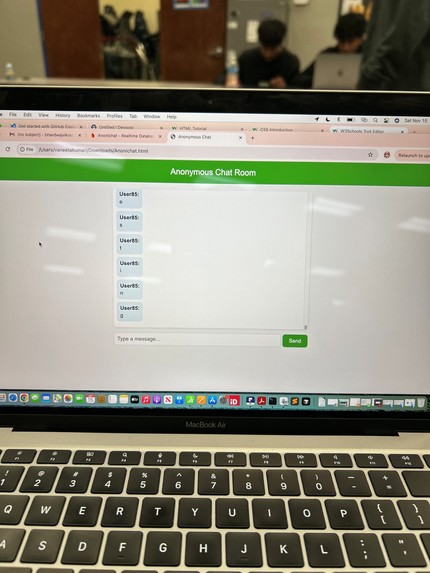
Picture of the website being used

Inspiration
Inspiration
AnoniChat was inspired by the idea that people often understand each other better when identity doesn’t get in the way. Labels, assumptions, and judgments can make conversations harder than they need to be. I wanted to create a space where none of that mattered—where anyone could talk freely, connect with strangers, and learn from perspectives different from their own. The goal was simple: help people communicate across differences by removing the pressure of being seen or judged.
What it does
AnoniChat is a real-time anonymous chat platform that allows multiple people to talk instantly without creating an account or sharing personal information. Every visitor is assigned a temporary anonymous username and can join the conversation immediately. Messages appear across all connected devices within a fraction of a second, creating a smooth, live conversation experience.
The focus is on openness, privacy, and connection—helping people share, listen, and understand each other in a safe and simple environment.
How we built it
The project is built using a lightweight front-end with HTML, CSS, and JavaScript, combined with Firebase Realtime Database for instant message synchronization. The frontend handles the message interface, auto-scrolling, and anonymous username generation. Firebase stores each message and broadcasts updates to all connected clients instantly.
The architecture is intentionally minimal so the experience feels fast and accessible to anyone with a browser.
Challenges we ran into
Several hurdles came up while building AnoniChat:
Realtime synchronization issues: Ensuring messages updated instantly across tabs required careful debugging.
Database configuration: Getting Firebase rules and paths set correctly was crucial for allowing users to write and read messages during testing.
Incorrect URLs: Even a small typo in the database URL completely stopped the chat from syncing, so attention to detail was essential.
Cross-device testing: Making sure everything behaved the same on multiple browsers and devices took trial and error.
Each challenge made the system more stable and helped shape the final version.
Accomplishments that we're proud of
Creating a clean, minimal chat experience that works instantly across devices
Building a space where people can talk without pressure or identity barriers
Getting multi-user live syncing working smoothly
Designing a UI that feels simple, friendly, and distraction-free
Bringing an idea focused on connection and understanding into a real product
What we learned
Throughout the project, several important lessons stood out:
Real-time apps require careful attention to detail—especially when configuring databases
Clean design makes the experience more welcoming and easier to use
Privacy-focused features matter more than ever in online communication
Testing on multiple devices helps catch issues that don’t appear on a single screen
Small improvements in UX can dramatically change how people interact with the app
What’s next for AnoniChat
Looking forward, there are several features planned to make AnoniChat even more meaningful and engaging:
Message categories or topic rooms to guide conversations
Optional cultural or interest-based chat modes to help users learn from people with different backgrounds
Customizable anonymous avatars
Improved moderation tools to keep the environment safe
Mobile-optimized UI enhancements
Potential group conversation events or prompts to encourage deeper discussions
The goal is to continue developing AnoniChat into a platform where people can connect openly, honestly, and respectfully—no matter who they are or where they come from.

Log in or sign up for Devpost to join the conversation.