-
-
-
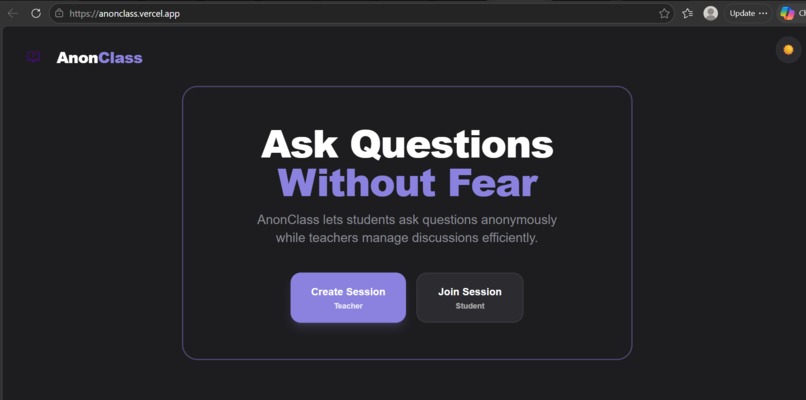
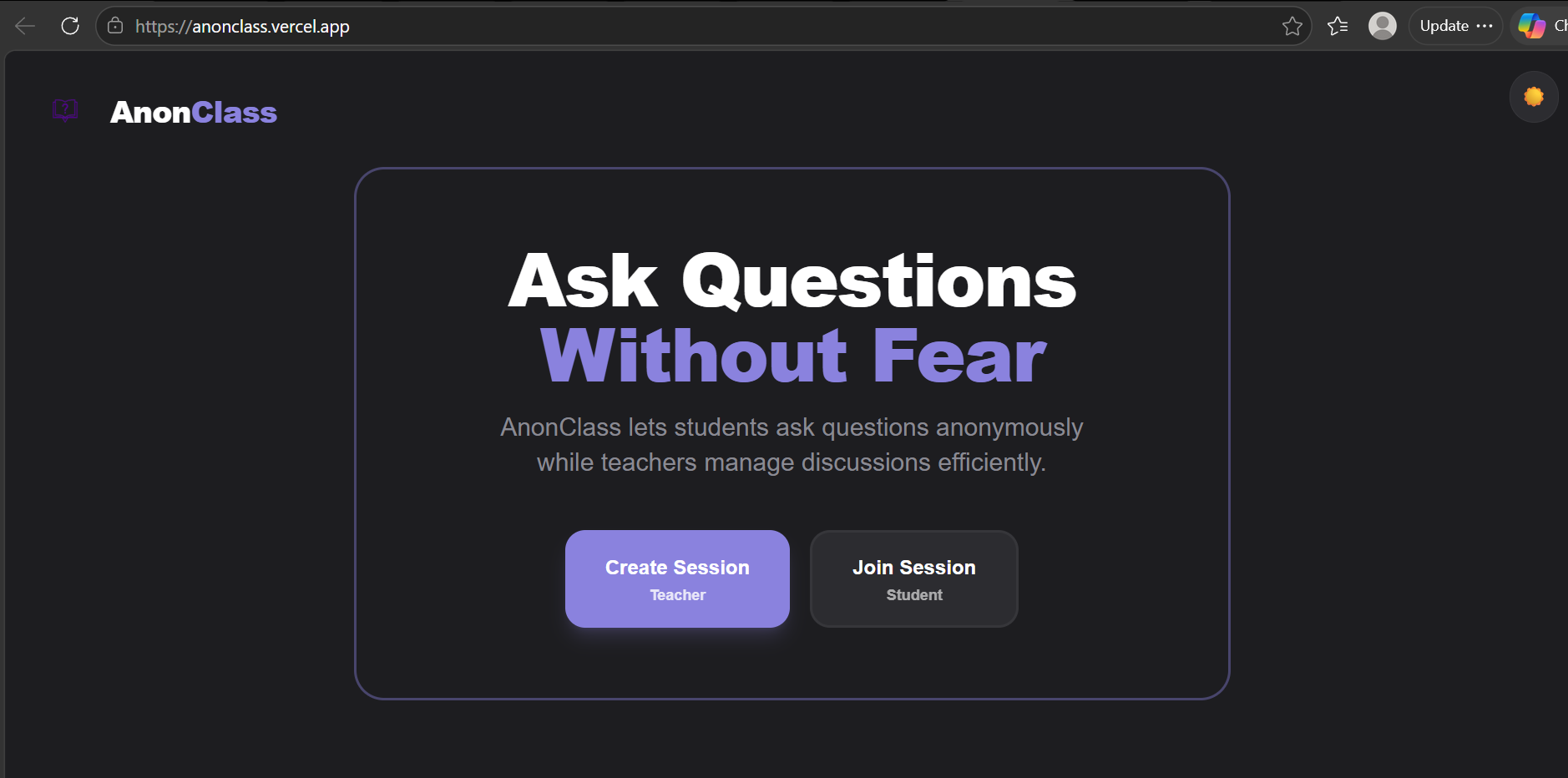
Landing page
-
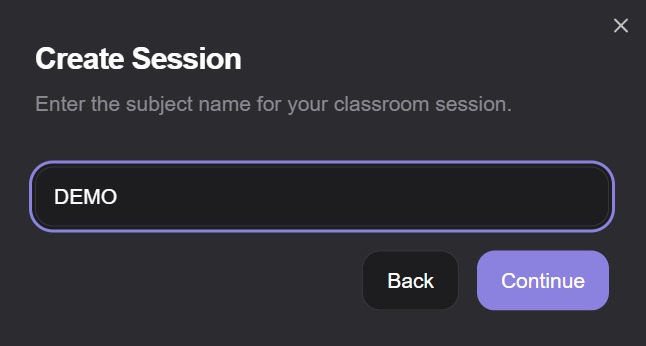
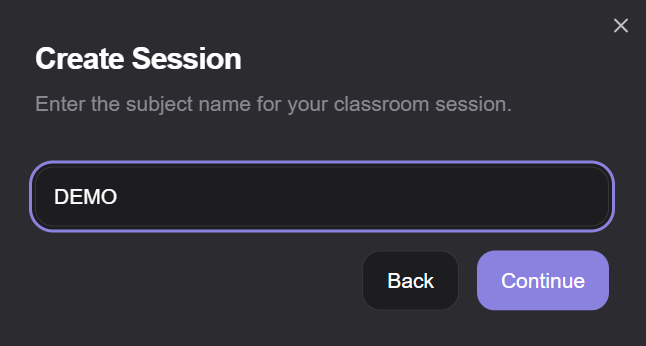
Create session window
-
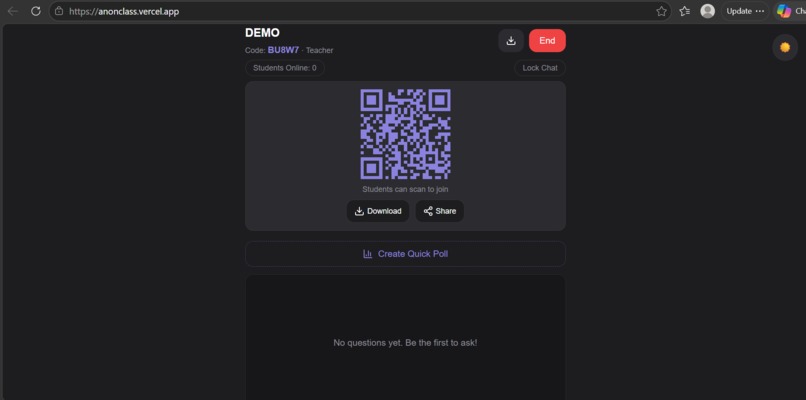
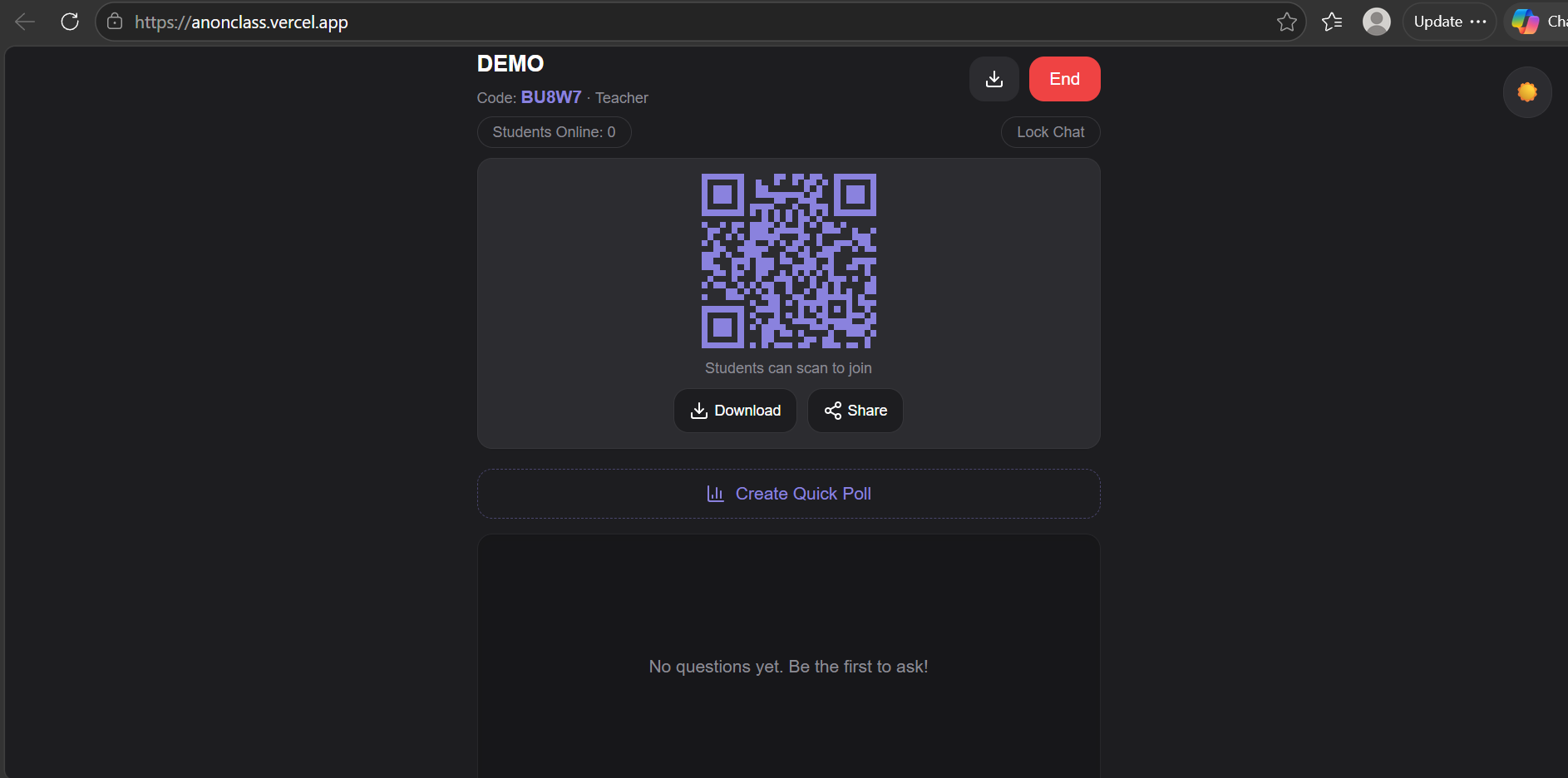
Teacher's interface
-
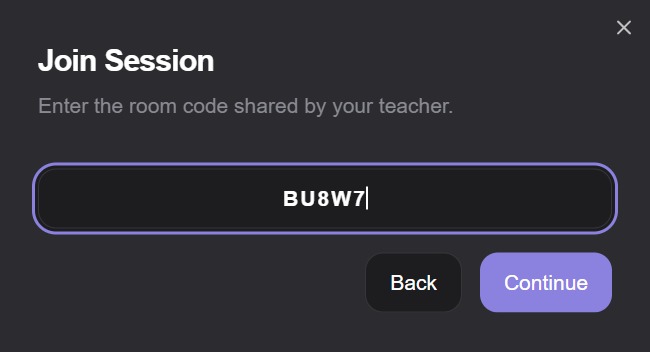
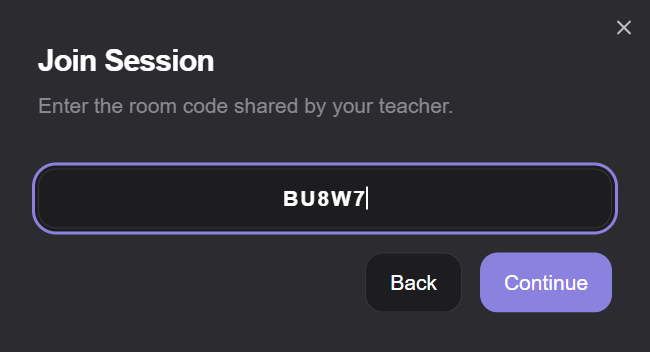
Join session window
-
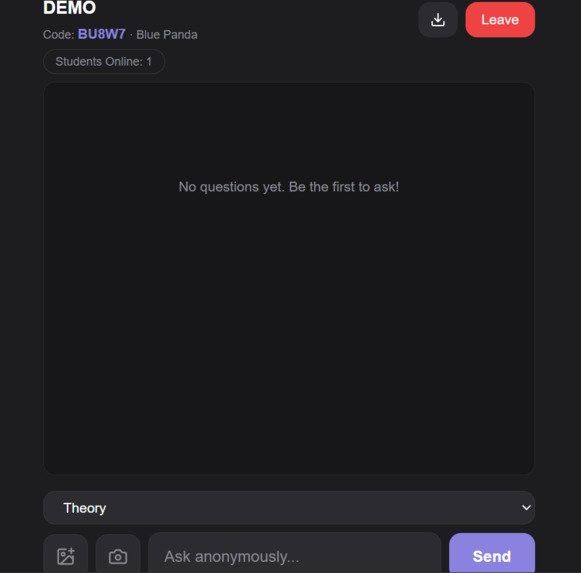
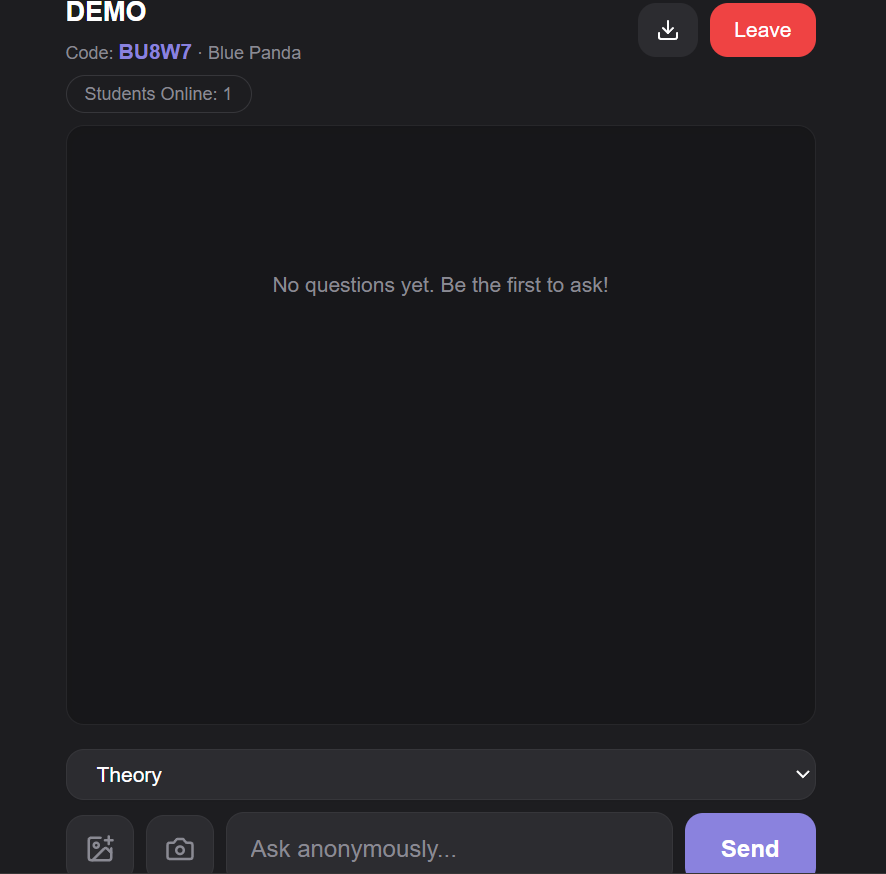
Student's interface
-
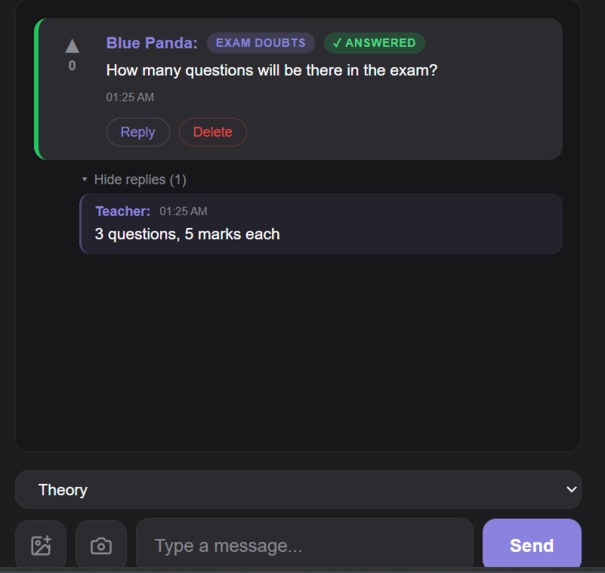
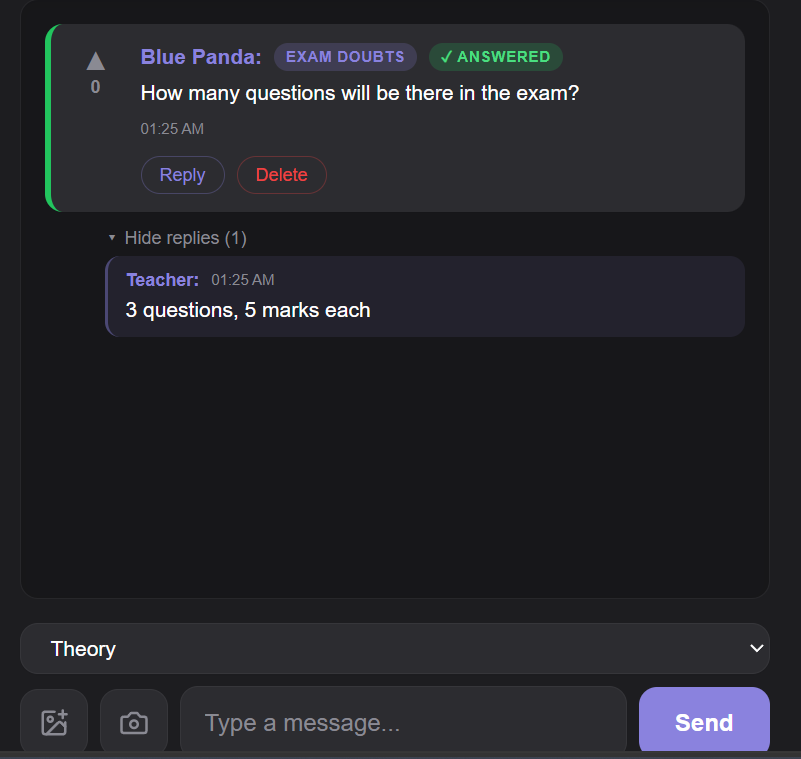
Teachers can answer questions
-
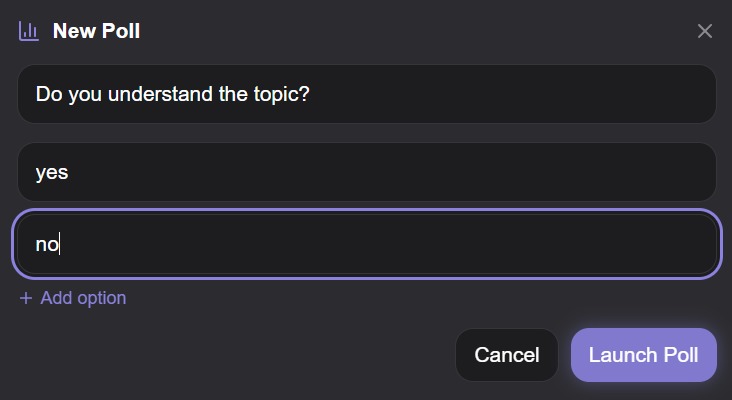
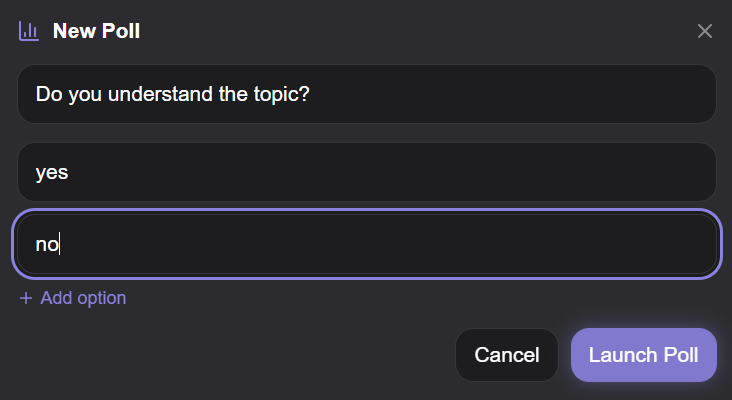
Teacher can post polls
-
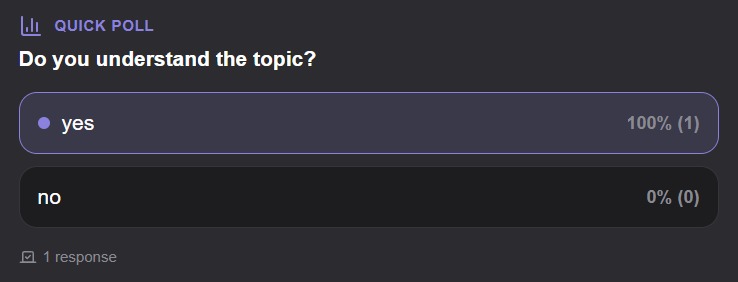
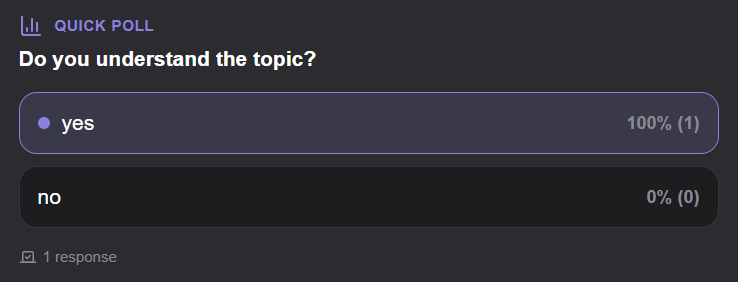
Students can participate in polls
-
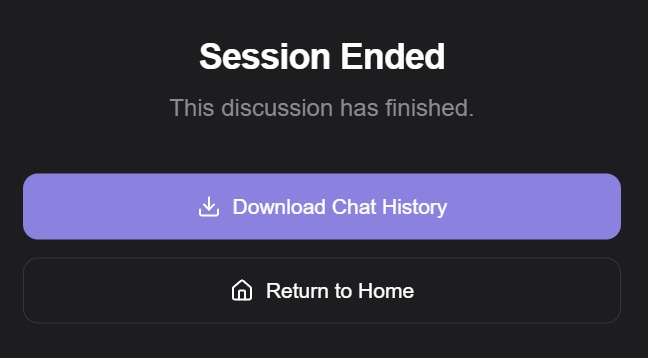
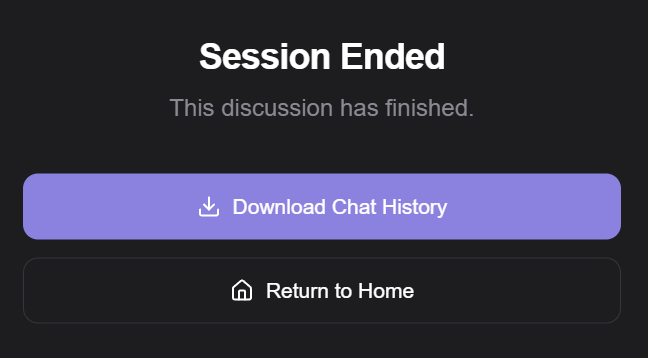
End of session
Inspiration
In many classroom environments, students often hesitate to ask questions due to fear of judgment, embarrassment, or social anxiety. This hesitation can limit learning and reduce classroom engagement. We observed this pattern not only among our peers but also in our own experiences, where important questions remained unasked simply because of discomfort in speaking up.
This inspired us to create "AnonClass", a platform designed to remove this barrier by allowing students to interact anonymously, ensuring that curiosity is never suppressed by fear.
What it does
AnonClass is a classroom interaction platform designed to make student participation easier and more comfortable. It allows students to join a session through a QR code and communicate using randomly assigned anonymous identities. Through this system, students can ask questions freely without fear of being judged.
Teachers can view these questions in real time and choose to: -Reply directly within the platform -Address them verbally during the lecture
Additional features like live polls and chat control help maintain a structured and interactive learning environment. Overall, the platform bridges the communication gap between students and teachers.
How we built it
AnonClass was designed as an interactive classroom support tool with a focus on simplicity and usability.
The core features include:
-Anonymous Chat System: Each student is assigned a random identity to ask questions freely -Live Polls: Teachers can quickly gather feedback or check understanding -Chat Control (Lock/Unlock): Maintains discipline during lectures -QR Code Access: Enables quick and easy joining without complicated setup
We structured the platform to ensure smooth interaction between students and teachers, where questions can either be answered digitally or addressed directly during the lecture.
Challenges we ran into
Like any real-world project, we faced multiple challenges during development: -Balancing anonymity and control: Ensuring students remain anonymous while preventing misuse required careful feature design -Designing an intuitive interface: The system needed to be extremely simple so that users could interact without confusion -Real-time interaction handling: Managing smooth and responsive communication between multiple users was a key challenge -Feature prioritization: Deciding which features (polls, chat lock, etc.) added the most value without overcomplicating the platform
Each challenge helped us refine both the technical structure and the user experience of the application.
Accomplishments that we're proud of
One of our biggest accomplishments is successfully addressing a real and relatable problem faced by students in classrooms. Instead of creating a generic project, we focused on something meaningful and impactful.
We are especially proud of: -Designing a system that promotes inclusive participation -Creating a clean and easy-to-use interface for both students and teachers -Integrating multiple features (anonymous chat, polls, QR access, chat control) into one cohesive platform
Most importantly, we transformed an idea based on everyday observations into a functional solution.
What we learned
Throughout the development of this project, we gained both technical and conceptual insights.
On the technical side, we improved our understanding of: -Real-time communication systems (chat-based interaction) -User identity abstraction (anonymous usernames) -UI/UX design focused on simplicity and accessibility
On a deeper level, we learned that designing for users is not just about functionality, but also about psychological comfort.
What's next for AnonClass
While AnonClass provides a strong foundation, there is significant room for future improvement.
Our next steps include: -Enhancing moderation features to prevent misuse of anonymity -Adding smart question filtering or prioritization -Providing analytics for teachers to track student engagement -Expanding the platform for use beyond classrooms, such as seminars or workshops
We aim to continuously refine the platform to make it more effective, scalable, and impactful in different learning environments.
Built With
- firebase
- react
- shadcn-ui
- talwindcss
- typescript
- vite

Log in or sign up for Devpost to join the conversation.