Inspiration
ANOMALIS began with a question that felt almost alive: what happens when beauty becomes unstable?
I imagined a laboratory filled not with monsters, but with light — strange, breathing systems held inside glass and chrome chambers, each one glowing with promise and danger. The player would not be a warrior or a hero in the traditional sense. They would be a caretaker of impossible reactions, a conductor of a living machine, someone standing at the edge of discovery and asking, one more time: should I stop now, or should I push further?
The inspiration came from the tension between curiosity and control. In science, the most interesting systems are often the ones that resist being still. They grow, shift, react, and sometimes collapse. I wanted ANOMALIS to capture that feeling: the thrill of watching a system become more powerful, knowing that the same force producing value might also be the force that breaks containment.
What it does
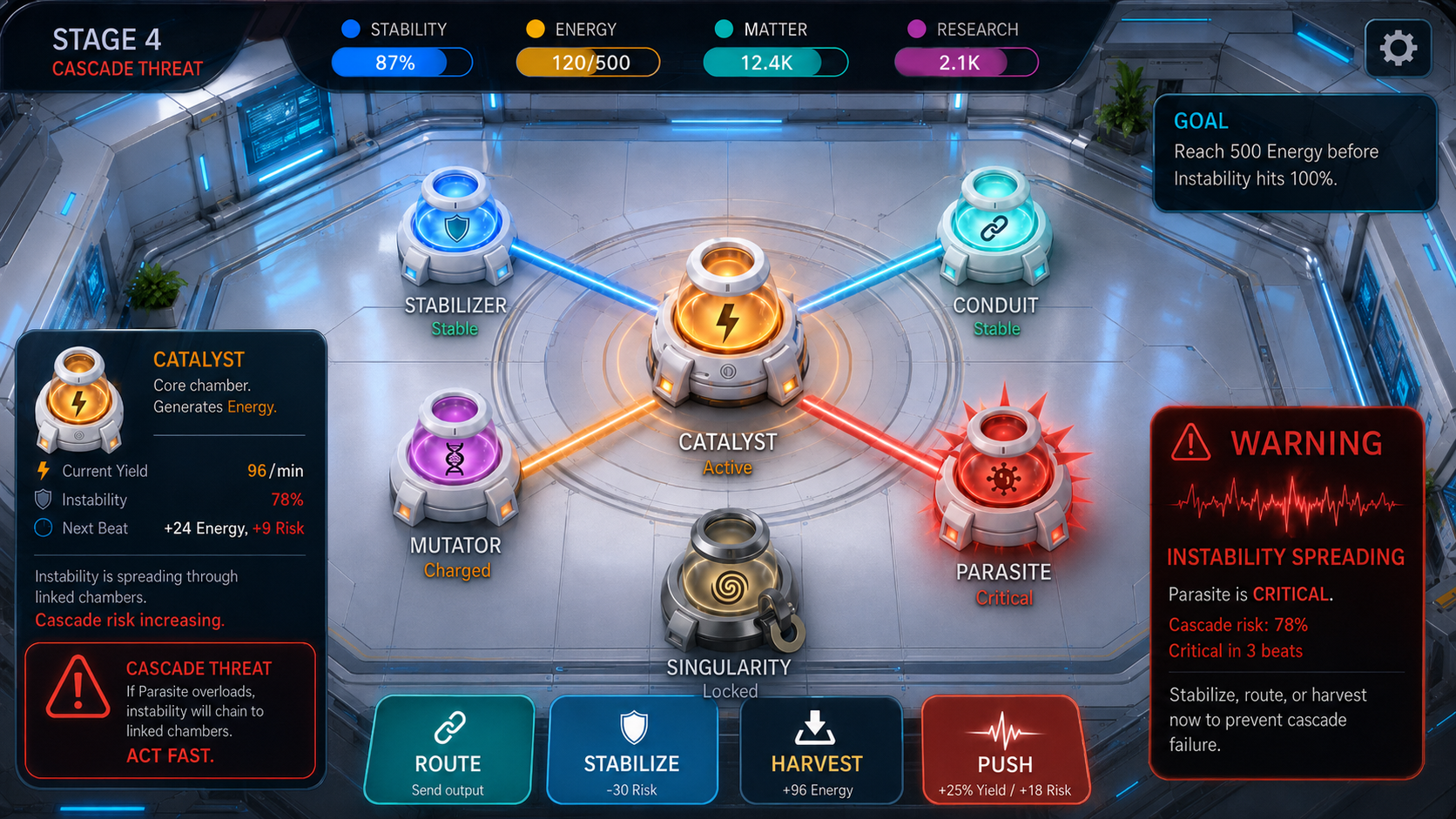
ANOMALIS is a mobile simulation and management game about running a futuristic anomaly containment facility. Players contain strange living energy systems inside clean-tech chambers, connect them into a facility network, harvest their output, and prevent instability from spreading.
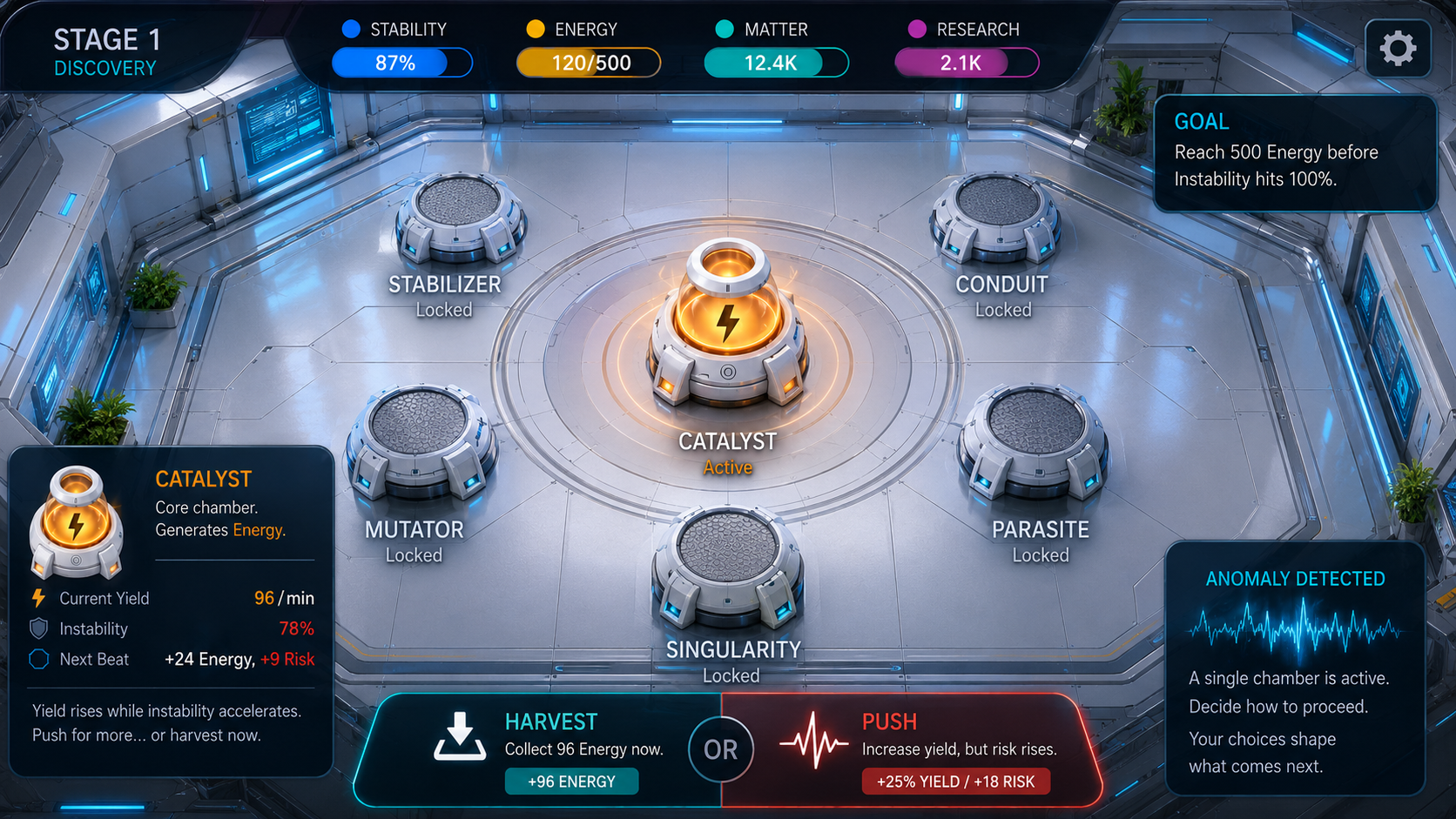
At the heart of the game is one recurring choice: harvest now, or push one more beat?
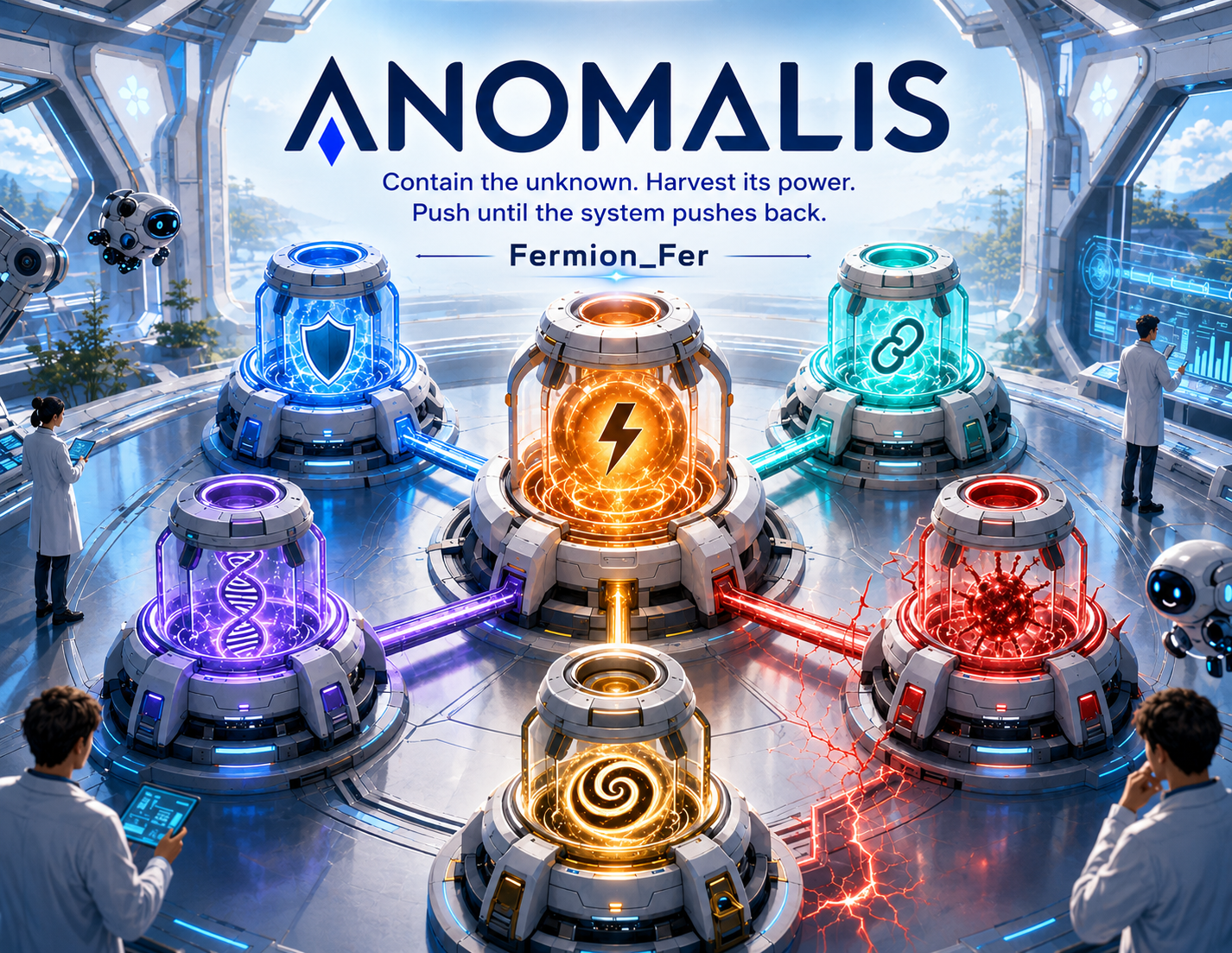
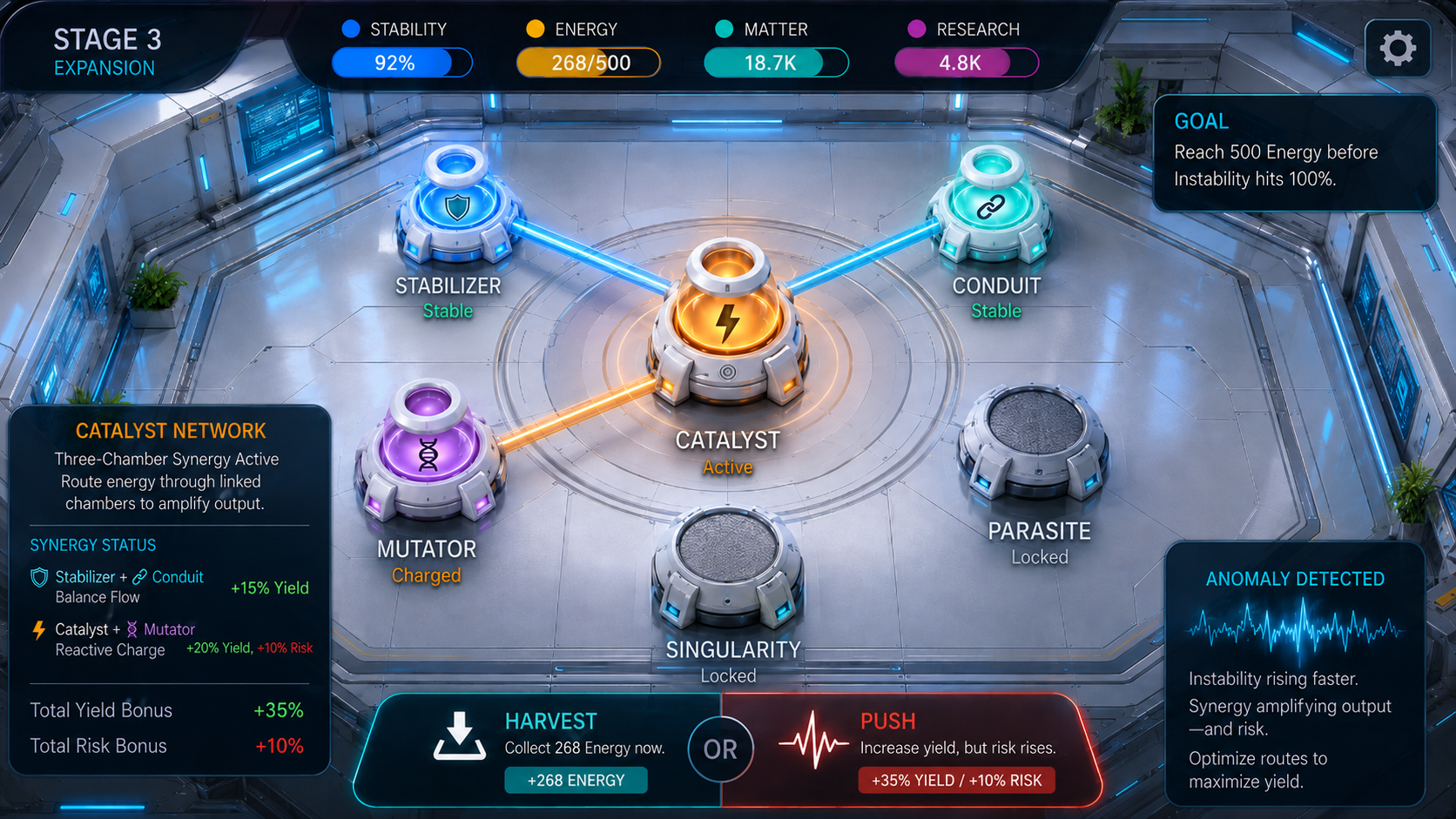
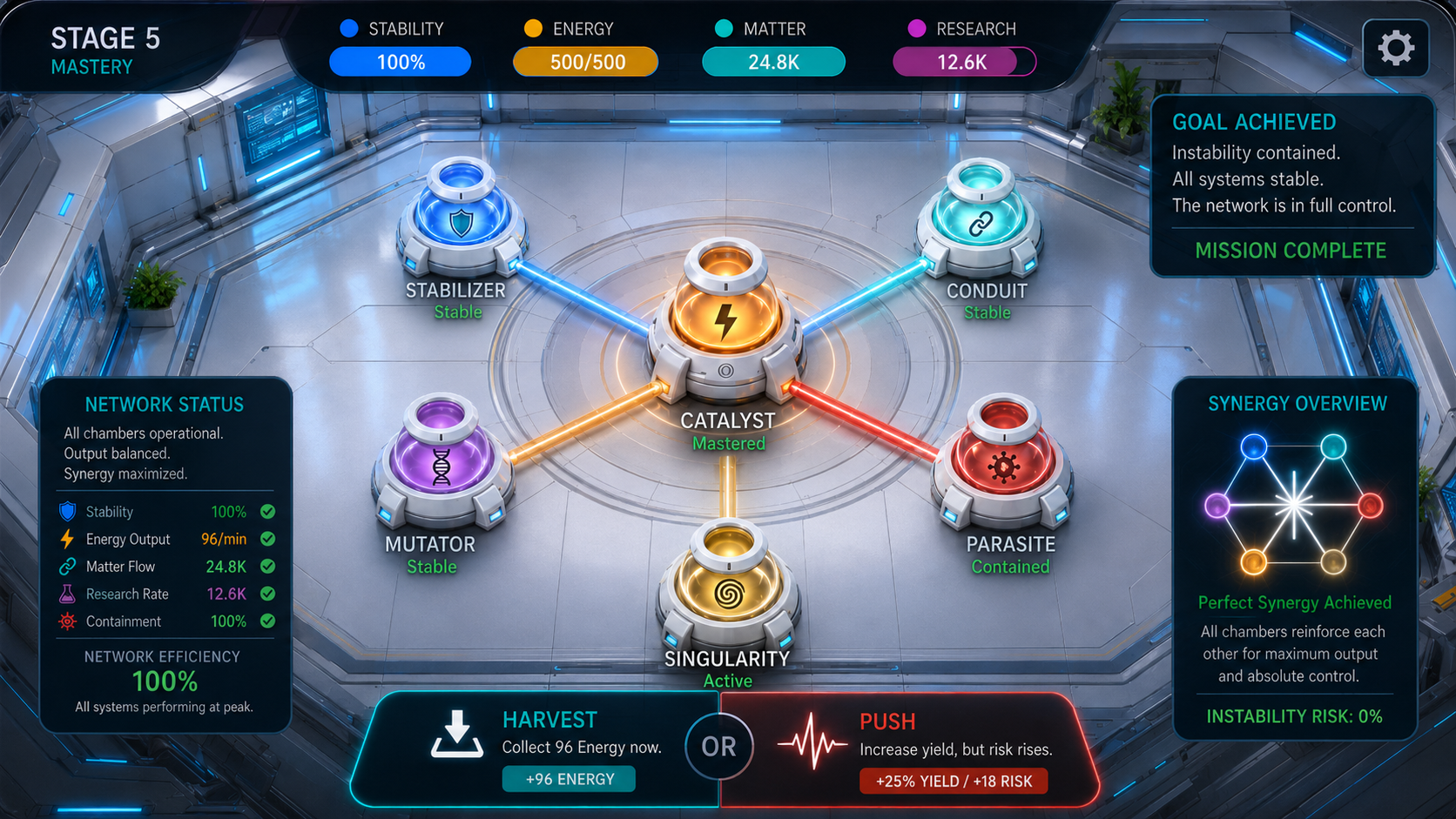
Each anomaly chamber has its own identity. The Stabilizer protects the system. The Catalyst produces powerful energy. The Conduit routes flow. The Mutator changes behavior. The Parasite destabilizes nearby chambers. The Singularity waits as a mysterious high-risk, high-value force.
The game is about controlled greed. Every reward invites risk, and every risk creates a story.
How we built it
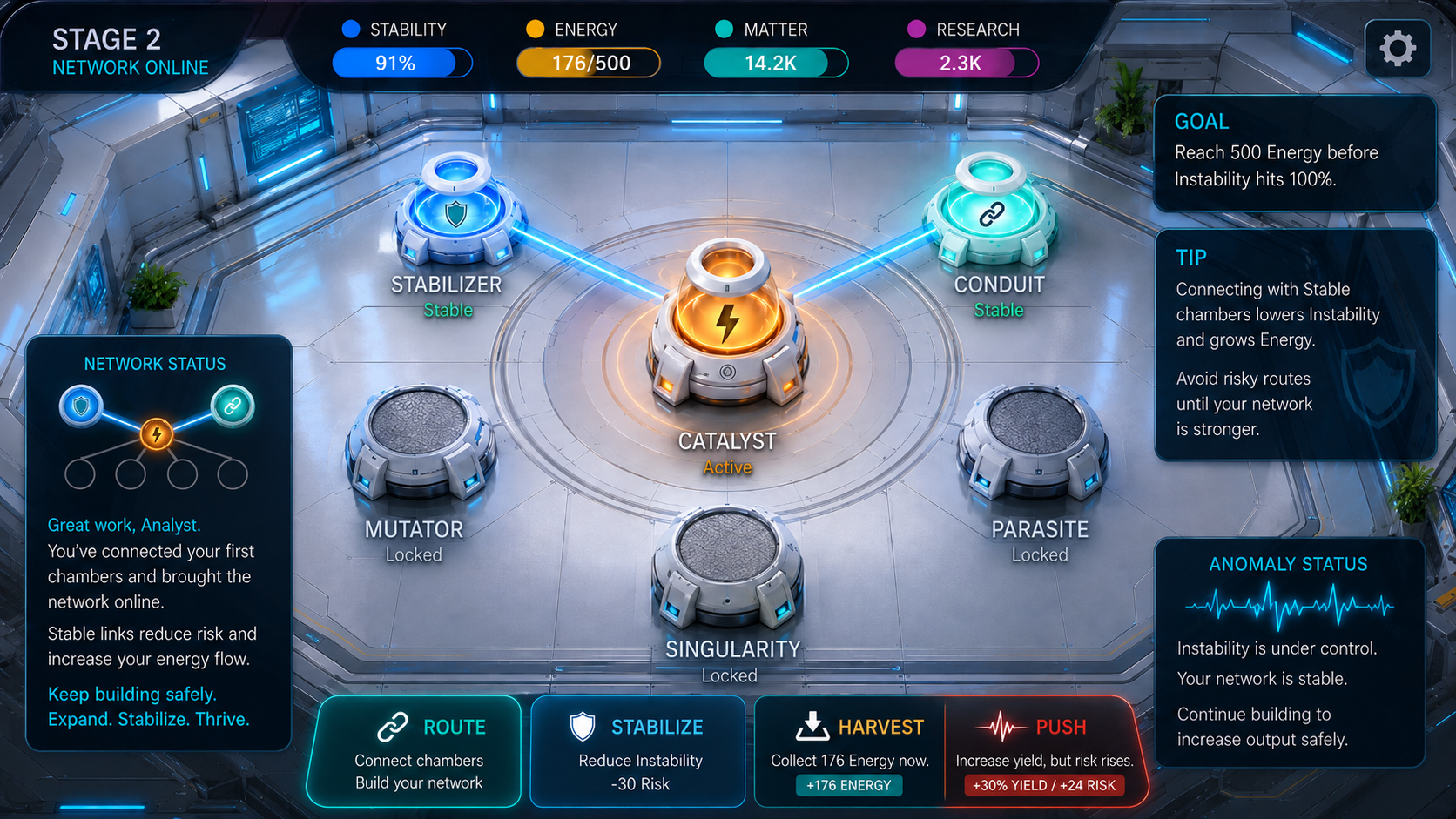
I built ANOMALIS from the emotional core outward. First came the loop: Harvest, Stabilize, Route, Push. Those four verbs became the foundation of the entire design.
Then came the chambers, each with its own role, color, symbol, and behavior. From there, the world began to take shape: a bright futuristic laboratory where every glow, warning pulse, and connection line had meaning.
The visual direction became “luminous clean-tech” — white and chrome materials, glass containment chambers, soft cyan lighting, and colorful anomaly energy. I wanted the game to feel optimistic and polished, but still slightly dangerous, like a beautiful experiment running hotter than expected.
Challenges we ran into
The greatest challenge was balancing wonder with pressure. I did not want ANOMALIS to feel dark, punishing, or chaotic. I wanted it to feel intelligent, readable, and alive.
Another challenge was making complexity feel simple at first glance. ANOMALIS has many moving systems, but the player needs to understand the screen in seconds. The interface had to become part of the storytelling: blue means safety, amber means temptation, red means the edge is near. The player does not just read the risk — they watch it brighten.
Failure was also an important design challenge. I did not want failure to be the end. In ANOMALIS, a cascade becomes another state of the system, another problem to solve, another story the facility tells.
Accomplishments that we're proud of
I am proud that ANOMALIS has a clear identity. It is not a combat game, not a horror game, and not a passive idle game. It is a game about curiosity under pressure.
I am also proud of the central question: harvest now, or push one more beat? It is simple enough to understand immediately, but strong enough to support strategy, tension, and long-term mastery.
The visual language also became a major accomplishment. The clean laboratory, glowing chambers, and color-coded anomaly roles make the game feel like a world players can understand, manage, and want to return to.
What we learned
I learned that complexity only works when the player can feel it before they have to understand it. A good mobile game cannot ask the player to study the system before they enjoy it. It has to invite them in, reward them quickly, and then reveal depth one decision at a time.
I also learned that visual design is not decoration. In ANOMALIS, the art direction is the gameplay made visible. Glow, color, shape, and motion all carry information. The cleaner the visual language became, the stronger the game became.
What's next for Anomalis
Next, I would prototype the core playable loop: one Catalyst chamber, rising Yield, rising Instability, and the decision to Harvest or Push. Once that moment feels exciting, I would add the Stabilizer and Conduit to test how routing and safety change the player’s choices.
After that, I would expand into the Mutator, Parasite, and Singularity, along with the Anomaly Index, upgrades, daily visitors, Resonance Seasons, and larger facility networks.
The long-term vision is for ANOMALIS to feel like a beautiful scientific instrument the player learns to conduct — one glowing chamber, one risky decision, and one near-disaster at a time.
Harvest now, or push one more beat?
Built With
- agentick-workflows
- canva
- claude
- codex
- figma
- game-design
- midjourney


Log in or sign up for Devpost to join the conversation.